


Microstrip Line Technology
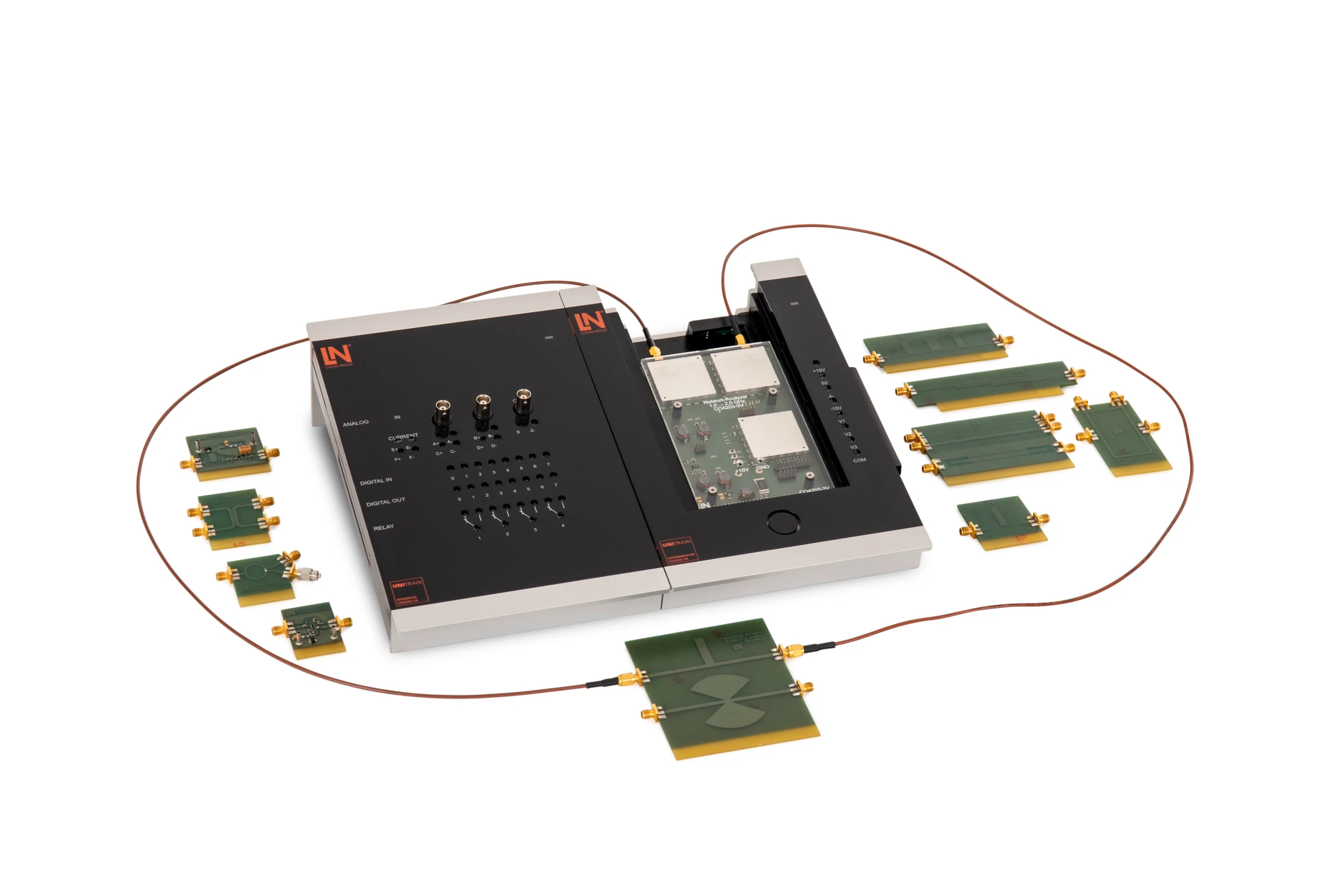
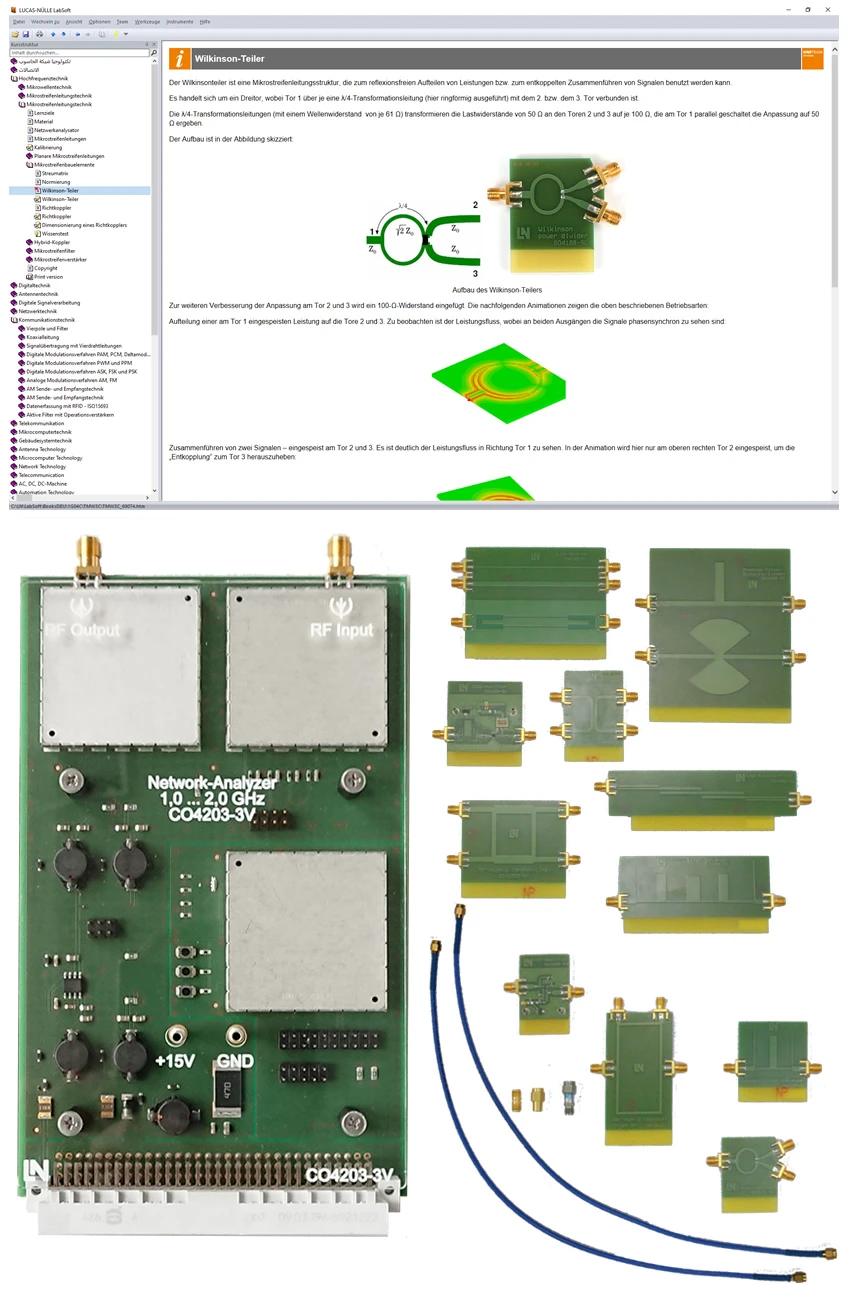
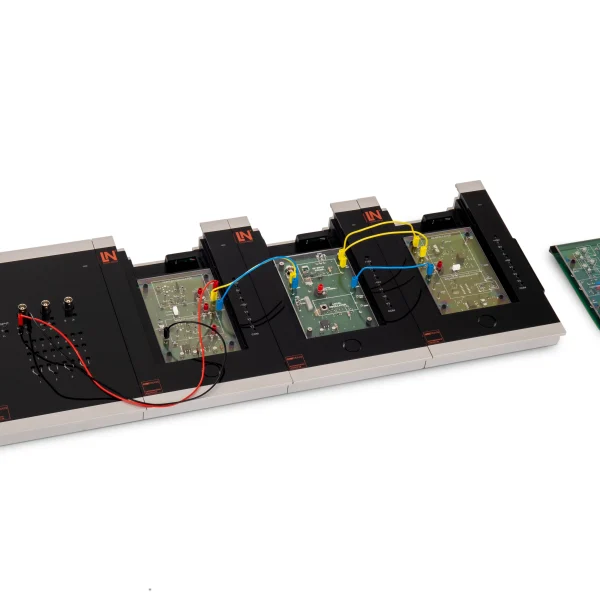
UniTrain course on microstrip technology with an L-band network analyzer and eleven test boards. Students characterize lines, dividers, couplers, filters and amplifiers in the 1 to 2 GHz range.
- Determining line parameters
- Performing system calibration
- Evaluating the scattering matrix
- Investigating hybrid couplers
- Investigating active microwave amplifiers in the L band
- Performing system calibration on the network analyzer
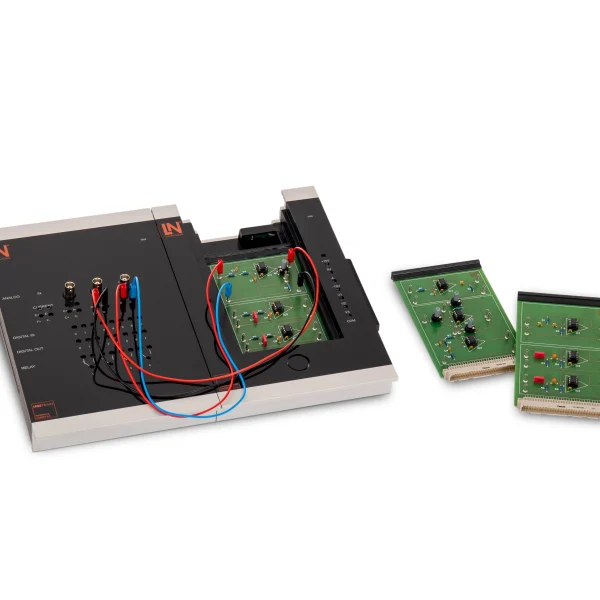
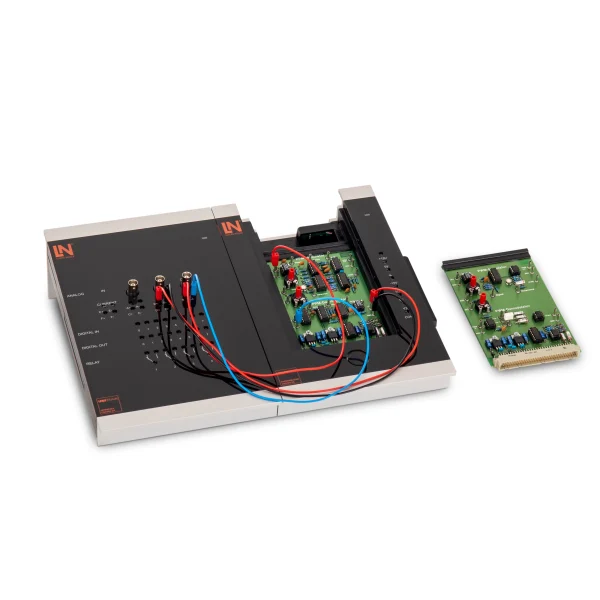
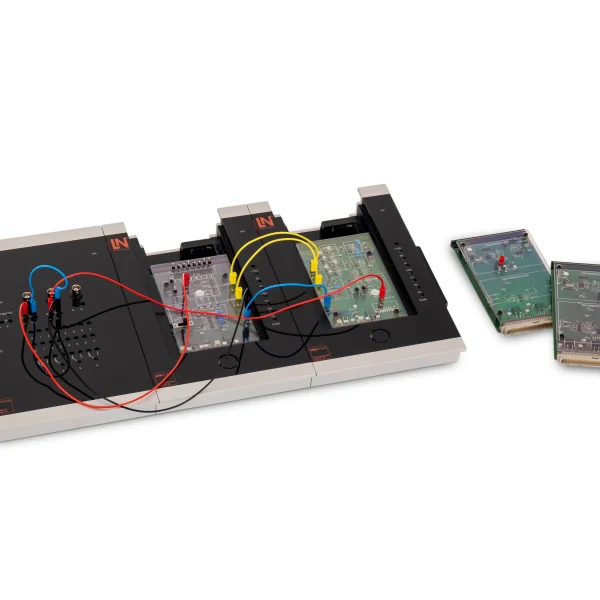
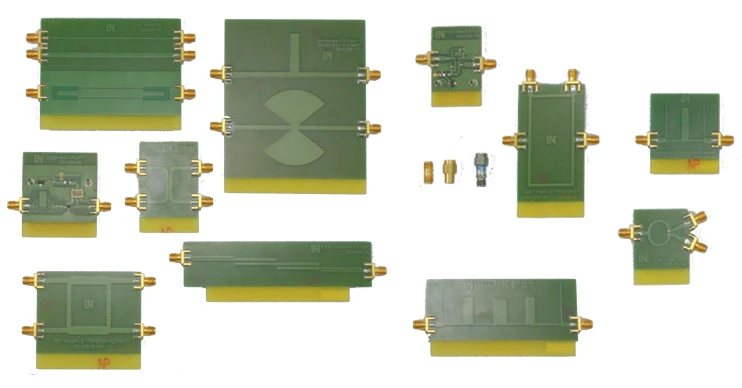
- Modular test boards with SMA connectors
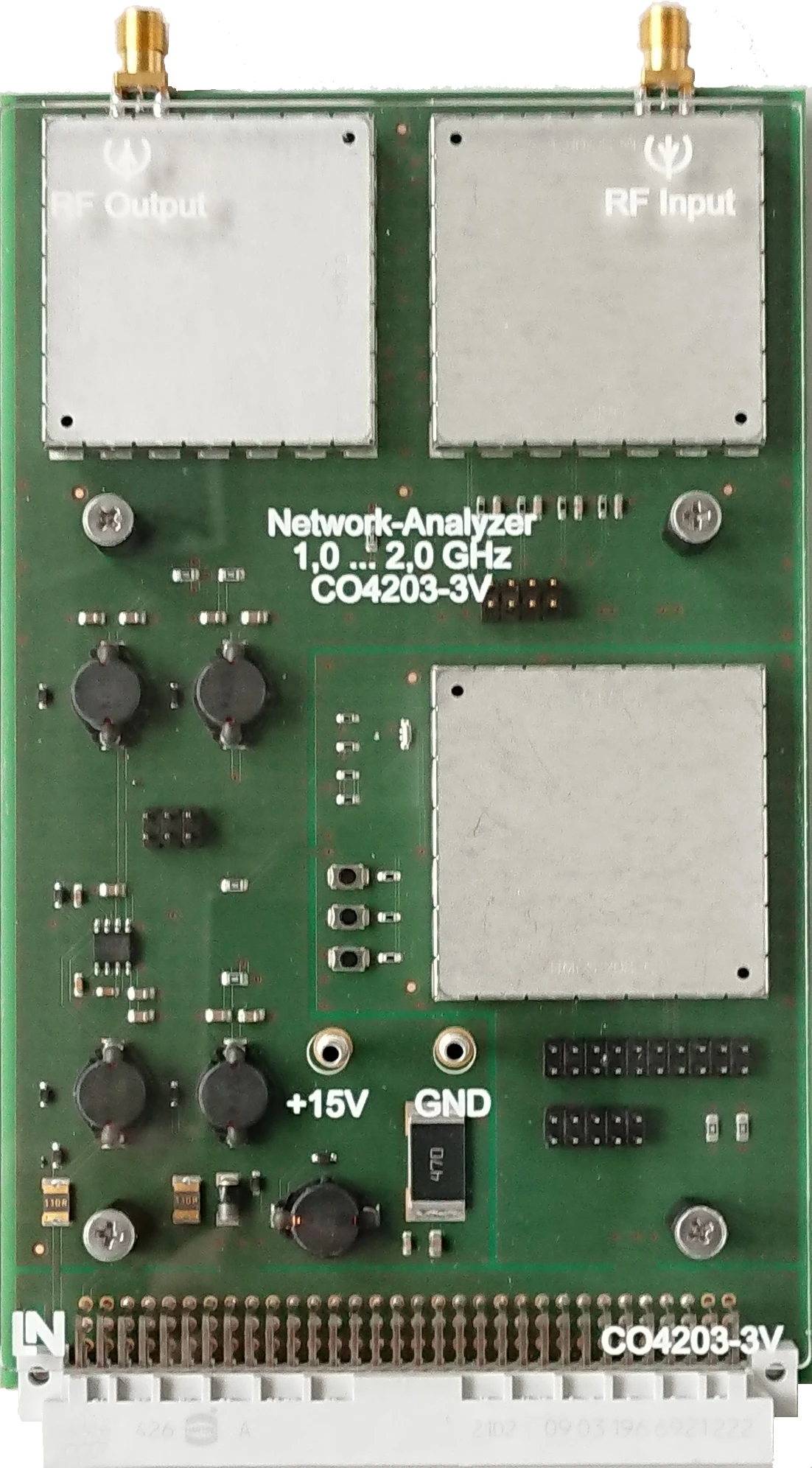
- L-band network analyzer experiment card
In mobile communications and radar modules, the radio-frequency functions are located on planar printed circuit boards. This UniTrain course makes their behavior measurable. Students first calibrate the L-band network analyzer to eliminate the influence of the feed lines, and then record magnitude and phase from 1 to 2 GHz. They determine distributed line parameters and effective permittivities on unbalanced microstrip and coplanar lines, evaluate the scattering matrix of Wilkinson dividers and 90-degree and 180-degree hybrid couplers, and measure 3rd- and 5th-order low-pass filters, edge-coupled band-pass filters and butterfly band-stop filters. On MMIC and low-noise FET stages, they investigate gain and noise behavior. The boards are changed via gold-plated SMA connectors.
| Course | |
| CO4204-9Y | Course Microstrip line technology |
| Accessories | |
| CO4203-2A | UniTrain Interface mit virtuellen Instrumenten (Basis VI) |
| CO4203-2J | UniTrain measurement accessories, shunts and connection cables |
| CO4203-2Y | UniTrain storage case for one UniTrain system |
| CO4203-2B | UniTrain Experimenter |
Learning Content in Detail
Determining line parameters
Performing system calibration
Evaluating the scattering matrix
Investigating hybrid couplers
Characterizing microstrip filters
Analyzing microwave amplifiers
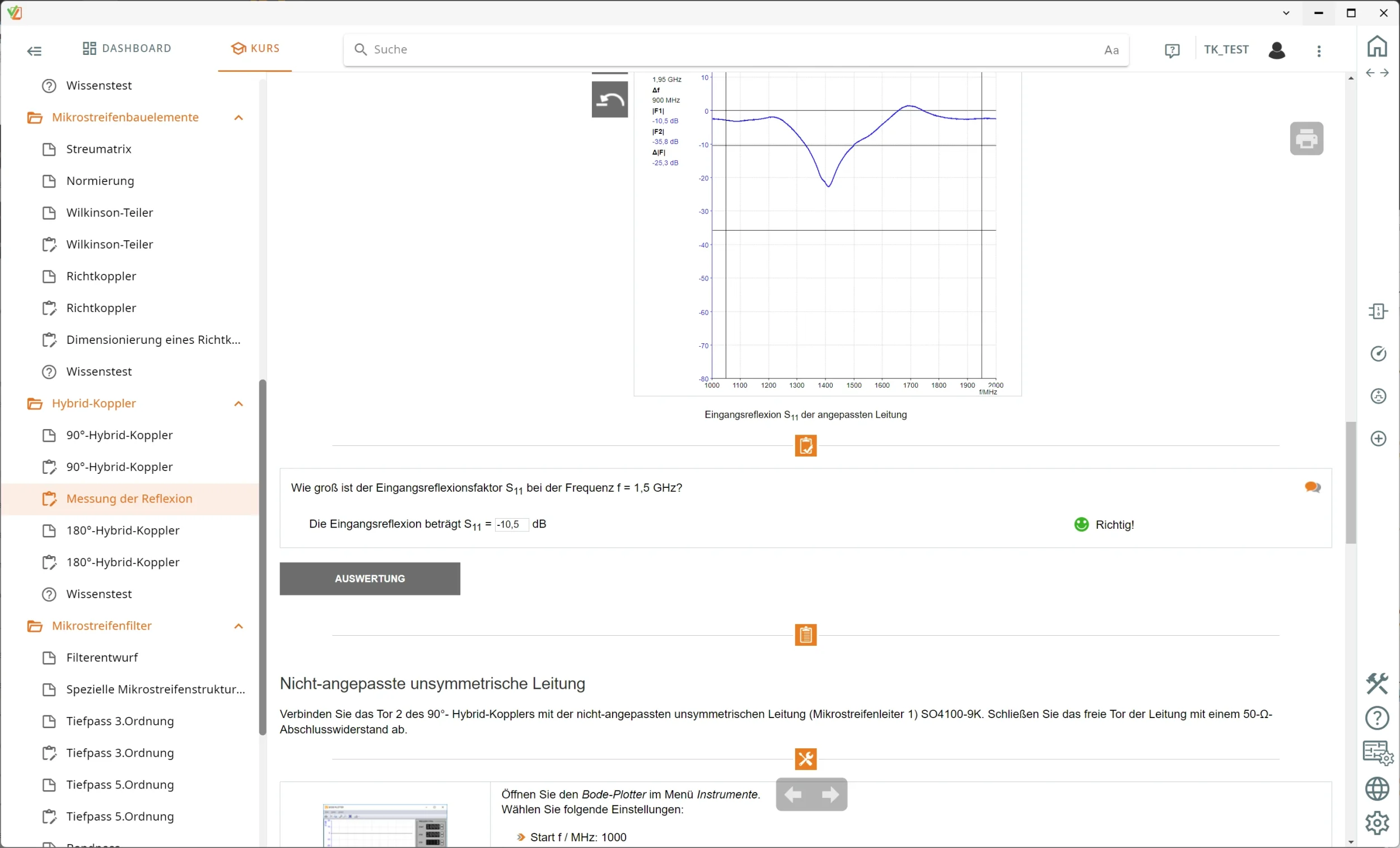
Measuring input reflection
Features & Applications
- Investigating active microwave amplifiers in the L band — Students analyze the gain and noise characteristics of MMIC amplifiers and low-noise FET stages.
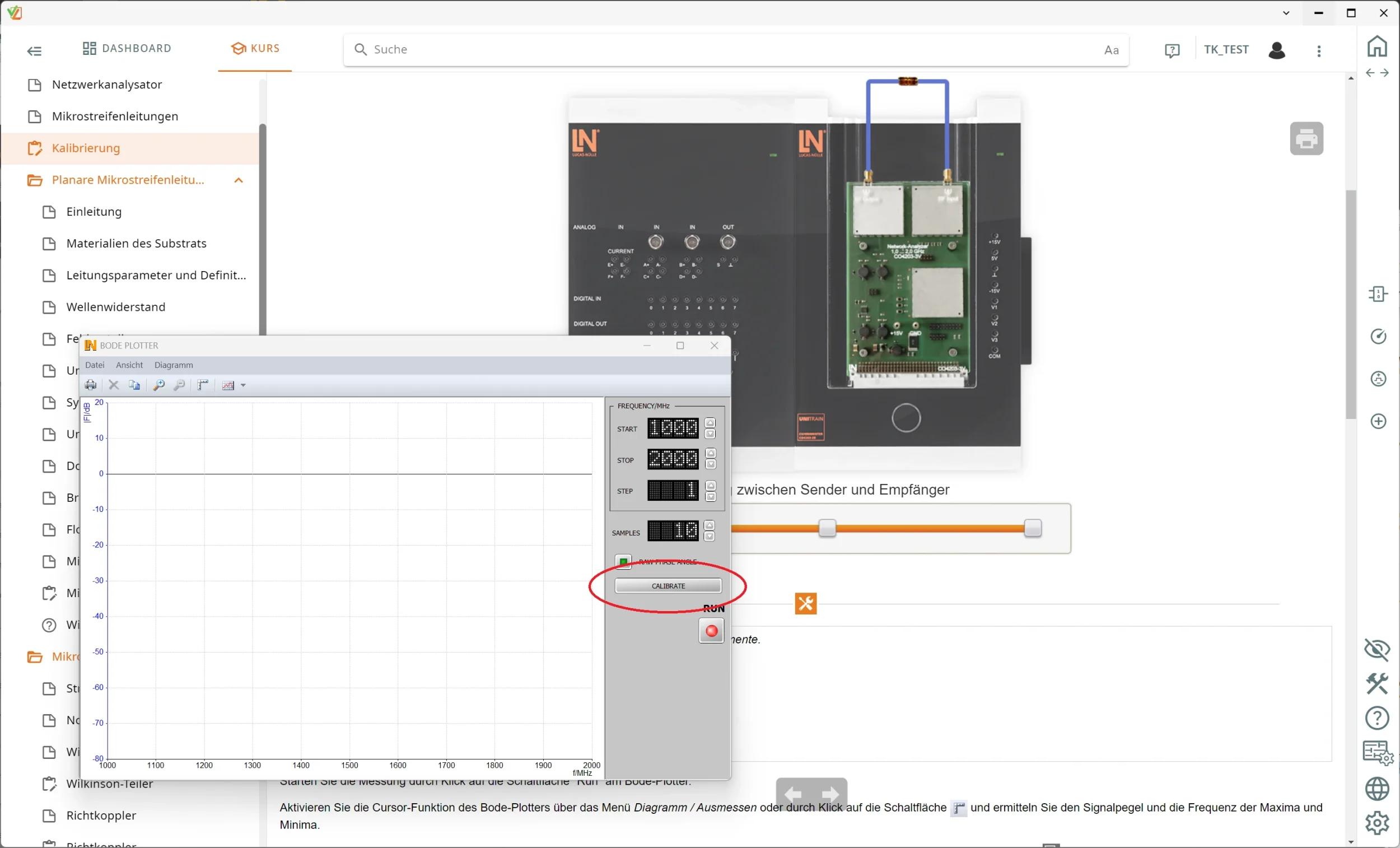
- Performing system calibration on the network analyzer — Students calibrate the system, compensating for the influence of the feed lines and keeping measurement errors small.
- Modular test boards with SMA connectors — A set of microstrip boards with gold-plated SMA connectors allows devices under test to be changed quickly and ensures reproducible measurement setups.
- L-band network analyzer experiment card — Measures magnitude and phase in the 1 to 2 GHz range with a sensitivity down to -50 dBm and adjustable frequency resolution.
- Microstrip line sample board — Contains unmatched and matched unbalanced microstrip lines as well as a coplanar line for comparative attenuation measurements.
- Microstrip couplers and power dividers — Comprises Wilkinson dividers, directional couplers and 90-degree and 180-degree (rat-race) hybrid couplers for analyzing scattering matrices.
- Microstrip filter set: low-pass, band-pass and band-stop — Contains 3rd- and 5th-order low-pass filters, an edge-coupled band-pass filter and a butterfly band-stop filter for frequency selectivity measurements.
- Active amplifier boards with MMIC and FET — Enable measurements on integrated MMIC amplifiers and on low-noise GaAs FET microwave stages.
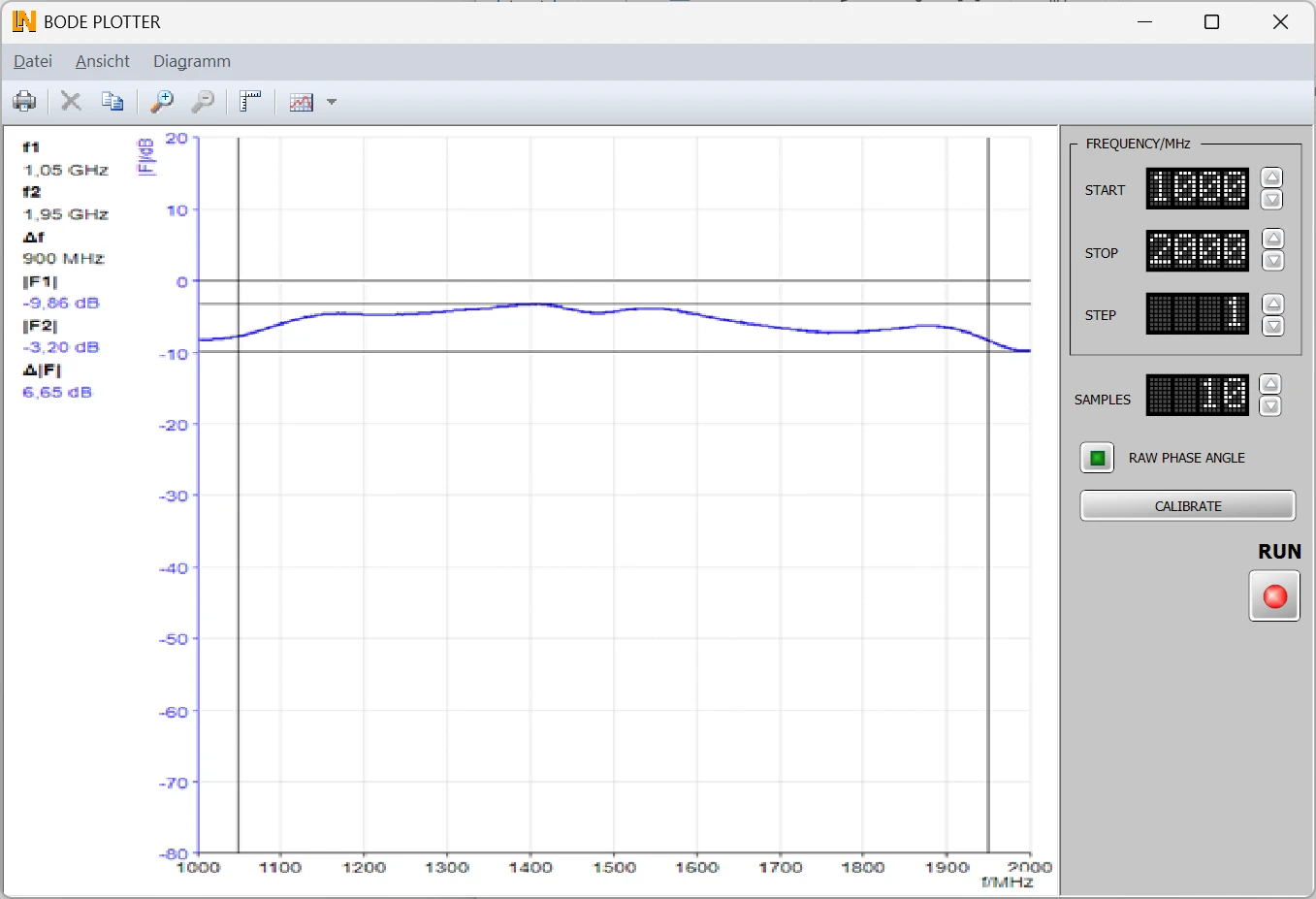
- Network analyzer — Records the amplitude and phase response, i.e., S11 and S21, in the 1 to 2 GHz range. An automatic calibration function eliminates the influence of the measurement setup.
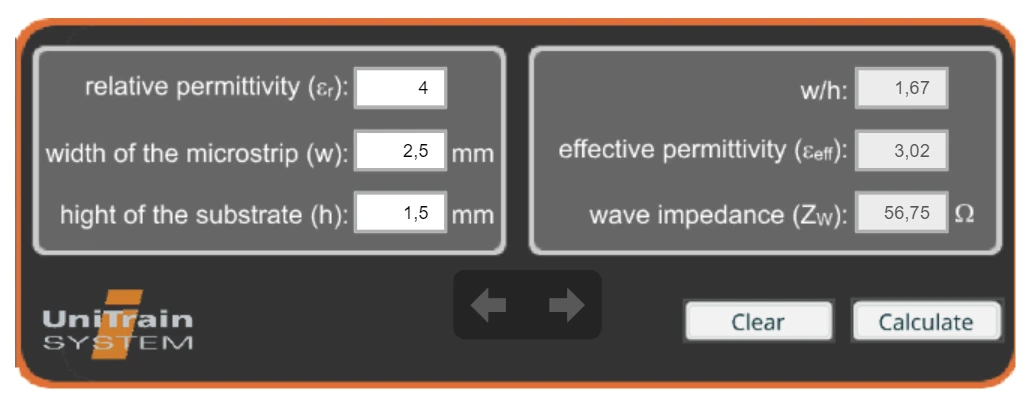
- Integrated microstrip calculator — Calculates characteristic impedances, effective permittivities and geometric conductor widths directly in LabSoft.
- Analyzing planar line types and characteristic impedances — Students determine distributed line parameters, effective permittivities and transfer functions on unbalanced microstrip lines and on coplanar lines.
- Evaluating power dividers and directional couplers using S-parameters — Students investigate the scattering matrix, insertion loss and isolation on Wilkinson dividers and on 90-degree and 180-degree hybrid couplers.
- Characterizing the frequency response of microstrip filters — Students measure the transfer characteristics of 3rd- and 5th-order low-pass filters, edge-coupled band-pass filters and butterfly band-stop filters.

From Knowledge Comes Capability.
You guide the learning
Where theory and practice go hand in hand.
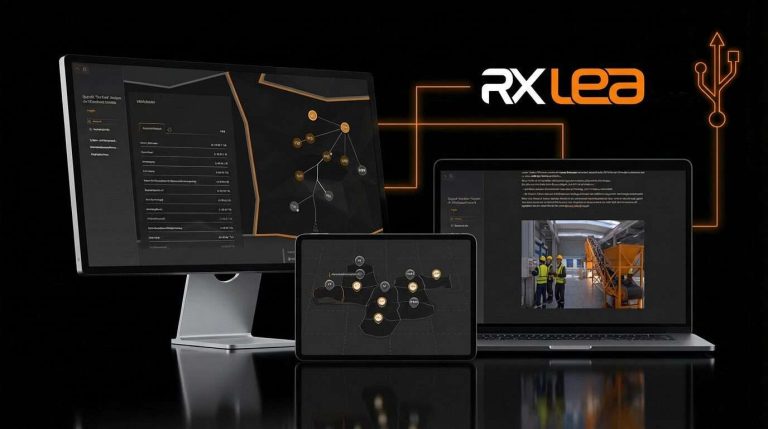
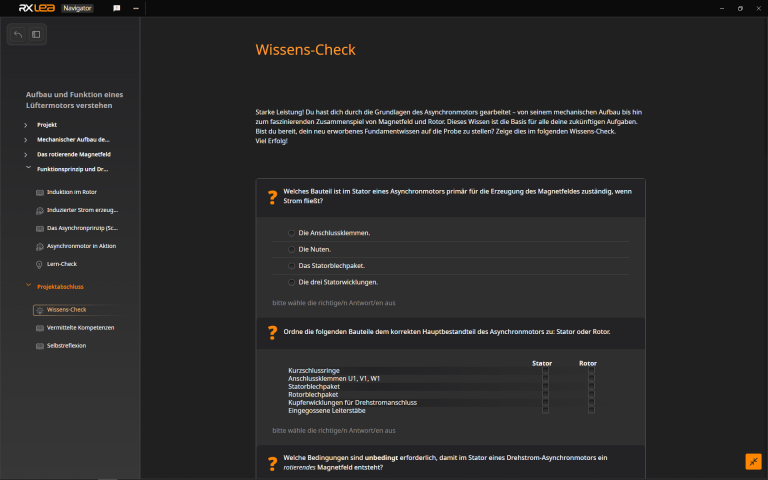
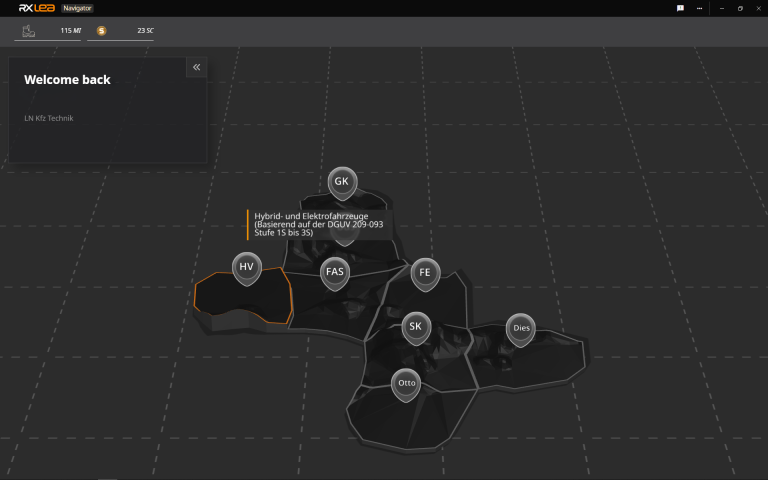
RXLea brings a new way of learning: project-based, hands-on and clearly structured. Learners solve real-world tasks, while instructors save time on preparation. Interactive modules, smart analytics and real hardware create a modern, efficient learning world.
Hands-on and interactive
Animations, interactive tasks and realistic scenarios build a deep understanding. All content is organized into clear learning paths for focused, hands-on learning.
Digital support
3D assembly animations and digital instructions simplify complex procedures, reduce errors and help learners work more independently.
Visual support
Overview graphics, screenshots and sample animations make the learning world transparent. Photos from the learning packages are also available, including country-specific versions where needed.

Stay ahead in
technical training.
Get the latest training systems, product launches and educational insights, delivered directly to your inbox.