


Active Filters with Operational Amplifiers
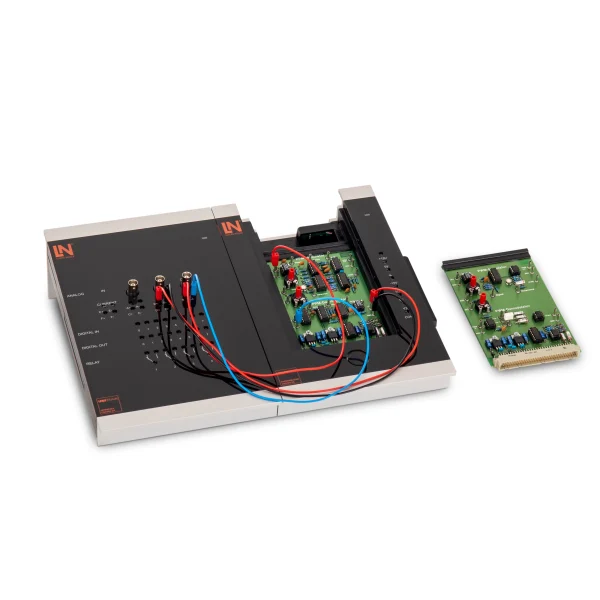
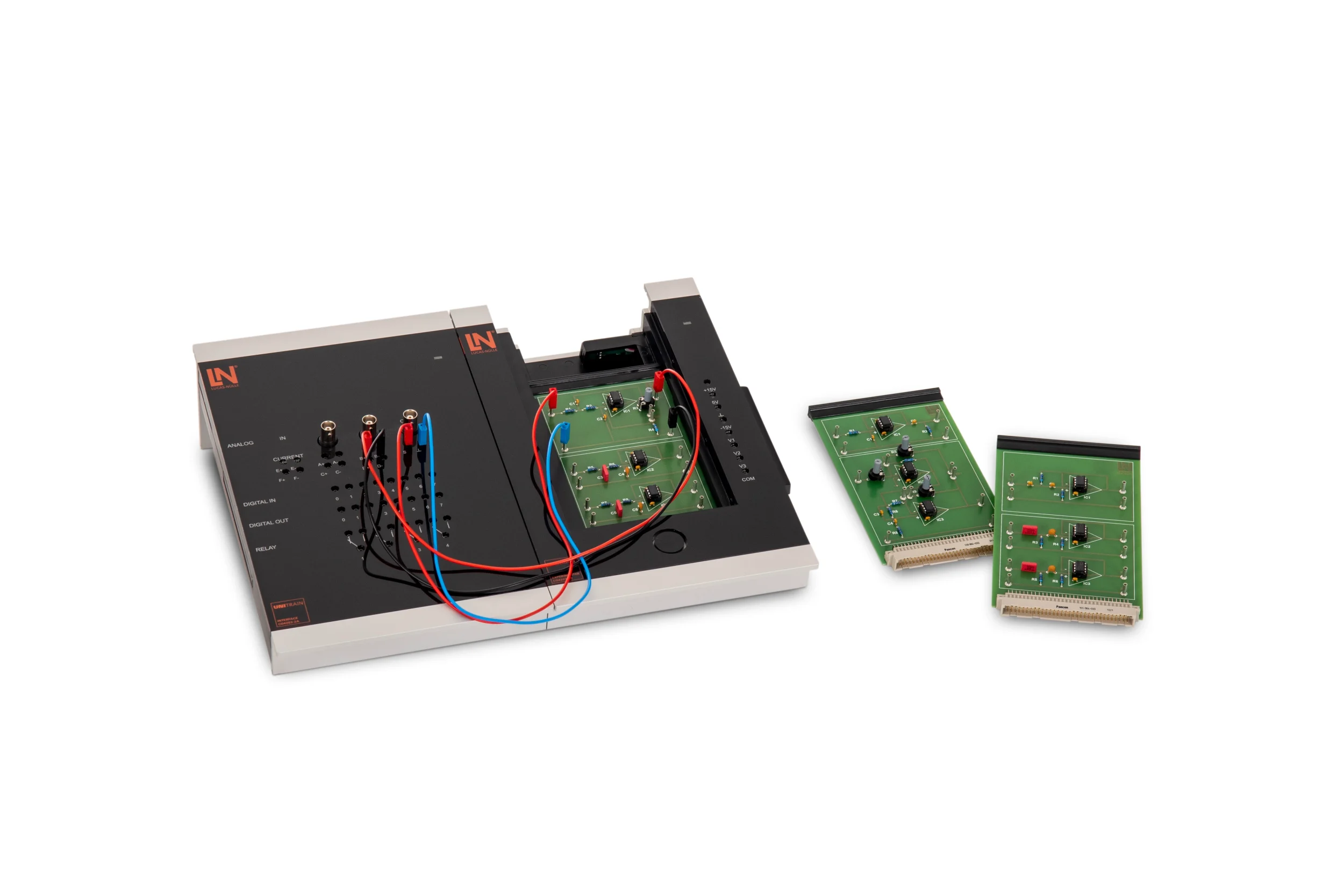
The UniTrain Active Filters system is used to investigate second- and fourth-order low-pass, high-pass, band-pass and band-stop filters based on operational amplifiers in Sallen-Key circuits.
- Comparing filter approximations
- Analyzing filter order and roll-off
- Investigating band-pass and band-stop filters
- Evaluating the square-wave response
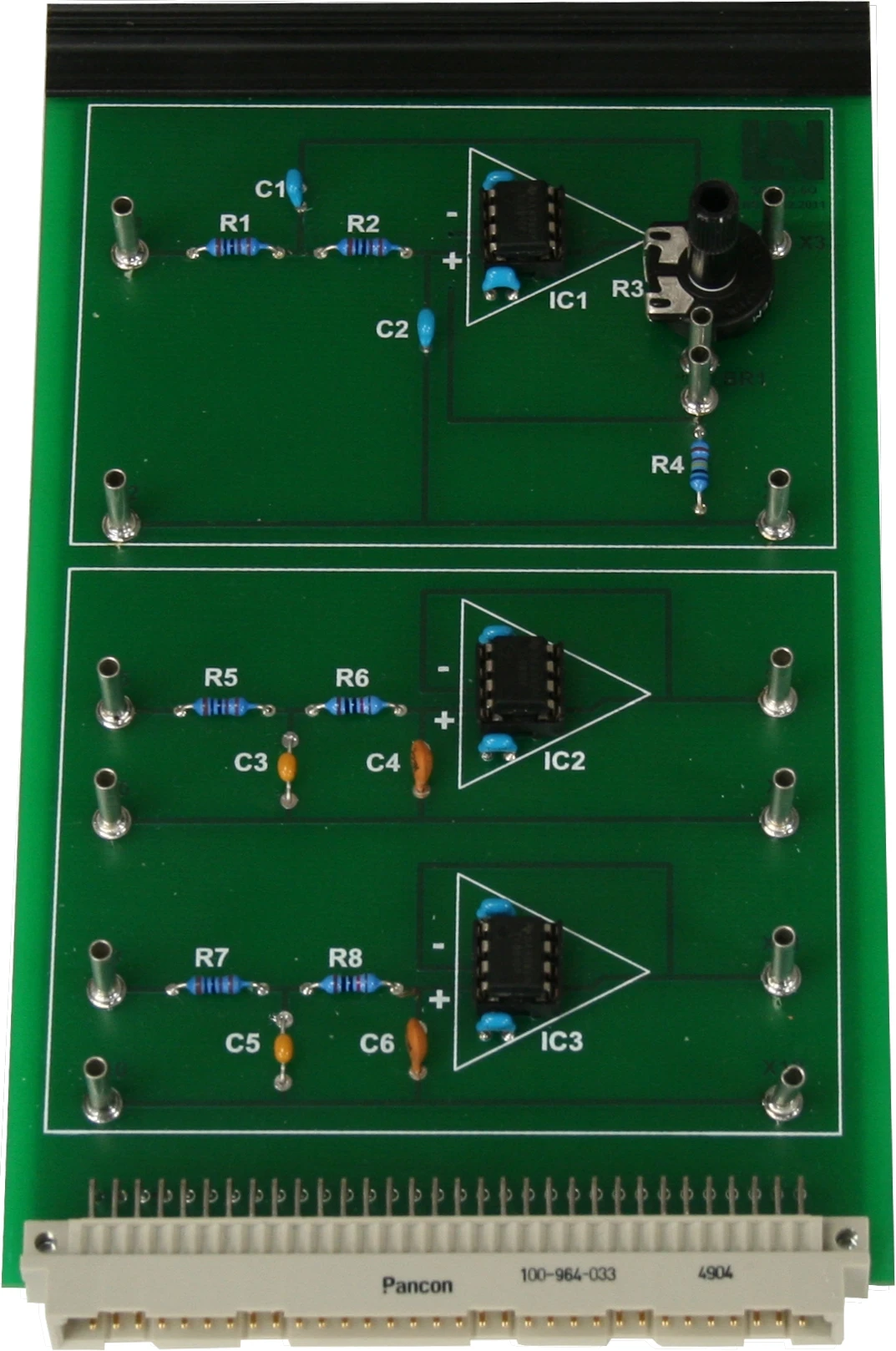
- Second- and fourth-order low-pass plug-in card
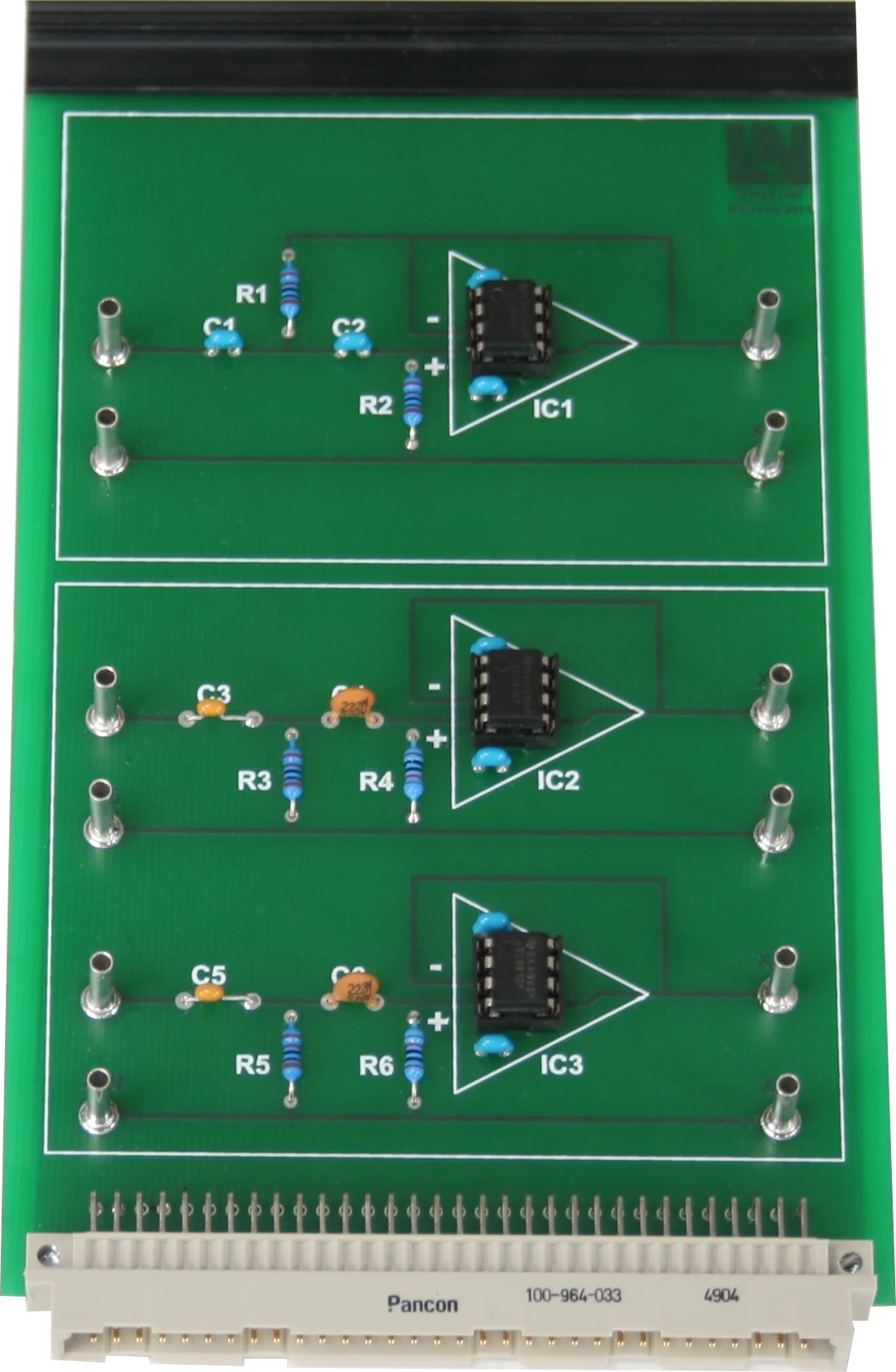
- Second- and fourth-order high-pass plug-in card
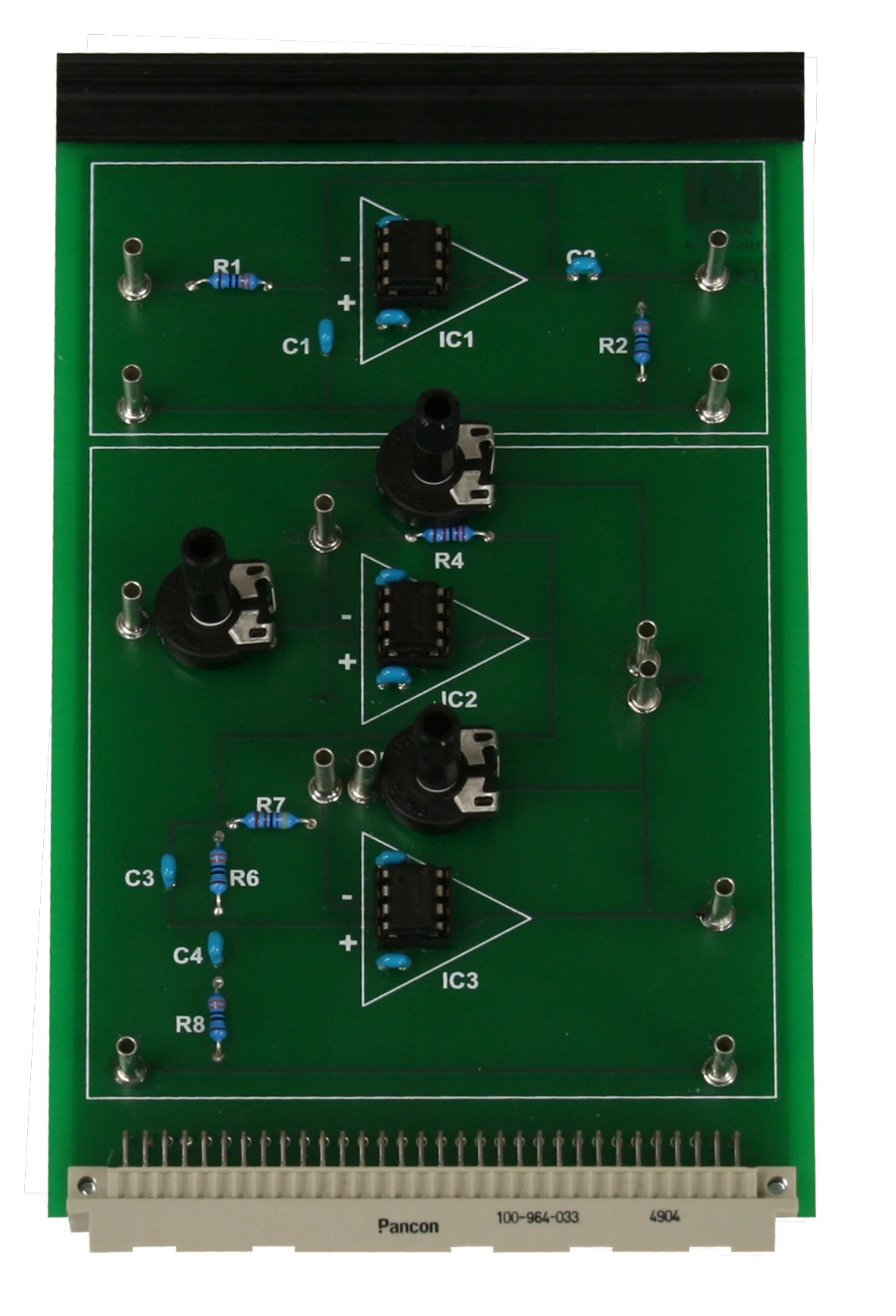
- Second-order band-pass and band-stop plug-in card
- Clear circuit layout to industry standard
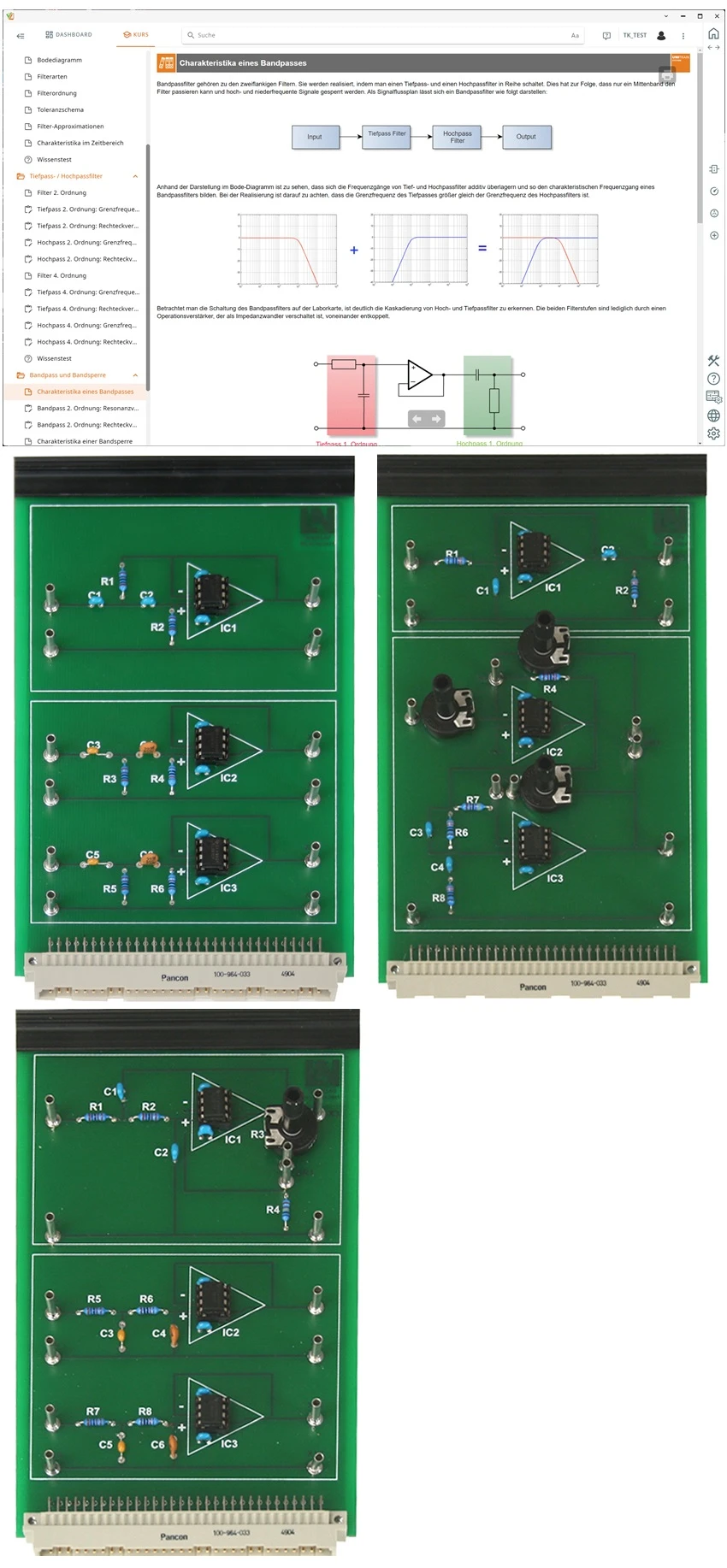
In industrial signal processing, active filters decouple circuit stages without inductors, amplify useful signals and suppress interference frequencies with a steep roll-off. Only measurement reveals how the approximation and the filter order affect this behavior. The UniTrain system provides three experiment cards for this purpose: a second- and fourth-order low-pass card, a second- and fourth-order high-pass card, and a card with a band-pass and a band-stop filter. Students use built-in potentiometers to set Bessel, Butterworth and Chebyshev characteristics. The Bode plotter automatically records the amplitude and phase response, and the virtual oscilloscope shows step responses and transient responses. This enables students to determine cutoff frequencies, roll-off steepness, Q factor and signal propagation times on their own setup.
| Course | |
| CO4204-9B | Course Telecommunications 11: Active filter with operational amplifiers |
| Accessories | |
| CO4203-2A | UniTrain Interface mit virtuellen Instrumenten (Basis VI) |
| CO4203-2J | UniTrain measurement accessories, shunts and connection cables |
| CO4203-2Y | UniTrain storage case for one UniTrain system |
| CO4203-2B | UniTrain Experimenter |
Learning Content in Detail
Comparing filter approximations
Analyzing filter order and roll-off
Investigating band-pass and band-stop filters
Evaluating the square-wave response
Determining phase response and propagation delay
Cascading decoupled stages
Features & Applications
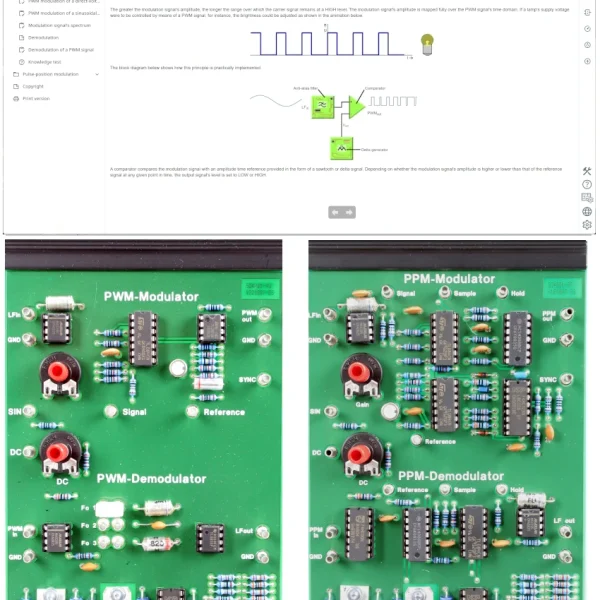
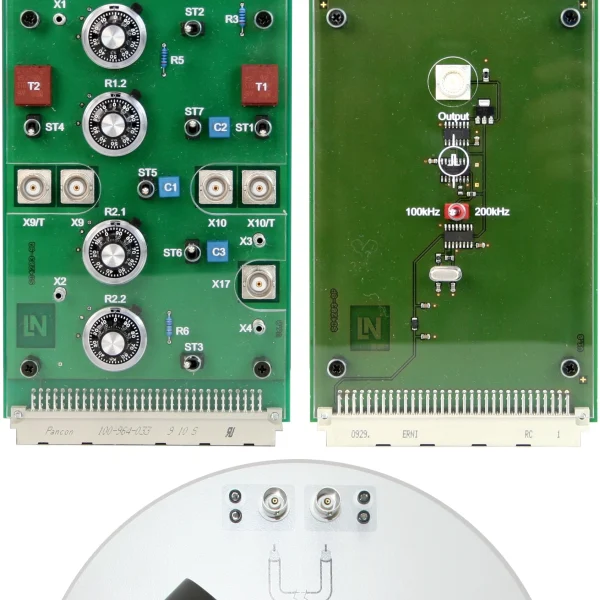
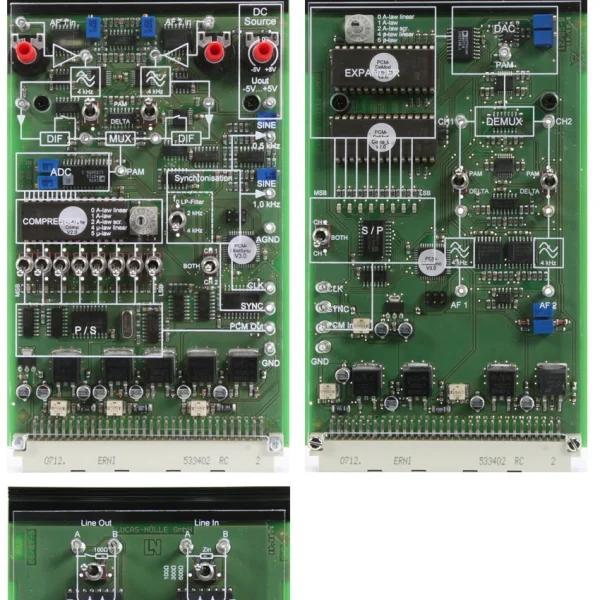
- Second- and fourth-order low-pass plug-in card — The card provides a second-order low-pass stage with adjustment potentiometer P and two cascadable second-order low-pass stages for building a fourth-order low-pass filter.
- Second- and fourth-order high-pass plug-in card — The card contains integrated first-order RC band-pass and RC band-stop circuits for investigating center frequency and attenuation behavior.
- Second-order band-pass and band-stop plug-in card — The card contains a second-order active band-pass filter and a second-order active Wien-Robinson band-stop filter with three adjustment potentiometers for gain and Q factor.
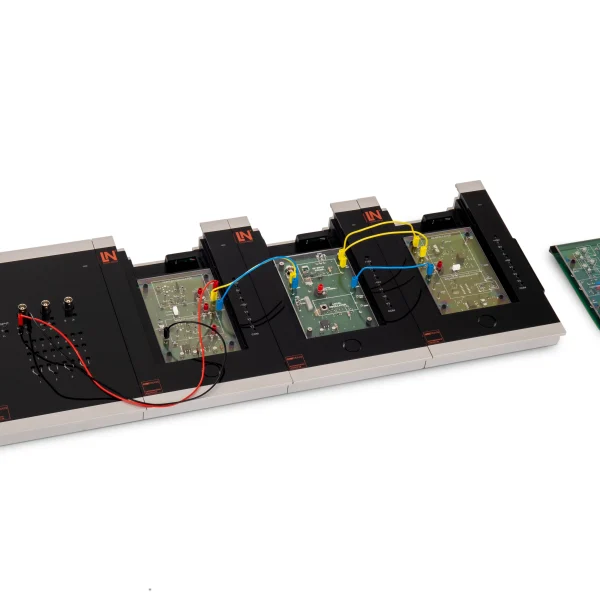
- Clear circuit layout to industry standard — Clearly structured experiment cards allow circuits to be set up directly. Students can quickly re-plug components and link theory directly to measurement.
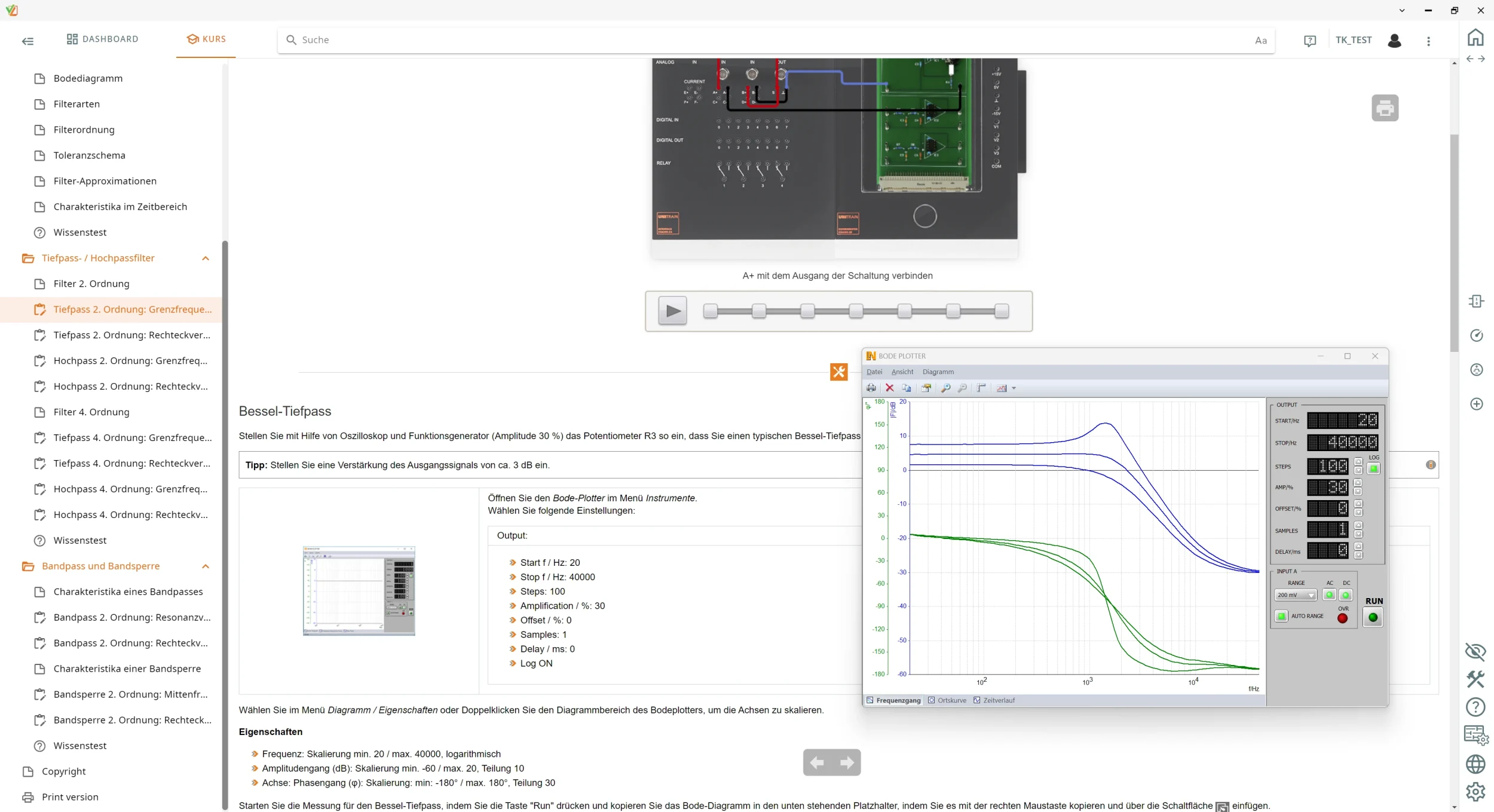
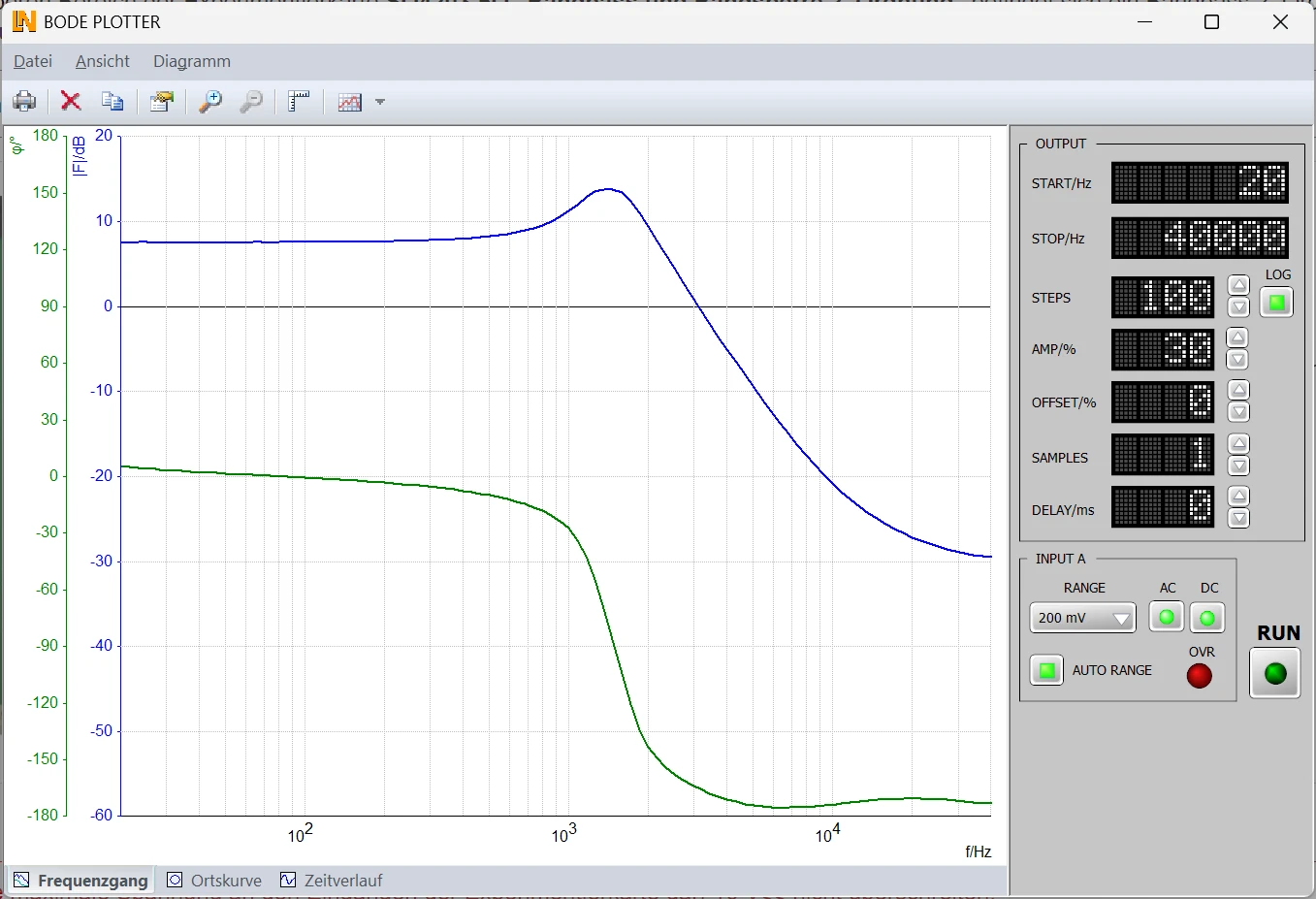
- Bode plotter — Automatically records amplitude and phase responses over frequency ranges from 1 Hz to 5 MHz and displays Nyquist plots in the complex plane.
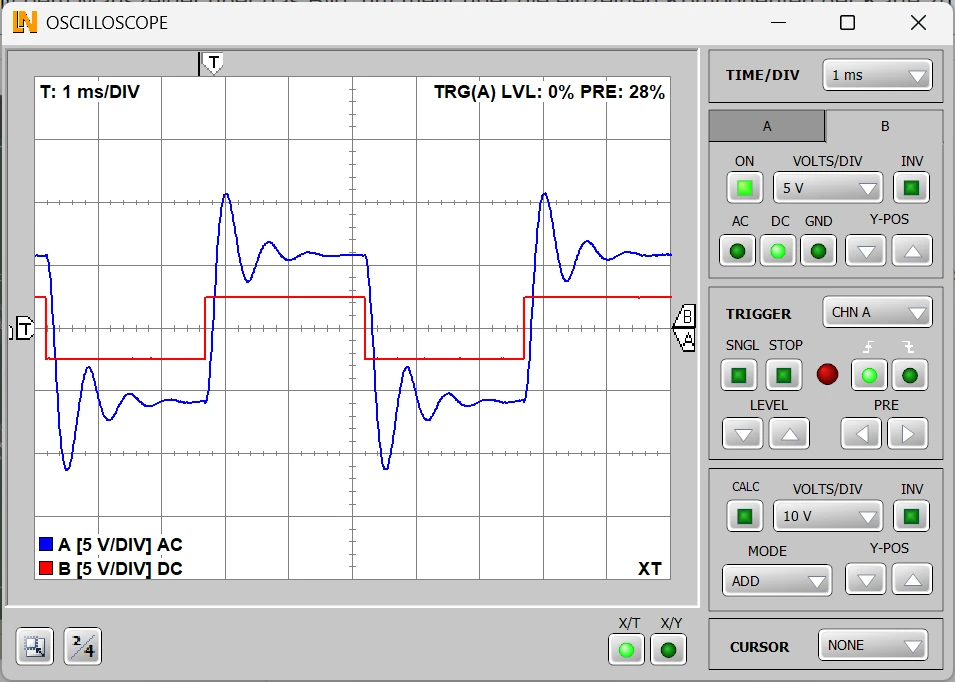
- 2/4-channel oscilloscope — Displays input and output signals in X/T or XY mode and provides cursor functions for precise measurement of phase shift, amplitude and frequency.
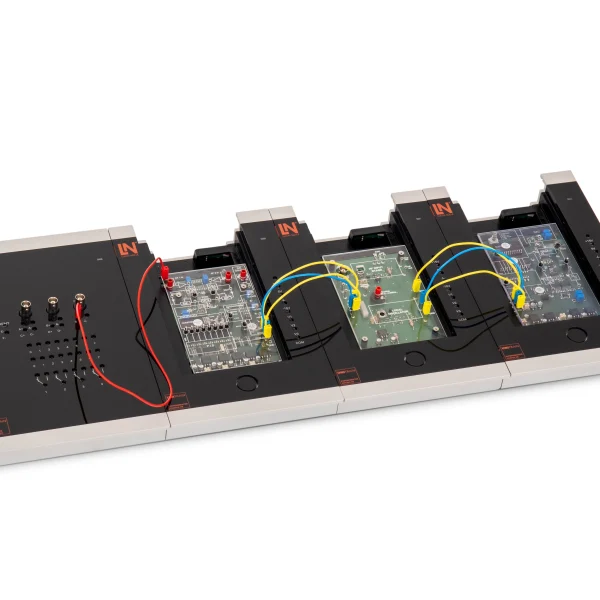
- UniTrain Experimenter — The card holder with ejection mechanism accommodates the experiment cards and connects them to the interface via the UniTrain bus.
- Comparing filter approximations using potentiometers — Students set the negative feedback on the potentiometer and compare Bessel, Butterworth and Chebyshev characteristics directly in both the frequency and the time domain.
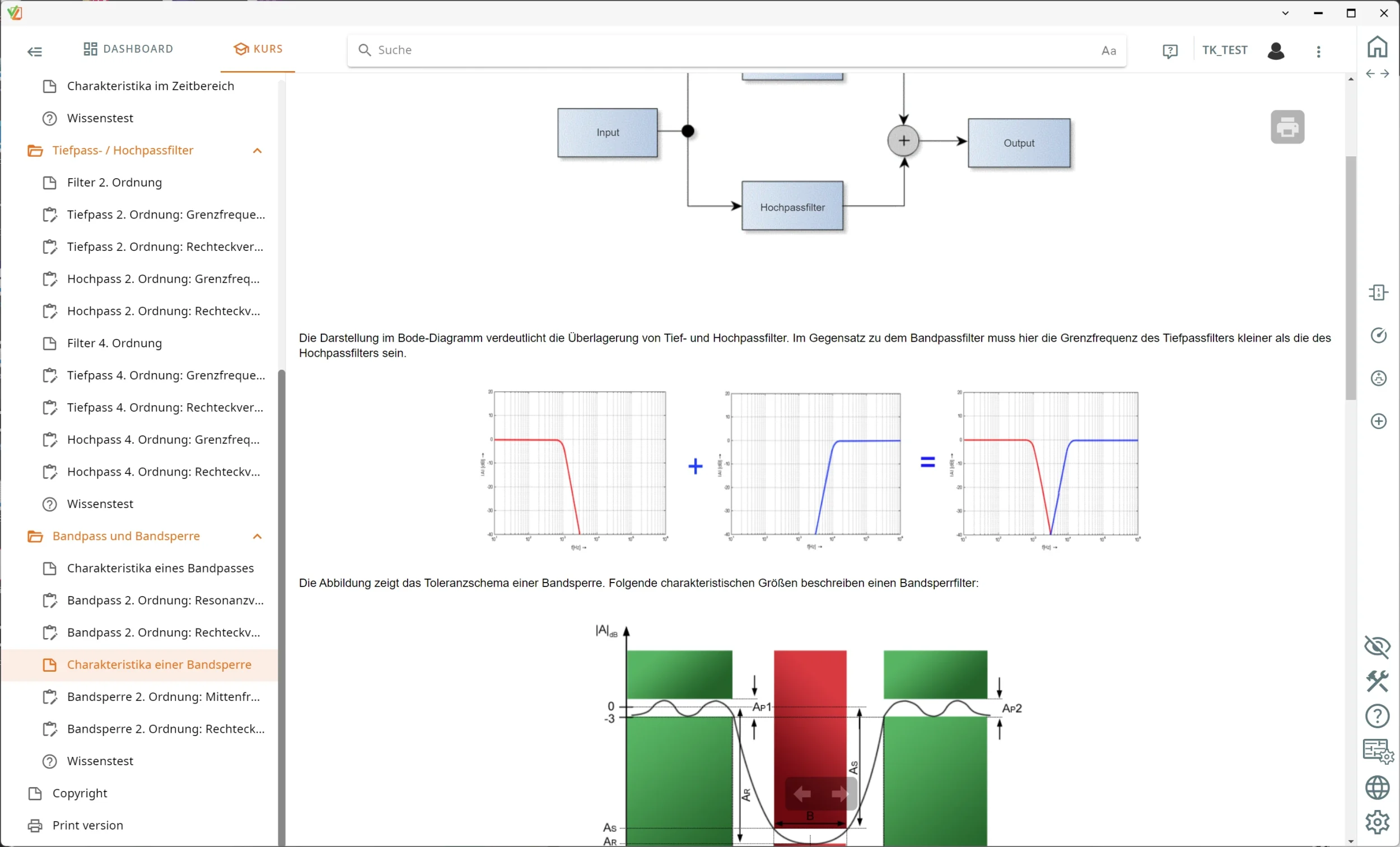
- Investigating band-pass filters and Wien-Robinson band-stop filters — Students determine the resonance gain, center frequency and Q factor of second-order active filters and vary the notch Q factor using the built-in potentiometers.
- Analyzing second- and fourth-order low-pass and high-pass filters — Students cascade active Sallen-Key stages to form fourth-order filters, investigate the change in roll-off steepness and measure the phase shift for different filter orders.
- Investigating step response and square-wave response — Students excite the filters with square-wave signals, measure rise times on the oscilloscope and analyze transient responses, overshoots and differentiating effects.
- LabSoft course software — Guides students interactively through the experiments, teaches the theory of filter approximations, offers knowledge tests and evaluates the experiment results.

From Knowledge Comes Capability.
You guide the learning
Where theory and practice go hand in hand.
RXLea brings a new way of learning: project-based, hands-on and clearly structured. Learners solve real-world tasks, while instructors save time on preparation. Interactive modules, smart analytics and real hardware create a modern, efficient learning world.
Hands-on and interactive
Animations, interactive tasks and realistic scenarios build a deep understanding. All content is organized into clear learning paths for focused, hands-on learning.
Digital support
3D assembly animations and digital instructions simplify complex procedures, reduce errors and help learners work more independently.
Visual support
Overview graphics, screenshots and sample animations make the learning world transparent. Photos from the learning packages are also available, including country-specific versions where needed.




Stay ahead in
technical training.
Get the latest training systems, product launches and educational insights, delivered directly to your inbox.