
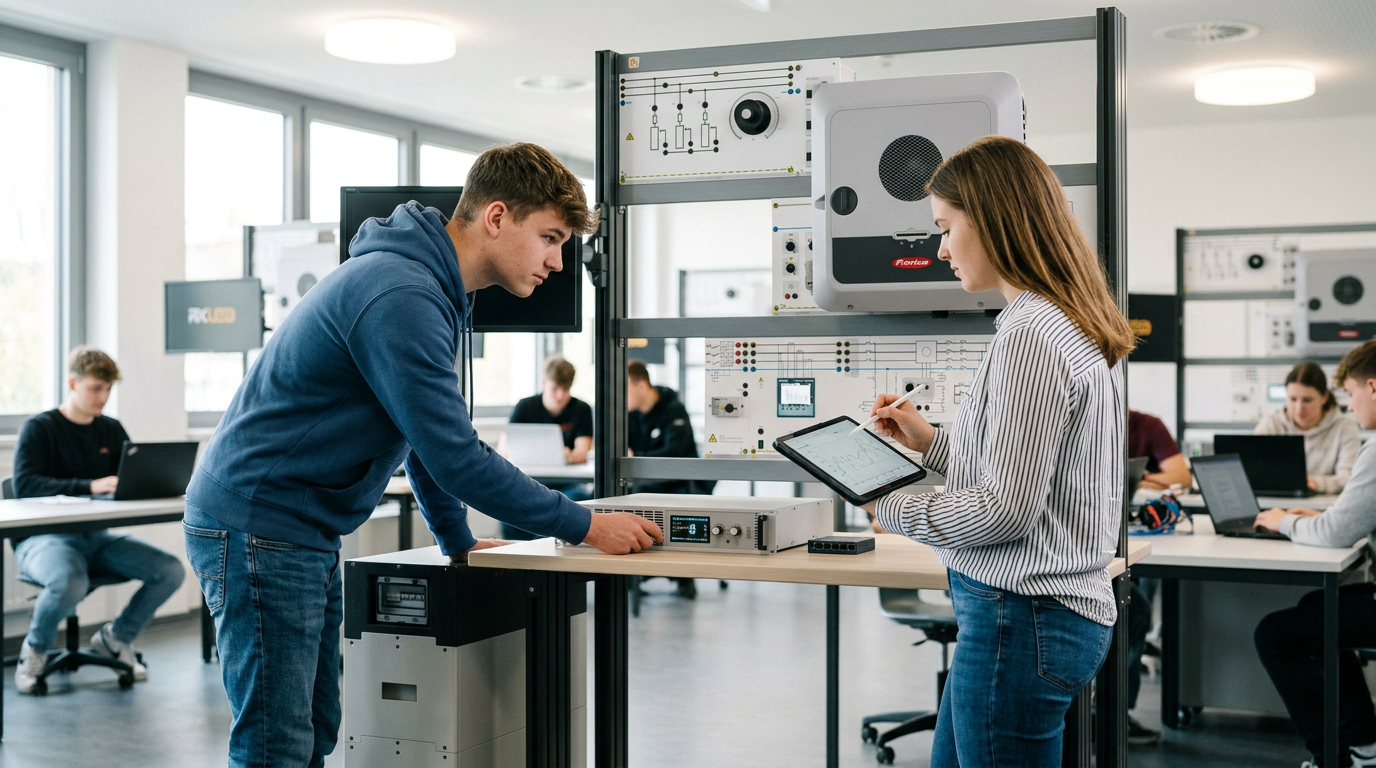

AM Transmission and Receiving Technology
Master the complete alignment of AM transmitter stages and superheterodyne receivers. The UniTrain system provides practical analyses for communications engineering specialists.
- Aligning oscillator circuits
- Building an AM transmitter
- Measuring image rejection
- Determining adjacent-channel selectivity
- Building an AM transmitter
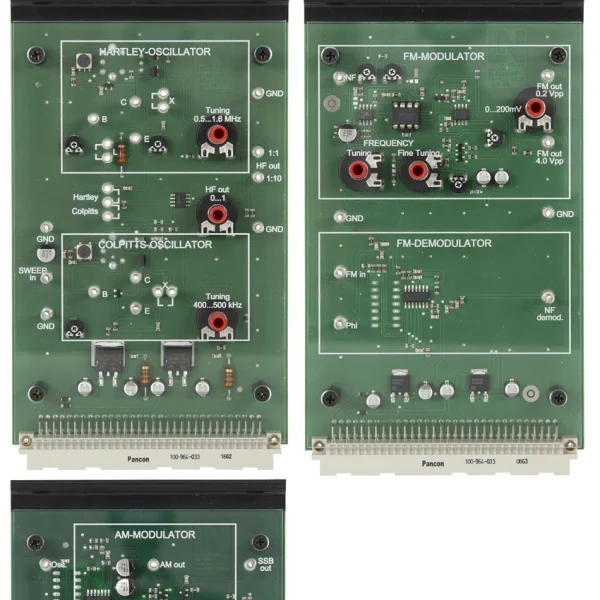
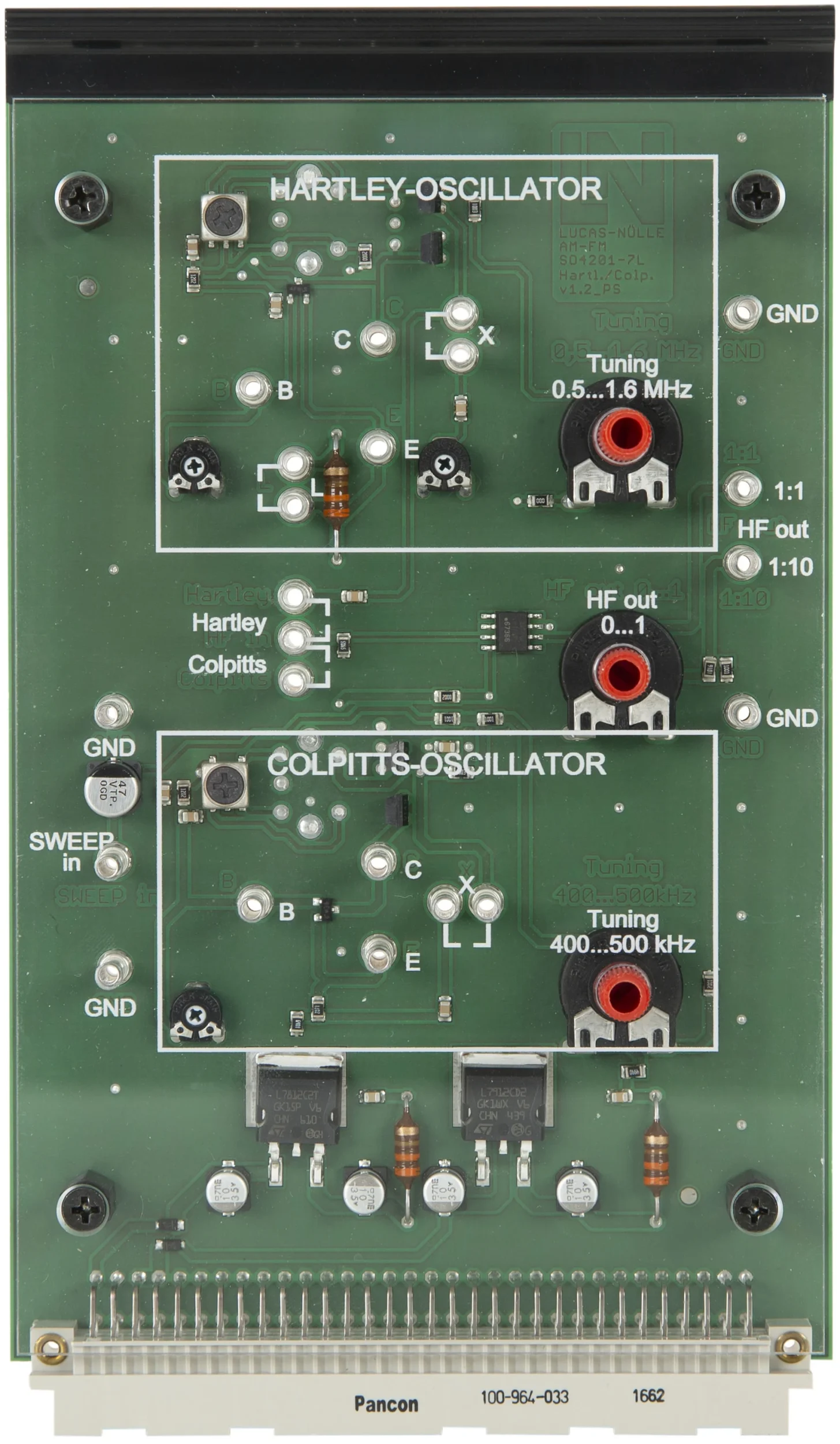
- Oscillator experiment card
- Automatic control loops
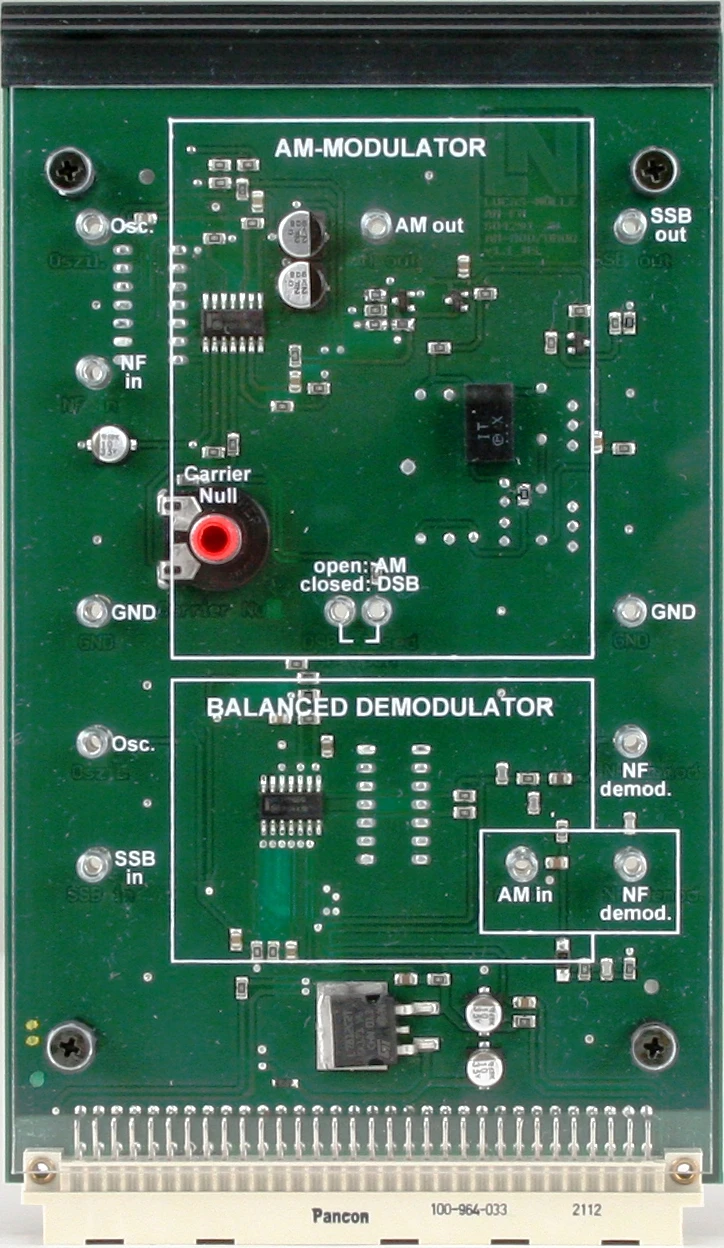
- Modulator/demodulator card
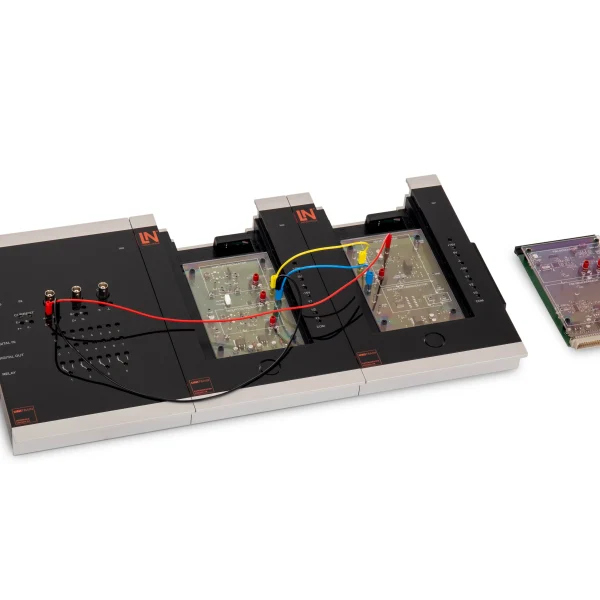
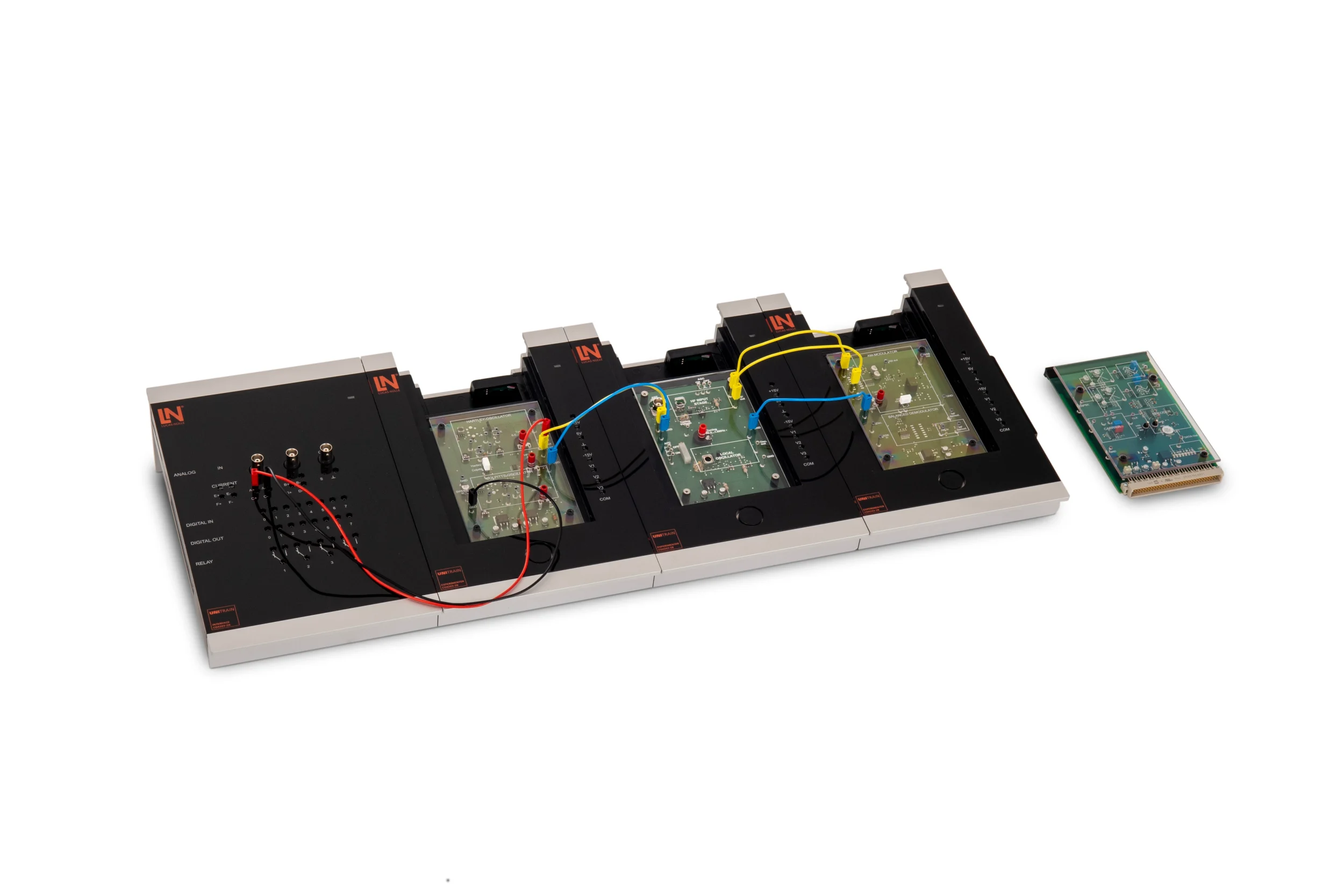
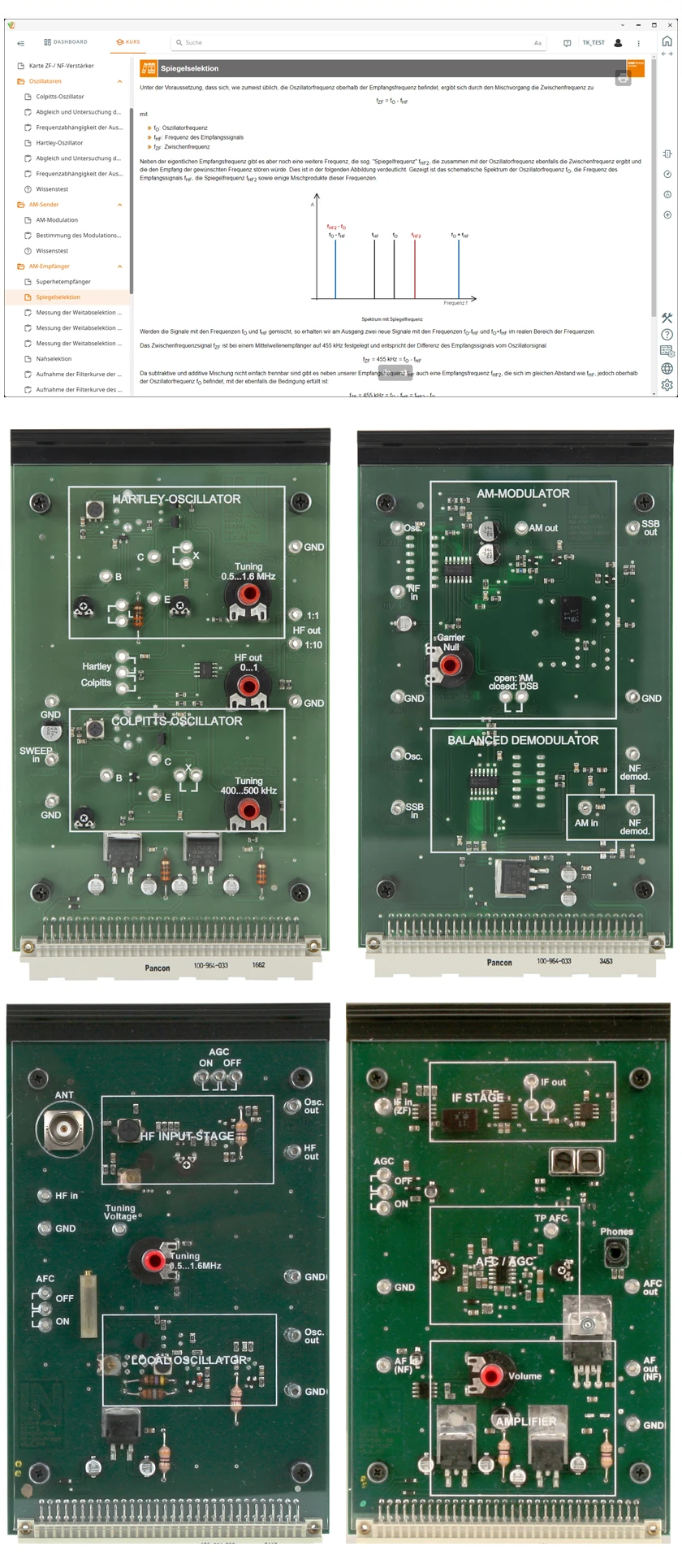
Optimize your training in radio-frequency and receiver technology. With the UniTrain system “Transmitter and receiver technology,” you analyze the design and operation of complete AM transmitter stages and superheterodyne receivers in the medium-wave band. The system teaches the superheterodyne principle through down-conversion to a fixed intermediate frequency. You build circuits for image rejection, IF amplification and automatic control. Measure modulation depths and frequency deviations, and analyze automatic control loops such as AGC and AFC. Ideal for engineers and technicians who want to develop an in-depth understanding of communications engineering.
| Course | |
| CO4204-9N | Course Telecommunications 9: AM transmission and receiving technology |
| Accessories | |
| CO4203-2A | UniTrain Interface mit virtuellen Instrumenten (Basis VI) |
| CO4203-2J | UniTrain measurement accessories, shunts and connection cables |
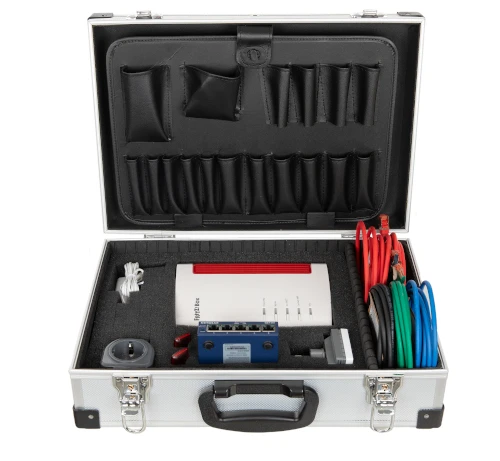
| CO4203-2Y | UniTrain storage case for one UniTrain system |
| CO4203-2B | UniTrain Experimenter |
Learning Content in Detail
Aligning oscillator circuits
Building an AM transmitter
Measuring image rejection
Determining adjacent-channel selectivity
Evaluating superheterodyne receivers
Determine image frequencies and measure far-off and adjacent-channel selectivity at the IF amplifier.
Automatic control loops
Aligning a medium-wave superhet receiver
Comparing receiver systems
Features & Applications
- Building an AM transmitter — Couple signals, determine modulation depths and evaluate the output spectrum.
- Oscillator experiment card — Provides tunable RF carrier signals from 400 to 1605 kHz for the modulator and the receiver mixer stage.
- Automatic control loops — Examine AGC for level stabilization and AFC for compensating oscillator drift.
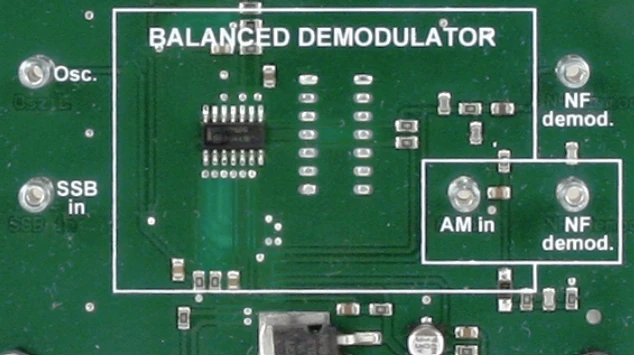
- Modulator/demodulator card — Multiplies the carrier and modulating signals, switches between DSB and SSB and serves as the first mixer stage.
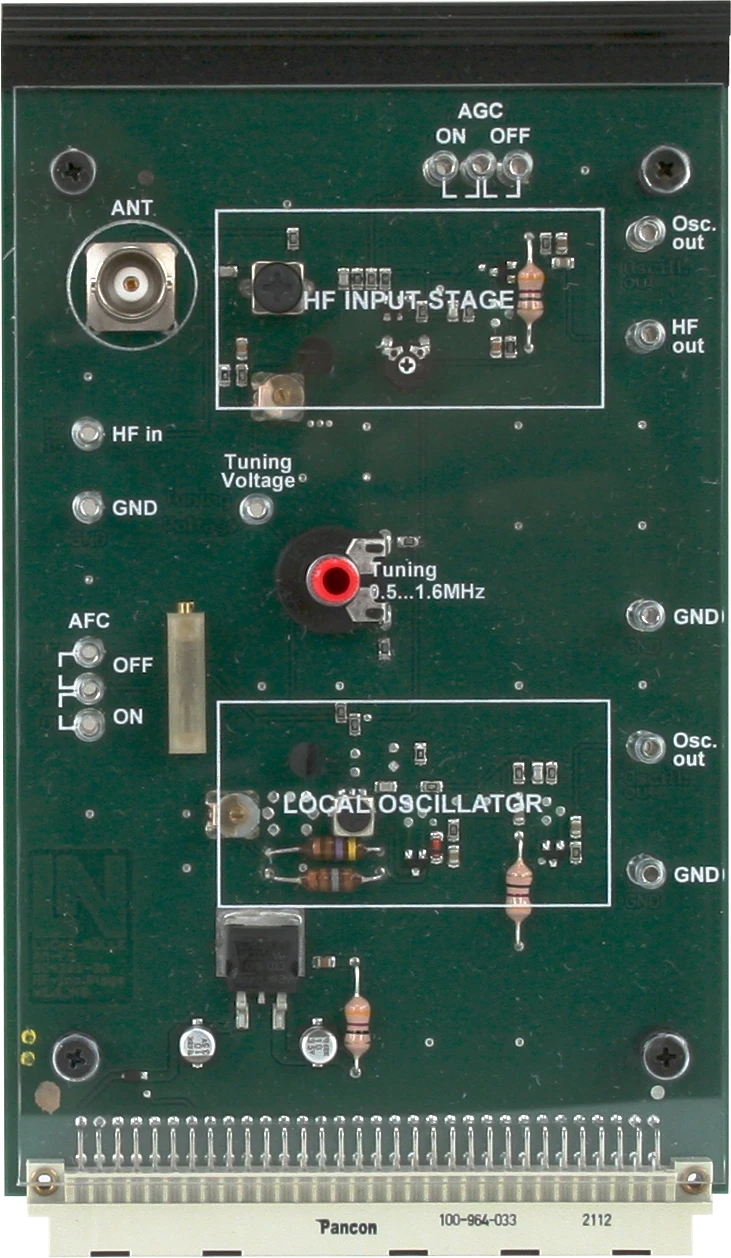
- AM input stage card — Contains the antenna input, a tuned RF pre-stage and a local oscillator for driving the mixer.
- Medium-wave AM single-conversion superhet — Combine the mixer and the IF and AF amplifiers to form a radio receiver with complete alignment.
- AM demodulation & envelopes — Test signal reconstruction and analyze the influence of the RC time constant.
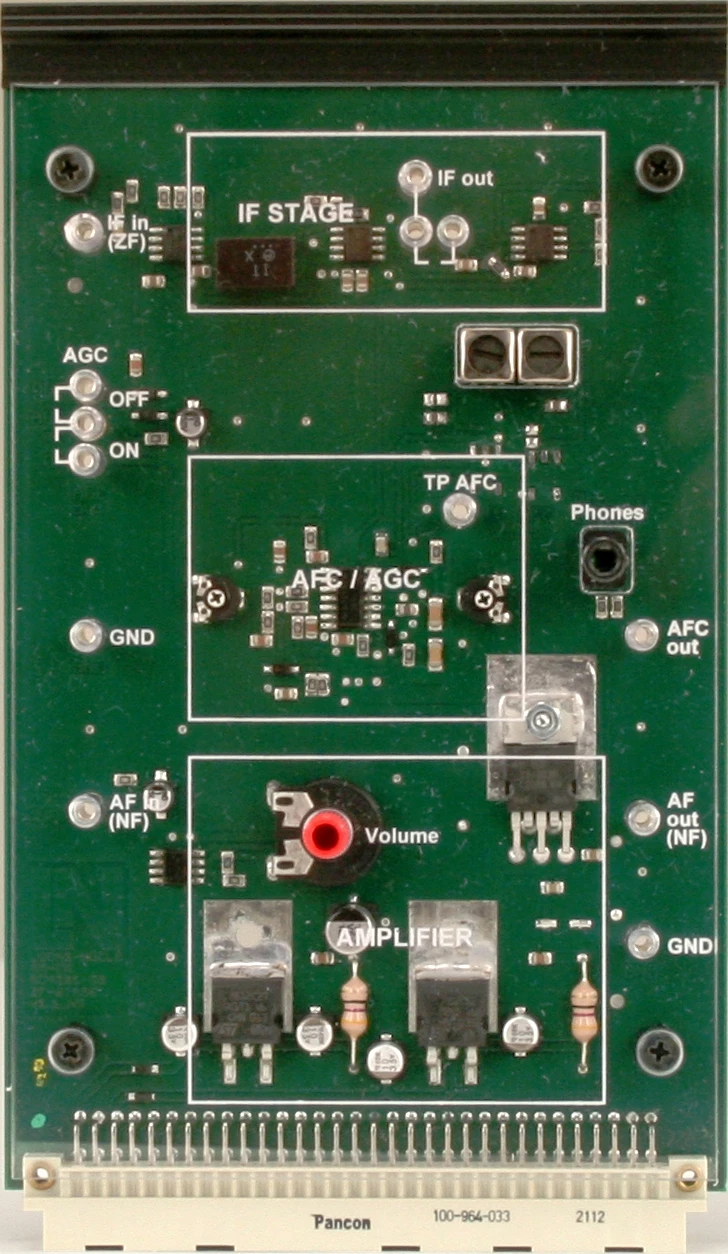
- IF and AF amplifiers — Amplifies the 455 kHz signal and contains AGC/AFC control circuits as well as an output amplifier for headphones.
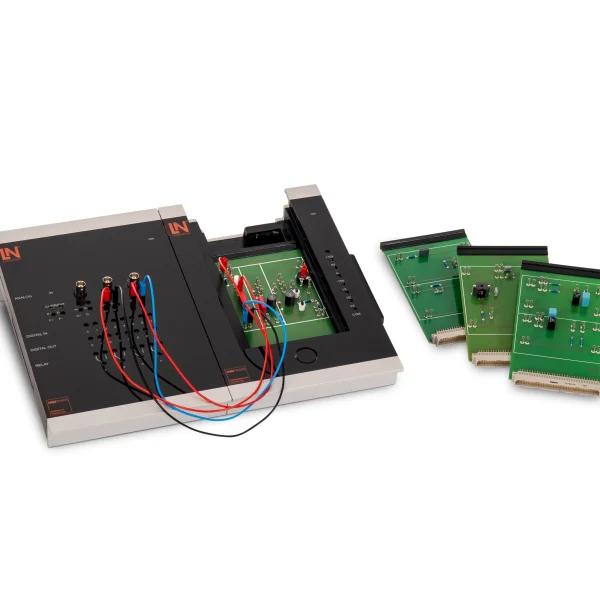
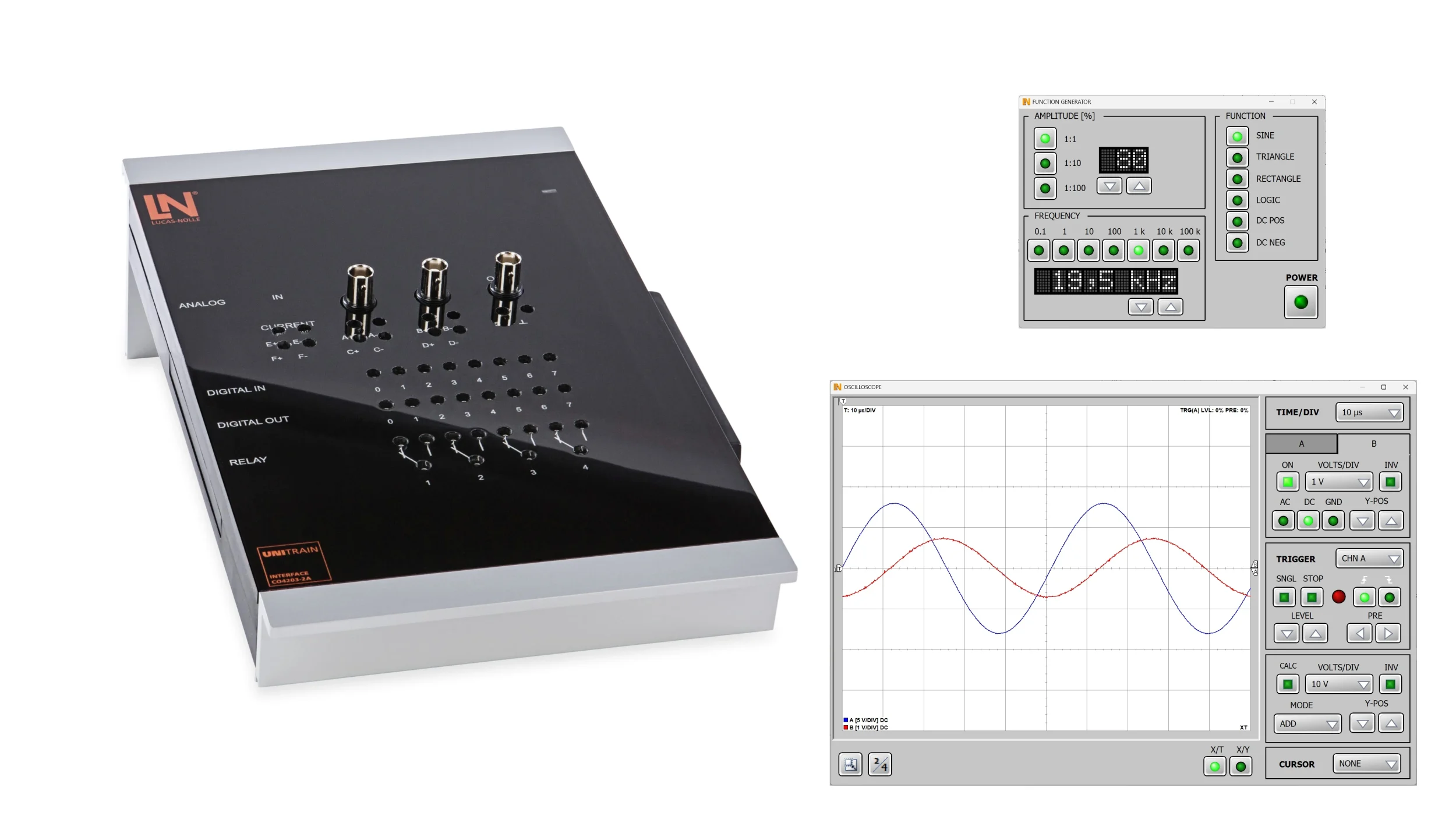
- UniTrain interface — Central control unit that serves as a compact laboratory device with integrated instruments.
- 2/4-channel oscilloscope — Measures envelopes, phase jumps and modulation trapezoids precisely, with accurate timing and in real time.
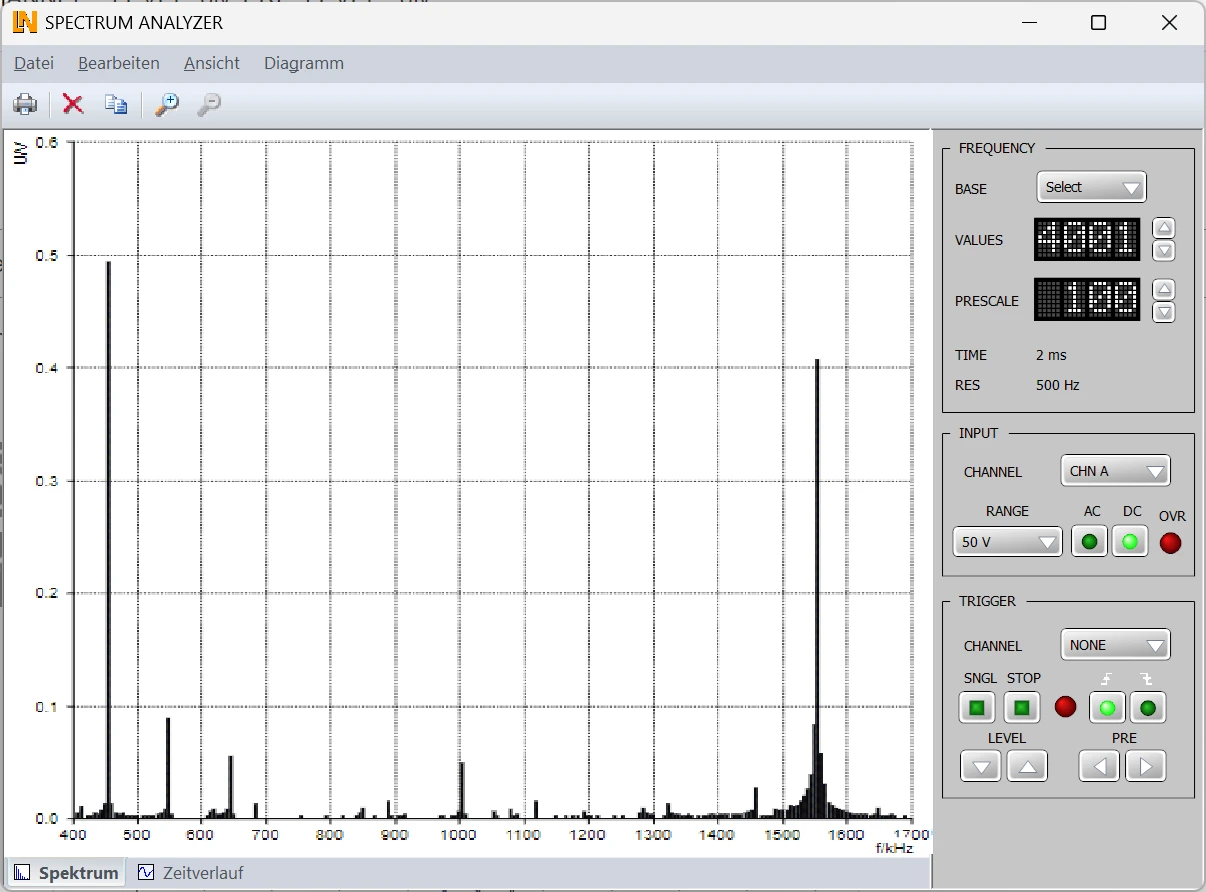
- Spectrum analyzer — Visualizes frequency spectra, image frequencies and adjacent-channel selectivity in the frequency domain.
- Function generator — Generates sine and square-wave signals to feed the modulator and test the transmission.

From Knowledge Comes Capability.
You guide the learning
Where theory and practice go hand in hand.
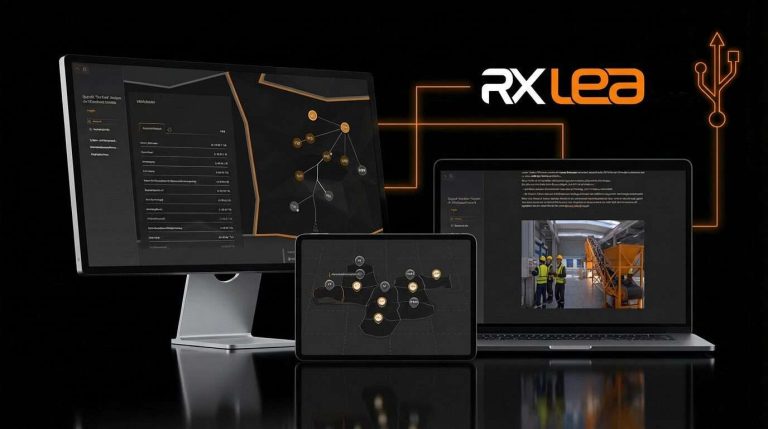
RXLea brings a new way of learning: project-based, hands-on and clearly structured. Learners solve real-world tasks, while instructors save time on preparation. Interactive modules, smart analytics and real hardware create a modern, efficient learning world.
Hands-on and interactive
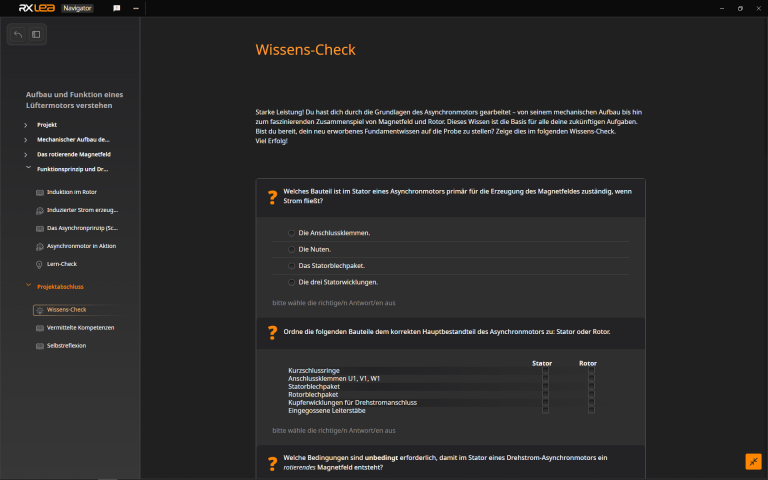
Animations, interactive tasks and realistic scenarios build a deep understanding. All content is organized into clear learning paths for focused, hands-on learning.
Digital support
3D assembly animations and digital instructions simplify complex procedures, reduce errors and help learners work more independently.
Visual support
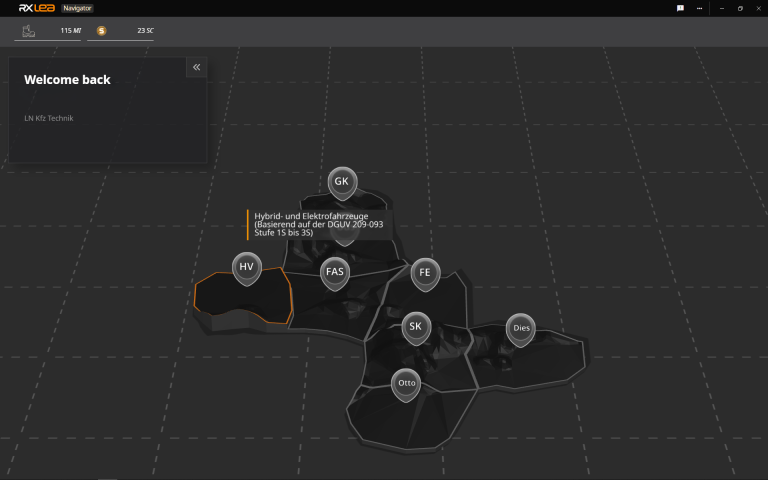
Overview graphics, screenshots and sample animations make the learning world transparent. Photos from the learning packages are also available, including country-specific versions where needed.

Stay ahead in
technical training.
Get the latest training systems, product launches and educational insights, delivered directly to your inbox.