


Optical Fibers for wavelength 1300 nm
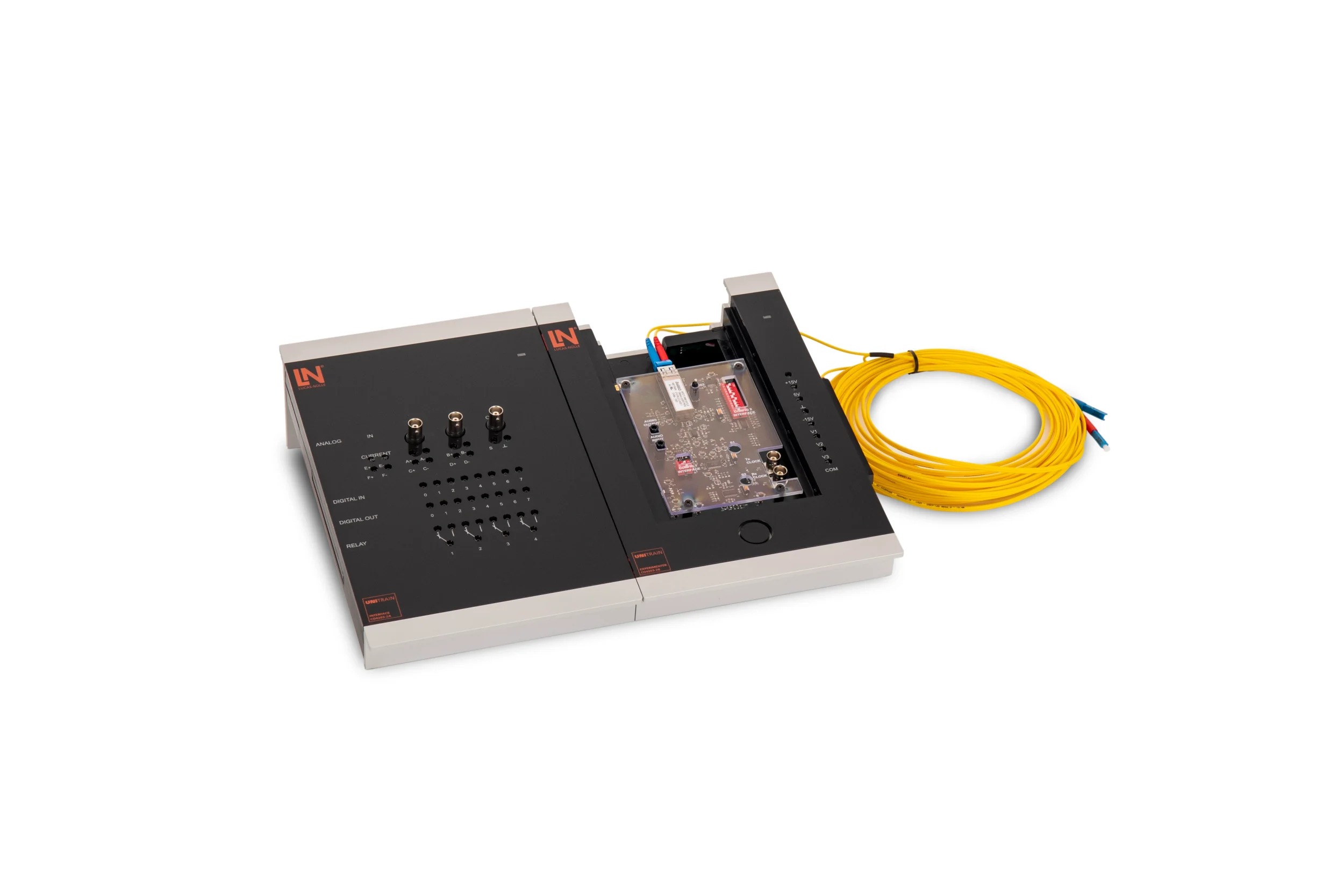
UniTrain course on fiber-optic technology at 1300 nm: students build links with OS2 single-mode fiber and an SFP transceiver and measure attenuation, bending radius, dispersion and bandwidth.
- Determining single-mode properties
- Complying with laser safety requirements
- Analyzing transceiver signals
- Determining channel bandwidth
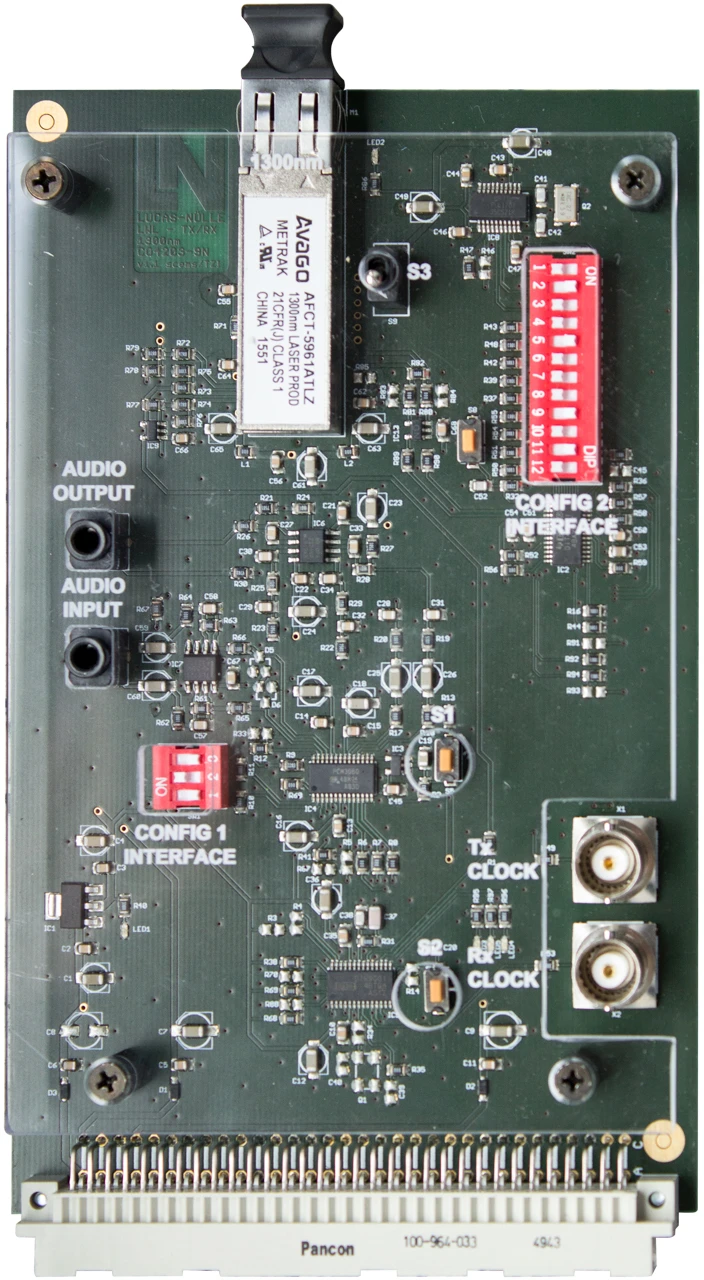
- 1300 nm Transmitter/Receiver experiment card
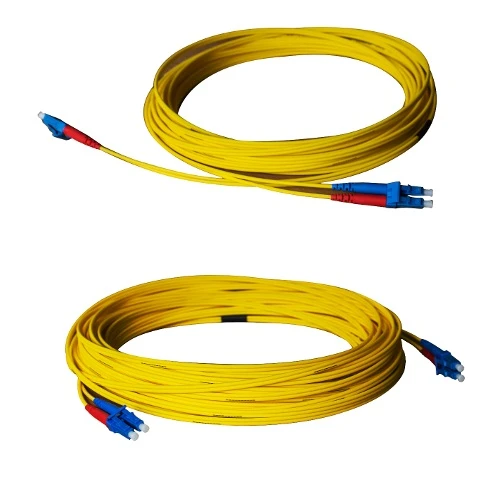
- OS2 single-mode patch cables, 10 m and 20 m
- Integrated high-speed measurement technology
- Patch cables with LC duplex connectors
High-speed networks operate in the 1300 nm window on single-mode fiber. This UniTrain course brings this technology to the lab bench. Students control the SFP transceiver module, measure the electrical signals and the system clock and apply the safety rules for invisible laser radiation. On OS2 patch cables 10 m and 20 m long, they determine attenuation, bending radius and pulse dispersion. Using DIP switches, they activate various PCM codecs and sampling rates and determine how these change the bandwidth and dynamic range of the link. Finally, using de-emphasis filters, they investigate how the frequency response and signal-to-noise ratio can be improved in speech and music transmission.
| Course | |
| CO4205-4F | Course: Optical fibres for wavelength 1300 nm |
| Accessories | |
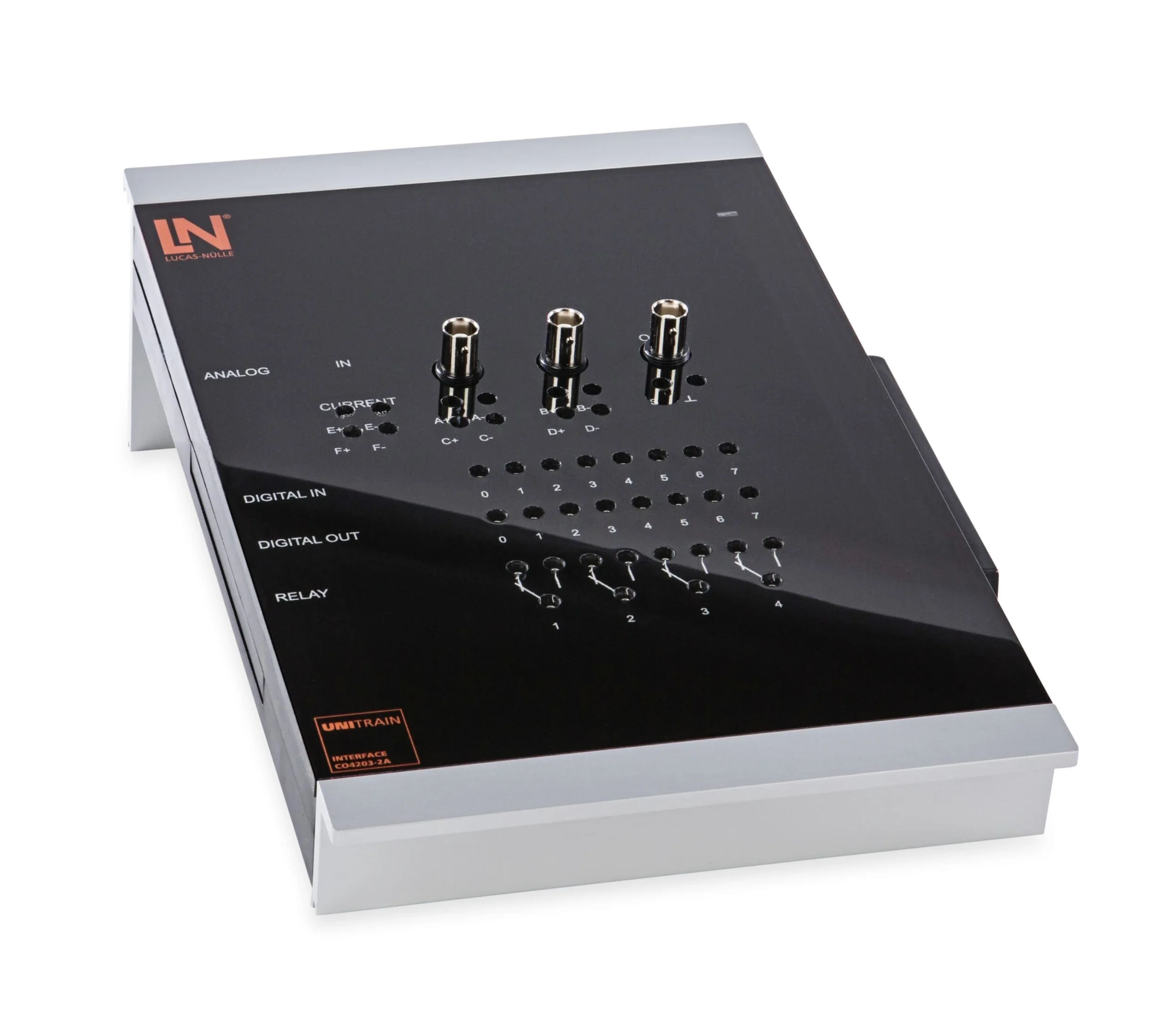
| CO4203-2A | UniTrain Interface mit virtuellen Instrumenten (Basis VI) |
| CO4203-2J | UniTrain measurement accessories, shunts and connection cables |
| CO4203-2Y | UniTrain storage case for one UniTrain system |
| CO4203-2B | UniTrain Experimenter |
Learning Content in Detail
Determining single-mode properties
Complying with laser safety requirements
Analyzing transceiver signals
Determining channel bandwidth
Evaluating audio codecs
Determining the bandwidth of the link
Features & Applications
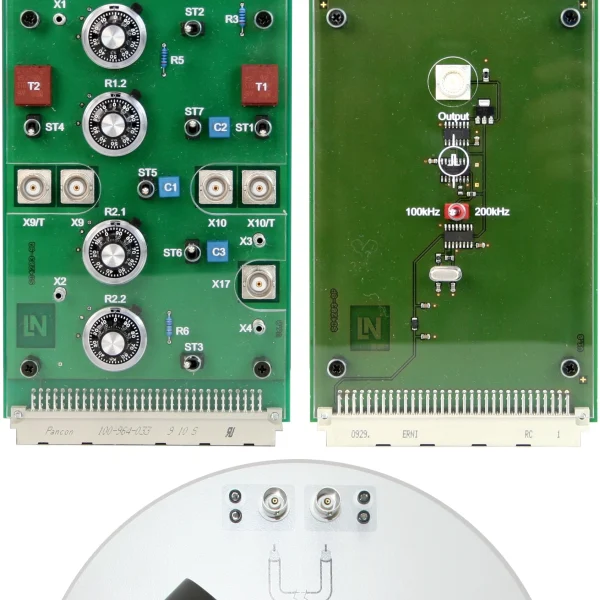
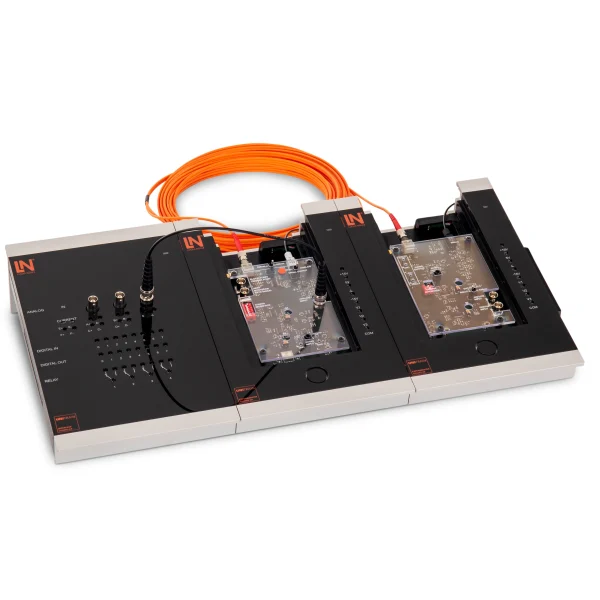
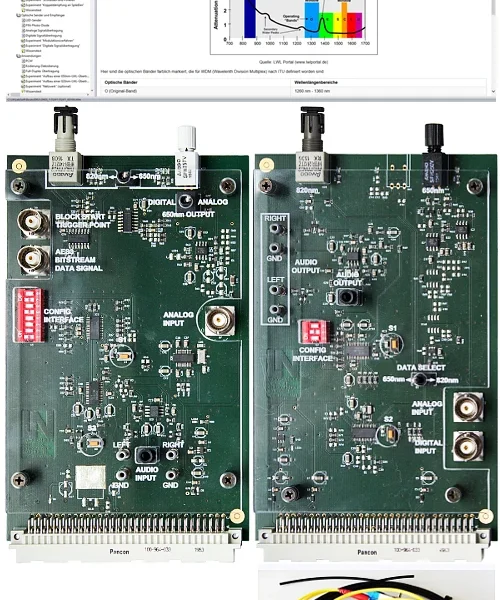
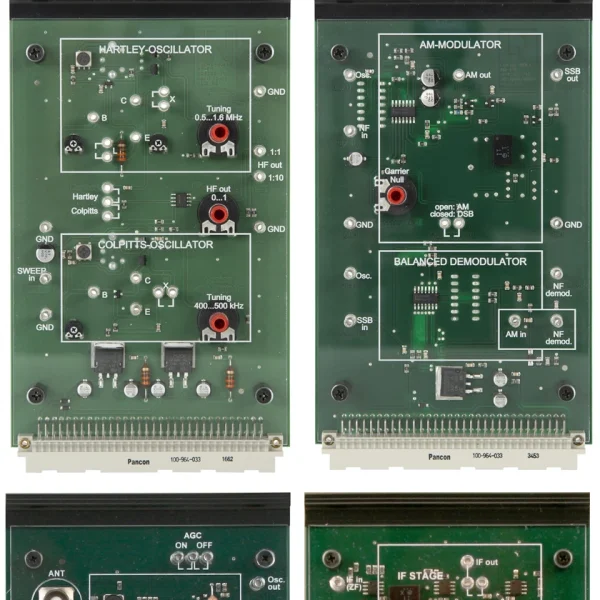
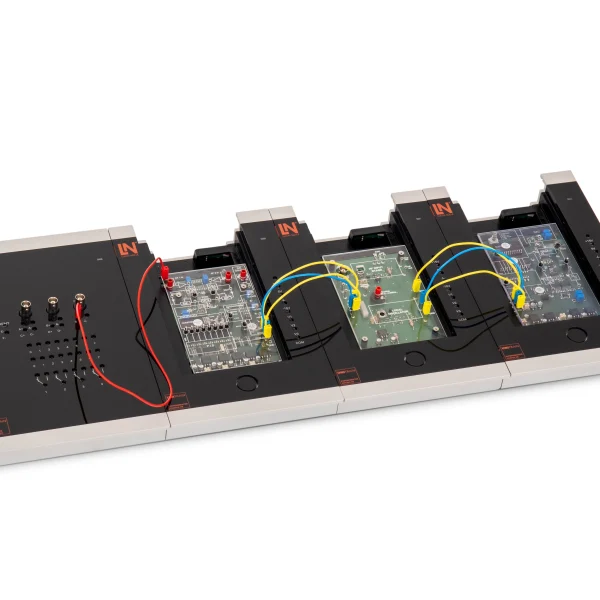
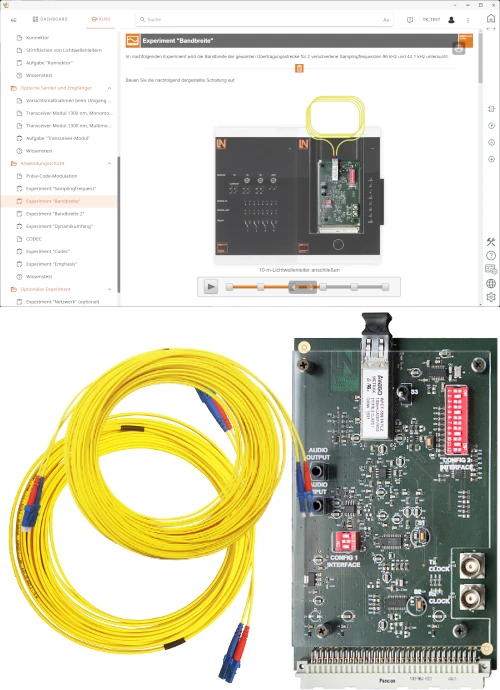
- 1300 nm Transmitter/Receiver experiment card — Carries the SFP transceiver module and allows a transmission link to be set up in the 1300 nm infrared range.
- OS2 single-mode patch cables, 10 m and 20 m — Used for measuring attenuation, dispersion, bending radii and transmission bandwidth on real single-mode fibers.
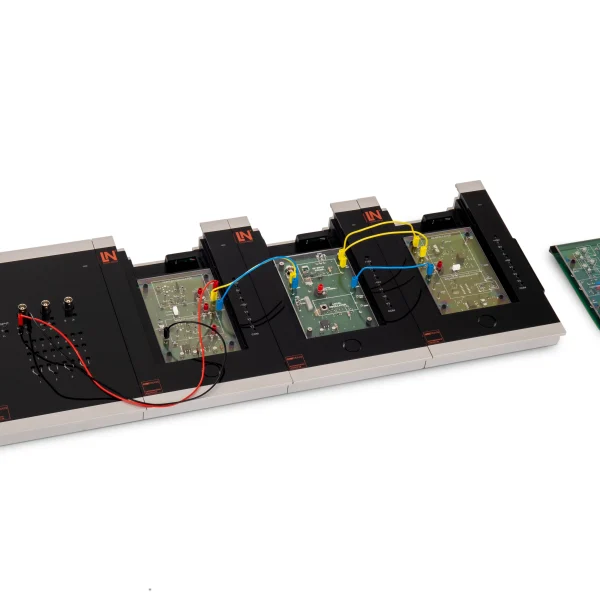
- Integrated high-speed measurement technology — The measurement interface operates at a sampling rate of 100 MSample/s and controls all instruments and voltage sources directly from the PC.
- Patch cables with LC duplex connectors — Connect the transceiver module to the OS2 test links and ensure defined optical coupling.
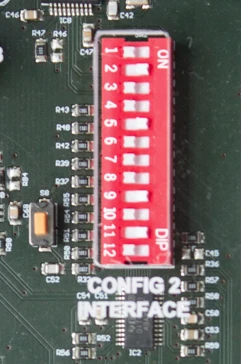
- DIP switches for codecs and sampling rates — Students activate various PCM codecs and sampling rates directly on the card and immediately check how the signal quality changes.
- LabSoft experiment platform — Guides students through the course, provides the instruments for controlling the interface and documents learning progress.
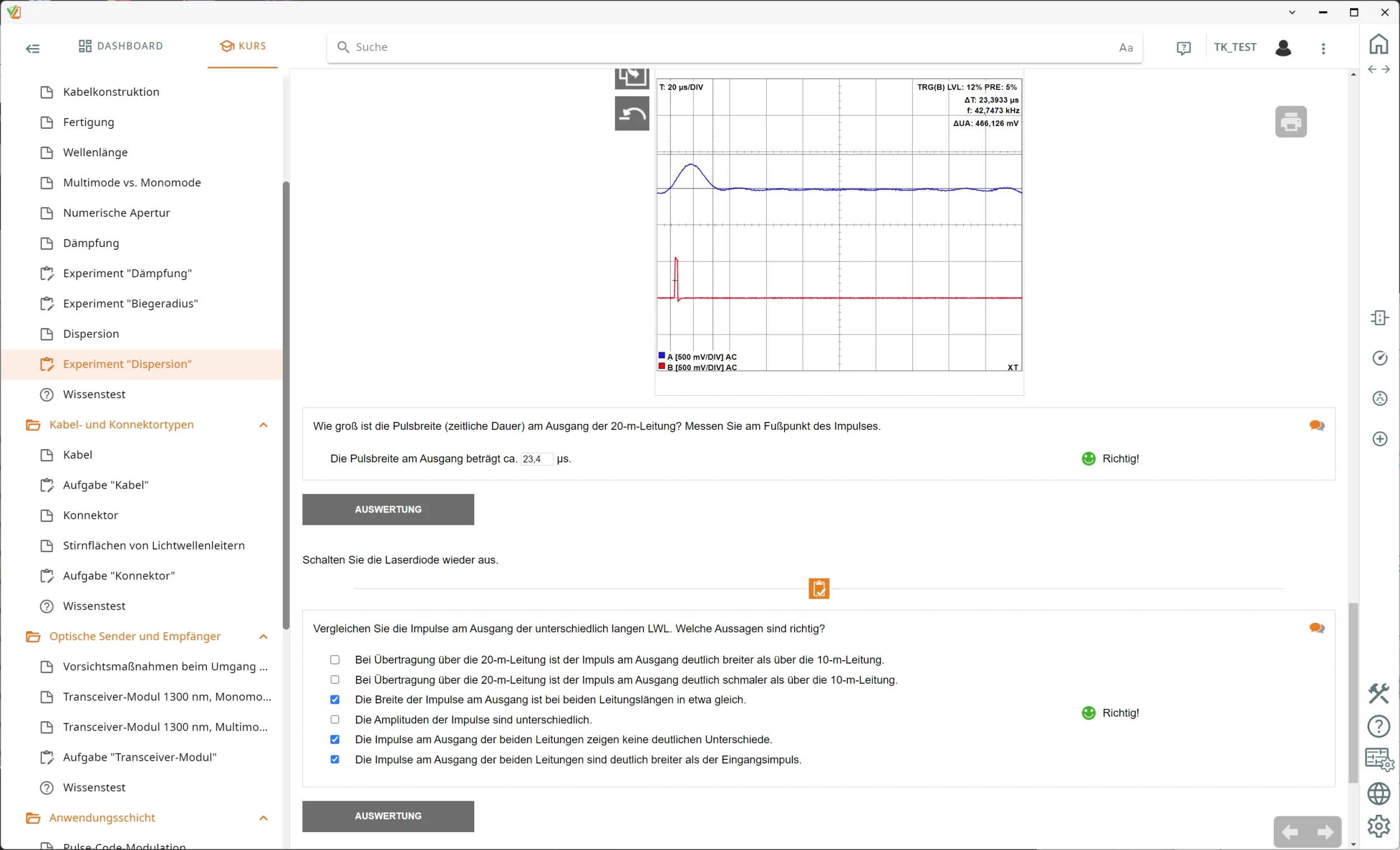
- 2/4-channel oscilloscope — Displays modulation and received signals in the time domain, measures signal propagation times and pulse broadening, and makes attenuation visible.
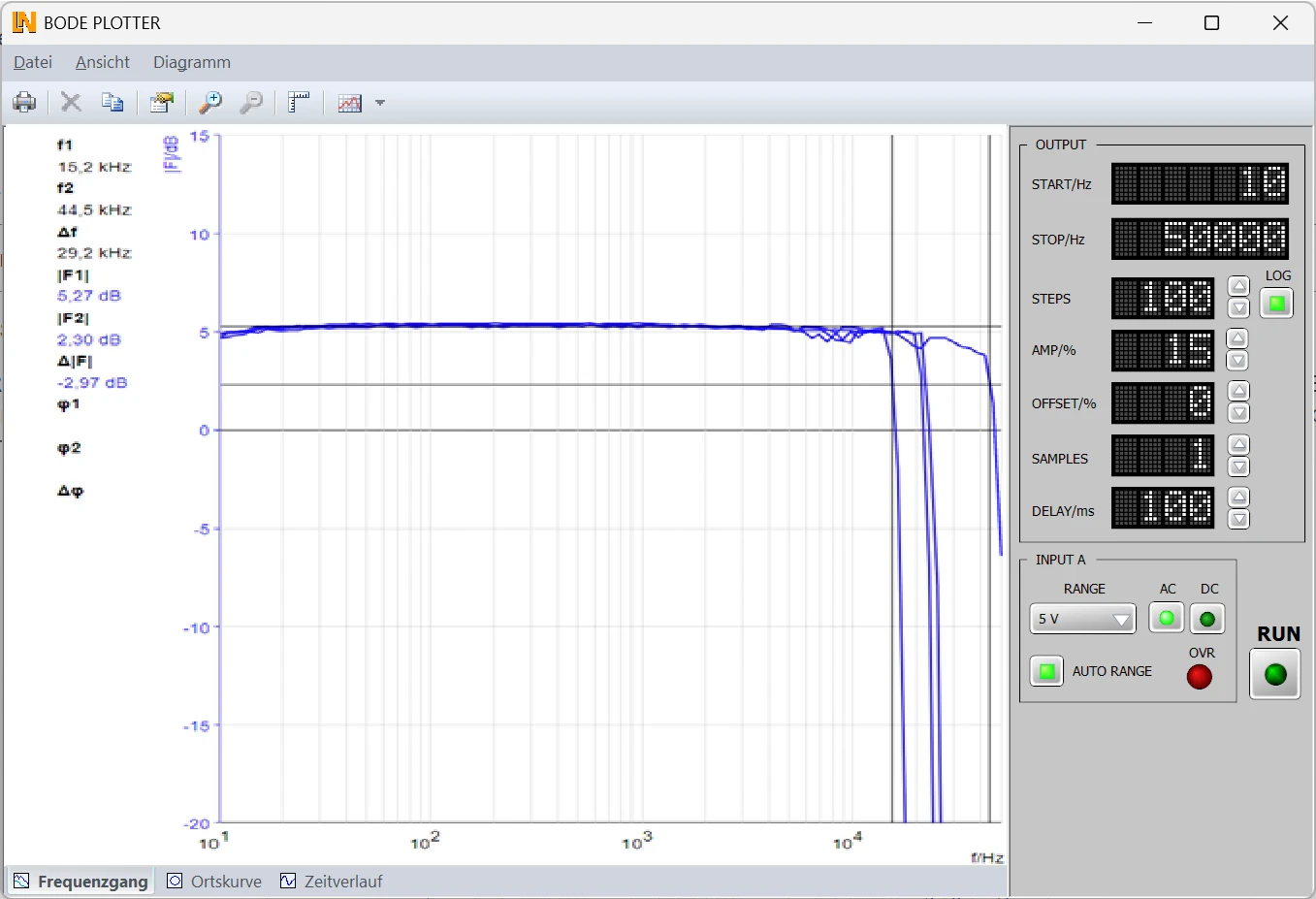
- Bode plotter — Automatically records frequency and phase response. The cursor function allows the cutoff frequencies of the optical transmission channel to be determined precisely.
- Function generator — Generates sine, square-wave and triangular signals of variable frequency to drive the transmitter modules in analog and digital experiments.
- Measuring the transmission properties of OS2 single-mode fibers — Students determine attenuation, bending radius and pulse dispersion on OS2 single-mode links of different lengths at 1300 nm.
- Trying out 1300 nm laser transceivers and laser safety — Students control the SFP transceiver module, analyze the electrical signals and apply the safety measures for handling laser radiation.
- Analyzing PCM channels, bandwidth and dynamic range — Students determine how the sampling frequency, cutoff frequencies and codec settings affect the bandwidth and dynamic range of the link.
- Testing signal optimization with pre-emphasis and de-emphasis — Students investigate how de-emphasis filters change the frequency response and signal-to-noise ratio in digital speech and music transmission over glass fiber.

From Knowledge Comes Capability.
You guide the learning
Where theory and practice go hand in hand.
RXLea brings a new way of learning: project-based, hands-on and clearly structured. Learners solve real-world tasks, while instructors save time on preparation. Interactive modules, smart analytics and real hardware create a modern, efficient learning world.
Hands-on and interactive
Animations, interactive tasks and realistic scenarios build a deep understanding. All content is organized into clear learning paths for focused, hands-on learning.
Digital support
3D assembly animations and digital instructions simplify complex procedures, reduce errors and help learners work more independently.
Visual support
Overview graphics, screenshots and sample animations make the learning world transparent. Photos from the learning packages are also available, including country-specific versions where needed.




Stay ahead in
technical training.
Get the latest training systems, product launches and educational insights, delivered directly to your inbox.