


Radar Training System
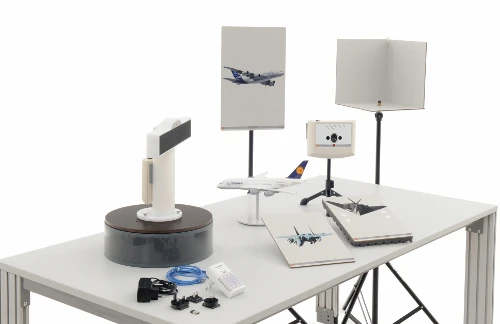
The Radar Trainer replicates primary and secondary radar using 50 kHz ultrasound. Students measure propagation times and radar cross-sections, evaluate transponder interrogations and track moving targets on the radar display.
- Verifying the radar equation
- Characterizing radar cross-sections
- Analyzing propagation effects
- Evaluating resolution and noise
- Ultrasonic analogy without radiation exposure
- Measuring radar cross-sections and reflection profiles
- Testing secondary radar with a transponder in Mode A and C
- Target tracking with TWS and STT
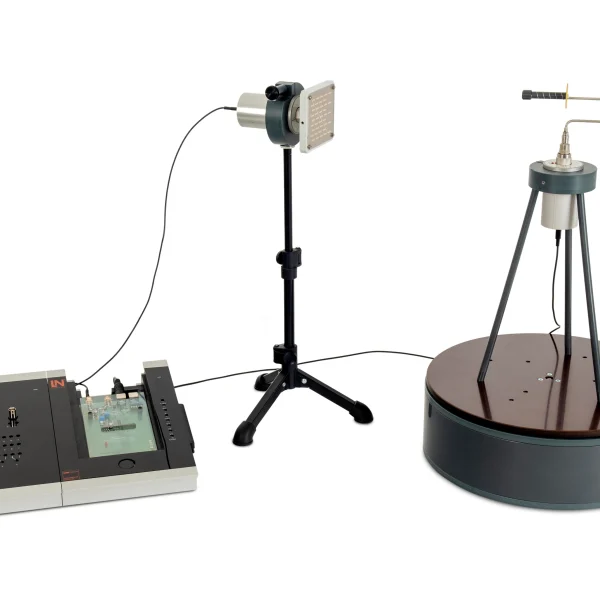
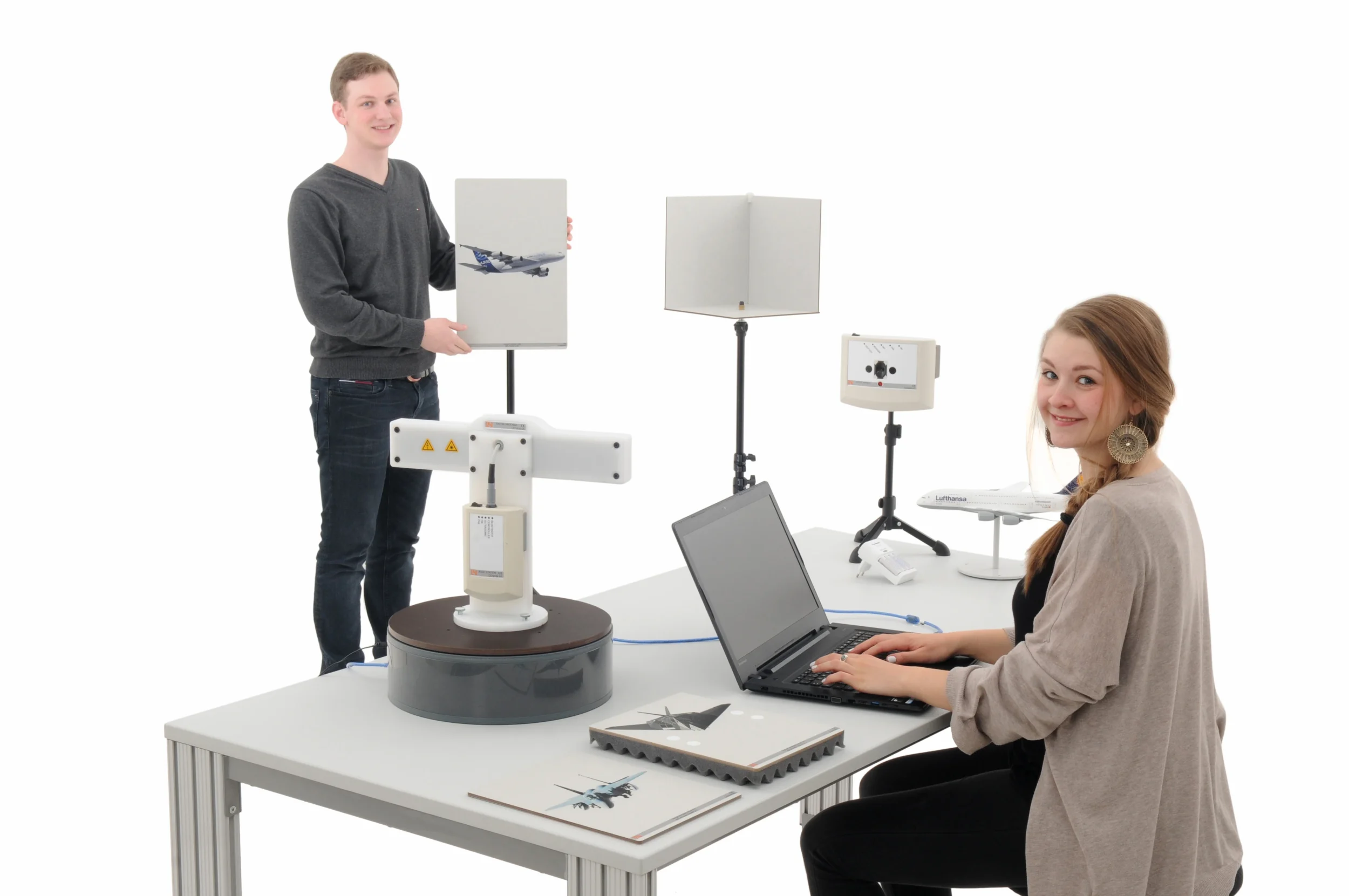
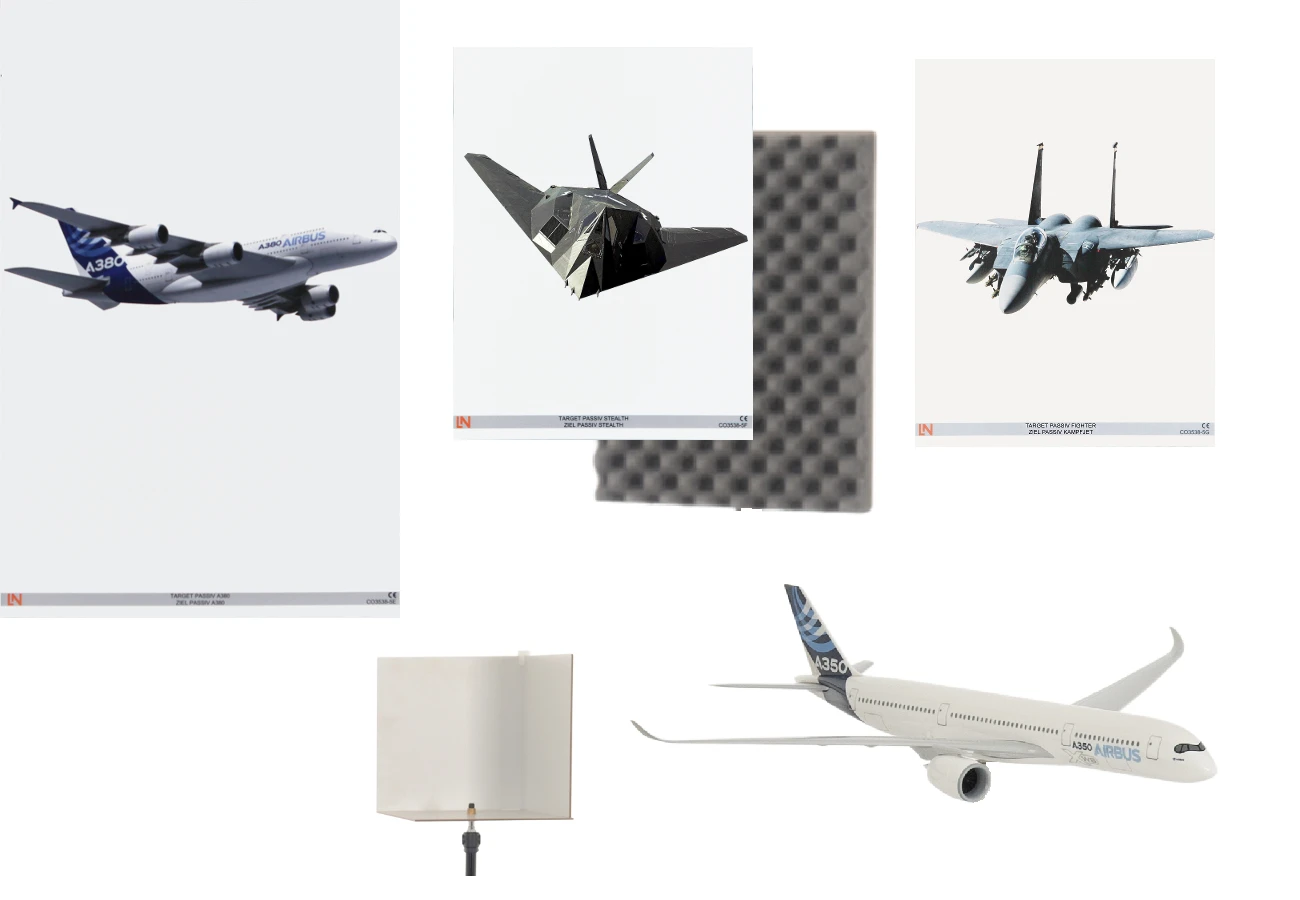
Radar experiments in the laboratory usually fail because of the transmission power required. The Radar Trainer gets around this with an ultrasonic analogy at 50 kHz: physiologically harmless, yet governed by the same physical laws as real EHF, SHF and UHF radars, so the findings can be transferred directly. On the stepper-motor-controlled turntable with 1 degree angular resolution, students record 360-degree reflection profiles of model targets, including an A380, a stealth aircraft, a fighter and a corner retroreflector. They determine distances by measuring propagation times, investigate multipath propagation, ground clutter and ghost targets, and interrogate the active transponder in Mode Alpha and Mode Charlie. In the Radar Control Center, they configure alpha-beta filters and track targets in TWS and STT mode.
| Base Product | |
| CO3538-6A | Radar-Trainer |
Learning Content in Detail
Verifying the radar equation
Characterizing radar cross-sections
Analyzing propagation effects
Evaluating resolution and noise
Testing secondary radar
Applying target tracking algorithms
Features & Applications
- Ultrasonic analogy without radiation exposure — The system works with 50 kHz ultrasound instead of radio-frequency radiation. The physical findings can be transferred directly to real radar systems.
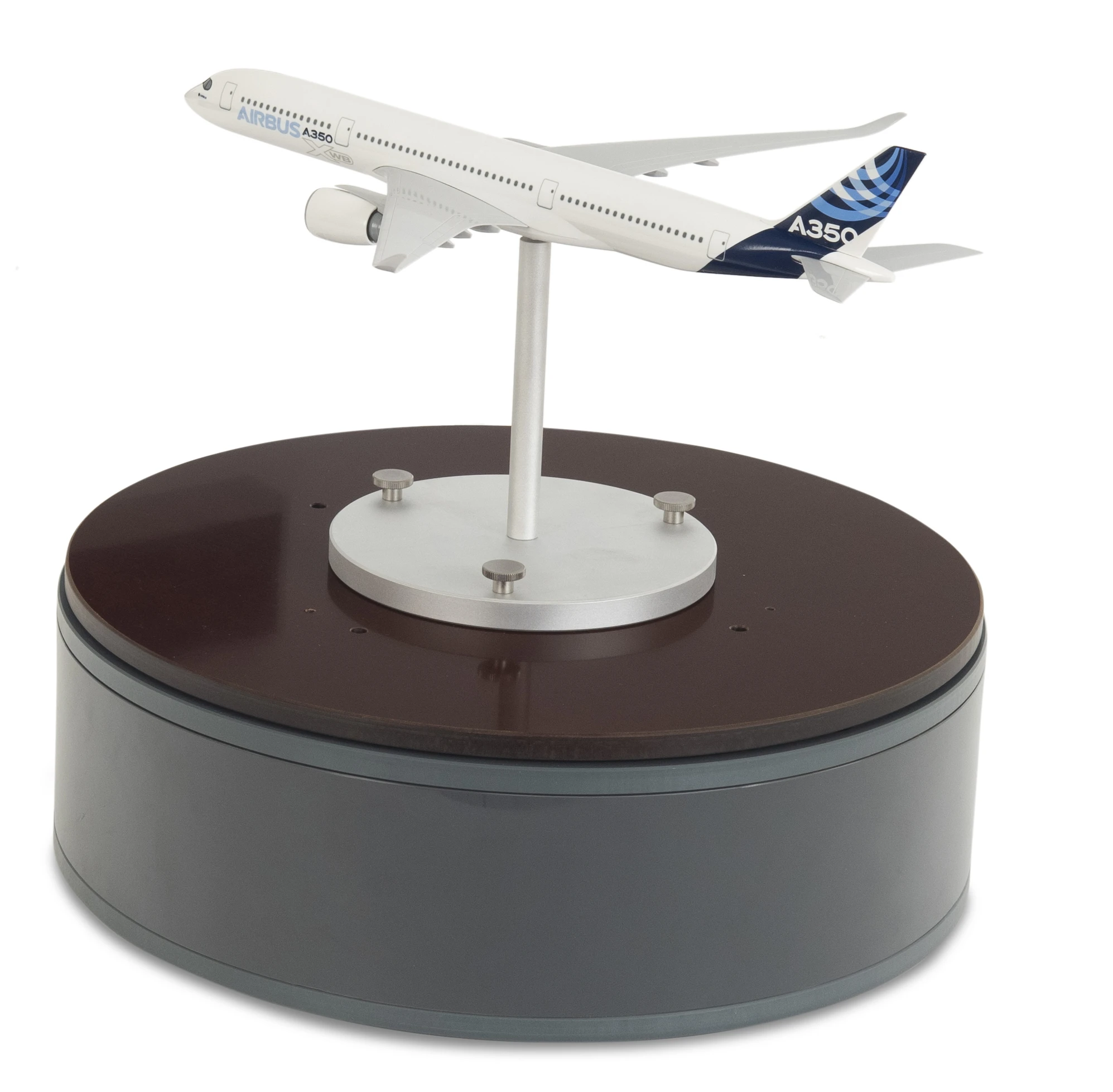
- Measuring radar cross-sections and reflection profiles — Students record the RCS profile of an aircraft model on the turntable and examine passive targets in the room with regard to radar cross-section, object size and stealth geometry.
- Testing secondary radar with a transponder in Mode A and C — Students evaluate identification codes and barometric altitude reports from active aircraft transponders in real time.
- Target tracking with TWS and STT — Students activate alpha-beta filters in the Radar Control Center, have the flight paths of moving targets calculated continuously and track individual objects in STT mode.
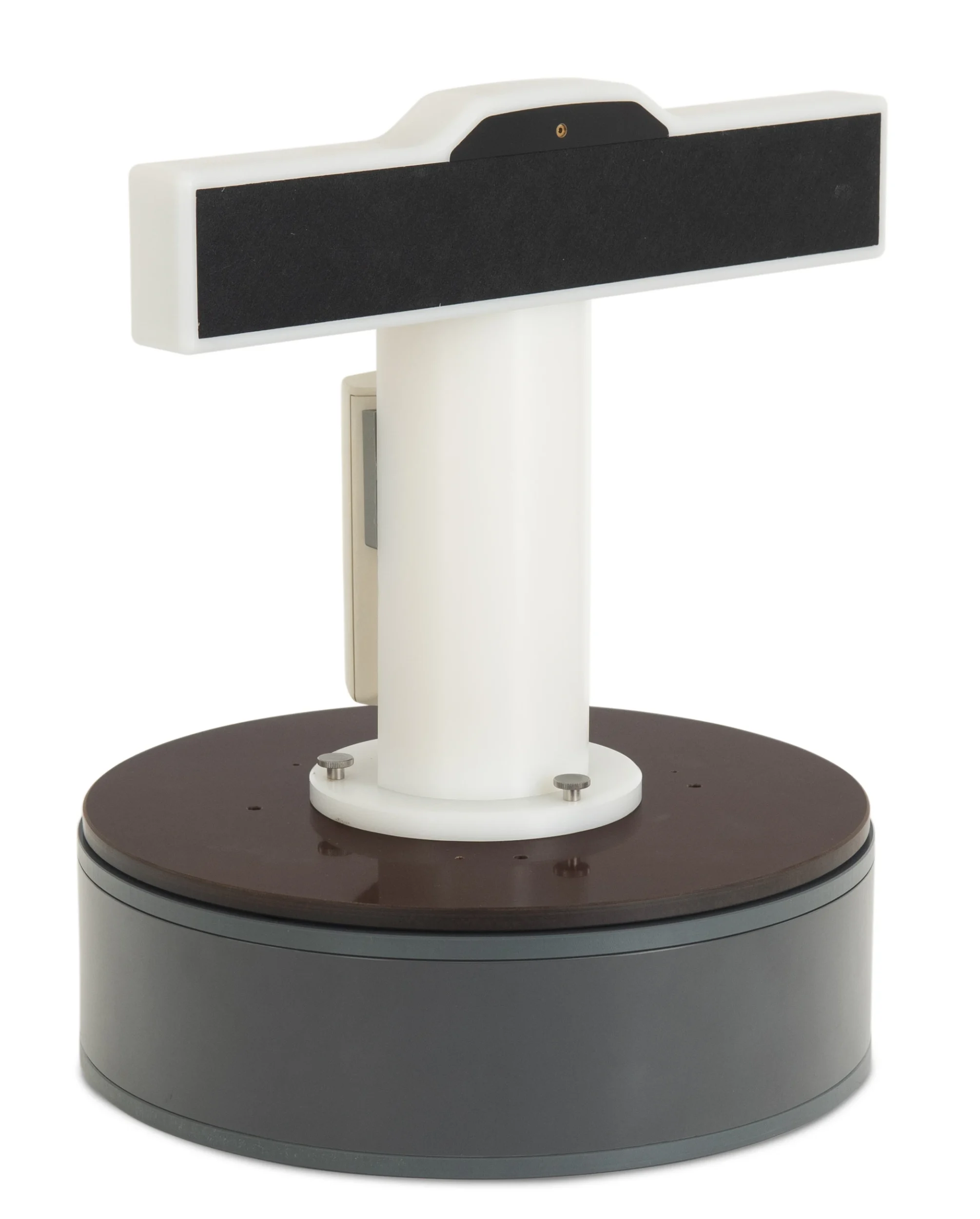
- Turntable with stepper motor and Bluetooth transmission — The backlash-free turntable positions with 1 degree angular resolution, and the antenna transmits its data via Bluetooth. This allows the 360-degree all-round scan to run without interruption.
- Analyzing propagation effects, clutter and ghost targets — Students investigate multipath propagation caused by walls, ground clutter and the attenuation behavior of absorbent materials and retroreflectors.
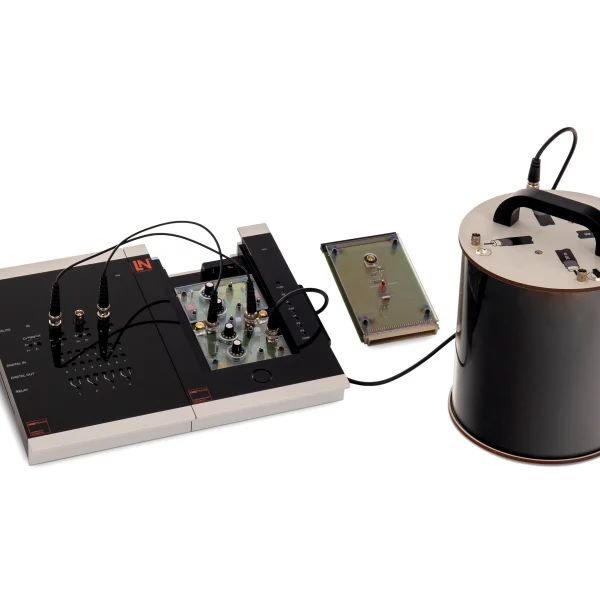
- Radar base station — Contains the central control ICs, the high-voltage drivers for the ultrasonic transducers and a Bluetooth module for wireless data transmission to the PC.
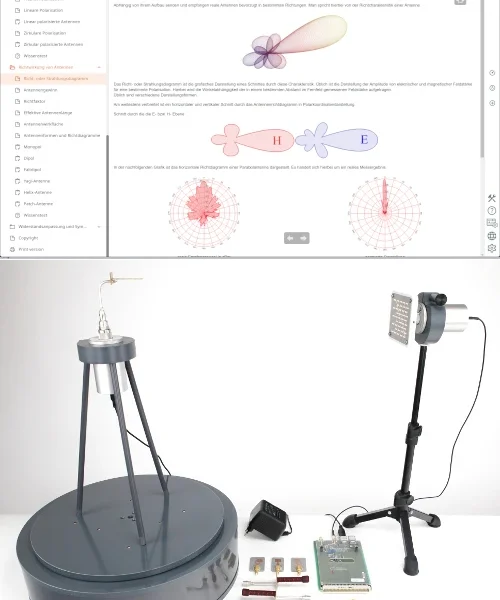
- Bar antenna with secondary radar submodule — Replicates a phased-array antenna and contains a laser pointer, ultrasonic transducers and infrared transmitter and receiver units.
- USB turntable with stepper motor — Provides a backlash-free drive with 1 degree angular resolution for azimuthal alignment and continuous all-round rotation.
- Active target as aircraft radio transponder — Simulates an aircraft transponder and, when interrogated, reports either the squawk code in Mode A or the barometric altitude in Mode C.
- Set of passive targets and model antennas — Contains reflectors in the shape of an A380, a stealth aircraft, a fighter and a 3D model, as well as a corner retroreflector, all mounted on stands.
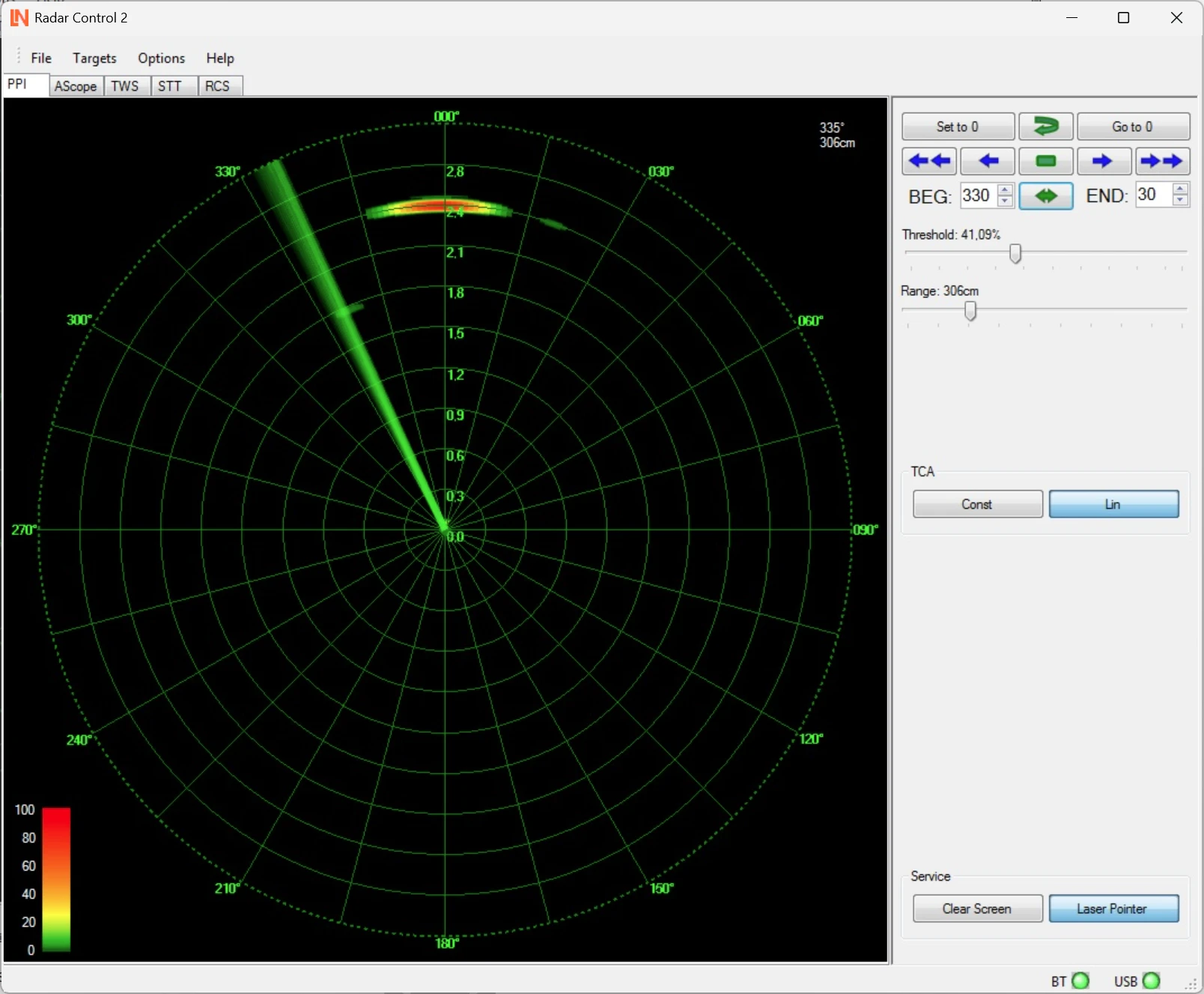
- Radar Control Center with plan position indicator — Displays the two-dimensional radar image with echo signals, sector boundaries and thresholds in polar coordinates and in real time.
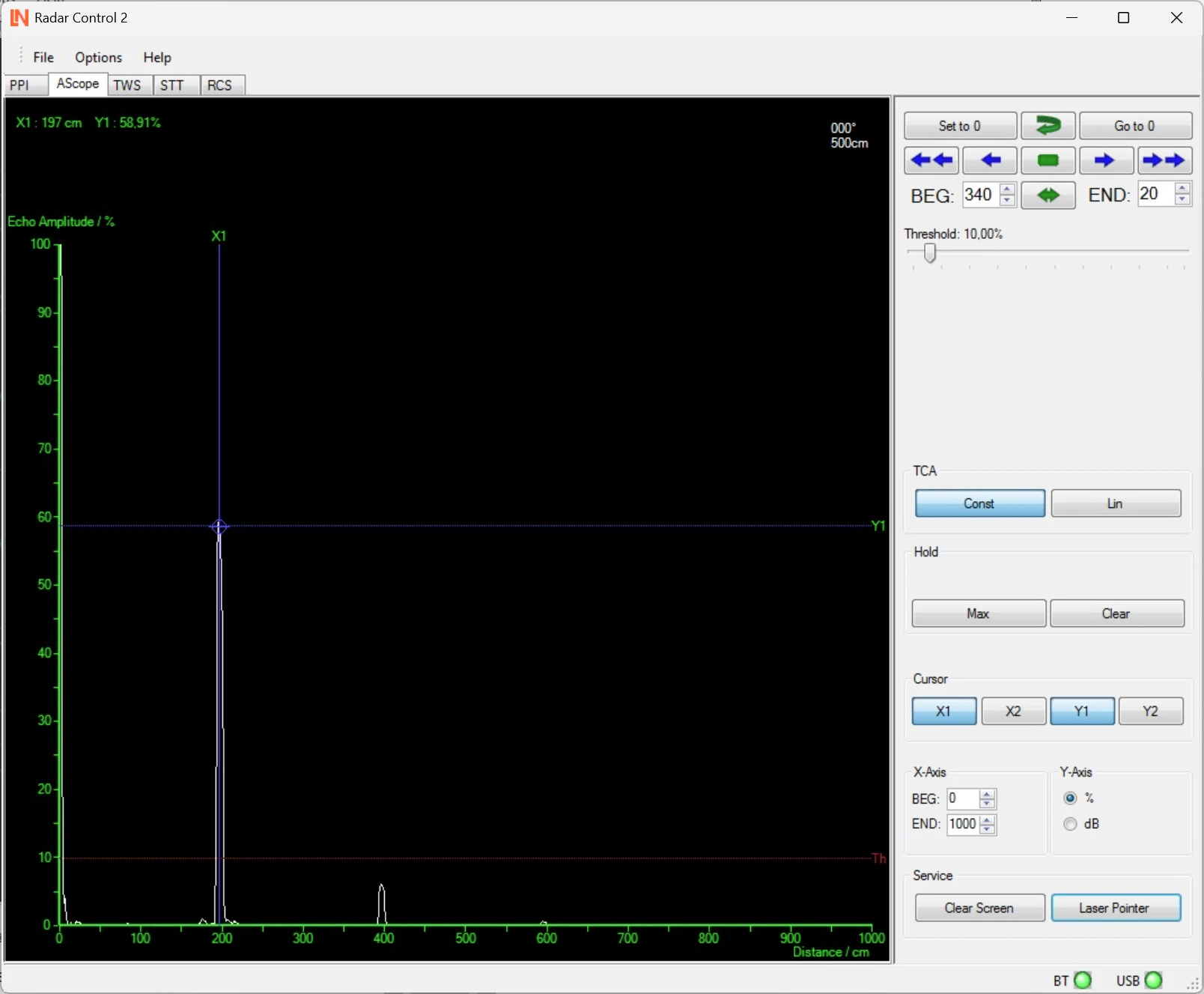
- Radar Control Center with A-scope — Shows the amplitude of the echo signals versus range and is used for propagation time analysis and threshold calibration.
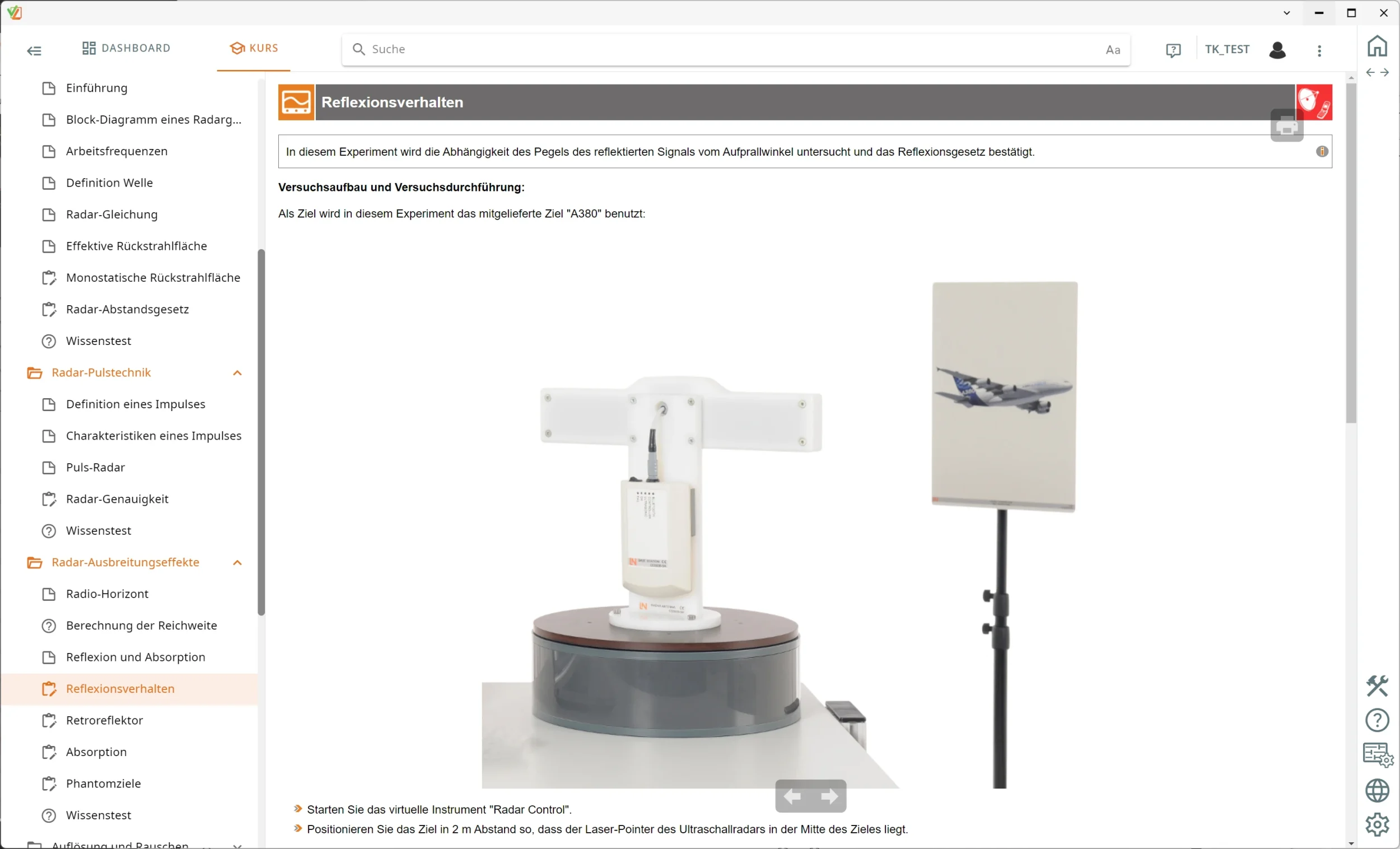
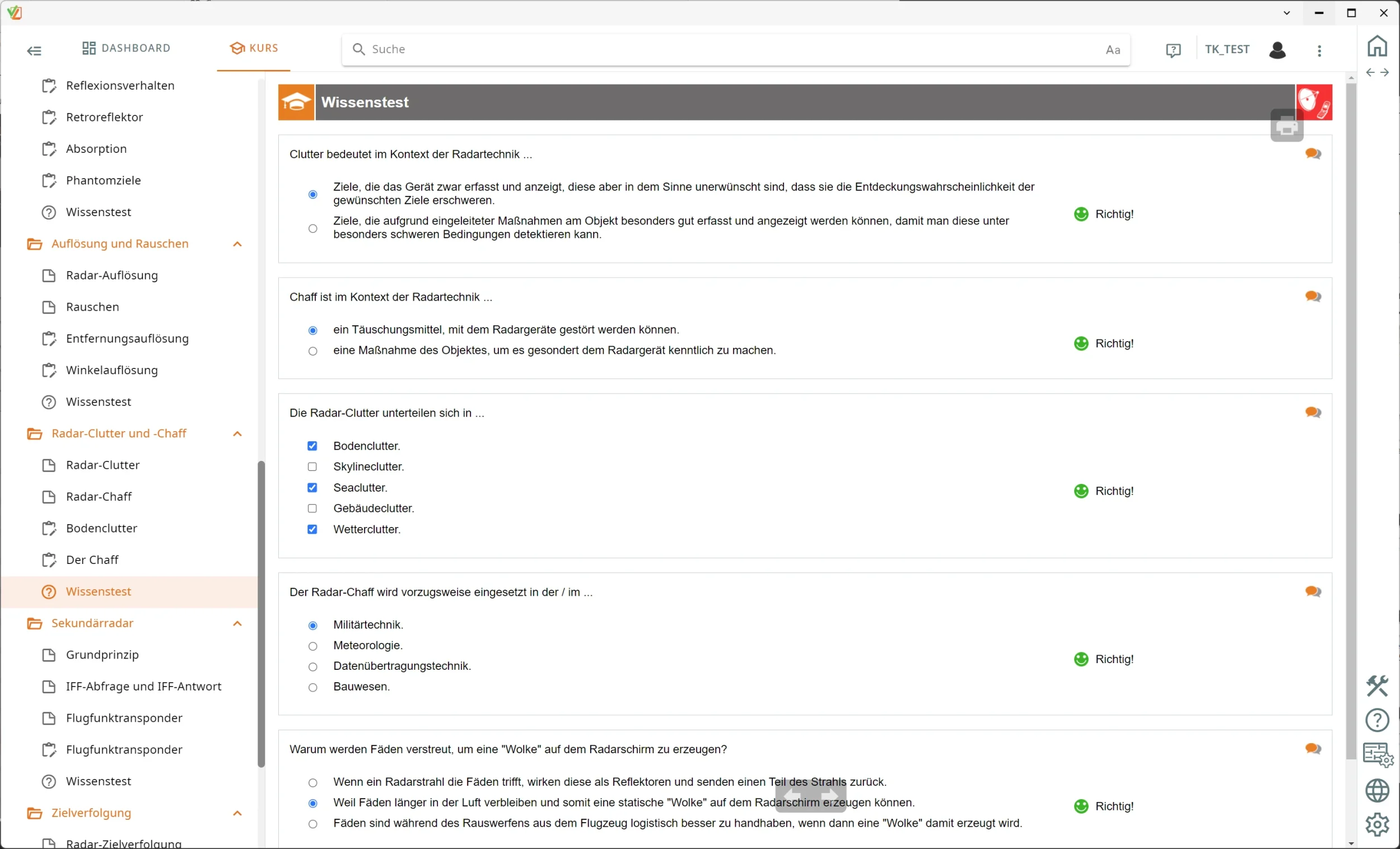
- LabSoft experiment platform with Interactive Lab Assistant — Guides learners through the course, teaches the fundamentals of radar, controls the experiment environment and checks learning progress by means of knowledge tests.

From Knowledge Comes Capability.
You guide the learning
Where theory and practice go hand in hand.
RXLea brings a new way of learning: project-based, hands-on and clearly structured. Learners solve real-world tasks, while instructors save time on preparation. Interactive modules, smart analytics and real hardware create a modern, efficient learning world.
Hands-on and interactive
Animations, interactive tasks and realistic scenarios build a deep understanding. All content is organized into clear learning paths for focused, hands-on learning.
Digital support
3D assembly animations and digital instructions simplify complex procedures, reduce errors and help learners work more independently.
Visual support
Overview graphics, screenshots and sample animations make the learning world transparent. Photos from the learning packages are also available, including country-specific versions where needed.




Stay ahead in
technical training.
Get the latest training systems, product launches and educational insights, delivered directly to your inbox.