


Control of a Coupled Two-Tank System
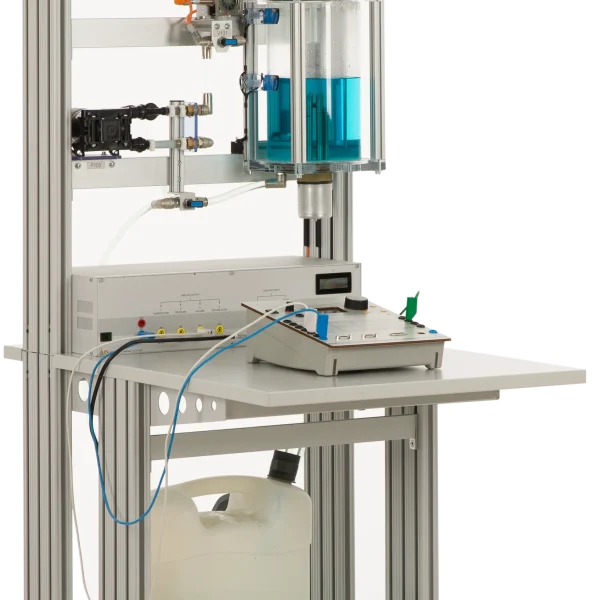
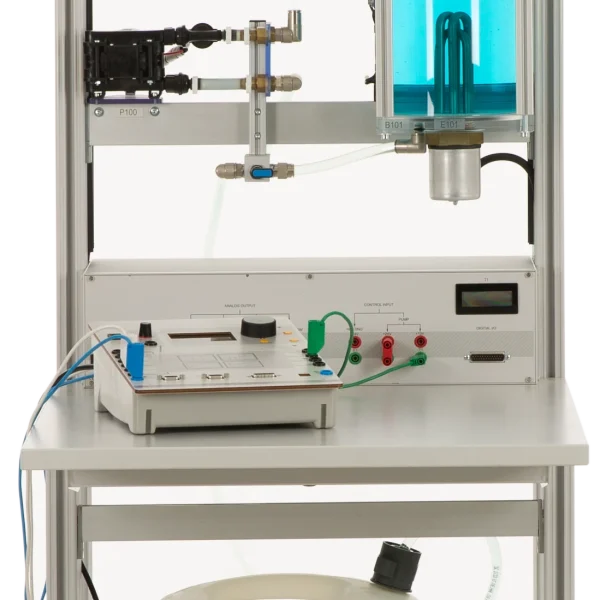
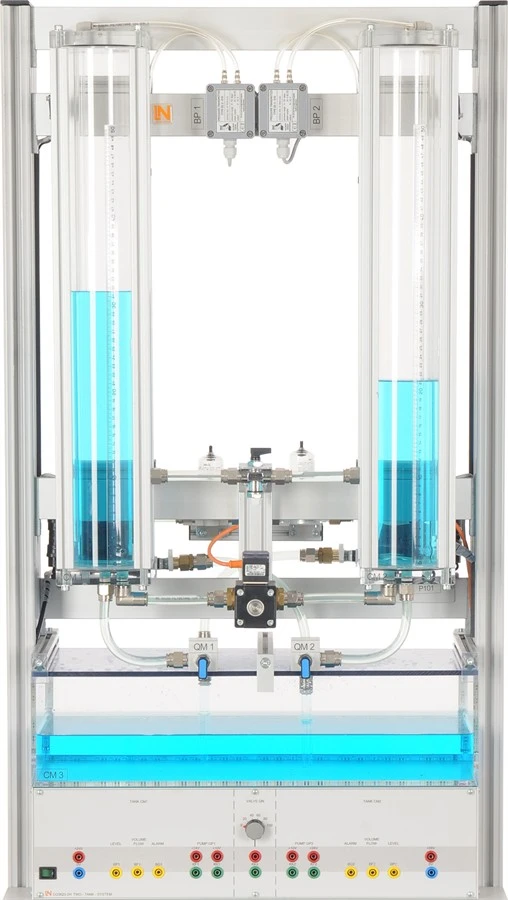
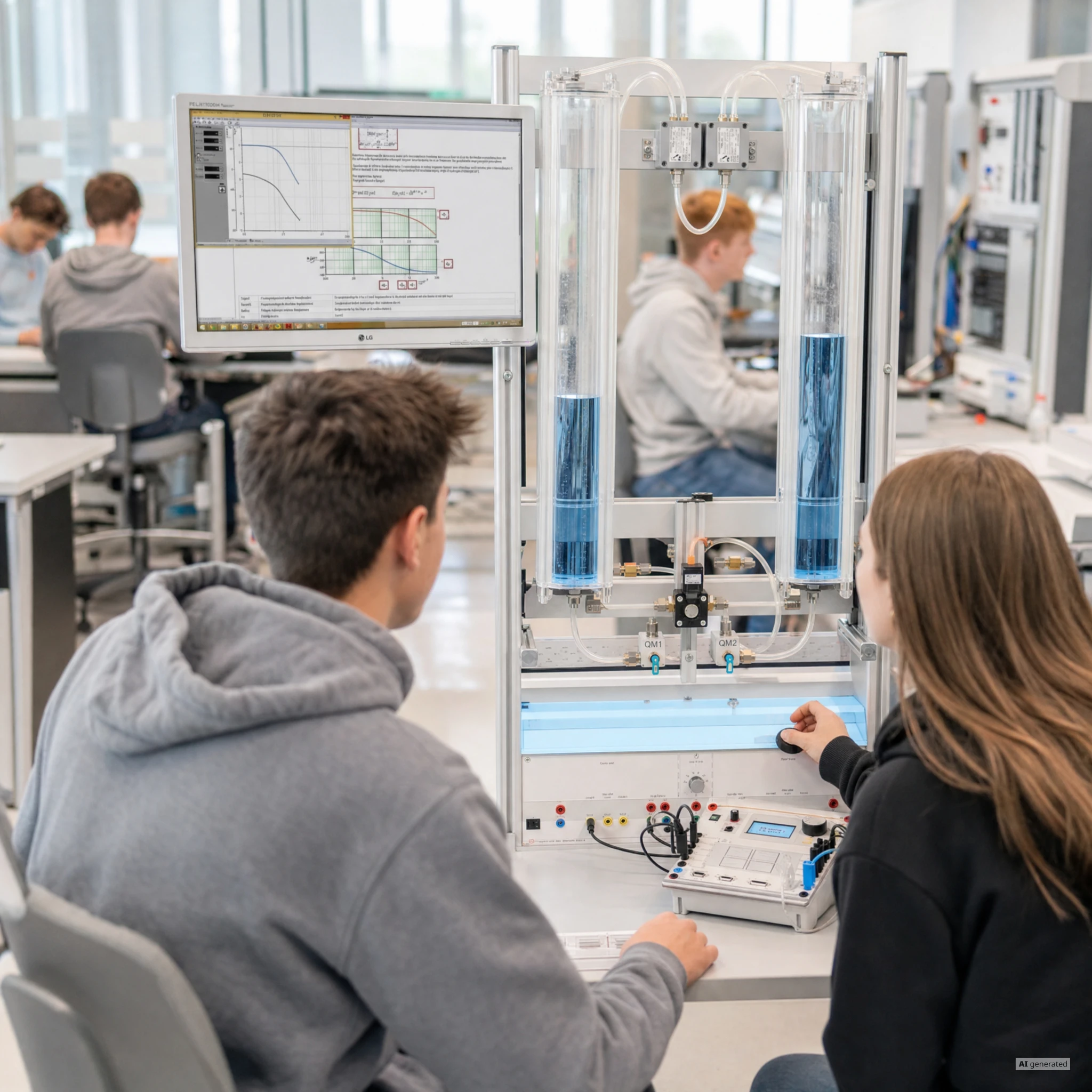
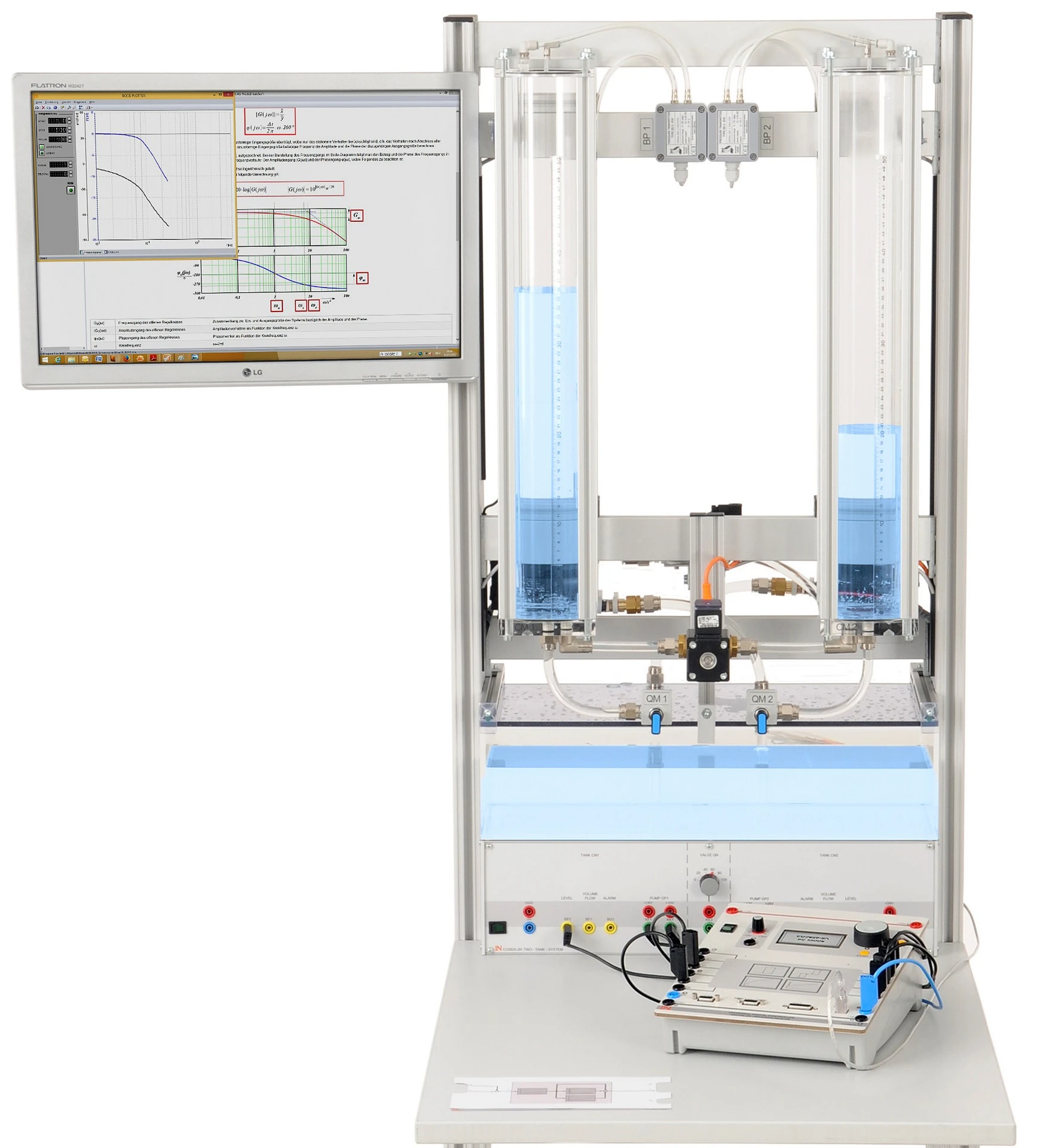
Training system with two coupled 4-liter tanks, each with its own pump and sensors. Learners first control individual levels and then connect the tanks via a solenoid valve.
- Carrying out system identification
- Analyzing step responses
- Analyzing the Bode diagram
- Parameterizing controllers
- Flexible system architecture
- Complete actuators and sensors for each tank
- Integrated measuring and control instruments
- Electronic system coupling
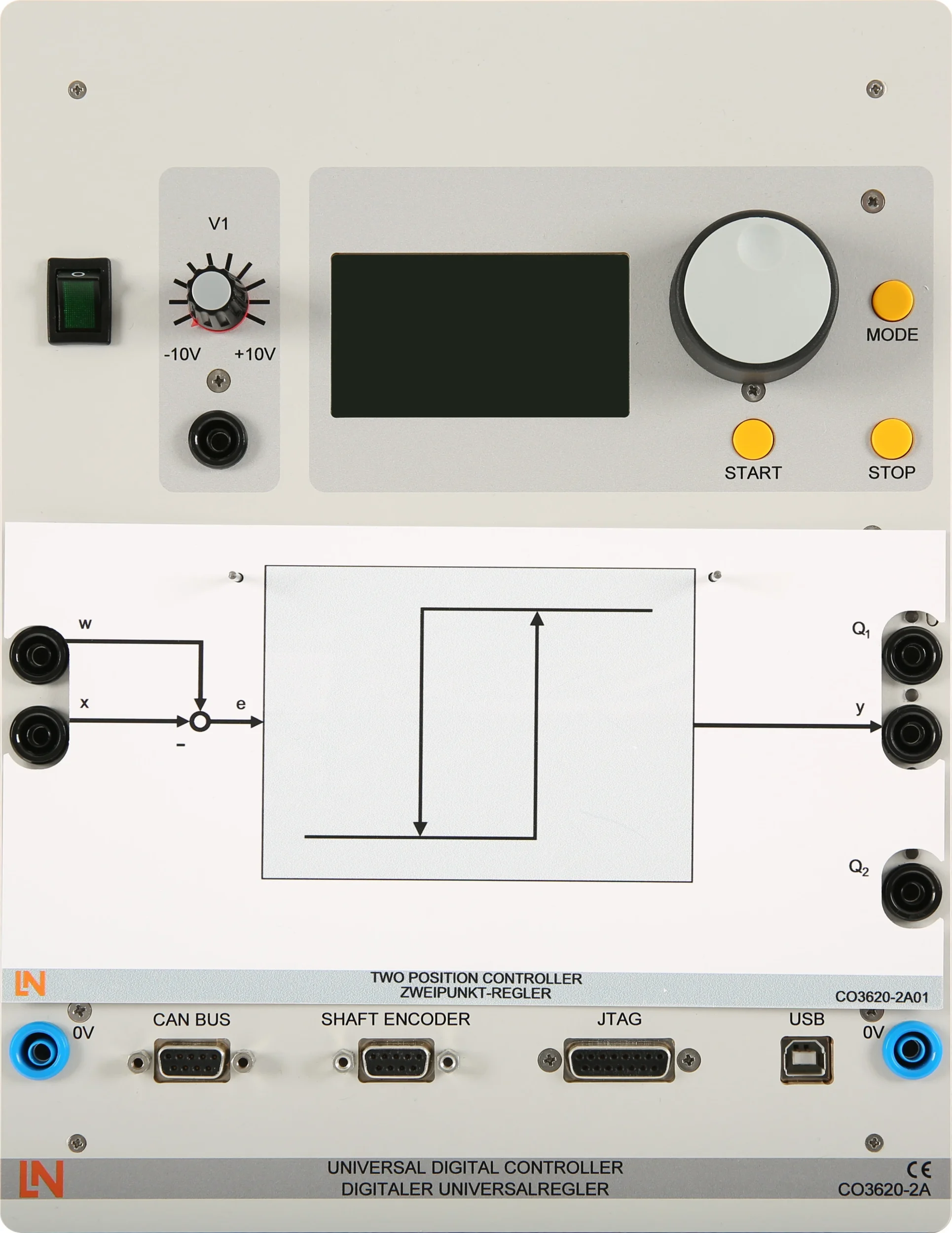
In industrial processes, cascade and multivariable control ensure plant safety and process efficiency. The training system leads there step by step: two 4-liter tanks with diaphragm pumps and electronic valves can initially be controlled as separate level systems. Two differential pressure transducers and two flow meters provide a total of four controlled variables. When the solenoid valve between the tanks opens, an entirely new, coupled overall system with mutual interaction is created. Learners record step responses, design two-position, three-position and PID controllers and evaluate the reference and disturbance response. Capacitive limit switches switch off the pumps when the maximum level is reached.
| Base Product | |
| CO3620-2H | Two-Tank-System |
| ST7200-3R | Experiment trolley 600x760x900mm WxHxD |
| SO2802-3E | Interactive Lab Assistant: Control of a two-tank reservoir |
| ST8003-1X | Sideways training panel frame extension |
| ST8010-8M | Protective cover for 600mm wide IMS experiment trolleys complete with experiments |
| ST8010-4T | Monitor holder for flat screen monitor of weight up to 15kg / 33lbs |
| Accessories | |
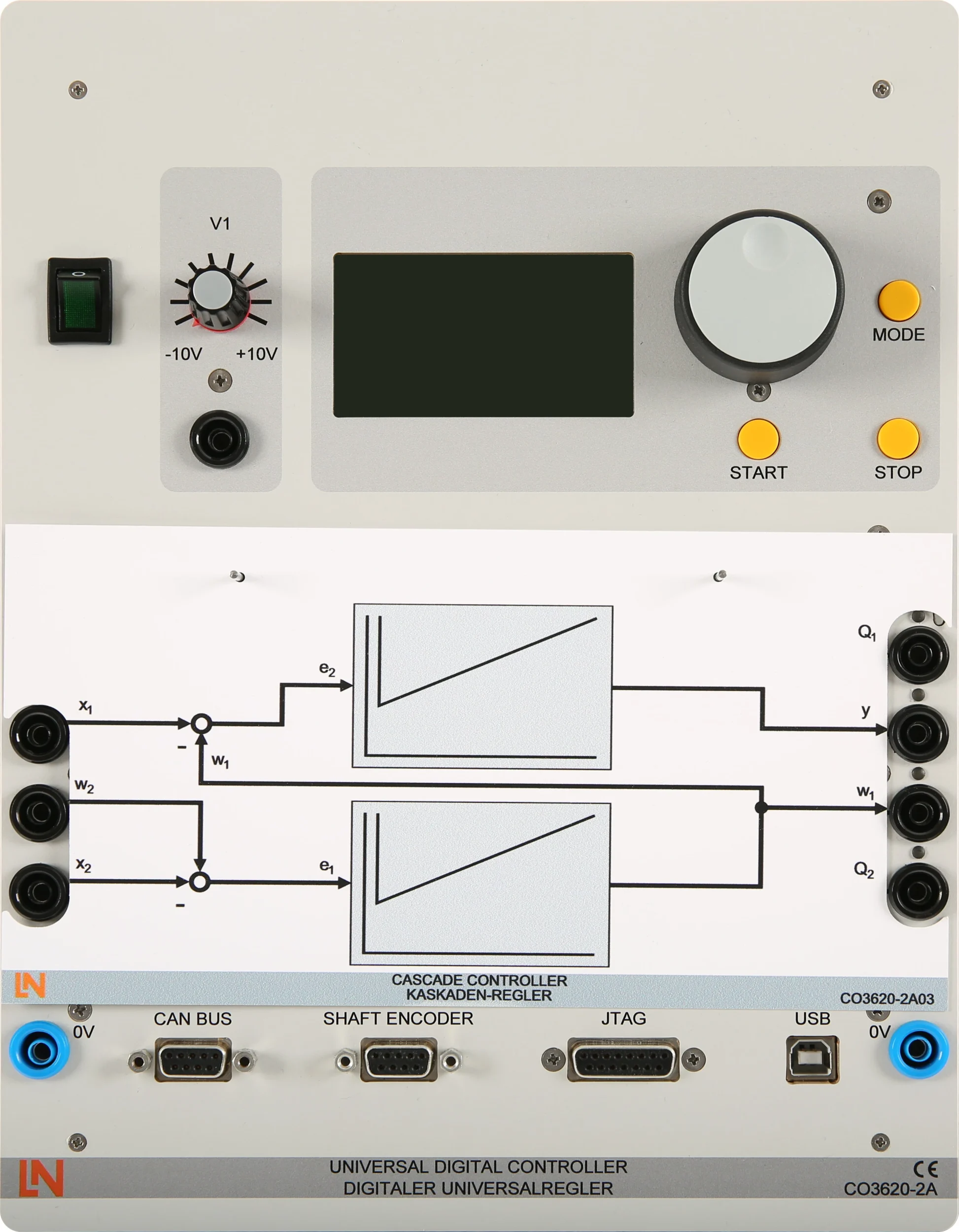
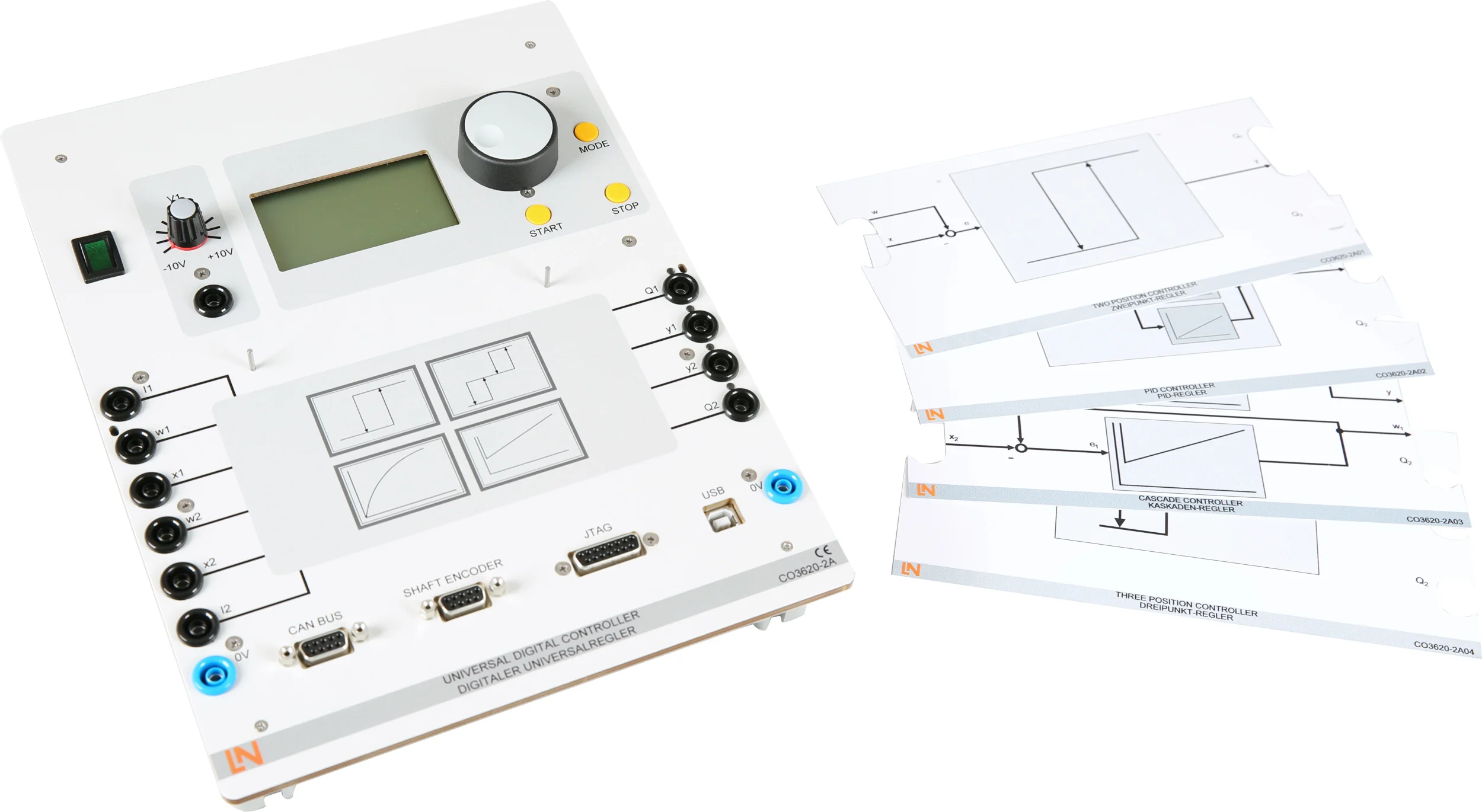
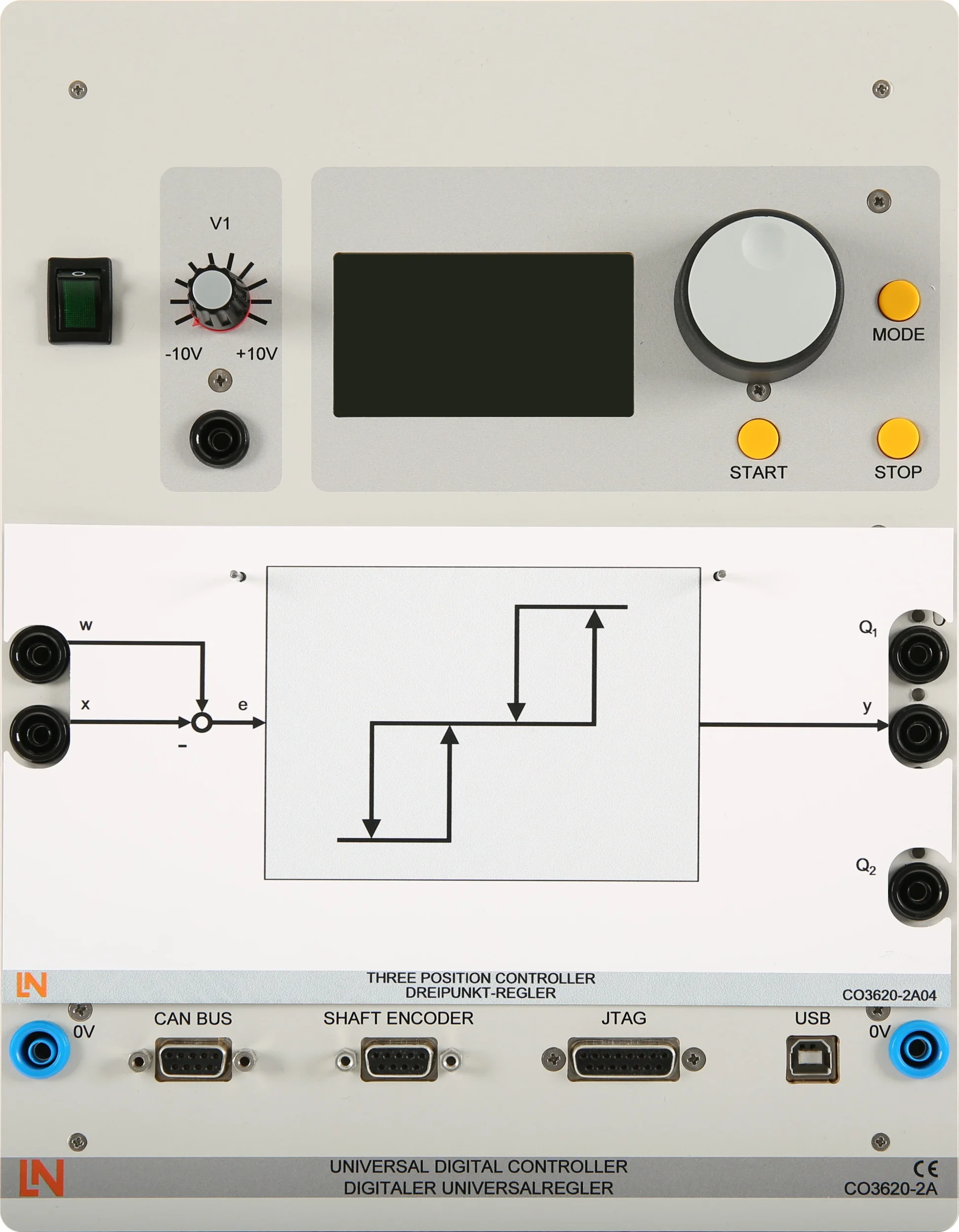
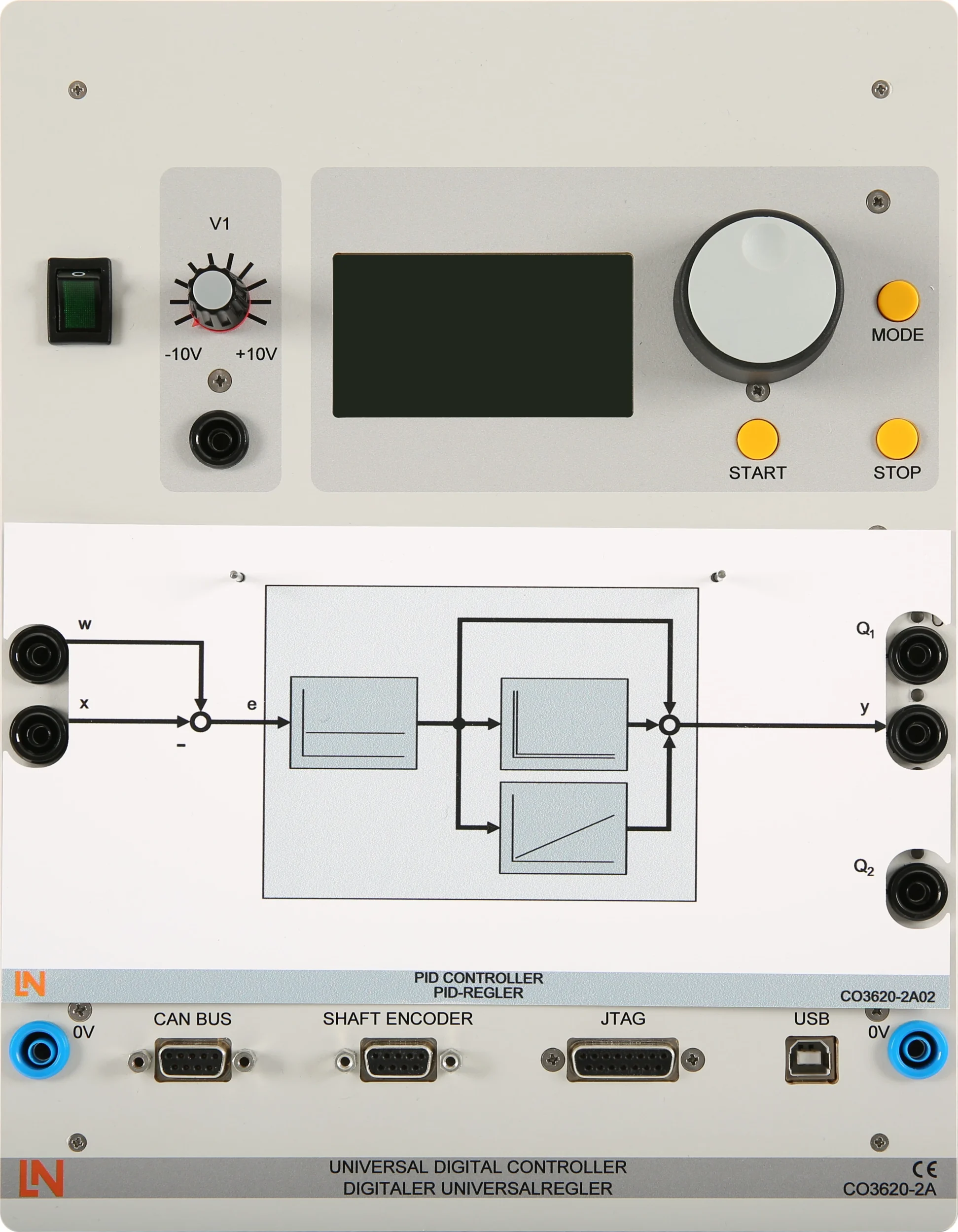
| CO3620-2A | Universal digital controller (DSP) |
| Measurement Leads | |
| SO5148-1V | Set of safety measurement cables, 4mm (20 leads) |
| SO5126-3R | Safety connecting plug 4mm with tap (2x), black, 1000V/32A CAT II |
| SO5126-3V | Safety connecting plug 4mm with tap (2x), blue, 1000V/32A CAT II |
Learning Content in Detail
Carrying out system identification
Analyzing step responses
Analyzing the Bode diagram
Parameterizing controllers
Investigating load steps
Features & Applications
- Flexible system architecture — Learners can investigate the tanks either as separate single-loop systems or as a coupled multivariable system.
- Complete actuators and sensors for each tank — Each tank has its own pumps and valves. Learners control them and evaluate the associated level and flow sensors separately.
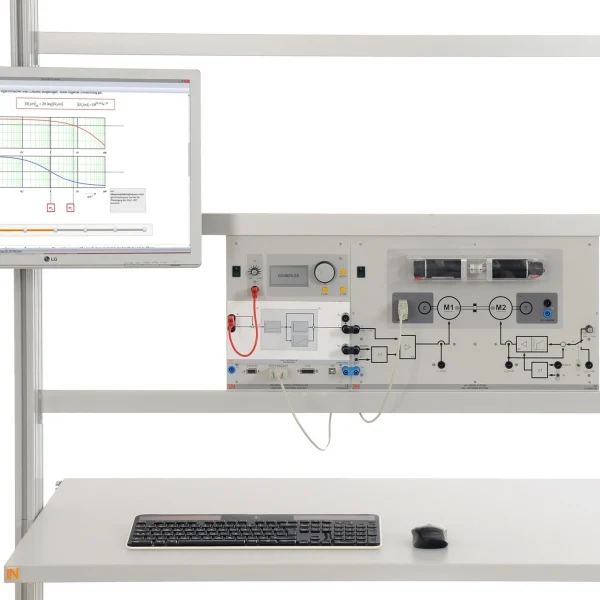
- Integrated measuring and control instruments — Recording step responses, analyzing dynamic behavior and tuning the PID controller: everything takes place directly on the system.
- Electronic system coupling — A solenoid valve between the tanks can be actuated, creating an entirely new overall controlled system.
- Two-tank system with 4-liter tanks — Two tanks with diaphragm pumps and electronic valves form realistic controlled systems.
- Four controlled variables from four sensors — Two differential pressure transducers and two flow meters together capture four different controlled variables.
- Overflow cut-out — Capacitive sensors act as limit switches and switch off the pumps as soon as the maximum level is reached.
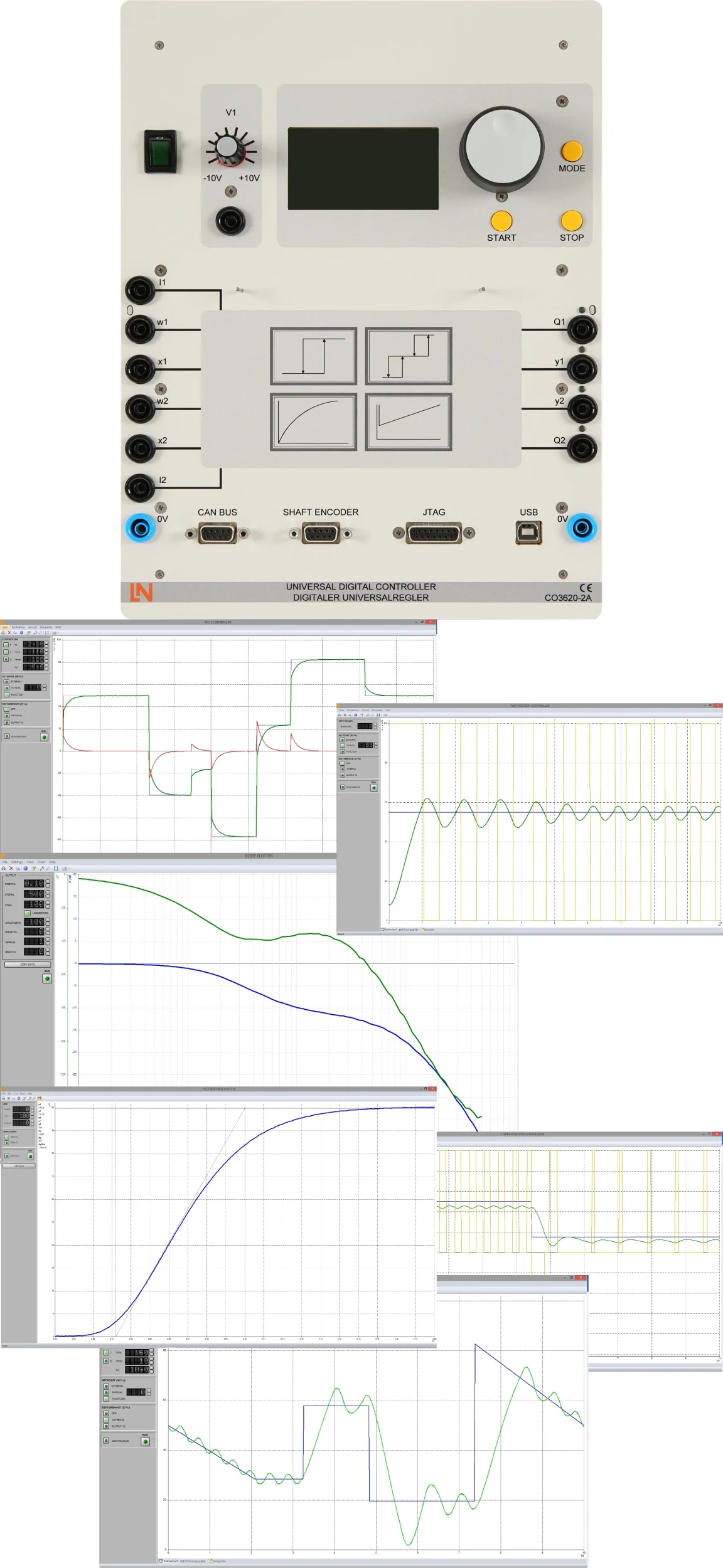
- Digital universal controller (CO3620-2A) — The universal control unit comes with numerous interfaces for typical controlled systems. Its software functions handle real-time analysis and control.
- Step response plotter — Learners record the system’s response to an input step in real time and use it to determine the static and dynamic parameters of the controlled system.
- PID controller — Learners parameterize all controller components interactively and specifically optimize the disturbance and reference response of the connected controlled system.
- Bode plotter — Amplitude and phase response are displayed. Learners use them to carry out frequency response analysis for systematic controller optimization.
- Cascaded PID controller — The instrument is used to set up and optimize cascade control made up of level and flow control.
- System analyzer — The tool compares measured data with models in both the time and the frequency domain, so theory can be applied immediately.

From Knowledge Comes Capability.
You guide the learning
Where theory and practice go hand in hand.
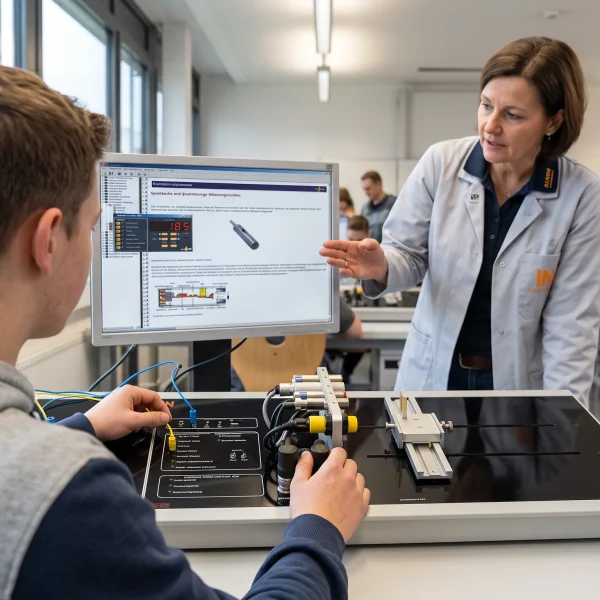
RXLea brings a new way of learning: project-based, hands-on and clearly structured. Learners solve real-world tasks, while instructors save time on preparation. Interactive modules, smart analytics and real hardware create a modern, efficient learning world.
Hands-on and interactive
Animations, interactive tasks and realistic scenarios build a deep understanding. All content is organized into clear learning paths for focused, hands-on learning.
Digital support
3D assembly animations and digital instructions simplify complex procedures, reduce errors and help learners work more independently.
Visual support
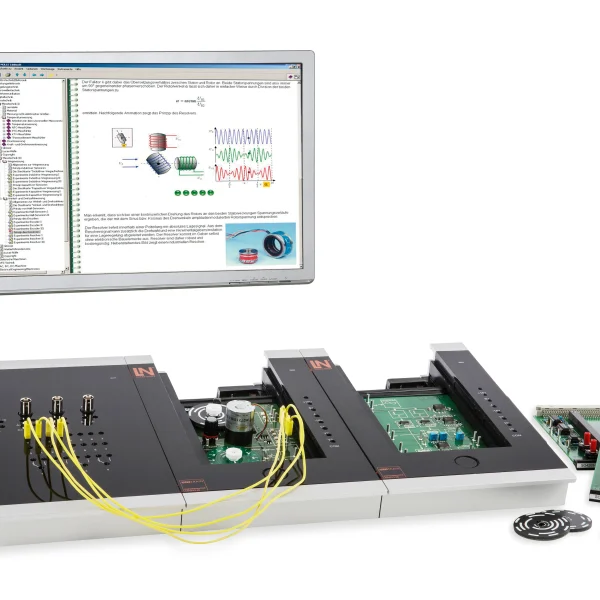
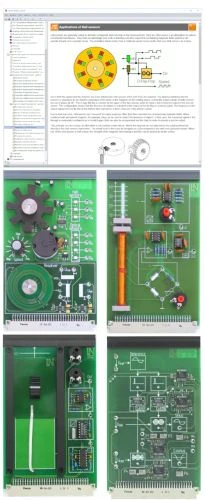
Overview graphics, screenshots and sample animations make the learning world transparent. Photos from the learning packages are also available, including country-specific versions where needed.




Stay ahead in
technical training.
Get the latest training systems, product launches and educational insights, delivered directly to your inbox.