


Measurement Technology: RLC Measurement
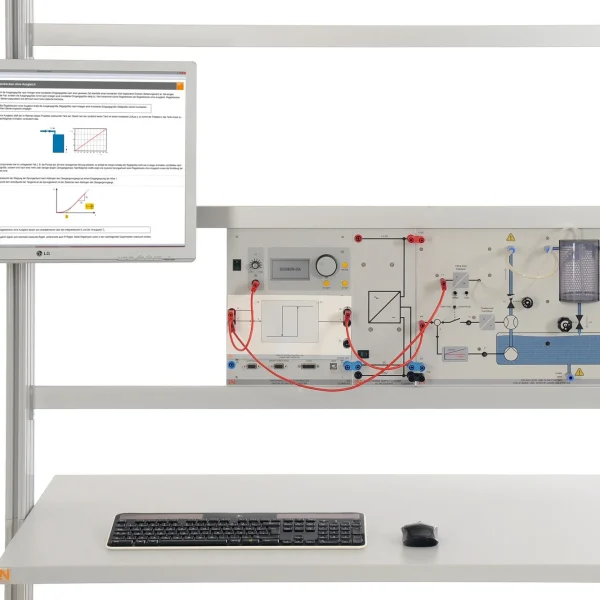
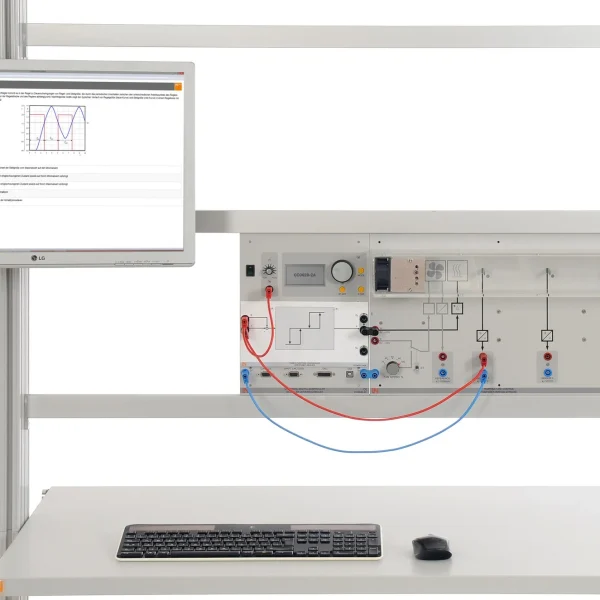
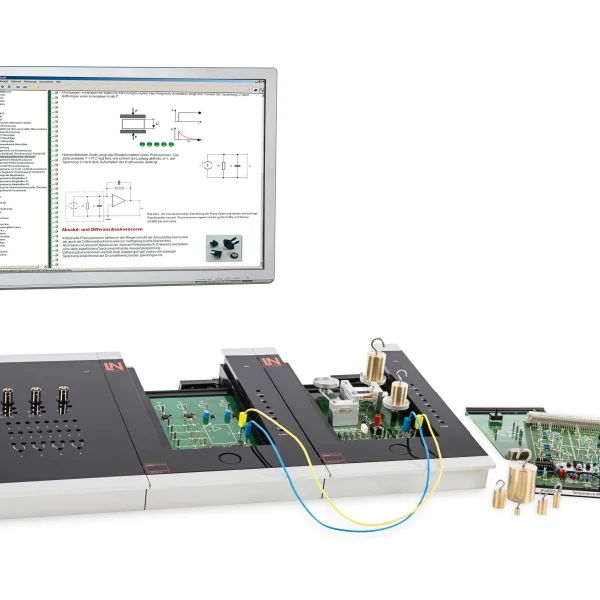
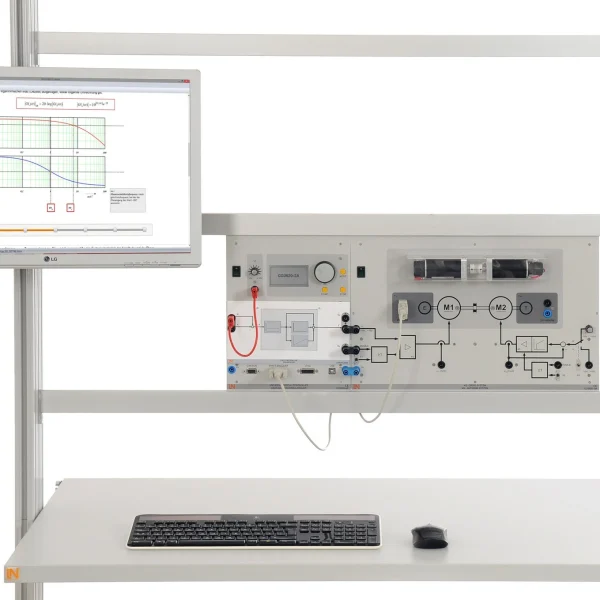
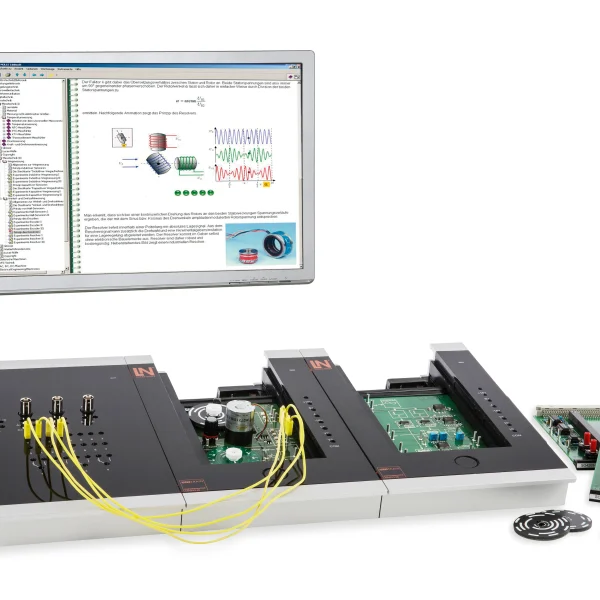
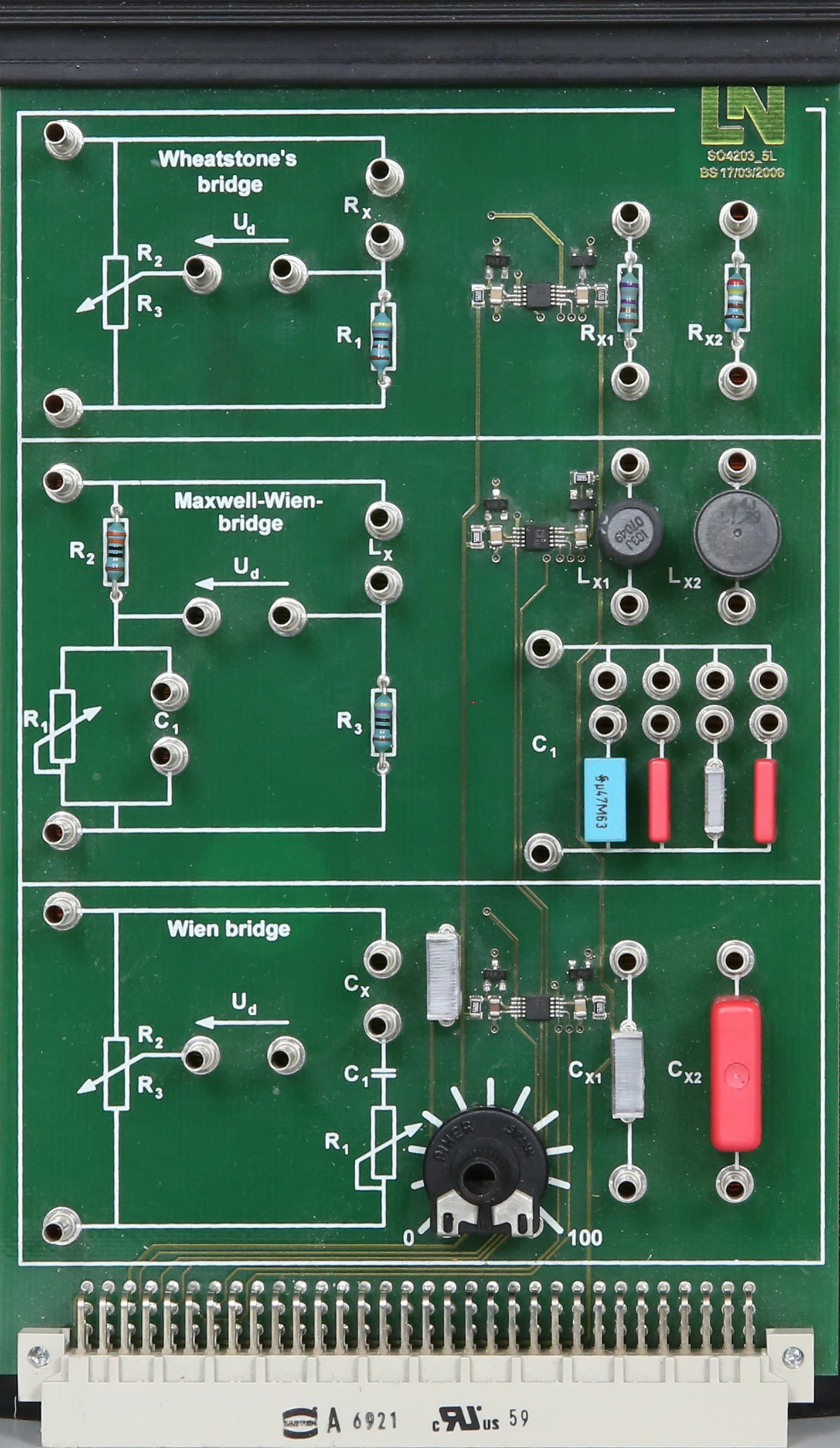
UniTrain training system for determining R, L and C component values: learners balance Wheatstone, Maxwell-Wien and Wien bridges and compare the result with computer-aided impedance measurement.
- Differentiating measuring methods
- Determining resistance with a DC bridge
- Measuring inductances
- Balancing capacitances
- Integrated digital potentiometers
- Comparing the balancing method and direct measurement
- Phase balancing with the integrated XY oscilloscope
- Safety extra-low voltage throughout
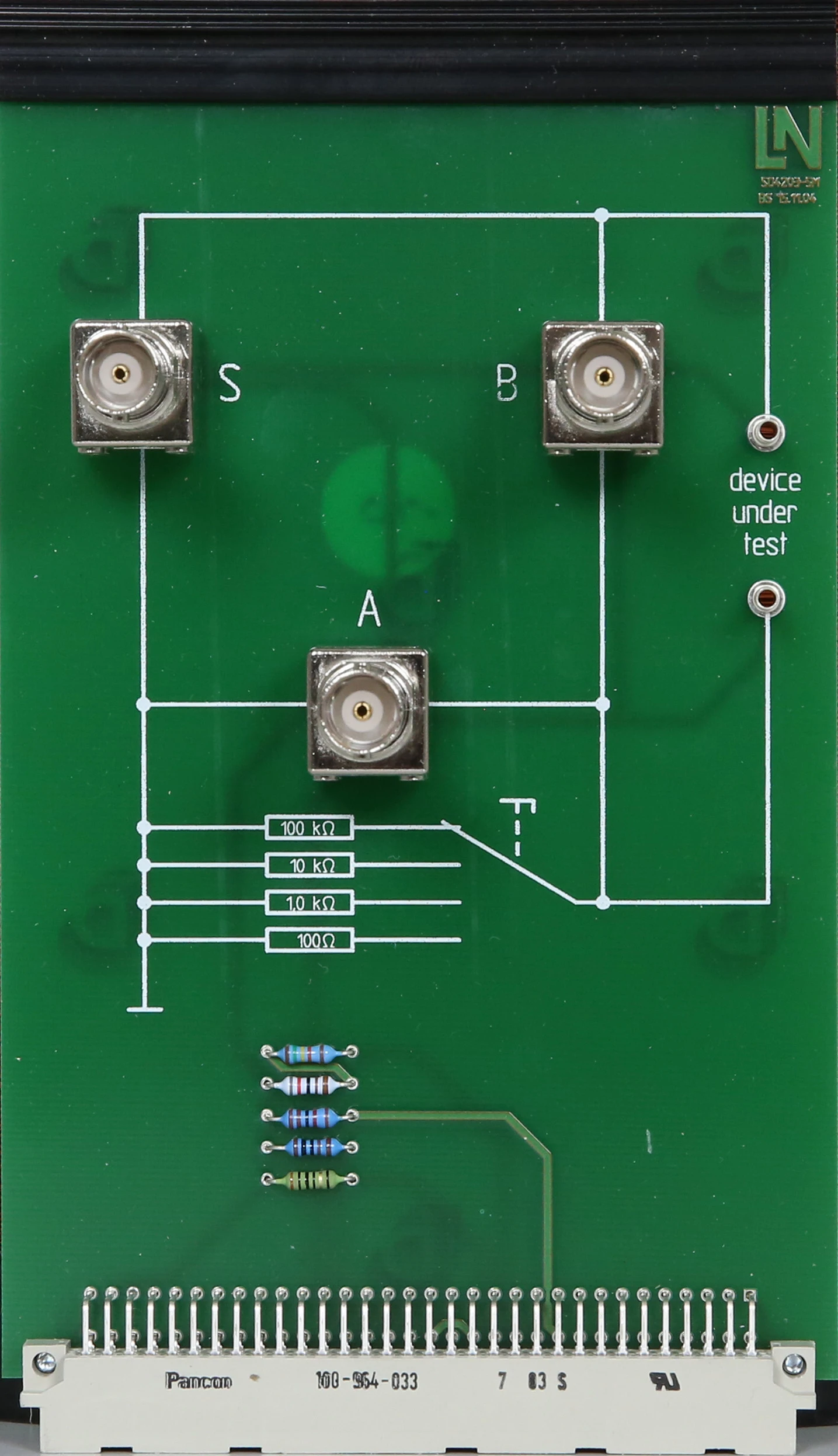
Resistance, inductance and capacitance are the parameters on which all analog and digital circuit technology is built. In test bays, production processes and diagnostics, precise RLC measurements ensure that electronic assemblies work properly. The training system shows both ways of getting there: classic null balancing in a bridge circuit and direct impedance measurement via current and voltage across a measuring shunt. Two experiment cards provide switchable Wheatstone, Maxwell-Wien and Wien bridges with software-controlled digital potentiometers. Learners observe phase balancing as a Lissajous figure in the XY mode of the virtual oscilloscope. They then determine component values, calculate the quality factor of coils and explain which method is suitable for which measuring task.
| Base Product | |
| CO4204-8D | Course Measurement technology 4: RLC measurement |
| Measuring Instruments | |
| LM2330 | Multi13S digital multimeter |
| Accessories | |
| CO4203-2A | UniTrain Interface mit virtuellen Instrumenten (Basis VI) |
| CO4203-2J | UniTrain measurement accessories, shunts and connection cables |
| CO4203-2Y | UniTrain storage case for one UniTrain system |
| CO4203-2B | UniTrain Experimenter |
Learning Content in Detail
Differentiating measuring methods
Determining resistance with a DC bridge
Measuring inductances
Balancing capacitances
Applying impedance measurement methods
Analyzing coil quality factor
Optimizing measuring ranges
Evaluating direct-reading instruments
Features & Applications
- Integrated digital potentiometers — The resistances can be set in fine steps via the software, so learners can carry out null balancing precisely and reproducibly.
- Comparing the balancing method and direct measurement — The same component is determined once by manual bridge balancing and once by computer-aided direct impedance measurement. The comparison reveals the effort and accuracy of both approaches.
- Phase balancing with the integrated XY oscilloscope — Magnitude and phase balancing on AC bridges are displayed as a Lissajous figure. Learners can recognize the balanced state at a glance.
- Safety extra-low voltage throughout — All experiments work with safety extra-low voltage (SELV). Learners handle the setups with no risk of electric shock.
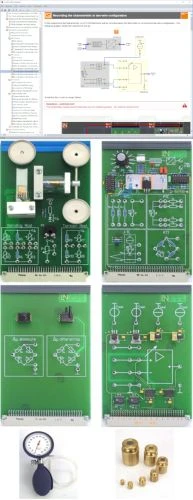
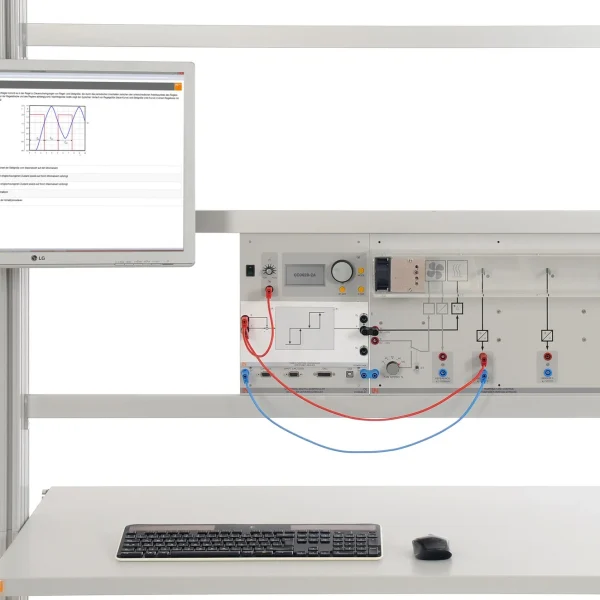
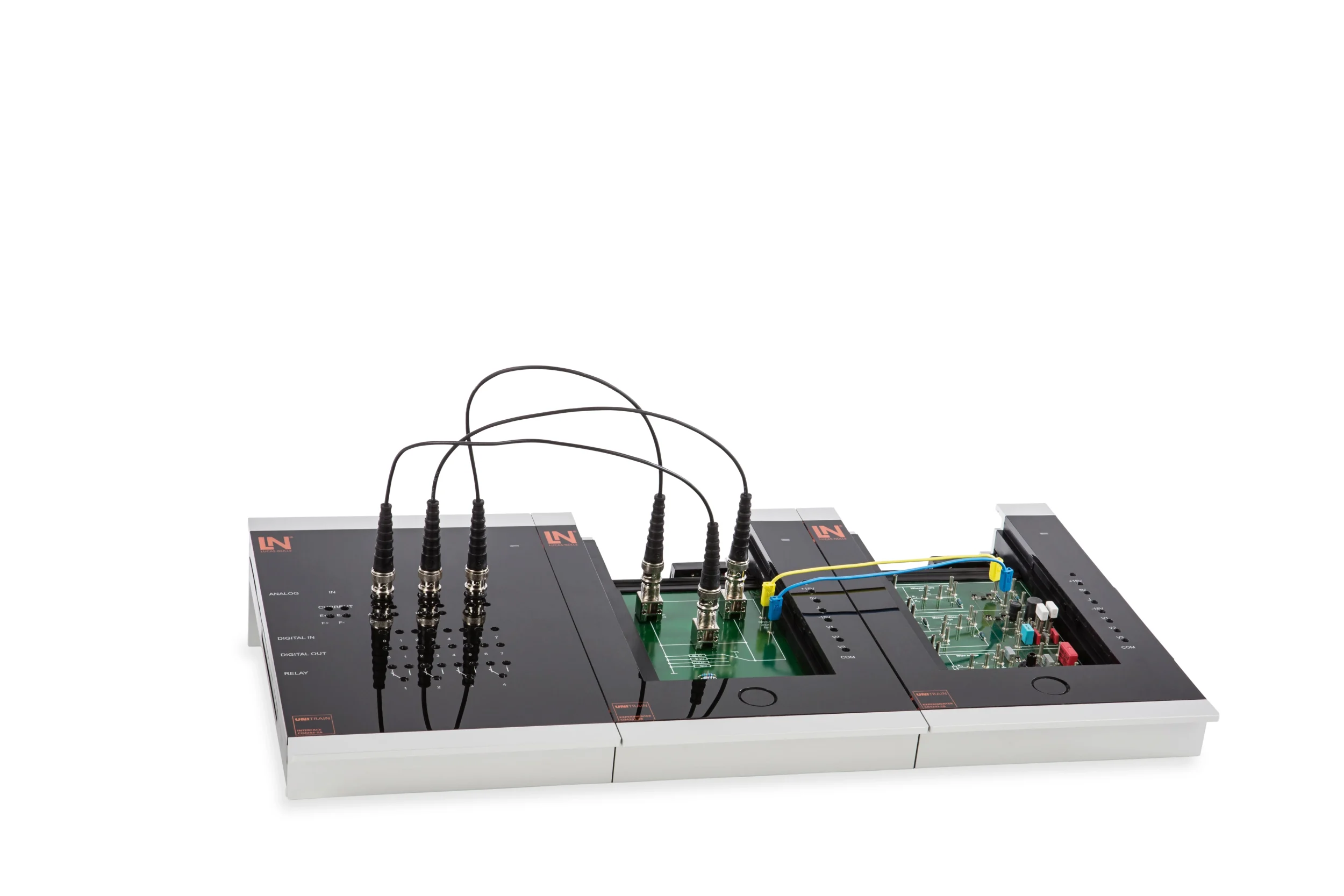
- RLC measuring bridge experiment card (SO4203-5L) — The card contains switchable Wheatstone, Maxwell-Wien and Wien bridges, as well as digital potentiometers for manual null balancing.
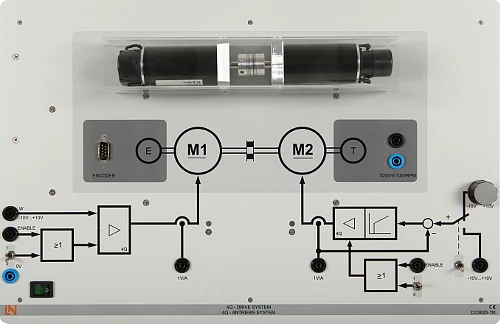
- RLC measurement experiment card (SO4203-5M) — The card provides measuring circuits for determining components by current and voltage measurement and by direct impedance analysis.
- Virtual 2/4-channel oscilloscope — The oscilloscope displays waveforms and, in XY mode, Lissajous figures that can be used to check the phase balance of AC bridges.
- Virtual function generator — The generator supplies the AC bridges with sine, square and triangle signals up to 5 MHz.
- Bridge balancing virtual instrument — The instrument controls the digital potentiometers on the experiment card and performs precise bridge balancing.

From Knowledge Comes Capability.
You guide the learning
Where theory and practice go hand in hand.
RXLea brings a new way of learning: project-based, hands-on and clearly structured. Learners solve real-world tasks, while instructors save time on preparation. Interactive modules, smart analytics and real hardware create a modern, efficient learning world.
Hands-on and interactive
Animations, interactive tasks and realistic scenarios build a deep understanding. All content is organized into clear learning paths for focused, hands-on learning.
Digital support
3D assembly animations and digital instructions simplify complex procedures, reduce errors and help learners work more independently.
Visual support
Overview graphics, screenshots and sample animations make the learning world transparent. Photos from the learning packages are also available, including country-specific versions where needed.




Stay ahead in
technical training.
Get the latest training systems, product launches and educational insights, delivered directly to your inbox.