


Skip to content

Practical Introduction to Control Technology

RXLea
Digital projects for hands-on learningInteractive learning content, directly connected to the training system.

Practical Introduction to Control Technology

IAC01UT

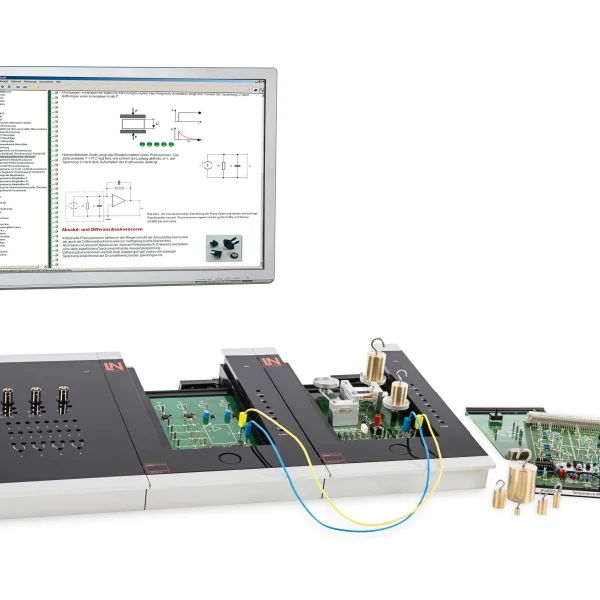
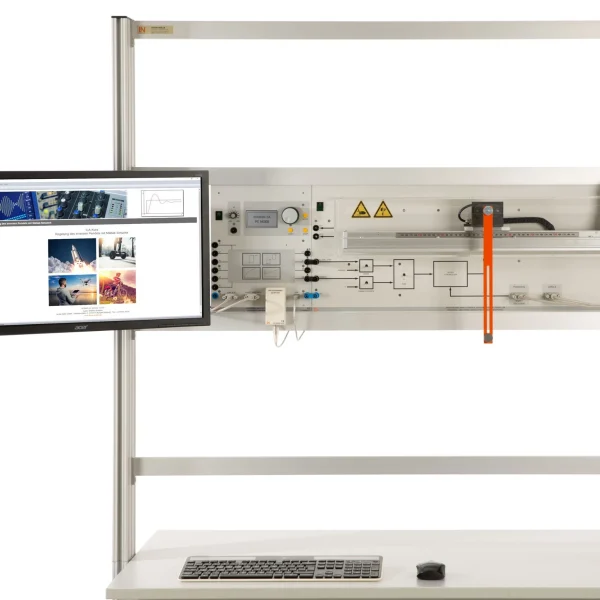
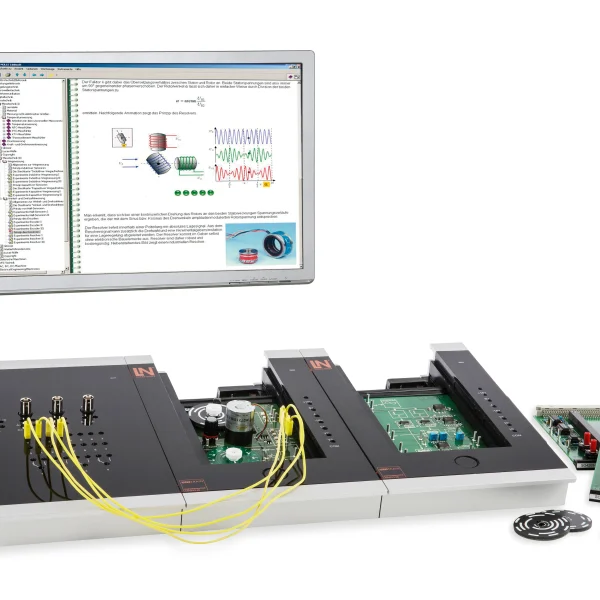
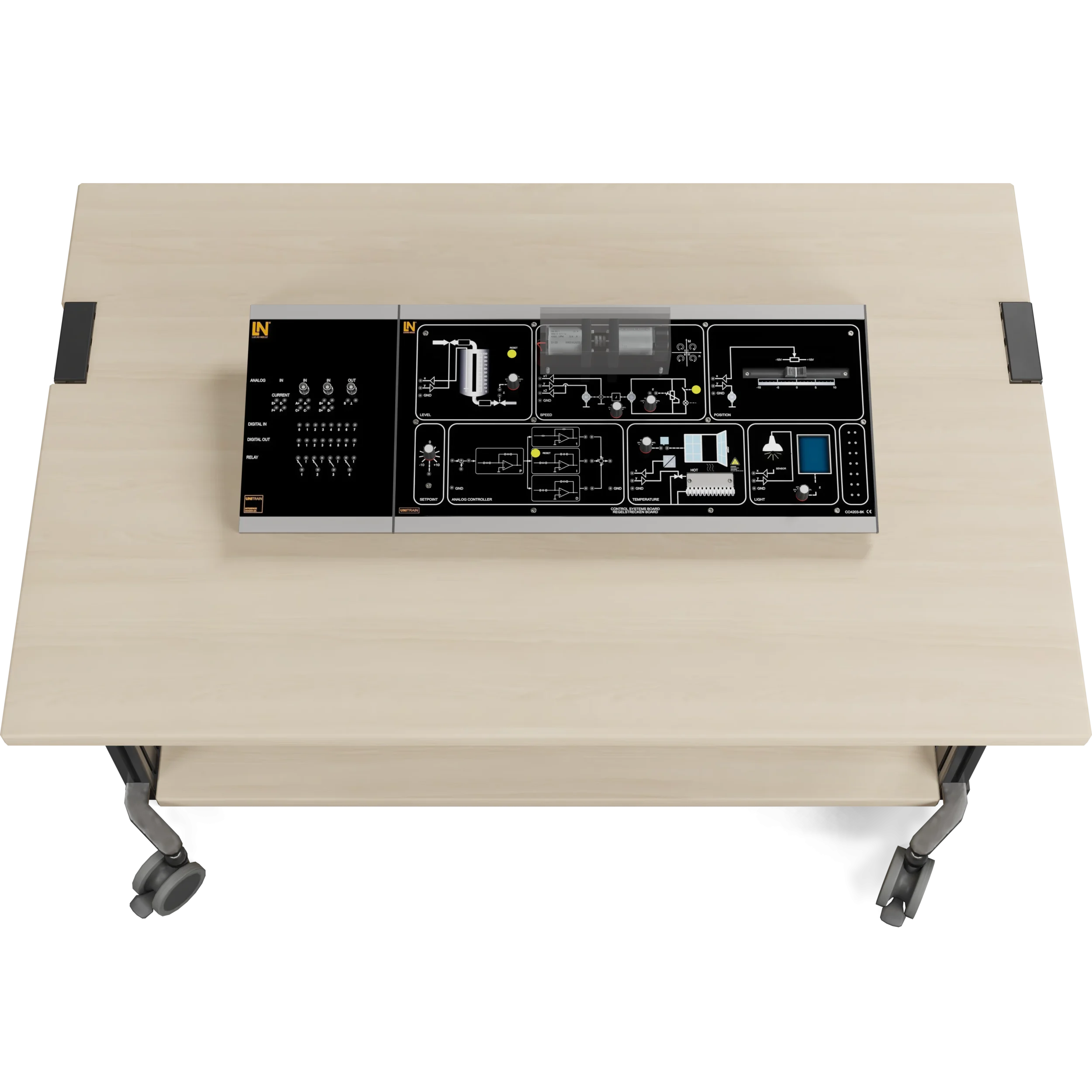
Compact UniTrain equipment for applied control engineering: five real controlled systems for speed, position, level, temperature and brightness, plus a digital PID controller and an analog PID controller that learners build themselves.

Learning Content
  • Distinguishing between open-loop and closed-loop control
  • Determining system characteristics experimentally
  • Parameterizing and optimizing controllers
  • Assessing reference and disturbance response
KEY FEATURES
  • Five controlled systems, from speed to brightness
  • Integrated measurement and control technology
  • Investigating control loops with disturbance injection
  • Analog PID controller with operational amplifiers
Speak with a Product Specialist +1 (757) 808-5696 · sales@lucas-nuelle.com

Optimized control loops help production and process engineering to use resources sparingly, and they are a prerequisite for intelligent products. The UniTrain system brings five typical industrial controlled systems together on one experiment board: level, speed, position, light and temperature. Learners record step responses, set the parameters of the digital PID controller on the PC and build the analog PID controller from operational amplifiers themselves using the 2 mm plug-in system. Via dedicated disturbance inputs, they apply reproducible disturbances, such as a load change on the motor or a flow of cold air onto the heater. This allows them to compare types of controlled system and control strategies in a single setup and to assess the reference and disturbance response of closed control loops.

Artikel-Nr.MengeBezeichnung
CX4204-8K1Kurs Praktische Einführung in die Regelungstechnik
PPC002001C1RXLea Content IAC01UT: Füllstandsregelung in einer Wasseraufbereitungsanlage
SW000015Software RX Lea
SW000195Software LN Installer
PPC002002C1RXLea Content IAC01UT: Regelung eines Personenaufzugs
PPC002003C1RXLea Content IAC01UT: Regelung einer Hafen-Containerbrücke
PPC002004C1RXLea Content IAC01UT: Klimaregelung in einem intelligenten Gewächshaus
PPC002005C1RXLea Content IAC01UT: Lichtregelung in einem intelligenten Gewächshaus
SO4203-2V1UniTrain storage case for experiment boardoptional
CO4203-2A1UniTrain Interface mit virtuellen Instrumenten (Basis VI)
CO4203-2J1UniTrain measurement accessories, shunts and connection cables
CO4203-2Y1UniTrain storage case for one system

Learning Content in Detail

Learners distinguish between open-loop and closed-loop control, determine the characteristic values of controlled systems by measurement and design controllers for different tasks.

Distinguishing between open-loop and closed-loop control

Learners explain both operating principles and name the components of a closed control loop.

Determining system characteristics experimentally

Learners record and evaluate the step responses of self-regulating and non-self-regulating systems.

Parameterizing and optimizing controllers

Learners configure P, PI and PID controllers as well as two-position and three-position controllers for various control tasks.

Assessing reference and disturbance response

Learners analyze closed control loops and assess their stability and control quality.

Features & Applications

The experiments take up tasks from process and automation engineering, drive technology and building automation with climate and lighting control.
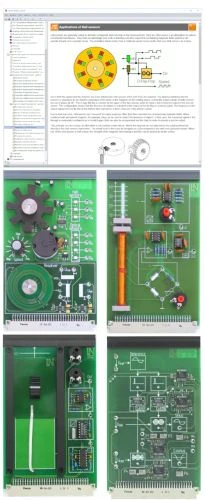
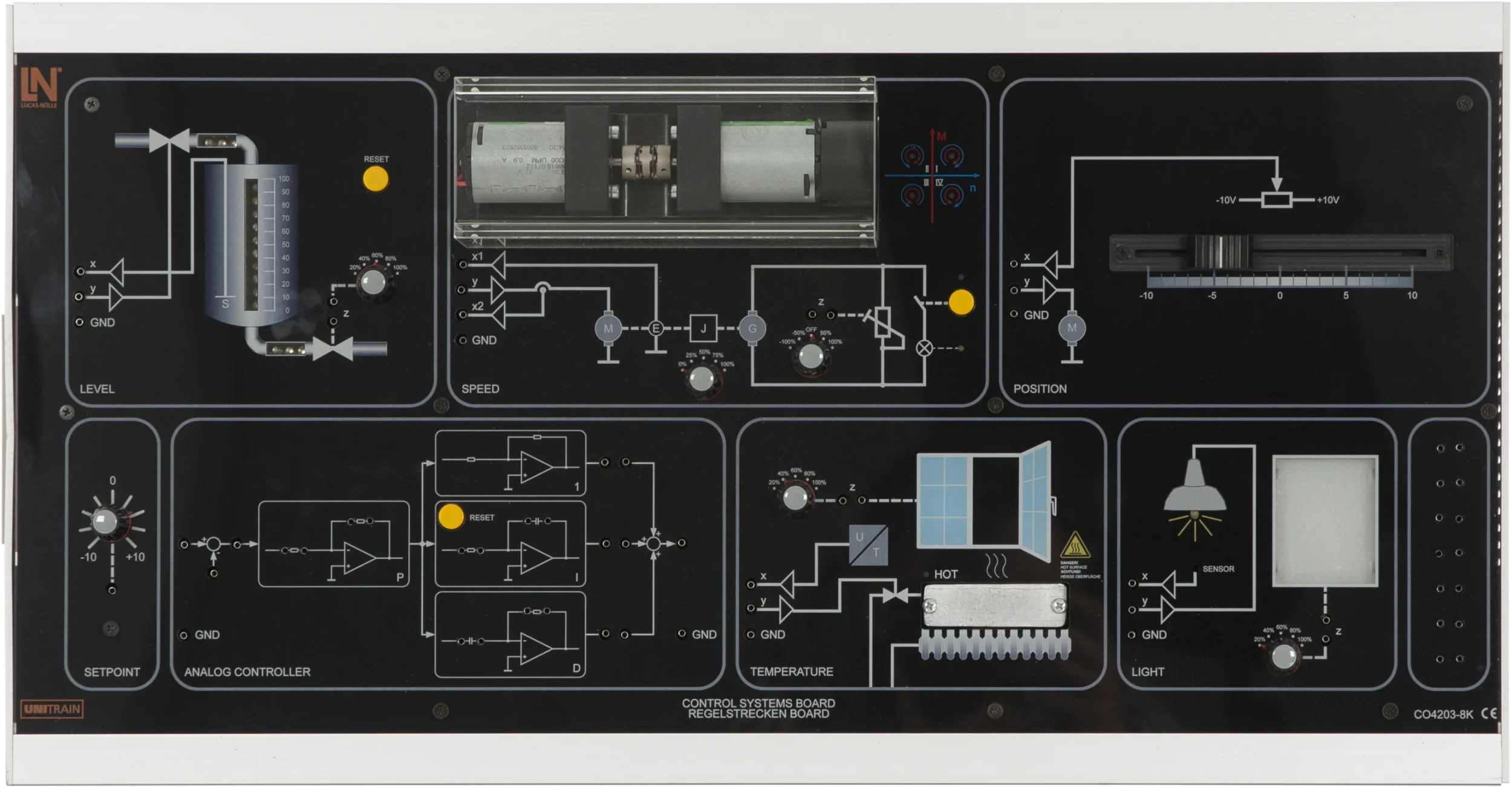
  • Five controlled systems, from speed to brightness — The experiment board combines level, speed, position, light and temperature. Learners compare control strategies directly and experience the properties of different types of controlled system, both self-regulating and non-self-regulating, in a single compact setup.
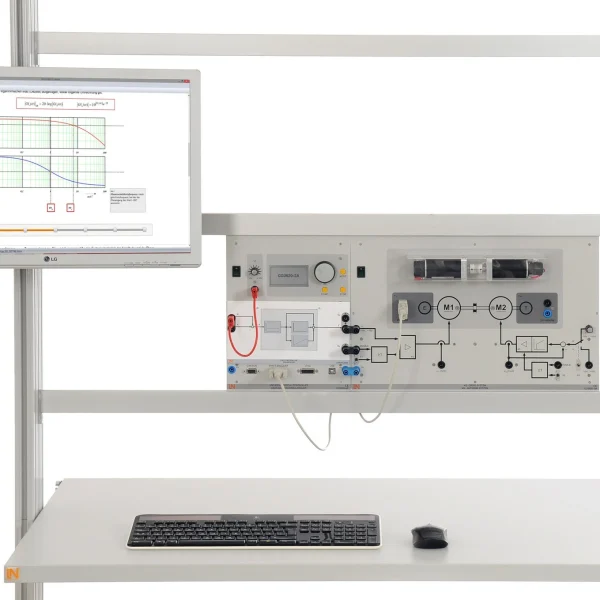
  • Integrated measurement and control technology — An oscilloscope, function generator, PID controller, cascade controller and Bode plot are available as virtual instruments. No additional measuring instruments are required.
  • Investigating control loops with disturbance injection — Each controlled system has its own input for disturbances. Learners apply them in a targeted and reproducible way, such as a load change on the motor or a flow of cold air onto the heater, and compare open and closed control loops.
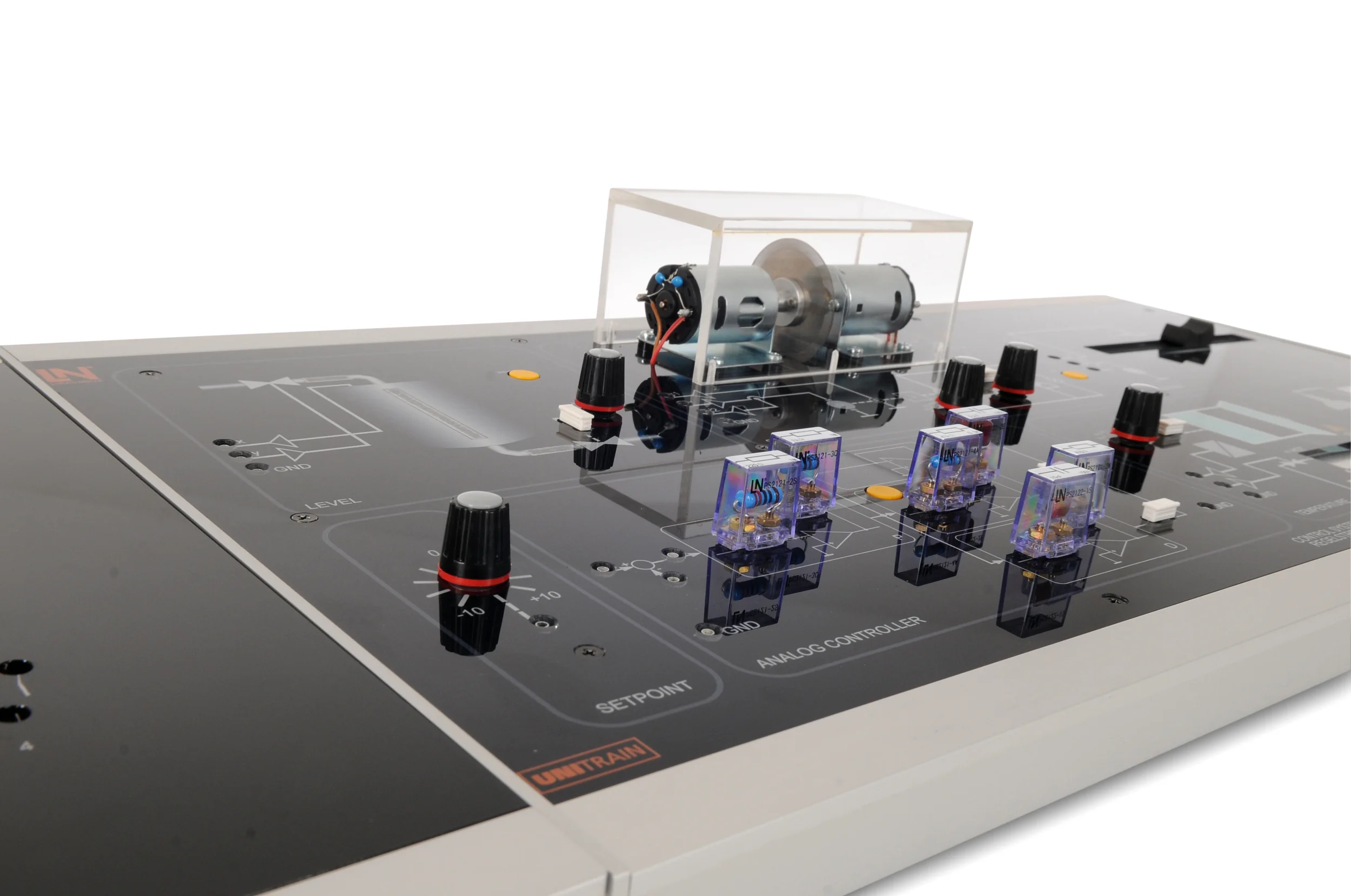
  • Analog PID controller with operational amplifiers — In addition to the virtual controllers, the board carries an analog PID controller that learners fit with components. This way, learners not only understand the block diagram but also analyze its real electronic implementation.
  • Controlled systems with real components — The motor and heating element are real components. The water circuit of the level control system is simulated, which keeps maintenance to a minimum.
  • Setting the reference variable manually or on the PC — Learners set the reference variable using potentiometers or define it graphically on the PC as a time profile.
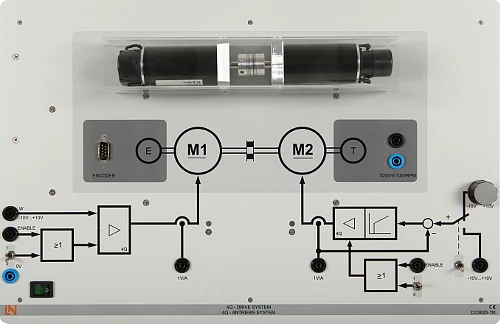
  • Speed control system with two coupled DC motors — The system operates in four quadrants. An incremental encoder measures the speed, the load and simulated flywheel mass are adjustable, and the current measurement feeds the inner loop of the cascade control.
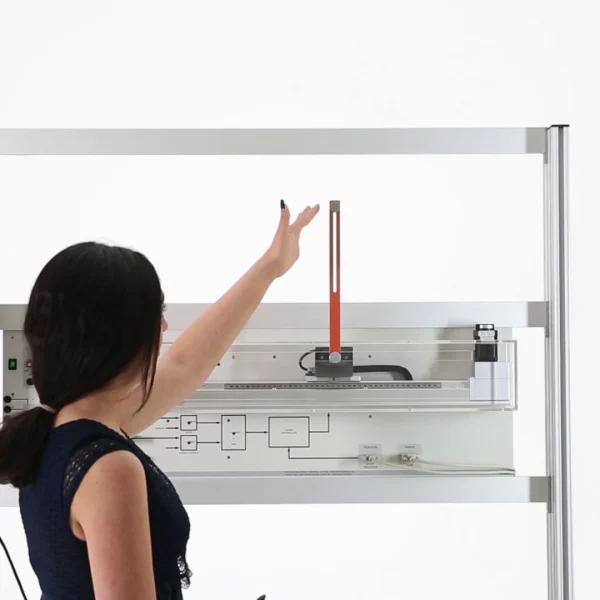
  • Positioning system with linear drive — A DC motor moves the axis, and a potentiometer feeds back the position. The drive switches off automatically at the end positions.
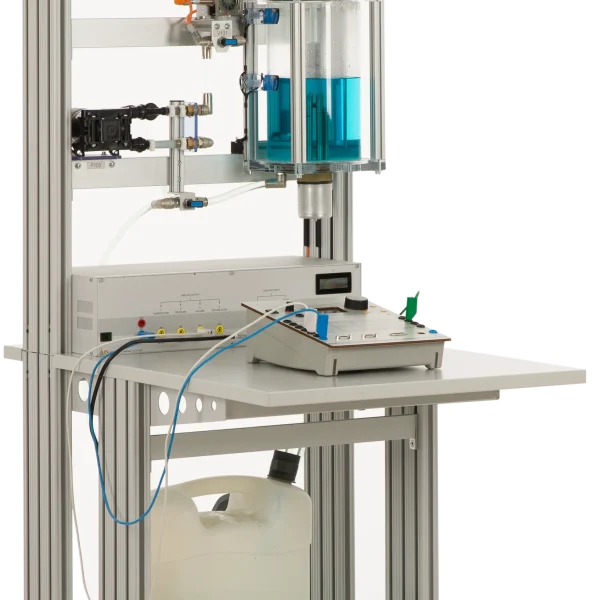
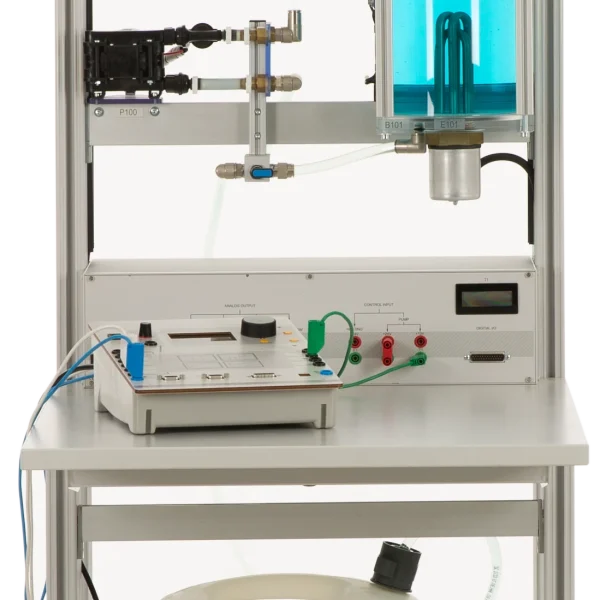
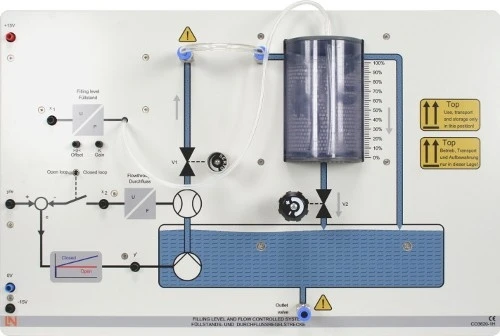
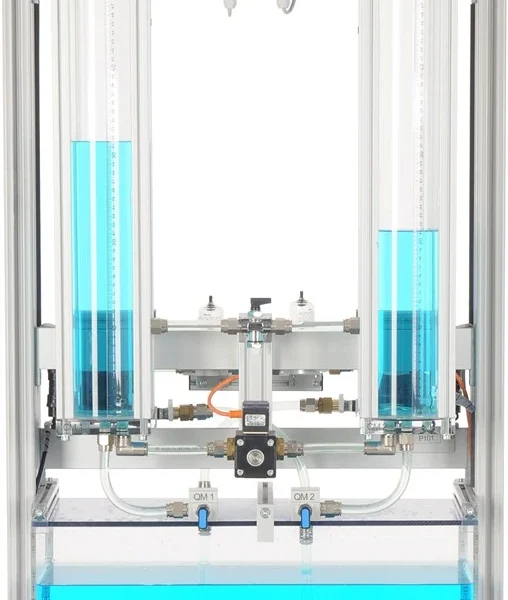
  • Level control system with LED visualization — The system is simulated digitally. LEDs indicate the level and flow; the inflow is controlled via 0–10 V, and the adjustable outflow acts as a disturbance variable.
  • Temperature control system with controllable fan — A controllable heating resistor heats the system and a temperature sensor monitors it. The controllable fan serves as a disturbance variable.
  • Brightness control system with photodiode — A controllable infrared LED illuminates the photodiode. A second infrared LED can be switched on as an external disturbance variable.
  • Digital PID controller with timing diagram — All the necessary variables appear directly in the display. Learners set the PID parameters as well as the reference and disturbance variables directly.
  • Analog PID controller in the 2 mm plug-in system — Learners build the controller themselves. The plug-in components are included: resistors of 470 Ω and 1, 10, 22, 47, 68 and 100 kΩ, and capacitors of 0.1 µF, 0.47 µF and 1 µF.
  • Integrated measurement and control instruments for control engineering — Two-position and three-position controllers, a PID controller, step response and Bode plot are available as virtual instruments.
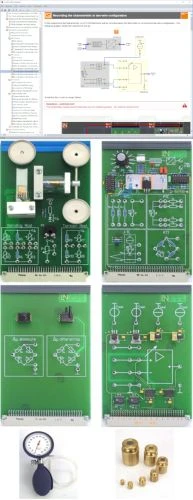
  • Setup Assistant — An interactive assistant guides learners through the experiment setup without doing the thinking for them. It clears away obstacles and setup errors while also promoting understanding.
  • Bode plotter — The integrated frequency generator sweeps the frequency range, and the instrument records the frequency response in a Bode plot.
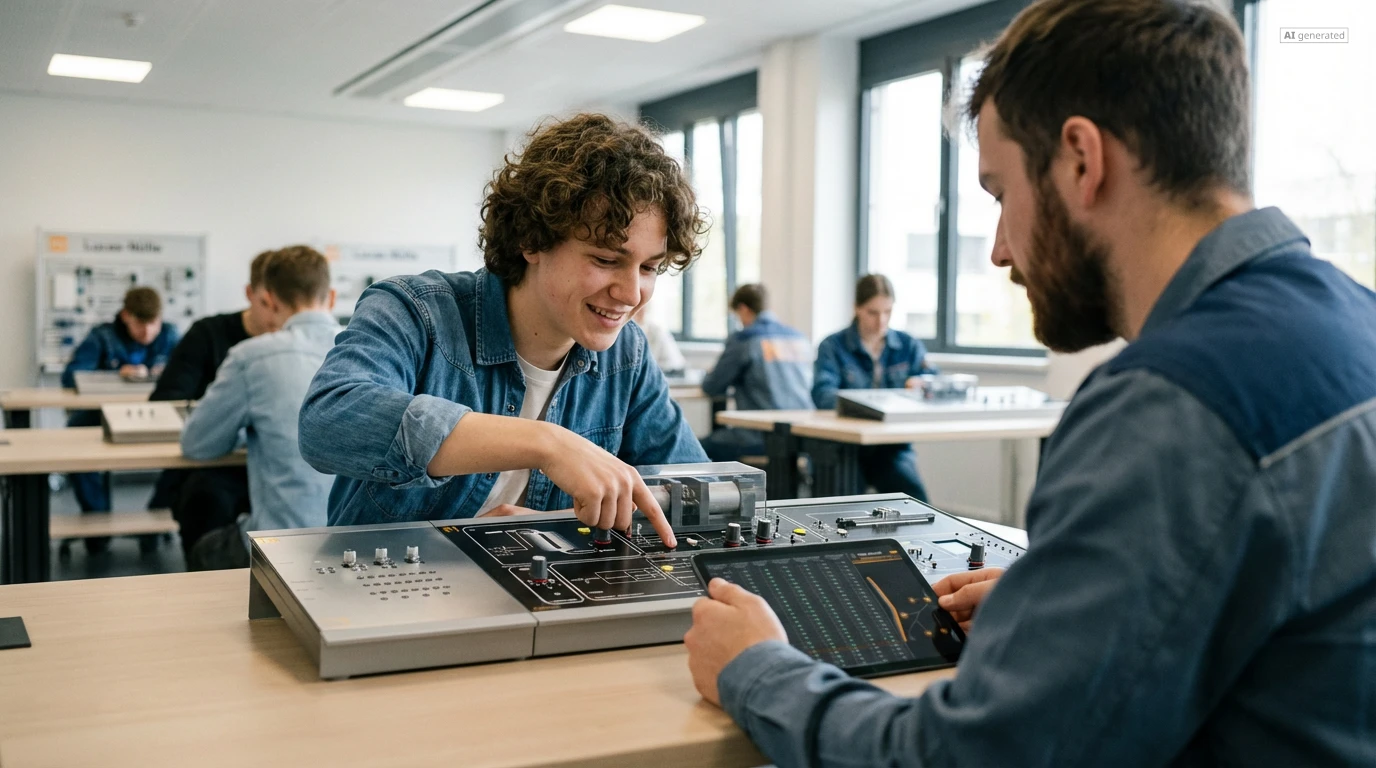
Learners working with RXLea on a tablet at a Lucas-Nuelle training system
RXLea

From Knowledge Comes Capability.

You guide the learning

Where theory and practice go hand in hand.

RXLea brings a new way of learning: project-based, hands-on and clearly structured. Learners solve real-world tasks, while instructors save time on preparation. Interactive modules, smart analytics and real hardware create a modern, efficient learning world.

Hands-on and interactive

Animations, interactive tasks and realistic scenarios build a deep understanding. All content is organized into clear learning paths for focused, hands-on learning.

Digital support

3D assembly animations and digital instructions simplify complex procedures, reduce errors and help learners work more independently.

Visual support

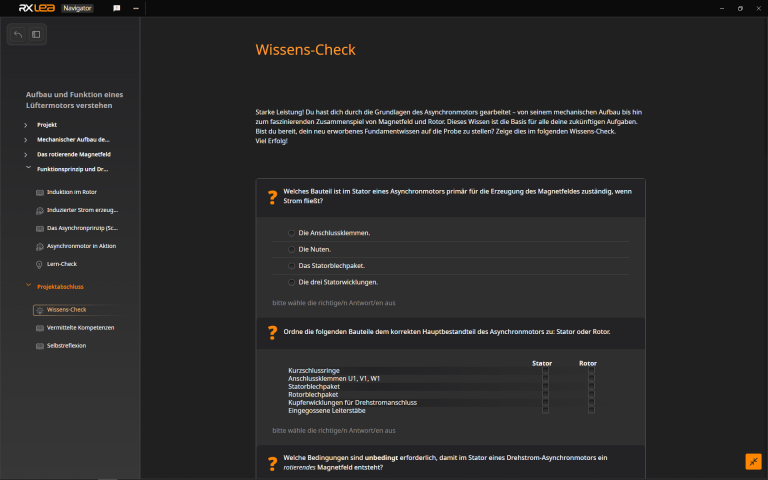
Overview graphics, screenshots and sample animations make the learning world transparent. Photos from the learning packages are also available, including country-specific versions where needed.

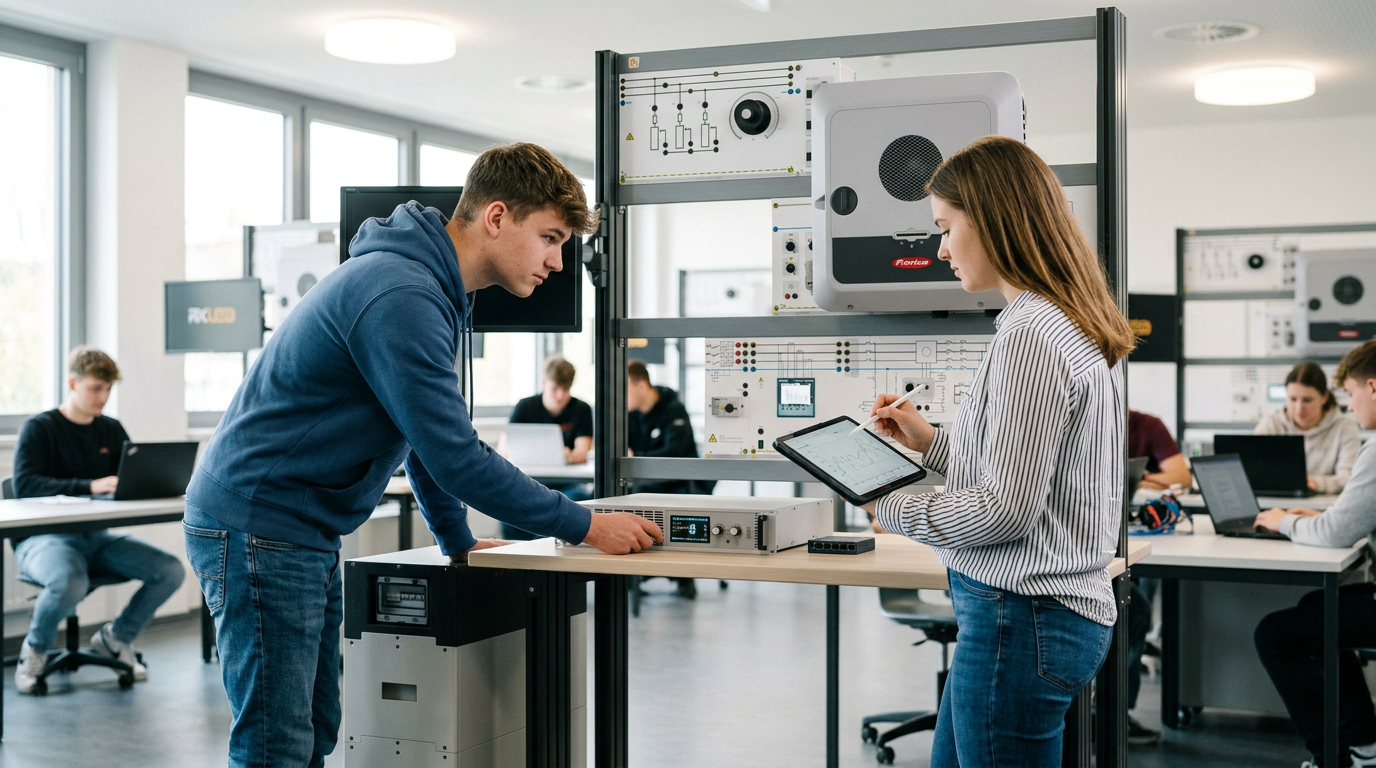
Learners using a tablet at an energy training system
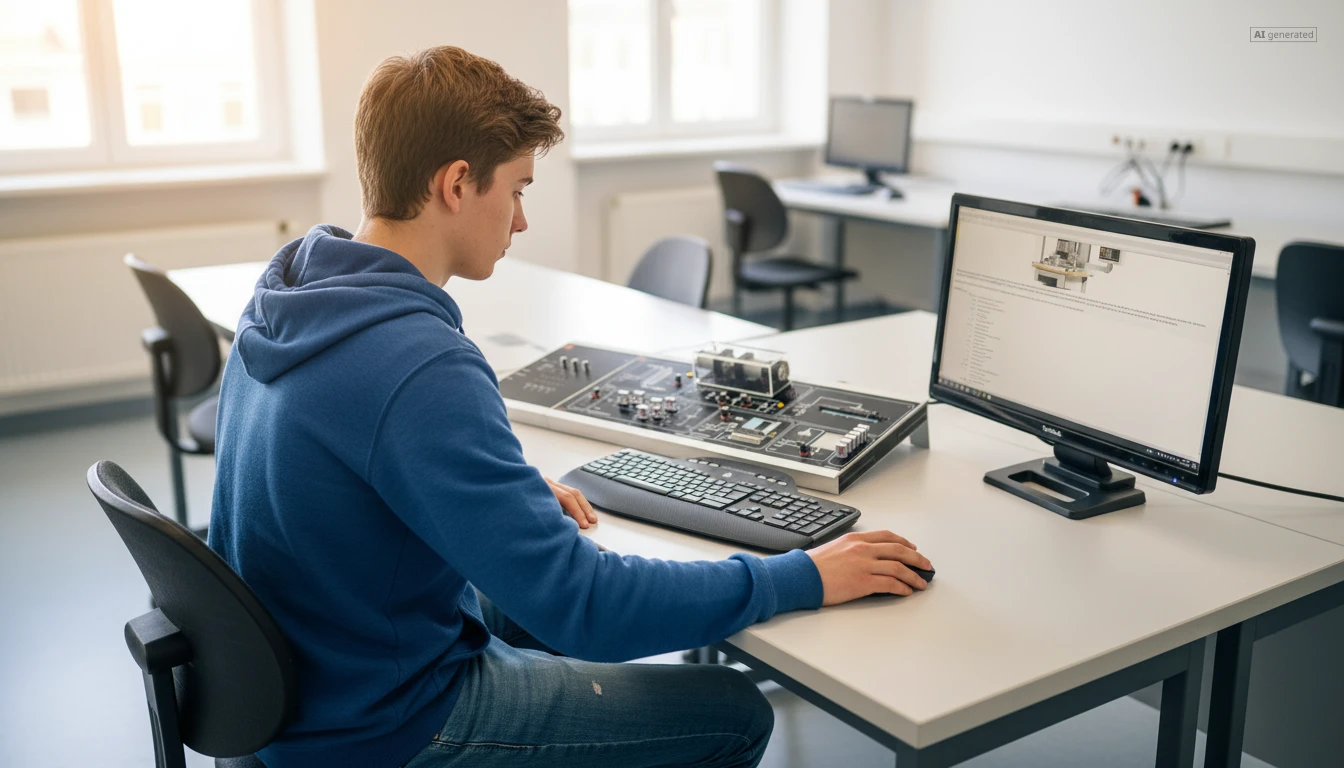
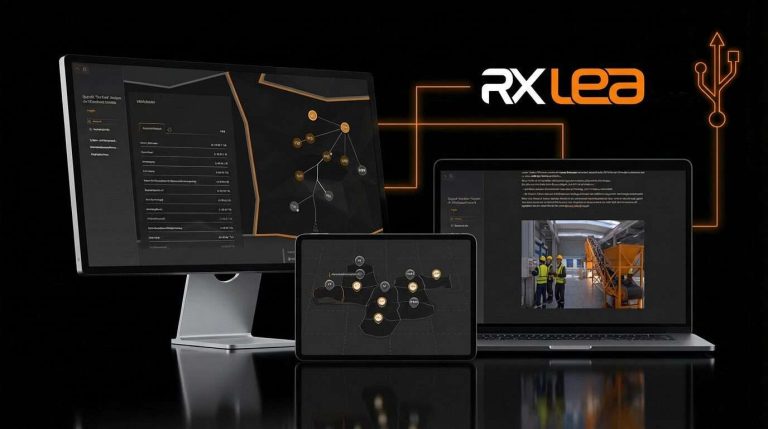
RXLea on desktop, laptop and tablet
RXLea Path Creator for building learning journeys
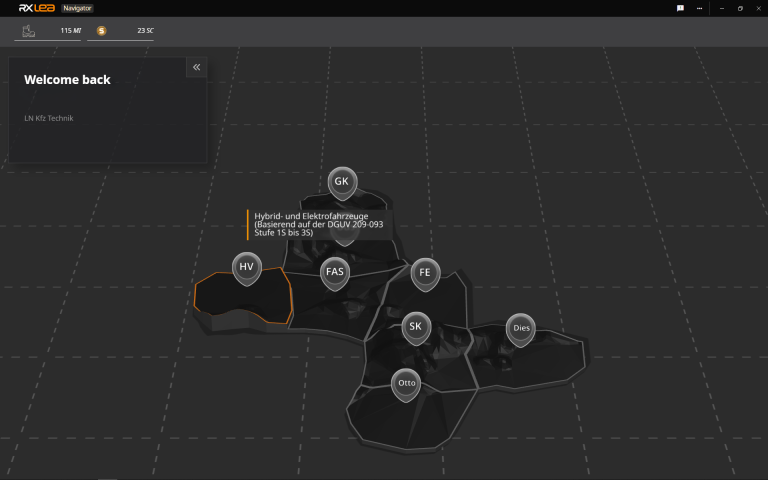
RXLea Navigator showing the learning world
Learn more about RXLea
Newsletter

Stay ahead in
technical training.

Get the latest training systems, product launches and educational insights, delivered directly to your inbox.

Your email address

By subscribing, you agree to our Privacy Policy. You can unsubscribe at any time.

 Please select at least one category before subscribing.
I'm interested in - select all that apply