


Optoelectronics
Optoelectronics
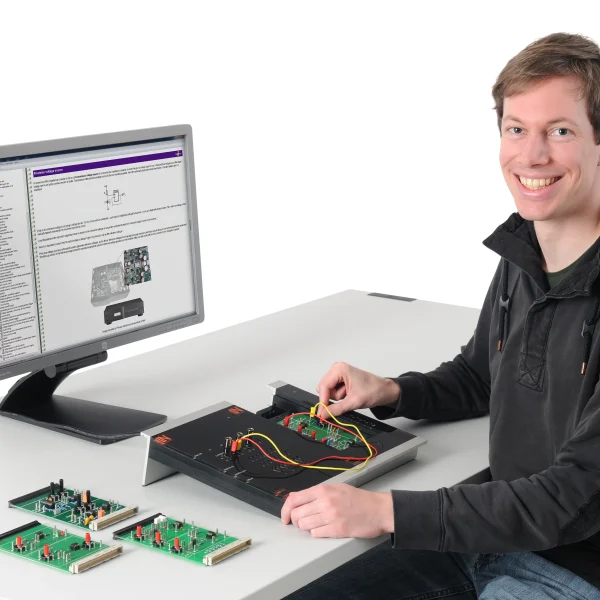
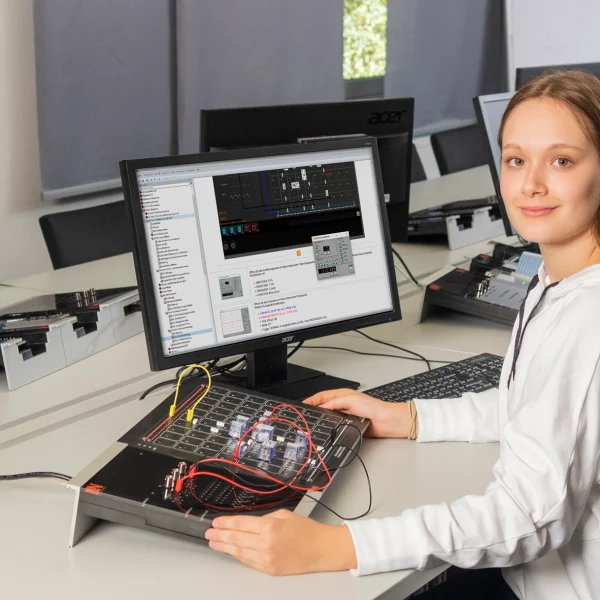
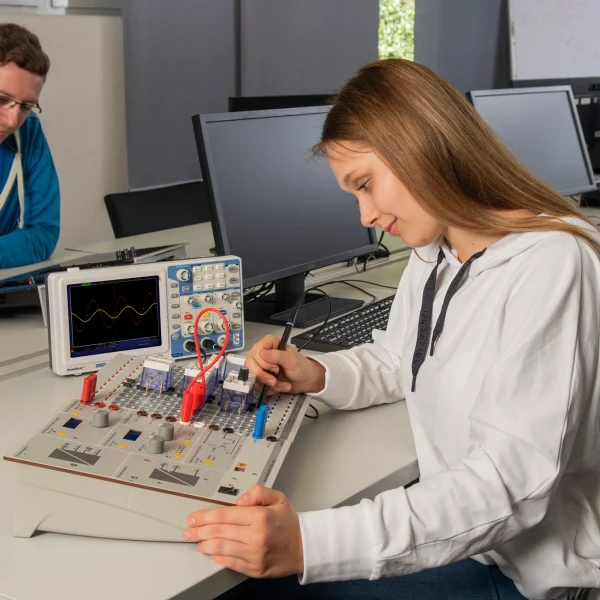
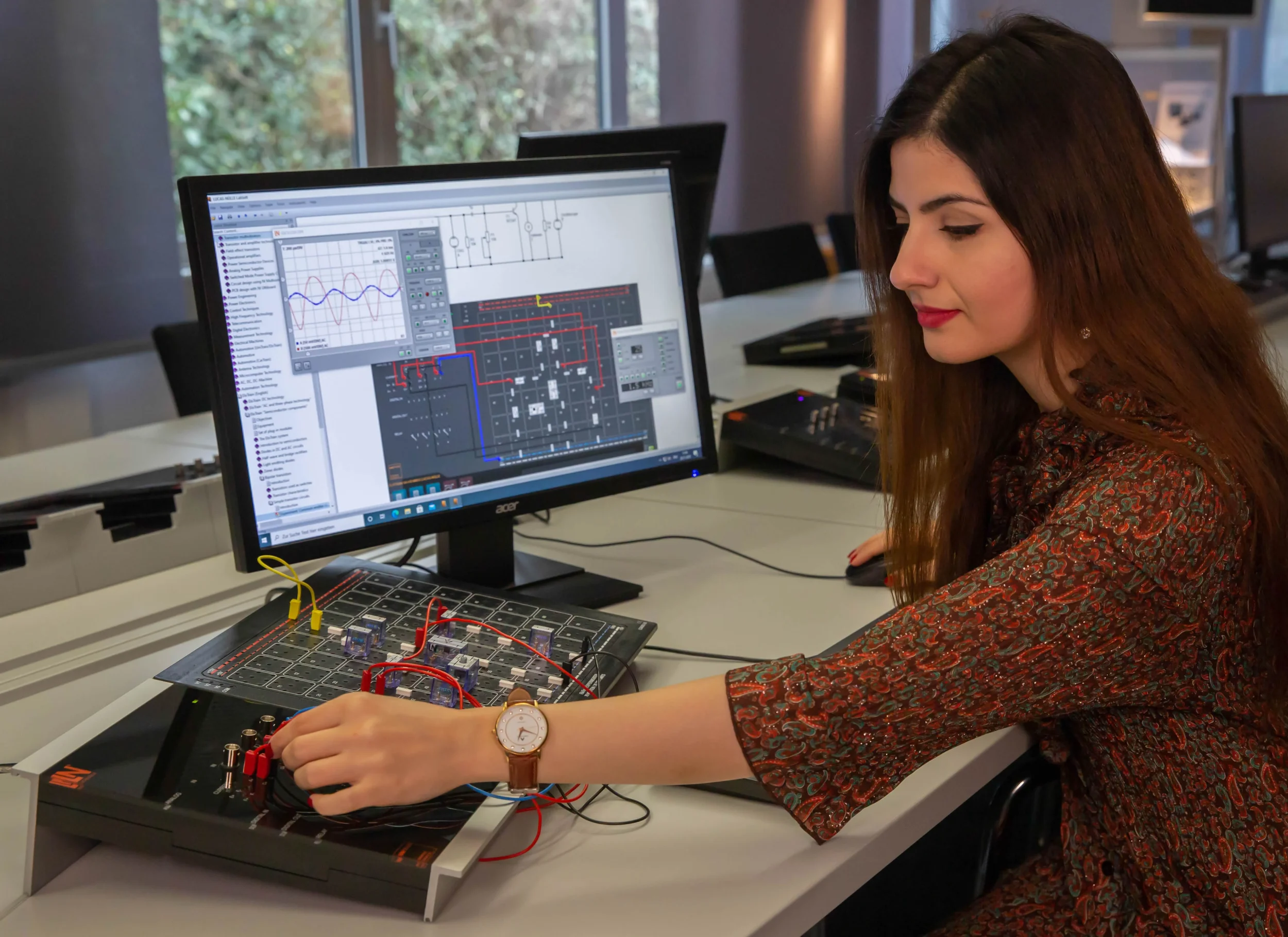
Interactive training system for the experimental investigation of optoelectronic components, sensors and fiber-optic links. Learners build circuits on the 2 mm plug-in board and take measurements with the instruments in LabSoft.
- Recording LED characteristics
- Investigating the photocell
- Exploring switching behavior of optoelectronic components
- Testing a free-space optical link
- Characterization of optoelectronic transmitters and receivers
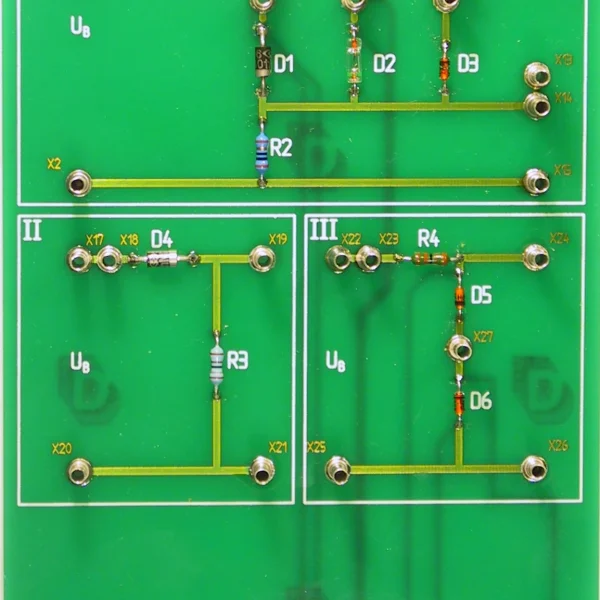
- Building circuits exactly as in the circuit diagram
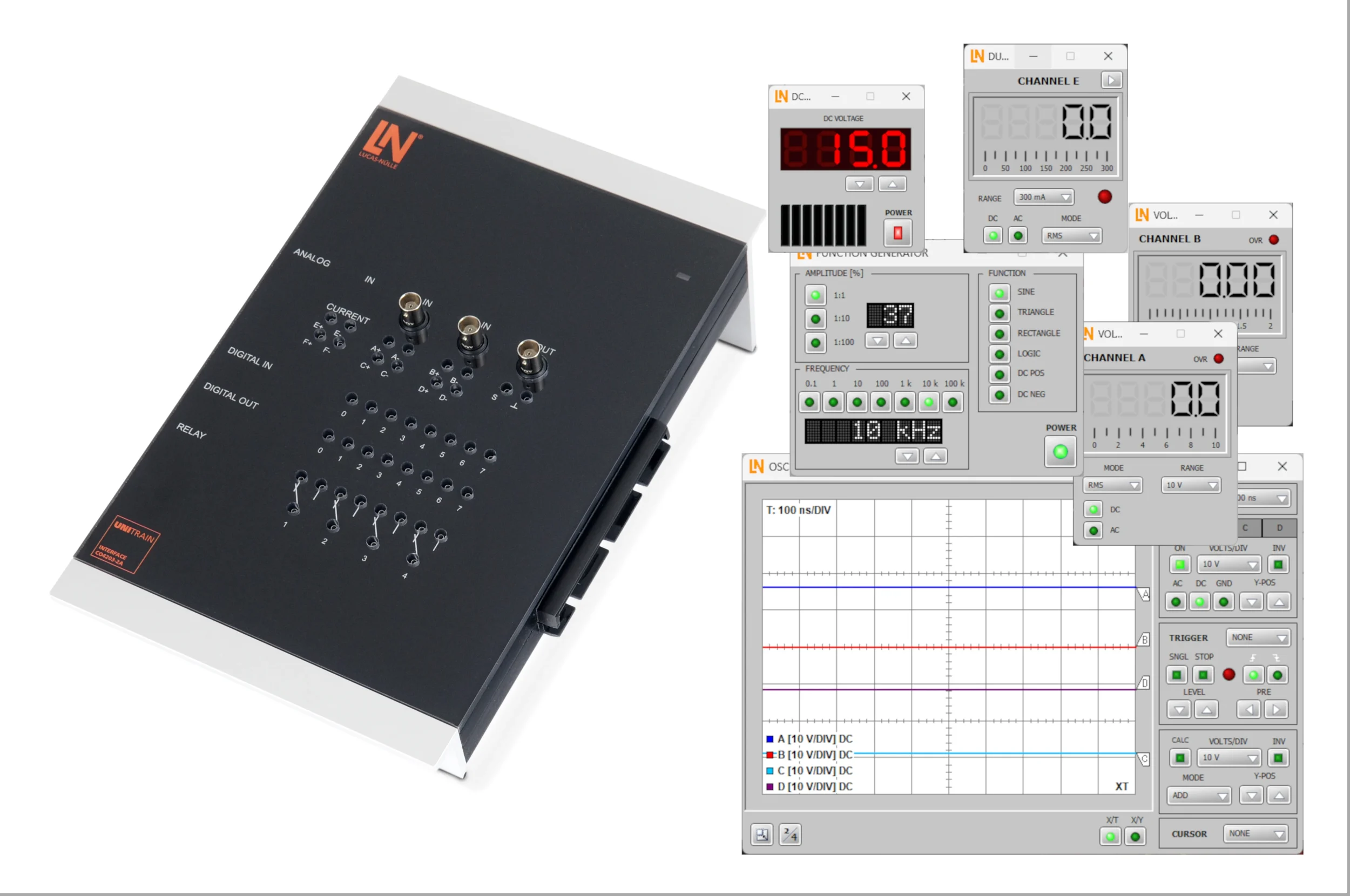
- UniTrain interface
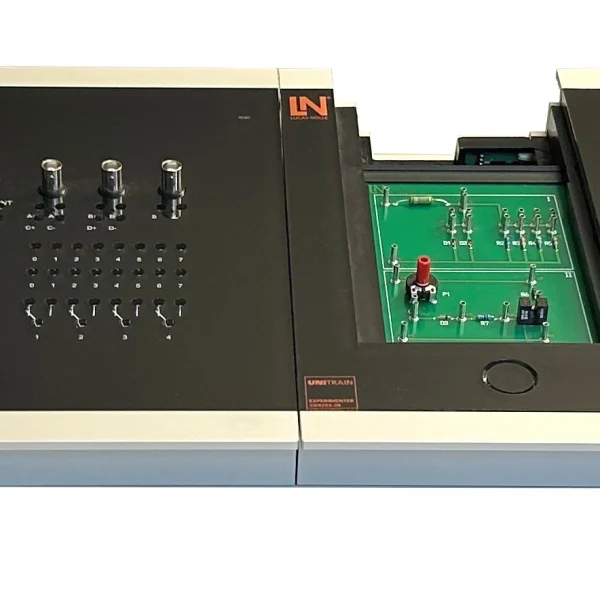
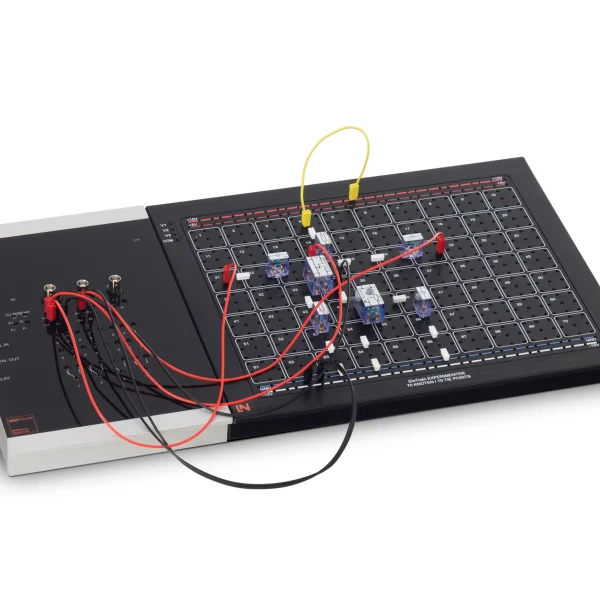
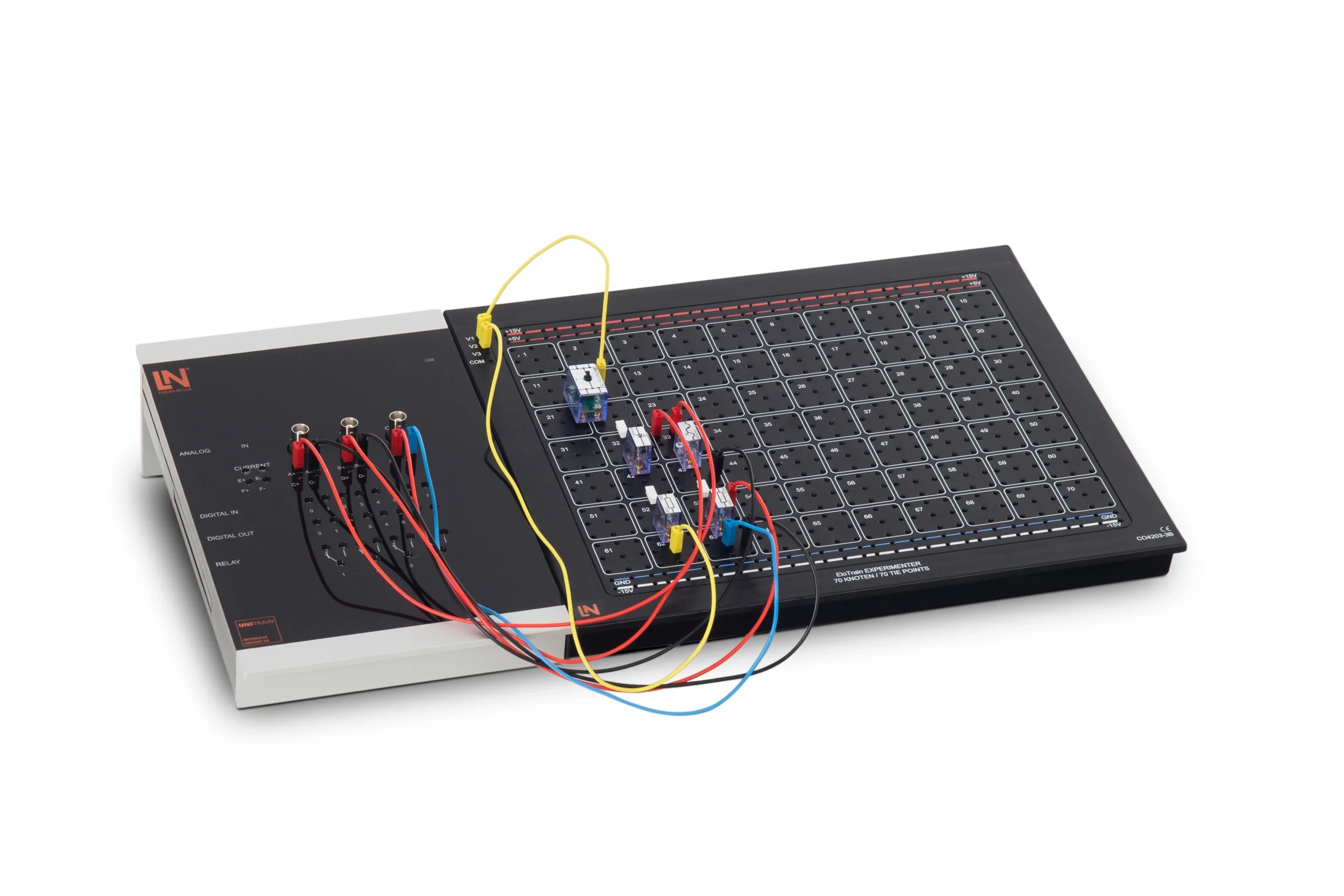
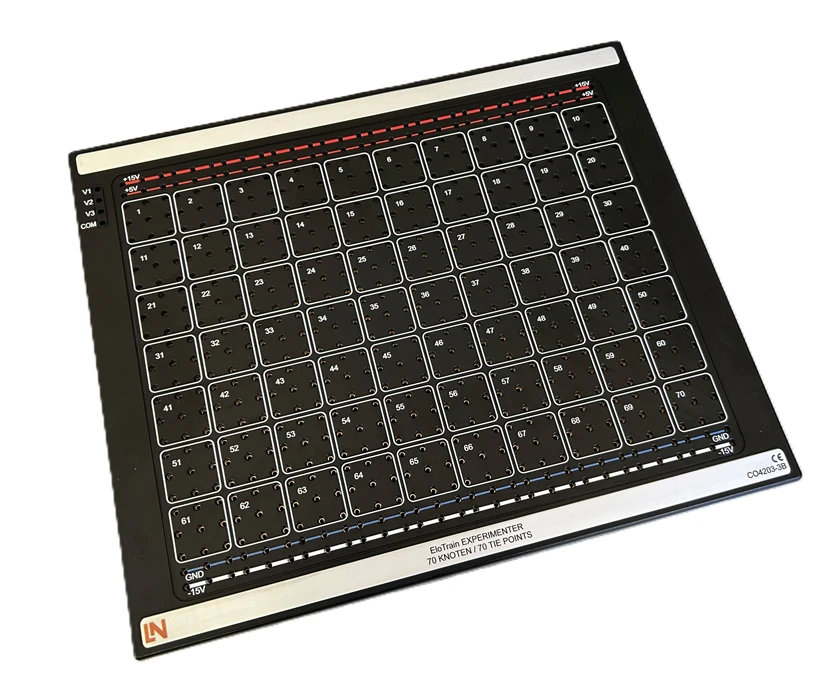
- EloTrain 2 mm Experimenter
Interference-resistant optical data transmission, galvanic isolation and industrial sensor technology are all based on optoelectronic components. The training system teaches the design, characteristics and operation of optoelectronic transmitters, receivers and transmission links. On the 2 mm plug-in board, learners set up experiments with diodes, optical fibers and optocouplers and analyze them with the instruments in LabSoft. They record the characteristic curves of LEDs and photodetectors, transmit signals through free space and via glass fiber, and superimpose the white light of a dimmable incandescent lamp on both. Finally, learners assess which type of transmission works under which interference conditions.
| Course | |
| CO4206-1E | Course, EloTrain 5: Optoelectronics |
| Accessories | |
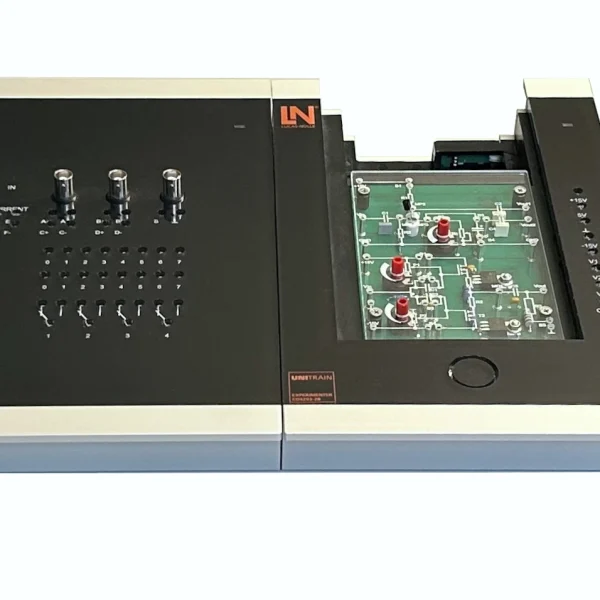
| CO4203-2A | UniTrain Interface mit virtuellen Instrumenten (Basis VI) |
| CO4203-3B | EloTrain Experimenter |
| SO5146-1N | EloTrain set of connection cables and plugs for 2mm system |
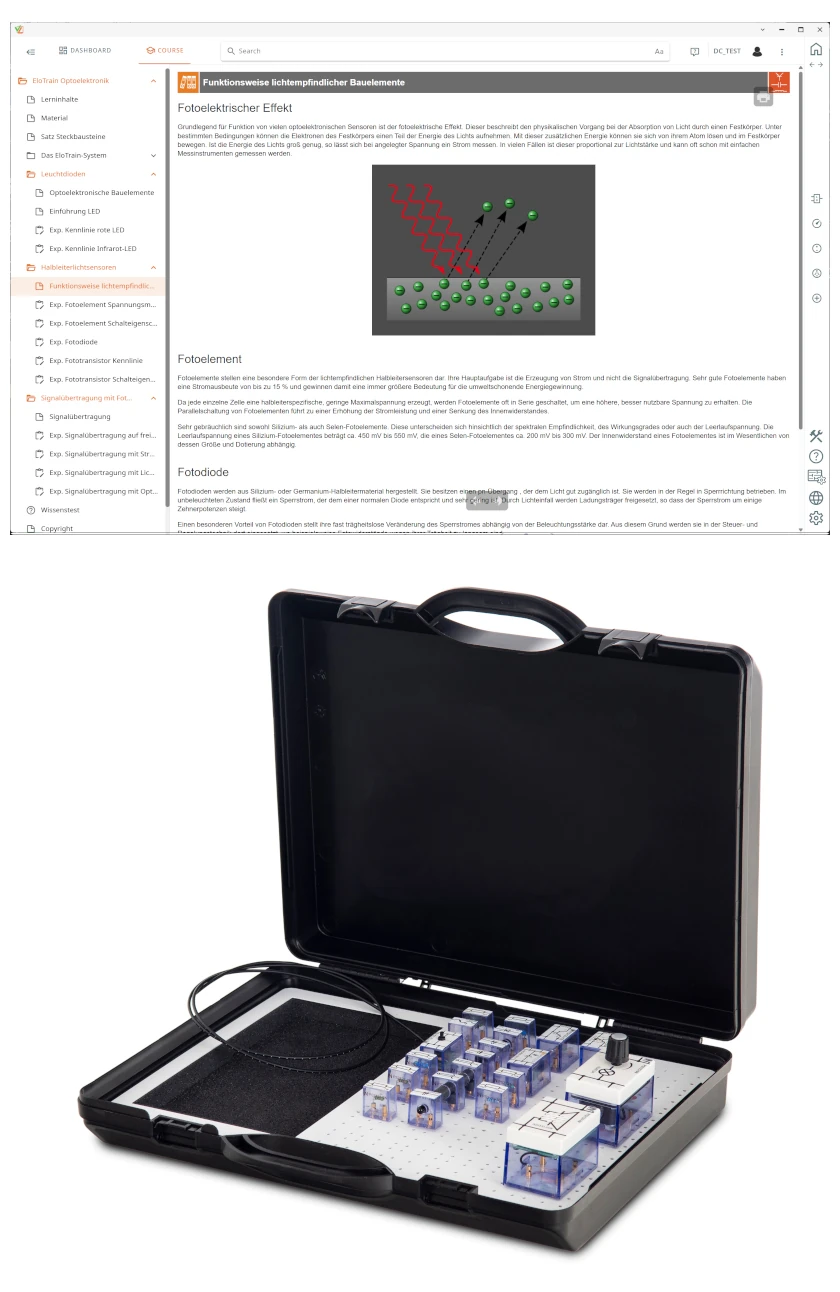
| CO4203-2Y | UniTrain storage case for one UniTrain system |
Learning Content in Detail
Recording LED characteristics
Investigating the photocell
Exploring switching behavior of optoelectronic components
Testing a free-space optical link
Analyzing fiber-optic transmission
Evaluating optocouplers
Features & Applications
- Characterization of optoelectronic transmitters and receivers — Learners determine the threshold voltages and characteristic curves of red LEDs and IR LEDs and investigate the behavior of photocells, photodiodes and phototransistors.
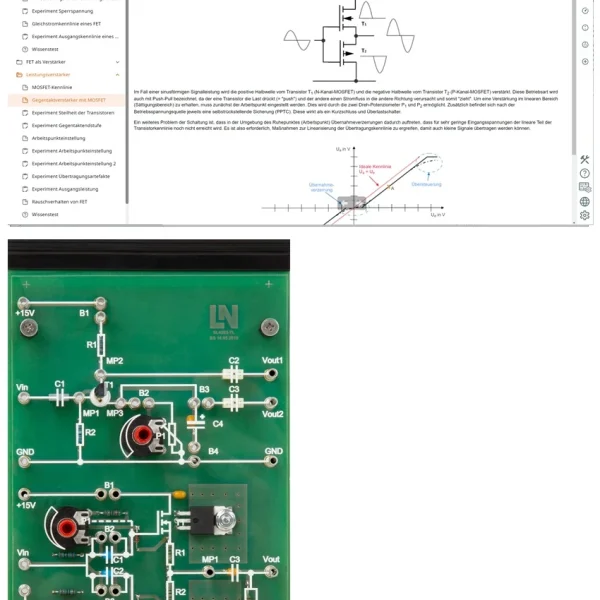
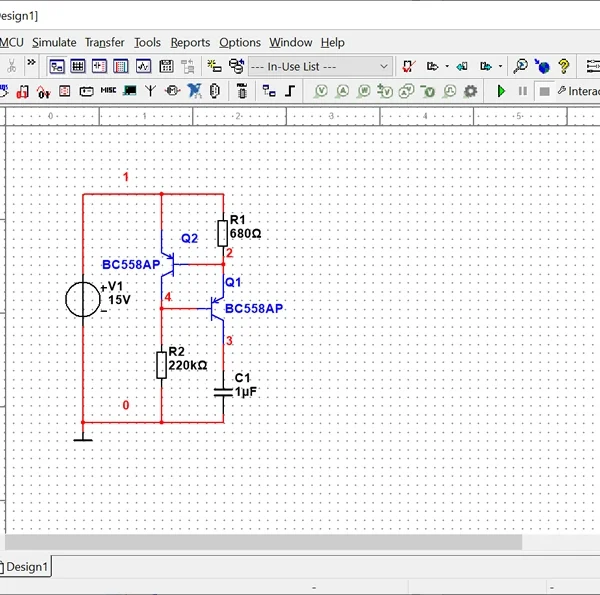
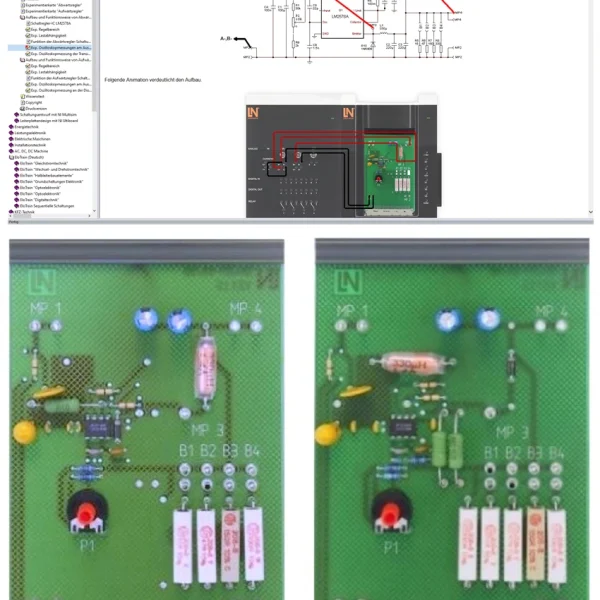
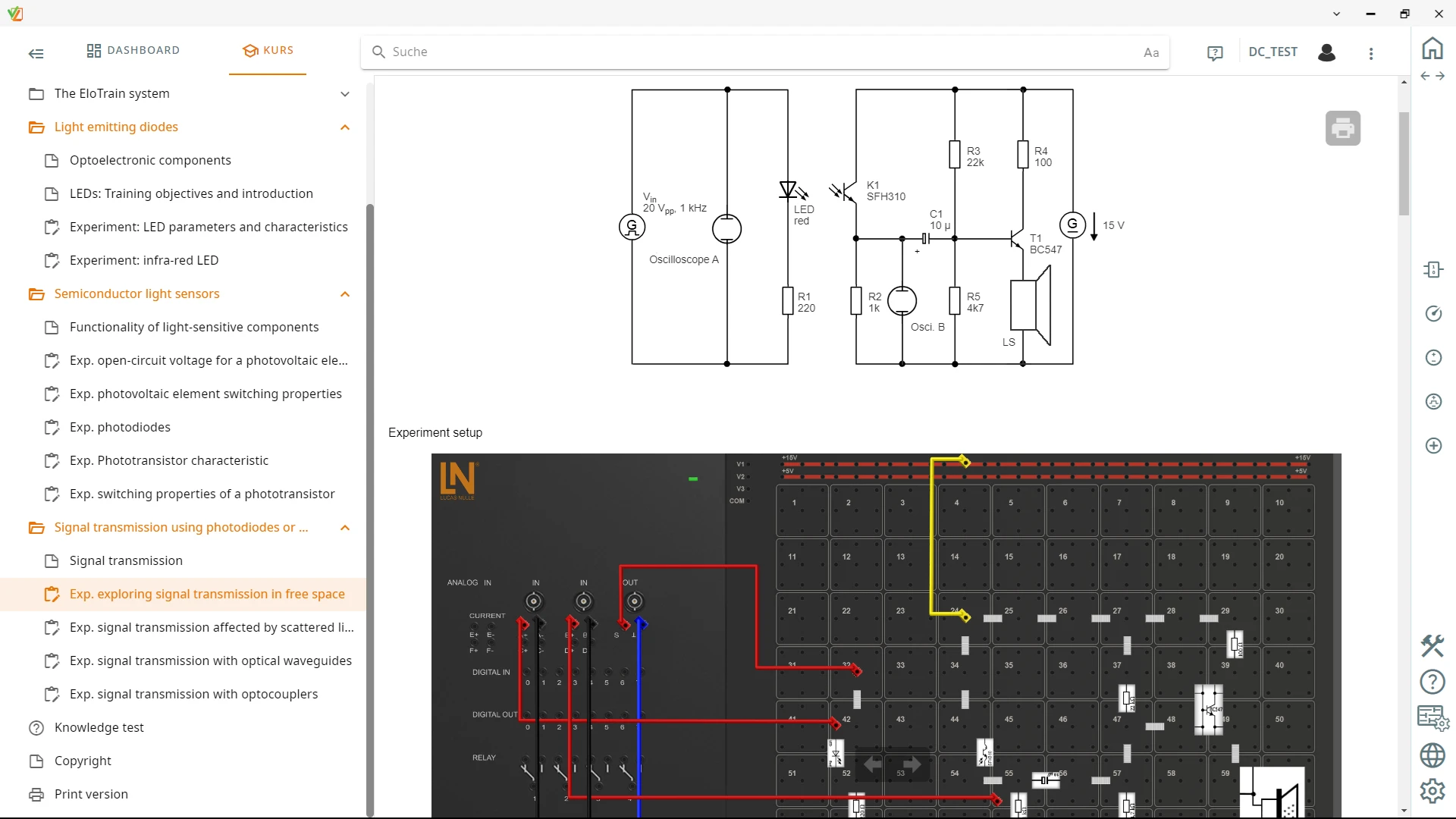
- Building circuits exactly as in the circuit diagram — Learners transfer the circuit layout directly from the circuit diagram to the experiment board.
- UniTrain interface — The central measurement and control interface with its wide-range power supply offers six analog differential amplifier inputs and integrated analog outputs for precise signal analysis.
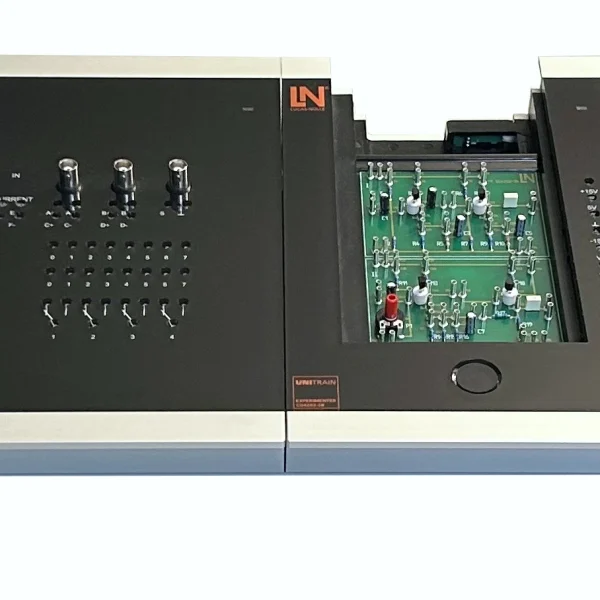
- EloTrain 2 mm Experimenter — The Experimenter offers 70 insulated nodes, each with nine jacks on a 7.5 mm grid, and provides supply voltages and three-phase outputs in a clearly laid-out arrangement.
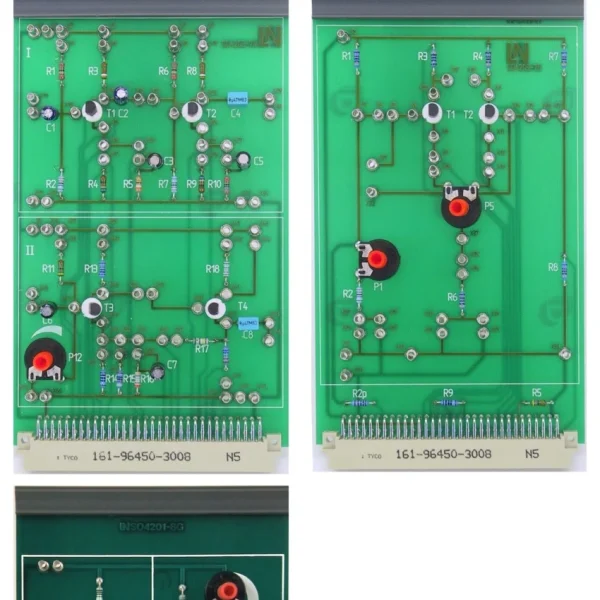
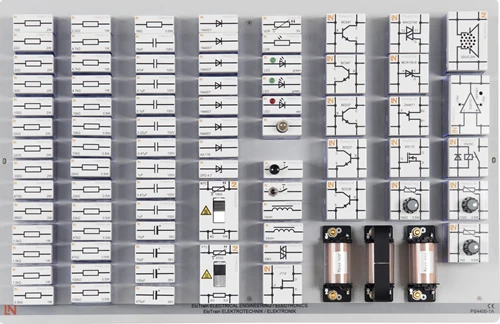
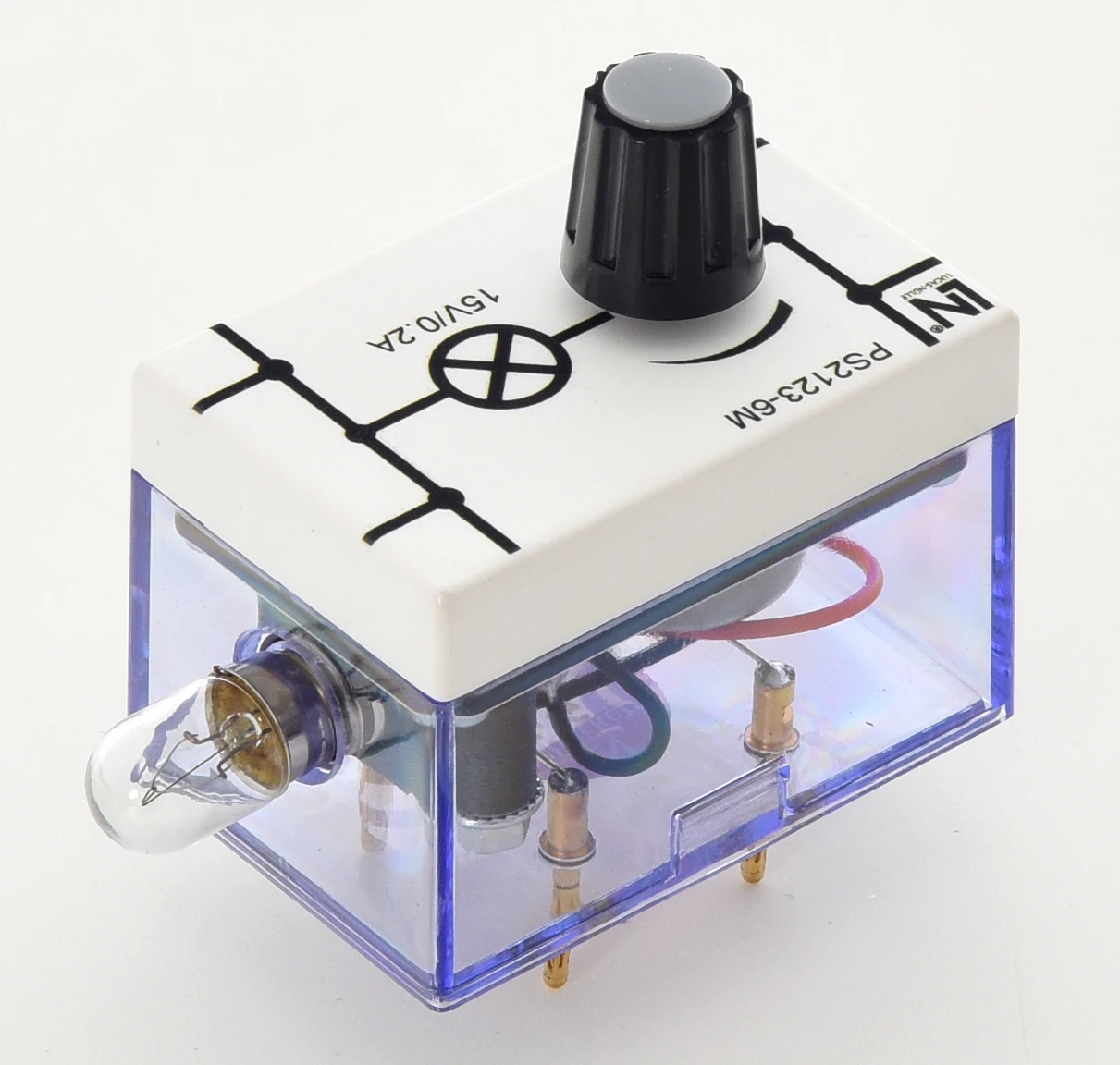
- Transparent polycarbonate components — The sturdy plastic housings protect the components and allow them to be inspected visually. The circuit symbol is printed on the top.
- Optical signal transmission through free space — Learners set up free-space optical links, compare red and infrared light transmitters and assess the range of the receiver acoustically and visually.
- Signal transmission via optical fiber — Learners connect glass fiber cables to the transmitter and receiver, transmit visible and infrared light signals and investigate the attenuation of flexible light guides.
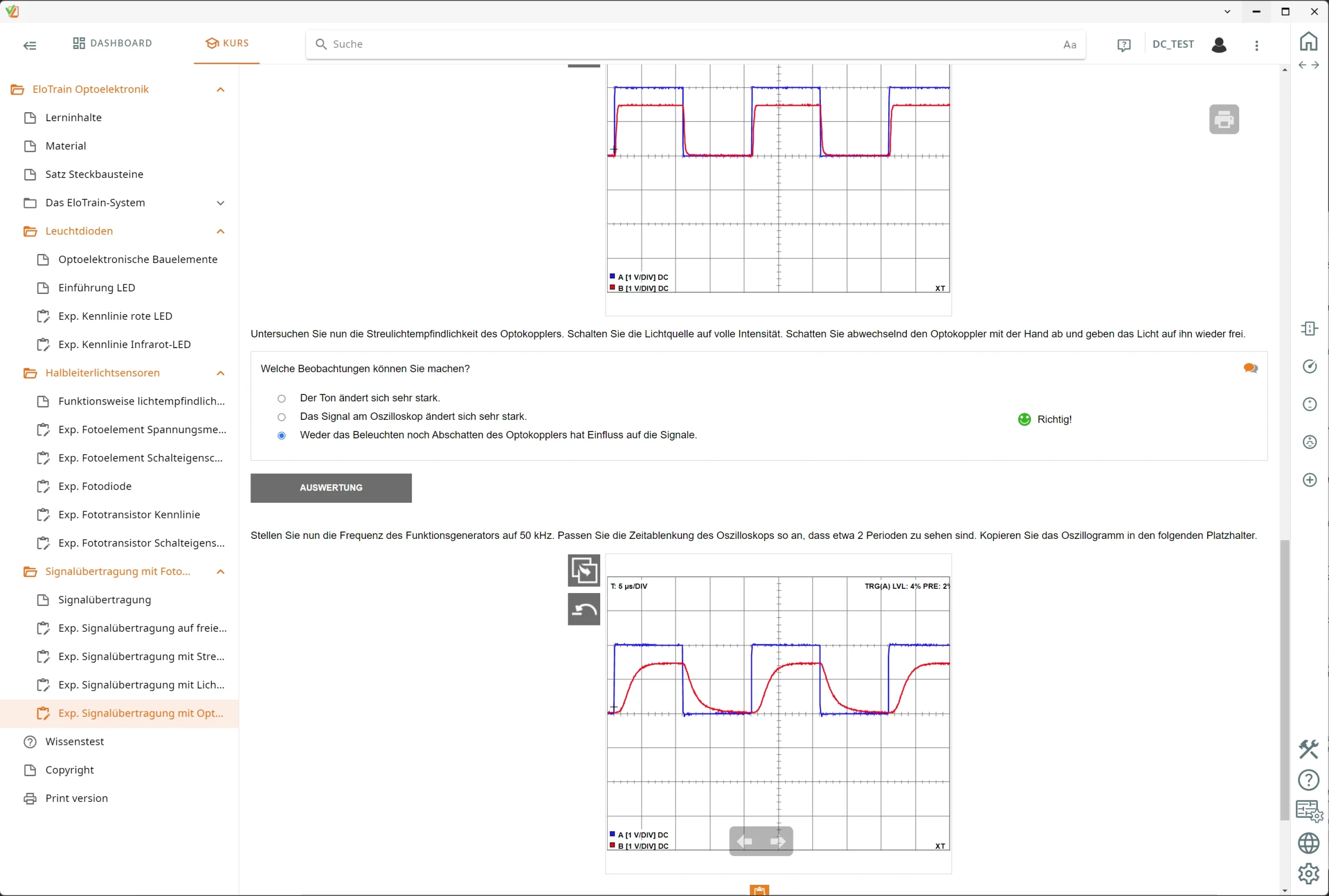
- Signal transmission with an optocoupler — Learners analyze the stray light sensitivity of an optocoupler component, investigate the transmission behavior at high frequencies and assess its interference immunity.
- Investigating the effects of ambient and stray light — Learners superimpose the white light of a dimmable incandescent lamp on free-space and fiber-optic links and evaluate the signal-to-noise ratio and DC offsets.
- Oscilloscope with XY mode — The 2/4-channel oscilloscope dynamically records the characteristic curves of semiconductor components in X-Y mode.
- Variable DC supply — The DC source supplies voltages of 0 to 40 V at a maximum of 1 A for the DC supply of the circuits.

From Knowledge Comes Capability.
You guide the learning
Where theory and practice go hand in hand.
RXLea brings a new way of learning: project-based, hands-on and clearly structured. Learners solve real-world tasks, while instructors save time on preparation. Interactive modules, smart analytics and real hardware create a modern, efficient learning world.
Hands-on and interactive
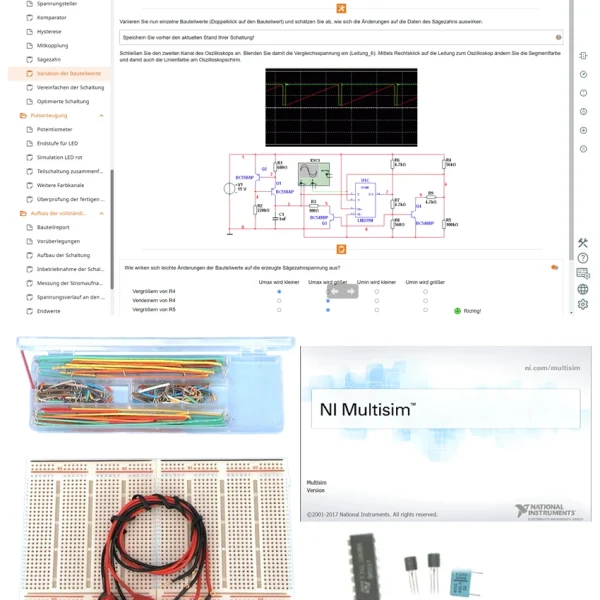
Animations, interactive tasks and realistic scenarios build a deep understanding. All content is organized into clear learning paths for focused, hands-on learning.
Digital support
3D assembly animations and digital instructions simplify complex procedures, reduce errors and help learners work more independently.
Visual support
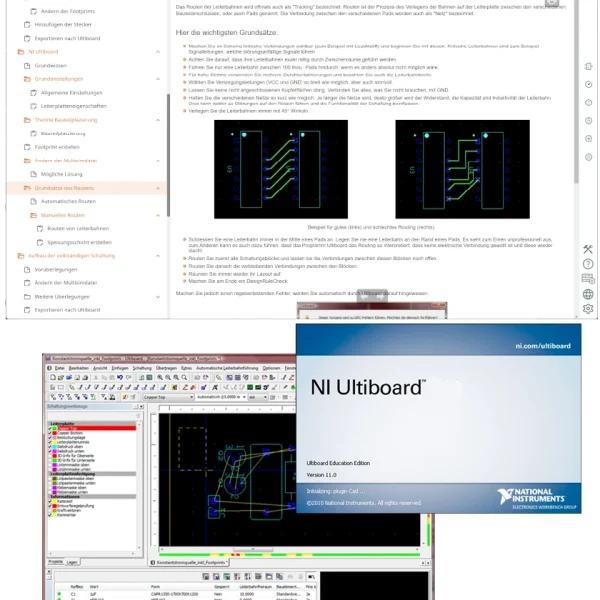
Overview graphics, screenshots and sample animations make the learning world transparent. Photos from the learning packages are also available, including country-specific versions where needed.




Stay ahead in
technical training.
Get the latest training systems, product launches and educational insights, delivered directly to your inbox.