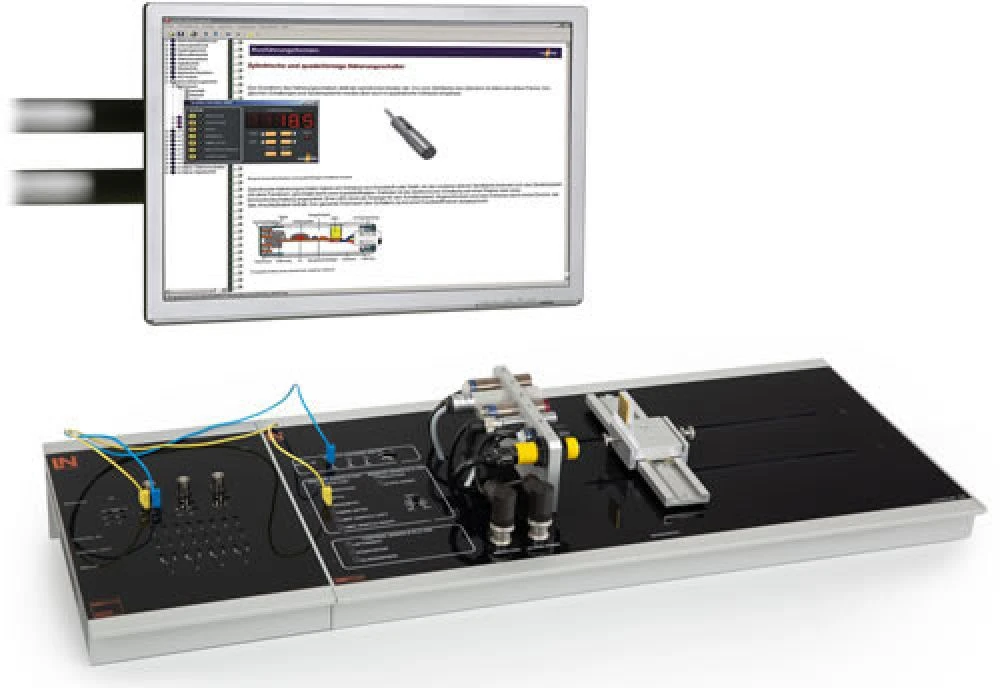



UniTrain course: sensors in automation technology
Discover how industrial sensors work. With the UniTrain system, learners analyze inductive, capacitive and optical sensors in a practical way using automated object positioning.
- Analyzing sensor principles
- Investigating material dependence
- Determining switching distances
- Calculating reduction factors
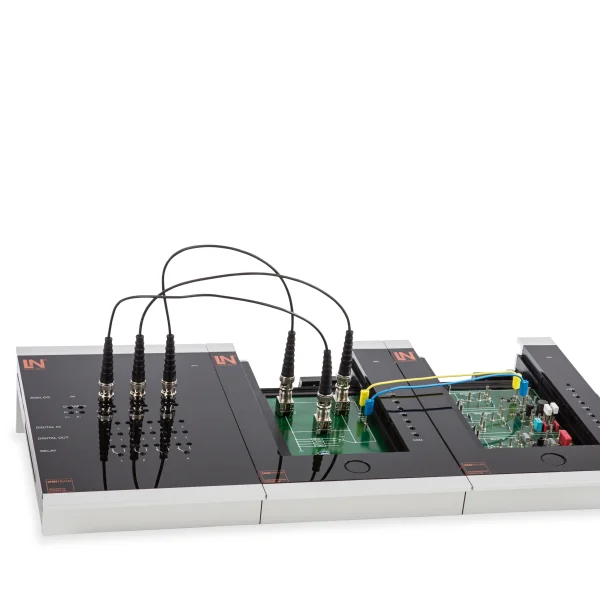
- Practical multi-sensor board
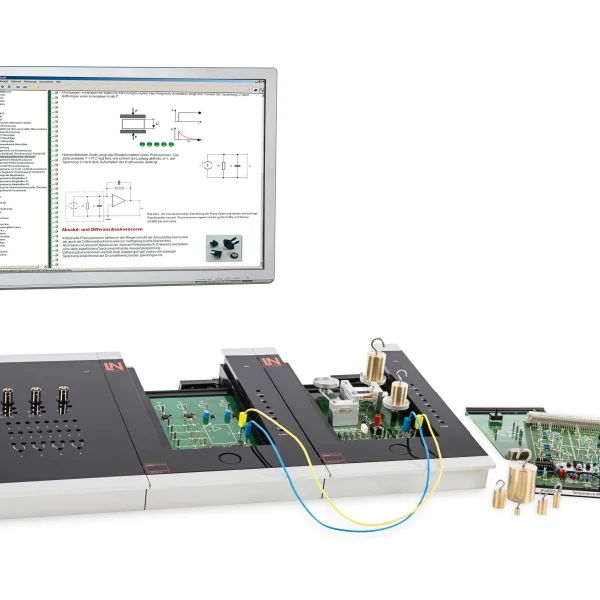
- Motorized measuring carriage
- Extensive set of material samples
- Real-time measurement via software
Industrial sensors are indispensable in modern production plants. Choosing exactly the right type of sensor determines the success of your automation processes. With this UniTrain course, you teach learners the technical design and operating behavior of typical sensors. On the compact plug-in experiment board system, they investigate inductive, capacitive, optical and magnetic sensors under real conditions. Thanks to the motorized measuring carriage and the LabSoft software, they record characteristics fully automatically. Prepare your participants optimally for industrial practice.
| Base Product | |
| CO4204-8U | Course Automation Technology 7: Sensors for automation |
| CO4203-2A | UniTrain Interface mit virtuellen Instrumenten (Basis VI) |
| CO4203-2J | UniTrain measurement accessories, shunts and connection cables |
| CO4203-2Y | UniTrain storage case for one UniTrain system |
| Options | |
| CO4002-4A | Analog sensor (optional for CO4204-8U)optional |
| CO4002-4B | Ultra sonic sensor (optional for CO4204-8U)optional |
| SO4203-2V | UniTrain storage case for experiment boardoptional |
Learning Content in Detail
Analyzing sensor principles
Investigating material dependence
Determining switching distances
Calculating reduction factors
Comparing connection methods
Determining optical sensing ranges
Testing magnetic field permeability
Recording analog characteristics
Evaluating measurement errors
Performing an ultrasonic teach-in
Features & Applications
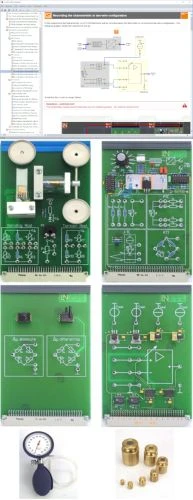
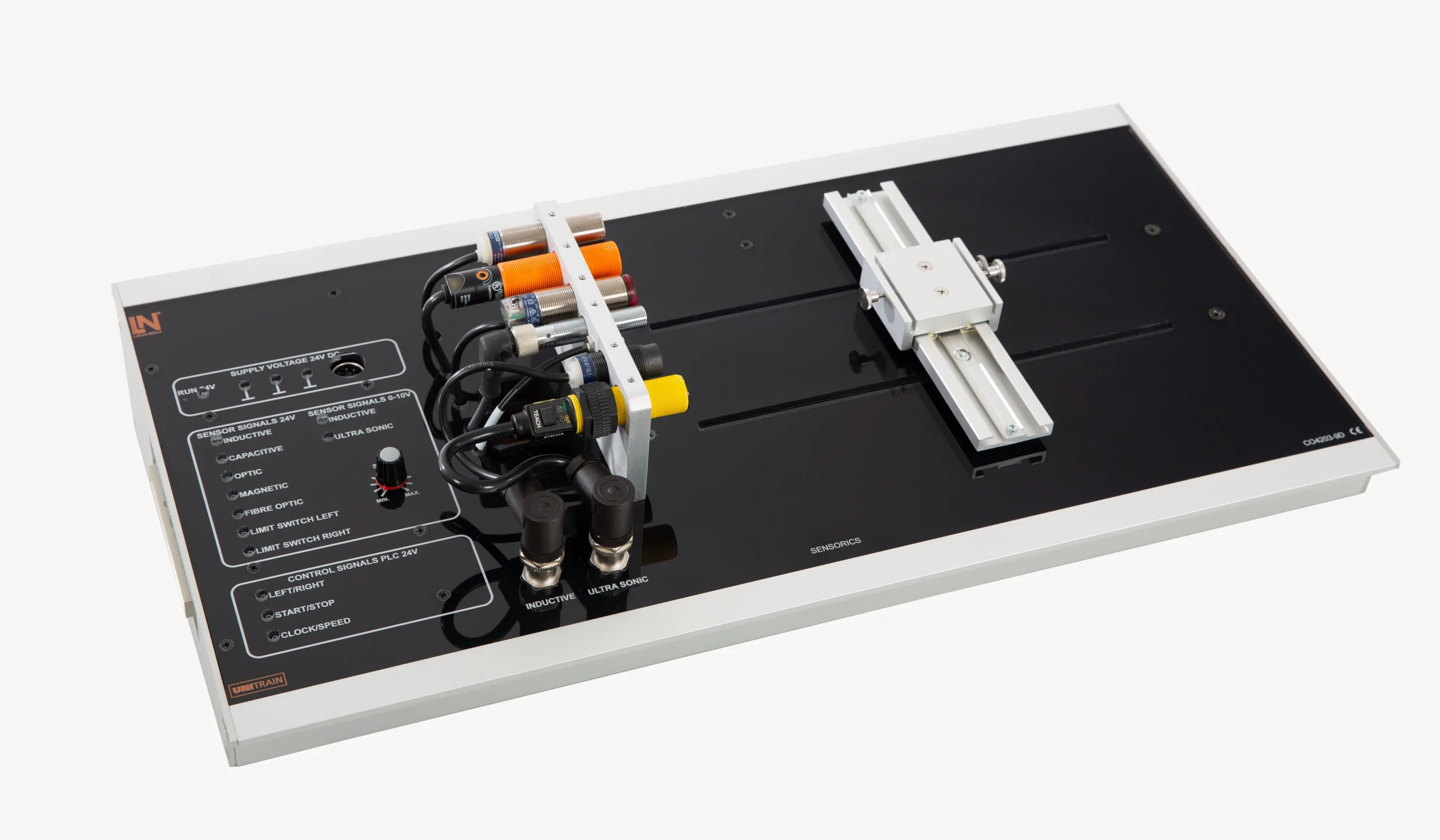
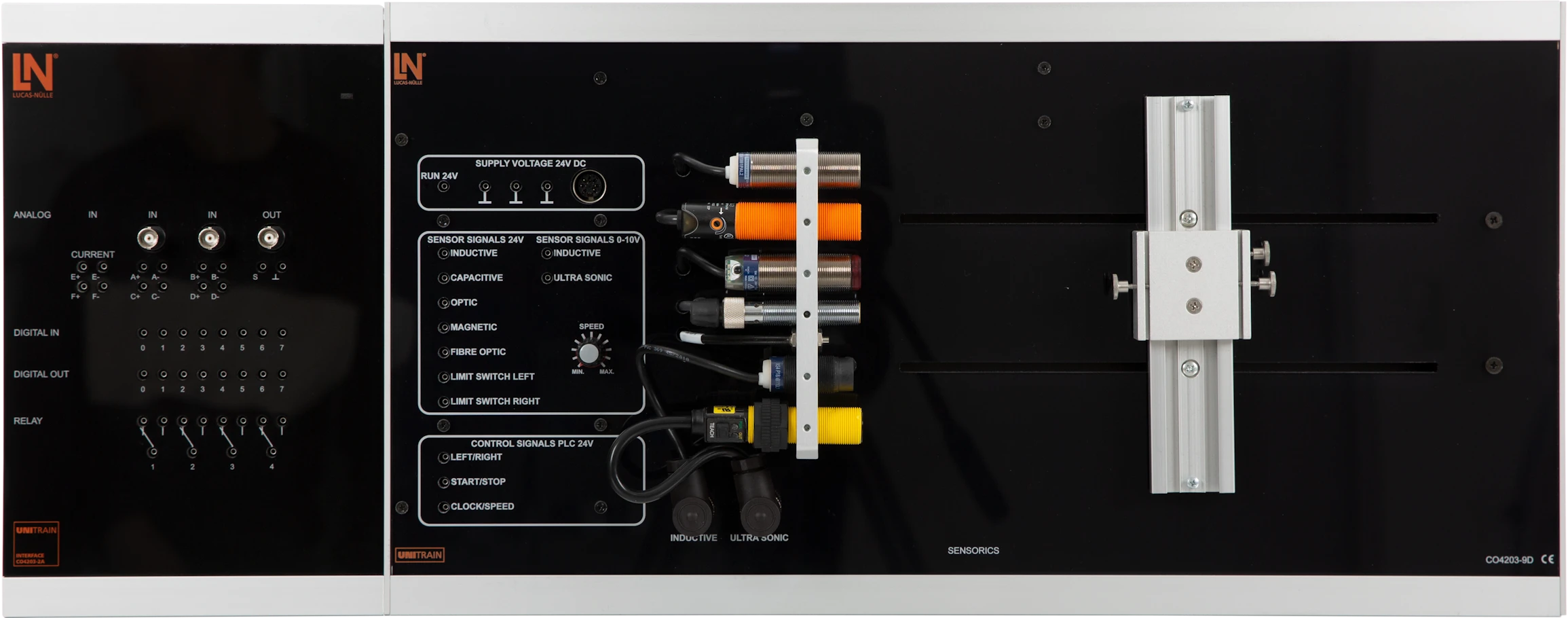
- Practical multi-sensor board — The board combines digital and analog industrial sensors. Learners compare physical operating principles directly on one platform.
- Motorized measuring carriage — A software-controlled carriage moves material samples with micrometer precision. Learners determine switching distances precisely in 0.1 mm steps.
- Extensive set of material samples — Learners investigate the response behavior using real samples such as steel, aluminum, brass, plastics and magnets.
- Real-time measurement via software — Learners visualize sensor signals and switching hystereses directly in the LabSoft software for automatic recording of characteristics.
- Expansion with analog sensors — Use expansion modules for analog sensors. Carry out advanced experiments on distance measurement.
- Inductive proximity switch — Learners detect metallic objects without contact and determine the reduction factor of different metals.
- Capacitive proximity switch — Learners detect conductive and non-conductive materials via the change in the solid-state capacitance of the integrated oscillator.
- Diffuse reflective sensor — Learners precisely evaluate the diffuse reflection of light from smooth and rough surfaces for long sensing ranges.
- Magnetic field sensor — The sensor responds selectively to magnetic fields and detects permanent magnets even through non-ferromagnetic layers.
- Slider Control Unit — Learners move the carriage step by step or continuously using the virtual software instrument with automatic zero positioning.
- Inductive analog sensor — The module outputs a displacement-proportional analog voltage and allows continuous distance characteristics to be recorded.
- Ultrasonic sensor — Learners measure distances with pinpoint accuracy via the sound propagation time and calibrate individual measuring limits using the teach-in button.
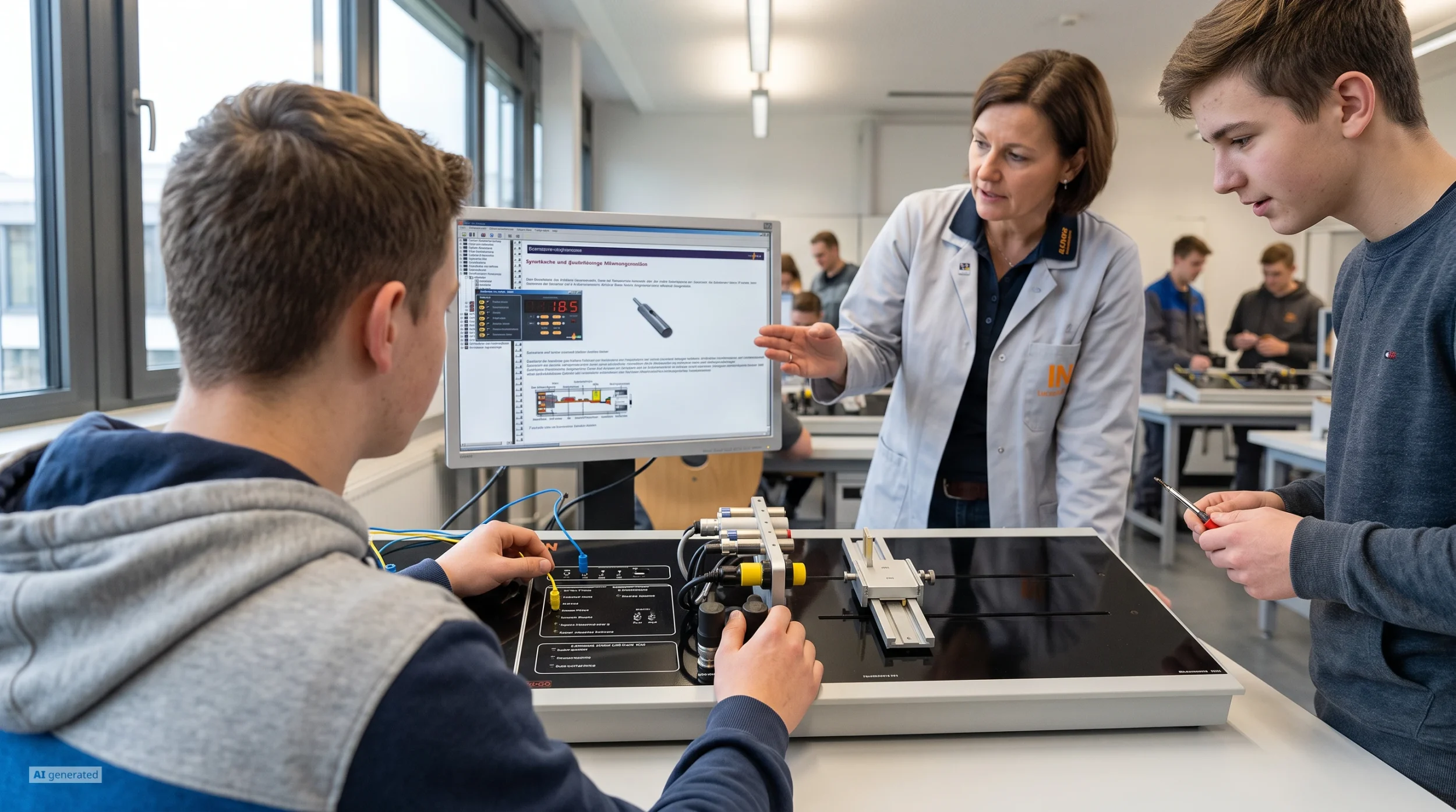
- LabSoft course interface — Learners use the interactive software to control the carriage and to document the measurement results automatically.
- Virtual measuring instruments — Integrated instruments capture analog sensor voltages in real time and display characteristics graphically.

From Knowledge Comes Capability.
You guide the learning
Where theory and practice go hand in hand.
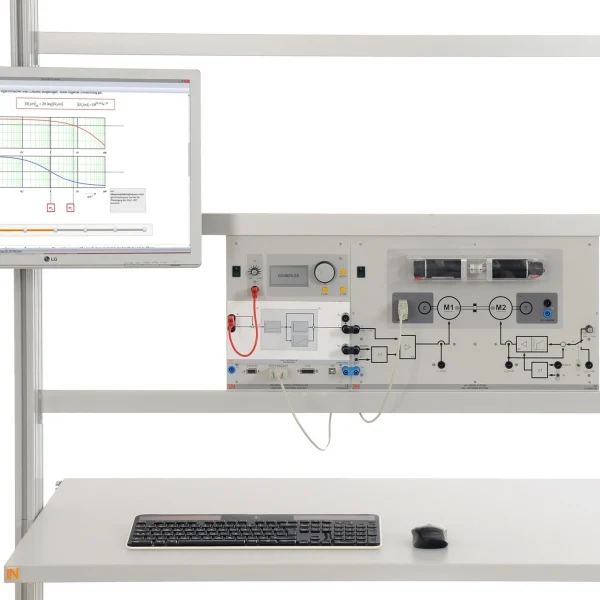
RXLea brings a new way of learning: project-based, hands-on and clearly structured. Learners solve real-world tasks, while instructors save time on preparation. Interactive modules, smart analytics and real hardware create a modern, efficient learning world.
Hands-on and interactive
Animations, interactive tasks and realistic scenarios build a deep understanding. All content is organized into clear learning paths for focused, hands-on learning.
Digital support
3D assembly animations and digital instructions simplify complex procedures, reduce errors and help learners work more independently.
Visual support
Overview graphics, screenshots and sample animations make the learning world transparent. Photos from the learning packages are also available, including country-specific versions where needed.




Stay ahead in
technical training.
Get the latest training systems, product launches and educational insights, delivered directly to your inbox.