


Wind Turbines with High-Voltage Direct Current Transmission (HVDC)
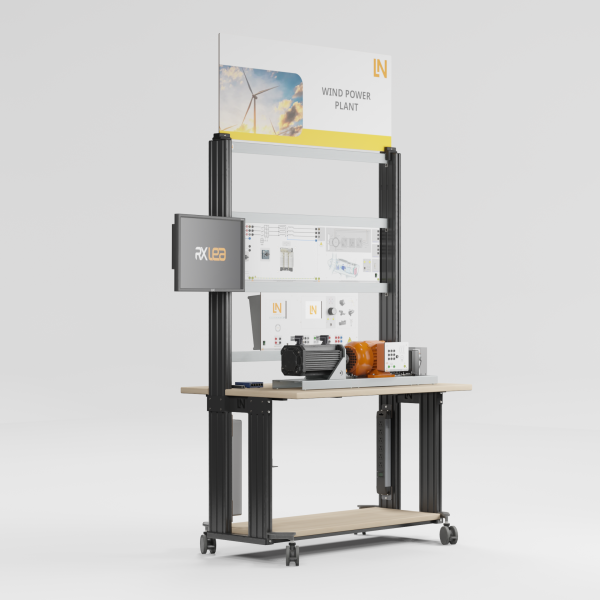
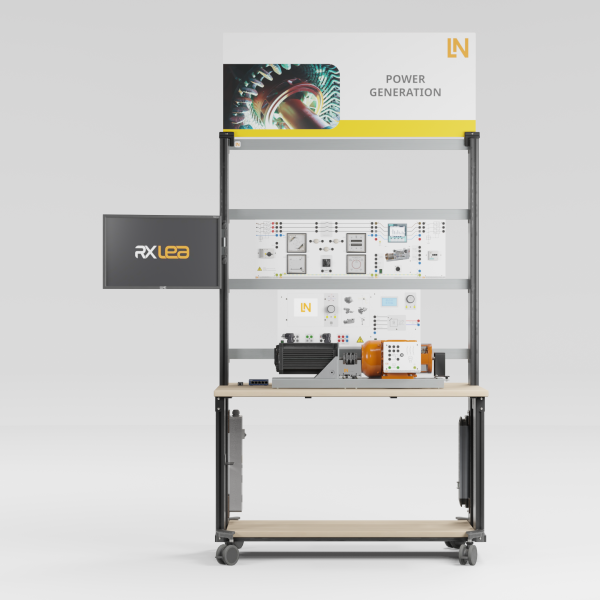
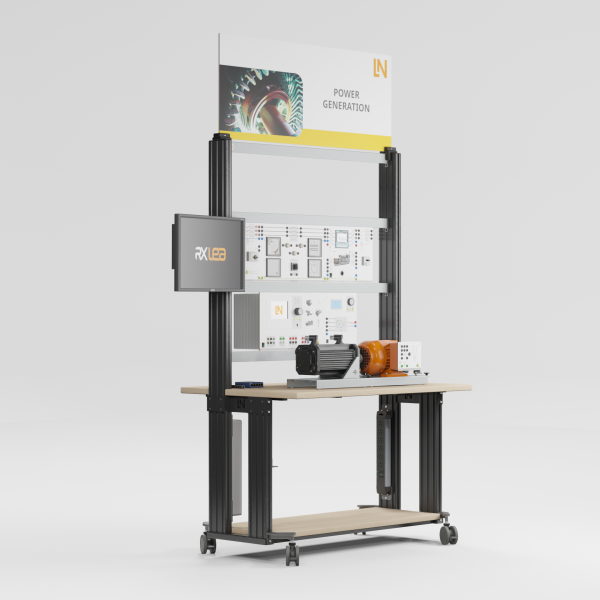
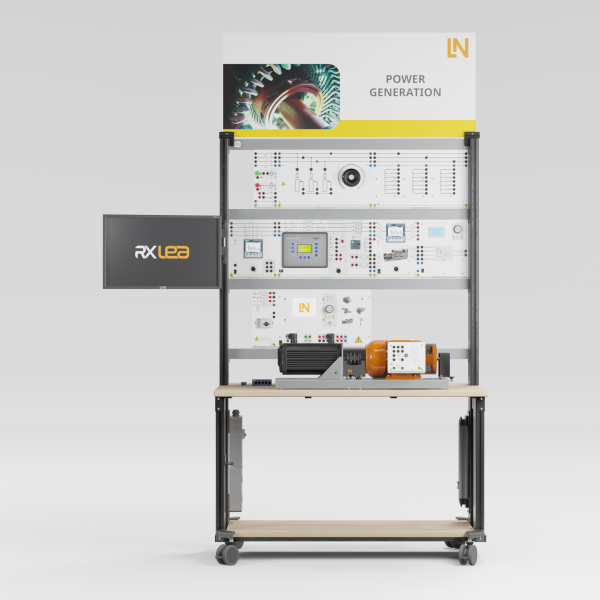
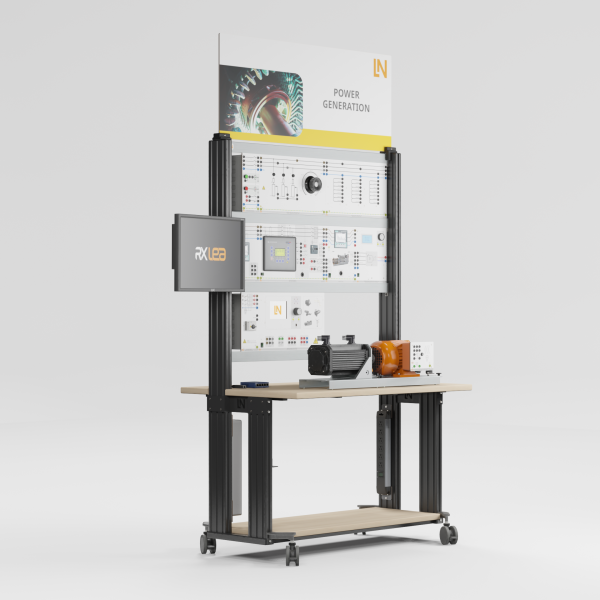
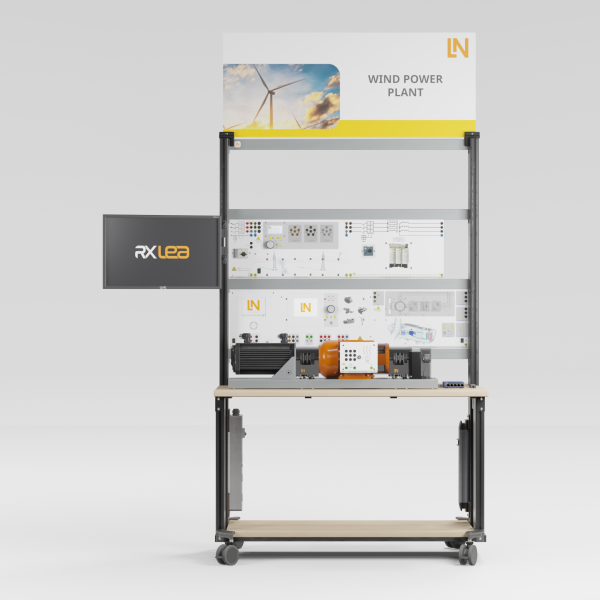
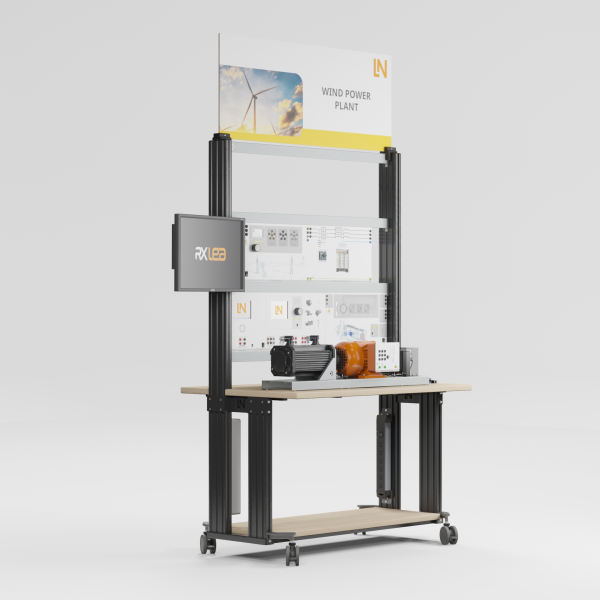
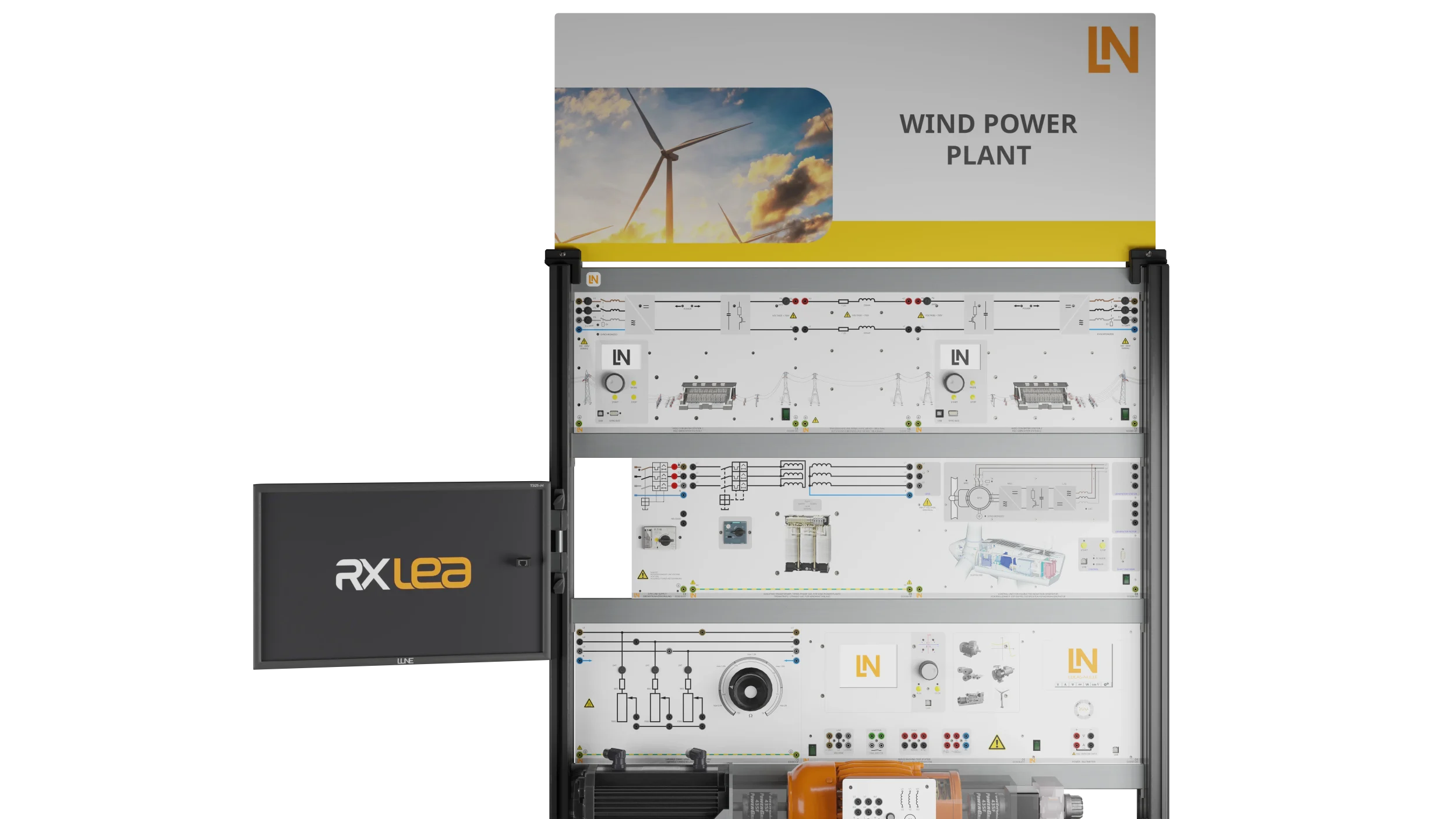
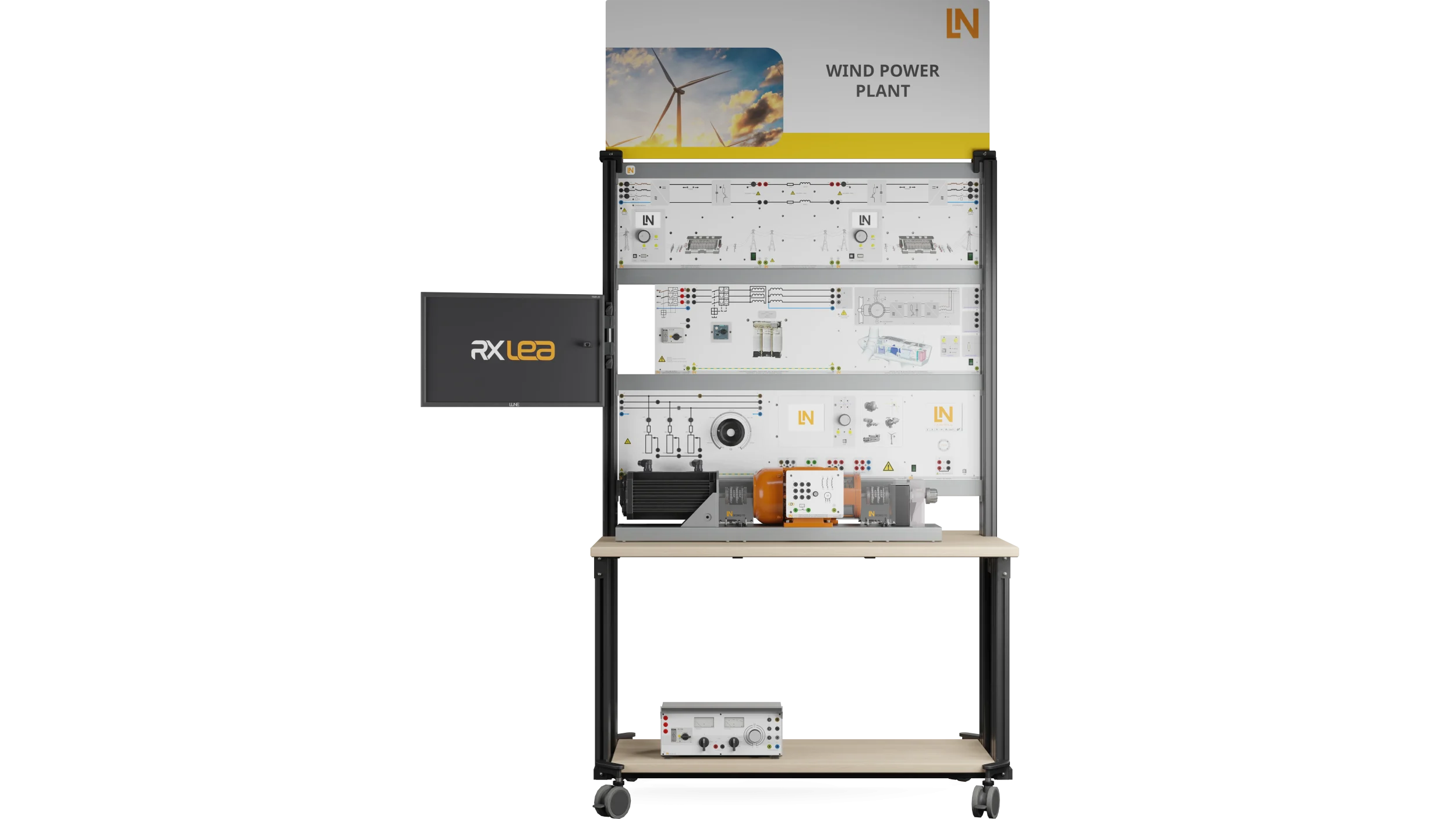
Equipment combining a wind turbine with high-voltage direct current transmission: students couple a doubly fed induction generator to a transmission link and control the power flow.
- Understanding operating principles
- Controlling HVDC power flow
- Analyzing STATCOM operation
- Coupling the wind turbine
- Controlling voltage and power on the HVDC link
- Testing STATCOM operation
- Applying pitch control during gusts
- Running the DFIG in subsynchronous and supersynchronous operation
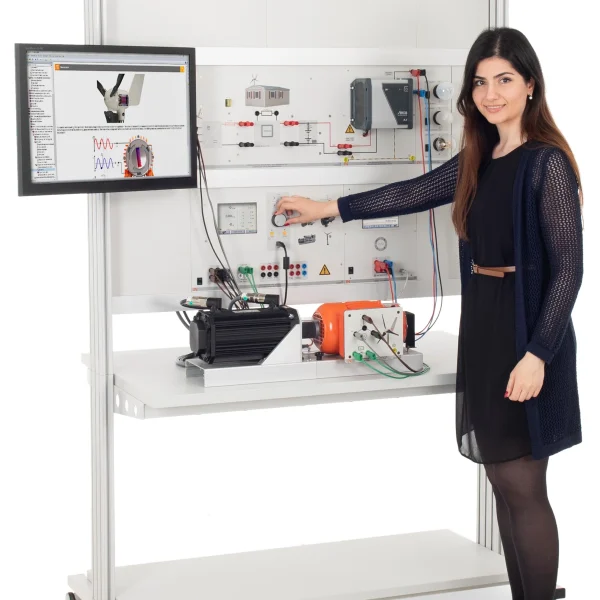
Offshore wind farms need efficient HVDC links to transport large amounts of energy over long distances into the interconnected grid. The equipment brings both sides together: wind power generation with a doubly fed induction generator and low-loss transmission by high-voltage direct current. Two converter stations and a 300 km line emulation form the link, while a servo machine test bench emulates wind profiles and gusts. Students couple the hardware without tools, synchronize the generator, regulate the DC link voltage and control the bidirectional active power flow. In STATCOM mode, they provide reactive power without any active power flow, limit the power via the pitch angle during gusts and ramp up passive grids in a black start.
| Base Product | |
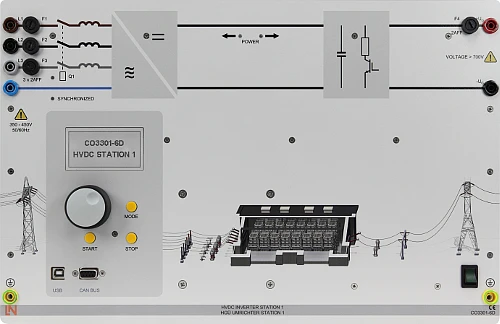
| CO3301-6D | HVDC Inverter Station 1 |
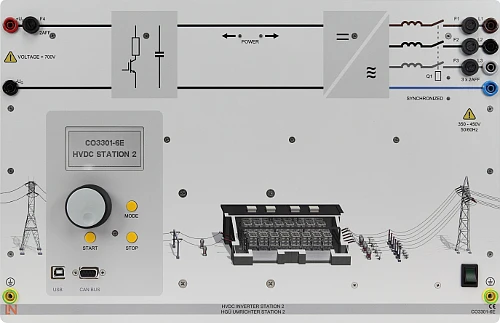
| CO3301-6E | HVDC Inverter Station 2 |
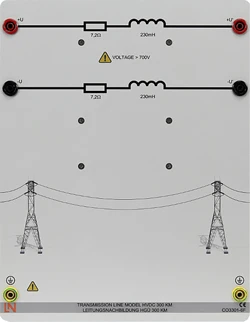
| CO3301-6F | HVDC Transmission line Model 300km / 186miles |
| CO3301-3F | Variable Ohmic load, three-phase, 1kW |
| SO2800-3F | Interactive Lab Assistant: Gleichstromübertragung (HVDC) |
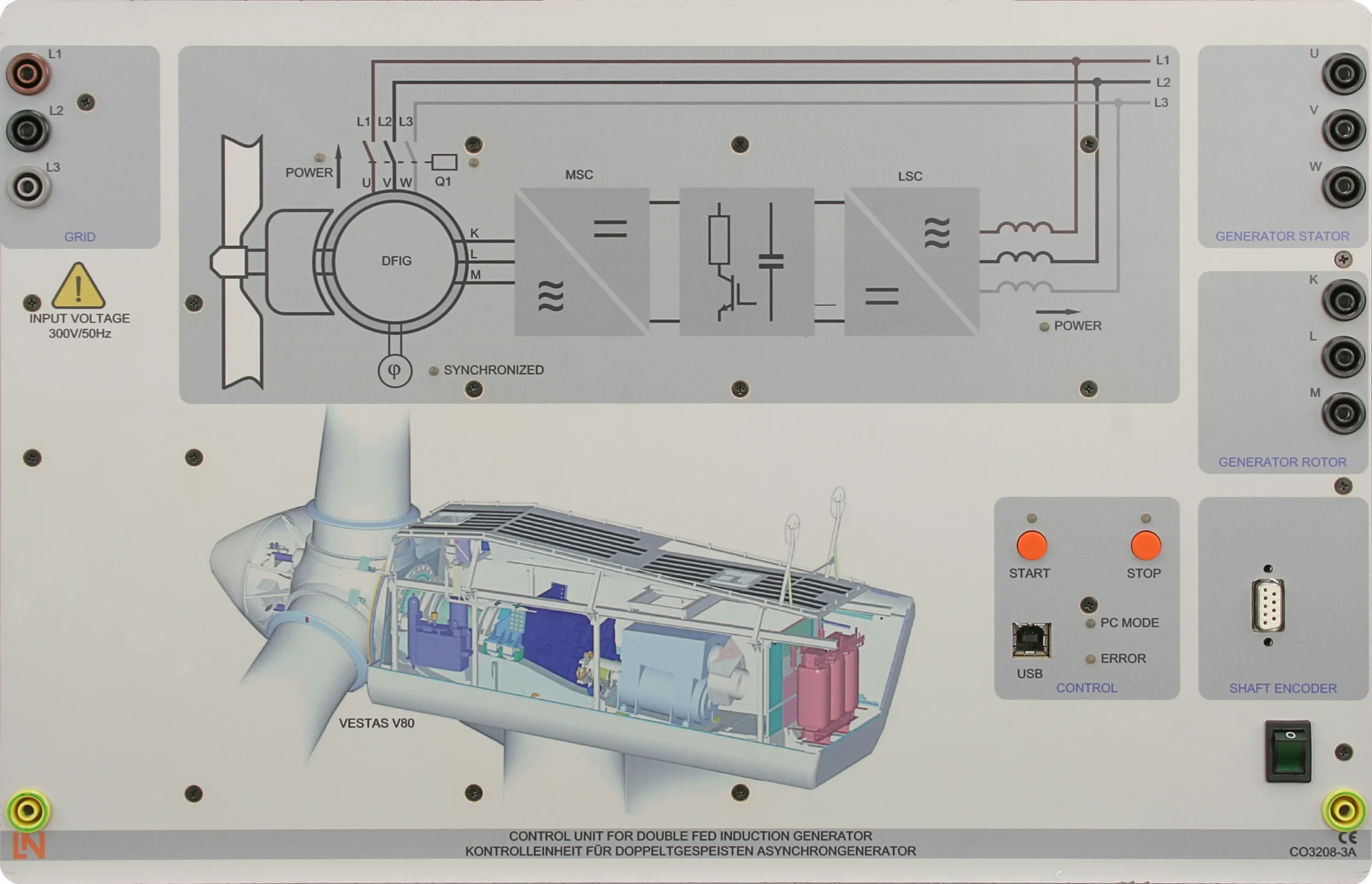
| CO3208-3A | Control unit for wind turbine, double-fed asynchronous generator |
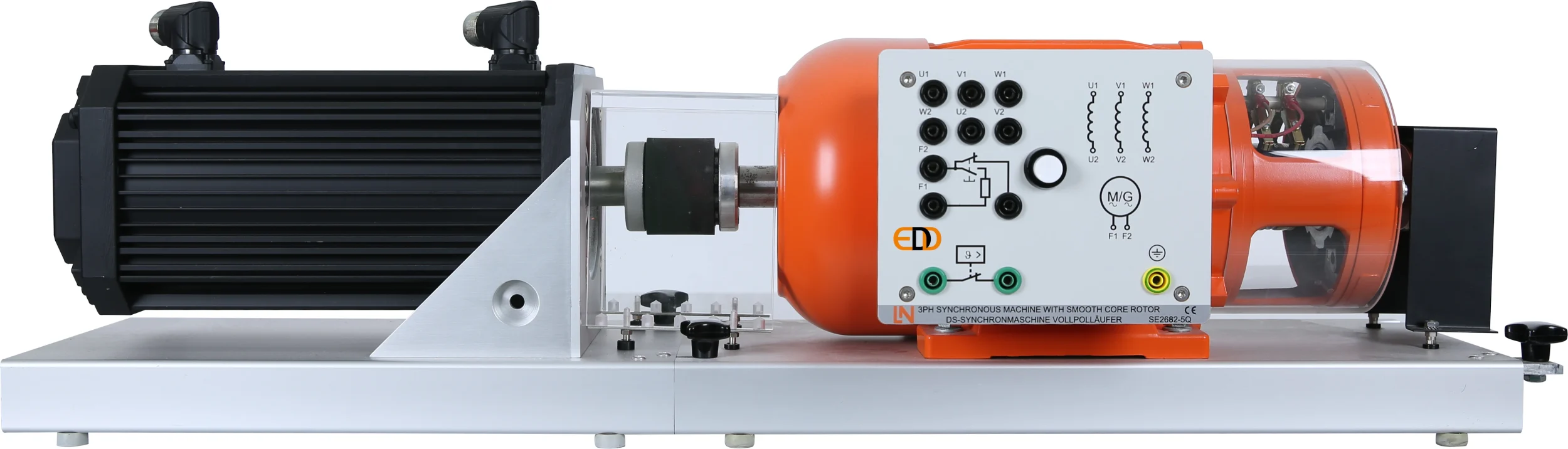
| SE2682-6W | Three-phase multi-function machine, 1.0kW |
| CO3208-3B | 3-phase isolation transformer, 1kW for wind power plants |
| SE2682-5T | Incremental position encoder 1024 pulses |
| SE2662-6A | Rubber coupling sleeve, 1kW |
| SE2662-7D | Coupling guard with LED lighting for 1kW machines |
| SO2800-3R | Interactive Lab Assistant: Windkraftanlagen mit DFIG |
| Power Supply | |
| CO3301-3Z | Adjustable 3-phase power supply, 0-450V/2A |
| CO3212-5V | Three-phase power supply with motor protection switch |
| Measuring Instruments | |
| CO5127-2A | Power-Multimeter |
| Accessories | |
| CO3636-6Y | Servo machine test stand for 1kW machines incl. software ActiveServo (D,GB,F,E) |
| SE2662-7D | Coupling guard with LED lighting for 1kW machines |
| SE2662-6A | Rubber coupling sleeve, 1kW |
| Furniture | |
| ST7200-7A | SybaPro experiment trolley, 3-level, 6 sockets, 1250x1970x800mm |
| ST8010-4T | Monitor holder for flat screen monitor of weight up to 15kg / 33lbs |
| ST7200-5L | Protection cover for three-level experiment trolleys |
| ST8010-4G | Keyboard adapter for flat screen monitor holders |
| ST8008-8N | Protected power distribution for working stations |
| ST8010-4J | Multiple socket outlet, 6 fold, with illuminated switch |
| Furniture Accessories | |
| ST8000-4D | Display for Wind Power Plants equipment |
| Measurement Leads | |
| SO5126-3R | Safety connecting plug 4mm with tap (2x), black, 1000V/32A CAT II |
| SO5126-3W | Safety connecting plug 4mm with tap (2x), green/yellow, 1000V/32A CAT II |
| SO5126-3V | Safety connecting plug 4mm with tap (2x), blue, 1000V/32A CAT II |
| SO5148-1L | Set of safety measurement cables, 4mm (31 leads) |
Learning Content in Detail
Understanding operating principles
Controlling HVDC power flow
Analyzing STATCOM operation
Coupling the wind turbine
Optimizing DFIG operating behavior
Adjusting the pitch angle
Calculating system losses
Features & Applications
- Controlling voltage and power on the HVDC link — Students regulate the DC link voltage and control the bidirectional active power flow via the HVDC link.
- Testing STATCOM operation — The converter stations provide reactive power. Students use it to stabilize the power grid independently, without any active power flowing.
- Applying pitch control during gusts — The system emulates dynamic wind gusts. Students adjust the pitch angle, thereby limiting the generator output.
- Running the DFIG in subsynchronous and supersynchronous operation — Students operate the induction generator at variable speeds and optimize the power yield via the rotor current.
- Ramping up passive grids in a black start — The HVDC link ramps up and supplies passive loads. In the process, students control the voltage and grid frequency.
- Coupling the wind turbine to the link — Students couple the DFIG to the HVDC link, which transports the generated wind energy to the grid with low losses.
- HVDC converter stations CO3301-6D and CO3301-6E — The stations convert three-phase current into direct current. Students control the IGBT inverter via USB and monitor power flows and DC voltage.
- Servo machine test bench CO3636-6Y — The test bench drives the generator like a real wind turbine. Students emulate wind profiles and directly observe the influence of the rotor blade angle.
- DFIG control unit CO3208-3A — The unit controls the generator via two inverters. Students control active and reactive power in subsynchronous and supersynchronous operation and synchronize the system with the grid.
- 300 km line emulation CO3301-6F — The module emulates an overhead line. Students analyze voltage drops and transmission losses at 700 V DC.
- Doubly fed induction generator SE2682-6W — The slip-ring machine converts the mechanical energy. Students capture the rotor speeds via the incremental encoder.
- Virtual control center — The control center emulates the wind turbine. Students import wind profiles, control the pitch angle and display measured values on a time diagram using the logger. For evaluation, they export the data in spreadsheet format.
- Virtual DFIG control — The instrument controls the doubly fed induction generator. Students regulate rotor current and frequency and evaluate the resulting stator voltages on the time diagram.
- HVDC instrument suite — The suite combines STATCOM with load and power control. Students control the power flow, synchronize grids and perform black starts of passive loads.

From Knowledge Comes Capability.
You guide the learning
Where theory and practice go hand in hand.
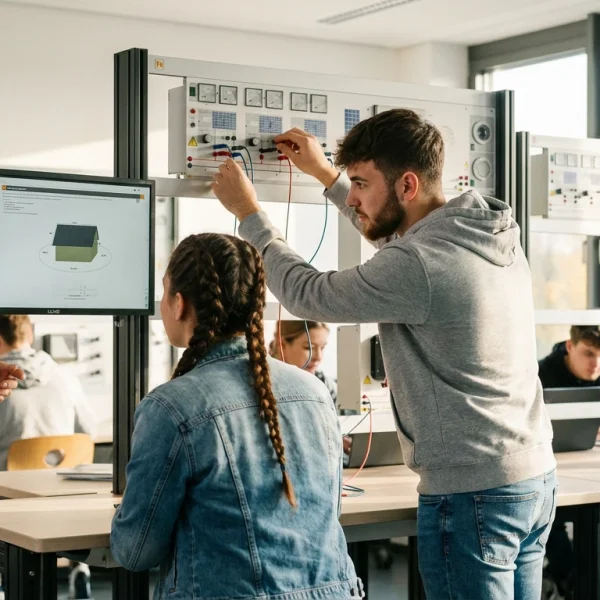
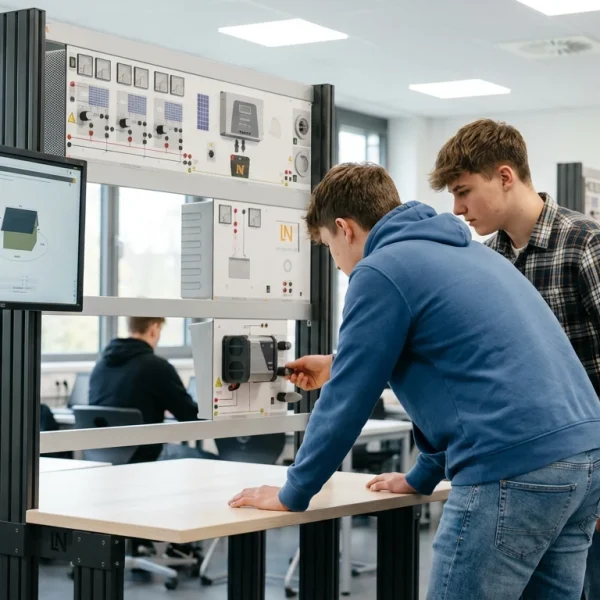
RXLea brings a new way of learning: project-based, hands-on and clearly structured. Learners solve real-world tasks, while instructors save time on preparation. Interactive modules, smart analytics and real hardware create a modern, efficient learning world.
Hands-on and interactive
Animations, interactive tasks and realistic scenarios build a deep understanding. All content is organized into clear learning paths for focused, hands-on learning.
Digital support
3D assembly animations and digital instructions simplify complex procedures, reduce errors and help learners work more independently.
Visual support
Overview graphics, screenshots and sample animations make the learning world transparent. Photos from the learning packages are also available, including country-specific versions where needed.




Stay ahead in
technical training.
Get the latest training systems, product launches and educational insights, delivered directly to your inbox.