


Semiconductors
Semiconductors
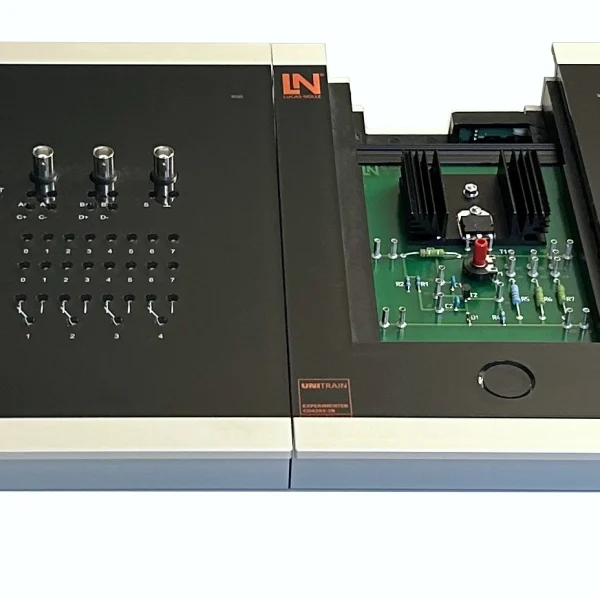
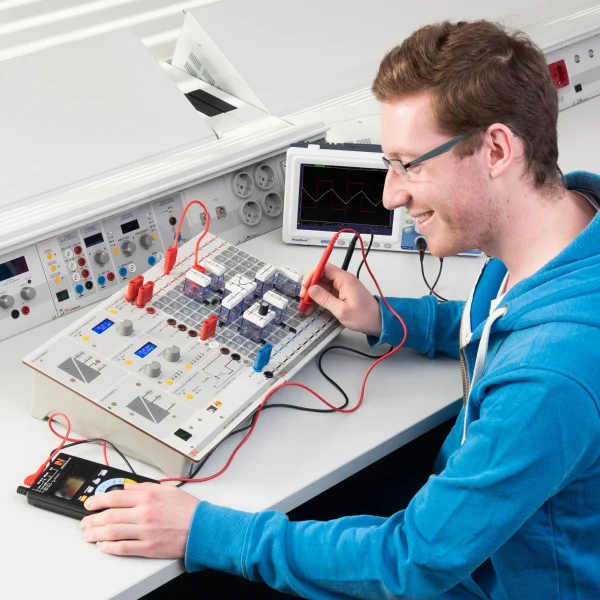
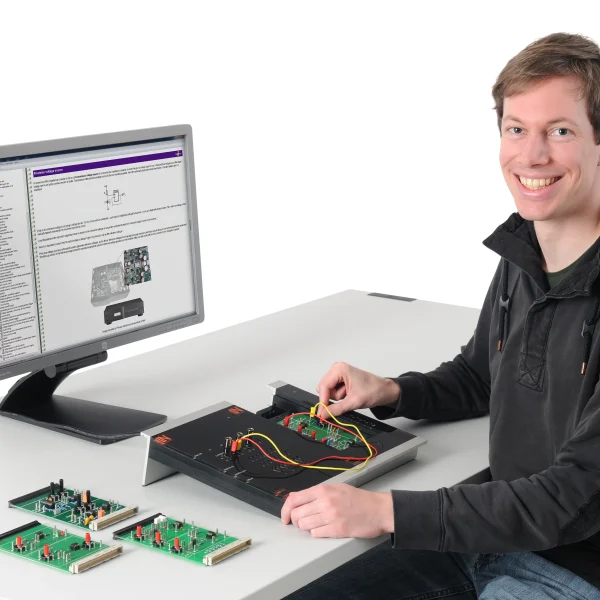
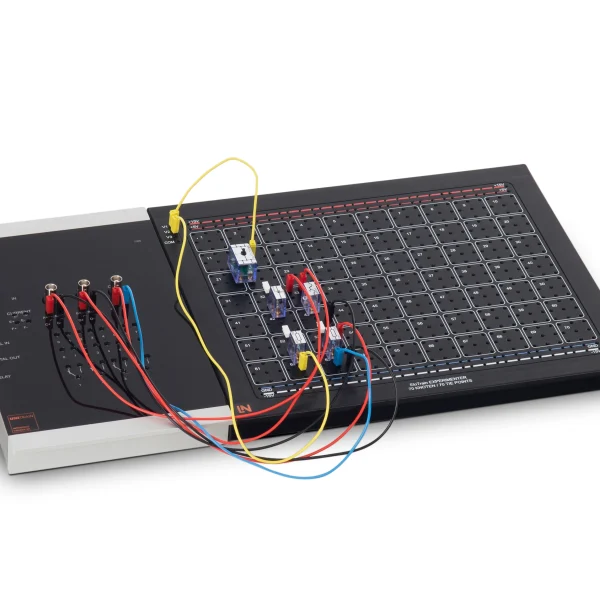
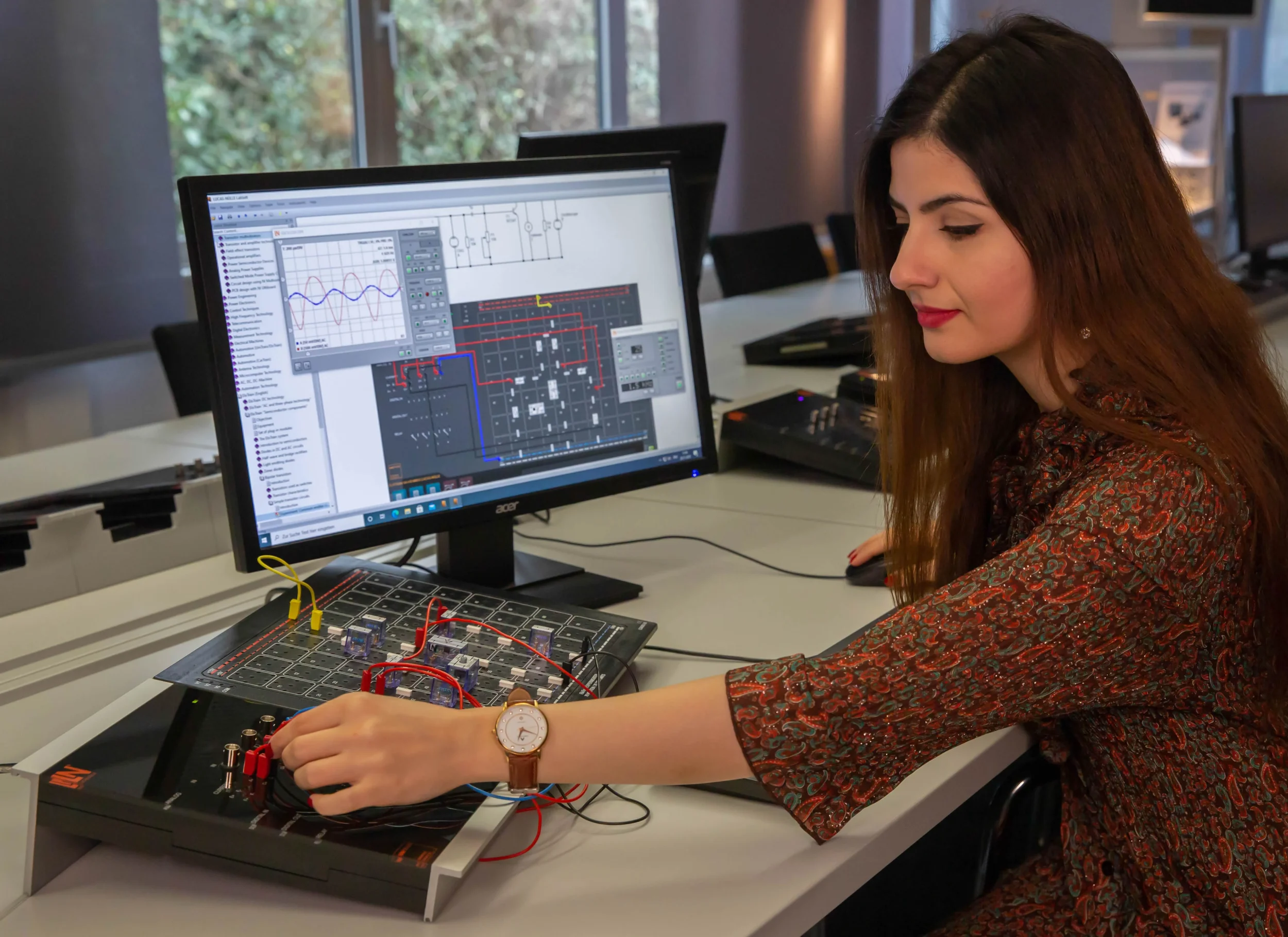
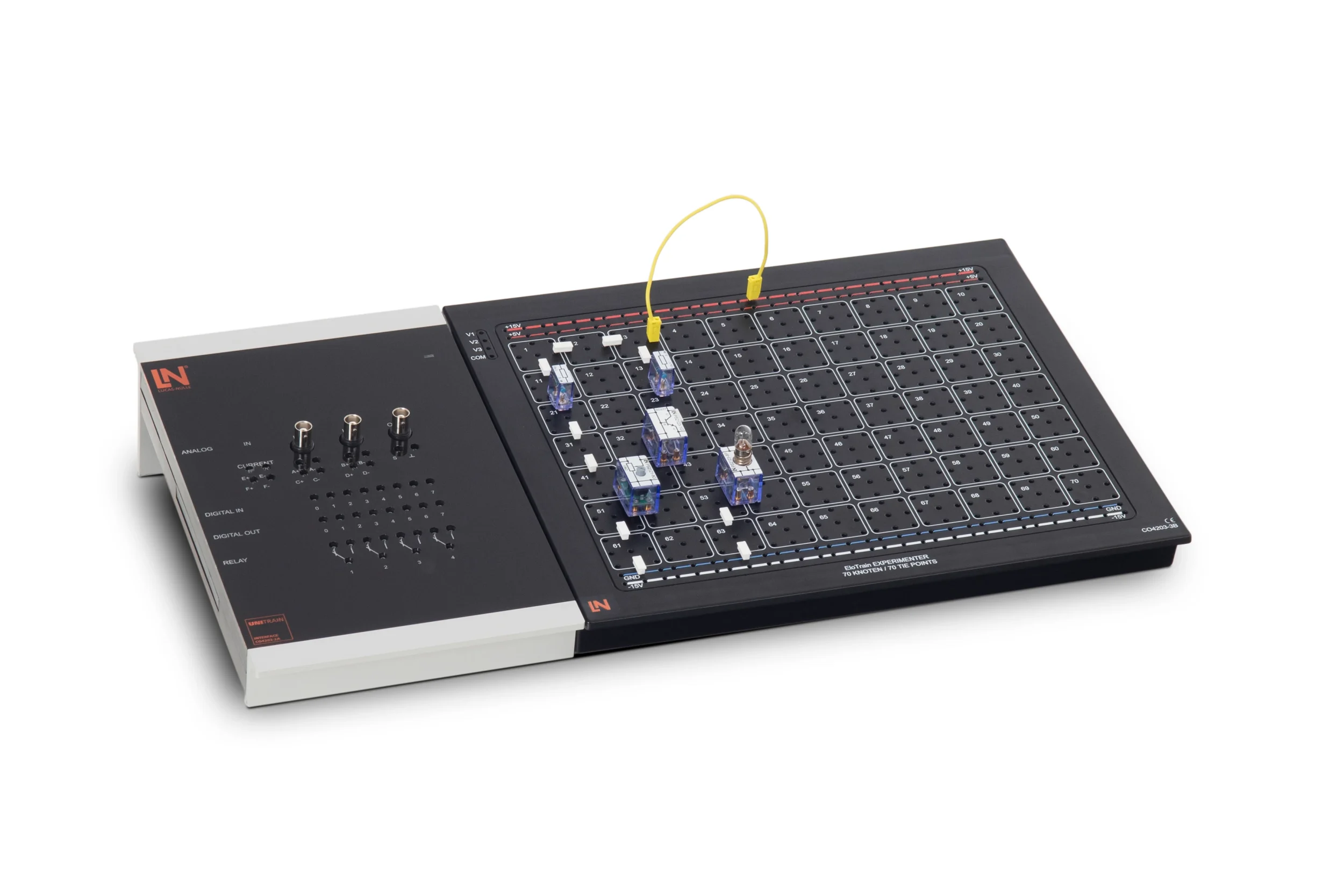
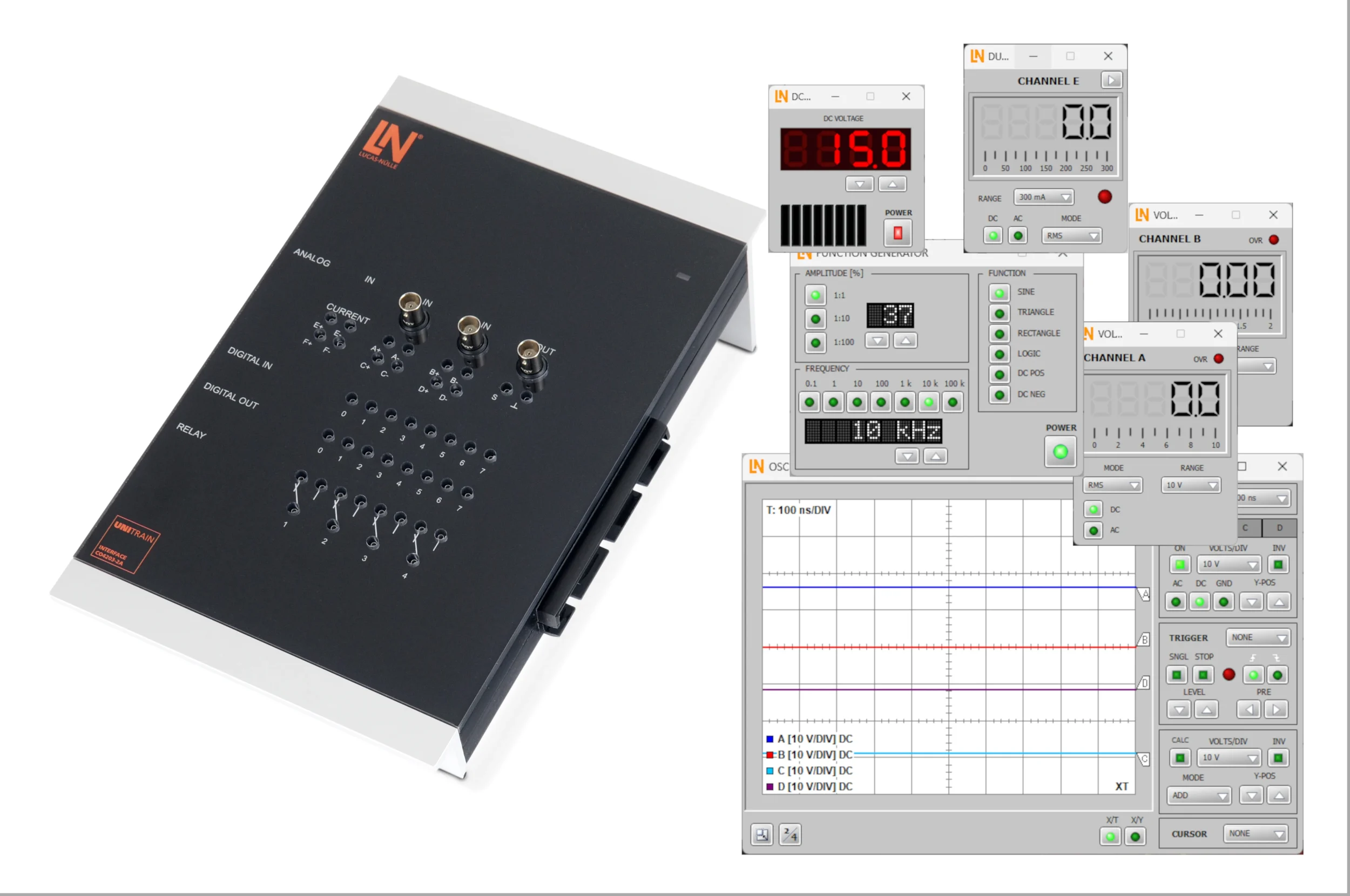
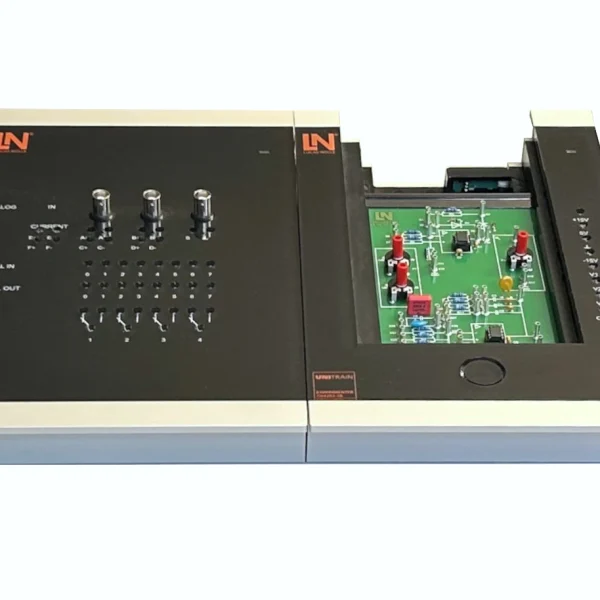
EloTrain training system with 2 mm plug-in components and UniTrain interface: learners build semiconductor circuits according to the circuit diagram and record characteristic curves with virtual instruments.
- Understanding how semiconductors work
- Explaining doping and the p-n junction
- Evaluating diode characteristics
- Comparing threshold voltages
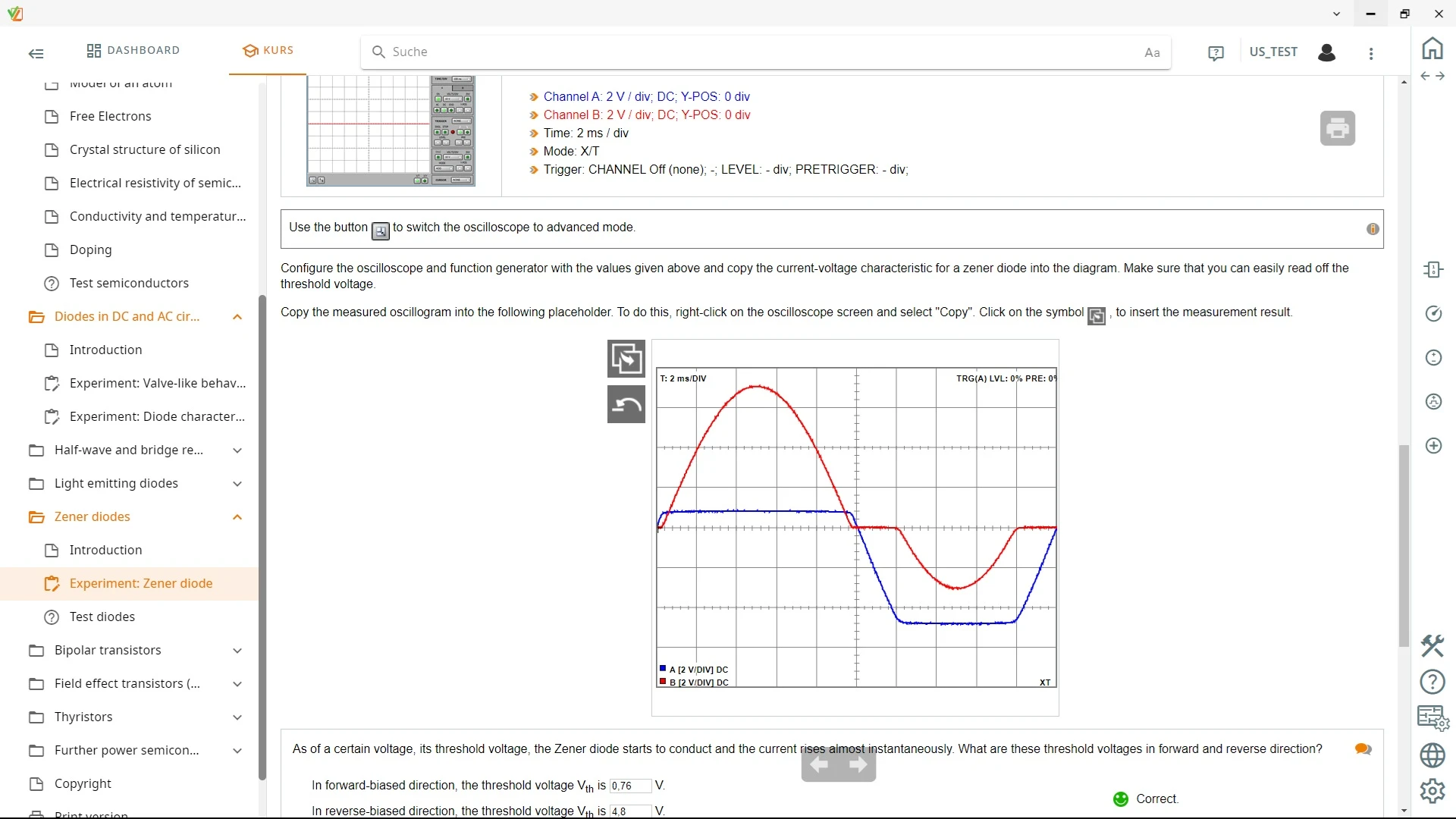
- Comprehensive component analysis on the oscilloscope
- Testing power semiconductors in practice
- Tool-free 2 mm plug-in system
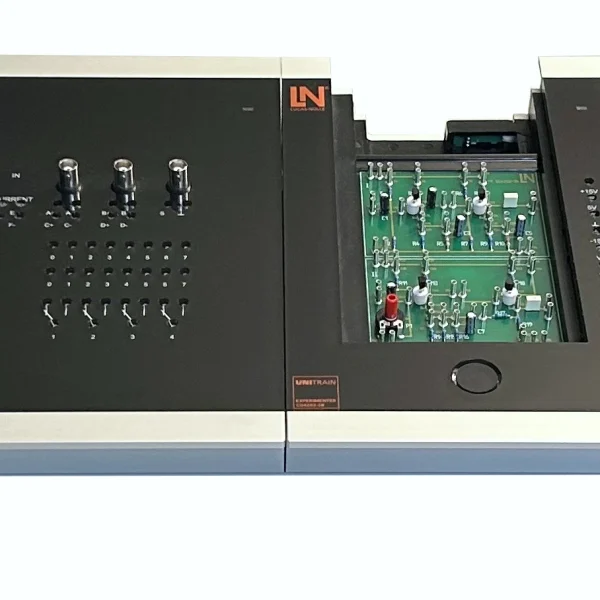
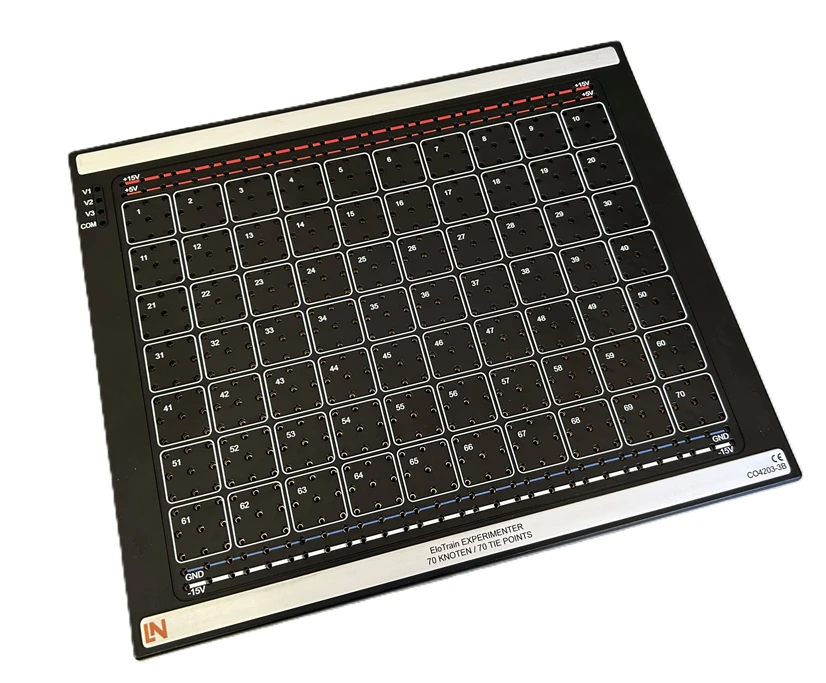
- EloTrain Experimenter with 70 nodes
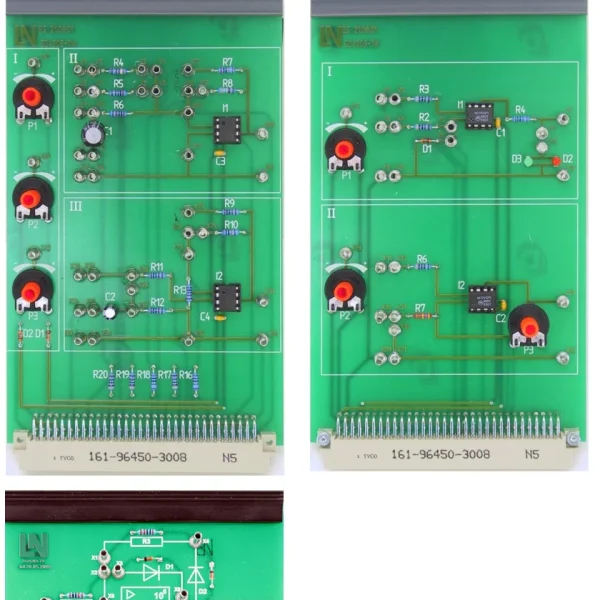
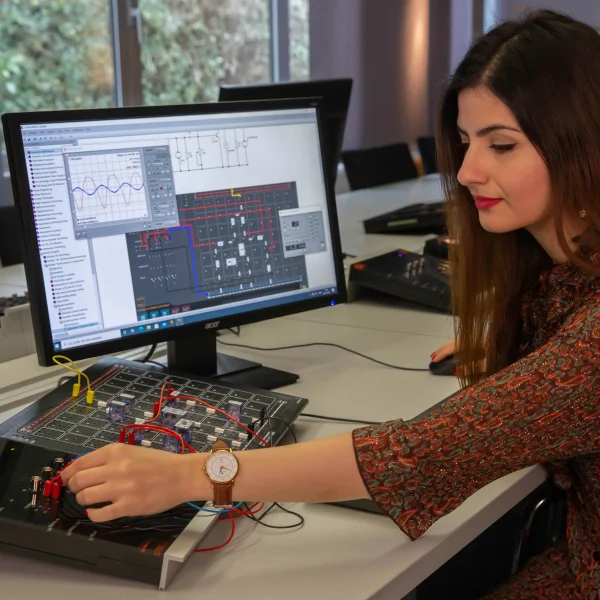
In industrial practice, diodes, transistors and thyristors form the basis for rectifiers, contactless switches and power controllers. The training system progresses from the physical behavior of the p-n junction to these applications. Learners transfer the circuit diagram to the Experimenter using transparent 2 mm plug-in components and then take measurements interactively via LabSoft: the input, output and transfer characteristics of diodes, bipolar transistors and FETs on the virtual oscilloscope, a comparison of half-wave and bridge rectifiers, and the influence of smoothing on residual ripple. Using JFET and MOSFET components, they build depletion-mode and enhancement-mode circuits, and with the thyristor, diac and triac they investigate triggering and turn-off behavior.
| Course | |
| CO4206-1C | Course, EloTrain 3: Semiconductors |
| Accessories | |
| CO4203-2A | UniTrain Interface mit virtuellen Instrumenten (Basis VI) |
| CO4203-3B | EloTrain Experimenter |
| SO5146-1N | EloTrain set of connection cables and plugs for 2mm system |
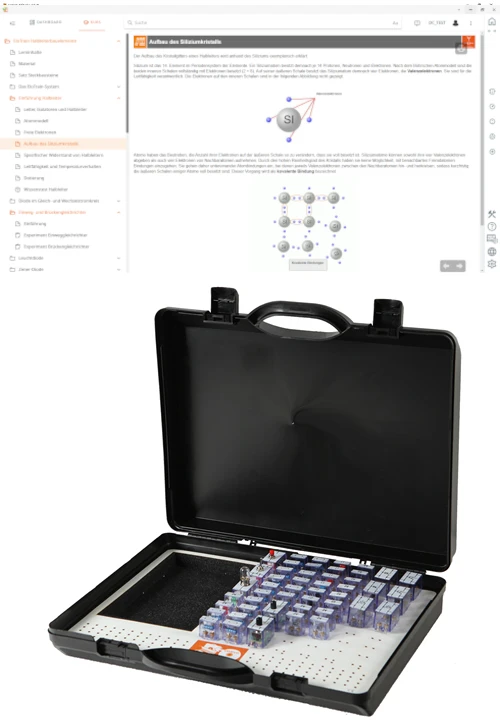
| CO4203-2Y | UniTrain storage case for one UniTrain system |
Learning Content in Detail
Understanding how semiconductors work
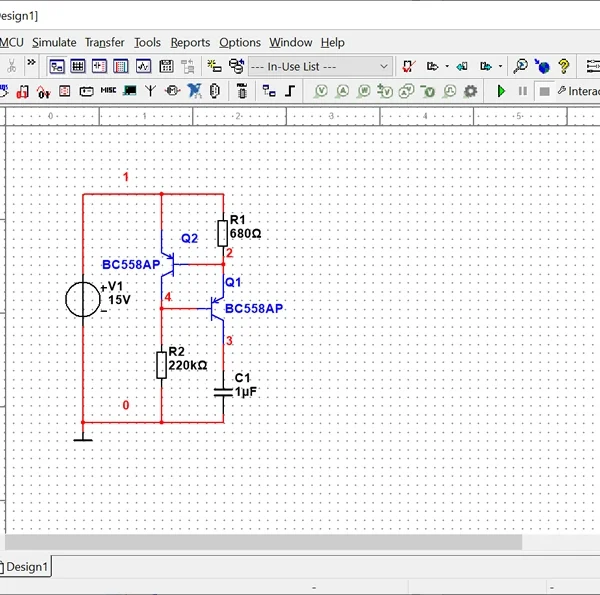
Explaining doping and the p-n junction
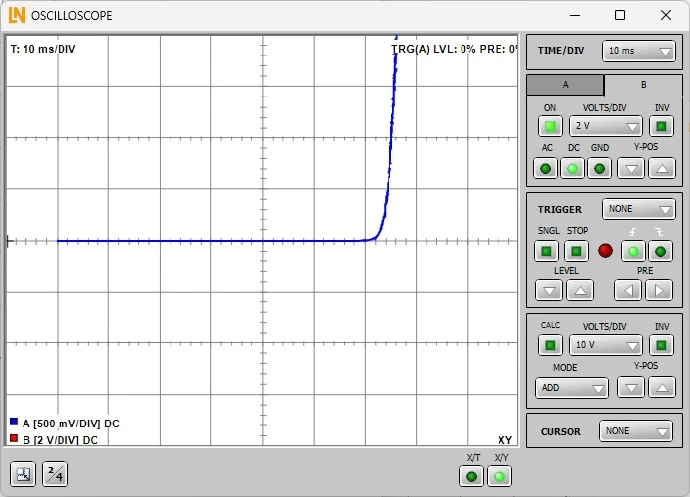
Evaluating diode characteristics
Comparing threshold voltages
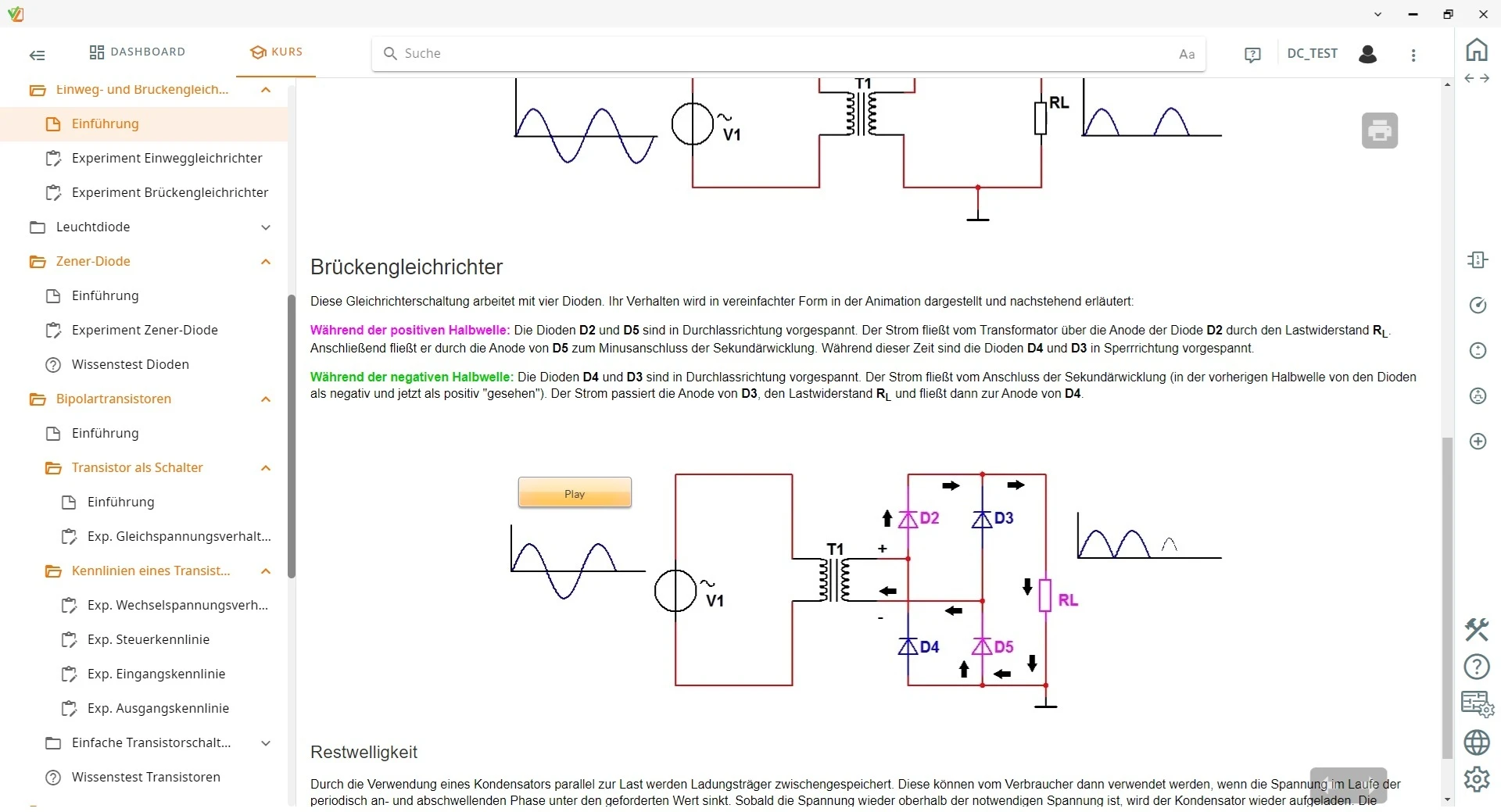
Comparing half-wave and bridge rectifiers
Recording families of transistor characteristics
Setting the operating point and comparing circuits
Characterizing field-effect transistors
Testing power semiconductors
Features & Applications
- Comprehensive component analysis on the oscilloscope — Learners record the input, output and transfer characteristics of diodes, bipolar transistors and FETs directly on the oscilloscope and use them to determine the characteristic values.
- Testing power semiconductors in practice — Learners analyze the triggering and turn-off behavior of thyristors, diacs and triacs in experiments and thereby discover the possible applications of power semiconductors.
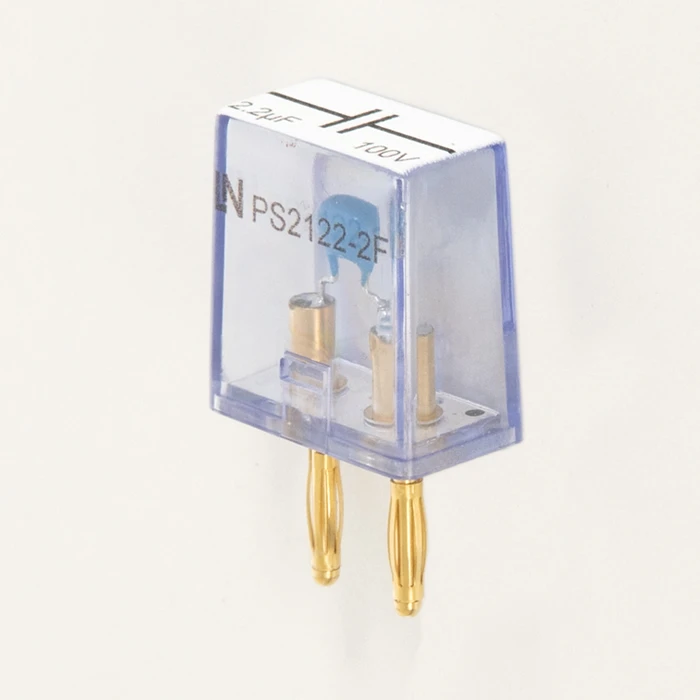
- Tool-free 2 mm plug-in system — Gold-plated lamella plugs keep contact resistance low and hold the impact-resistant housings in place simply by being plugged in.
- EloTrain Experimenter with 70 nodes — The Experimenter offers 70 insulated nodes, each with nine jacks on a 7.5 mm grid, and provides supply voltages and three-phase outputs in a clearly laid-out arrangement.
- Comparing rectifier assemblies — Learners compare half-wave and bridge rectifiers and calculate how capacitor smoothing changes the residual ripple.
- Investigating field-effect transistors in detail — JFET and MOSFET components allow both depletion-mode and enhancement-mode circuits to be built. Learners use them to analyze the voltage-controlled channel.
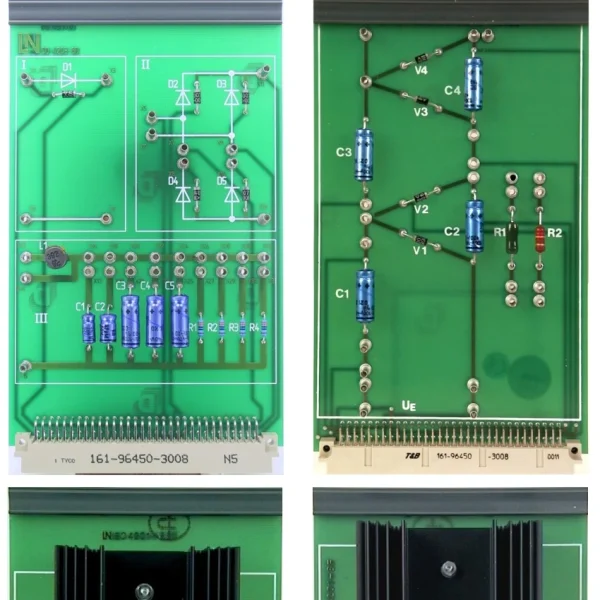
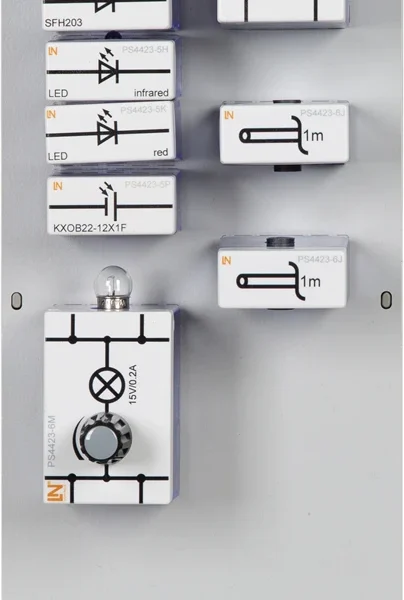
- Transparent polycarbonate components — The sturdy housings protect the components, allow visual inspection and bear the circuit symbol on the top.
- UniTrain interface as measurement and control center — The interface with its wide-range power supply offers six analog differential amplifier inputs and integrated analog outputs, providing the basis for precise signal analysis.
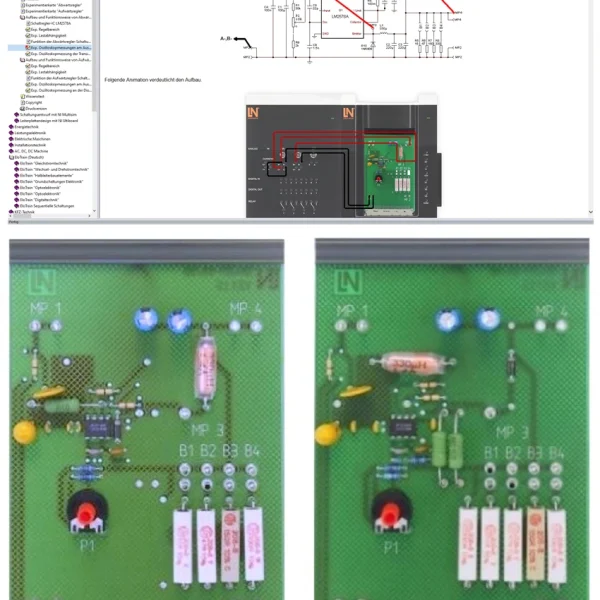
- Building directly from the circuit diagram — Learners transfer the circuit directly from the circuit diagram to the experiment board, practicing the step from drawing to built circuit.
- Oscilloscope with XY mode — The 2/4-channel oscilloscope with X-Y mode is used for the dynamic recording of characteristic curves on semiconductor components.
- Function generator — The generator produces sine, triangle and square-wave voltages up to 5 MHz and uses them to feed the measuring circuits.

From Knowledge Comes Capability.
You guide the learning
Where theory and practice go hand in hand.
RXLea brings a new way of learning: project-based, hands-on and clearly structured. Learners solve real-world tasks, while instructors save time on preparation. Interactive modules, smart analytics and real hardware create a modern, efficient learning world.
Hands-on and interactive
Animations, interactive tasks and realistic scenarios build a deep understanding. All content is organized into clear learning paths for focused, hands-on learning.
Digital support
3D assembly animations and digital instructions simplify complex procedures, reduce errors and help learners work more independently.
Visual support
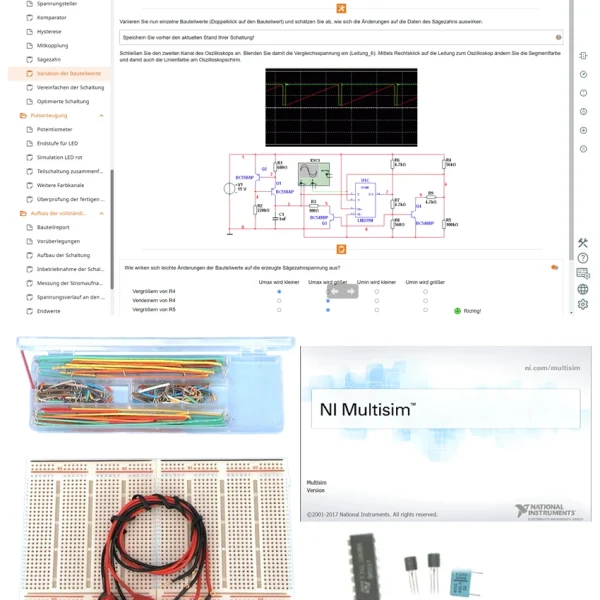
Overview graphics, screenshots and sample animations make the learning world transparent. Photos from the learning packages are also available, including country-specific versions where needed.




Stay ahead in
technical training.
Get the latest training systems, product launches and educational insights, delivered directly to your inbox.