


Skip to content

Manual Switching in Three-Phase Circuits with 24 V DC Control

RXLea
Digital projects for hands-on learningInteractive learning content, directly connected to the training system.

Manual Switching in Three-Phase Circuits with 24 V DC Control

EST11PT-24V

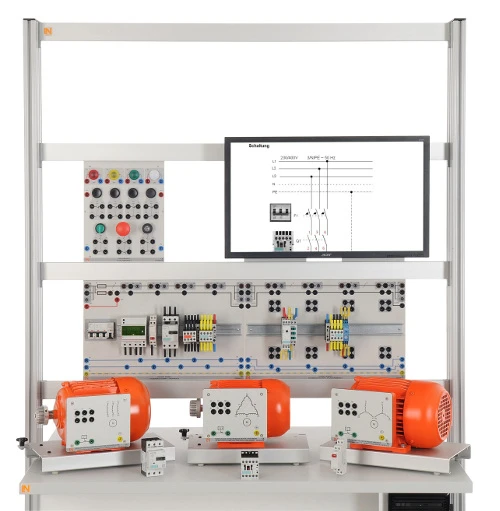
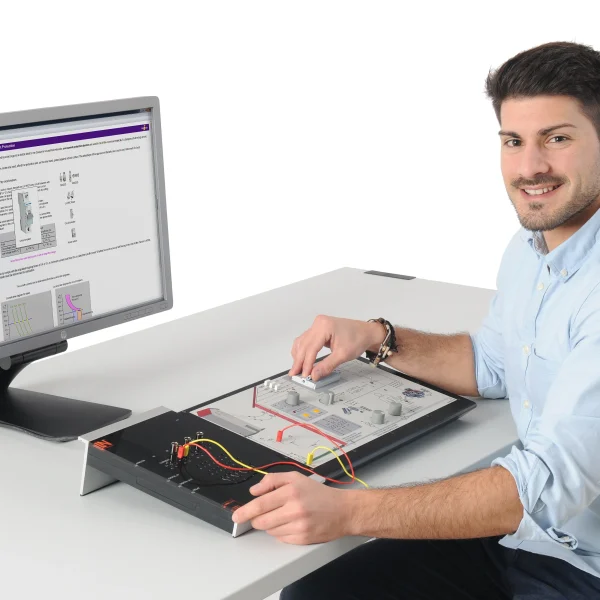
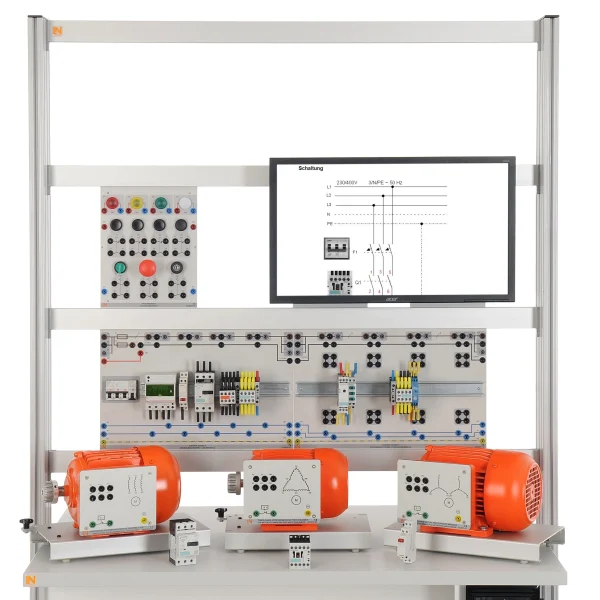
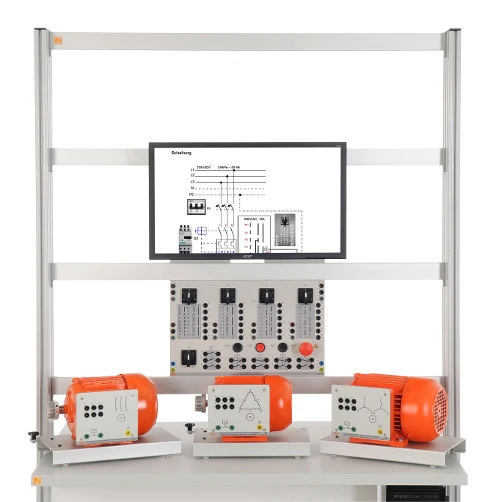
Practical training equipment in the panel system with 24 V DC control voltage: learners wire wye-delta, reversing and pole-changing circuits on the CO3209-1A switch and push-button unit and assess motor protection.

Learning Content
  • Understanding how three-phase induction motors work
  • Evaluating wye and delta connections
  • Connecting and examining wye-delta switches
  • Carrying out Dahlander pole changing
KEY FEATURES
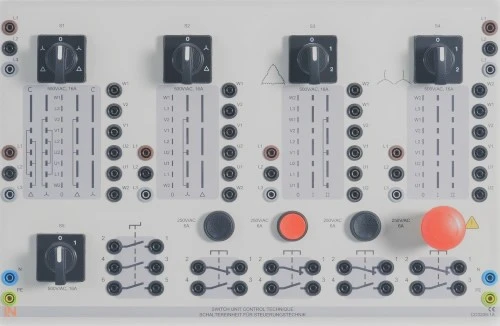
  • CO3209-1A switch and push-button unit
  • Limiting starting currents in a practical way
  • Speed control by pole changing
  • Interactive Lab Assistant (SO2801-4A)
Speak with a Product Specialist +1 (757) 808-5696 · sales@lucas-nuelle.com

In industry, three-phase motors drive fans, pumps, agitators and elevators. Switching them on generates high starting currents that put a strain on the supply grid and the mechanics. Manually operated switching concepts limit these currents, and motor protection devices safeguard the machine. With this equipment, learners wire the essential circuit types themselves: wye-delta circuit, reversing circuit and pole changing using the Dahlander method or with two separate windings. They compare the starting methods, observe inrush current peaks on virtual measuring instruments and set the thermal and electromagnetic releases of the motor protection switches. The Interactive Lab Assistant accompanies the experiments step by step. The control voltage is 24 V DC.

CO3209-1ASwitch and pushbutton unit for motor controls
SO2801-4AInteractive Lab Assistant Manually actuated switching of three-phase motors
CO3538-8CStabilised DC powersupply 24V/6A
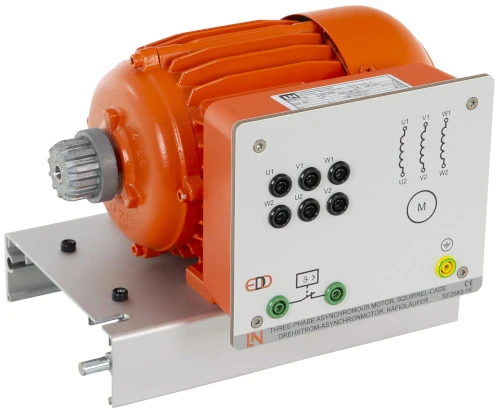
SE2683-1GThree-phase asynchronous motor, 0.3 kW n=1400 (400V/690V)
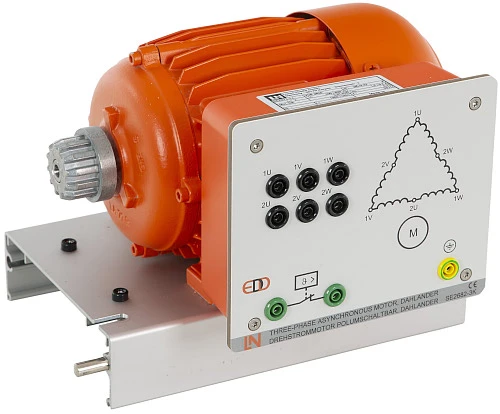
SE2682-3KThree-phase asynchronous motor, Dahlander, 0.3kW
SE2682-3LThree-phase asynchronous motor, two separate windings, 0.3 kW
SE2662-2CShaft end guard, 0.3kW
LM2323TRMS digital multimeter MetraHit 2+, CAT III
SO5148-1BSet of safety measurement cables, 4mm (53 leads)
CO3209-1GControl tech. III, supp. module with two rows for assembly of arbitrary circuits
CO3212-5VThree-phase power supply with motor protection switch
ST7200-7ASybaPro experiment trolley, 3-level, 6 sockets, 1250x1970x800mm
ST8010-4TMonitor holder for flat screen monitor of weight up to 15kg / 33lbs
ST7200-5LProtection cover for three-level experiment trolleys

Learning Content in Detail

The training leads from the operating behavior of the three-phase induction motor through wye-delta and pole-changing circuits to motor protection and standards-compliant wiring.

Understanding how three-phase induction motors work

Learners understand how three-phase induction motors work and what their characteristics are.

Evaluating wye and delta connections

Learners learn the advantages and disadvantages of wye and delta connections and where they are used.

Connecting and examining wye-delta switches

Learners connect and examine wye-delta switches and wye-delta reversing switches.

Carrying out Dahlander pole changing

Learners carry out and evaluate Dahlander pole changing with a ratio of 1:2.

Switching motors with two separate windings

Learners examine pole changing in motors with two separate windings.

Setting motor protection switches correctly

Learners understand the protective function of motor protection switches and set them correctly.

Analyzing starting currents and grid load

Learners analyze starting currents, starting torques and the load on the grid at switch-on.

Reading circuit diagrams and wiring in compliance with standards

Learners read circuit diagrams and wire power and control circuits in compliance with standards.

Features & Applications

The system covers the manual control of three-phase induction motors in industrial and commercial operations, the starting and switching of drives for fans, pumps, agitators and elevators, and thermal and electromagnetic motor protection.
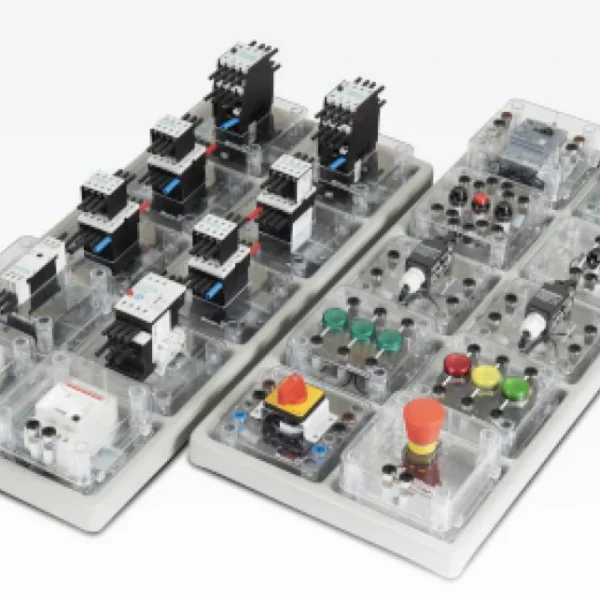
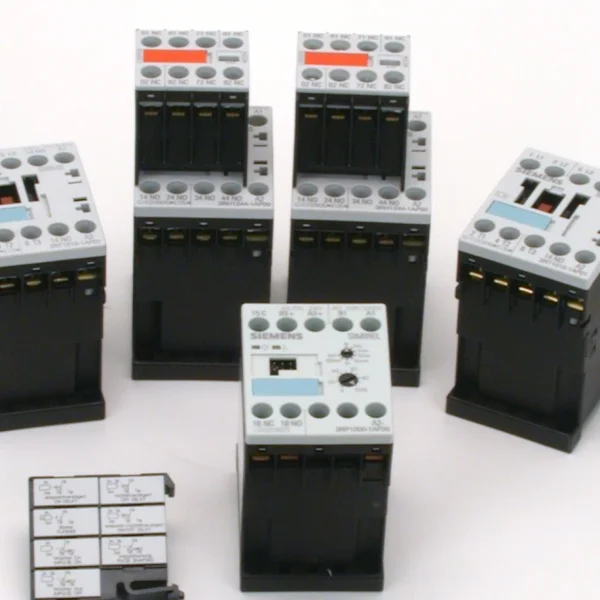
  • CO3209-1A switch and push-button unit — The off switch, wye-delta switch, reversing switch and pole-changing switch are combined in one compact module.
  • Limiting starting currents in a practical way — Learners learn and compare starting methods such as wye-delta changeover and see how much they relieve the load on the grid.
  • Speed control by pole changing — Learners examine pole changing using the Dahlander method and with two separate windings for controlling speed in steps.
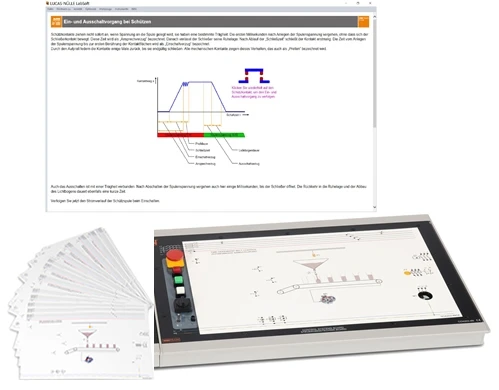
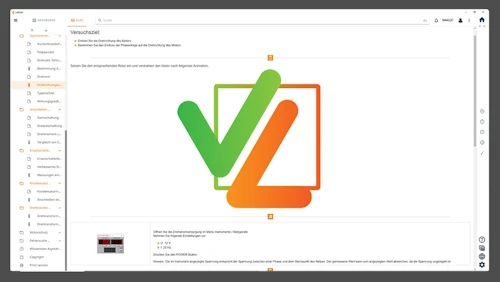
  • Interactive Lab Assistant (SO2801-4A) — The software provides step-by-step instructions, interactive experiment setups and automated evaluation logic for checking learners’ progress.
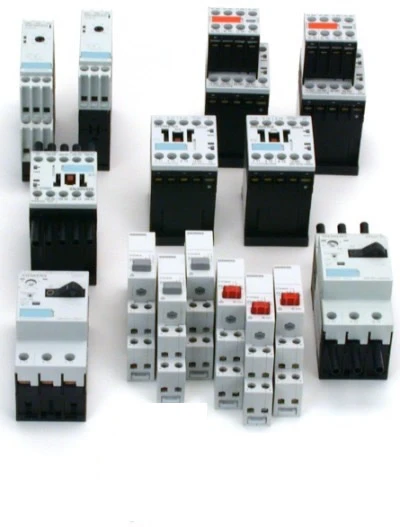
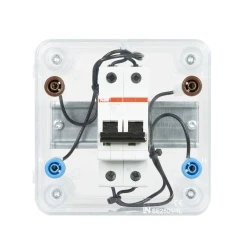
  • Motor protection in operation — Learners get to know the thermal and electromagnetic releases of motor protection switches and learn to handle them confidently.
  • Safe operation thanks to 4 mm safety technology — All inputs and outputs are brought out to touch-protected 4 mm safety jacks.
  • Integrated emergency stop button and push-button unit — They allow a rapid safety stop and contact switching via normally open and normally closed push-buttons.
  • Wye-delta reversing switch — It combines soft starting in the wye-delta connection with reversal of the motor’s direction of rotation.
  • Dahlander pole-changing switch for a speed ratio of 1:2 — It switches the stator windings between delta and double-wye connection.
  • Pole-changing switch for two separate windings — It switches between mutually independent stator windings with any number of pole pairs.
  • Interactive Lab Assistant (SO2801-4A) — Multimedia course software with interactive experiment setups, theory sheets and evaluation logic.
  • Virtual measuring instruments and oscilloscope display — They visualize voltage and current waveforms as well as inrush current peaks directly on the PC.
Learners working with RXLea on a tablet at a Lucas-Nuelle training system
RXLea

From Knowledge Comes Capability.

You guide the learning

Where theory and practice go hand in hand.

RXLea brings a new way of learning: project-based, hands-on and clearly structured. Learners solve real-world tasks, while instructors save time on preparation. Interactive modules, smart analytics and real hardware create a modern, efficient learning world.

Hands-on and interactive

Animations, interactive tasks and realistic scenarios build a deep understanding. All content is organized into clear learning paths for focused, hands-on learning.

Digital support

3D assembly animations and digital instructions simplify complex procedures, reduce errors and help learners work more independently.

Visual support

Overview graphics, screenshots and sample animations make the learning world transparent. Photos from the learning packages are also available, including country-specific versions where needed.


Learners using a tablet at an energy training system
RXLea on desktop, laptop and tablet
RXLea Path Creator for building learning journeys
RXLea Navigator showing the learning world
Learn more about RXLea
Newsletter

Stay ahead in
technical training.

Get the latest training systems, product launches and educational insights, delivered directly to your inbox.

Your email address

By subscribing, you agree to our Privacy Policy. You can unsubscribe at any time.

 Please select at least one category before subscribing.
I'm interested in - select all that apply