

Skip to content

Complex Contactor Circuits with 24 V DC Control Voltage

RXLea
Digital projects for hands-on learningInteractive learning content, directly connected to the training system.

Complex Contactor Circuits with 24 V DC Control Voltage

EST22PT-24V

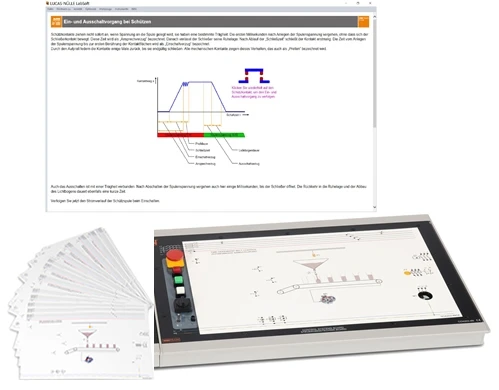
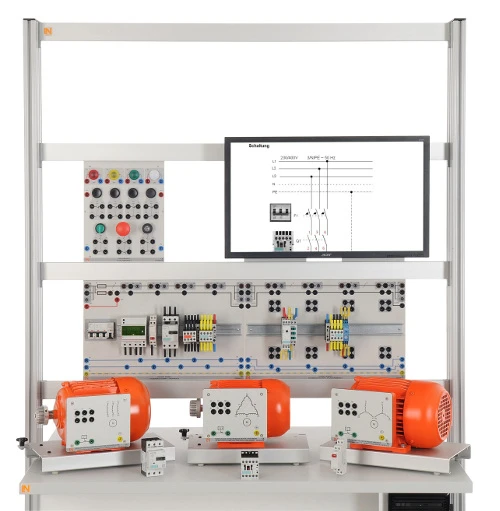
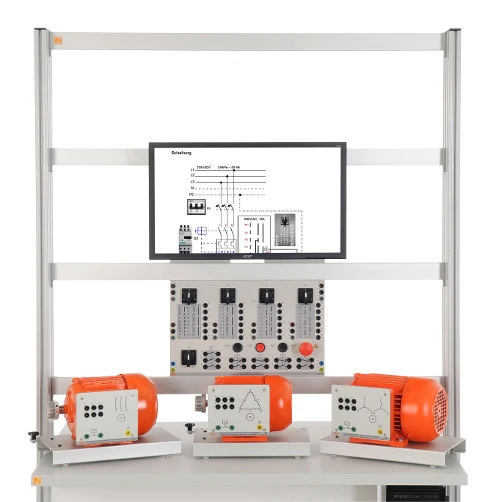
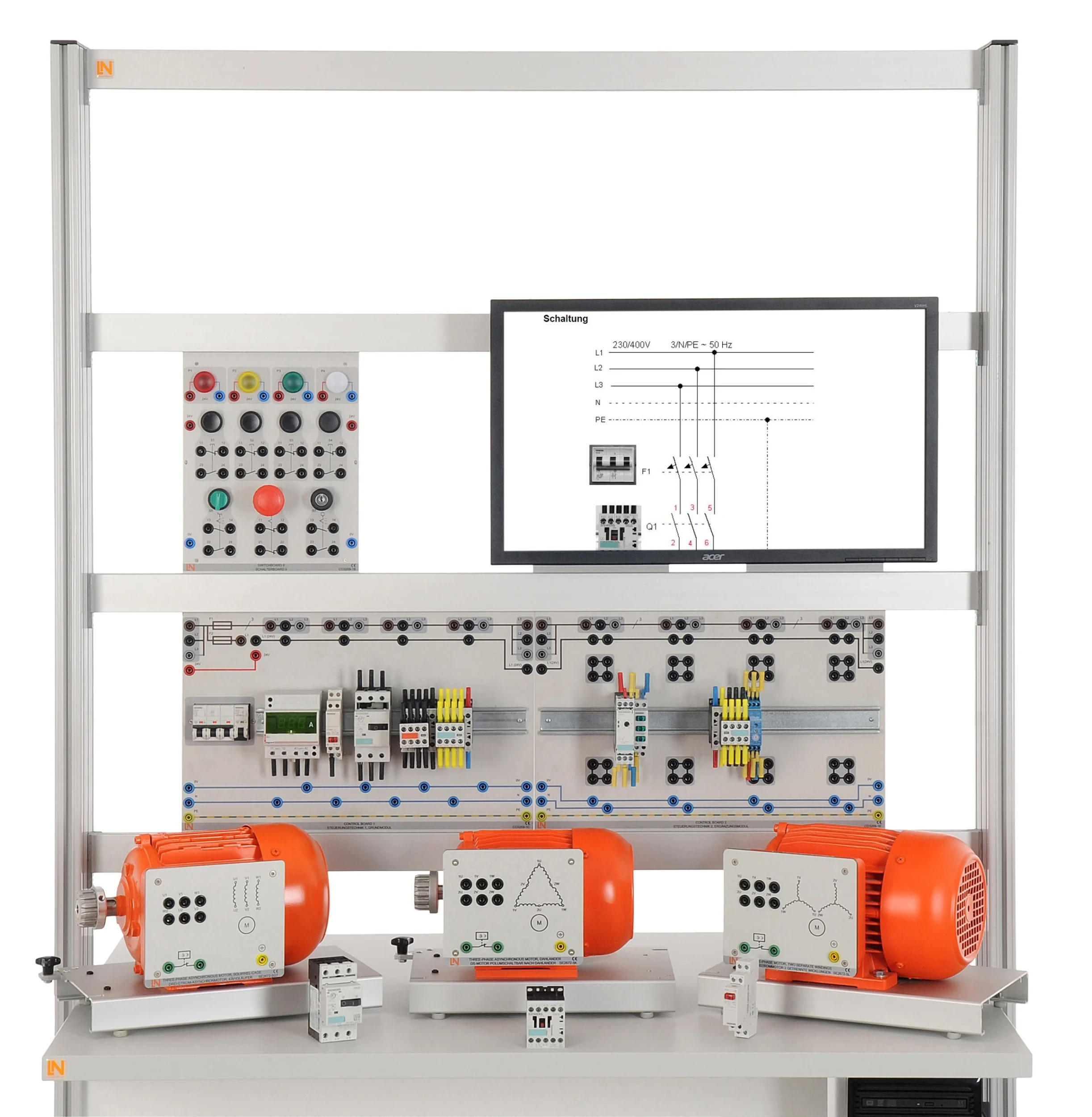
Training equipment for building, commissioning and troubleshooting complex contactor circuits in three-phase circuits. The control circuit operates at 24 V DC safety extra-low voltage.

Learning Content
  • Drawing circuit diagrams
  • Setting motor protection
  • Building a contactor circuit with self-holding
  • Processing fault signals
KEY FEATURES
  • Contactor controls with 24 V DC control voltage
  • From the basic circuit to the complex system circuit
  • Building main and control circuits in compliance with standards
  • Processing fault signals and troubleshooting
Speak with a Product Specialist +1 (757) 808-5696 · sales@lucas-nuelle.com

Industrial plants and machines control their three-phase drives via electromechanical contactor circuits. Anyone who installs or maintains them, or troubleshoots them, needs knowledge of circuit technology, standards and protective measures. The EST22PT-24V equipment provides a learning environment with 24 V DC control voltage for this purpose. Learners wire main and control circuits, configure timing and protection relays and locate faults using fault signals. The modular design ranges from the self-holding circuit through reversing controls and automatic wye-delta starting to Dahlander pole changing. By the end, learners read and draw detached circuit diagrams in accordance with DIN VDE 0113 and commission multi-stage motor controls.

LN-AU-010271Contactor Circuits in Three-Phase Circuits with 24 V DC Control Voltage
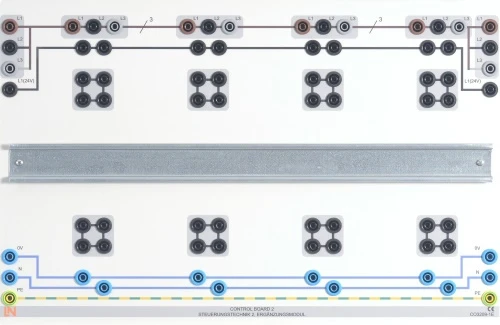
CO3209-1EControl tech. II, supp. module to accommodate contactors and aux. contactors
SO3209-2FControl technology II, Equipment set for assembling complex contactor circuits
SE2669-1K190-piece set of 4mm adapters for control components

Learning Content in Detail

Learners work their way from standards-compliant planning through wiring to the commissioning and troubleshooting of multi-stage motor controls.

Drawing circuit diagrams

Learners create and complete standards-compliant circuit diagrams for main and control circuits.

Setting motor protection

Learners determine the rated motor current from the nameplate and set the motor protection relay correctly.

Building a contactor circuit with self-holding

Learners wire a contactor circuit with push-button operation and a self-holding contact.

Processing fault signals

Learners implement circuits with a visual fault signal when the bimetallic relay detects an overload.

Storing and acknowledging faults

Learners build auxiliary contactor circuits that store fault signals until they are acknowledged manually.

Using timing relays

Learners configure on-delay and off-delay timing relays for time-controlled switching sequences.

Interlocking reversing controls

Learners switch three-phase motors for clockwise and counterclockwise rotation with contactor and push-button interlocking.

Implementing limit control

Learners integrate mechanical limit switches for automatic shutdown and reversal of the direction of rotation.

Switching wye-delta starting

Learners build manual and automatic wye-delta changeover circuits to limit starting current.

Carrying out pole changing

Learners wire Dahlander circuits and motors with separate windings for speed changeover.

Features & Applications

The tasks come from industrial plant engineering and machine control: three-phase motors in conveyor and pumping systems, together with troubleshooting, fault signal management and safety interlocks in automated controls.
  • Contactor controls with 24 V DC control voltage — Learners wire and test industrial contactor circuits in an environment whose control circuit operates at 24 V DC safety extra-low voltage.
  • From the basic circuit to the complex system circuit — The system allows step-by-step construction, from simple self-holding circuits right up to automatic wye-delta reversing controls.
  • Building main and control circuits in compliance with standards — Learners read, plan and wire detached circuit diagrams in accordance with DIN VDE 0113.
  • Processing fault signals and troubleshooting — Overloads at the bimetallic motor protection relay generate simple and latched fault signals. Learners use them to diagnose faults just as they would on a real system.
  • Double interlocking of reversing circuits — Through contactor and push-button interlocks, learners get to know the protective measures against phase-to-phase short circuits when changing the direction of rotation.
  • Building automatic starting controls — Wye-delta changeover circuits controlled by timing relays show how the starting current can be reduced for drives with heavy starting loads.
  • Controlling pole-changing drives — The circuits for Dahlander motors and for motors with separate windings teach step-by-step speed control.
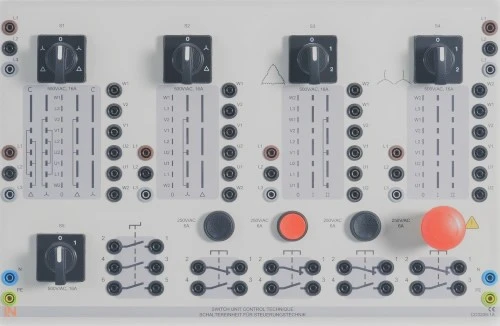
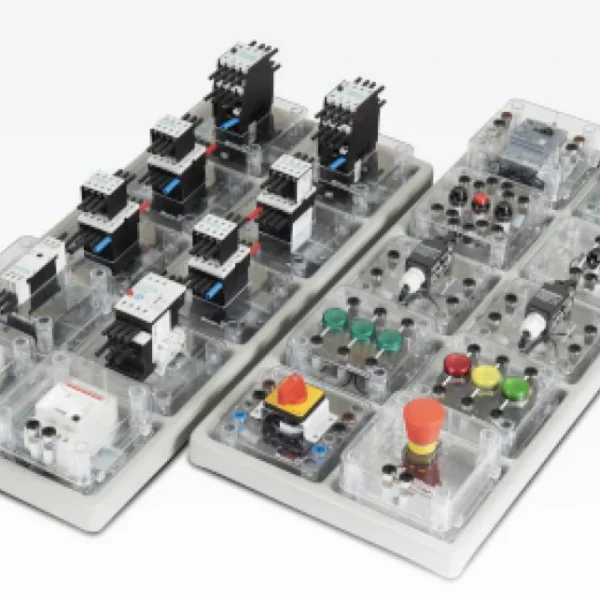
  • Switch and push-button unit 24 V — The unit contains an emergency stop button, control push-buttons, a manual/automatic key switch and indicator lights in four colors on 4 mm safety jacks.
  • Mounting platform with main and control voltage bus — The basic and extension modules provide DIN rails and potential distributors for the flexible installation of modular DIN-rail devices.
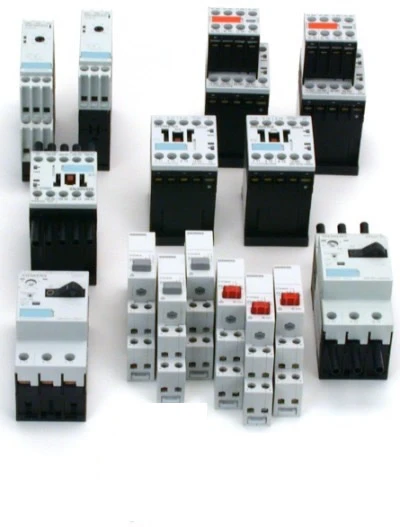
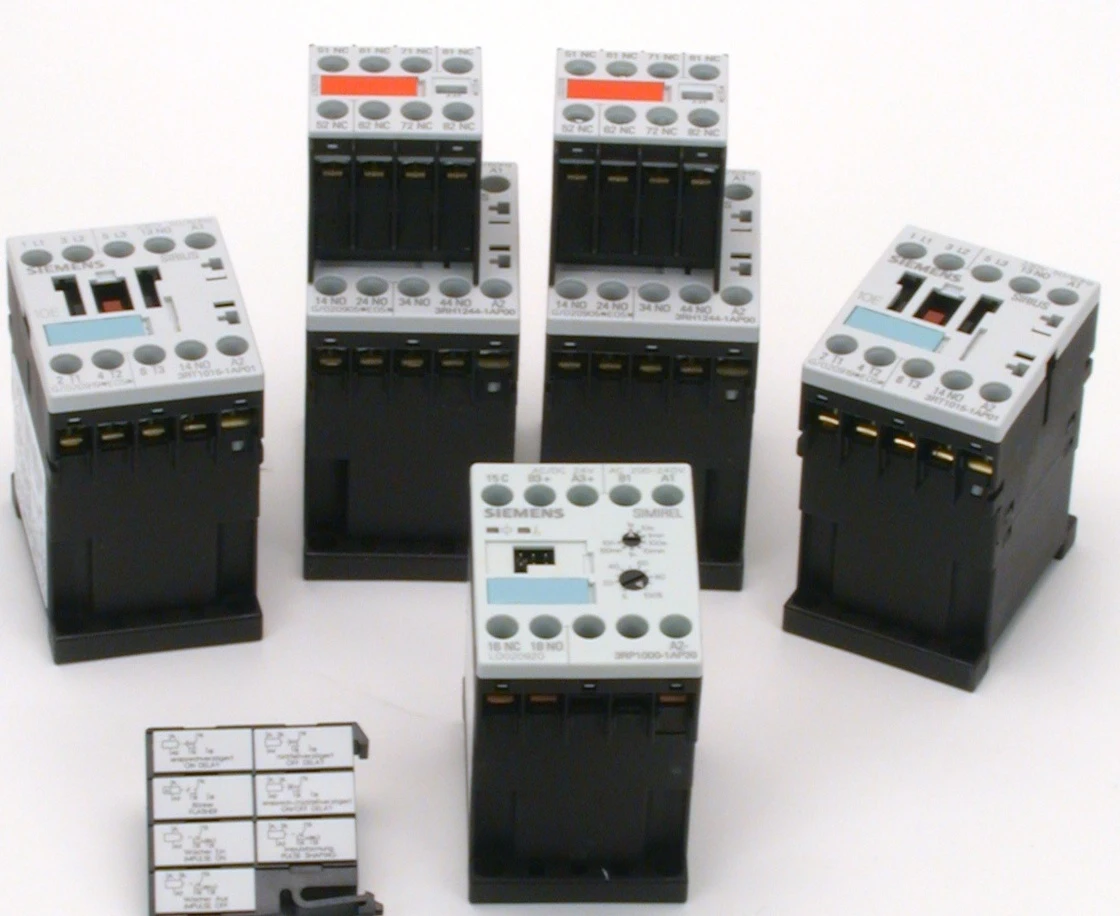
  • Industrial main and auxiliary contactors 24 V — Four-pole main contactors with varistor surge suppressors and auxiliary contactors enable complex interlocks.
  • Adjustable bimetallic motor protection relays — The relays can be set according to the motor nameplate and actuate their auxiliary contacts in the event of an overload.
  • On-delay and off-delay timing relays — Adjustable time ranges enable time-delayed switching on and off as well as automatic wye-delta changeover.
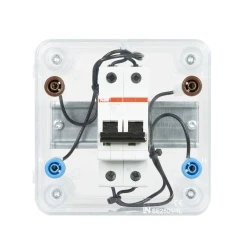
  • Safety adapter set for standard components — Fork and pin adapters connect standard commercial industrial switching devices to the 4 mm safety jacks.
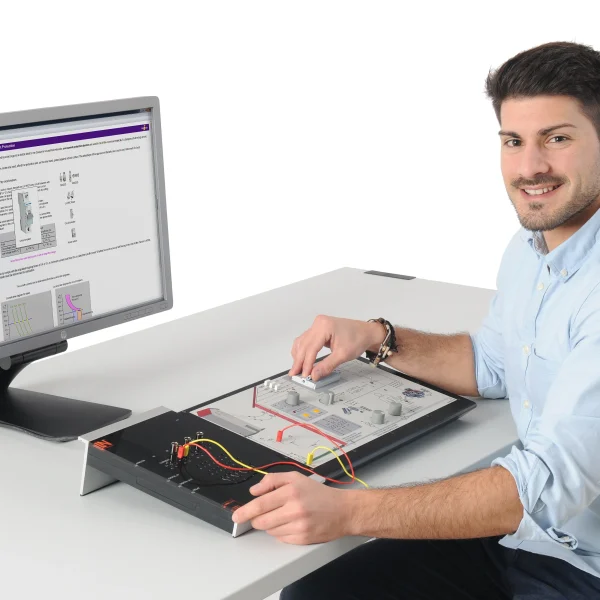
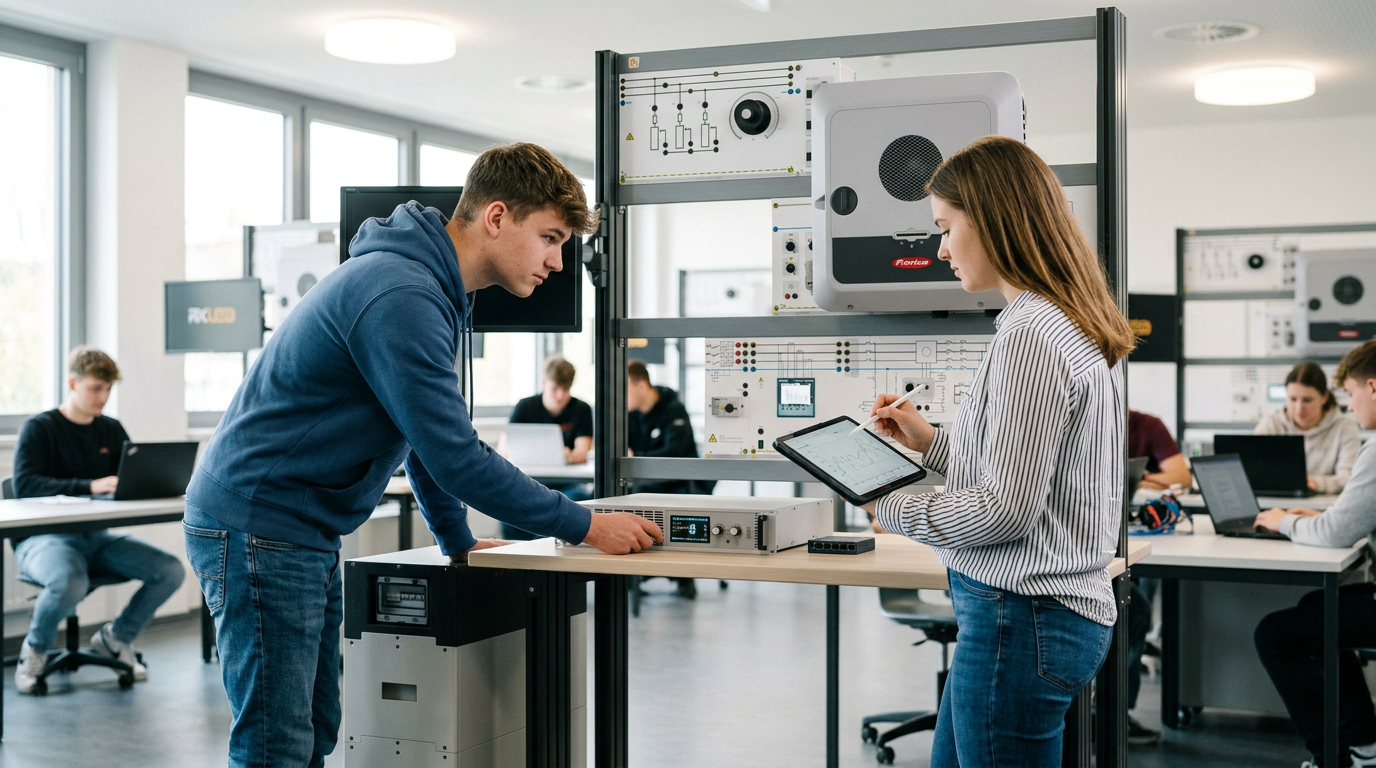
Learners working with RXLea on a tablet at a Lucas-Nuelle training system
RXLea

From Knowledge Comes Capability.

You guide the learning

Where theory and practice go hand in hand.

RXLea brings a new way of learning: project-based, hands-on and clearly structured. Learners solve real-world tasks, while instructors save time on preparation. Interactive modules, smart analytics and real hardware create a modern, efficient learning world.

Hands-on and interactive

Animations, interactive tasks and realistic scenarios build a deep understanding. All content is organized into clear learning paths for focused, hands-on learning.

Digital support

3D assembly animations and digital instructions simplify complex procedures, reduce errors and help learners work more independently.

Visual support

Overview graphics, screenshots and sample animations make the learning world transparent. Photos from the learning packages are also available, including country-specific versions where needed.

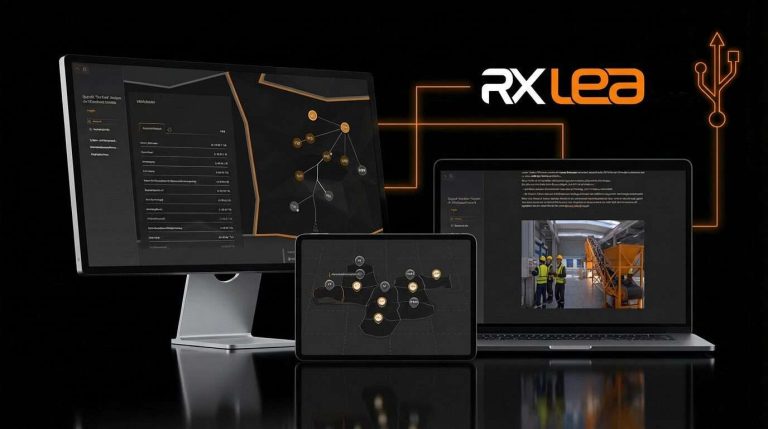
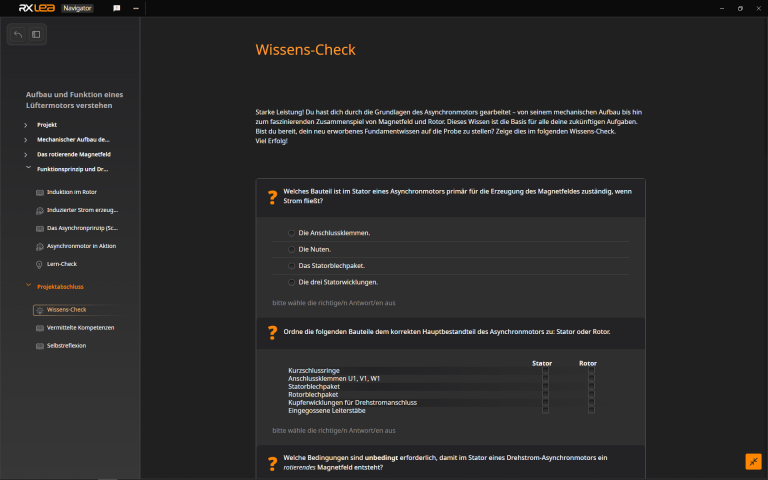
Learners using a tablet at an energy training system
RXLea on desktop, laptop and tablet
RXLea Path Creator for building learning journeys
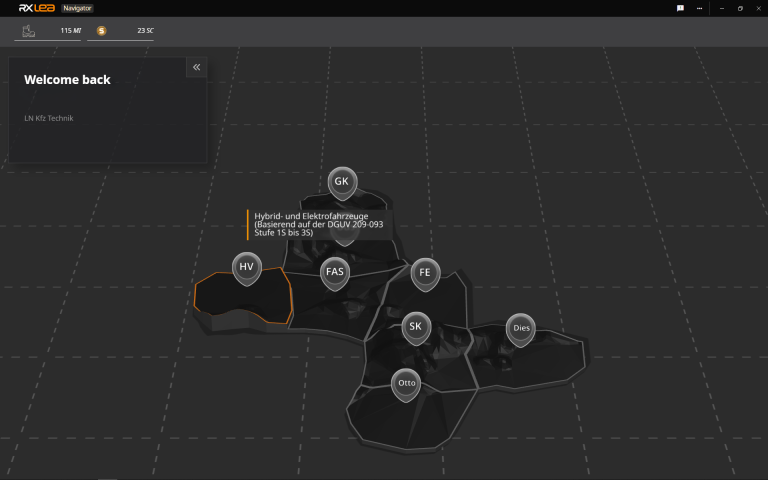
RXLea Navigator showing the learning world
Learn more about RXLea
Newsletter

Stay ahead in
technical training.

Get the latest training systems, product launches and educational insights, delivered directly to your inbox.

Your email address

By subscribing, you agree to our Privacy Policy. You can unsubscribe at any time.

 Please select at least one category before subscribing.
I'm interested in - select all that apply