


Skip to content

Frequency Converter Drives

RXLea
Digital projects for hands-on learningInteractive learning content, directly connected to the training system.

Frequency Converter Drives

EPE41UT

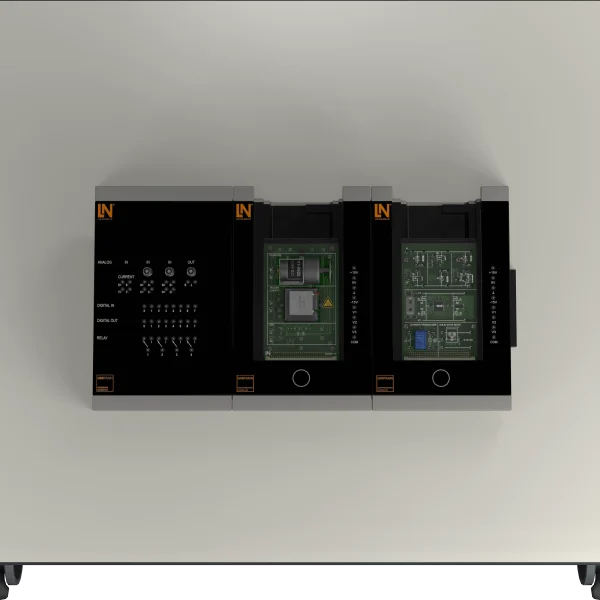
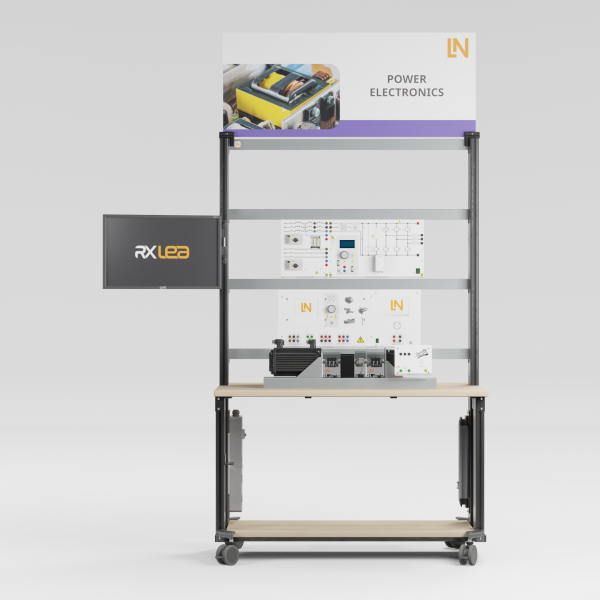
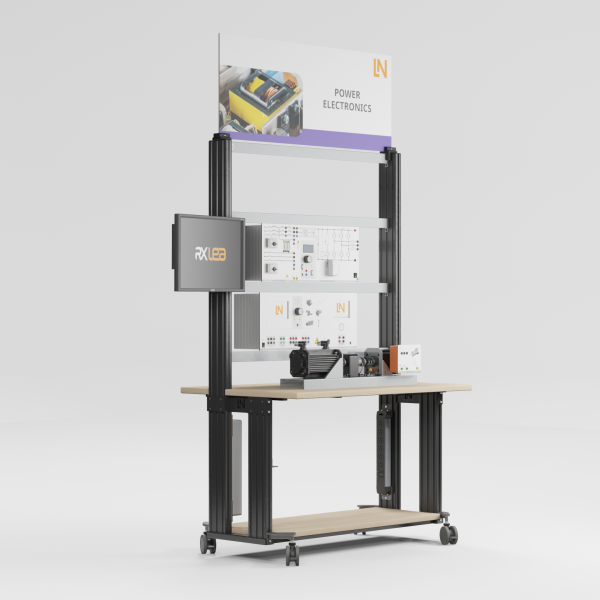
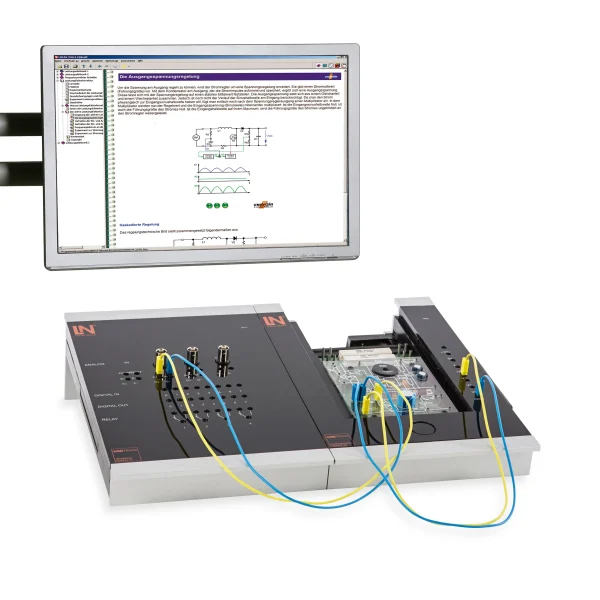
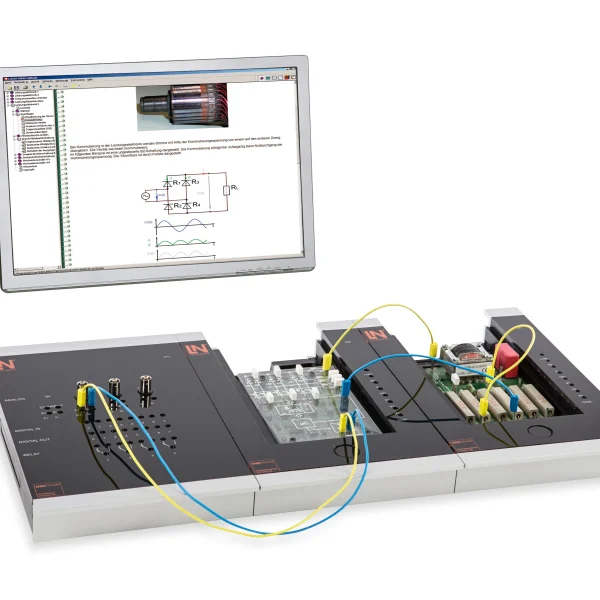
A UniTrain course comprising line supply, DC link, inverter and open induction motor: learners commission the drive, set ramps and characteristics and master regenerative operation.

Learning Content
  • Commissioning the drive
  • Optimizing drive performance
  • Mastering regenerative operation
  • Implementing EMC measures
KEY FEATURES
  • Modular industrial design
  • Interactive drive optimization
  • Integrated protective circuit
  • Integrated brake chopper
Speak with a Product Specialist +1 (757) 808-5696 · sales@lucas-nuelle.com

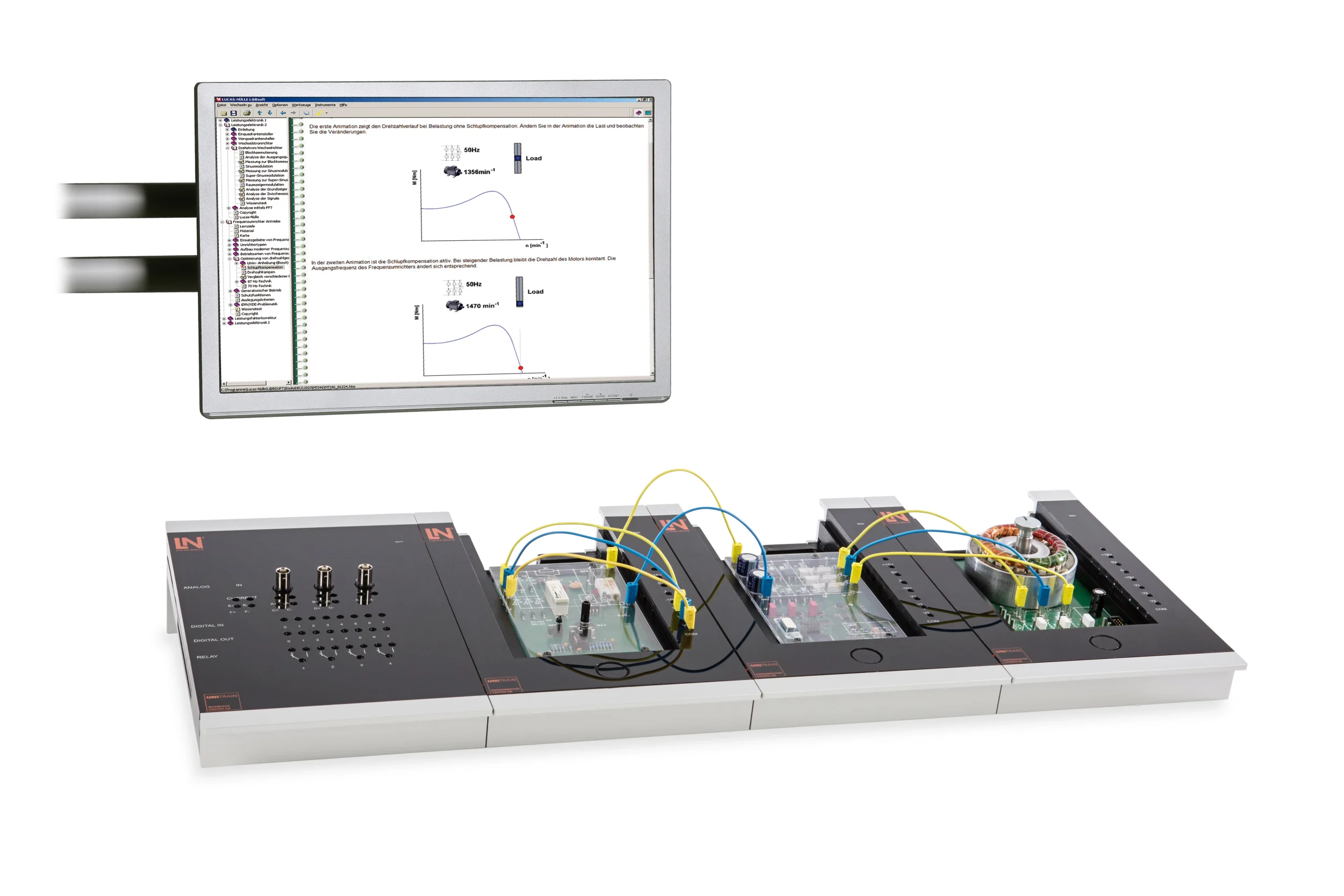
Variable frequency drives (VFDs) adjust the speed of standard three-phase motors with low losses. How well a drive runs and how long it lasts depends on how characteristics, ramps and EMC measures are matched. The UniTrain course lets learners assemble the VFD from its modules: a line supply with DC link, a self-commutated power converter with six MOSFETs and an open induction motor with color-coded windings. Using the virtual instrument, they adjust ramps and characteristics graphically and see the motor’s response immediately. The integrated brake chopper dissipates the braking energy and protects the DC link capacitors from overvoltage. With FFT analysis, learners assess how the switching frequency affects harmonics and motor noise.

CO4204-7MCourse Power electronics 2: Self-commutated power converters
CO4204-7TCourse Electric Machines 2: Asynchronous machines
CO4204-7PCourse Power electronics 3: Frequency converter drives
CO4203-2AUniTrain Interface mit virtuellen Instrumenten (Basis VI)
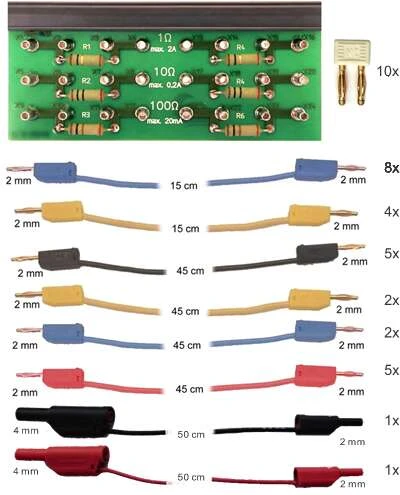
CO4203-2JUniTrain measurement accessories, shunts and connection cables
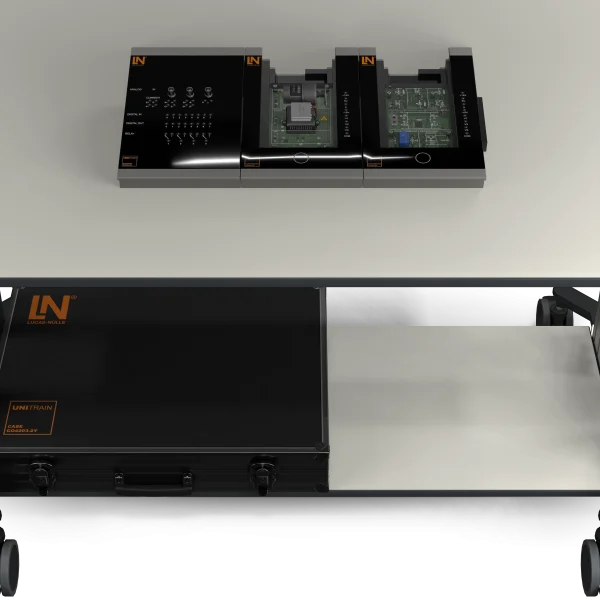
CO4203-2YUniTrain storage case for one UniTrain system
CO4203-2BUniTrain Experimenter

Learning Content in Detail

Learners acquire the competence to commission a variable frequency drive, optimize it and safely master regenerative operation.

Commissioning the drive

Learners configure the VFD for a safe motor start.

Optimizing drive performance

Learners use boost functions and the V/f characteristic to improve speed stability.

Mastering regenerative operation

Learners use the brake chopper to bring large masses to a controlled stop.

Implementing EMC measures

Learners evaluate sources of interference and shielding concepts for interference-free operation.

Features & Applications

The experiments target three fields in which VFDs are used: electrical drive technology, automation technology and power engineering.
  • Modular industrial design — Learners combine the rectifier, DC link and inverter themselves and grasp the architecture of modern drive converters on a real setup.
  • Interactive drive optimization — Learners intervene in the control during operation and follow the changes directly on the motor.
  • Integrated protective circuit — The hardware offers active inrush current limiting and short-circuit protection. Learners practice device protection under safe lab conditions.
  • Integrated brake chopper — With the brake chopper, learners master the handling of regenerative energy and actively protect the DC link capacitors from overvoltage.
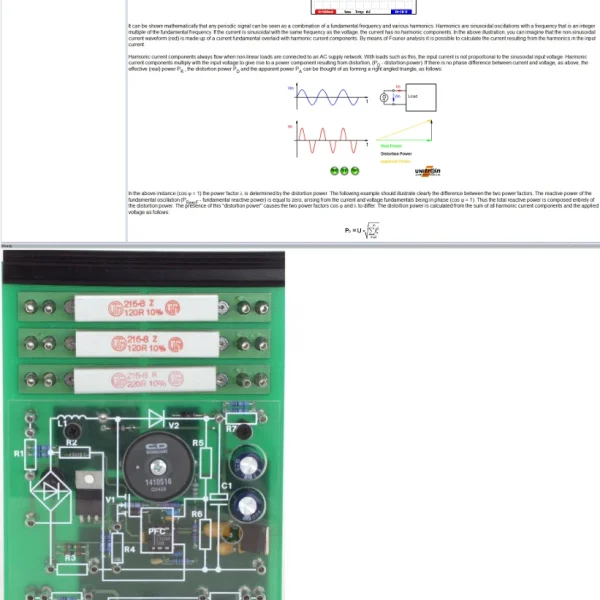
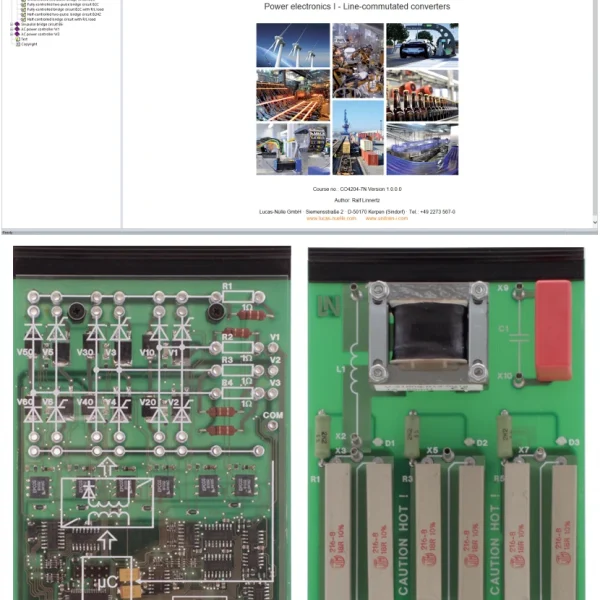
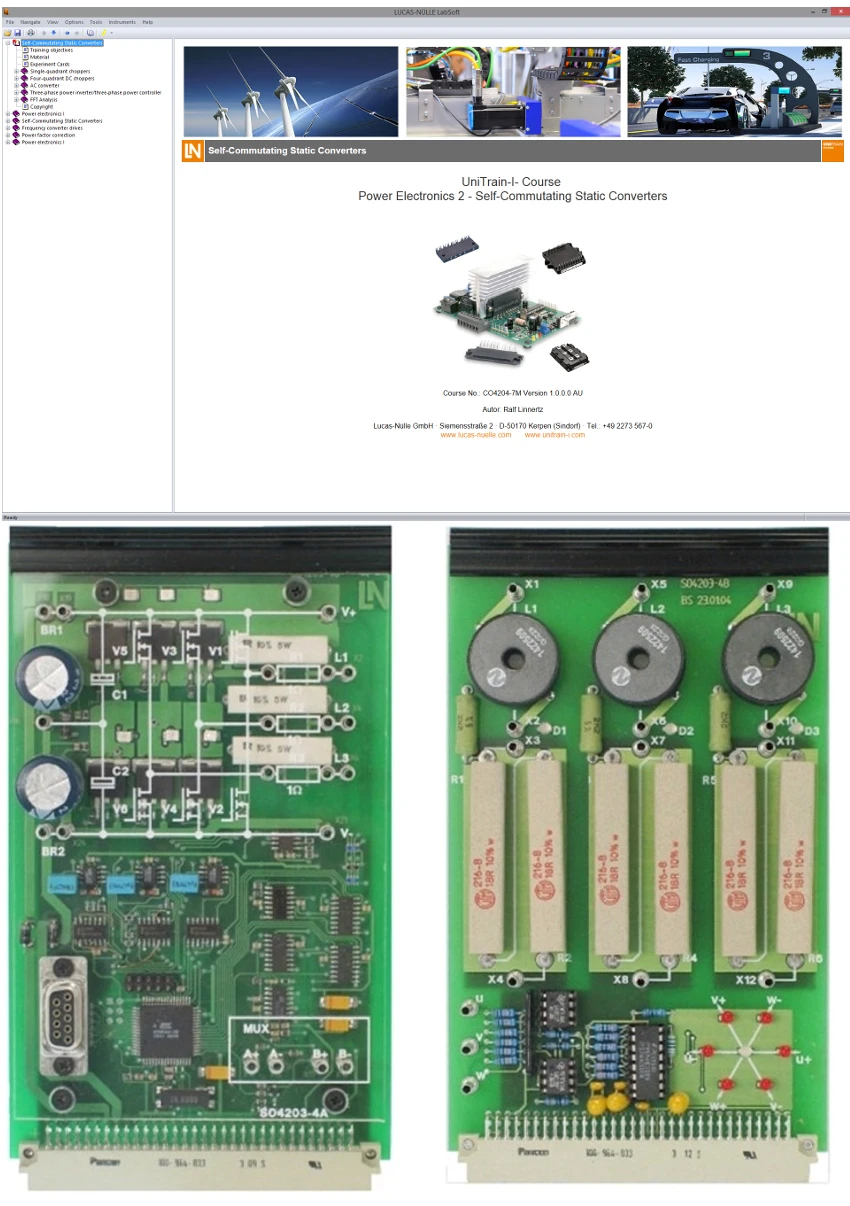
  • Self-commutated power converters experiment card — The card contains six MOSFET transistors and a voltage DC link of up to 48 V. It has an integrated microcontroller and is overload-protected.
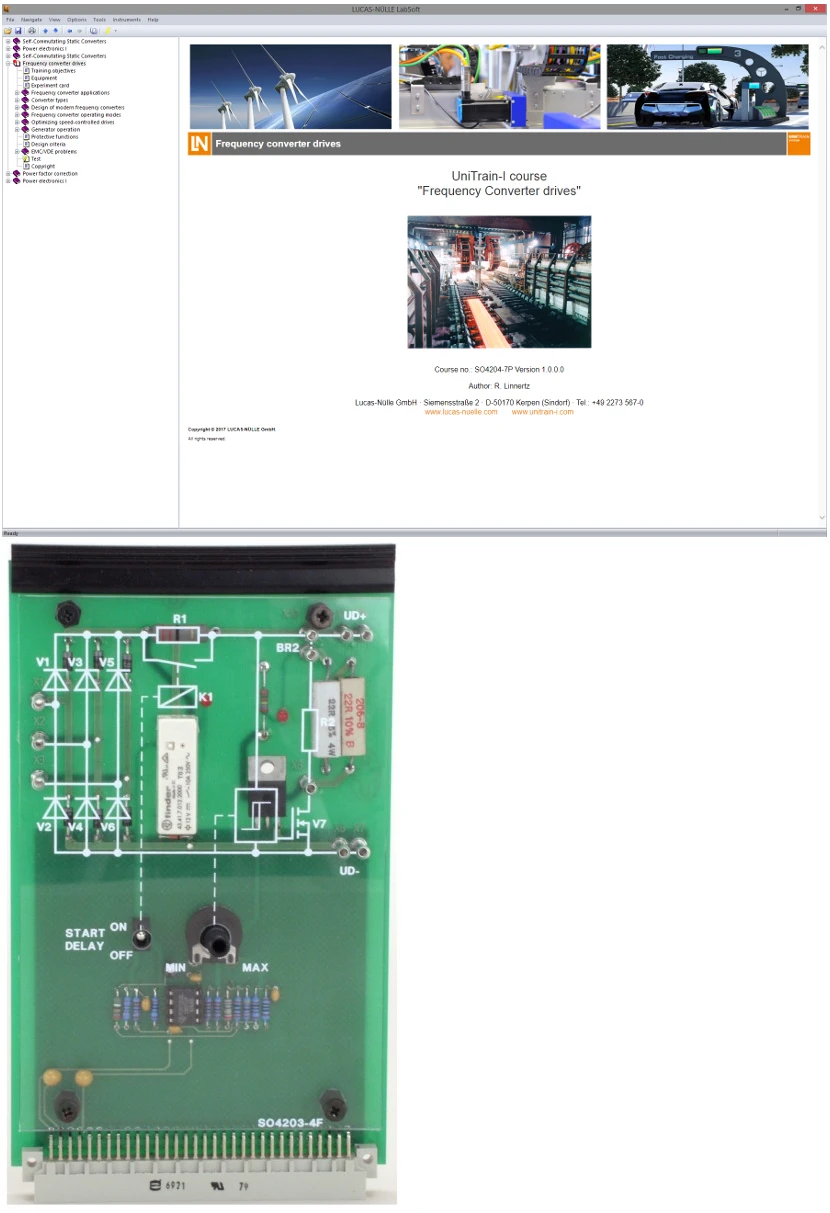
  • VFD DC link experiment card — The card generates the DC supply for the inverter. Learners monitor smoothing and energy buffering during dynamic load changes; an integrated brake chopper dissipates excess braking energy.
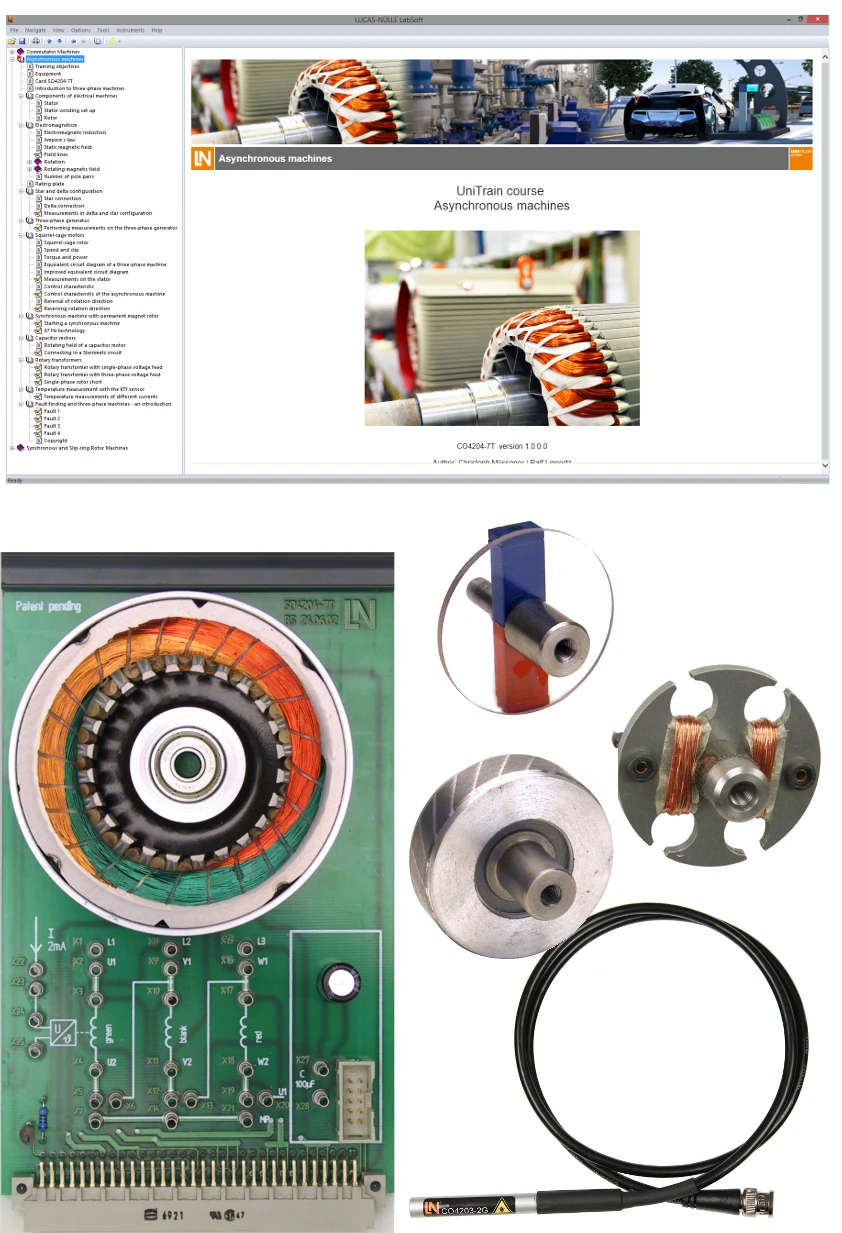
  • Induction motor experiment card — The open motor shows three color-coded windings whose starts and ends are brought out to 2 mm jacks. When driven by the inverter, it becomes a variable-speed drive.
  • LabSoft digital learning environment — The software combines theory and experiment: learners read instructions, answer interactive tests and save their measurement results directly in the HTML interface.
  • VFD virtual instrument — Learners control all parameters via software, adjust ramps and characteristics graphically and observe the motor’s response immediately.
  • Real-time FFT analysis — The tool makes signal quality visible. Learners analyze the influence of the switching frequency on harmonics and motor noise.
Learners working with RXLea on a tablet at a Lucas-Nuelle training system
RXLea

From Knowledge Comes Capability.

You guide the learning

Where theory and practice go hand in hand.

RXLea brings a new way of learning: project-based, hands-on and clearly structured. Learners solve real-world tasks, while instructors save time on preparation. Interactive modules, smart analytics and real hardware create a modern, efficient learning world.

Hands-on and interactive

Animations, interactive tasks and realistic scenarios build a deep understanding. All content is organized into clear learning paths for focused, hands-on learning.

Digital support

3D assembly animations and digital instructions simplify complex procedures, reduce errors and help learners work more independently.

Visual support

Overview graphics, screenshots and sample animations make the learning world transparent. Photos from the learning packages are also available, including country-specific versions where needed.


Learners using a tablet at an energy training system
RXLea on desktop, laptop and tablet
RXLea Path Creator for building learning journeys
RXLea Navigator showing the learning world
Learn more about RXLea
Newsletter

Stay ahead in
technical training.

Get the latest training systems, product launches and educational insights, delivered directly to your inbox.

Your email address

By subscribing, you agree to our Privacy Policy. You can unsubscribe at any time.

 Please select at least one category before subscribing.
I'm interested in - select all that apply