


Field-Effect Transistors
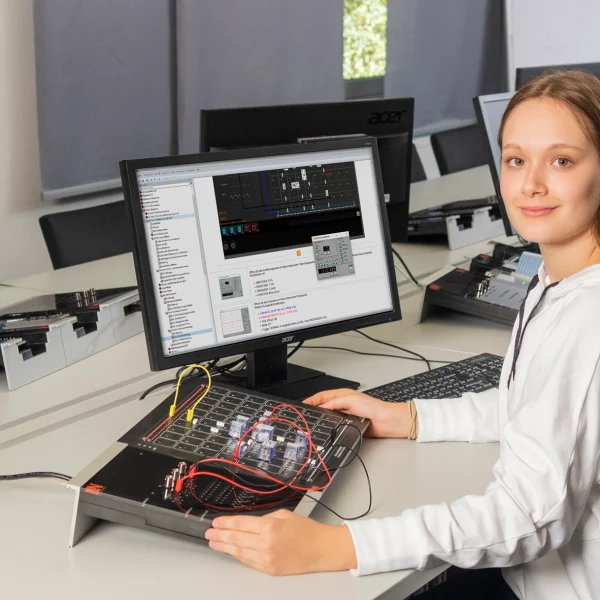
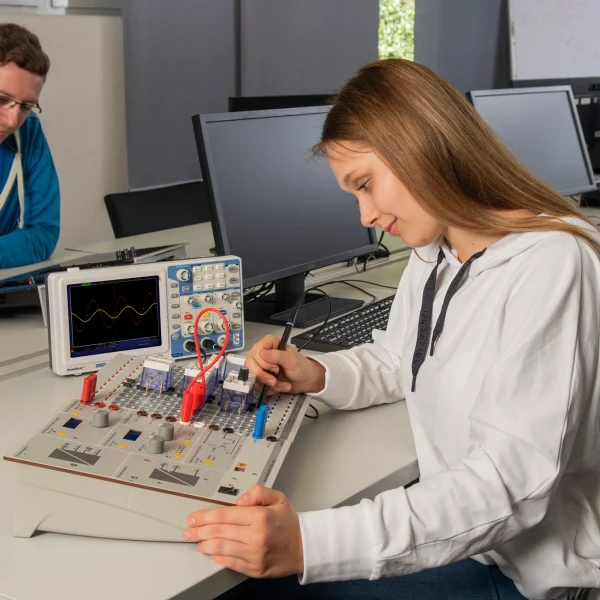
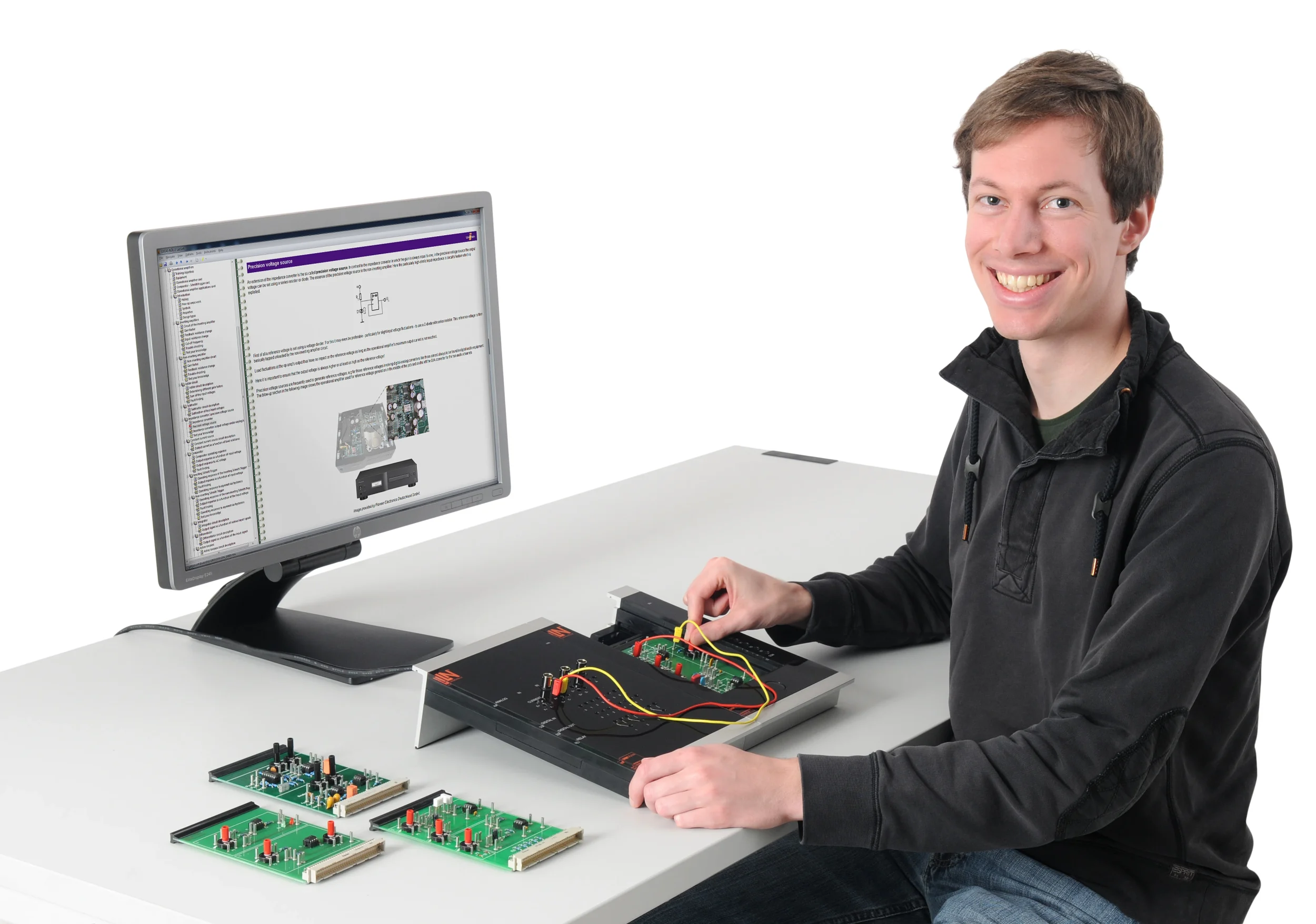
Interactive training system for the measurement-based investigation of JFETs and MOSFETs in amplifier and push-pull circuits. Learners work on a plug-in Eurocard card using the instruments of the UniTrain system.
- Investigating JFETs
- Analyzing the common-source circuit
- Evaluating the common-drain circuit
- Determining MOSFET transconductance
- JFET characterization and characteristic curves
- Amplifier circuits in common-source and common-drain configuration
- MOSFET push-pull output stage and transconductance measurement
- Integrated fault simulation
As voltage-controlled components, field-effect transistors can be driven with virtually no power. This makes them the basis of integrated circuits and power electronics. The training system teaches the structure, properties and operation of junction FETs (JFETs) and insulated-gate FETs (MOSFETs). Learners record output and transfer characteristics, investigate common-source and common-drain circuits and adjust a MOSFET push-pull output stage in XY mode for minimum crossover distortion. Faults that can be activated via relays train diagnosis on faulty amplifier circuits, and the LabSoft course software guides learners through the experiments. By the end, learners can determine FET parameters and assess amplifier stages.
| Course | |
| CO4204-5L | Course Electronics 4: Field-effect transistors |
| Options | |
| LM2330 | Multi13S digital multimeteroptional |
| Accessories | |
| CO4203-2A | UniTrain Interface mit virtuellen Instrumenten (Basis VI) |
| CO4203-2J | UniTrain measurement accessories, shunts and connection cables |
| CO4203-2Y | UniTrain storage case for one UniTrain system |
| CO4203-2B | UniTrain Experimenter |
Learning Content in Detail
Investigating JFETs
Analyzing the common-source circuit
Evaluating the common-drain circuit
Determining MOSFET transconductance
Adjusting push-pull amplifiers
Carrying out fault diagnosis
Distinguishing amplifier classes
Features & Applications
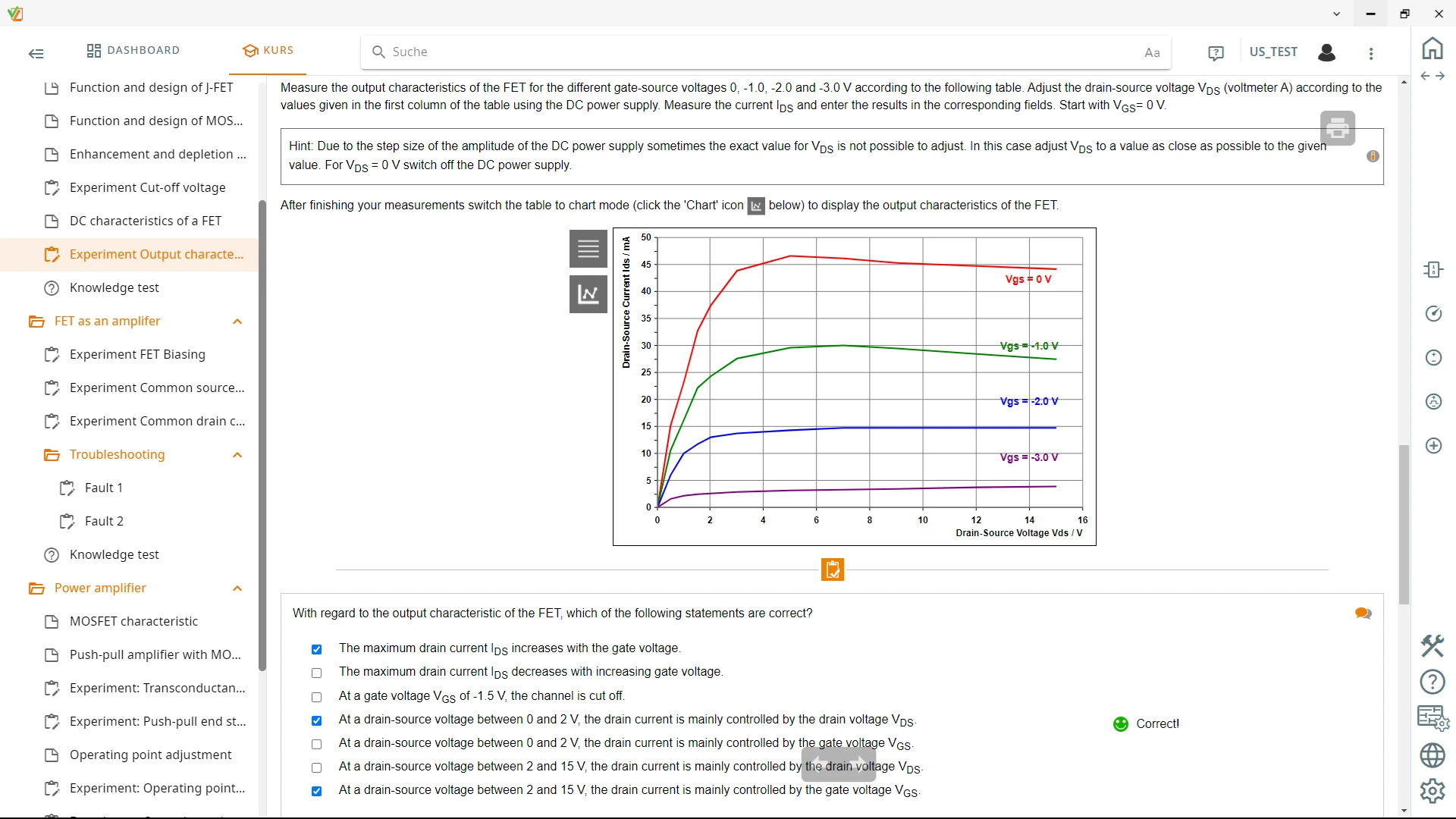
- JFET characterization and characteristic curves — Learners use measurements to determine the pinch-off voltage as well as the output and transfer characteristics of JFETs in DC and AC operation.
- Amplifier circuits in common-source and common-drain configuration — Learners investigate voltage gain, signal phases and the influence of negative feedback in common-source and common-drain circuits.
- MOSFET push-pull output stage and transconductance measurement — Learners determine the transconductance of N-channel and P-channel MOSFETs and analyze the output power and crossover distortion of push-pull amplifiers.
- Integrated fault simulation — Circuit faults that can be activated via relays simulate realistic malfunctions. Learners use them to systematically diagnose faulty FET amplifier circuits.
- Compact experiment card concept — The plug-in Eurocard board and the Experimenter shorten changeover times. All experiments are conducted at safety extra-low voltage and are therefore safe.
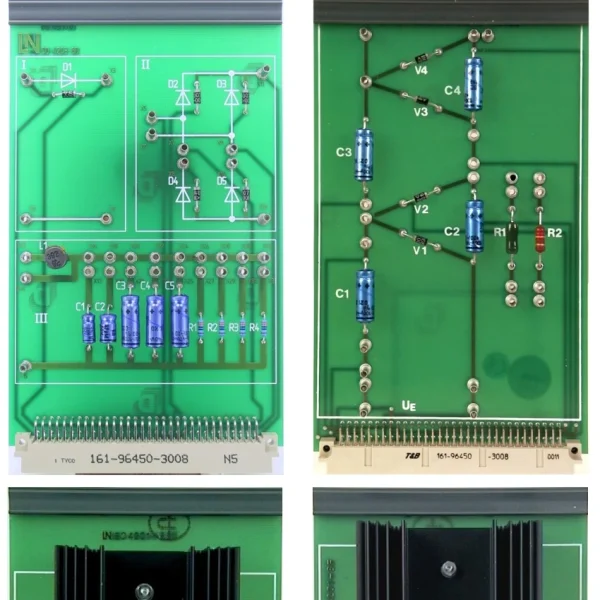
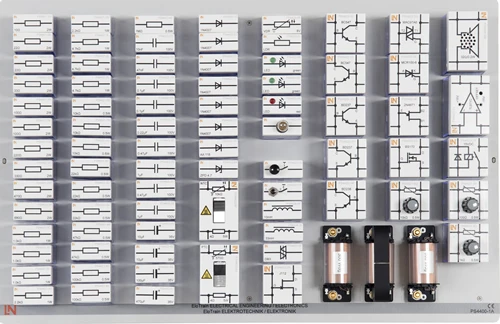
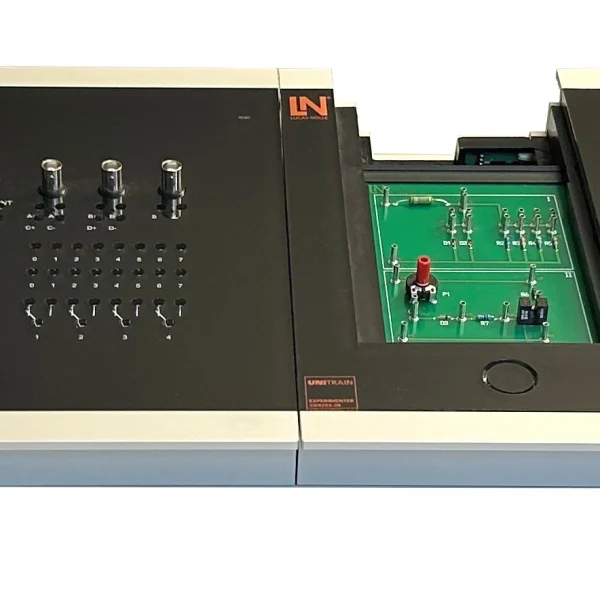
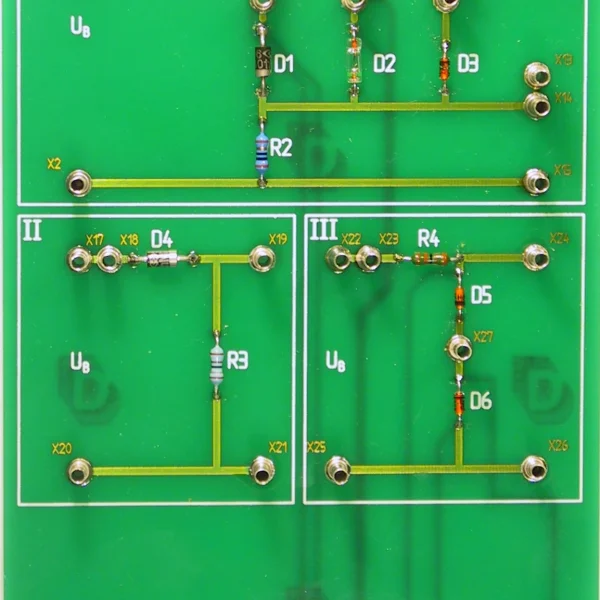
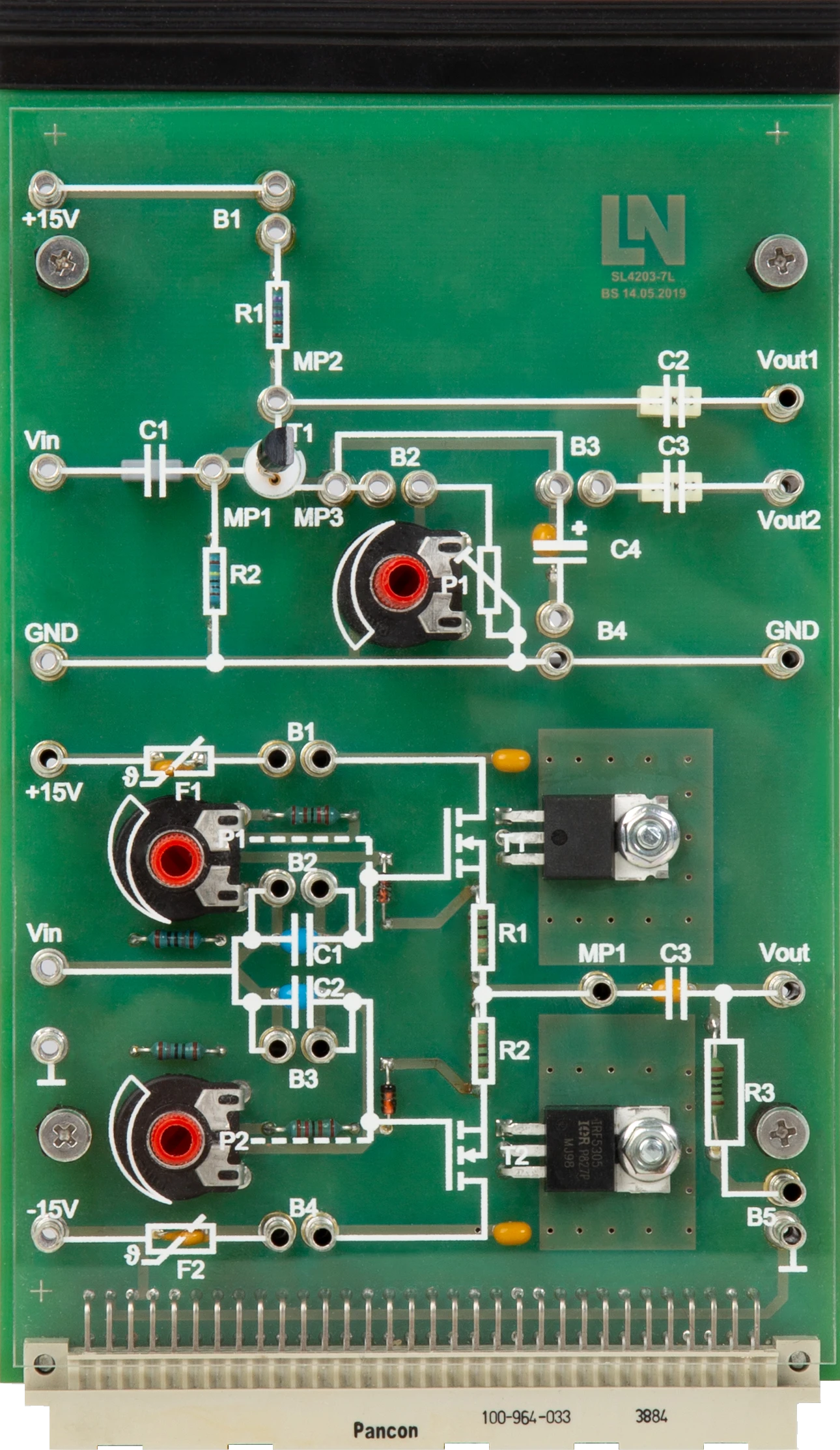
- “Field-effect transistor” experiment card (SO4203-7L) — The card contains a JFET circuit for common-source and common-drain operation with two faults that can be activated, as well as a MOSFET push-pull circuit.
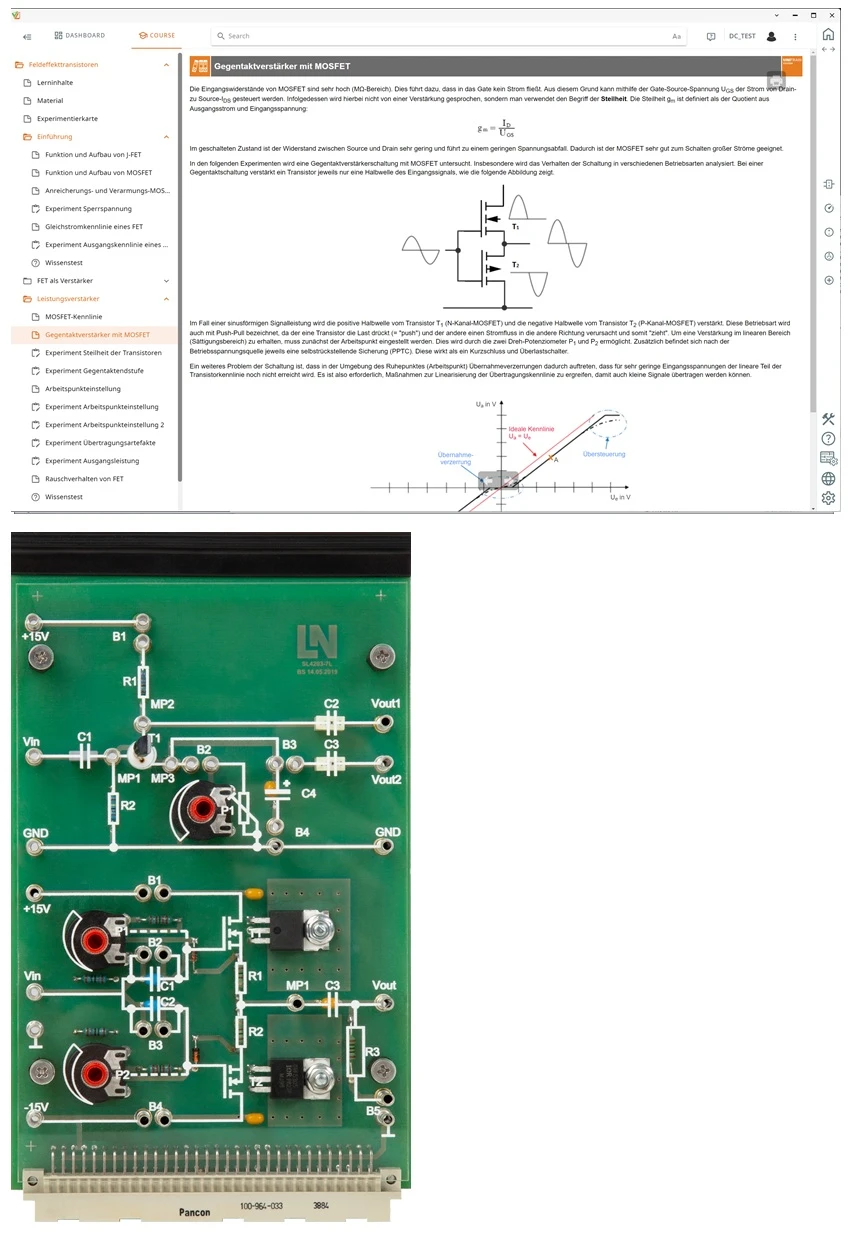
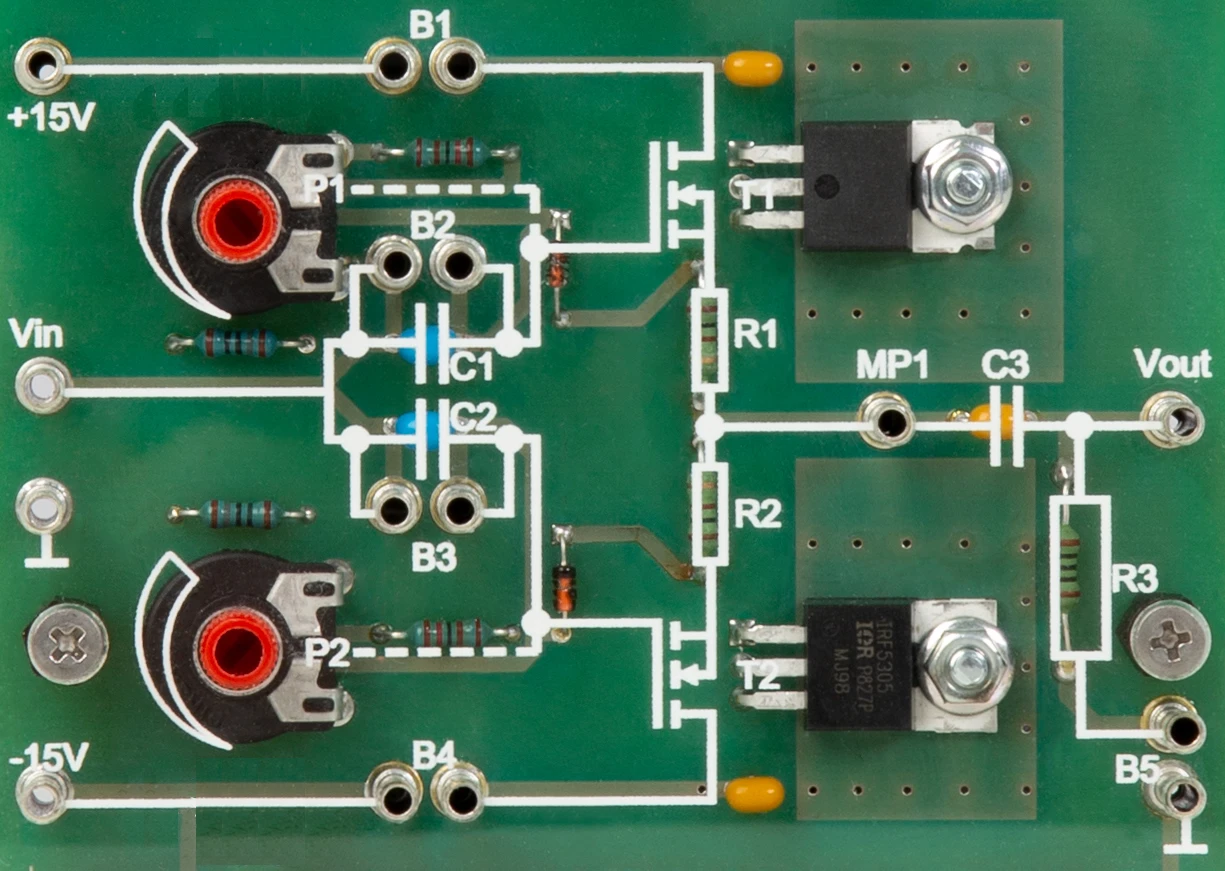
- Output stage circuit with power MOSFETs — The amplifier circuit with complementary MOSFET power transistors amplifies the positive and negative half-waves of the input signal separately.
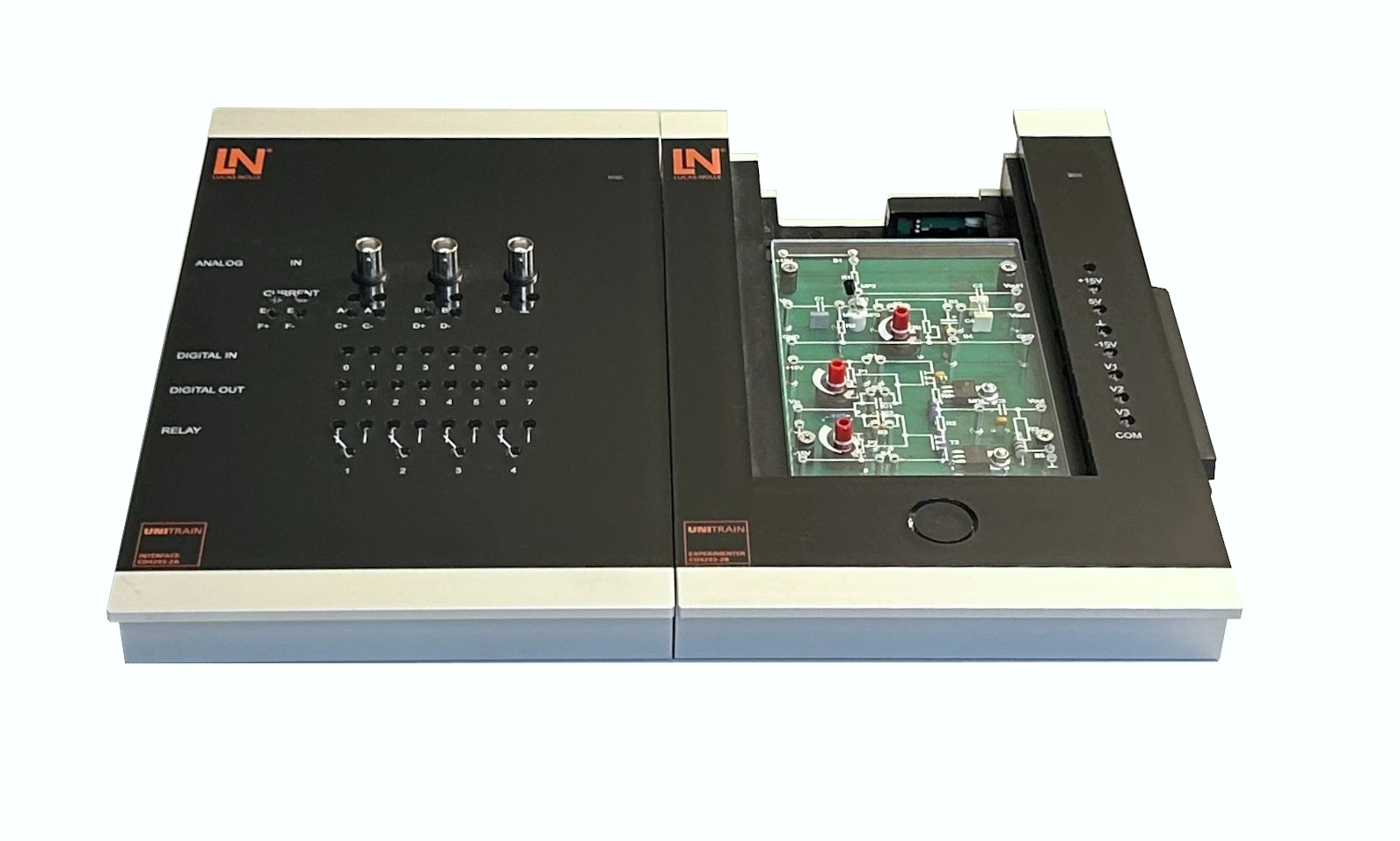
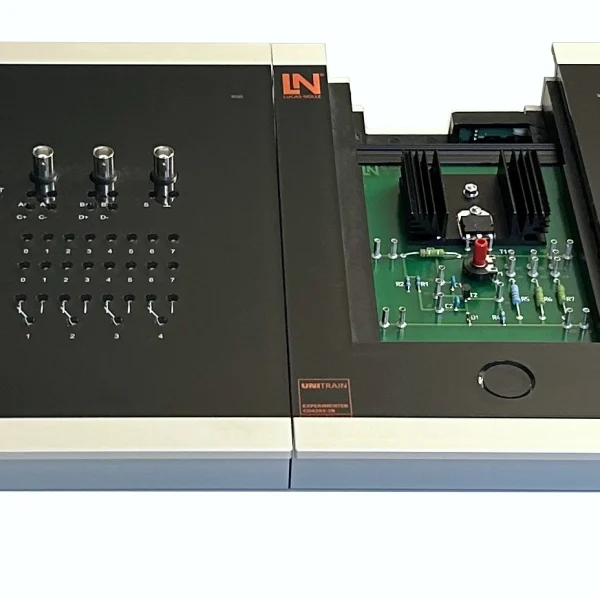
- UniTrain interface — The central interface with a 32-bit processor offers analog and digital inputs and outputs as well as integrated instruments for the practical measuring tasks.
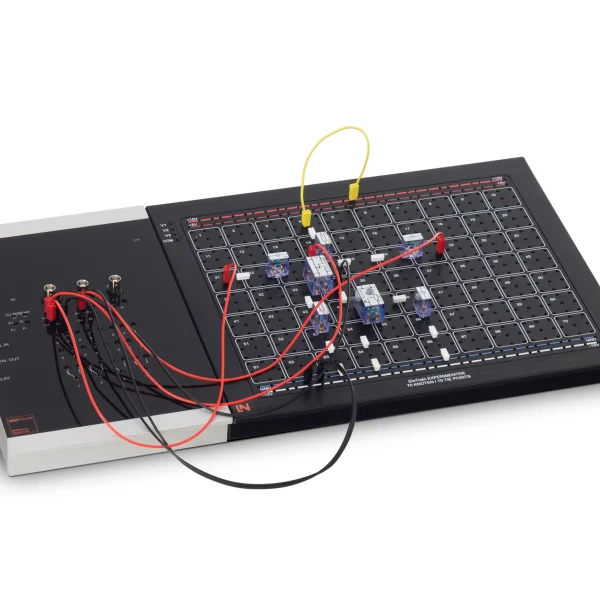
- UniTrain Experimenter (CO4203-2B) — The Experimenter with its ejector mechanism holds the experiment card and connects it to the UniTrain bus.
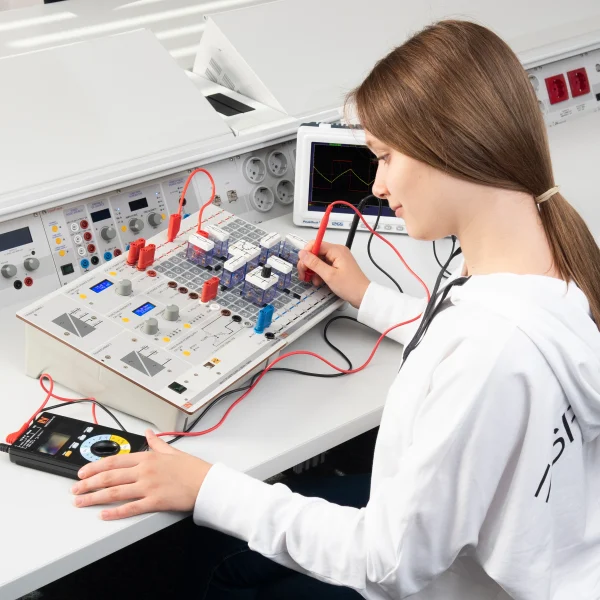
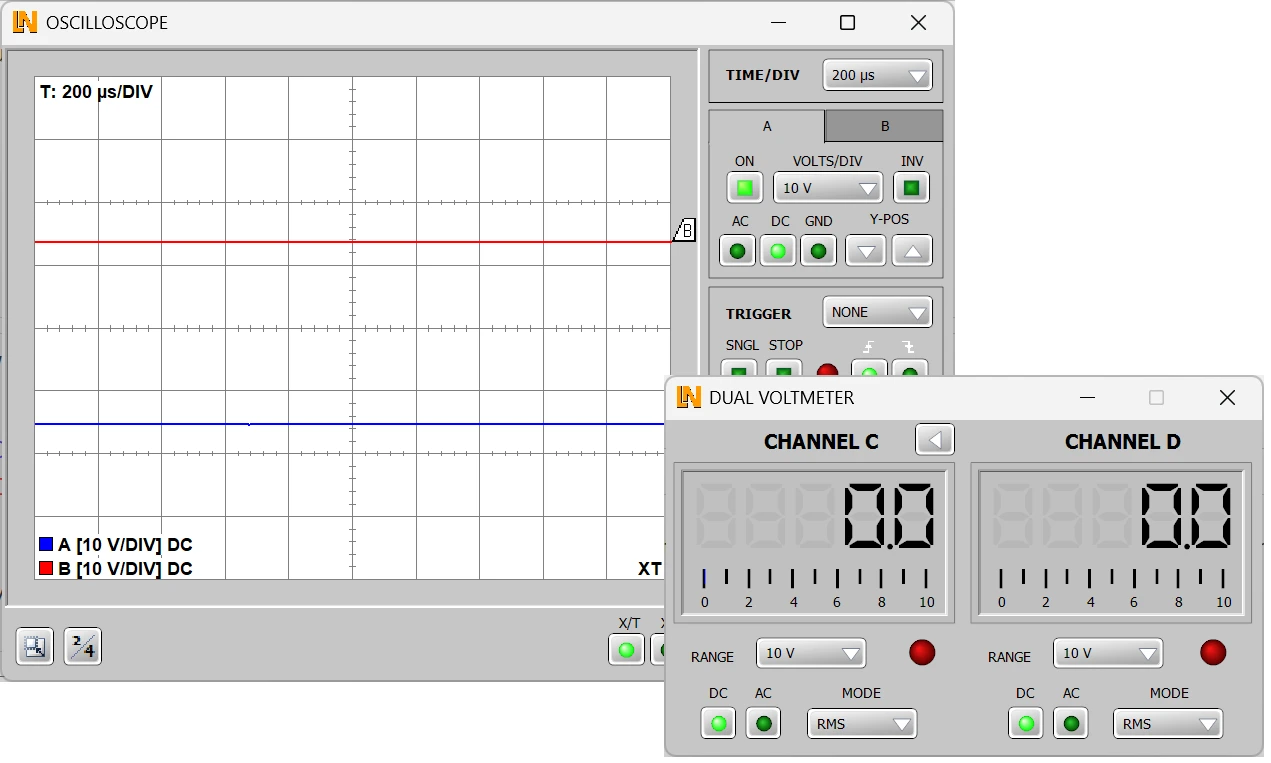
- Oscilloscope and voltmeters — Using the oscilloscope in 2-channel mode and the voltmeters, learners capture the waveform and RMS value of AC voltages simultaneously.
- Function generator — The function generator produces AC voltage in sine, triangle and square waveforms up to a frequency of 5 MHz.

From Knowledge Comes Capability.
You guide the learning
Where theory and practice go hand in hand.
RXLea brings a new way of learning: project-based, hands-on and clearly structured. Learners solve real-world tasks, while instructors save time on preparation. Interactive modules, smart analytics and real hardware create a modern, efficient learning world.
Hands-on and interactive
Animations, interactive tasks and realistic scenarios build a deep understanding. All content is organized into clear learning paths for focused, hands-on learning.
Digital support
3D assembly animations and digital instructions simplify complex procedures, reduce errors and help learners work more independently.
Visual support
Overview graphics, screenshots and sample animations make the learning world transparent. Photos from the learning packages are also available, including country-specific versions where needed.




Stay ahead in
technical training.
Get the latest training systems, product launches and educational insights, delivered directly to your inbox.