


Controlling an Inverted Pendulum with Reinforcement Learning
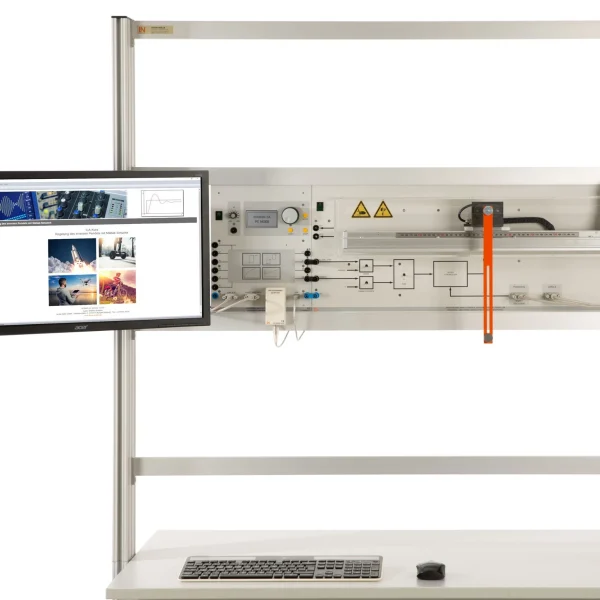
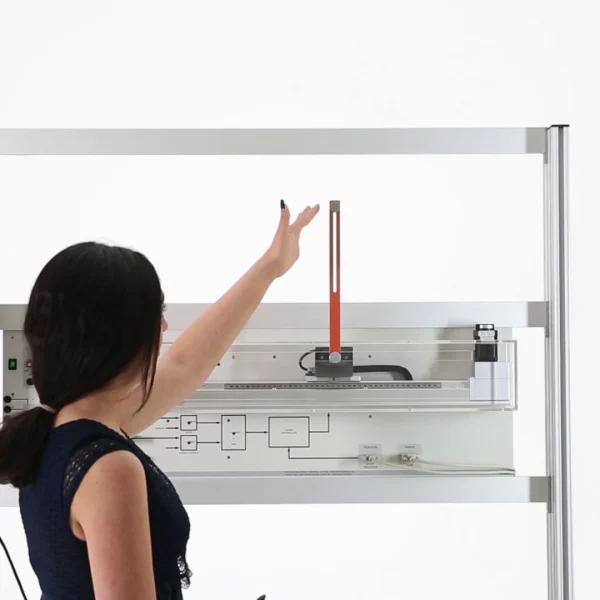
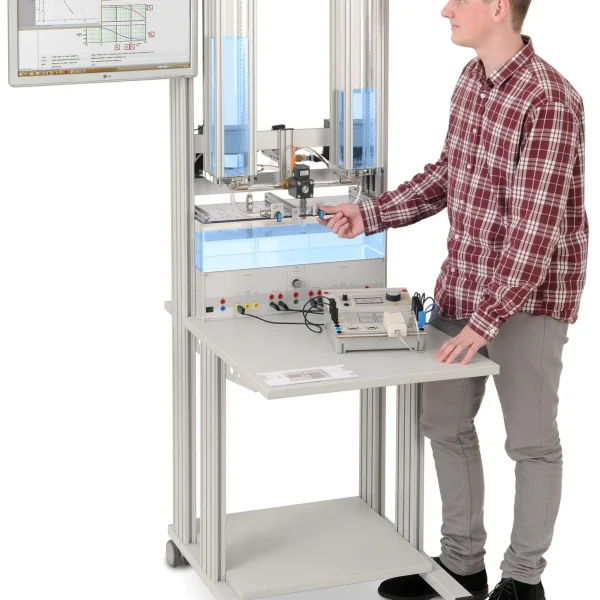
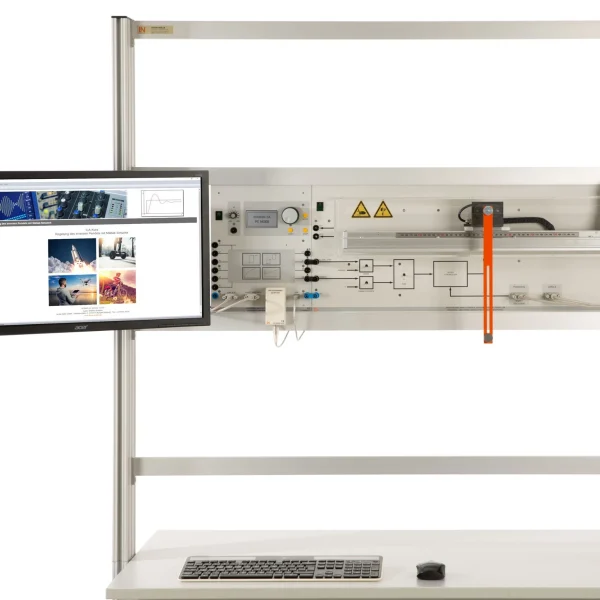
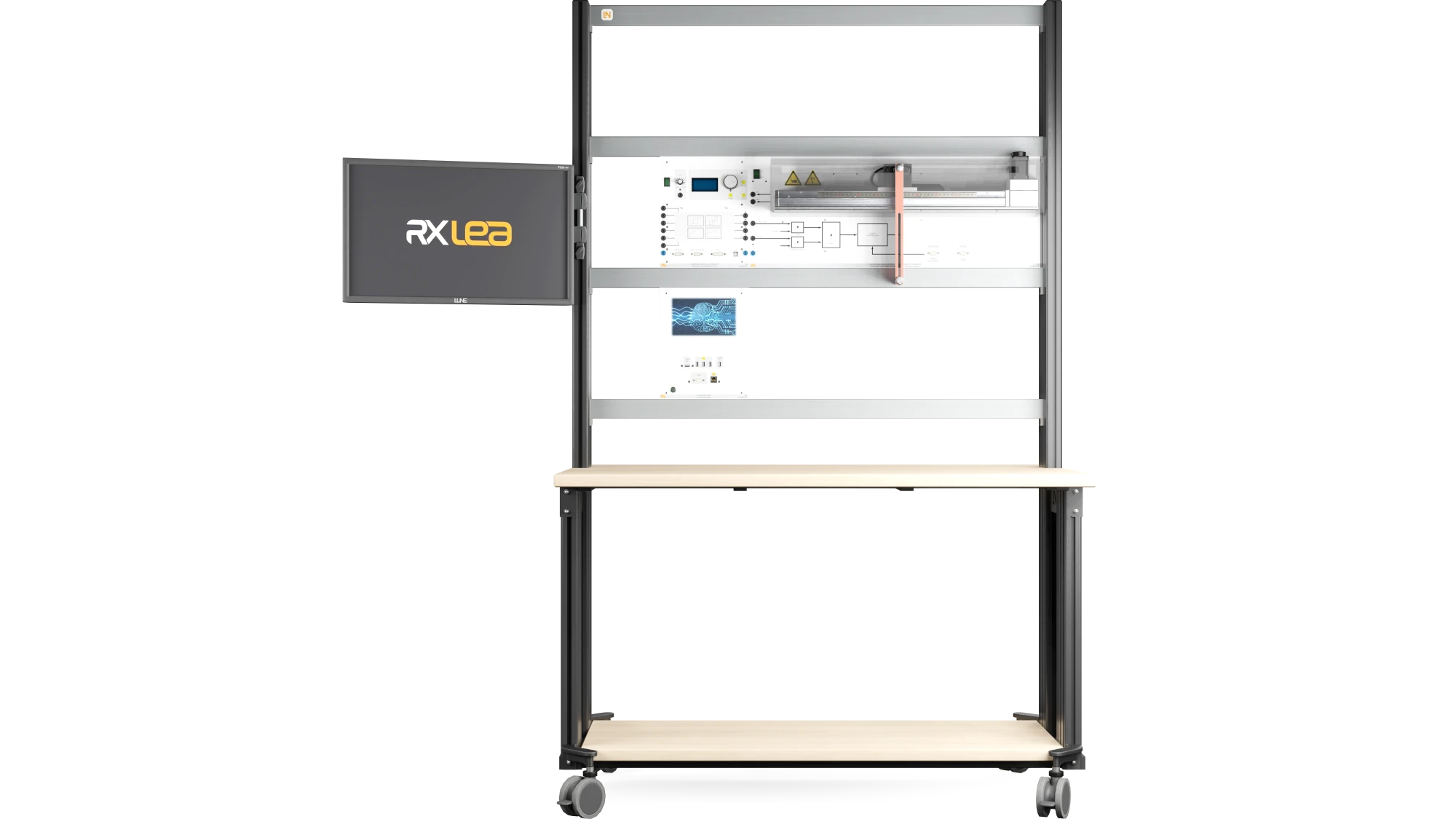
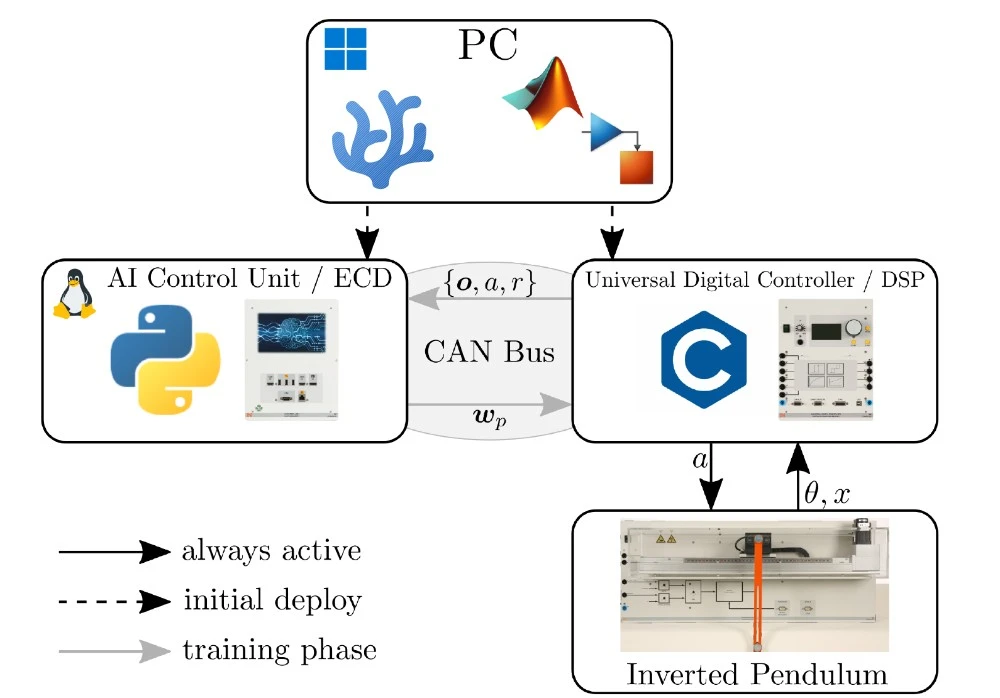
Training system for developing and testing reinforcement learning algorithms on a real inverted pendulum. An AI control unit trains the agent directly on the system and exchanges the weights via the CAN bus.
- Investigating system dynamics and wiring
- Parameterizing scripts and models
- Defining the reward function
- Implementing the actor-critic architecture
- Real-time AI training on the real system
- Hybrid control architecture
- Rapid prototyping on the DSP hardware
- Variable pendulum center of gravity
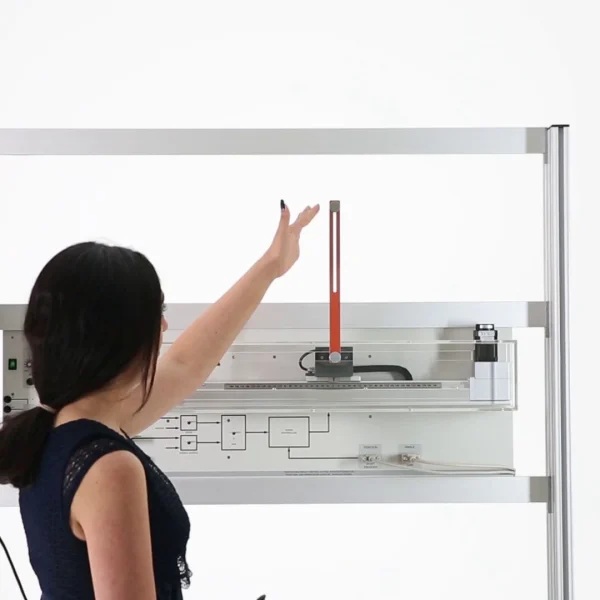
The inverted pendulum is the classic model of an unstable controlled system: a pivoted pendulum rod on a belt-driven linear axis. Instead of stabilizing it using an exact mathematical model, an agent learns the control strategy itself. Learners parameterize predefined Python scripts and Simulink models, define the reward function and implement the actor-critic architecture on the AI control unit with NVIDIA Jetson Xavier NX. Training takes place directly on the real system, and the weights are sent live via the CAN bus to the real-time controller. Using the live scope, learners follow the learning progress and evaluate how the reward function and parameters affect the result.
| Base Product | |
| CO3620-2G | Position and Angle Control System, Inverted Pendulum |
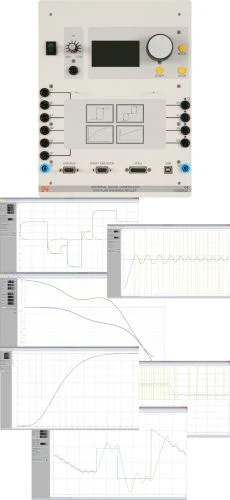
| CO3620-2A | Universal digital controller (DSP) |
| CO3620-3E | AI control unit |
| CO3636-3D | USB adapter with MATLAB toolbox for power electronics and process control |
| SO5147-2A | Set of safety measurement cables and special cables for IAC53 |
| Course | |
| SO2802-3G | Interactive Lab Assistant: Control of a position and angle control system |
| SO2802-3H | Interactive Lab Assistant: Control of a position and angle control system using Matlab Simulink |
| Furniture | |
| ST7200-7A | SybaPro experiment trolley, 3-level, 6 sockets, 1250x1970x800mm |
| Furniture Accessories | |
| ST8010-4T | Monitor holder for flat screen monitor of weight up to 15kg / 33lbs |
| ST7200-5L | Protection cover for three-level experiment trolleys |
| ST8010-4G | Keyboard adapter for flat screen monitor holders |
| ST8008-8N | Protected power distribution for working stations |
| ST8010-4J | Multiple socket outlet, 6 fold, with illuminated switch |
| ST8000-6A | Display for the Control Technology equipment |
Learning Content in Detail
Investigating system dynamics and wiring
Parameterizing scripts and models
Defining the reward function
Implementing the actor-critic architecture
Monitoring and evaluating the learning process
Features & Applications
- Real-time AI training on the real system — Learners train the AI agent not in a simulation but on the real pendulum. The weight parameters are sent live to the controller via the CAN bus.
- Hybrid control architecture — MATLAB Simulink handles real-time control, while Python with TensorFlow handles AI training. Learners see how the two worlds work together.
- Rapid prototyping on the DSP hardware — Learners compile Simulink models directly into C code, test the control algorithms as hardware-in-the-loop and optimize the parameters on the running system.
- Variable pendulum center of gravity — The pendulum’s center of gravity can be shifted. This allows learners to change the characteristics of the controlled system and test how robust the trained controller remains.
- LN toolbox with JTAG programming adapter — Models and algorithms are created in MATLAB Simulink and transferred to the hardware at the push of a button.
- Belt drive with recirculating ball guide — The guide allows precise, low-friction linear movements over a travel distance of up to 400 mm.
- Hybrid stepper motor with up to 100 W — Current and speed control are integrated, enabling highly dynamic motion profiles.
- CAN angle sensor — The high-resolution incremental encoder delivers 16,000 pulses per revolution via a CAN interface.
- AI control unit for training on the edge — Thanks to its Volta GPU with CUDA and Tensor cores, the control unit with NVIDIA Jetson Xavier NX runs the computationally intensive training processes directly on the device. Python, TensorFlow and OpenCV are used.
- Python RL framework with KerasRL and TensorFlow — The script package controls training on the AI control unit, manages the replay buffer and synchronizes the weights via the CAN bus.
- LN toolbox for MATLAB Simulink — The library provides ready-made hardware blocks and reduces the time needed to build models in Simulink.
- Integrated live scope — Learners visualize system variables in real time and make changes during operation.

From Knowledge Comes Capability.
You guide the learning
Where theory and practice go hand in hand.
RXLea brings a new way of learning: project-based, hands-on and clearly structured. Learners solve real-world tasks, while instructors save time on preparation. Interactive modules, smart analytics and real hardware create a modern, efficient learning world.
Hands-on and interactive
Animations, interactive tasks and realistic scenarios build a deep understanding. All content is organized into clear learning paths for focused, hands-on learning.
Digital support
3D assembly animations and digital instructions simplify complex procedures, reduce errors and help learners work more independently.
Visual support
Overview graphics, screenshots and sample animations make the learning world transparent. Photos from the learning packages are also available, including country-specific versions where needed.




Stay ahead in
technical training.
Get the latest training systems, product launches and educational insights, delivered directly to your inbox.