


Skip to content

Transmission Line with Earth-Fault Compensation

RXLea
Digital projects for hands-on learningInteractive learning content, directly connected to the training system.

Transmission Line with Earth-Fault Compensation

EUL31PT

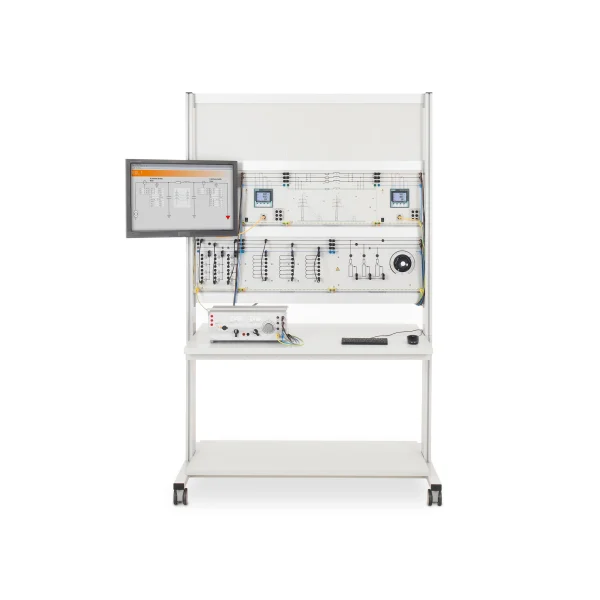
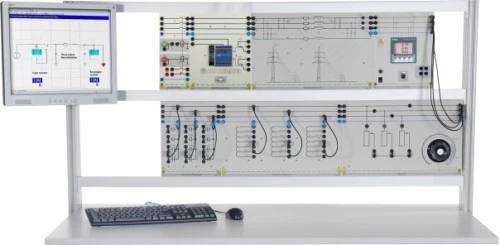
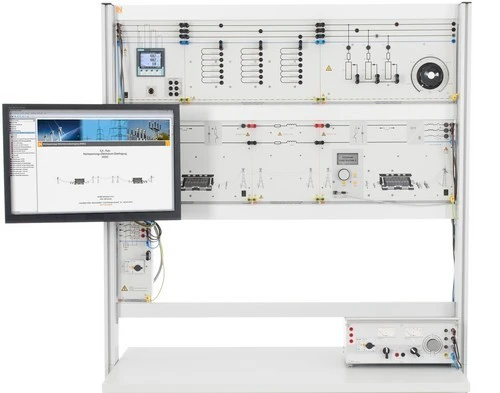
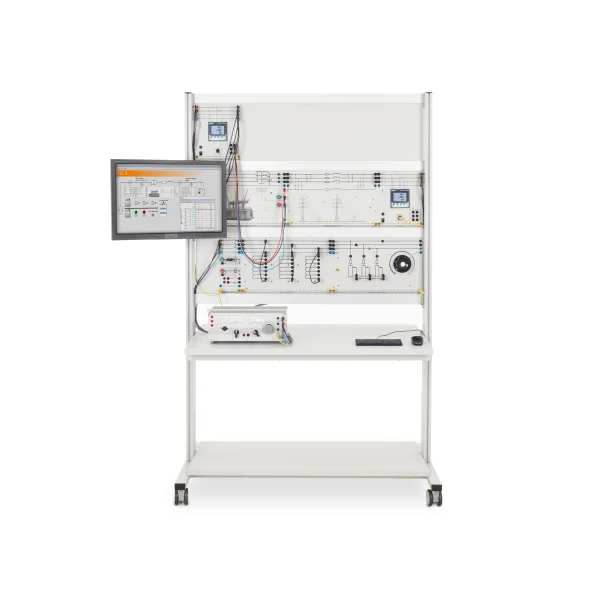
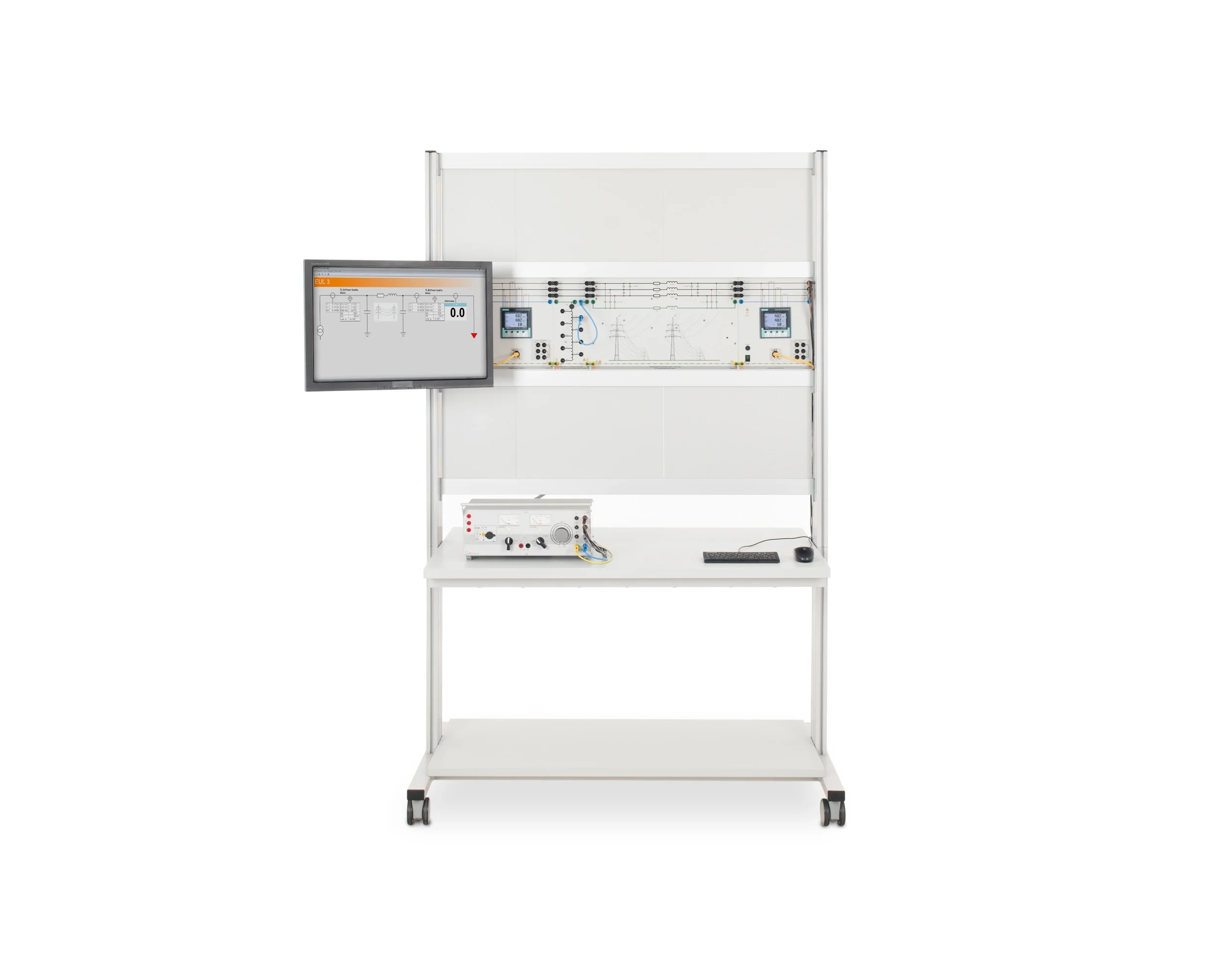
Expansion set with Petersen coil: students investigate single-phase ground faults in networks with an ungrounded neutral and set the arc suppression coil to the appropriate value in nine steps.

Learning Content
  • Measuring behavior during a ground fault
  • Compensating the ground-fault current
  • Calculating asymmetrical faults
  • Assessing safety in the distribution grid
KEY FEATURES
  • Simulating ungrounded neutral points
  • Stepped ground-fault compensation
  • Realistic behavior during asymmetrical faults
  • Comprehensive grid monitoring
Speak with a Product Specialist +1 (757) 808-5696 · sales@lucas-nuelle.com

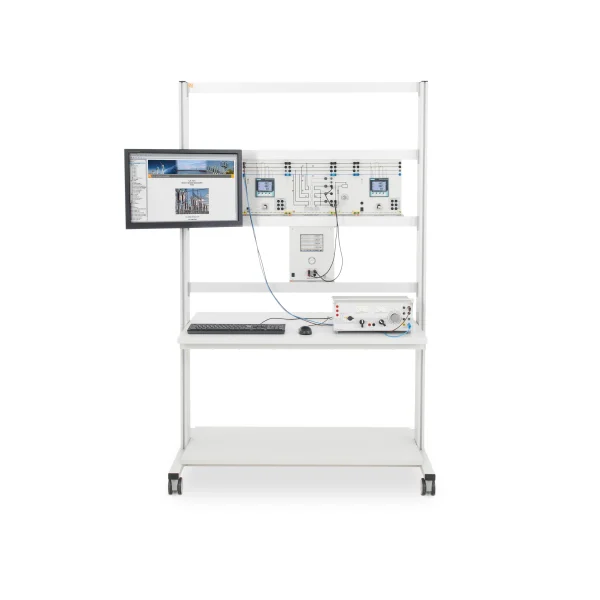
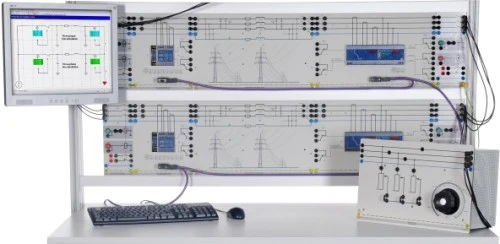
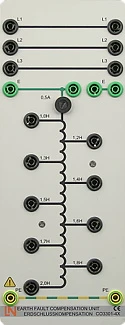
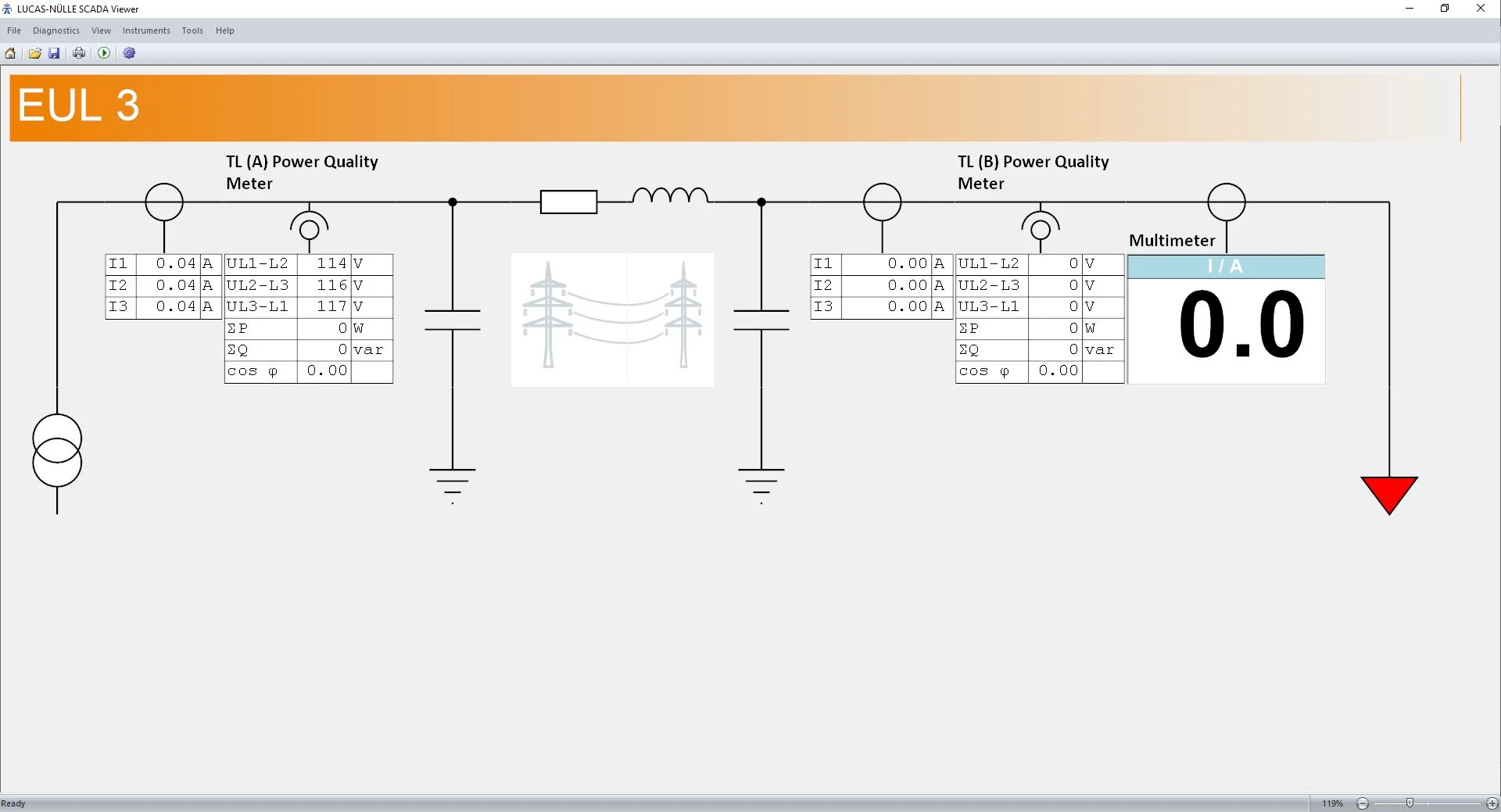
In the distribution grid, a ground fault on a phase conductor must not lead to immediate disconnection. To keep the fault current at the fault location low, a Petersen coil compensates the capacitive component. This expansion set adds a ground-fault compensation unit with nine inductance steps between 1.0 and 2.0 H to the line model. Students set up a network with an ungrounded neutral, create single-phase ground faults and measure the neutral point displacement voltage and the currents at the fault location. They then tune the arc suppression coil and observe how the ground-fault current decreases. The Power Quality Meters display zero-sequence voltages and currents, and SCADA for PowerLab shows the phasor diagrams in real time.

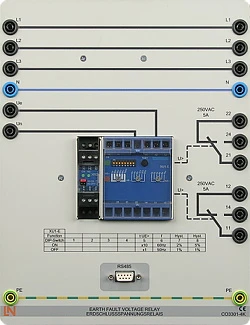
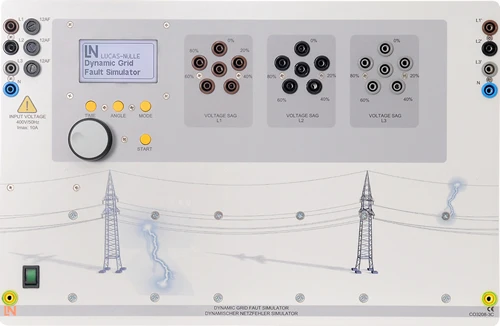
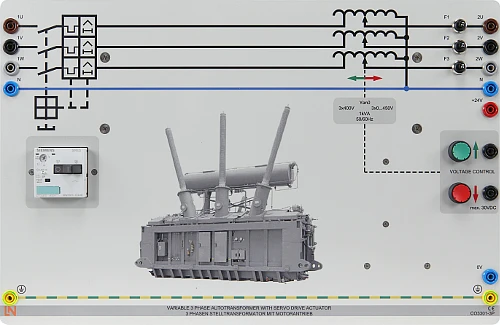
CO3301-4XEarth fault compensation unit
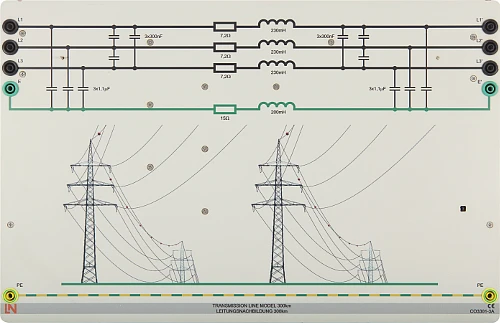
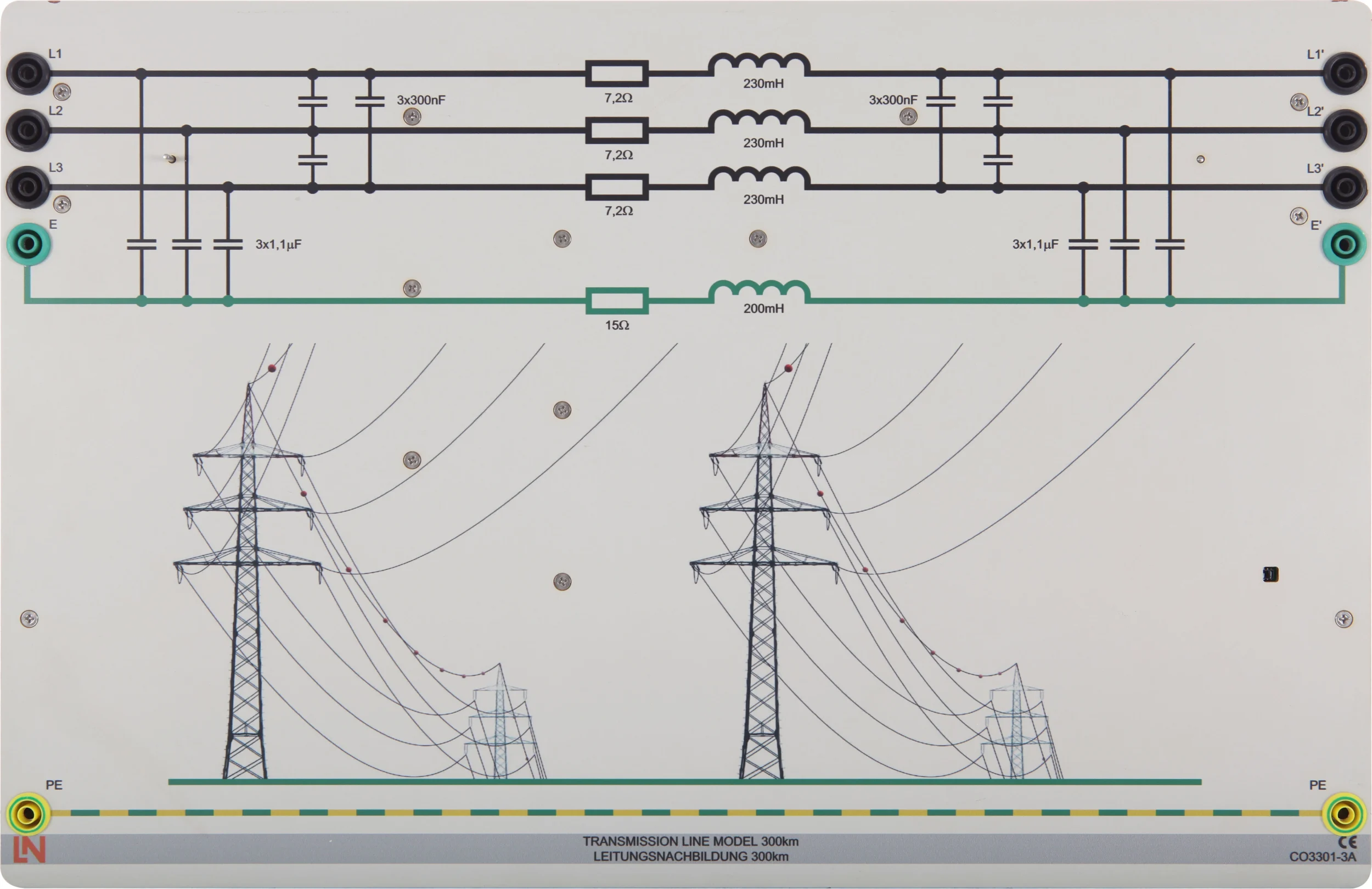
CO3301-3ATransmission line Model 150km/300km (93.2miles/186.4miles)
SO2800-3LInteractive Lab Assistant: High-voltage transmission lines
CO3301-3FVariable Ohmic load, three-phase, 1kW
CO3301-3ECapacitive load, three-phase, 1kW
CO3301-3DInductive load, three-phase, 1kW
CO3301-5PPower switch module
SO4001-3HSoftware SCADA Viewer
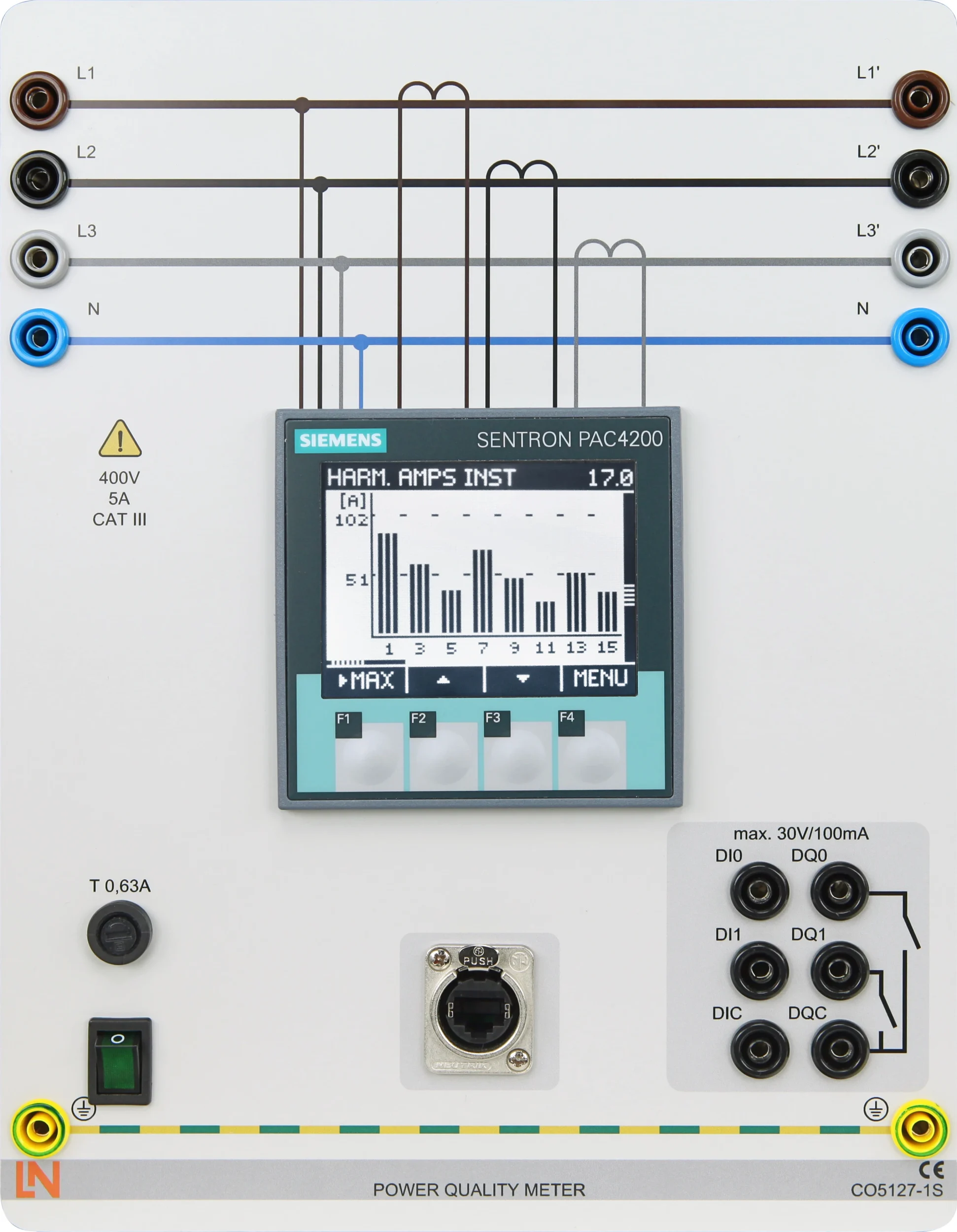
CO5127-2SPower Quality Meter mit Grafikdisplay und Langzeitspeicher
CO3301-3ZAdjustable 3-phase power supply, 0-450V/2A
LM9057Patch cable Cat5E 1x 1m yellow, 2x 2m yellow
LM8257USB 2.0 Ethernet adapter, 10/100
LM99885-Port Ethernet Switch
ST8010-4JMultiple socket outlet, 6 fold, with illuminated switch
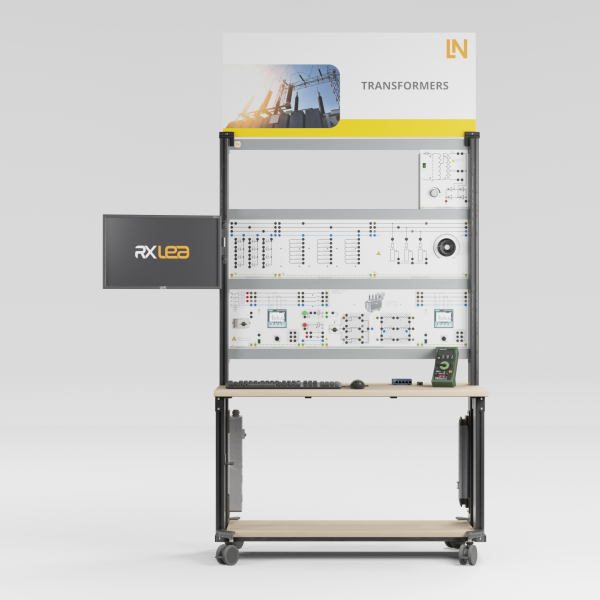
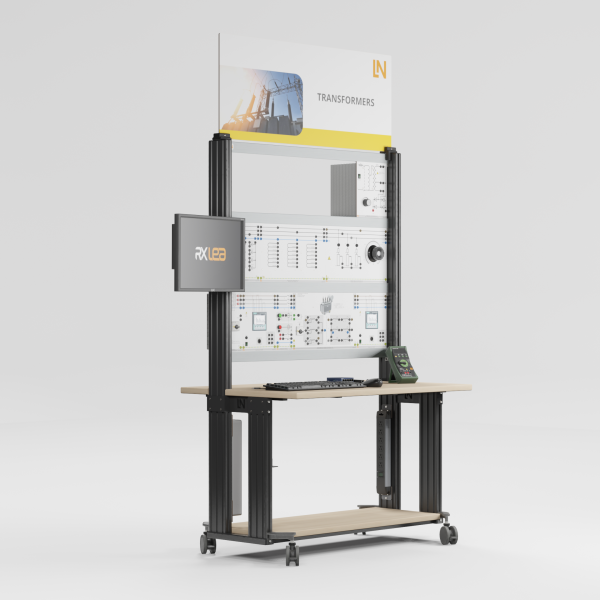
ST7200-7ASybaPro experiment trolley, 3-level, 6 sockets, 1250x1970x800mm
ST8010-4TMonitor holder for flat screen monitor of weight up to 15kg / 33lbs
ST7200-5LProtection cover for three-level experiment trolleys
ST8010-4GKeyboard adapter for flat screen monitor holders
ST8000-4LDisplay for Power Transmission equipment
SO5126-3RSafety connecting plug 4mm with tap (2x), black, 1000V/32A CAT II
SO5126-3VSafety connecting plug 4mm with tap (2x), blue, 1000V/32A CAT II
SO5126-3WSafety connecting plug 4mm with tap (2x), green/yellow, 1000V/32A CAT II
SO5148-1LSet of safety measurement cables, 4mm (31 leads)
SO5126-8BSafety measurement cable 4mm, 25cm/10", black, 600V CAT III ~1000V CAT II / 32A
SO5126-8LSafety measurement cable 4mm, 50cm/20", black, 600V CAT III ~1000V CAT II / 32A

Learning Content in Detail

Students work through ground faults in ungrounded networks, from the measured values to tuning the arc suppression coil, and assess the gain in safety.

Measuring behavior during a ground fault

Students record the neutral point displacement during a single-line-to-ground short circuit in an ungrounded network.

Compensating the ground-fault current

Students set the Petersen coil so that the capacitive ground-fault current is as low as possible.

Calculating asymmetrical faults

Students validate the measured fault currents against the theoretical calculations.

Assessing safety in the distribution grid

Students evaluate how effectively the compensation prevents consequential faults in the installation.

Features & Applications

The experiments follow the tasks in the distribution grid: avoiding consequential faults caused by ground faults, extinguishing ground-fault currents with Petersen coils and assessing the behavior of three-phase systems with an ungrounded neutral during asymmetrical faults.
  • Simulating ungrounded neutral points — Students analyze three-phase systems without neutral point grounding, both in normal operation and under fault conditions.
  • Stepped ground-fault compensation — The arc suppression coil can be adjusted in nine steps from 1.0 to 2.0 H and can thus be adapted to different grid conditions.
  • Realistic behavior during asymmetrical faults — Students test single-phase short circuits with ground contact and evaluate the currents at the fault location.
  • Comprehensive grid monitoring — Digital Power Quality Meters record voltage and current vectors in real time and make the effect of compensation visible.
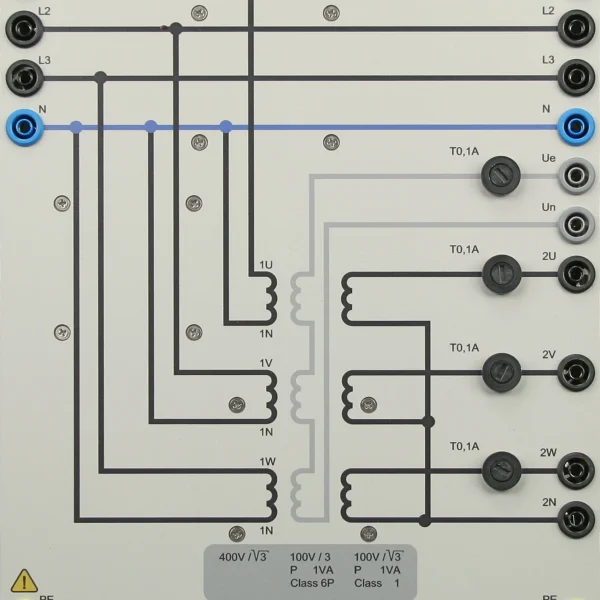
  • Ground-fault compensation unit (CO3301-4X) — The Petersen coil operates at a rated voltage of 230 V and a maximum of 0.5 A. Nine inductance steps between 1.0 and 2.0 H are available.
  • Line model (CO3301-3A) — The model of a 380 kV line generates realistic capacitive ground-fault currents, providing the basis for compensation.
  • Power Quality Meter (CO5127-1S) — The meter records asymmetries in the three-phase system, including zero-sequence voltages and currents during ground faults.
  • Load modules up to 1 kW — Three separate modules for resistive, inductive and capacitive loads allow wye, delta, series and parallel connections.
  • Circuit breaker module (CO3301-5P) — It switches the 400 V supply voltage on and off during the experiments, either manually or by electrical remote control.
  • SCADA for PowerLab — The software displays the asymmetrical fault currents and the compensating effect of the Petersen coil as a phasor diagram in real time.
Learners working with RXLea on a tablet at a Lucas-Nuelle training system
RXLea

From Knowledge Comes Capability.

You guide the learning

Where theory and practice go hand in hand.

RXLea brings a new way of learning: project-based, hands-on and clearly structured. Learners solve real-world tasks, while instructors save time on preparation. Interactive modules, smart analytics and real hardware create a modern, efficient learning world.

Hands-on and interactive

Animations, interactive tasks and realistic scenarios build a deep understanding. All content is organized into clear learning paths for focused, hands-on learning.

Digital support

3D assembly animations and digital instructions simplify complex procedures, reduce errors and help learners work more independently.

Visual support

Overview graphics, screenshots and sample animations make the learning world transparent. Photos from the learning packages are also available, including country-specific versions where needed.


Learners using a tablet at an energy training system
RXLea on desktop, laptop and tablet
RXLea Path Creator for building learning journeys
RXLea Navigator showing the learning world
Learn more about RXLea
Newsletter

Stay ahead in
technical training.

Get the latest training systems, product launches and educational insights, delivered directly to your inbox.

Your email address

By subscribing, you agree to our Privacy Policy. You can unsubscribe at any time.

 Please select at least one category before subscribing.
I'm interested in - select all that apply