


Skip to content

Electromagnetic Compatibility (EMC)

RXLea
Digital projects for hands-on learningInteractive learning content, directly connected to the training system.

Electromagnetic Compatibility (EMC)

BET07UT

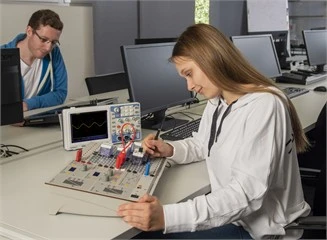
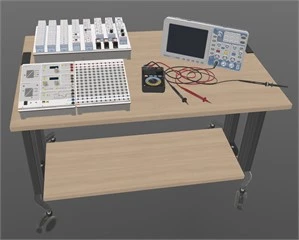
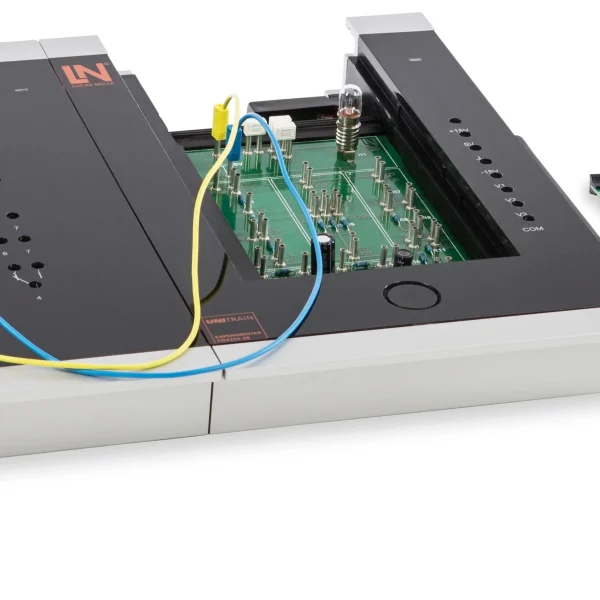
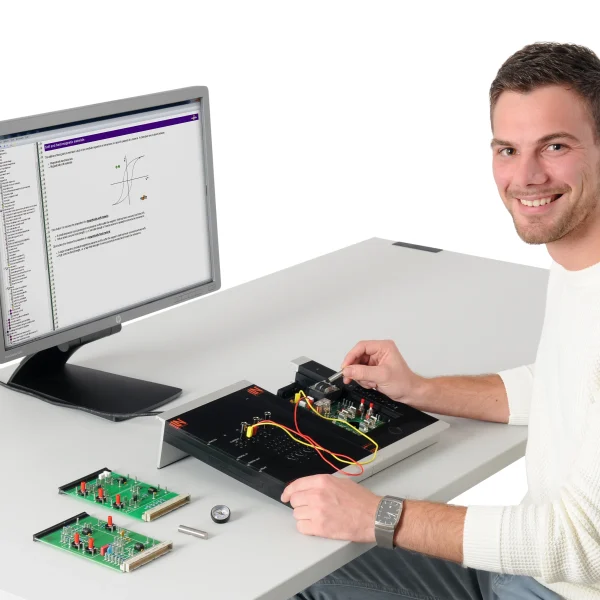
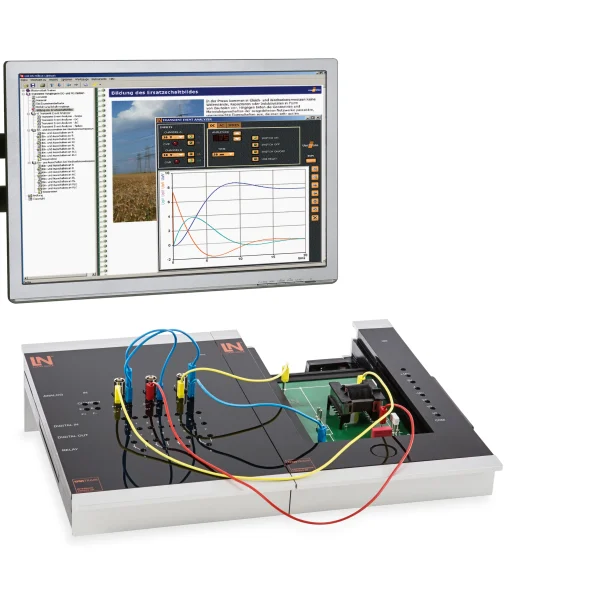
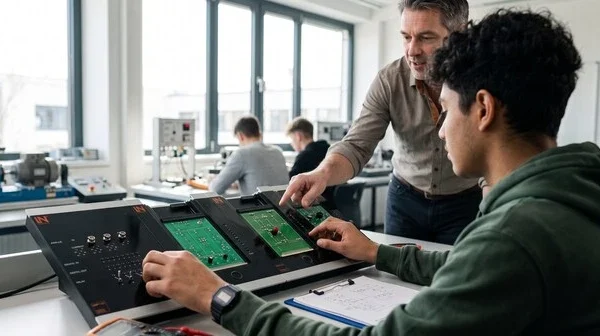
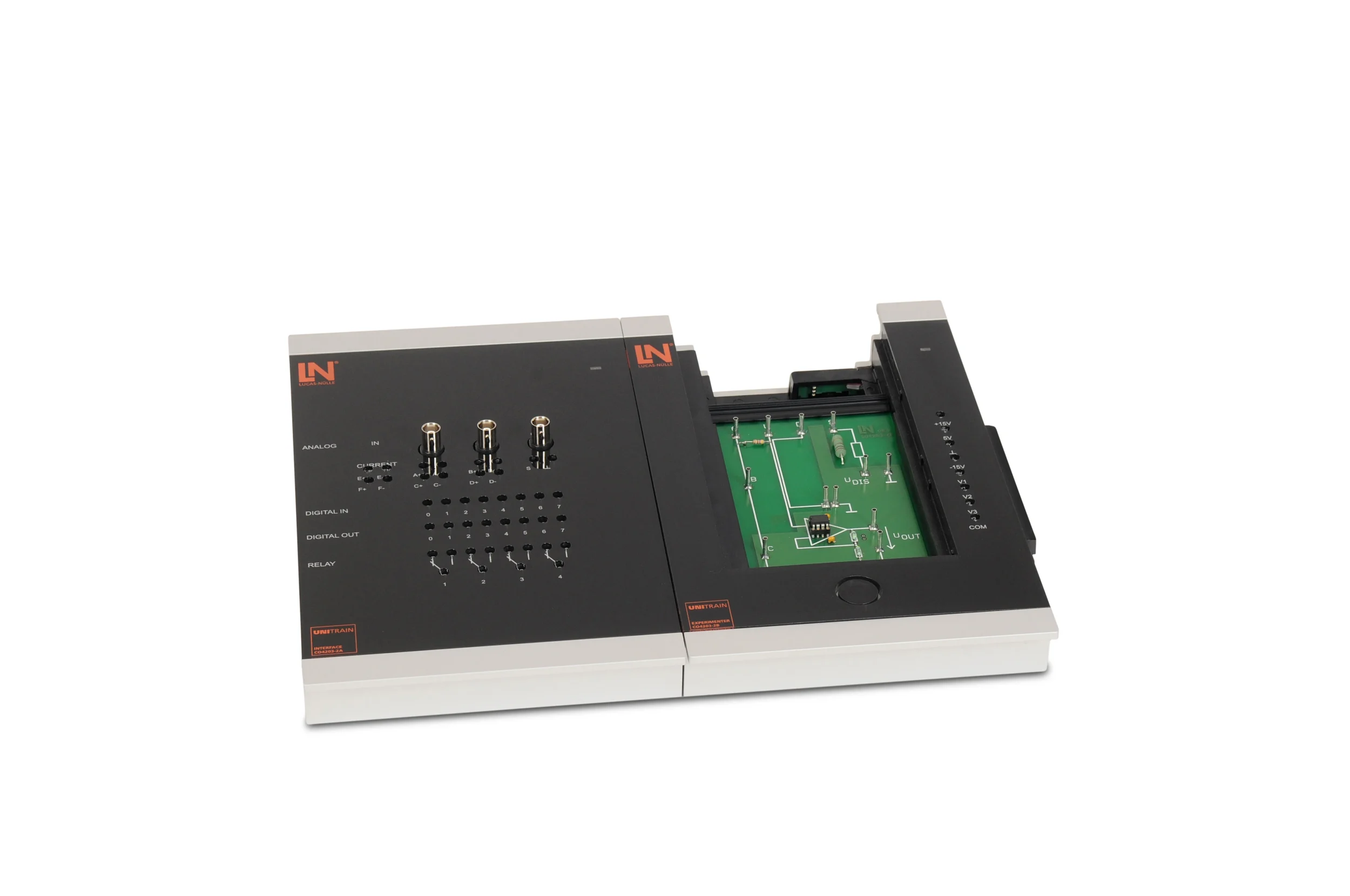
Compact UniTrain benchtop system for electromagnetic compatibility: students inject interference signals galvanically, capacitively and inductively into parallel conductor tracks and test countermeasures experimentally.

Learning Content
  • Getting to know the concept of EMC
  • Getting to know electromagnetic coupling effects
  • Listing sources of interference
  • Naming EMC standards and directives
KEY FEATURES
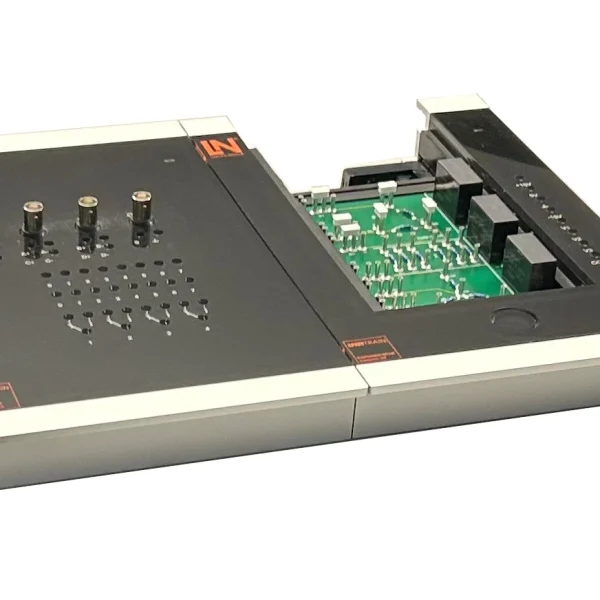
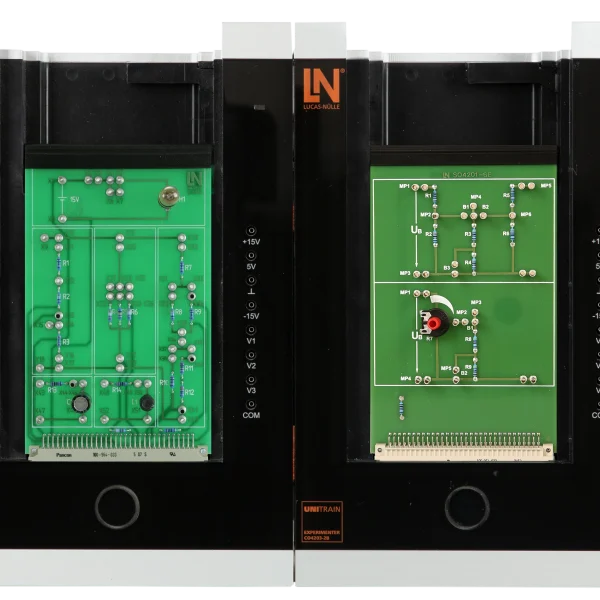
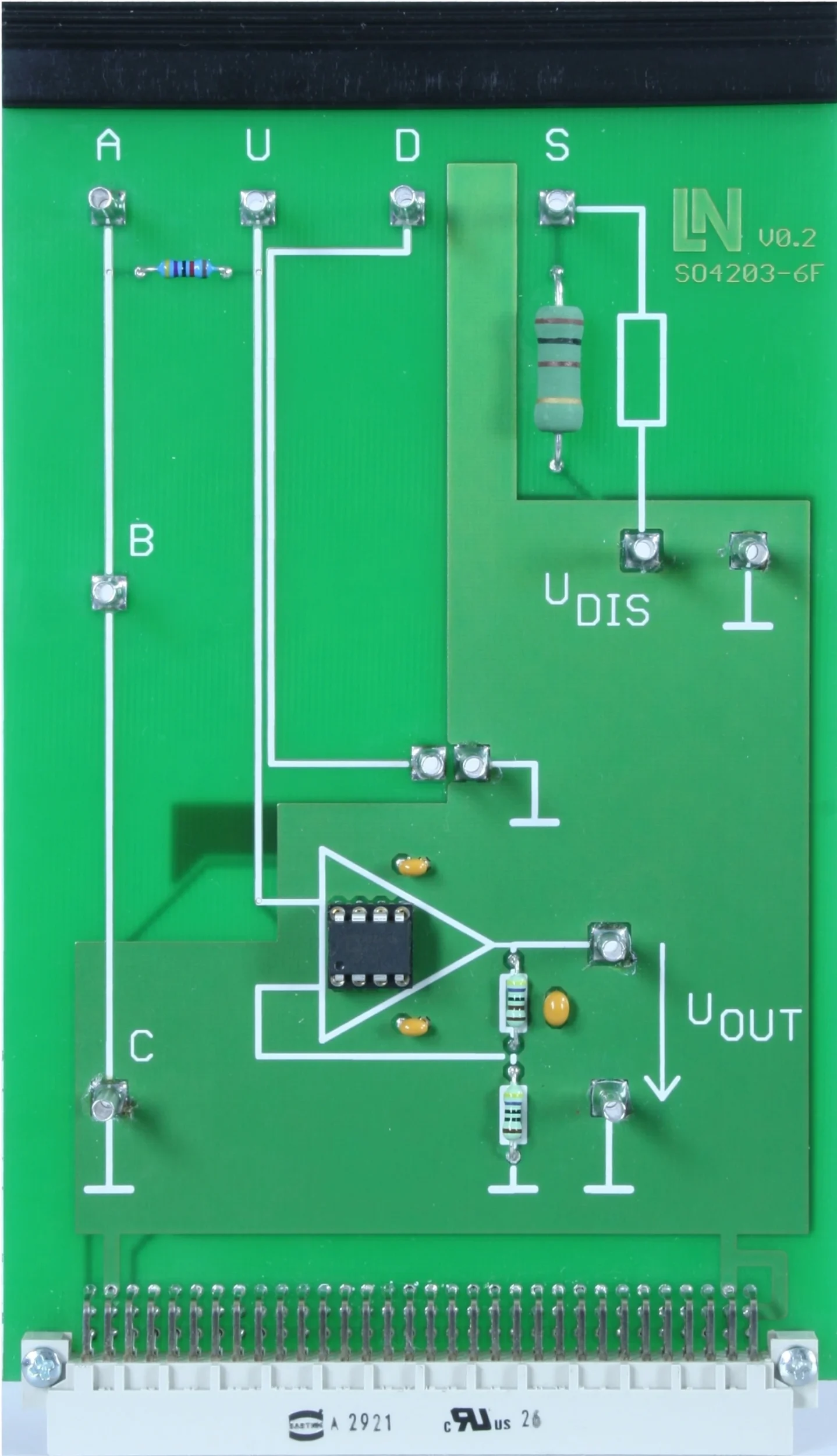
  • Coupling mechanisms experiment card
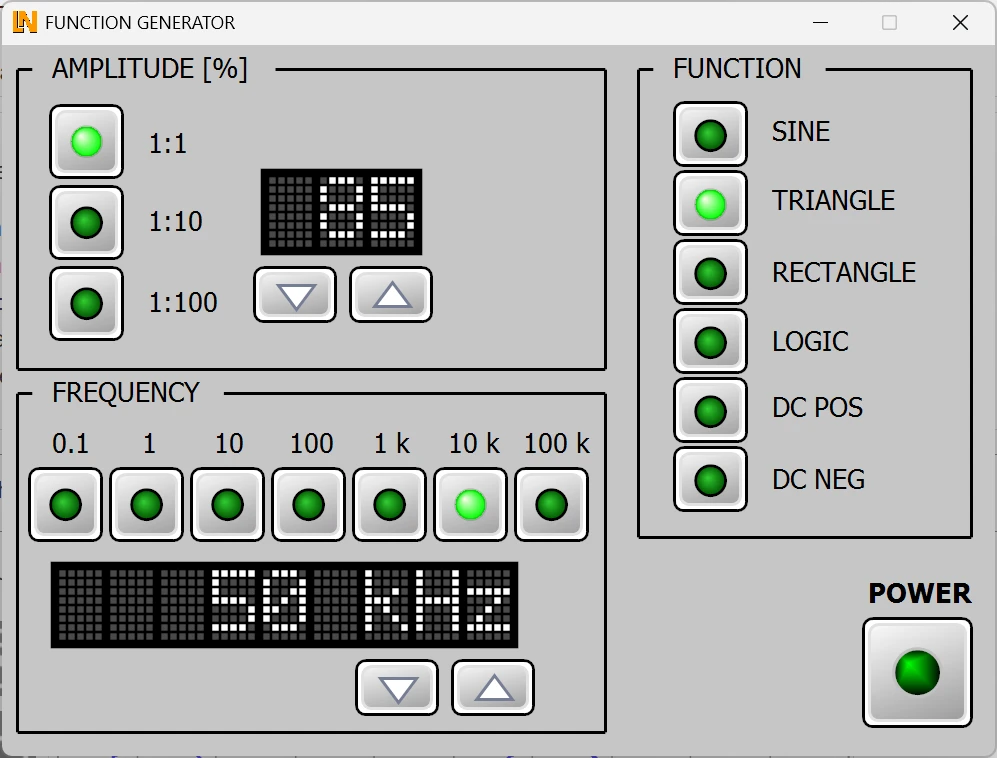
  • Function generator
  • Integrated measuring amplifier
  • Analyzing galvanic coupling
Speak with a Product Specialist +1 (757) 808-5696 · sales@lucas-nuelle.com

EMC interference causes malfunctions and failures in installations. It can only be avoided if the coupling paths are already known at the planning stage. The training system makes them measurable: students examine the resistive and inductive voltage drop across shared conductor tracks, determine how the rate of voltage change affects the interference current flowing through parasitic coupling capacitances, and analyze inductive coupling between parallel tracks as a function of the rate of current rise and the loop area. A measuring amplifier with a fixed gain of eleven makes even the smallest coupled-in interference voltages visible. Students then test how much shielding, conductor spacing and optimized enclosure grounding actually reduce the interference.

CO4204-4KCourse Electrical engineering 7: Electromagnetic compatibility (EMC)
LM2330Multi13S digital multimeteroptional
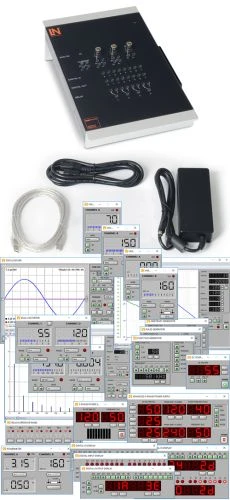
CO4203-2AUniTrain Interface mit virtuellen Instrumenten (Basis VI)
CO4203-2JUniTrain measurement accessories, shunts and connection cables
CO4203-2YUniTrain storage case for one UniTrain system
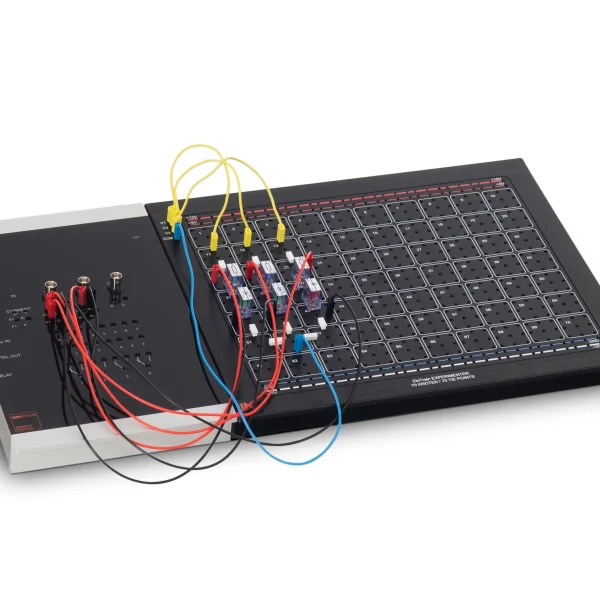
CO4203-2BUniTrain Experimenter

Learning Content in Detail

The training progresses from the concept of electromagnetic compatibility, through sources of interference and standards, to the measurement-based investigation of the three types of coupling and their countermeasures.

Getting to know the concept of EMC

Students become familiar with the concept of electromagnetic compatibility.

Getting to know electromagnetic coupling effects

Students become familiar with electromagnetic coupling effects.

Listing sources of interference

Students list natural and man-made sources of electromagnetic interference.

Naming EMC standards and directives

Students list the most important European EMC standards and directives.

Investigating galvanic coupling by measurement

Students use measurements to investigate galvanic coupling between parallel conductor tracks.

Investigating capacitive coupling by measurement

Students use measurements to investigate capacitive coupling between parallel conductor tracks.

Investigating inductive coupling by measurement

Students use measurements to investigate inductive coupling between parallel conductor tracks.

Getting to know measures for improving EMC

Students learn about measures that improve the EMC properties of a circuit.

Getting to know measures for interference immunity

Students learn about measures that increase the interference immunity of a circuit.

Features & Applications

The experiments address issues from electrical power engineering and automation technology, as well as from maintenance and mechatronic systems engineering.
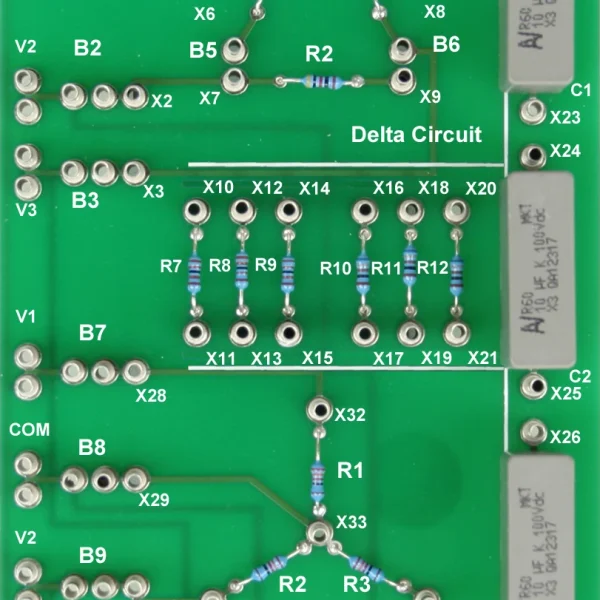
  • Coupling mechanisms experiment card — It contains parallel conductor tracks for analyzing coupling paths as well as an integrated operational amplifier that serves as a measuring amplifier.
  • Function generator — It generates AC voltages with different waveforms (sine, triangle, square) and thus supplies the measurement and interference signals.
  • Integrated measuring amplifier — It operates in non-inverting mode with a fixed gain of eleven, making even the smallest coupled-in interference voltages measurable.
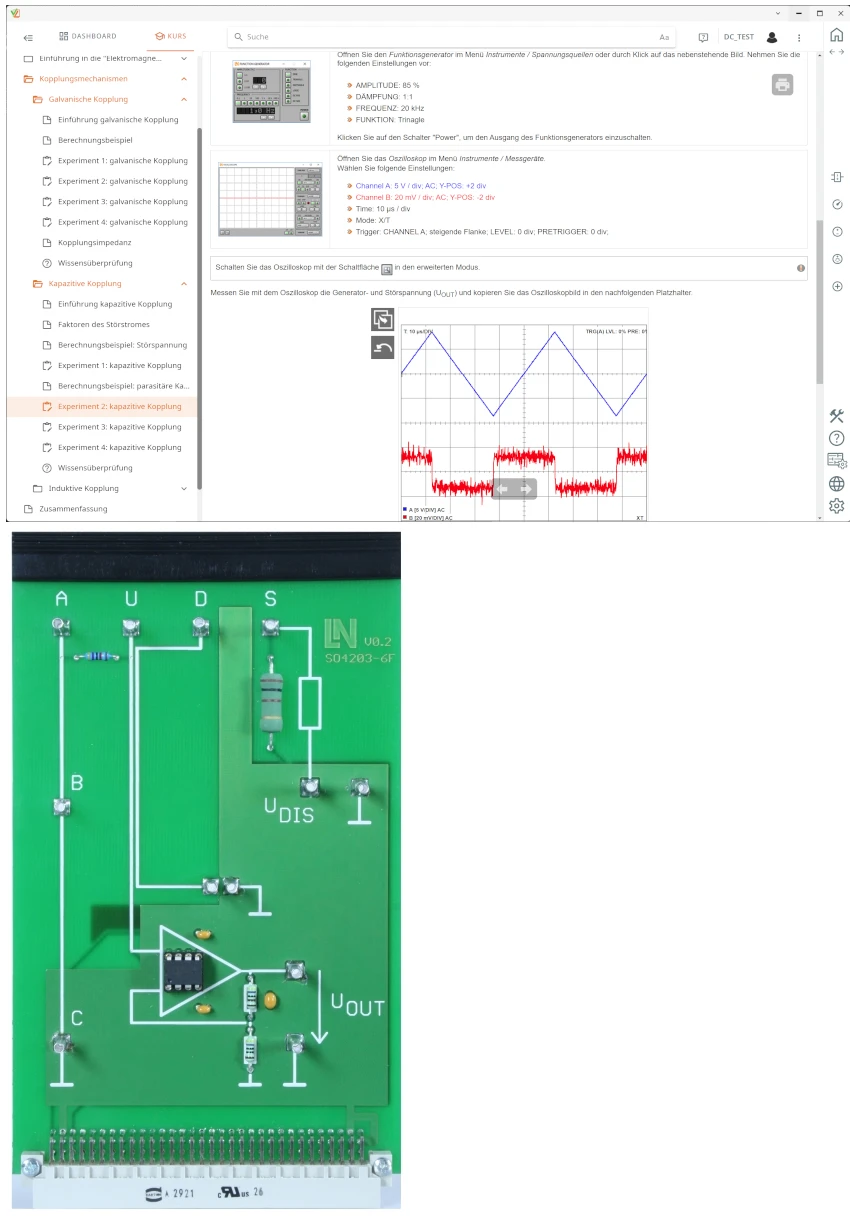
  • Analyzing galvanic coupling — Students examine the resistive and inductive voltage drop across shared conductor tracks at varying frequencies.
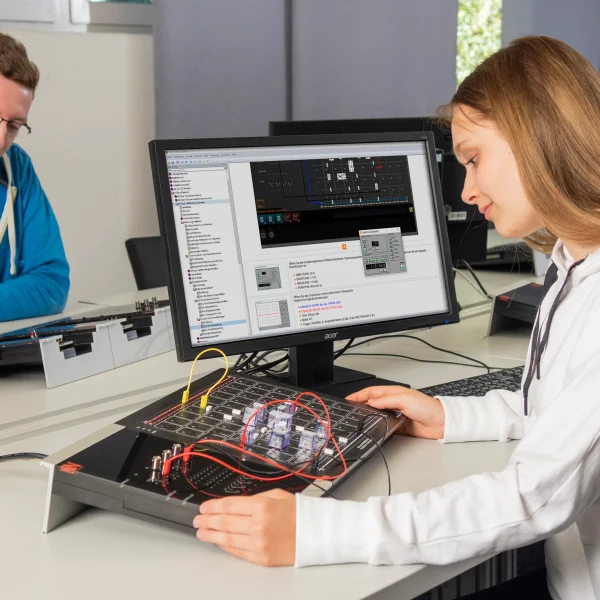
  • Step-by-step instructions for building the experiments — Clear animations ensure that the measuring circuits are built quickly and without errors.
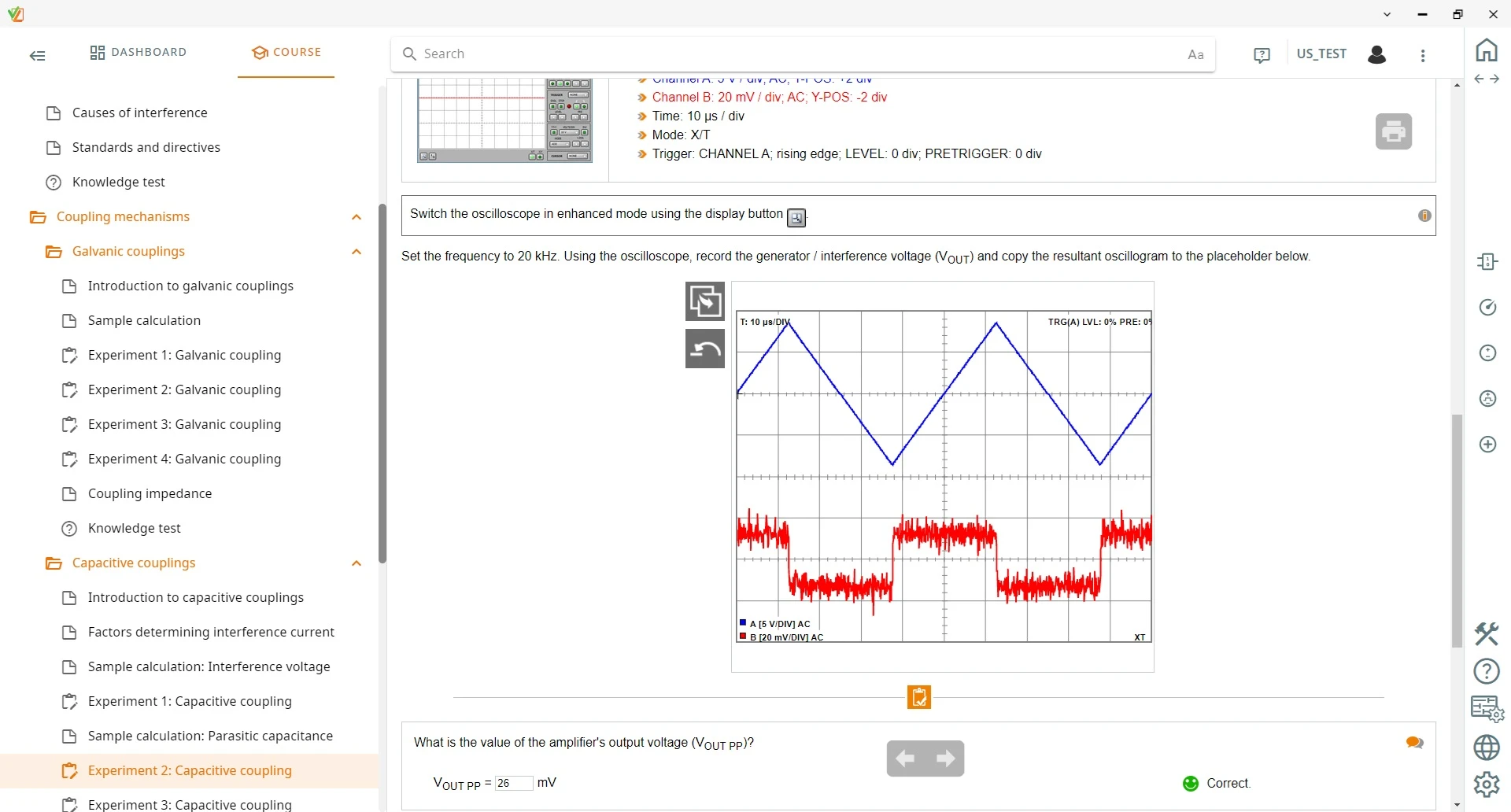
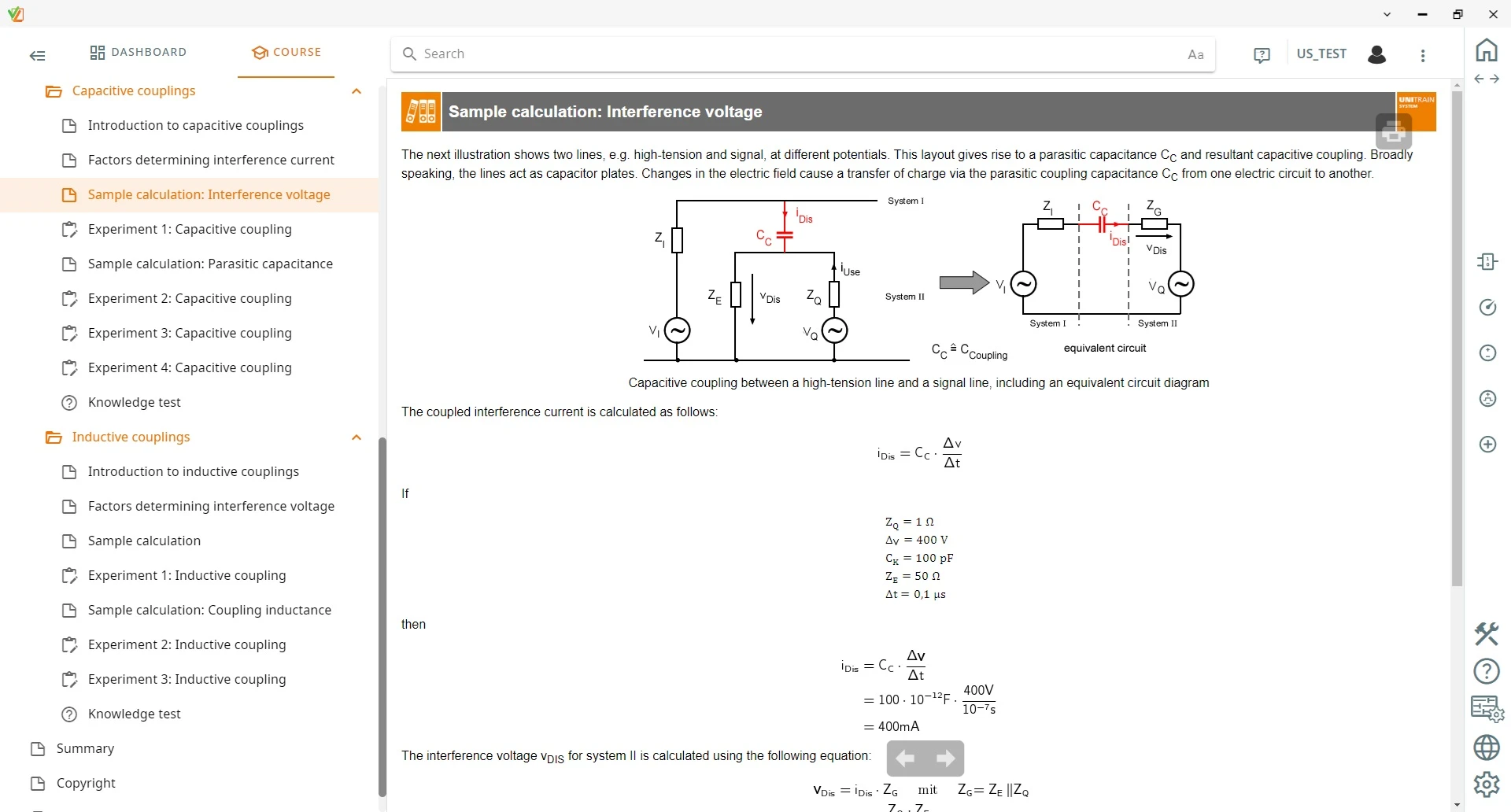
  • Testing capacitive coupling effects — Students determine how the rate of voltage change affects the interference current through parasitic coupling capacitances.
  • Investigating inductive interference signals — Students analyze the transformer principle between parallel tracks as a function of the rate of current rise and the loop area.
  • Trying out EMC countermeasures — Students verify the effectiveness of shielding, conductor spacing and optimized enclosure grounding directly in the experiment.
  • On-board interference source network — It provides defined connection points at which interference currents and interference voltages can be injected in a targeted manner.
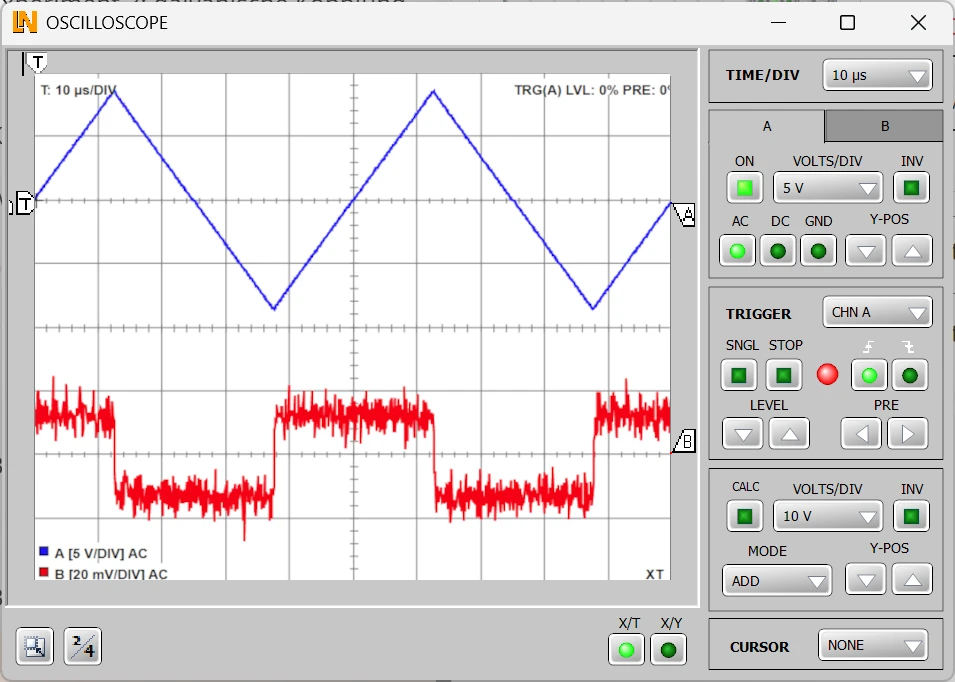
  • 2/4-channel oscilloscope — The instrument offers a bandwidth of 20 MHz as well as cursor functions and displays waveforms and time differences in real time.
Learners working with RXLea on a tablet at a Lucas-Nuelle training system
RXLea

From Knowledge Comes Capability.

You guide the learning

Where theory and practice go hand in hand.

RXLea brings a new way of learning: project-based, hands-on and clearly structured. Learners solve real-world tasks, while instructors save time on preparation. Interactive modules, smart analytics and real hardware create a modern, efficient learning world.

Hands-on and interactive

Animations, interactive tasks and realistic scenarios build a deep understanding. All content is organized into clear learning paths for focused, hands-on learning.

Digital support

3D assembly animations and digital instructions simplify complex procedures, reduce errors and help learners work more independently.

Visual support

Overview graphics, screenshots and sample animations make the learning world transparent. Photos from the learning packages are also available, including country-specific versions where needed.


Learners using a tablet at an energy training system
RXLea on desktop, laptop and tablet
RXLea Path Creator for building learning journeys
RXLea Navigator showing the learning world
Learn more about RXLea
Newsletter

Stay ahead in
technical training.

Get the latest training systems, product launches and educational insights, delivered directly to your inbox.

Your email address

By subscribing, you agree to our Privacy Policy. You can unsubscribe at any time.

 Please select at least one category before subscribing.
I'm interested in - select all that apply