


Investigating transients in DC and AC networks safely
Compact UniTrain training system for transient switching processes: learners build line models from R, L and C elements and measure switch-on and switch-off processes with virtual instruments at safety extra-low voltage.
- Investigating DC switching behavior
- Evaluating capacitor charging
- Testing inductor behavior
- Testing resonant circuits
- Comparing bounce-free and bouncing switching operations
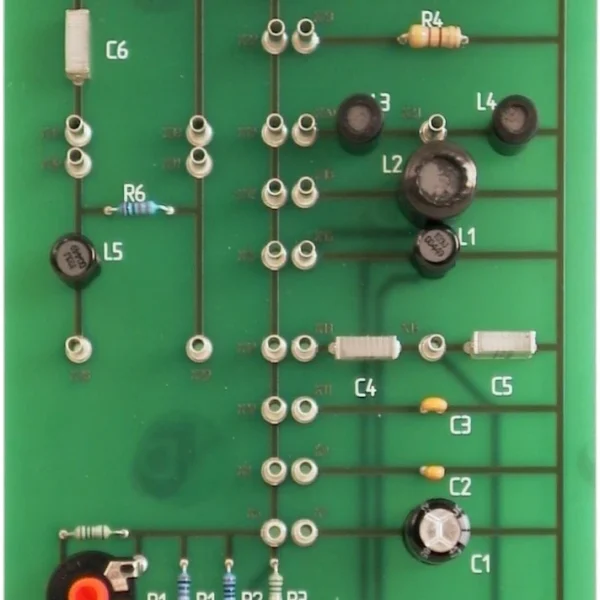
- Realistic line model built from discrete components
- Phase-accurate switching with 1° resolution
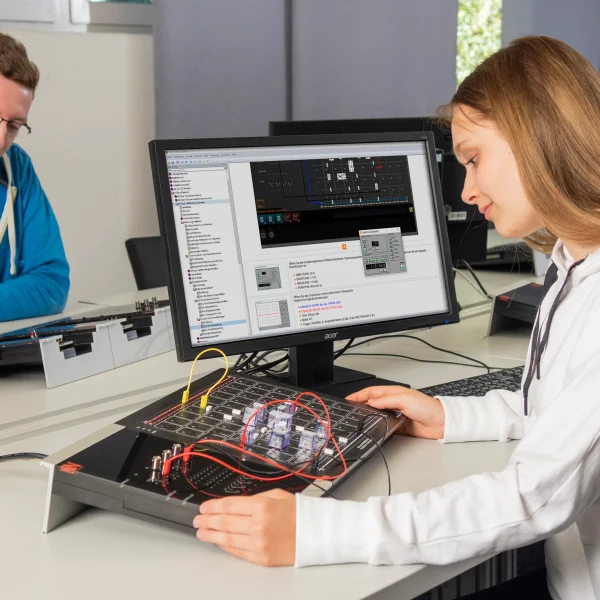
- Hands-on learning with real circuits
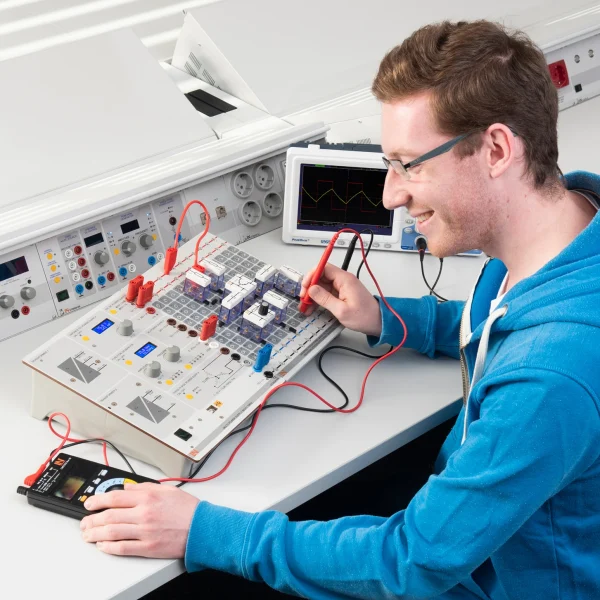
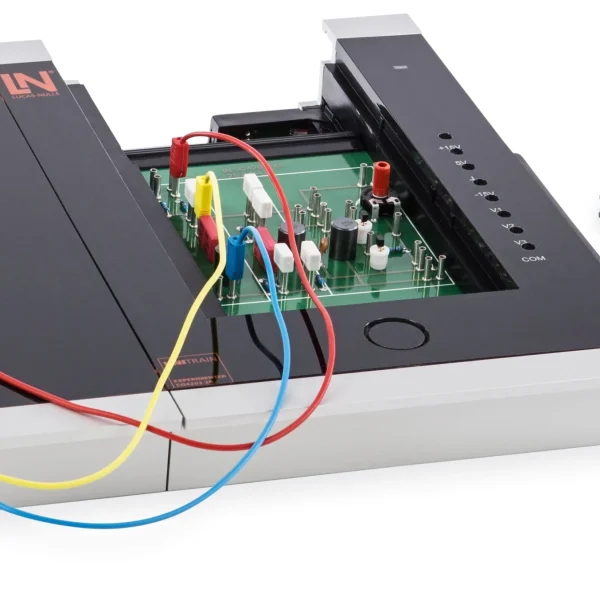
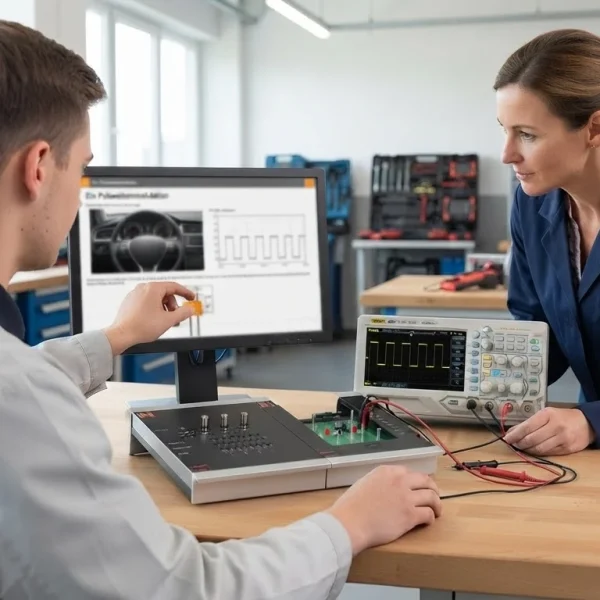
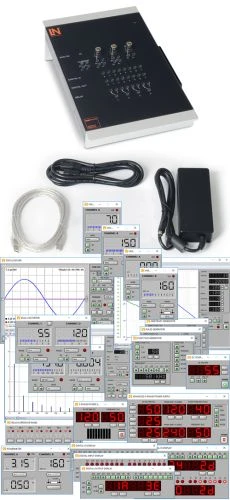
In real power grids, switching operations and lightning strikes trigger transient overvoltages and currents that cause damage to the grid and outages. These transient phenomena only become visible through measurement. The training system replicates resistive, inductive and capacitive line components on a UniTrain experiment card. Learners plug in the circuits themselves, use the fault generator to switch at precise phase angles with a resolution of 1° and compare bounce-free with bouncing switching operations. The virtual 4-channel oscilloscope displays the waveform over time. All experiments are carried out at safety extra-low voltage. By the end, learners determine the time constants of RC and RL elements, find resonant frequencies and assess the transient current at different switch-on instants.
| Base Product | |
| CO4204-3B | Course Power engineering: Transient processes in AC and DC networks |
| Accessories | |
| CO4203-2A | UniTrain Interface mit virtuellen Instrumenten (Basis VI) |
| CO4203-2J | UniTrain measurement accessories, shunts and connection cables |
| CO4203-2Y | UniTrain storage case for one UniTrain system |
| CO4203-2B | UniTrain Experimenter |
Learning Content in Detail
Investigating DC switching behavior
Evaluating capacitor charging
Testing inductor behavior
Testing resonant circuits
Varying the phase angle
Comparing switch-off processes
Features & Applications
- Comparing bounce-free and bouncing switching operations — Learners switch the same circuit once without bounce and once with contact bounce and display the two waveforms directly side by side. The difference can then be read straight from the recording.
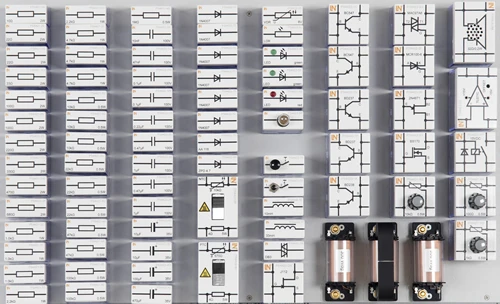
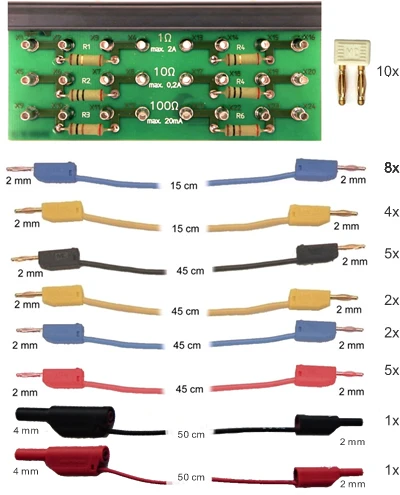
- Realistic line model built from discrete components — The parasitic capacitances and inductances of real transmission lines are implemented as discrete components. Learners investigate their influence directly on the circuit rather than on a model.
- Phase-accurate switching with 1° resolution — The fault generator switches with an angular resolution of 1°. Learners deliberately select the switch-on instant and see how strongly the transient current depends on it.
- Hands-on learning with real circuits — Learners plug in the circuits themselves, linking theory with their own practical assembly work.
- Safe experimentation at safety extra-low voltage — All experiments use safety extra-low voltage, so learners can handle the setups without any hazard.
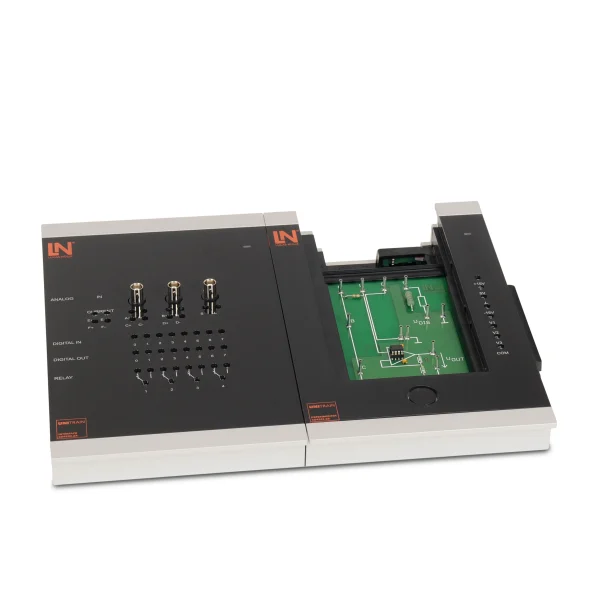
- UniTrain interface (CO4203-2A) — The 32-bit processor acquires the measurement data rapidly and controls the virtual instruments.
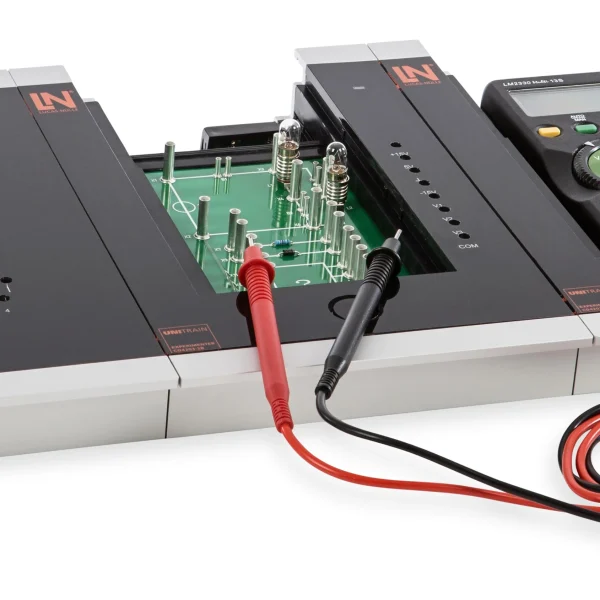
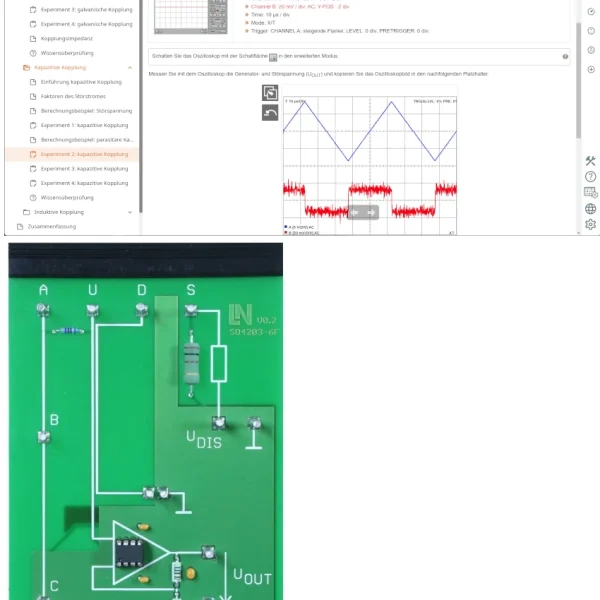
- Transients experiment card (CO4204-3B) — The card replicates real lines using resistances, inductances and capacitances.
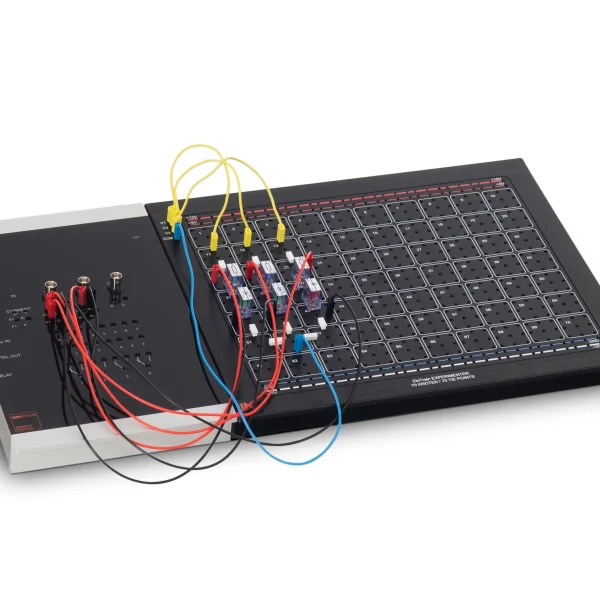
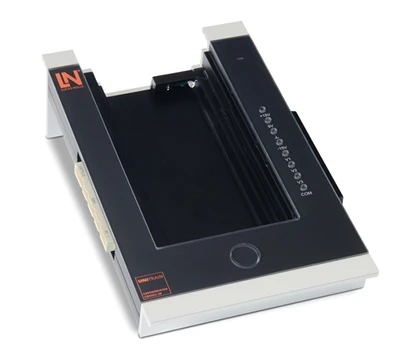
- UniTrain Experimenter (CO4203-2B) — The rugged housing accommodates the experiment cards and has a mechanical ejection function.
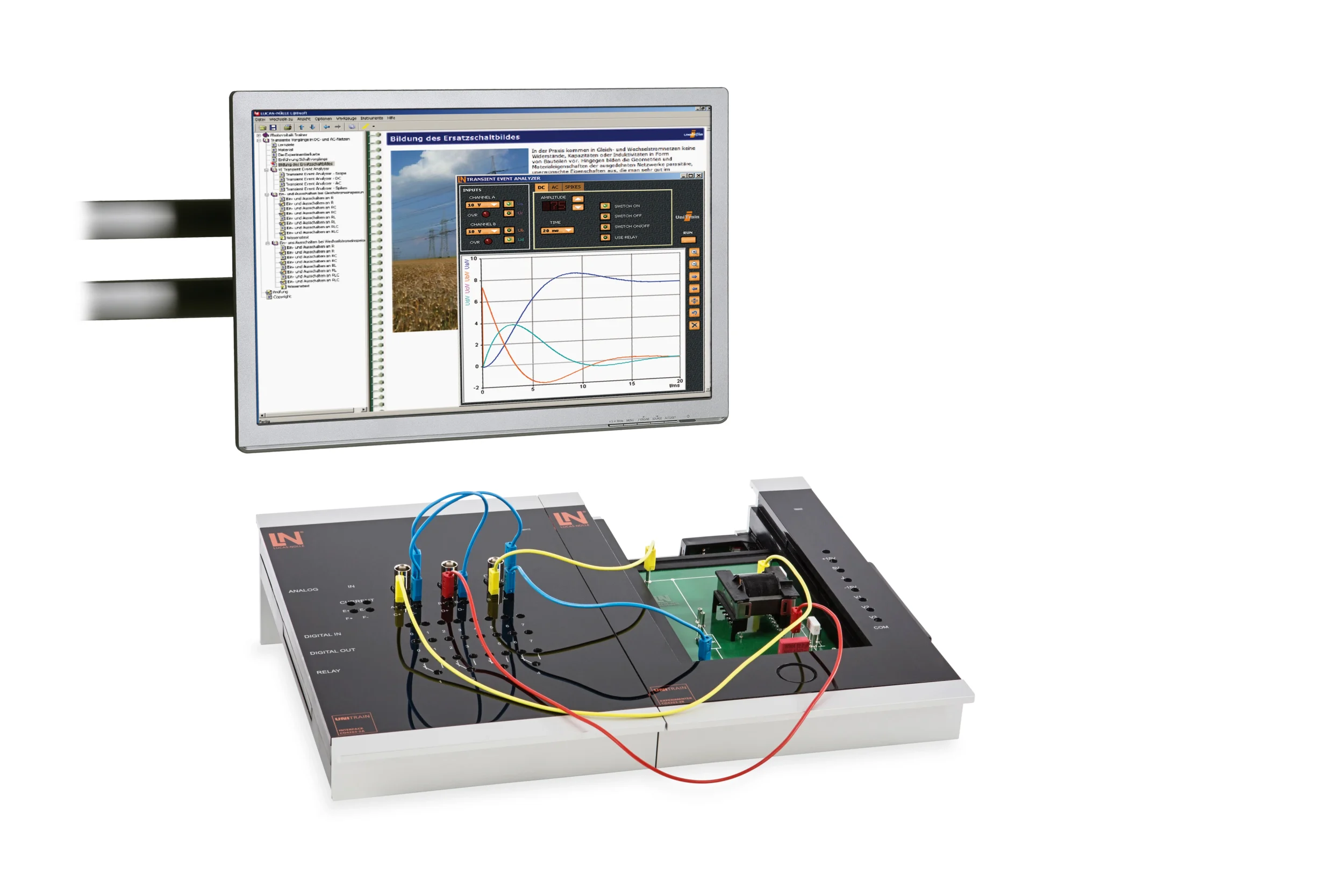
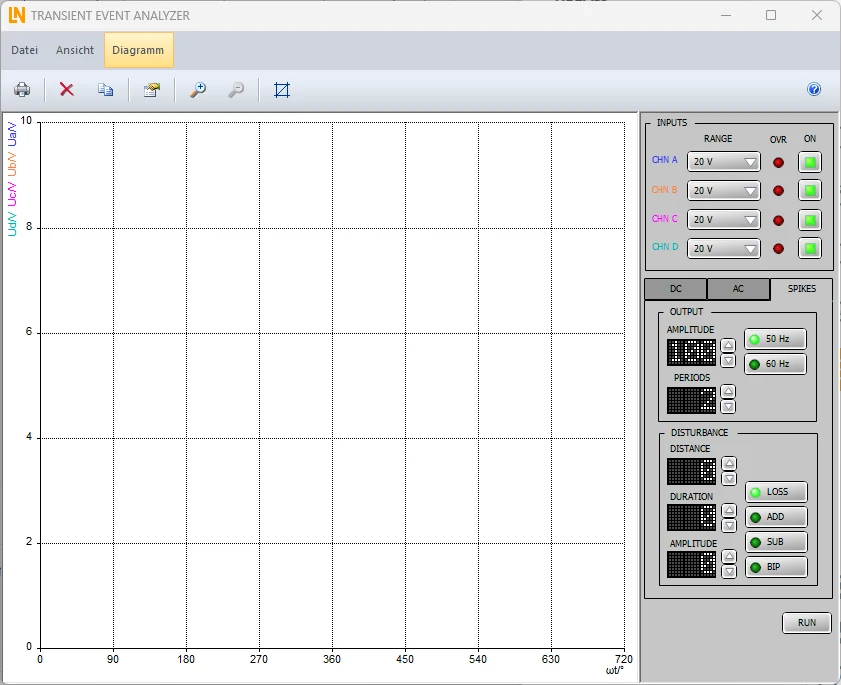
- Transient analyzer — The virtual 4-channel oscilloscope switches DC and AC voltages with phase accuracy. It simulates contact bounce and grid disturbances and makes the transient processes visible.

From Knowledge Comes Capability.
You guide the learning
Where theory and practice go hand in hand.
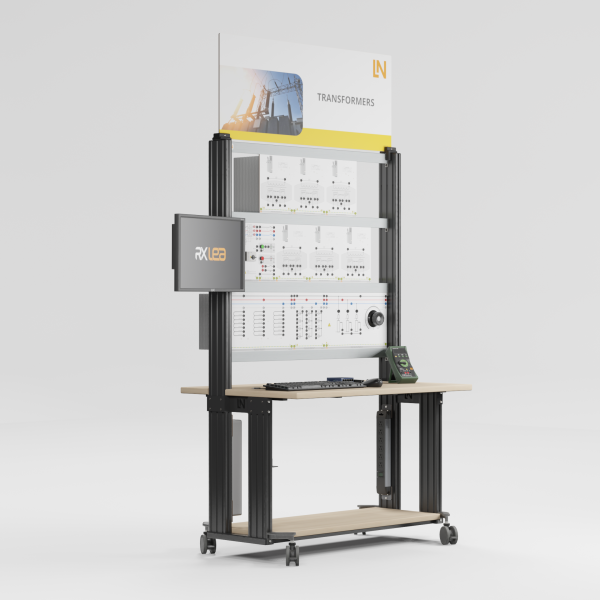
RXLea brings a new way of learning: project-based, hands-on and clearly structured. Learners solve real-world tasks, while instructors save time on preparation. Interactive modules, smart analytics and real hardware create a modern, efficient learning world.
Hands-on and interactive
Animations, interactive tasks and realistic scenarios build a deep understanding. All content is organized into clear learning paths for focused, hands-on learning.
Digital support
3D assembly animations and digital instructions simplify complex procedures, reduce errors and help learners work more independently.
Visual support
Overview graphics, screenshots and sample animations make the learning world transparent. Photos from the learning packages are also available, including country-specific versions where needed.




Stay ahead in
technical training.
Get the latest training systems, product launches and educational insights, delivered directly to your inbox.