


Skip to content

Master ABS, ASR, ESP: Students Experience Vehicle Stability Systems Practically

RXLea
Digital projects for hands-on learningInteractive learning content, directly connected to the training system.

Master ABS, ASR, ESP: Students Experience Vehicle Stability Systems Practically

ARE23UT

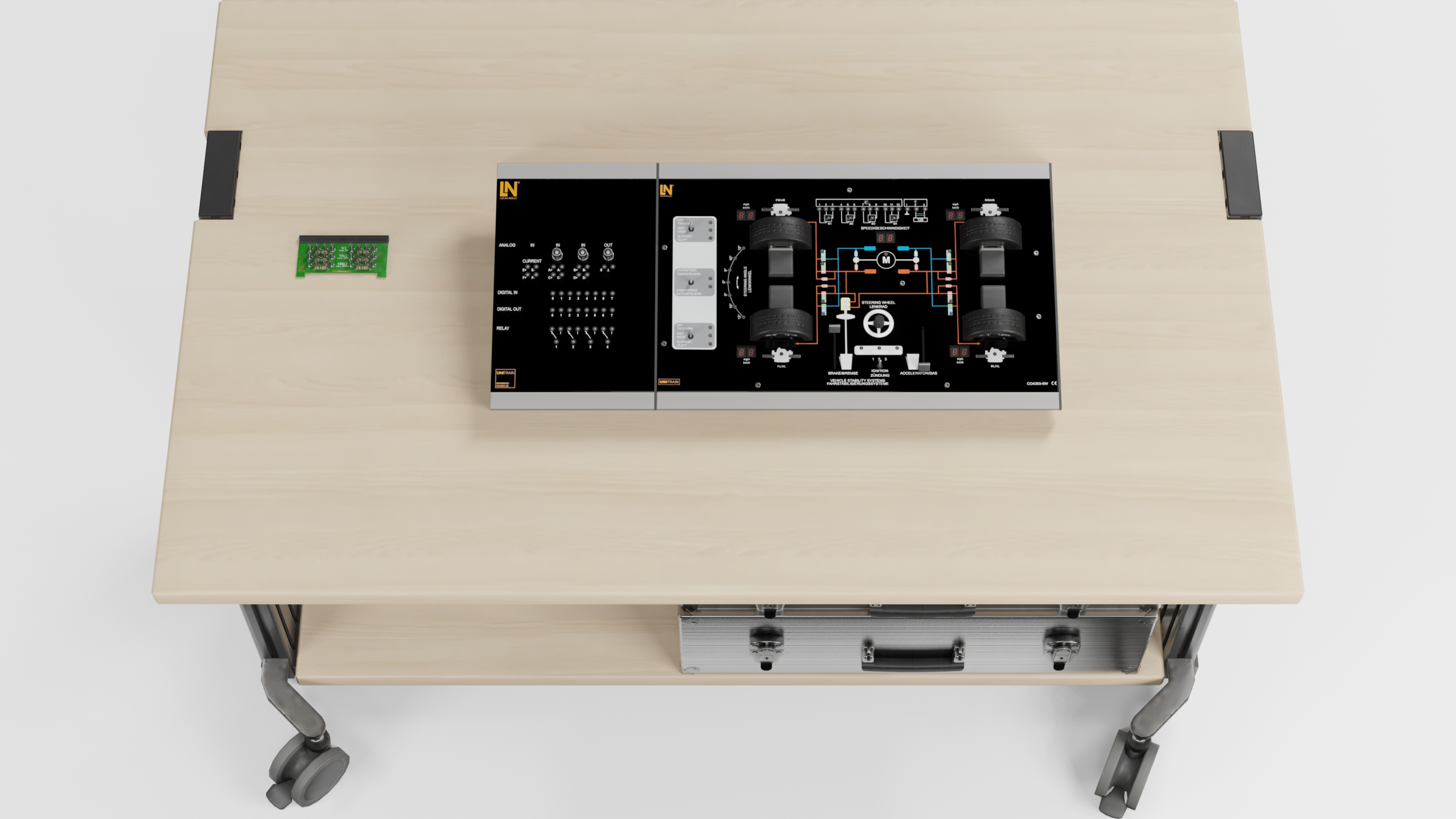
Learners explore complex control strategies of ABS, ASR, and ESP with a 4-wheel functional model. They analyze driving physics and modern brake control systems under realistic conditions for comprehensive understanding.

Learning Content
  • Explaining the fundamentals of vehicle dynamics
  • Analyzing control strategies
  • Testing sensors and actuators
  • Systematic fault diagnosis
KEY FEATURES
  • Integrated fault simulation
  • Simulation of physical limits
  • Slow-motion display of cycles
  • Interactive adjustment of the friction coefficient
Speak with a Product Specialist +1 (757) 808-5696 · sales@lucas-nuelle.com

Modern brake control systems act within milliseconds and, in critical situations, decide whether the vehicle remains stable. With our interactive training system, you make these invisible control strategies of ABS, ASR and ESP visually tangible using a fully functional model. Learners gain practical training in diagnosing networked sensors and actuators, enabling them to locate and rectify safety-critical faults systematically. The combination of hardware and software makes it possible to investigate dynamic states such as understeer and oversteer safely in the lab. Learners experience how the control algorithms adapt to changing environmental conditions and are optimally prepared for the demands of modern automotive mechatronics.

CO4204-6WCourse: Vehicle Stabilization Systems - ABS, ESC and TCS
CO4203-2AUniTrain Interface mit virtuellen Instrumenten (Basis VI)
CO4203-2JUniTrain measurement accessories, shunts and connection cables
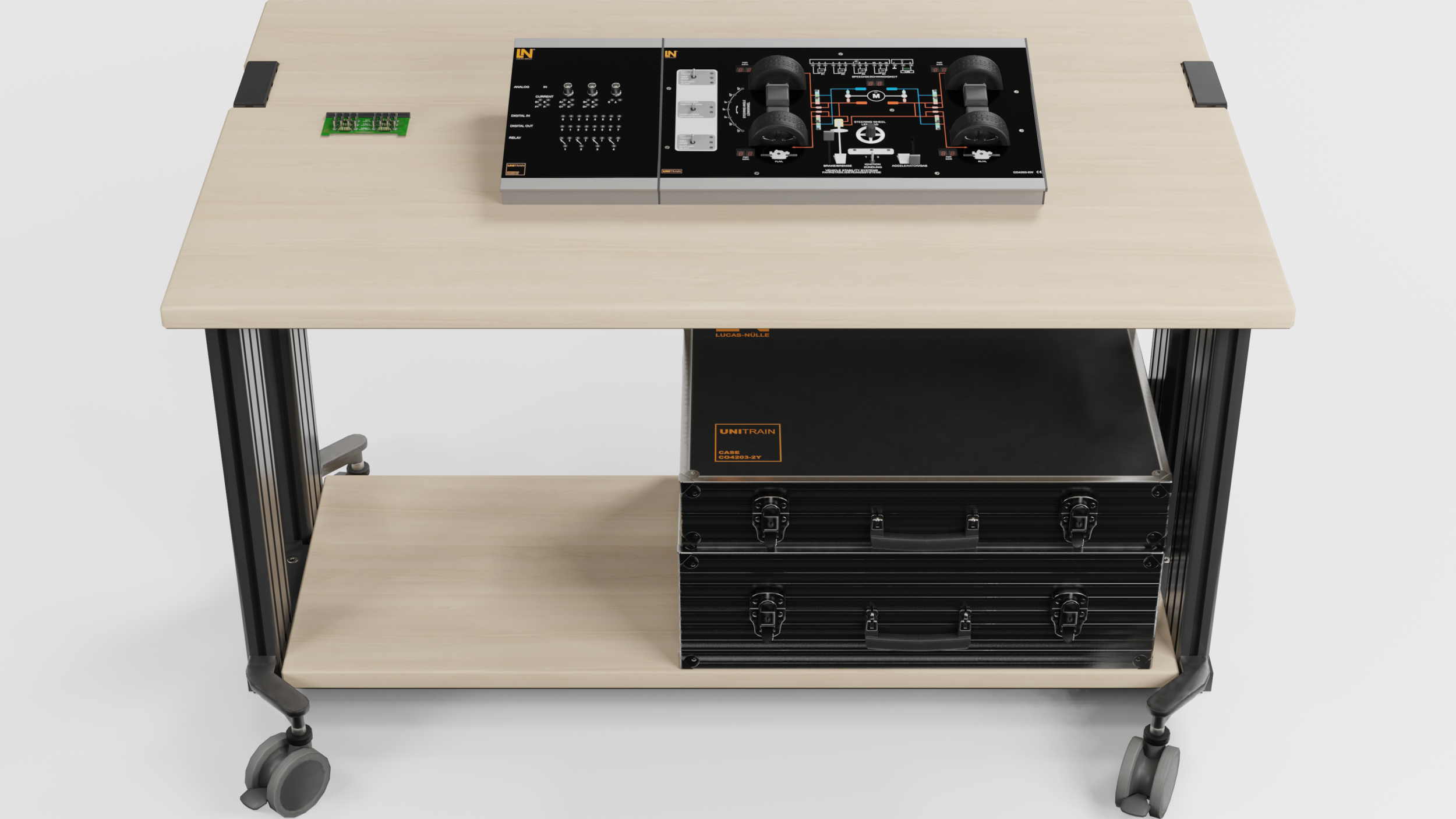
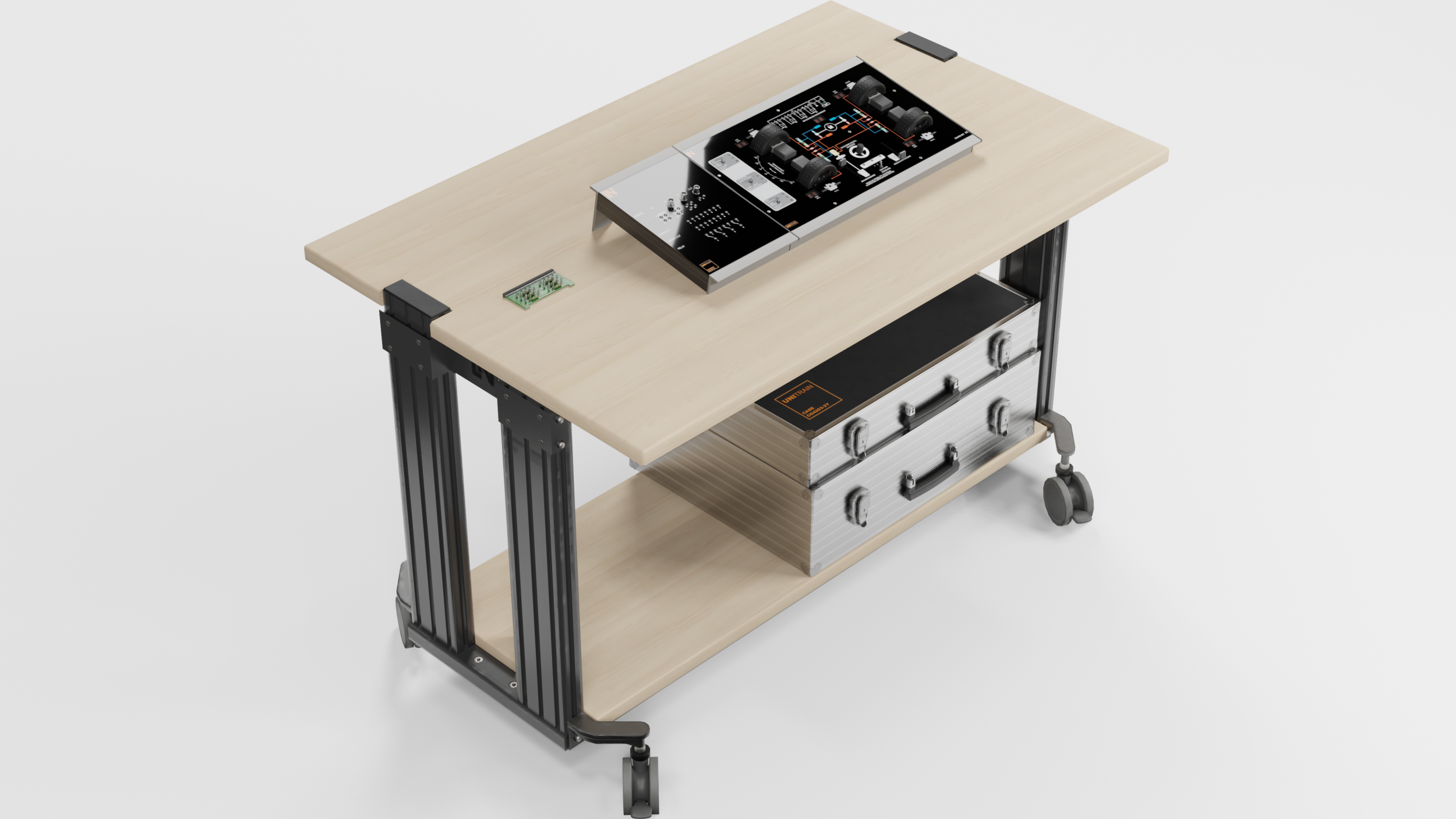
CO4203-2YUniTrain storage case for one UniTrain system
SO4203-2VUniTrain storage case for experiment board

Learning Content in Detail

With this system, learners gain in-depth knowledge of vehicle dynamics and of diagnosing complex brake control systems.

Explaining the fundamentals of vehicle dynamics

Learners explain physical principles such as Kamm’s circle of friction and demonstrate them on the model.

Analyzing control strategies

Learners evaluate the strategies of ABS, ASR and ESP in various driving situations, such as emergency braking in a curve.

Testing sensors and actuators

Learners test components using an oscilloscope and interpret the signals in the complex CAN bus network.

Systematic fault diagnosis

Learners carry out diagnostics and determine repair procedures based on fault memory entries and measured values.

Features & Applications

Our training system offers practical applications for investigating complex vehicle dynamics and control strategies realistically in the lab.
  • Integrated fault simulation — Learners independently identify defects in sensors or on the CAN bus. In this way, they develop a methodical troubleshooting strategy for safety-critical systems.
  • Simulation of physical limits — Learners investigate dynamic states such as understeer and oversteer safely in the lab. This allows them to justify the need for electronic control systems in physical terms.
  • Slow-motion display of cycles — The system makes high-frequency control processes such as pressure build-up visible to the eye. This makes it much easier to understand the functional chain.
  • Interactive adjustment of the friction coefficient — By switching between dry, wet and icy conditions, learners experience directly how the control algorithms adapt to changing environmental conditions.
  • Four driven wheel units — Generate slip at individual wheels in a targeted way to make the selective brake interventions of the ESP physically comprehensible.
  • Steering system with angle display — Precisely analyze the driver’s intention in comparison with the vehicle’s response. This clearly illustrates the core of the ESP control deviation.
  • Digital speed displays — Learners derive the slip by comparing wheel speed and vehicle speed. This consolidates the mathematical fundamentals of ABS control.
  • CAN bus measuring jacks — Access to the data lines enables learners to analyze the communication between sensors using a virtual oscilloscope.
  • LabSoft with virtual instruments — The software guides users interactively through theory and practice. Integrated oscilloscopes visualize wheel speeds in sync with the movement of the hardware.
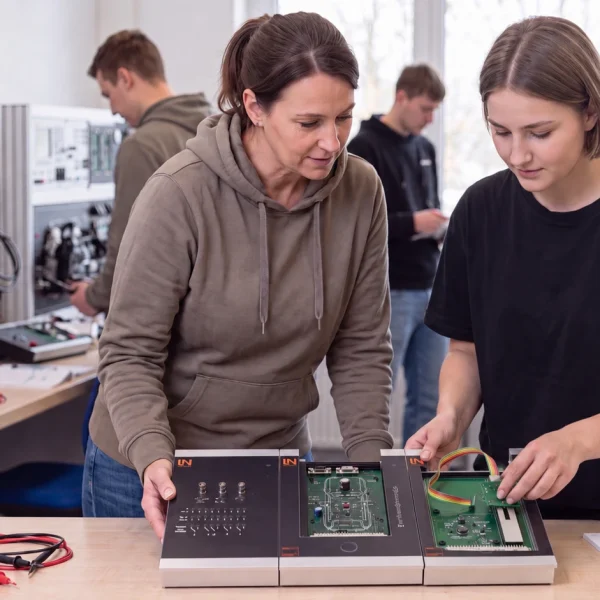
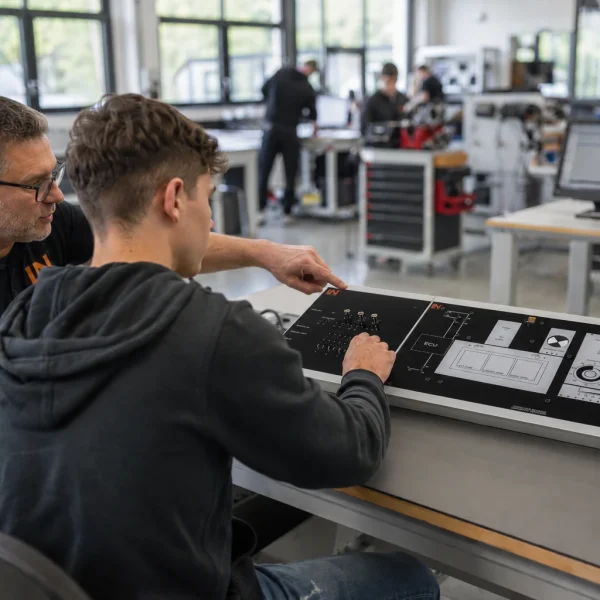
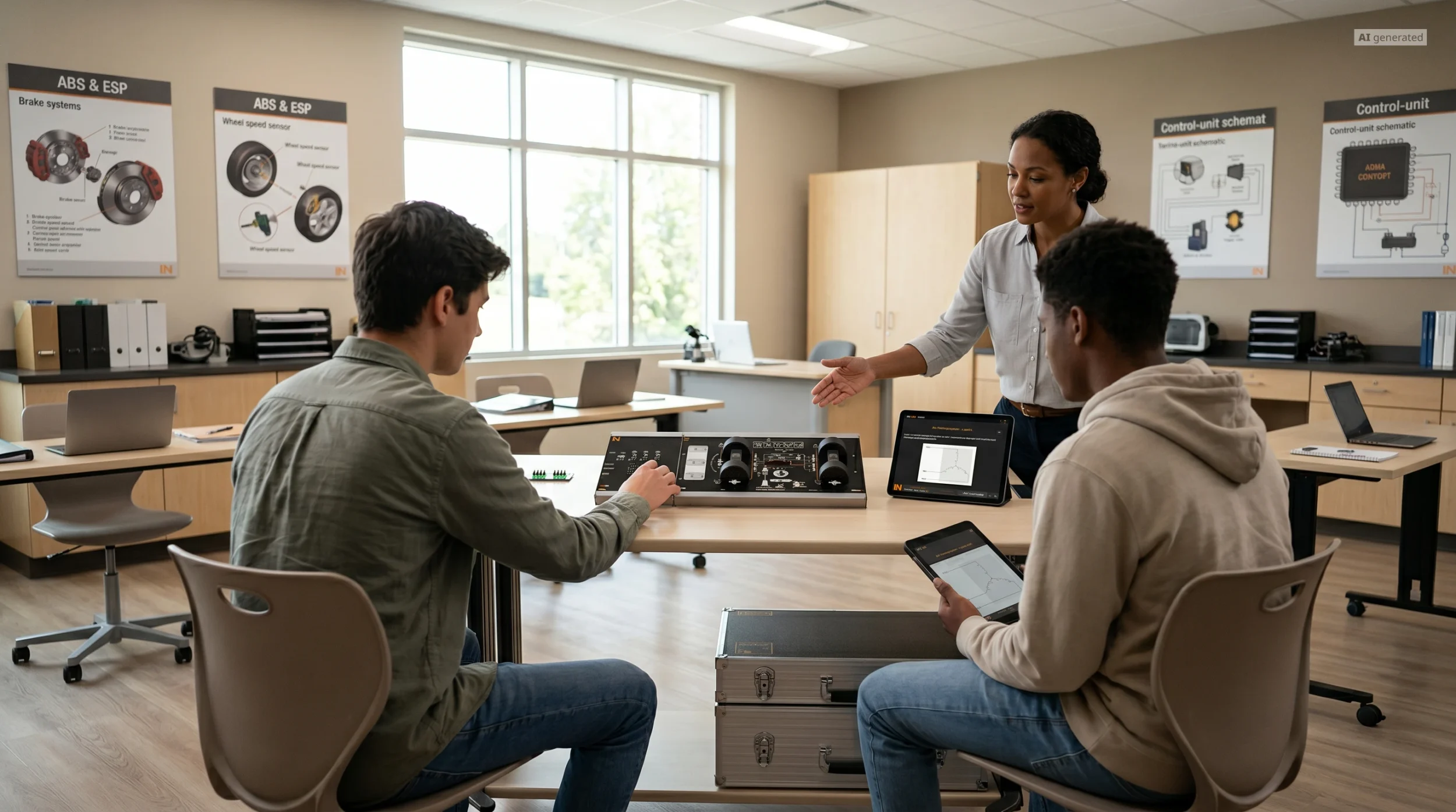
Learners working with RXLea on a tablet at a Lucas-Nuelle training system
RXLea

From Knowledge Comes Capability.

You guide the learning

Where theory and practice go hand in hand.

RXLea brings a new way of learning: project-based, hands-on and clearly structured. Learners solve real-world tasks, while instructors save time on preparation. Interactive modules, smart analytics and real hardware create a modern, efficient learning world.

Hands-on and interactive

Animations, interactive tasks and realistic scenarios build a deep understanding. All content is organized into clear learning paths for focused, hands-on learning.

Digital support

3D assembly animations and digital instructions simplify complex procedures, reduce errors and help learners work more independently.

Visual support

Overview graphics, screenshots and sample animations make the learning world transparent. Photos from the learning packages are also available, including country-specific versions where needed.


Learners using a tablet at an energy training system
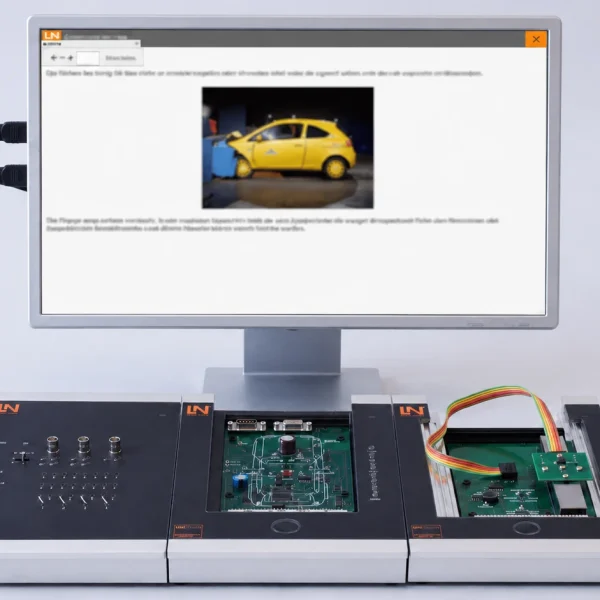
RXLea on desktop, laptop and tablet
RXLea Path Creator for building learning journeys
RXLea Navigator showing the learning world
Learn more about RXLea
Newsletter

Stay ahead in
technical training.

Get the latest training systems, product launches and educational insights, delivered directly to your inbox.

Your email address

By subscribing, you agree to our Privacy Policy. You can unsubscribe at any time.

 Please select at least one category before subscribing.
I'm interested in - select all that apply