


Skip to content

CAN FD in Motor Vehicles

RXLea
Digital projects for hands-on learningInteractive learning content, directly connected to the training system.

CAN FD in Motor Vehicles

ACF21UT

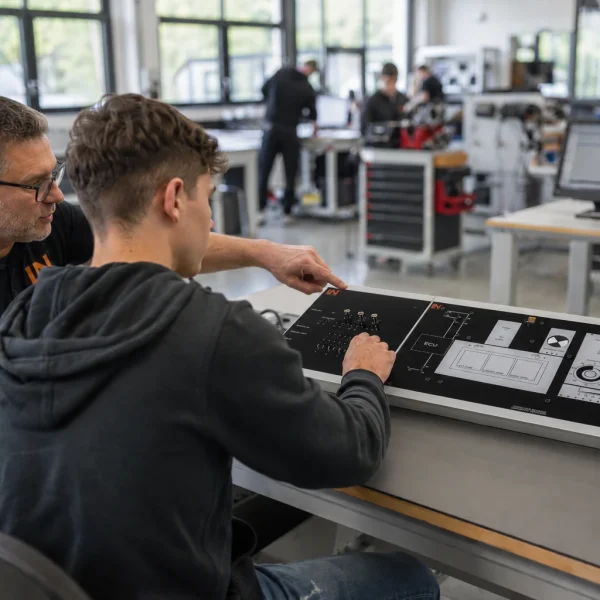
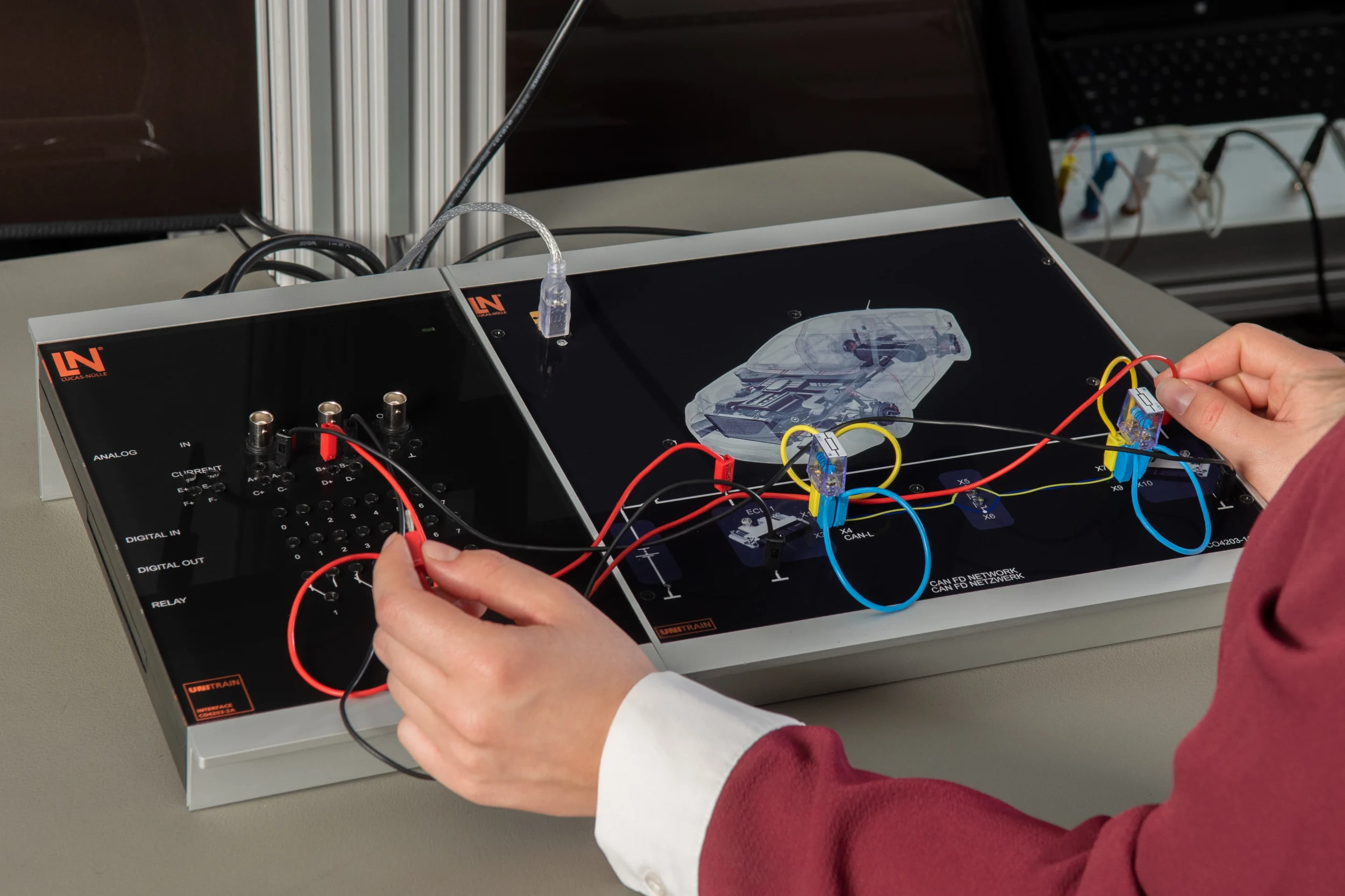
The training system provides sound technical knowledge and practical diagnostic skills relating to the operation and signal analysis of modern CAN FD networks in vehicles.

Learning Content
  • Checking bus levels by measurement
  • Evaluating bus termination
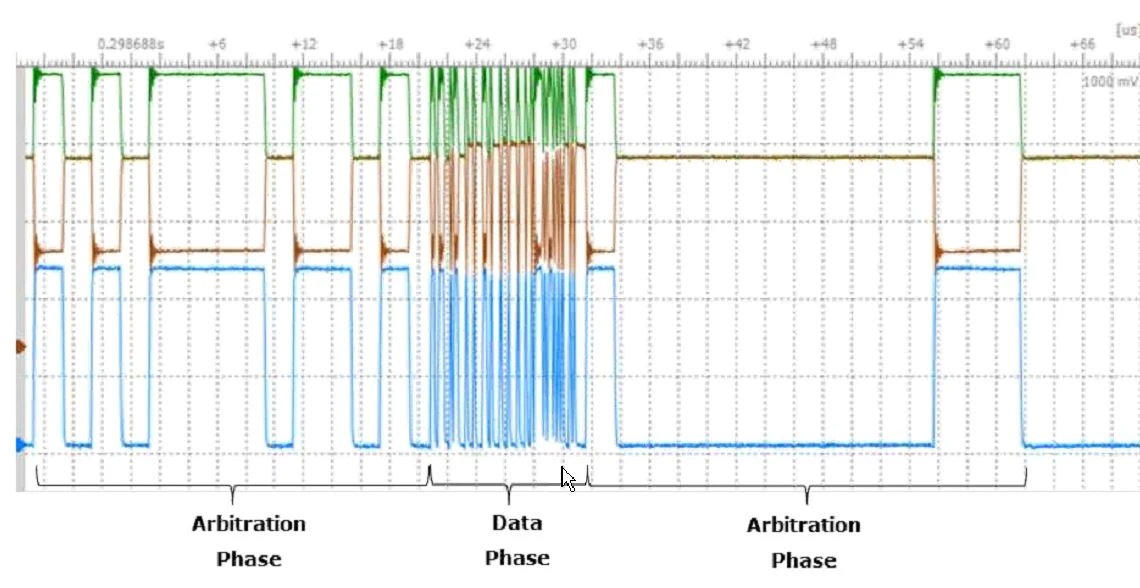
  • Analyzing the frame structure
  • Comparing data field sizes
KEY FEATURES
  • Hardware fault insertion
  • Switchable payload variants
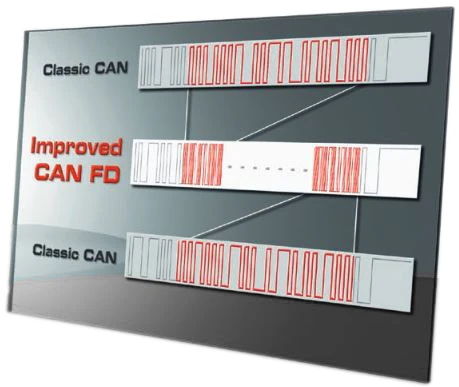
  • Variable bit rate switching
  • UniTrain interface
Speak with a Product Specialist +1 (757) 808-5696 · sales@lucas-nuelle.com

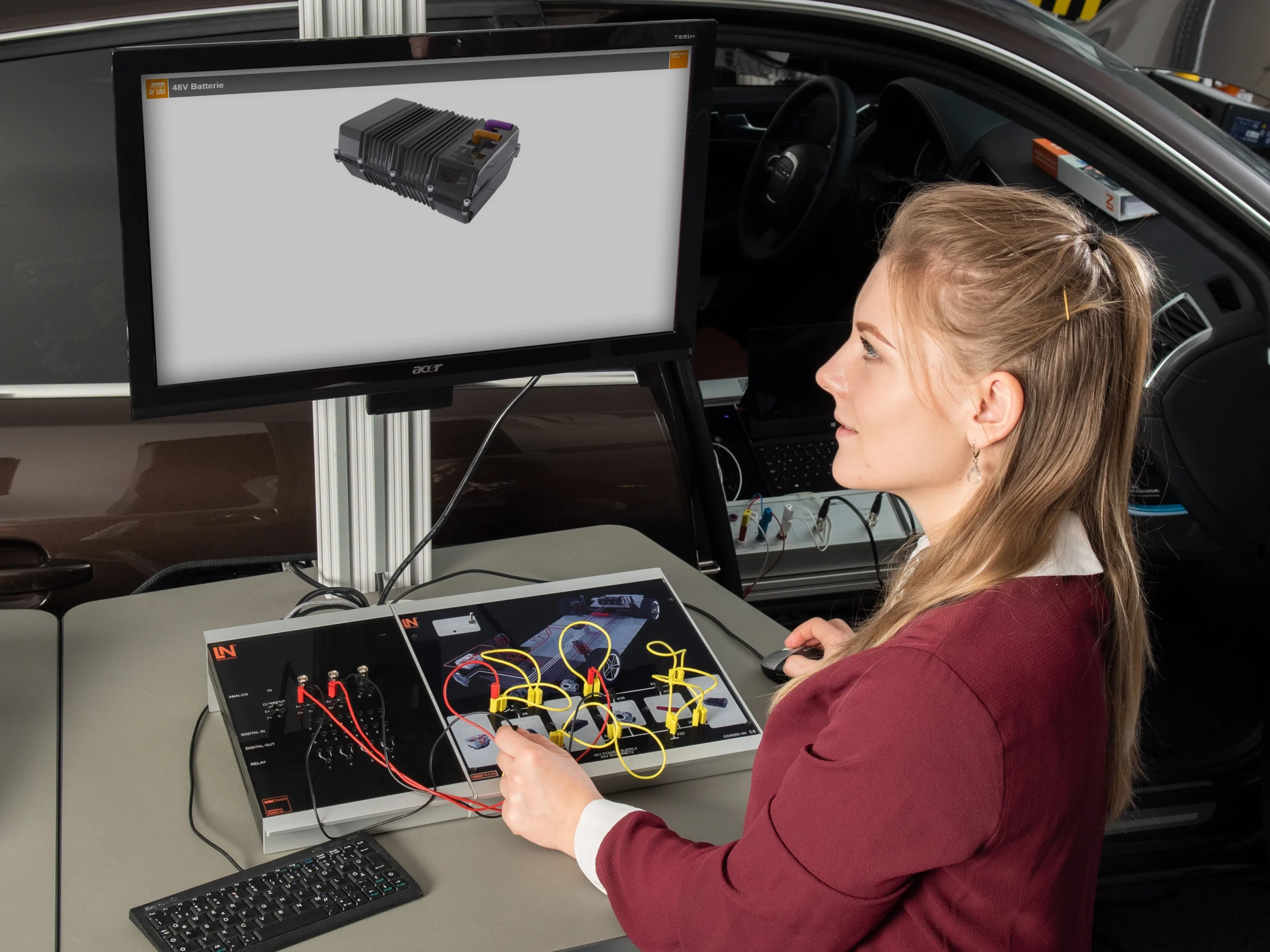
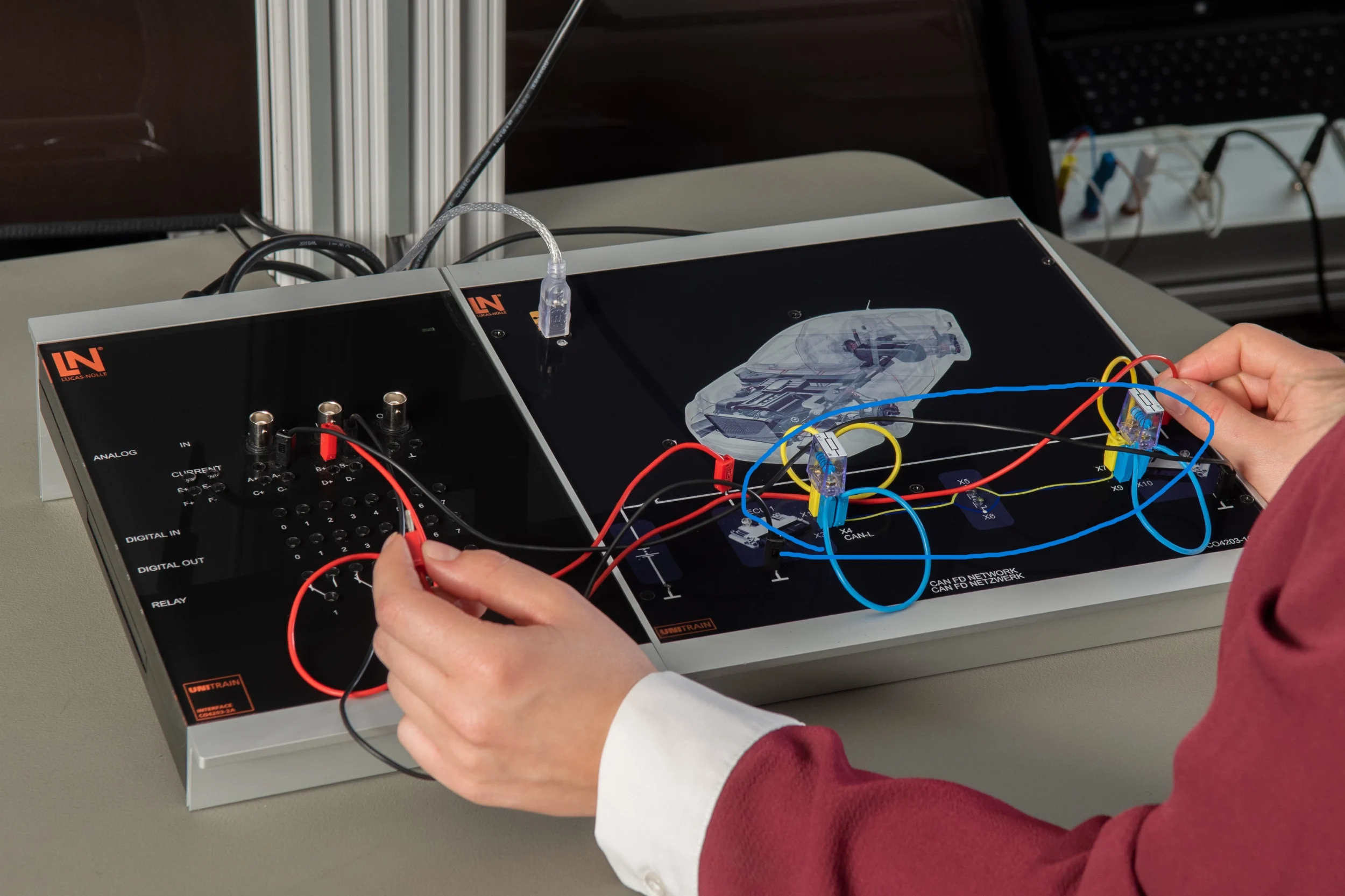
The growing amount of electronics in vehicles is pushing classic CAN buses to their performance limits. That is why modern service shops need a precise understanding of the flexible bit rates of CAN FD. This training system is based on the physical implementation of a two-wire bus system for fast serial data transmission between automotive control units. By building their own CAN FD network, learners carry out safe, hands-on signal and ISO fault analyses using virtual measuring instruments.

CO4205-1SCourse: CAN FD in motor vehicles
CO4203-2AUniTrain Interface mit virtuellen Instrumenten (Basis VI)
CO4203-2JUniTrain measurement accessories, shunts and connection cables
CO4203-2YUniTrain storage case for one UniTrain system
SO4203-2VUniTrain storage case for experiment board

Learning Content in Detail

With this training system, you acquire comprehensive knowledge of modern bus systems in vehicles. Your learners achieve the following learning objectives in a hands-on way:

Checking bus levels by measurement

Learners check the recessive and dominant voltages of CAN High and CAN Low with the oscilloscope.

Evaluating bus termination

Learners plug in different terminating resistors and investigate the resulting change in levels in the signal pattern.

Analyzing the frame structure

Learners identify the structure of the data frame from arbitration through to the end phase.

Comparing data field sizes

Learners switch the payload from 8 to 64 bytes and measure the reduction in the duration of the data phase.

Locating open circuits

Learners deliberately remove jumpers and diagnose the loss of the acknowledge bits.

Classifying bus systems

Learners use the bit rate to determine the difference between low-speed CAN and high-speed CAN.

Diagnosing data bus faults

Learners systematically work through a troubleshooting checklist and eliminate short circuits.

Features & Applications

Discover the wide range of applications of our system. It provides you with practical hardware and software for detailed CAN FD analyses.
  • Hardware fault insertion — The system includes 8 fully fledged diagnostic tasks. Learners locate short circuits and open circuits directly on the physical data lines.
  • Switchable payload variants — The software simulates data volumes from 8 to 64 bytes. Learners compare the resulting transmission times and frame lengths on the oscilloscope.
  • Variable bit rate switching — The system separates static arbitration phases from dynamic data phases. Learners investigate bit rate switching live in the signal pattern.
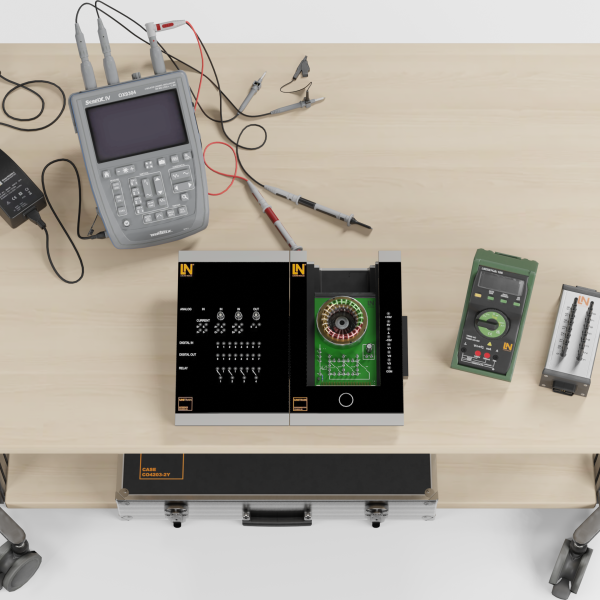
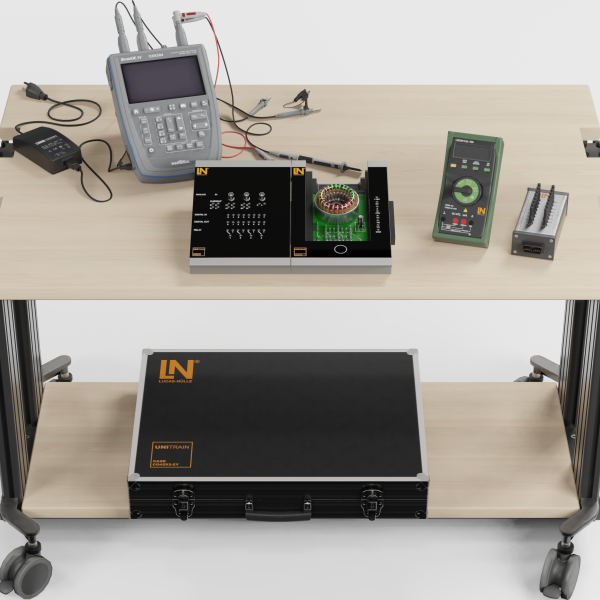
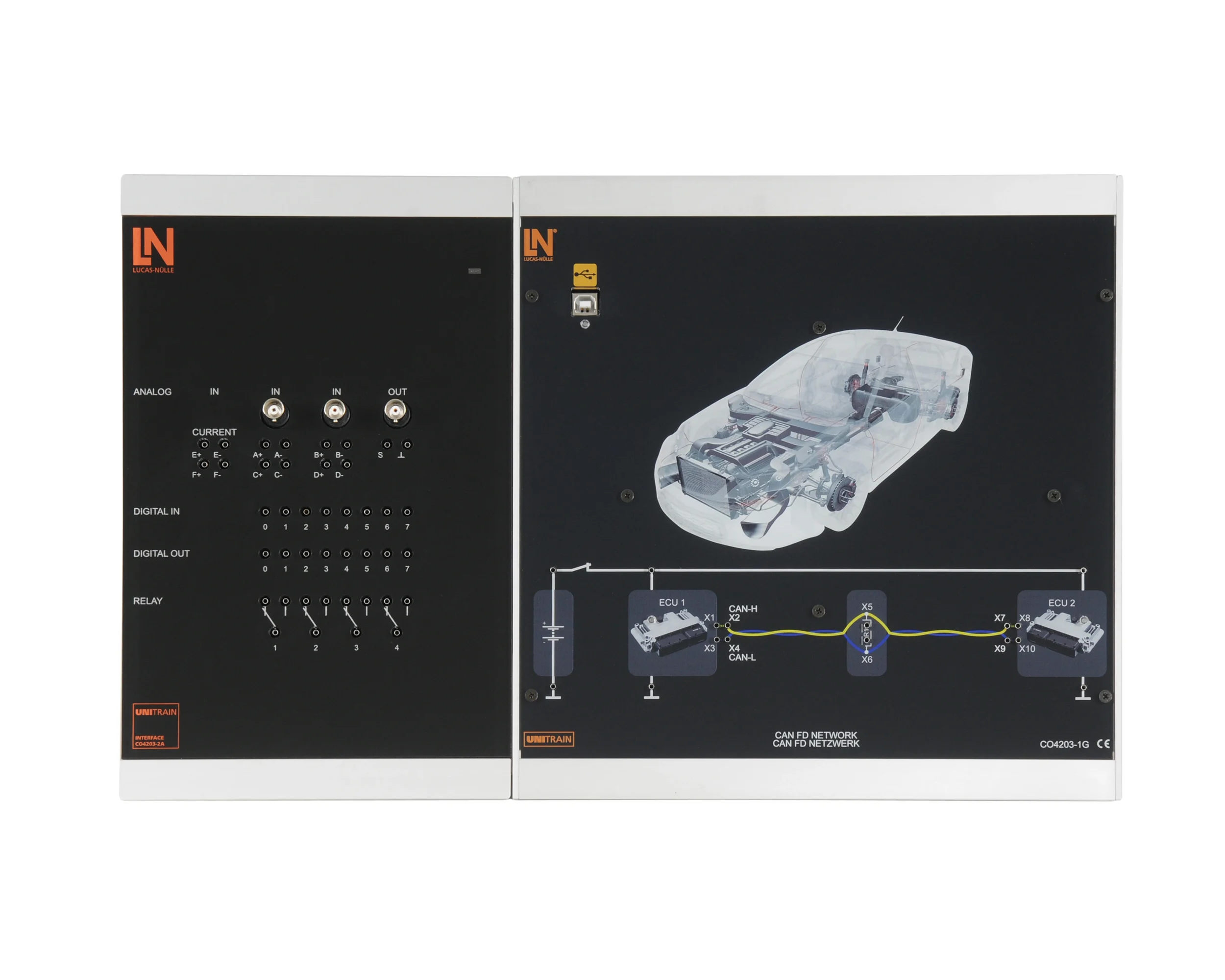
  • UniTrain interface — The central control unit acquires analog measurement data at 100 MS/s. It stores signal waveforms and supplies power to the recording modules.
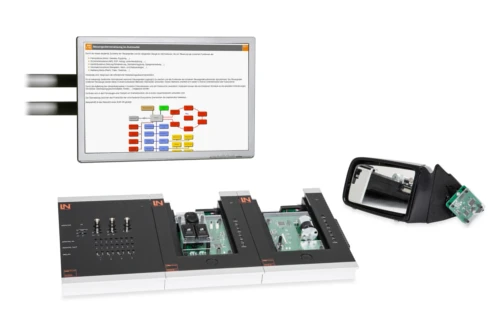
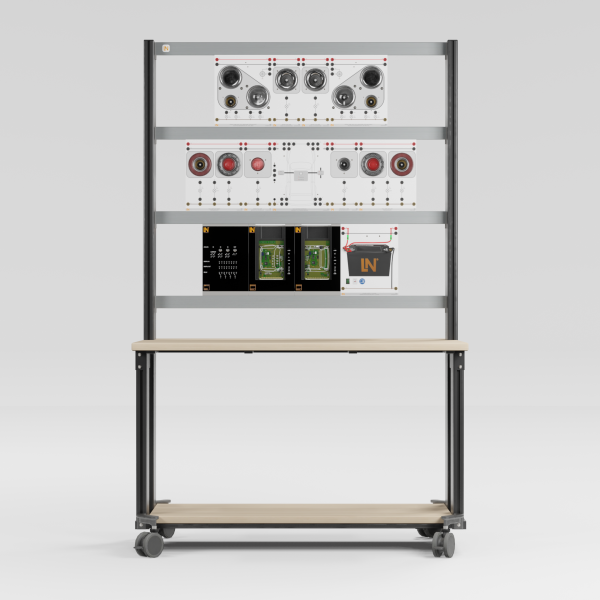
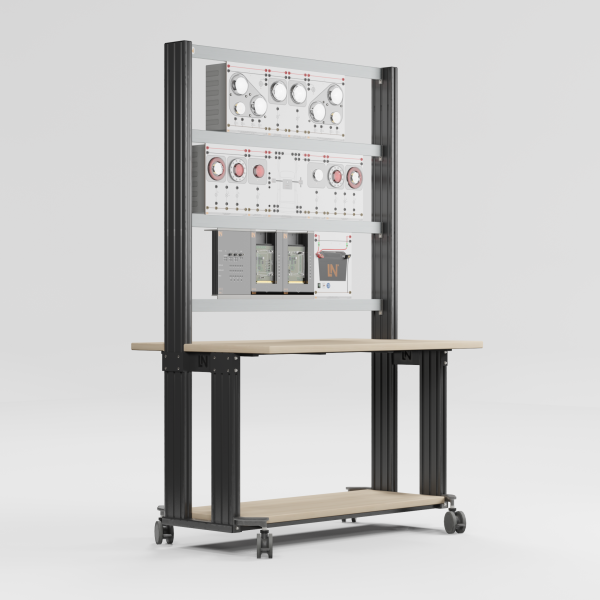
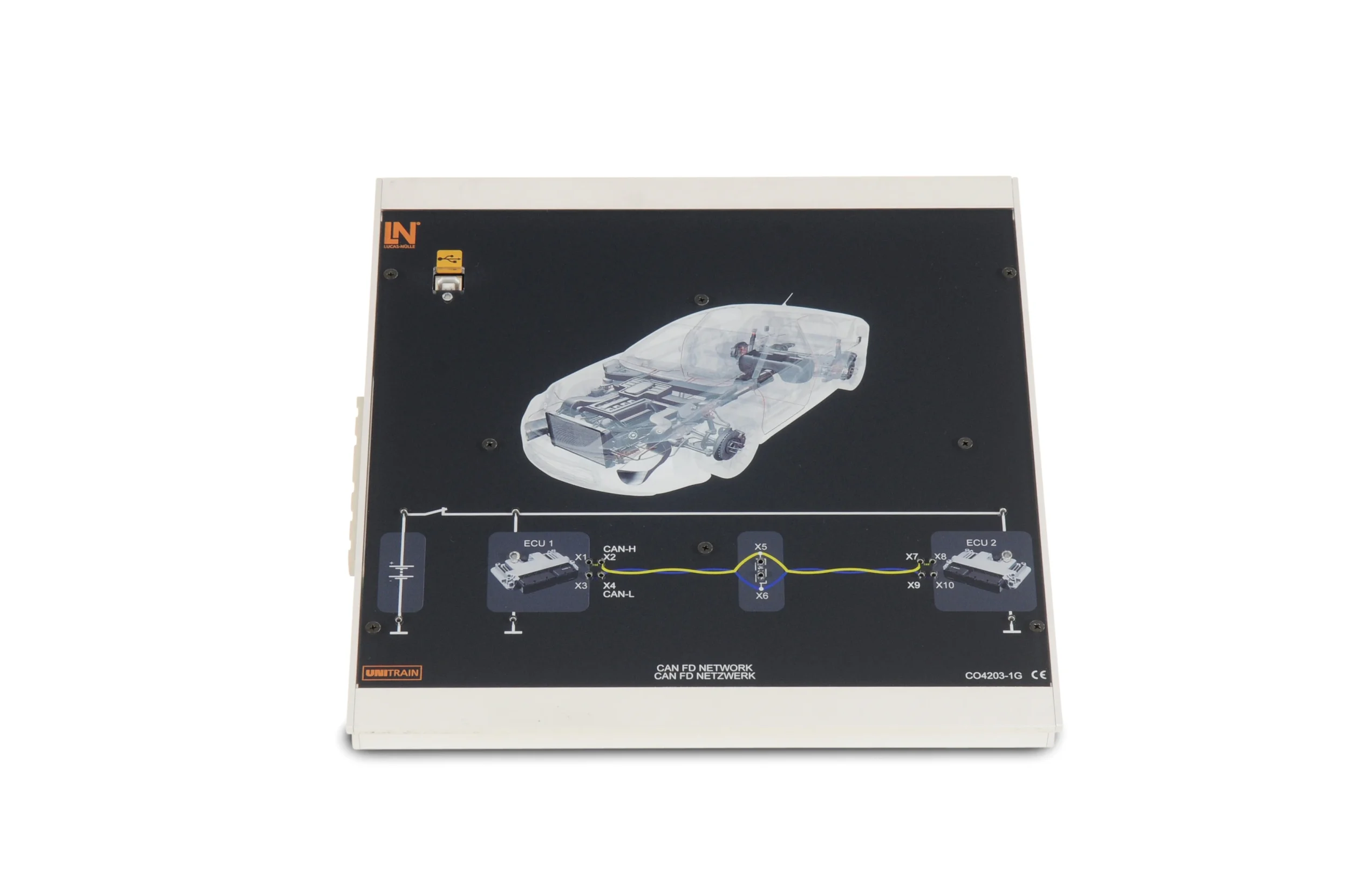
  • CAN FD experiment board — The training panel houses two self-contained nodes (ECU 1 and 2). Multicolored LEDs indicate the transmit, receive and error status in the network.
  • Plug-in terminating resistors — The module provides shunts from 33 to 330 Ω. Learners insert incorrect bus terminations and analyze harmful signal reflections in the network.
  • 4-channel differential amplifier — The input stage processes fully floating differential signals up to 100 V. It protects the PC against overvoltages from the test area.
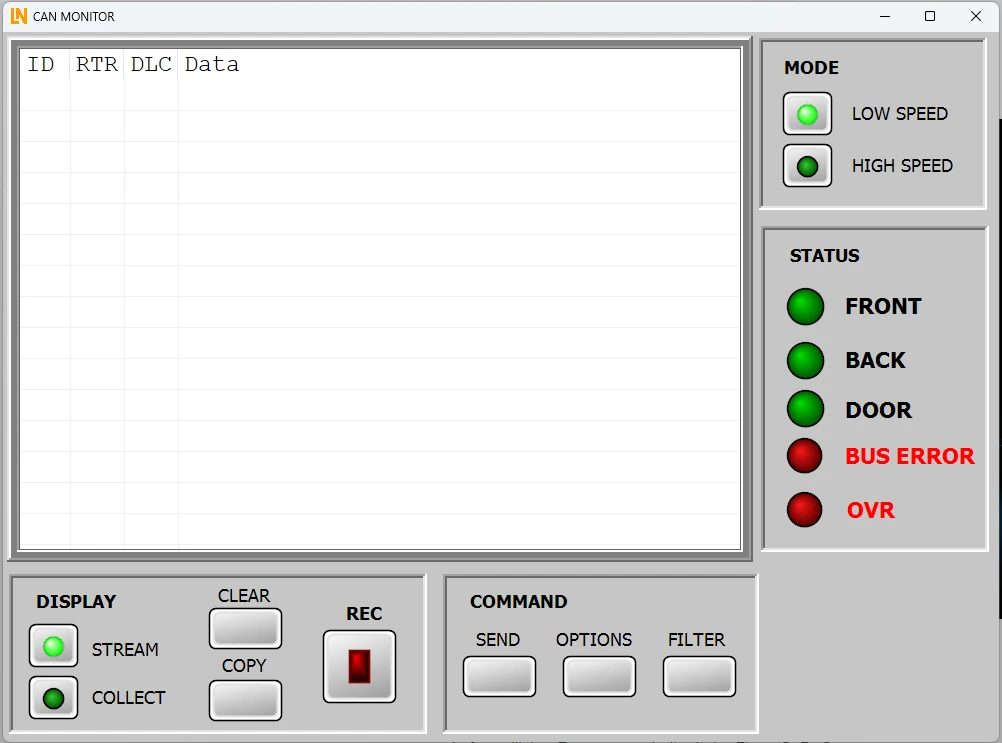
  • Lucas-Nülle CAN FD Monitor — The digital tool decodes bus messages in real time. Learners check bit sequences, identify stuff bits and read out fault memories.
  • Virtual storage oscilloscope — The instrument displays signal voltages graphically. Learners measure voltage differences and determine bit times using cursor lines.
Learners working with RXLea on a tablet at a Lucas-Nuelle training system
RXLea

From Knowledge Comes Capability.

You guide the learning

Where theory and practice go hand in hand.

RXLea brings a new way of learning: project-based, hands-on and clearly structured. Learners solve real-world tasks, while instructors save time on preparation. Interactive modules, smart analytics and real hardware create a modern, efficient learning world.

Hands-on and interactive

Animations, interactive tasks and realistic scenarios build a deep understanding. All content is organized into clear learning paths for focused, hands-on learning.

Digital support

3D assembly animations and digital instructions simplify complex procedures, reduce errors and help learners work more independently.

Visual support

Overview graphics, screenshots and sample animations make the learning world transparent. Photos from the learning packages are also available, including country-specific versions where needed.


Learners using a tablet at an energy training system
RXLea on desktop, laptop and tablet
RXLea Path Creator for building learning journeys
RXLea Navigator showing the learning world
Learn more about RXLea
Newsletter

Stay ahead in
technical training.

Get the latest training systems, product launches and educational insights, delivered directly to your inbox.

Your email address

By subscribing, you agree to our Privacy Policy. You can unsubscribe at any time.

 Please select at least one category before subscribing.
I'm interested in - select all that apply