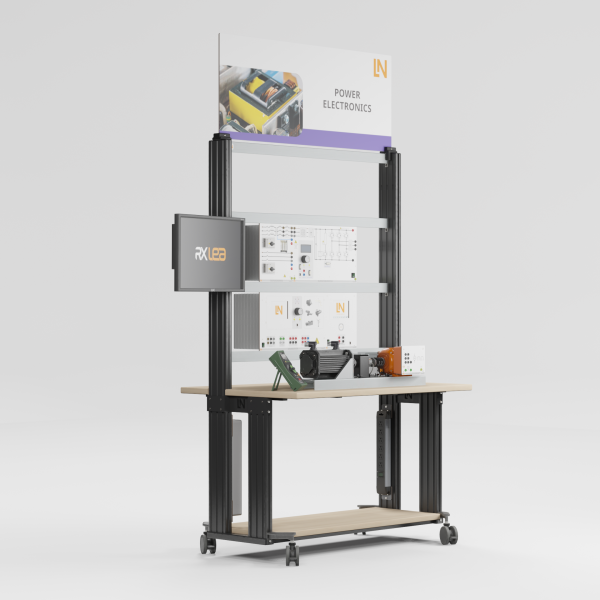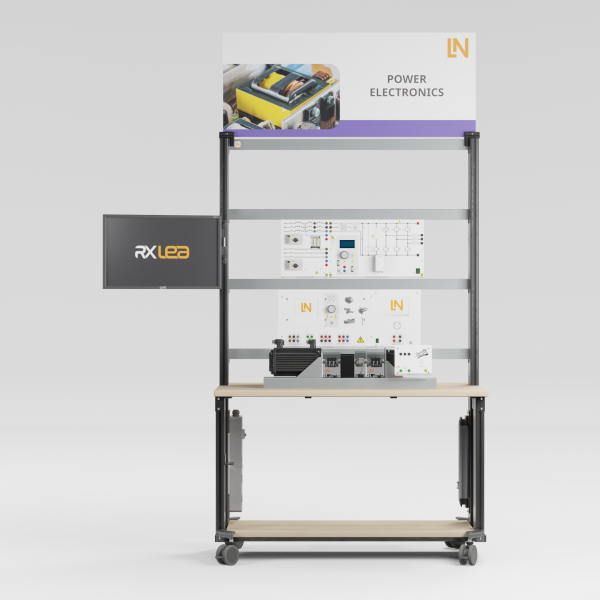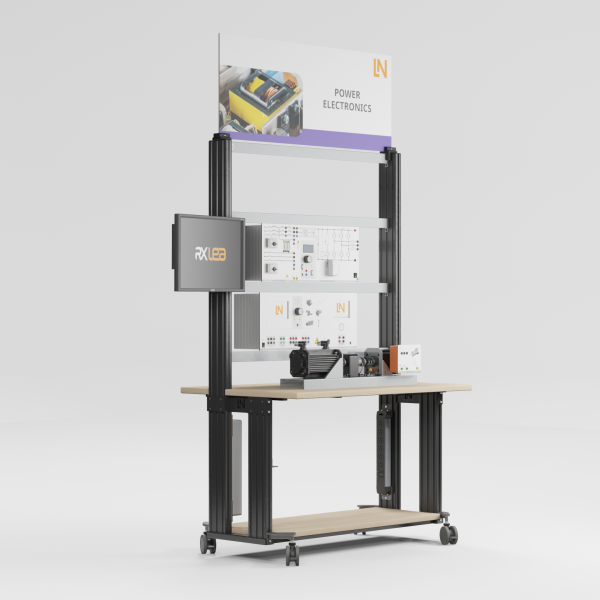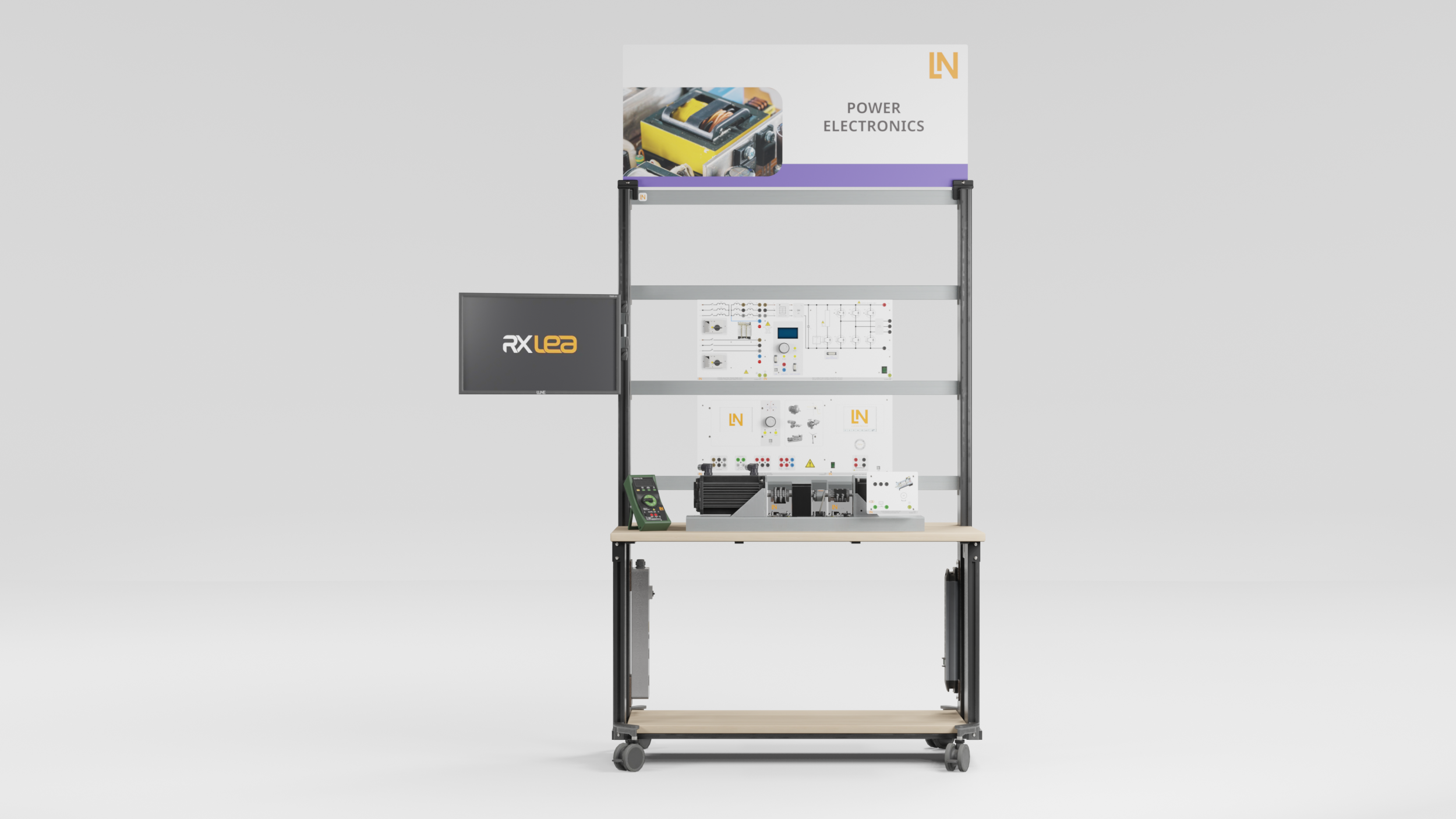
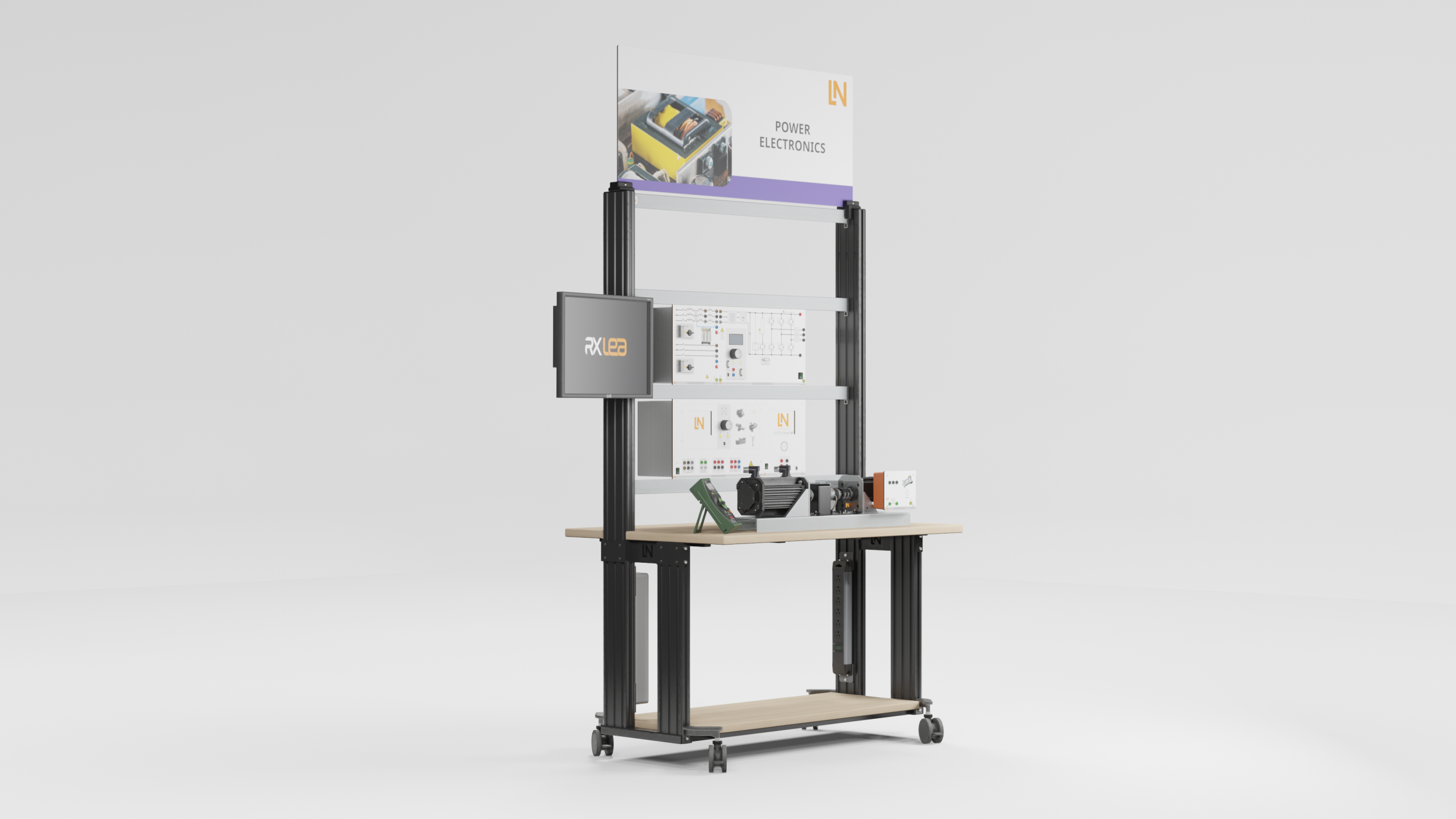



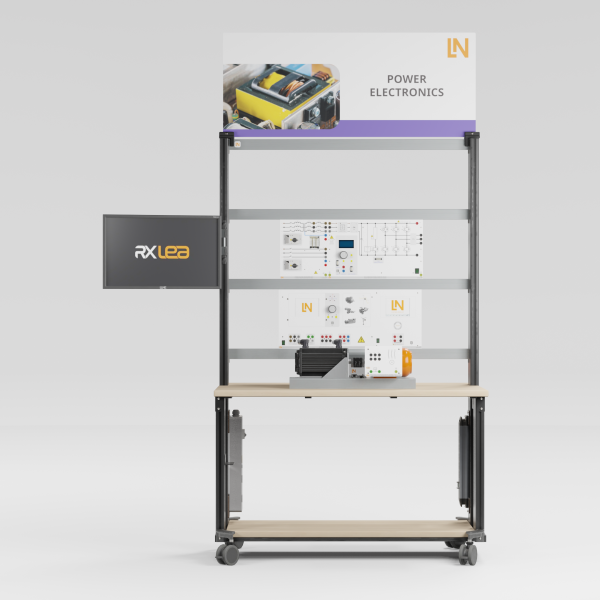
Servo Drive Technology, PMSM and BLDC Motor 300W
Analyze field-oriented controlled, permanent magnet synchronous motors deeply. This compact training system guides you through current and speed control as well as coordinate transformations.
- Analyzing controller structures of servo drives
- Aligning coordinate systems
- Applying the Clarke and Park transformations
- Parameterizing controllers using optimum methods
- Analyzing field-oriented control
- Parameterizing current and speed controllers
- Dynamic four-quadrant operation
- Emulating industrial driven machines
Servo drives maintain speed and torque precisely, even during rapid changes. That is exactly why they are found in production systems, machine tools and industrial robots, where cycled processes would not work without this dynamic performance. How field-oriented control achieves this remains hidden in a finished industrial drive. This training system reveals it: students record characteristics, separate the current and speed control loops, tune the PI controllers according to the modulus optimum and symmetrical optimum, and follow the Clarke-Park transformation on the PC. Meanwhile, the servo machine test system emulates heavy starting, pumps or calenders. Finally, students assess the reference and disturbance response of the drive under real load.
| Base Product | |
| SE2682-3S | Permanent Magnet Synchronous Motor (PMSM) 0.3 kW |
| SE2683-3T | Incremental position encoder 1024 pulses, 0.3 kW |
| SE2662-7C | Coupling guard with LED lighting for 300W machines |
| SE2662-2A | Rubber coupling sleeve, 0.3kW |
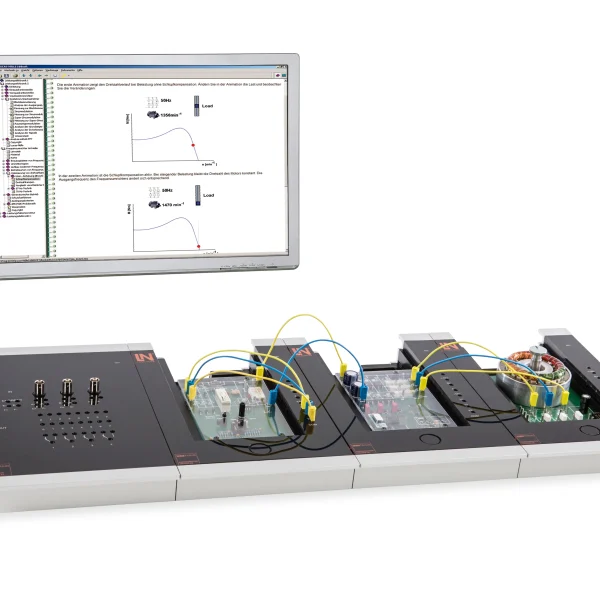
| SO2805-1M | Interactive Lab Assistant: Servo motors, electronically commutated motors 0.3 kW |
| CO3636-3B | Self-commutated converter circuits |
| Power Supply | |
| CO3636-3E7 | 3-Phasen Trenntransformator 300VA |
| Measuring Instruments | |
| CO5127-2A | Power-Multimeter |
| Accessories | |
| CO3636-6X7 | Dynamic servo machine test stand for 300W machines incl. control software ActiveServo 2.0 |
| SE2662-2A | Rubber coupling sleeve, 0.3kW |
| SE2662-7C | Coupling guard with LED lighting for 300W machines |
| Furniture | |
| ST8010-4G | Keyboard adapter for flat screen monitor holders |
| ST8008-8N7 | Protected power distribution for workstations |
| ST8010-4J8 | Multiple power outlet strip, 6 outlets, US-standard |
| Furniture Accessories | |
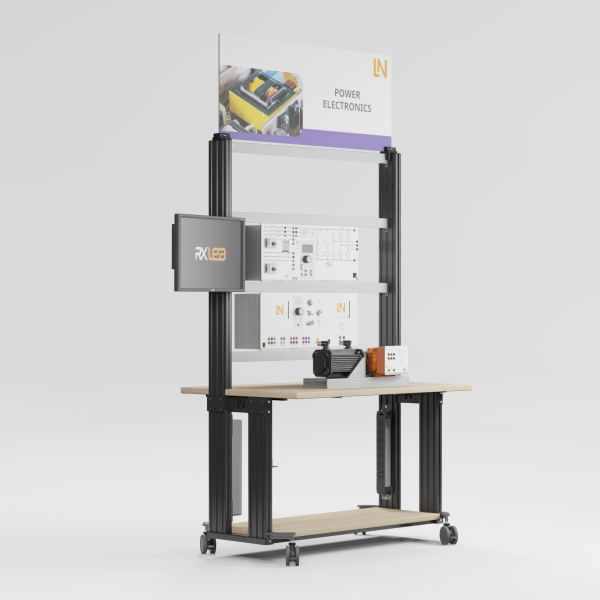
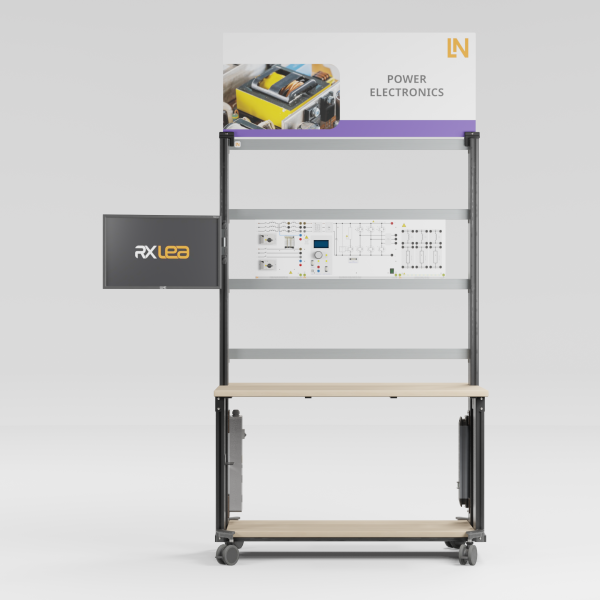
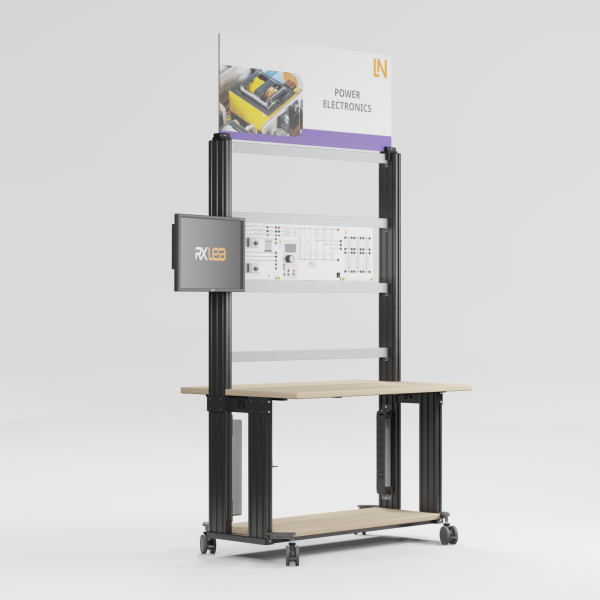
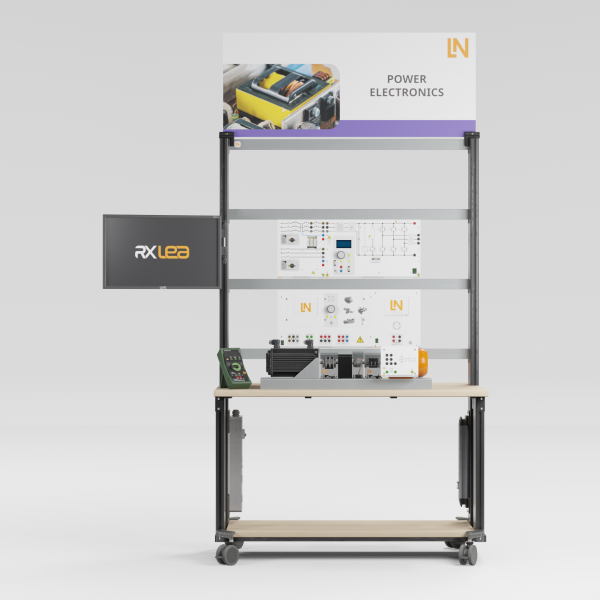
| ST8000-5B | Display for Power Electronics equipment |
| Measurement Leads | |
| SO5148-1L | Set of safety measurement cables, 4mm (31 leads) |
| SO5126-3R | Safety connecting plug 4mm with tap (2x), black, 1000V/32A CAT II |
| SO5126-3V | Safety connecting plug 4mm with tap (2x), blue, 1000V/32A CAT II |
| SO5126-3W | Safety connecting plug 4mm with tap (2x), green/yellow, 1000V/32A CAT II |
Learning Content in Detail
Analyzing controller structures of servo drives
Aligning coordinate systems
Applying the Clarke and Park transformations
Parameterizing controllers using optimum methods
Evaluating the disturbance response to load steps
Features & Applications
- Analyzing field-oriented control — Students investigate the control structure of the servo drive. On the PC, they follow how stator-fixed quantities are transformed into a rotor-fixed coordinate system.
- Parameterizing current and speed controllers — The PI controllers are tuned according to the modulus optimum and symmetrical optimum. Students then test the reference and disturbance response in practice with load steps.
- Dynamic four-quadrant operation — Load tests run in all four quadrants. Torque and speed can be specified continuously, and students evaluate the curves on the PC.
- Emulating industrial driven machines — Using the software, students replicate heavy starting, pumps or calenders and investigate how the drive responds to real load requirements.
- Three-phase synchronous machine (PMSM), 0.3 kW — The permanent-magnet servo motor is the machine under test in the experiment. An electronic nameplate transfers the motor data to the software and simplifies parameterization.
- Incremental position encoder — The encoder detects the rotor position with 1024 pulses. Students mount it externally and carry out the coordinate alignment with the motor manually.
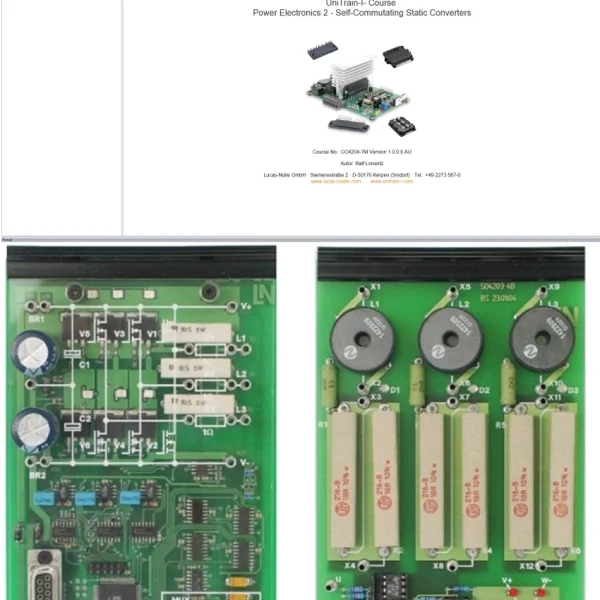
- Self-commutated power converter — The control unit with a 6-pulse IGBT inverter generates the rotating field. An integrated DSP performs the field-oriented control of the machine.
- Servo machine test system — The control unit and induction servo form the active load. Students specify torque or speed precisely and measure the resulting mechanical quantities.
- Tool-free coupling and temperature protection — The machine under test and the brake are coupled without backlash and without tools. An integrated temperature contact protects the machines against thermal overload.
- Shaft cover with safety interlock — The Makrolon cover shields the rotating parts. The LED lights up green only when there are no faults, and only then does the system enable the power supply.
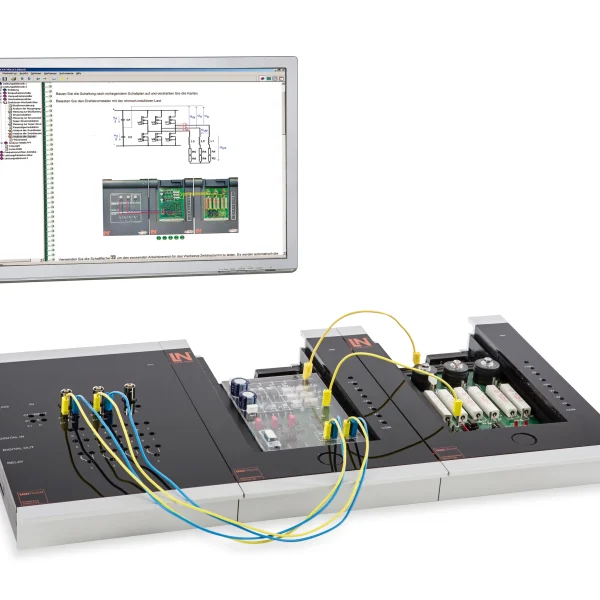
- Virtual instruments: FOC controller for PMSM — The PC software controls the power converter. Students set up the field-oriented control, parameterize the current and speed controllers separately, select the modulation method and monitor internal variables during operation.
- ActiveServo for drive analysis — The software of the servo machine test system records and displays the motor characteristics. Students record how the set parameters affect mechanical and electrical quantities, simulate load profiles such as a pump characteristic and compare characteristics in the diagram.
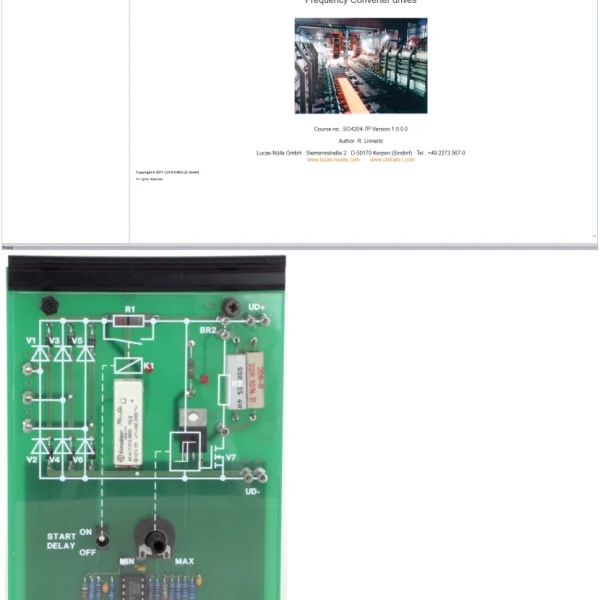
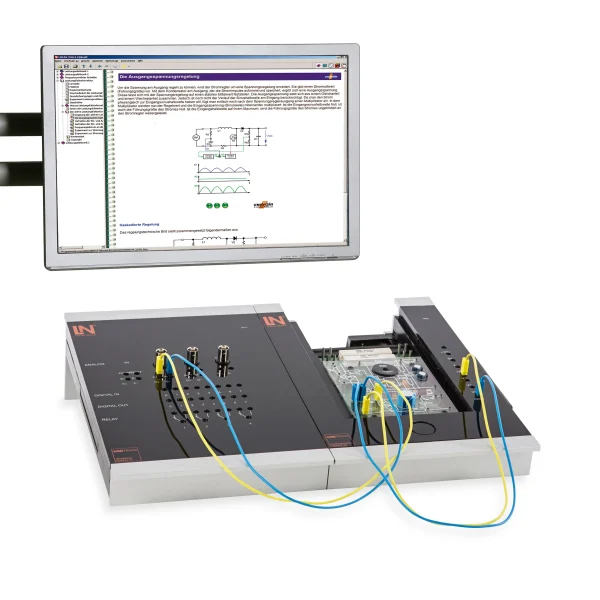
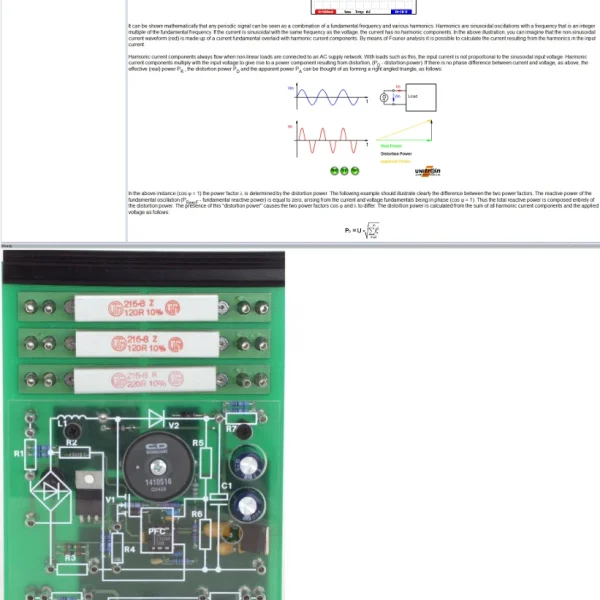
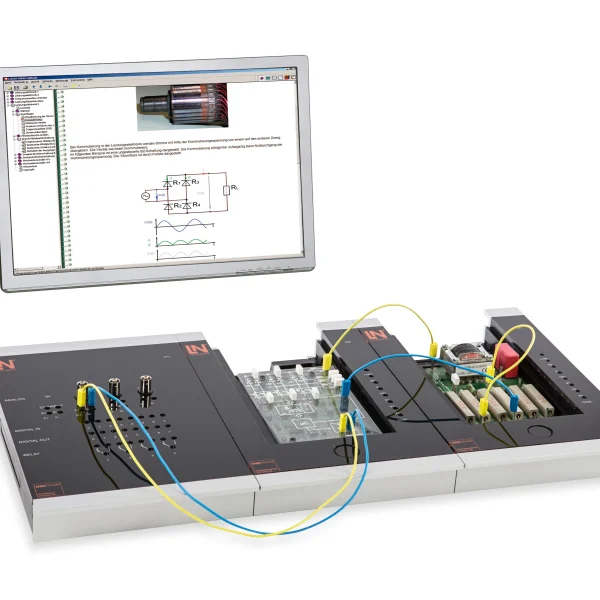
- Interactive Lab Assistant — The interactive course guides students through all the experiments using multimedia. Students answer knowledge questions, operate the virtual instruments and transfer measured values by drag and drop.

From Knowledge Comes Capability.
You guide the learning
Where theory and practice go hand in hand.
RXLea brings a new way of learning: project-based, hands-on and clearly structured. Learners solve real-world tasks, while instructors save time on preparation. Interactive modules, smart analytics and real hardware create a modern, efficient learning world.
Hands-on and interactive
Animations, interactive tasks and realistic scenarios build a deep understanding. All content is organized into clear learning paths for focused, hands-on learning.
Digital support
3D assembly animations and digital instructions simplify complex procedures, reduce errors and help learners work more independently.
Visual support
Overview graphics, screenshots and sample animations make the learning world transparent. Photos from the learning packages are also available, including country-specific versions where needed.




Stay ahead in
technical training.
Get the latest training systems, product launches and educational insights, delivered directly to your inbox.