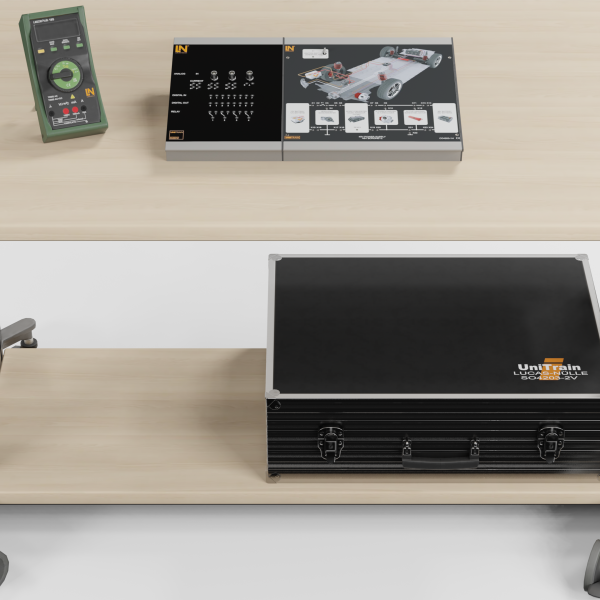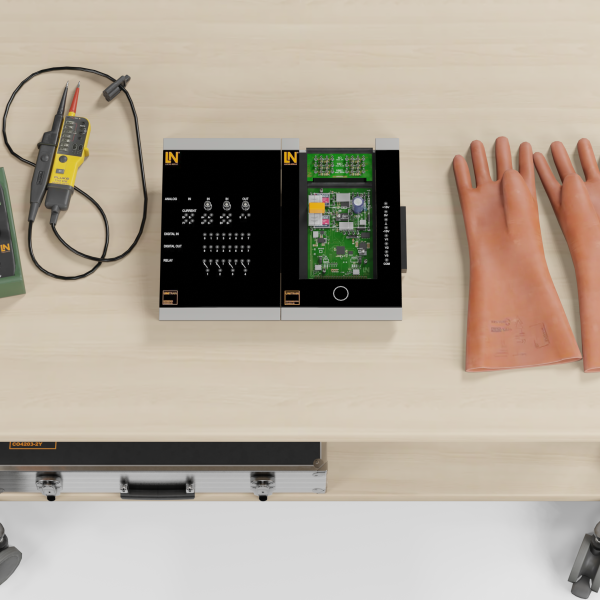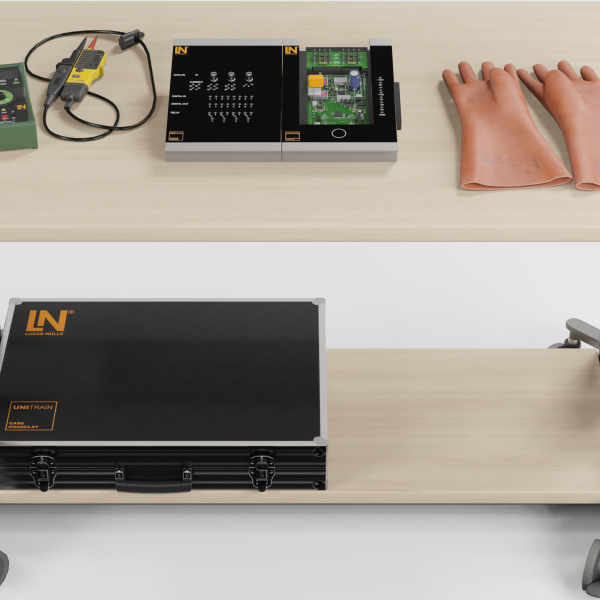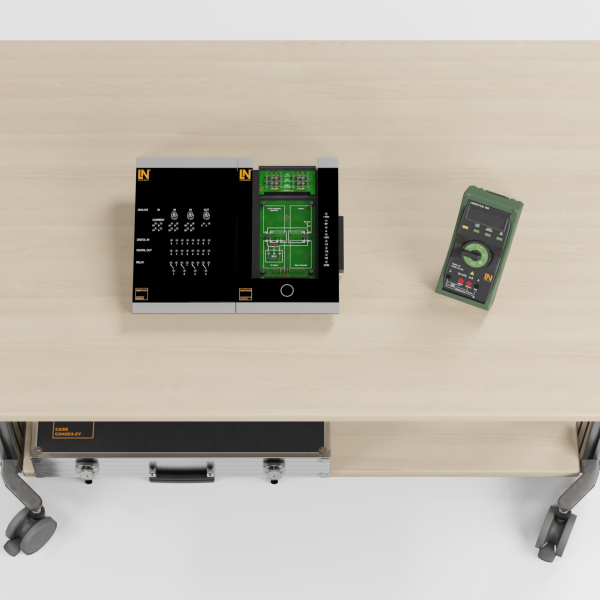


DC-DC Step-Down Converters: Diagnosis and Repair in EVs
Systematic troubleshooting of DC-DC step-down converters for hybrid/EV 12V systems. Students learn practical diagnosis and repair via hands-on workshop tasks.
- Analyzing repair orders
- Understanding operation and design
- Measuring and evaluating voltages
- Determining repair measures
- Realistic repair order
- Risk-free learning
- Methodical troubleshooting
- Physical principles
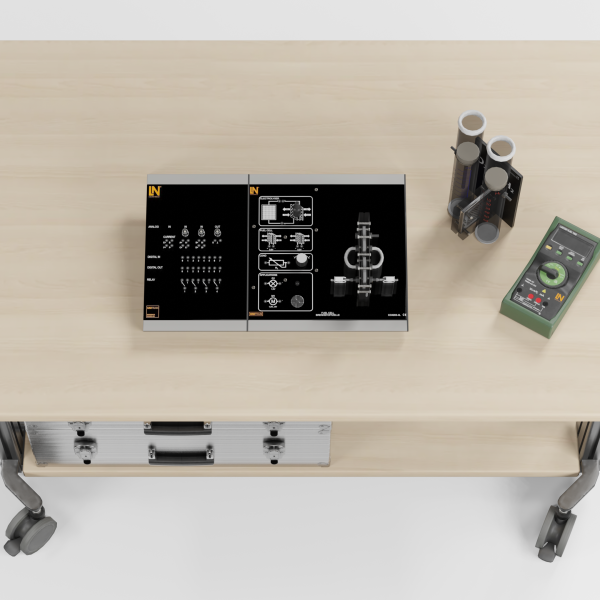
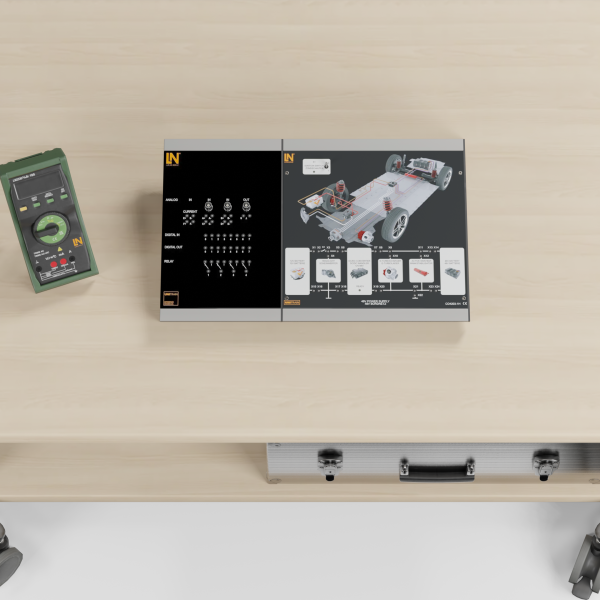
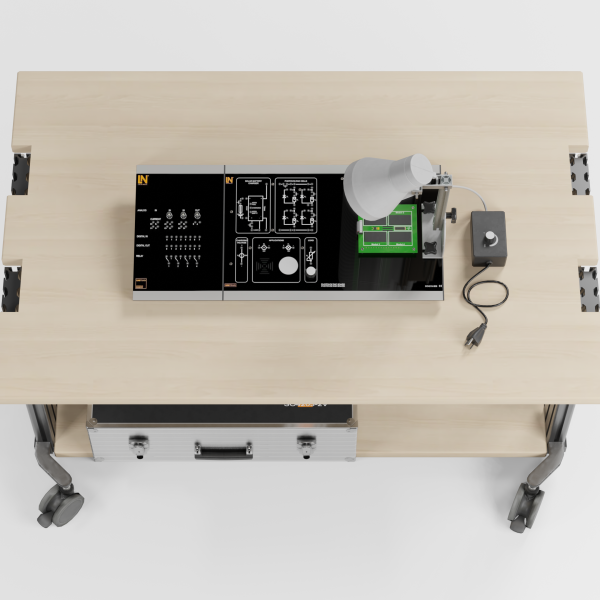
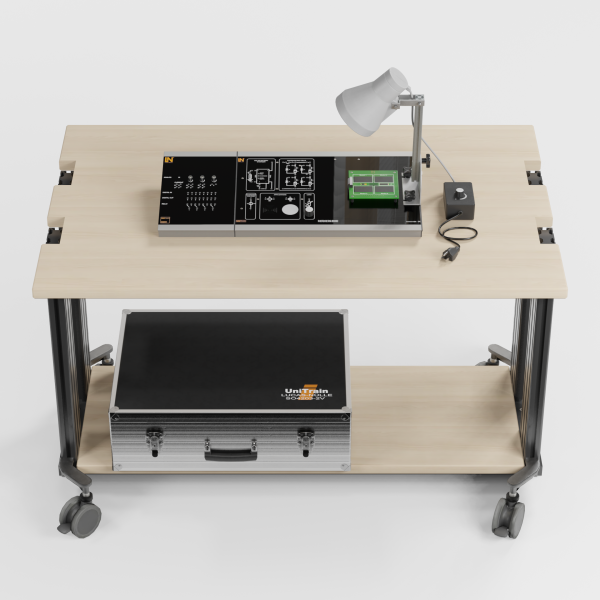
The 12 V electrical system in hybrid and electric vehicles must be supplied safely from the high-voltage system. With this practical training system, learners train in the operation and diagnosis of a DC-DC buck converter, which performs exactly this task. By working through a realistic repair order, they learn systematic troubleshooting on this essential component. Prepare your participants optimally for real challenges in the automotive shop and foster an in-depth understanding of vehicle electrics.
| Base Product | |
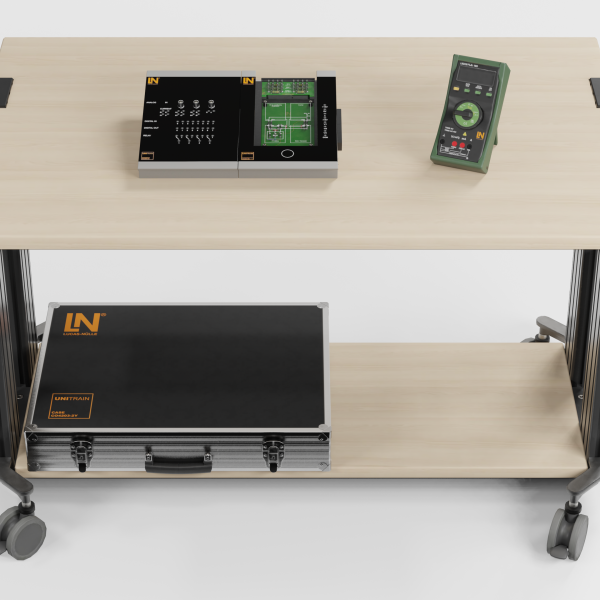
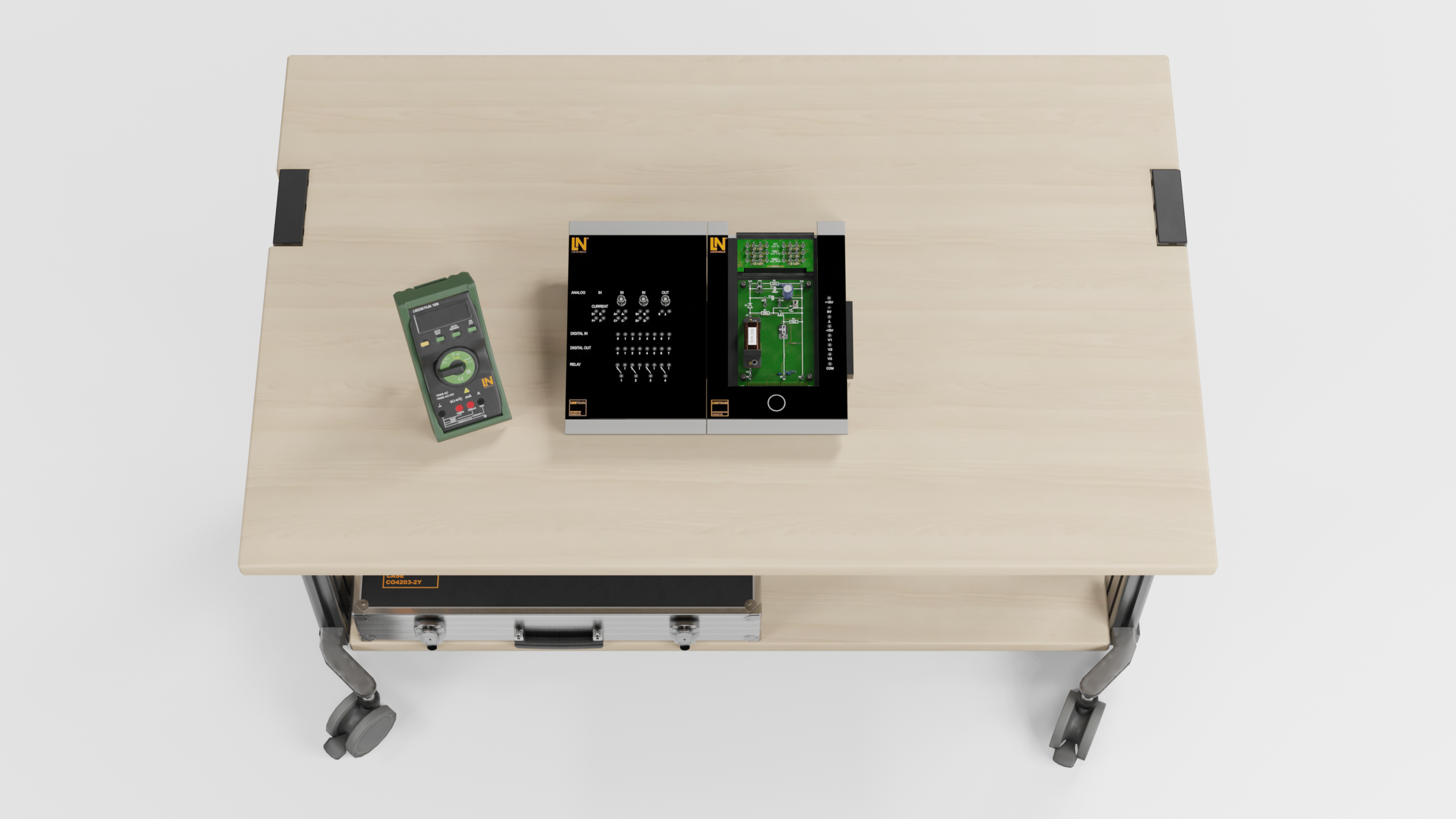
| CO4203-2A | UniTrain Interface mit virtuellen Instrumenten (Basis VI) |
| CO4203-2B | UniTrain Experimenter |
| Options | |
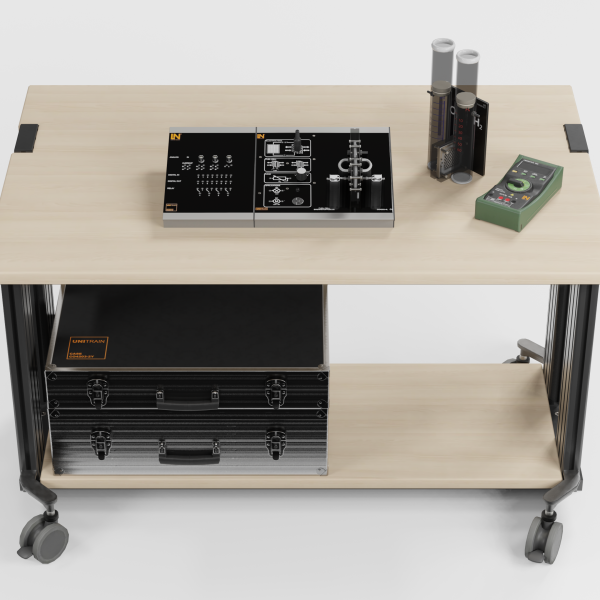
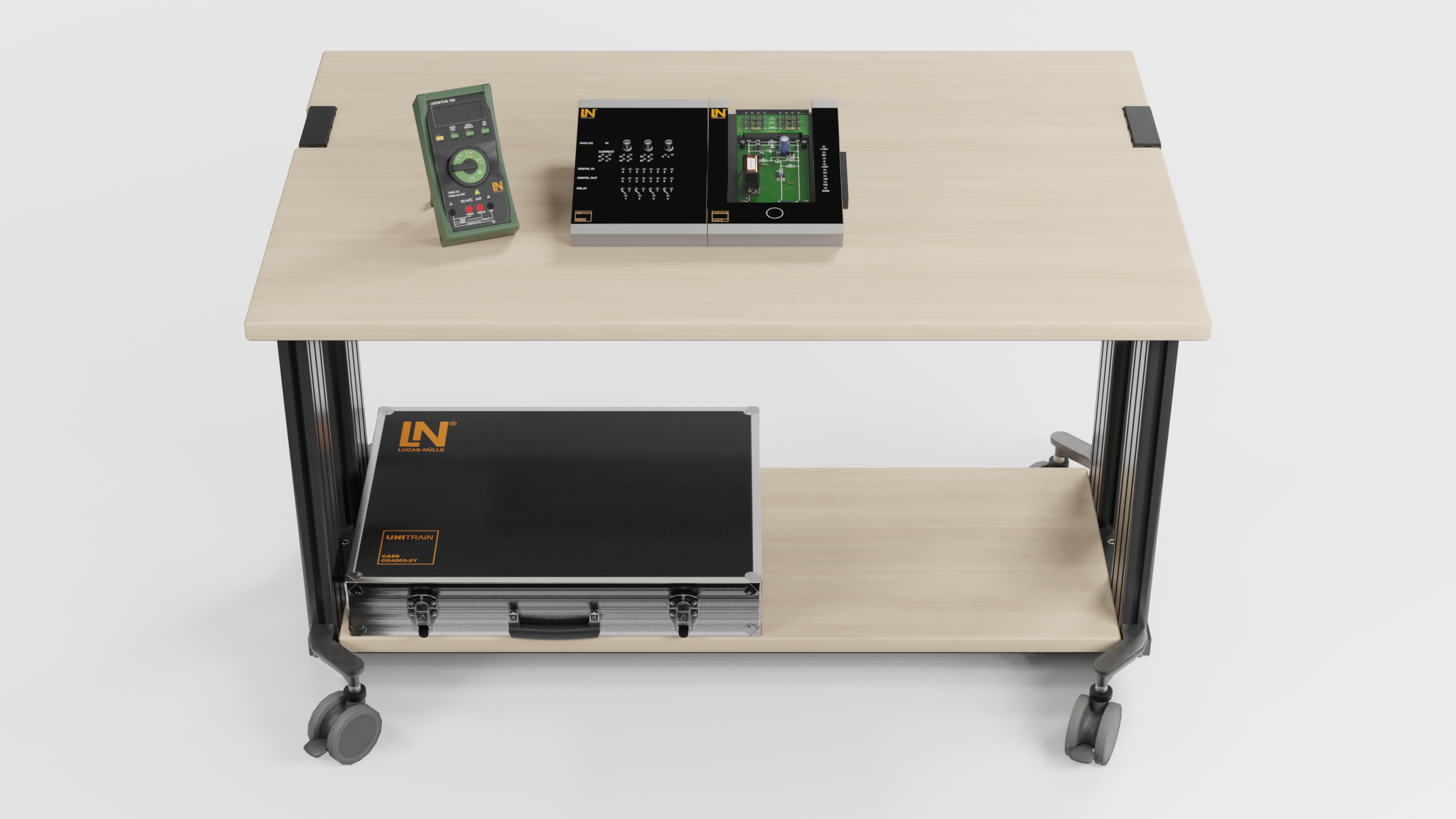
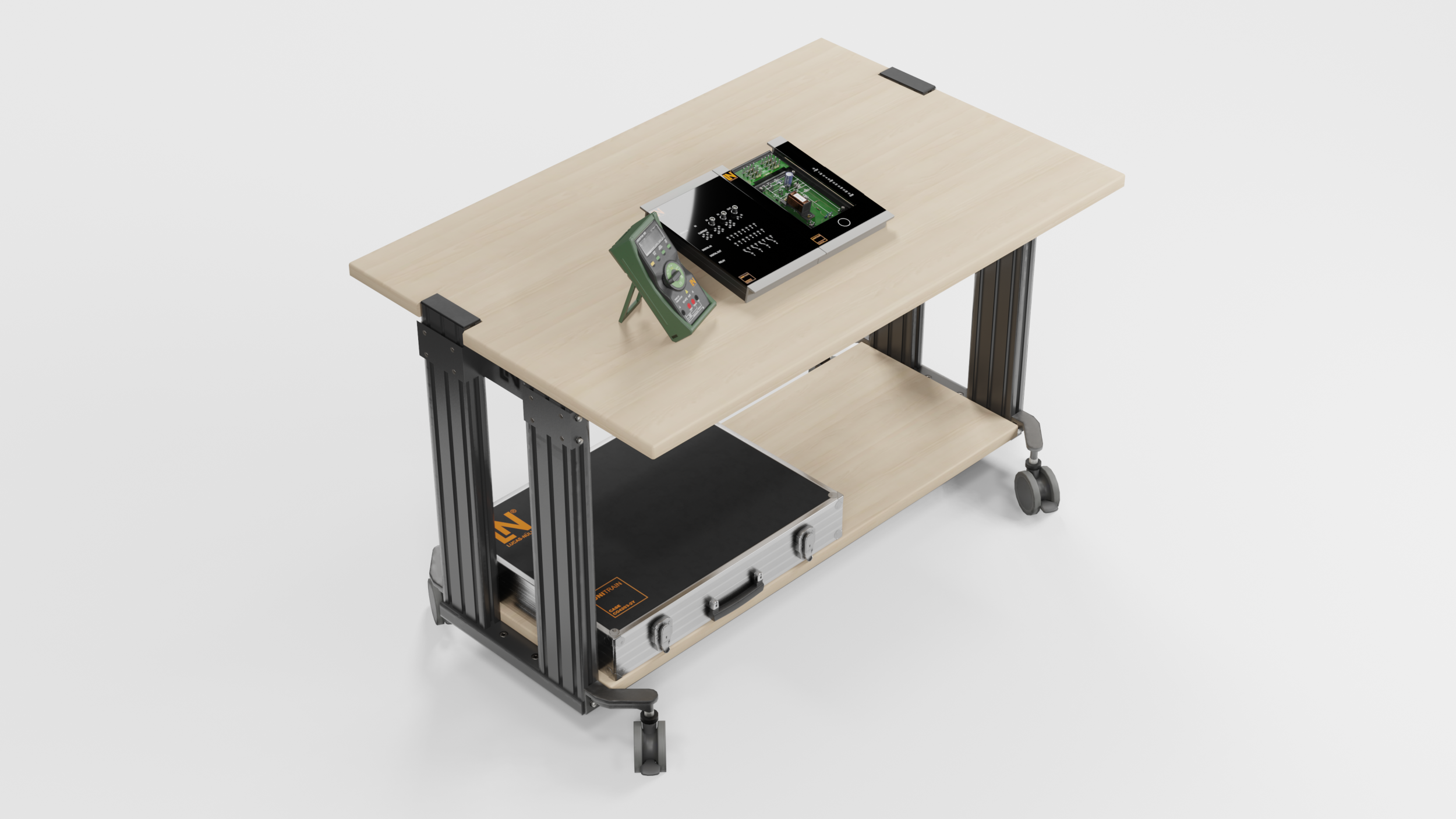
| CO4203-2Y | UniTrain storage case for one UniTrain systemoptional |
| Measurement Leads | |
| CO4203-2J | UniTrain measurement accessories, shunts and connection cables |
| CO4205-1L | Course: DC-DC Step-Down Converters in Hybrid and all Electric Vehicles |
| LM2330 | Multi13S digital multimeter |
Learning Content in Detail
Analyzing repair orders
Understanding operation and design
Measuring and evaluating voltages
Determining repair measures
Features & Applications
- Realistic repair order — Learners go through the diagnostic process from the customer complaint to the repair and develop their professional competence.
- Risk-free learning — The system works with safety extra-low voltage. Learners can concentrate safely on understanding physical relationships.
- Methodical troubleshooting — The software guides learners from the fault memory and understanding the circuit diagram through to targeted measurements on the component.
- Physical principles — By actively controlling frequency and pulse width, learners experience the effects on the output voltage.
- Virtual pulse generator — Learners simulate the control signals from the engine control unit and understand the relationship between control signal and function.
- Repair guide and spare parts — The course links technical diagnosis with the real process through correct part identification and repair specifications.
- Circuit diagram and hardware linked — Learners locate components from the circuit diagram on the real experiment card, which improves their ability to read circuit diagrams.
- LabSoft and virtual instruments — The learning environment provides a diagnostic tester, measuring instruments and a pulse generator digitally.

From Knowledge Comes Capability.
You guide the learning
Where theory and practice go hand in hand.
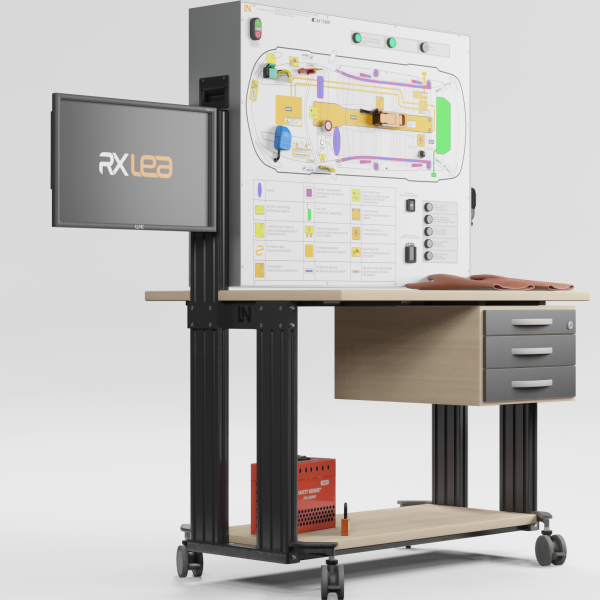
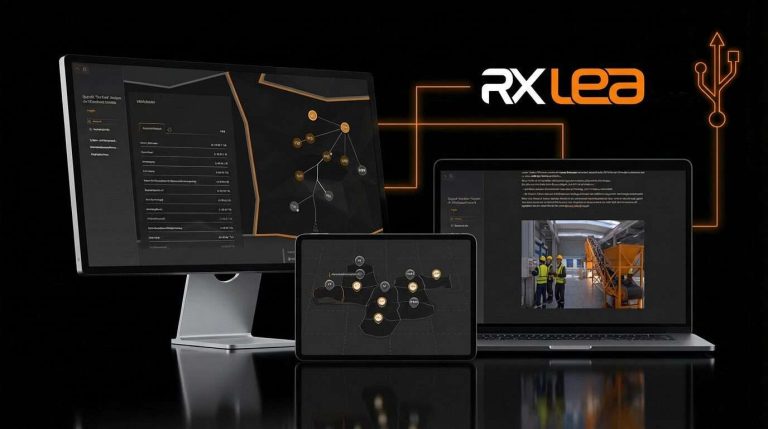
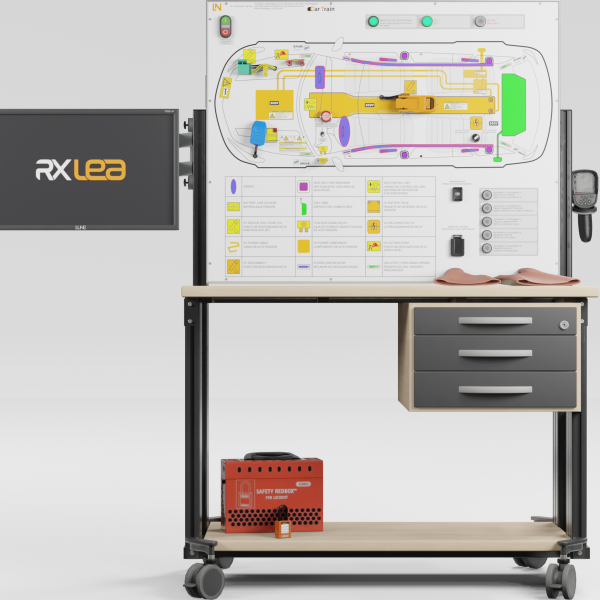
RXLea brings a new way of learning: project-based, hands-on and clearly structured. Learners solve real-world tasks, while instructors save time on preparation. Interactive modules, smart analytics and real hardware create a modern, efficient learning world.
Hands-on and interactive
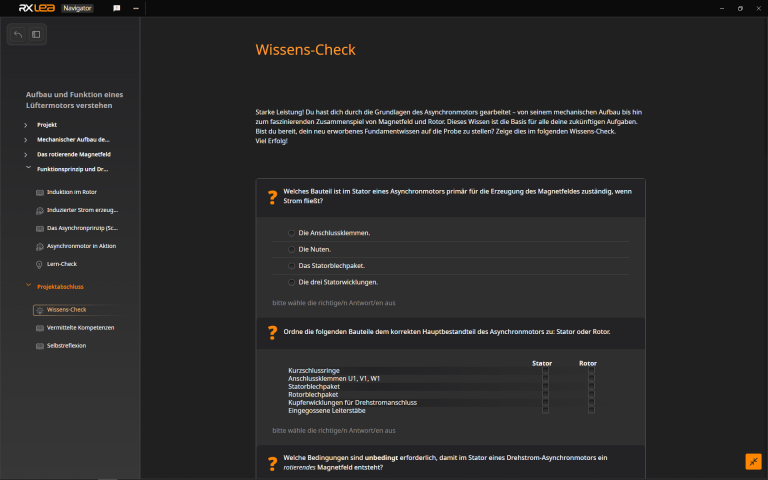
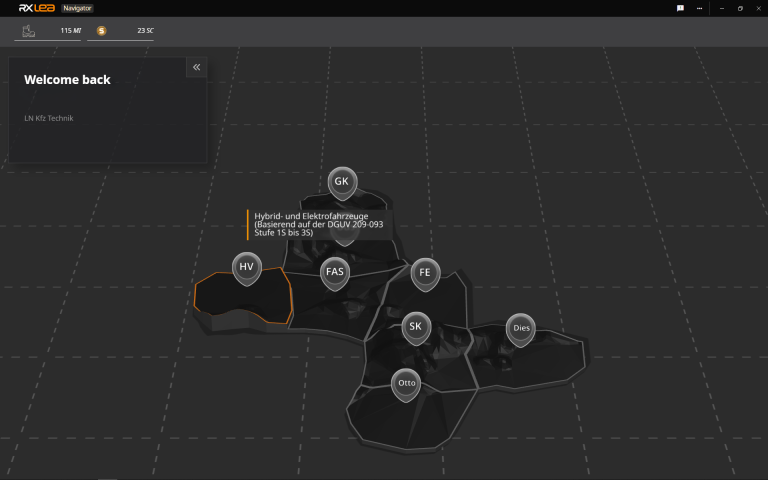
Animations, interactive tasks and realistic scenarios build a deep understanding. All content is organized into clear learning paths for focused, hands-on learning.
Digital support
3D assembly animations and digital instructions simplify complex procedures, reduce errors and help learners work more independently.
Visual support
Overview graphics, screenshots and sample animations make the learning world transparent. Photos from the learning packages are also available, including country-specific versions where needed.

Stay ahead in
technical training.
Get the latest training systems, product launches and educational insights, delivered directly to your inbox.