


Skip to content

Fundamentals of Automotive Electrics

RXLea
Digital projects for hands-on learningInteractive learning content, directly connected to the training system.

Fundamentals of Automotive Electrics

AEM21UT

A hands-on introduction to automotive electrical engineering and the diagnosis of vehicle electrical systems.

Learning Content
  • Applying Ohm’s law
  • Distinguishing circuit types
  • Reading circuit diagrams
  • Measuring voltage
KEY FEATURES
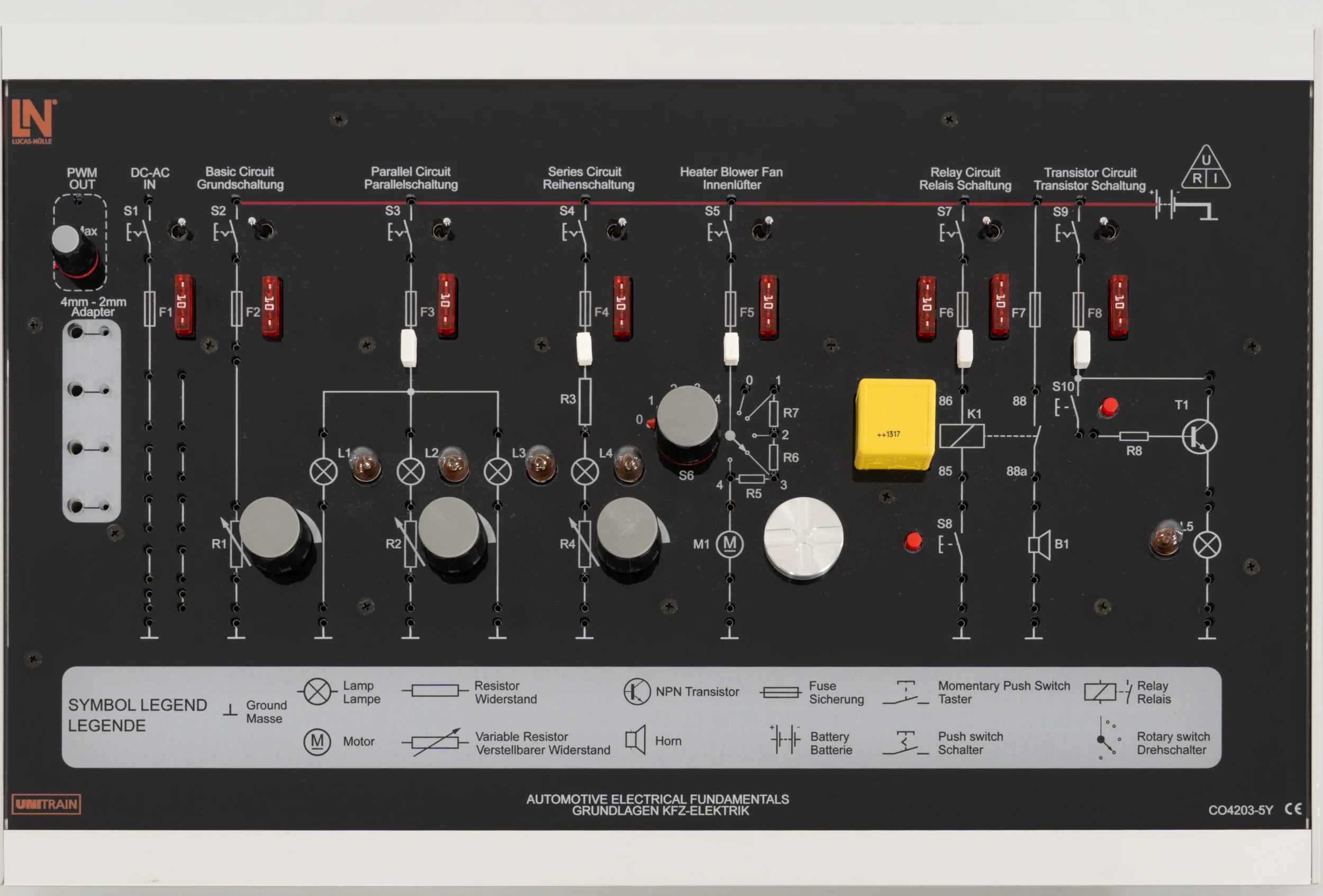
  • Integrated fault insertion
  • Physically plugging in leads
  • Rotary potentiometer knob
  • Transistor circuit with lamp
Speak with a Product Specialist +1 (757) 808-5696 · sales@lucas-nuelle.com

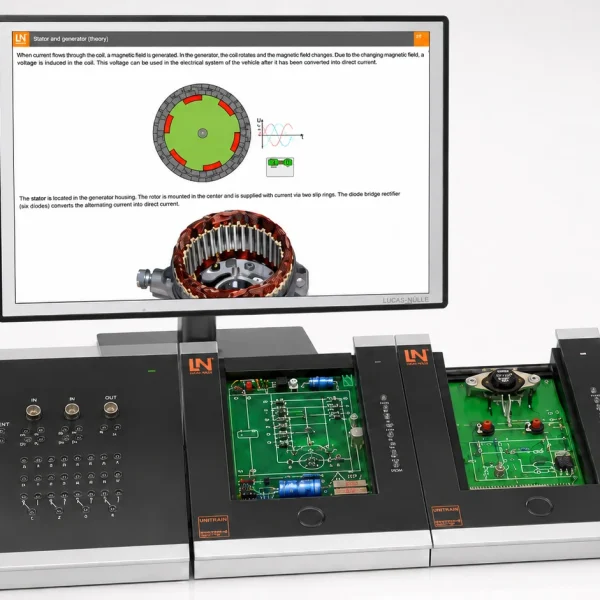
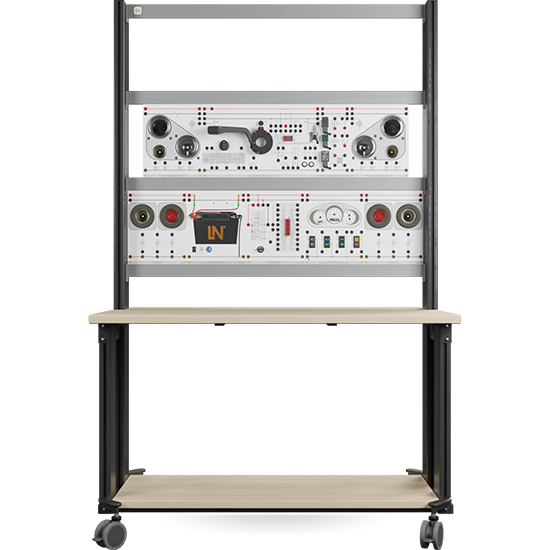
The increasing amount of electronics in modern vehicles demands an in-depth understanding of current, voltage and resistance. The system offers a hands-on introduction to automotive electrical engineering and to the use of typical service shop measuring instruments, directly on prefabricated vehicle circuits. By experimenting safely and independently on real components, learners acquire sound diagnostic and practical skills for everyday work in the shop.

CO4205-1GCourse Automotive 26: Fundamentals of automotive electrics (Europe/South Ameri
CO4203-2AUniTrain Interface mit virtuellen Instrumenten (Basis VI)
CO4203-2JUniTrain measurement accessories, shunts and connection cables
CO4203-2YUniTrain storage case for one UniTrain system
LM2330Multi13S digital multimeter
LM8205Test lamp
SO4203-2VUniTrain storage case for experiment board

Learning Content in Detail

Acquire sound diagnostic and practical skills through hands-on experiments on real automotive electrical components.

Applying Ohm’s law

Learners calculate the electrical resistance from the measured values of voltage and current.

Distinguishing circuit types

Learners measure the voltage distribution in a series circuit and compare it with a parallel circuit.

Reading circuit diagrams

Learners assign real components to the standardized circuit symbols and terminal designations in the vehicle wiring diagram.

Measuring voltage

Learners connect the voltmeter in parallel with the load and determine the exact voltage drop.

Measuring current

Learners insert the ammeter in series into the opened circuit and determine the current.

Checking resistance properties

Learners measure the cold resistance of an incandescent lamp and document the increase when it is hot.

Checking pulse-width modulation

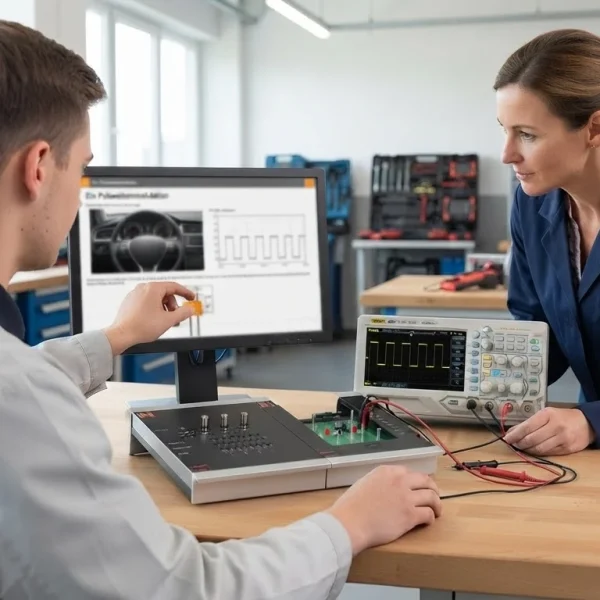
Learners vary the PWM controller and measure the change in pulse width on the oscilloscope.

Locating circuit faults

Learners check the circuit fusing and systematically diagnose a short circuit.

Features & Applications

Discover the wide range of applications for systematic troubleshooting and signal checking on real vehicle components.
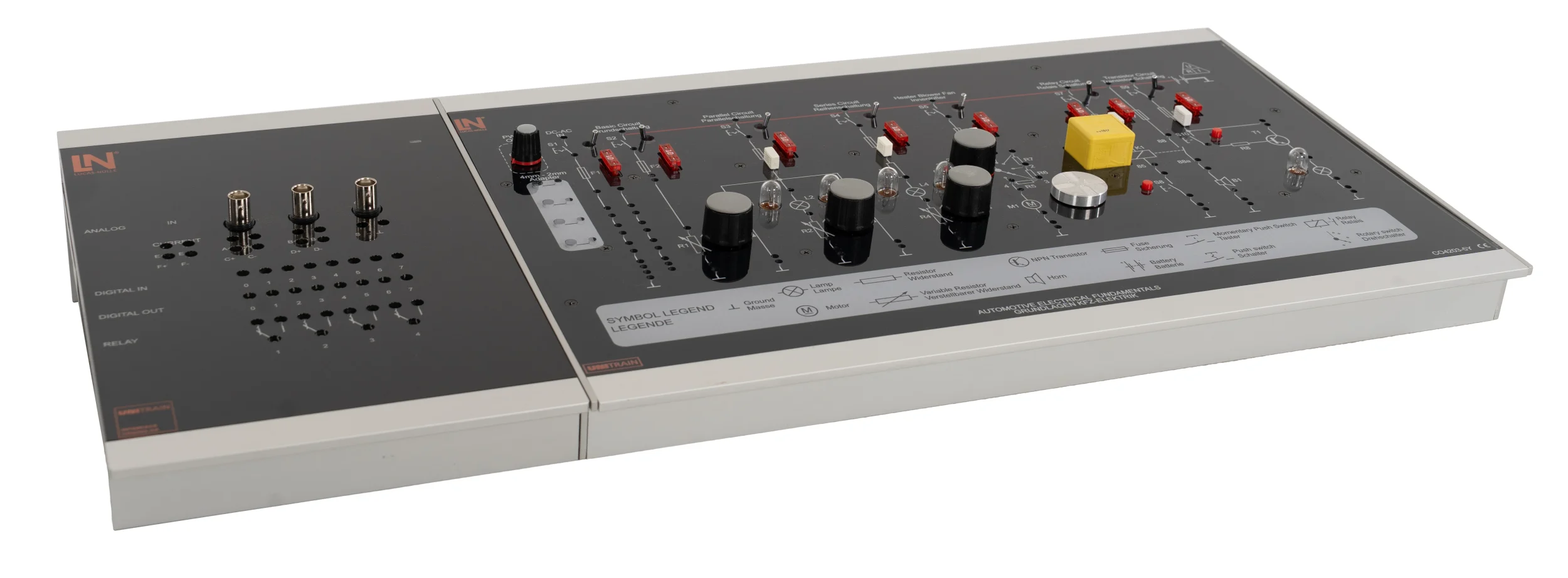
  • Integrated fault insertion — The system uses relays to activate 8 typical real-world faults. Learners locate open circuits or short circuits to ground directly on the wiring diagram.
  • Physically plugging in leads — The system uses plug-in connections as measuring gaps. Learners remove the connectors by hand to insert an ammeter for measuring current.
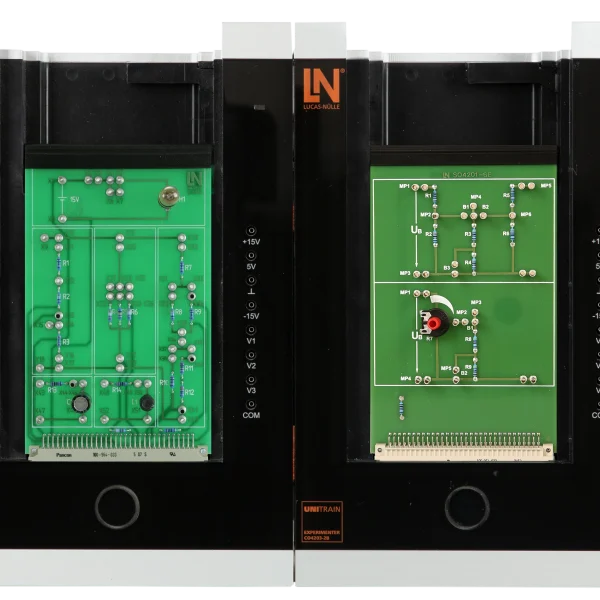
  • Rotary potentiometer knob — The card has a physical handwheel for changing the resistance. Learners turn the knob and watch an incandescent lamp dim in step.
  • Transistor circuit with lamp — The module replicates an electronic switch. A pushbutton drives the base, causing the lamp to light up as an indicator of the load current.
  • Electromechanical automotive relay — The component shows the coil former and contacts. Learners press the button, hear the click and see the load circuit close.
  • Heater blower circuit — The circuit controls a real DC motor. A segmented disk visually illustrates the change in speed at the different switch positions.
  • Open fuse holders — The board uses standardized fuses. Learners remove the fuse inserts to inspect the fusible wire visually.
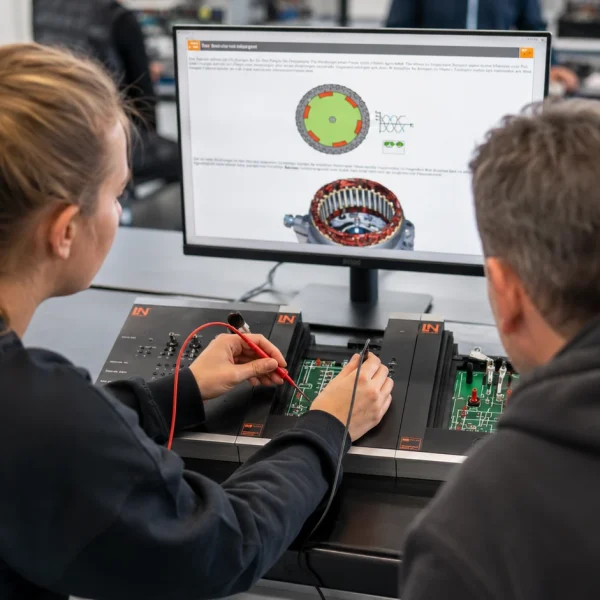
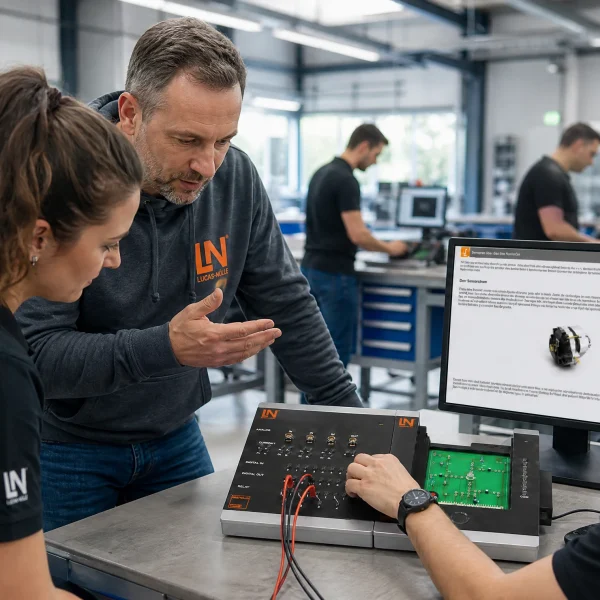
Learners working with RXLea on a tablet at a Lucas-Nuelle training system
RXLea

From Knowledge Comes Capability.

You guide the learning

Where theory and practice go hand in hand.

RXLea brings a new way of learning: project-based, hands-on and clearly structured. Learners solve real-world tasks, while instructors save time on preparation. Interactive modules, smart analytics and real hardware create a modern, efficient learning world.

Hands-on and interactive

Animations, interactive tasks and realistic scenarios build a deep understanding. All content is organized into clear learning paths for focused, hands-on learning.

Digital support

3D assembly animations and digital instructions simplify complex procedures, reduce errors and help learners work more independently.

Visual support

Overview graphics, screenshots and sample animations make the learning world transparent. Photos from the learning packages are also available, including country-specific versions where needed.


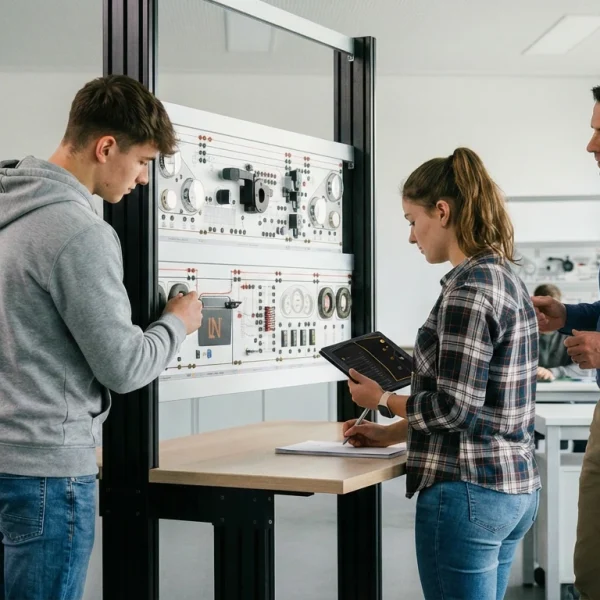
Learners using a tablet at an energy training system
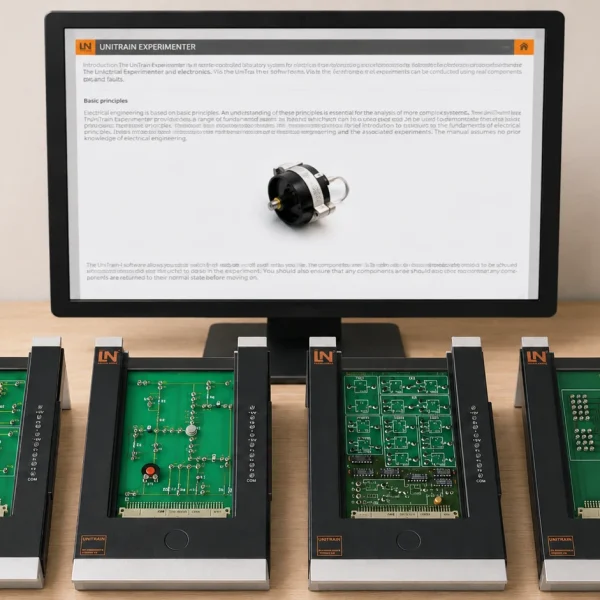
RXLea on desktop, laptop and tablet
RXLea Path Creator for building learning journeys
RXLea Navigator showing the learning world
Learn more about RXLea
Newsletter

Stay ahead in
technical training.

Get the latest training systems, product launches and educational insights, delivered directly to your inbox.

Your email address

By subscribing, you agree to our Privacy Policy. You can unsubscribe at any time.

 Please select at least one category before subscribing.
I'm interested in - select all that apply