


Skip to content

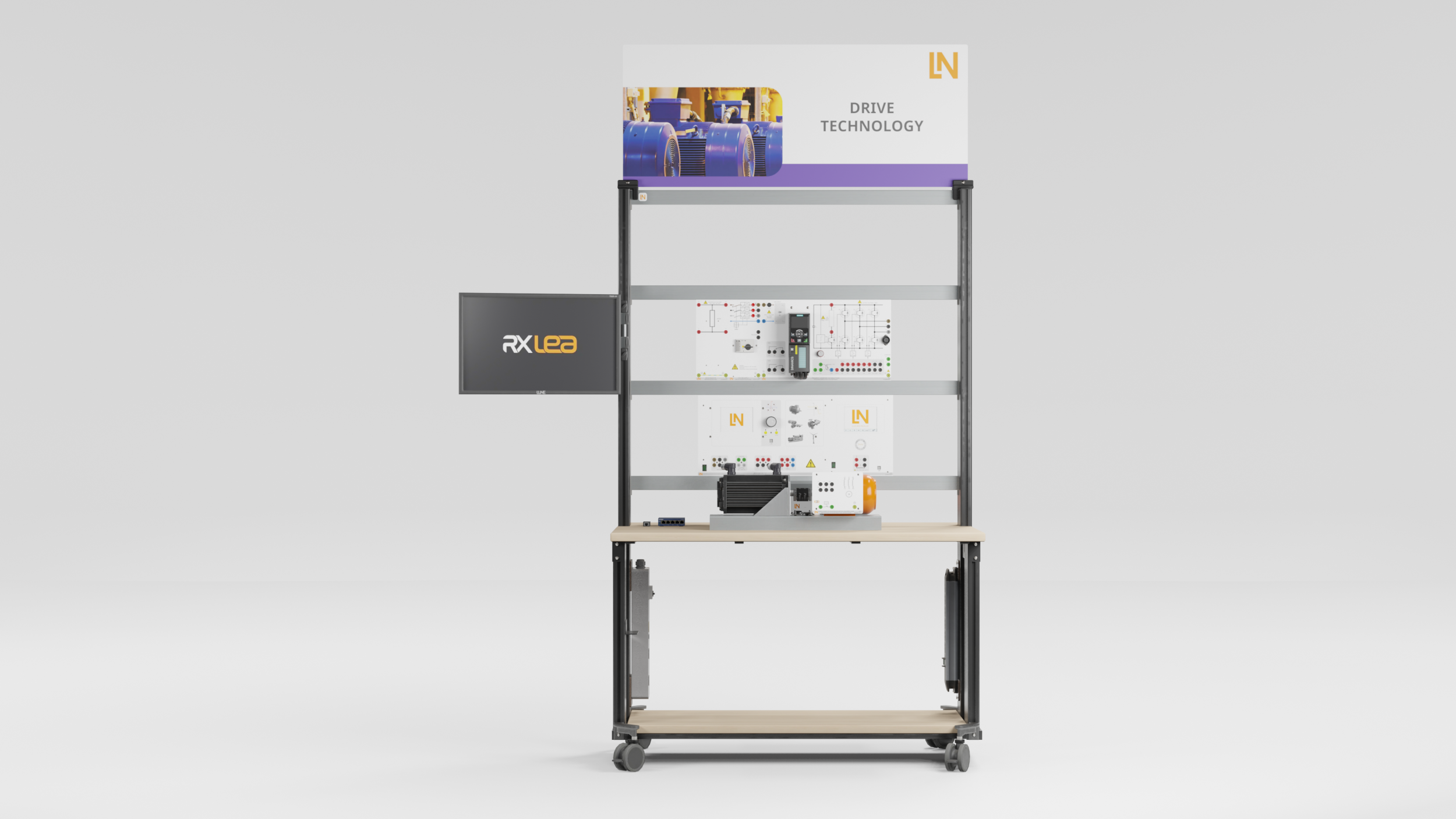
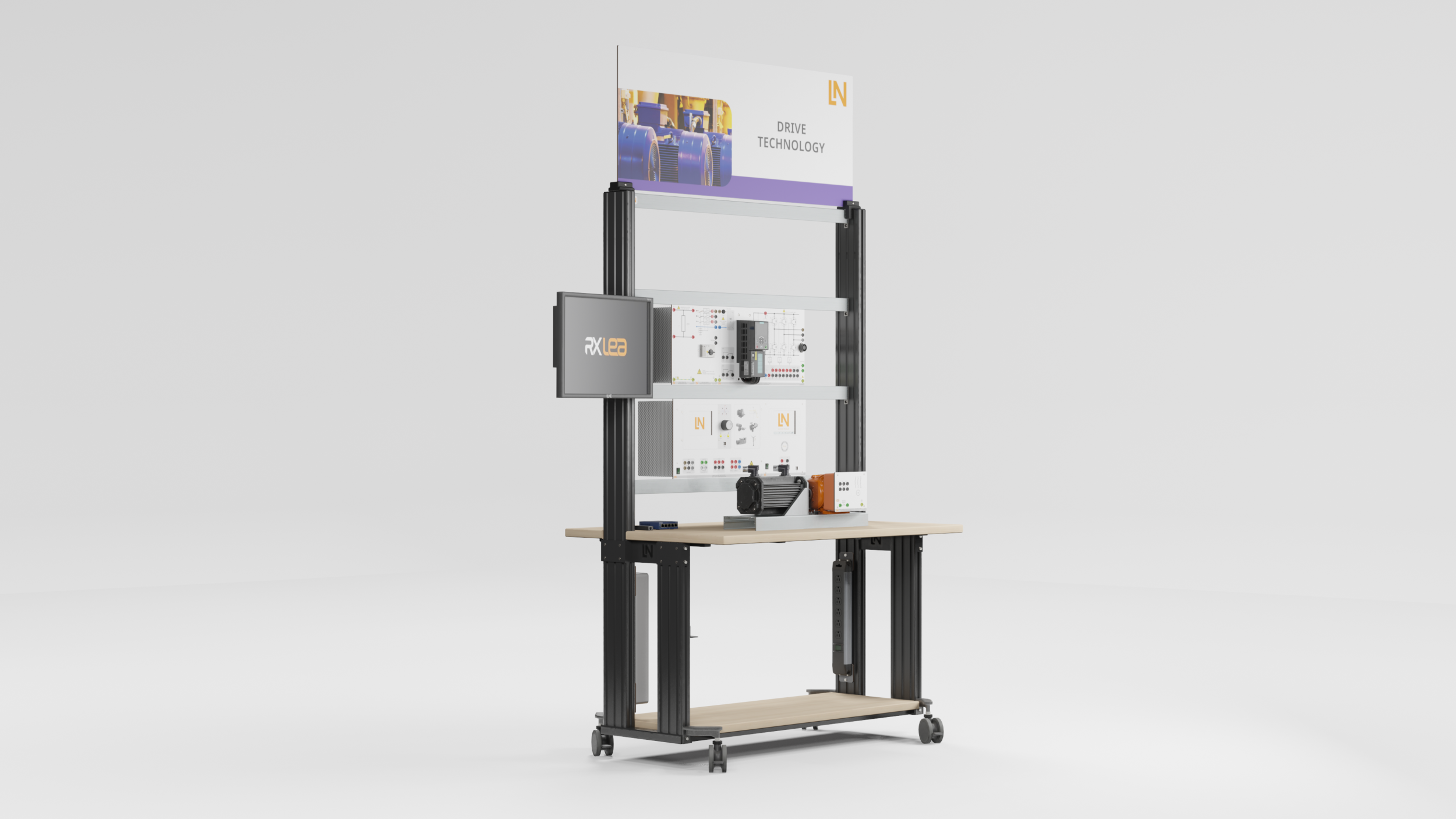
Frequency Converter Drives 300W Siemens G120 (Single-Phase Feed-In)

RXLea
Digital projects for hands-on learningInteractive learning content, directly connected to the training system.

Frequency Converter Drives 300W Siemens G120 (Single-Phase Feed-In)

EDT25PT-7-300W

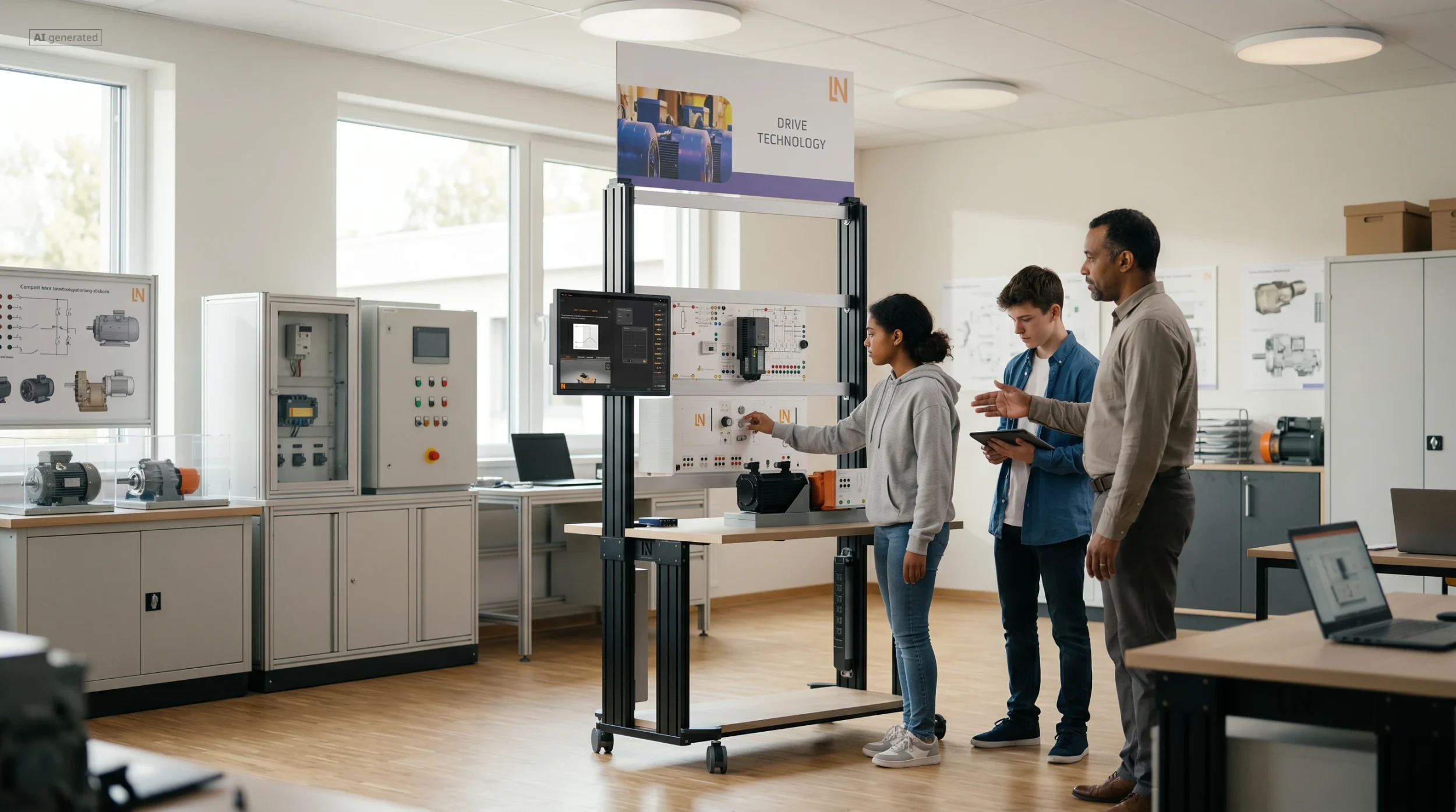
Practical training equipment for commissioning electrical drives. Train motor control with the Siemens G120 frequency converter under realistic conditions.

Learning Content
  • Configuring the drive using software
  • Wiring industrial components safely
  • Characterizing the drive
  • Eliminating process weaknesses under load
KEY FEATURES
  • Complete industrial drive system
  • Dynamic load simulation and four-quadrant analysis
  • Real commissioning with STARTDRIVE
  • Project task: belt conveyor system
Speak with a Product Specialist +1 (757) 808-5696 · sales@lucas-nuelle.com

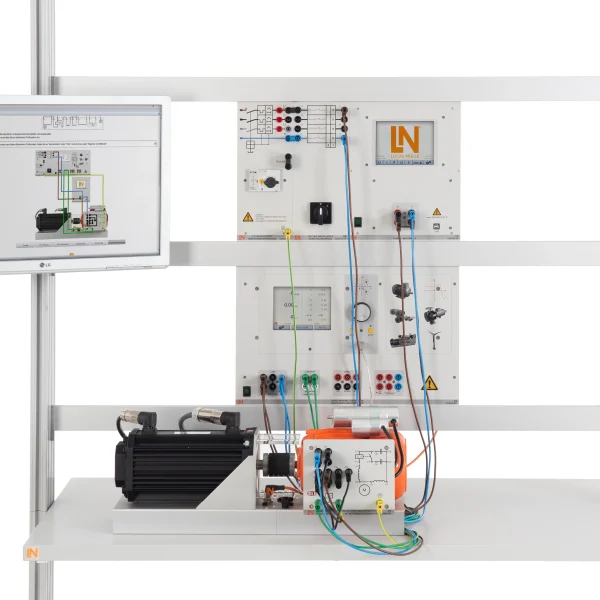
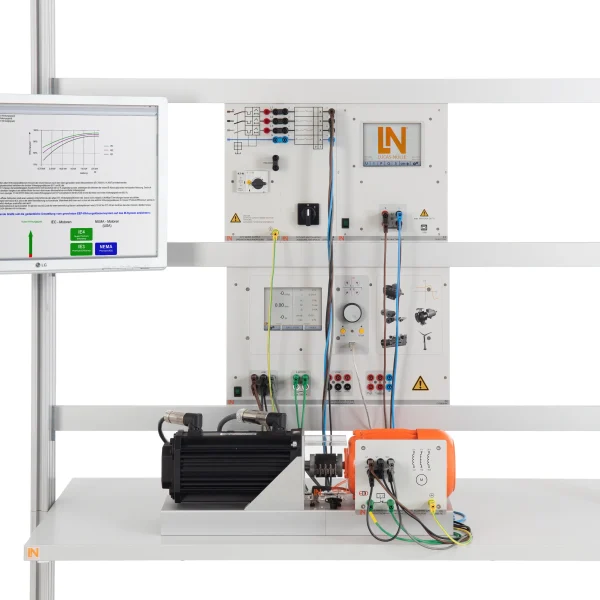
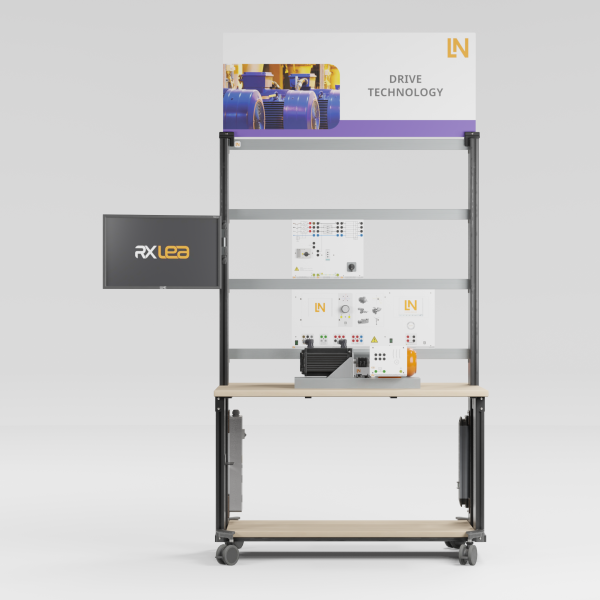
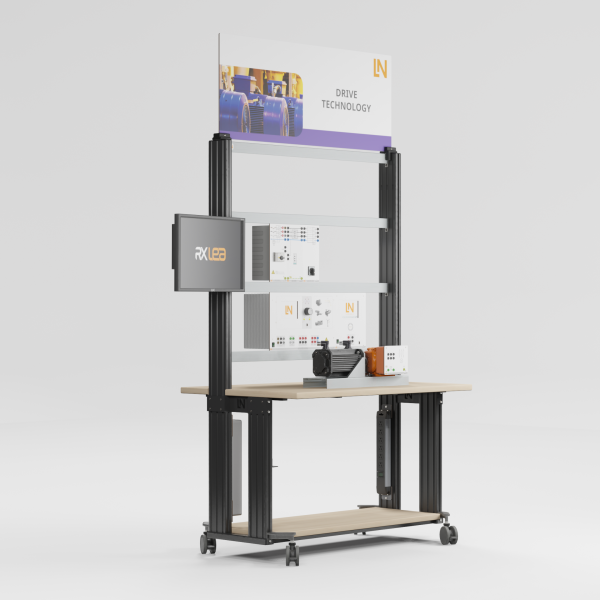
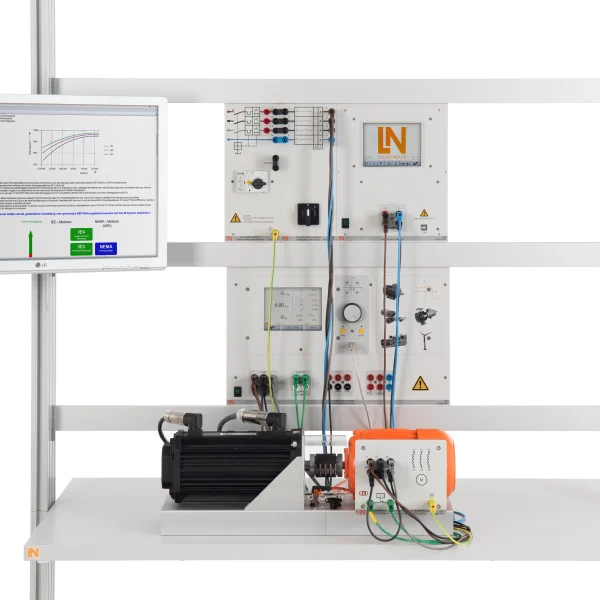
Variable frequency drives make the robust and widely used standard three-phase motor speed-variable, which makes them the foundation of modern process automation. Precise control of current and voltage saves energy and extends the service life of the motor and the mechanical components. This system brings the whole task into the lab: a Siemens SINAMICS G120, an IE2 induction motor, a braking resistor and the servo machine test system work together as a real industrial drive chain. Learners wire the setup using 4 mm safety jacks, carry out initial commissioning with STARTDRIVE, record speed-torque characteristics and, using a belt conveyor as an example, optimize the V/f characteristic, slip compensation and vector control.

CO3636-5NSinamics G120 frequency converter, 0.75 kW, 200-240V single-phase feed-in, PROFINET
CO3636-5VBrake resistor 0.2kW for frequency converters
SO2805-1T7Interactive Lab Assistant: Industrieller Frequenzumrichter einphasig 0,3 kW
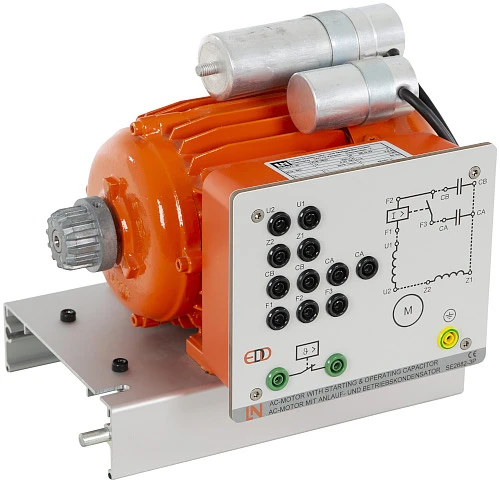
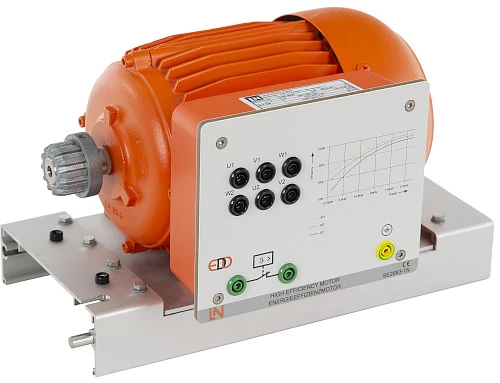
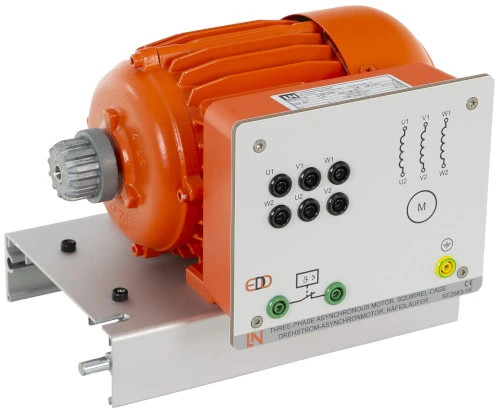
SE2683-1HThree-phase asynchronous motor, 0.3 kW n=1400 (230V/400V)
CO3212-5V7Three-phase power supply with motor protection switch
CO5127-2APower-Multimeter
CO3636-6X7Dynamic servo machine test stand for 300W machines incl. control software ActiveServo 2.0
SE2662-2ARubber coupling sleeve, 0.3kW
SE2662-7CCoupling guard with LED lighting for 300W machines
ST8010-4GKeyboard adapter for flat screen monitor holders
ST8008-8N7Protected power distribution for workstations
ST8010-4J8Multiple power outlet strip, 6 outlets, US-standard
ST8000-5CDisplay for Drive Technology equipment
SO5148-1LSet of safety measurement cables, 4mm (31 leads)
SO5126-3RSafety connecting plug 4mm with tap (2x), black, 1000V/32A CAT II
SO5126-3VSafety connecting plug 4mm with tap (2x), blue, 1000V/32A CAT II
SO5126-3WSafety connecting plug 4mm with tap (2x), green/yellow, 1000V/32A CAT II

Learning Content in Detail

Learners acquire the competence to wire an electric drive correctly, commission it, characterize it by measurement and optimize it for the application.

Configuring the drive using software

Learners use STARTDRIVE to carry out guided initial commissioning, check the motor data and set the operating parameters.

Wiring industrial components safely

Learners correctly wire the VFD, motor and brake using the touch-proof 4 mm connectors.

Characterizing the drive

Learners record speed-torque characteristics with the servo machine test system and ActiveServo and interpret them.

Eliminating process weaknesses under load

Learners recognize problems such as a speed drop under load and eliminate them using slip compensation or vector control.

Verifying optimizations by measurement

After optimization, learners measure again and compare the before and after characteristics in ActiveServo.

Translating requirements into drive parameters

Learners translate a task such as the conveyor belt application into speed, torque and ramp times.

Selecting the control method

Learners assess when V/f control is sufficient and when the application calls for vector control.

Features & Applications

The system covers the fields of application of the VFD: drives in industry, in HVAC and in mining.
  • Complete industrial drive system — All components are real industrial parts: a Siemens SINAMICS G120 with PROFINET interface, a three-phase induction motor of efficiency class IE2 and a braking resistor. The motor’s electronic data plate (EDD) exchanges the machine data digitally with the test system.
  • Dynamic load simulation and four-quadrant analysis — The servo machine test system works as a highly dynamic brake and emulates pumps, fans, hoists or winders. This makes it possible to investigate the drive’s behavior under static and dynamic loads in four-quadrant operation, i.e. when motoring and braking in both directions of rotation.
  • Real commissioning with STARTDRIVE — Learners use the original industrial software for offline and online configuration. They carry out motor identification and transfer the data sets to the VFD.
  • Project task: belt conveyor system — Learners carry out commissioning just as it is done in industry: they optimize the V/f characteristic for better starting behavior, compensate for stator resistance and load-dependent slip, and operate the drive with vector control.
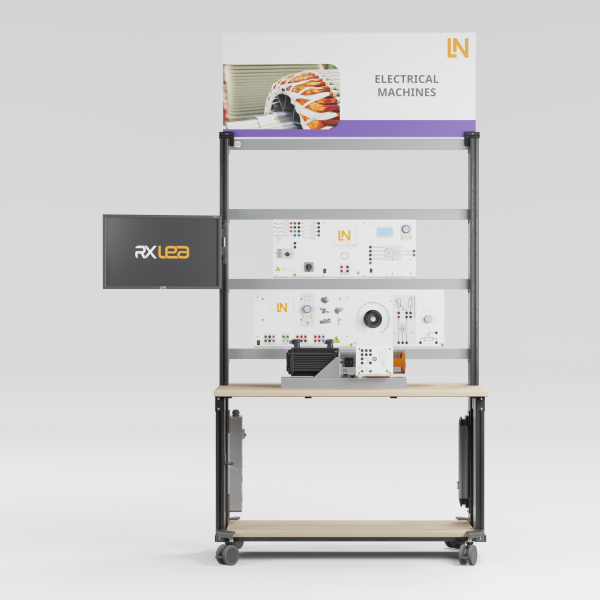
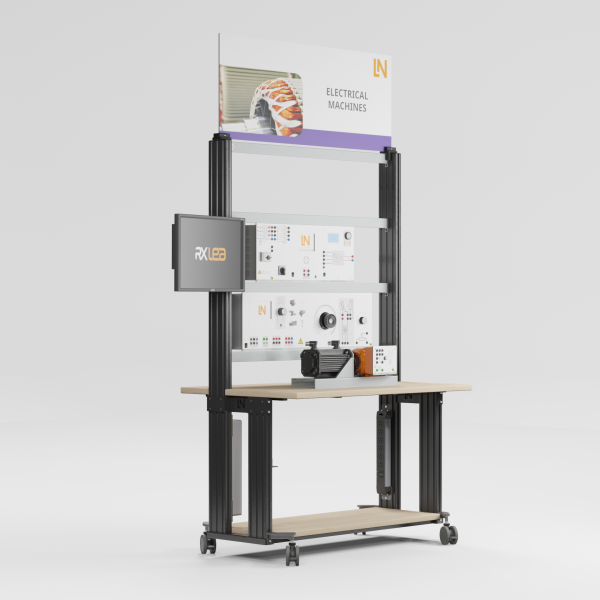
  • Modular and safe lab system — All components are didactically designed A4-format experiment panels for a mobile experiment cart. 4 mm safety jacks, shaft covers and photorealistic printing make the setup tool-free, clearly laid out and safe.
  • Didactically prepared Siemens SINAMICS G120 — The Siemens SINAMICS G120 is a series-production device widely used in industry. All the industry-standard terminal strips are brought out to large, touch-proof 4 mm safety jacks, so that learners can wire and measure in the lab quickly, without errors and without danger.
  • Three ways of operation and parameterization — The inverter can be operated manually via potentiometer and LCD operator panel, PC-based via USB with STARTDRIVE, and automatically via PROFINET. The learning path thus ranges from simple manual intervention to integration into higher-level control and bus systems.
  • Automated recording of characteristics — The system records the speed-torque characteristic of the connected motor fully automatically: it runs through a defined speed or torque range and captures all the measured values. This makes starting torque and breakdown torque visible and measurable as a graph.
  • Universal driven-machine simulation — The servo machine test system emulates various driven machines, including pumps, fans, hoists and winders. Learners can use it to load the drive reproducibly and compare its behavior under different types of load.
  • Shaft cover with safety interlock — The Makrolon cover protects against rotating parts. The status LED only lights up green when there are no faults, and only then does the system enable the power supply.
  • Tool-free coupling and temperature protection — Learners couple the motor and brake backlash-free using a rubber sleeve, without any tools. A temperature contact protects the machines against thermal overload.
  • STARTDRIVE: engineering tool for commissioning — The original Siemens software for commissioning, parameterization and diagnostics of the SINAMICS family. Learners carry out guided initial commissioning, start motor identification, set fixed setpoints, ramp times and control functions, and save the configuration in the inverter.
  • ActiveServo: analysis and visualization tool — Control and evaluation software for the servo machine test system. Learners record motor characteristics, simulate driven machines such as a pump, fan or hoist, record dynamic processes in a time diagram and monitor all measured variables live.
Learners working with RXLea on a tablet at a Lucas-Nuelle training system
RXLea

From Knowledge Comes Capability.

You guide the learning

Where theory and practice go hand in hand.

RXLea brings a new way of learning: project-based, hands-on and clearly structured. Learners solve real-world tasks, while instructors save time on preparation. Interactive modules, smart analytics and real hardware create a modern, efficient learning world.

Hands-on and interactive

Animations, interactive tasks and realistic scenarios build a deep understanding. All content is organized into clear learning paths for focused, hands-on learning.

Digital support

3D assembly animations and digital instructions simplify complex procedures, reduce errors and help learners work more independently.

Visual support

Overview graphics, screenshots and sample animations make the learning world transparent. Photos from the learning packages are also available, including country-specific versions where needed.


Learners using a tablet at an energy training system
RXLea on desktop, laptop and tablet
RXLea Path Creator for building learning journeys
RXLea Navigator showing the learning world
Learn more about RXLea
Newsletter

Stay ahead in
technical training.

Get the latest training systems, product launches and educational insights, delivered directly to your inbox.

Your email address

By subscribing, you agree to our Privacy Policy. You can unsubscribe at any time.

 Please select at least one category before subscribing.
I'm interested in - select all that apply