

Skip to content

Compact Station

RXLea
Digital projects for hands-on learningInteractive learning content, directly connected to the training system.

Compact Station

CIP01XX

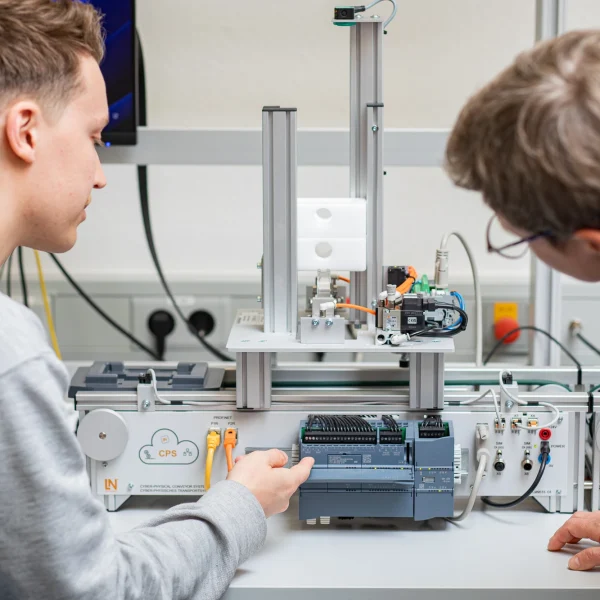
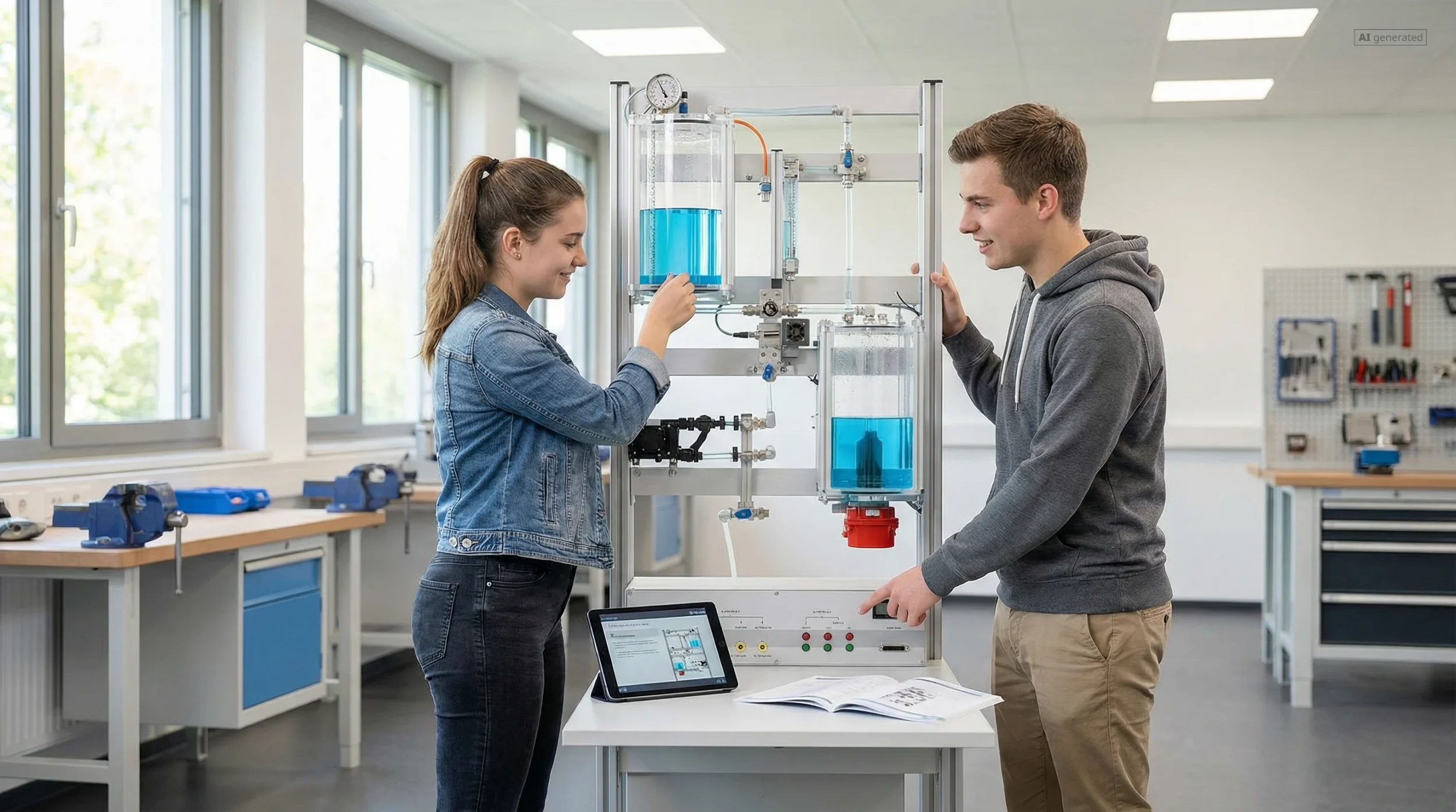
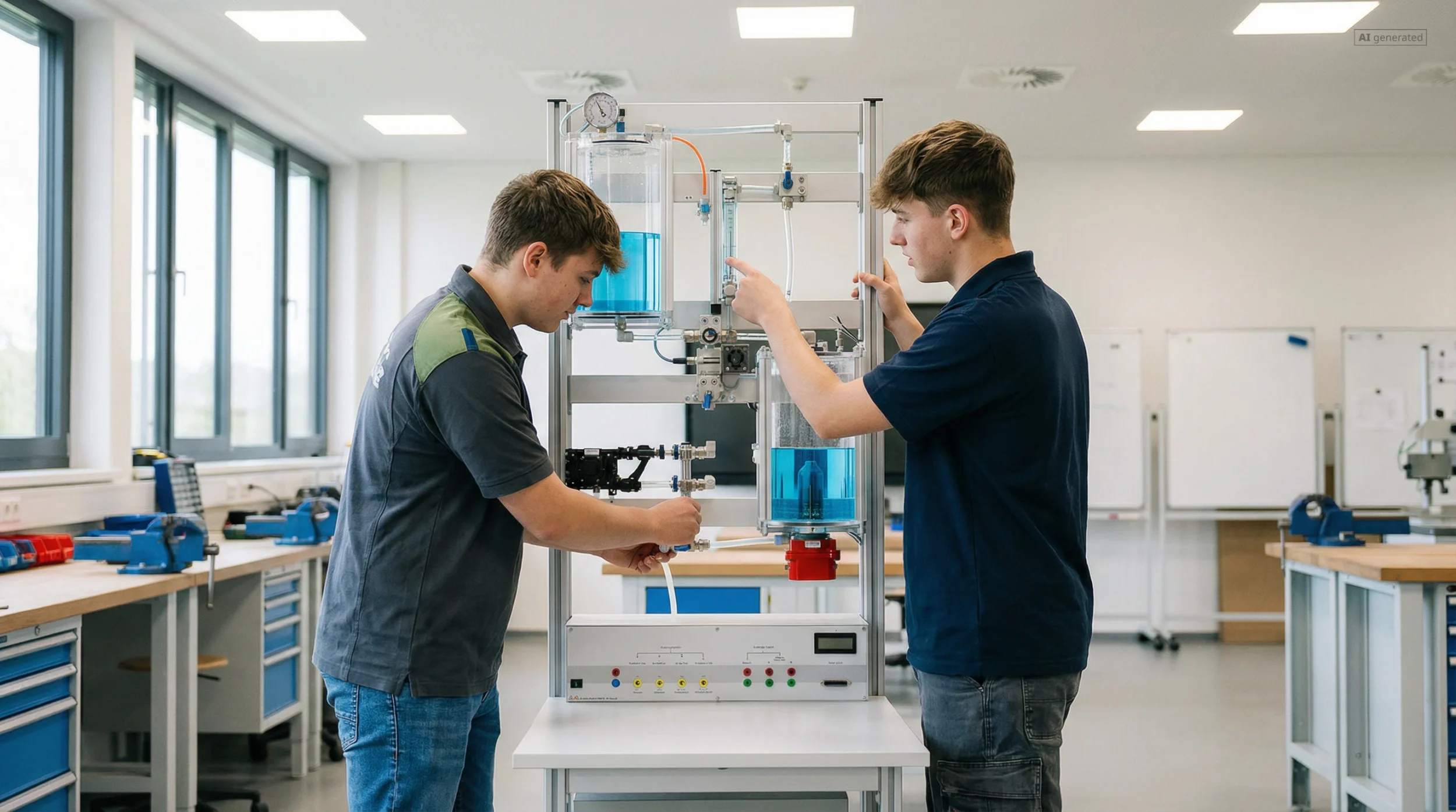
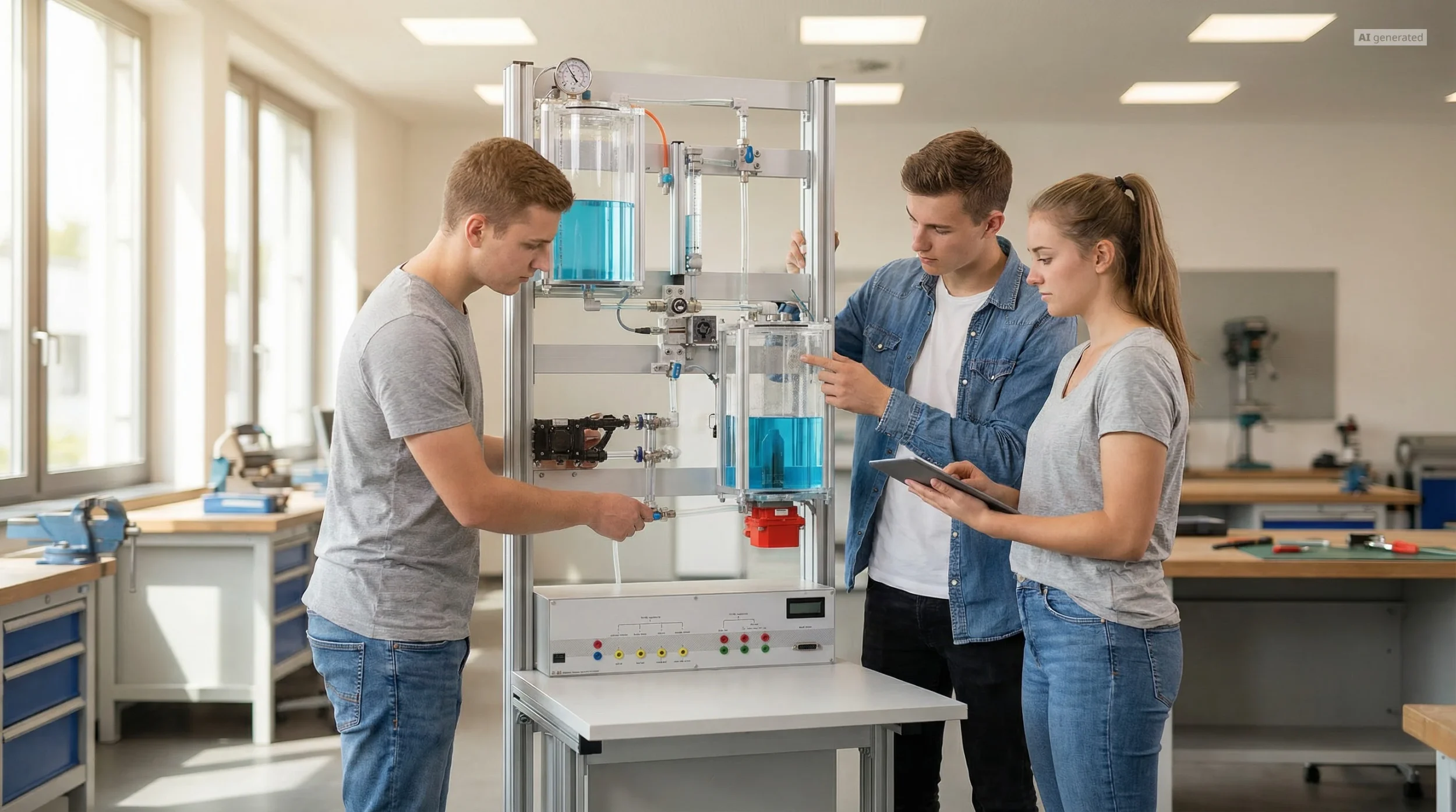
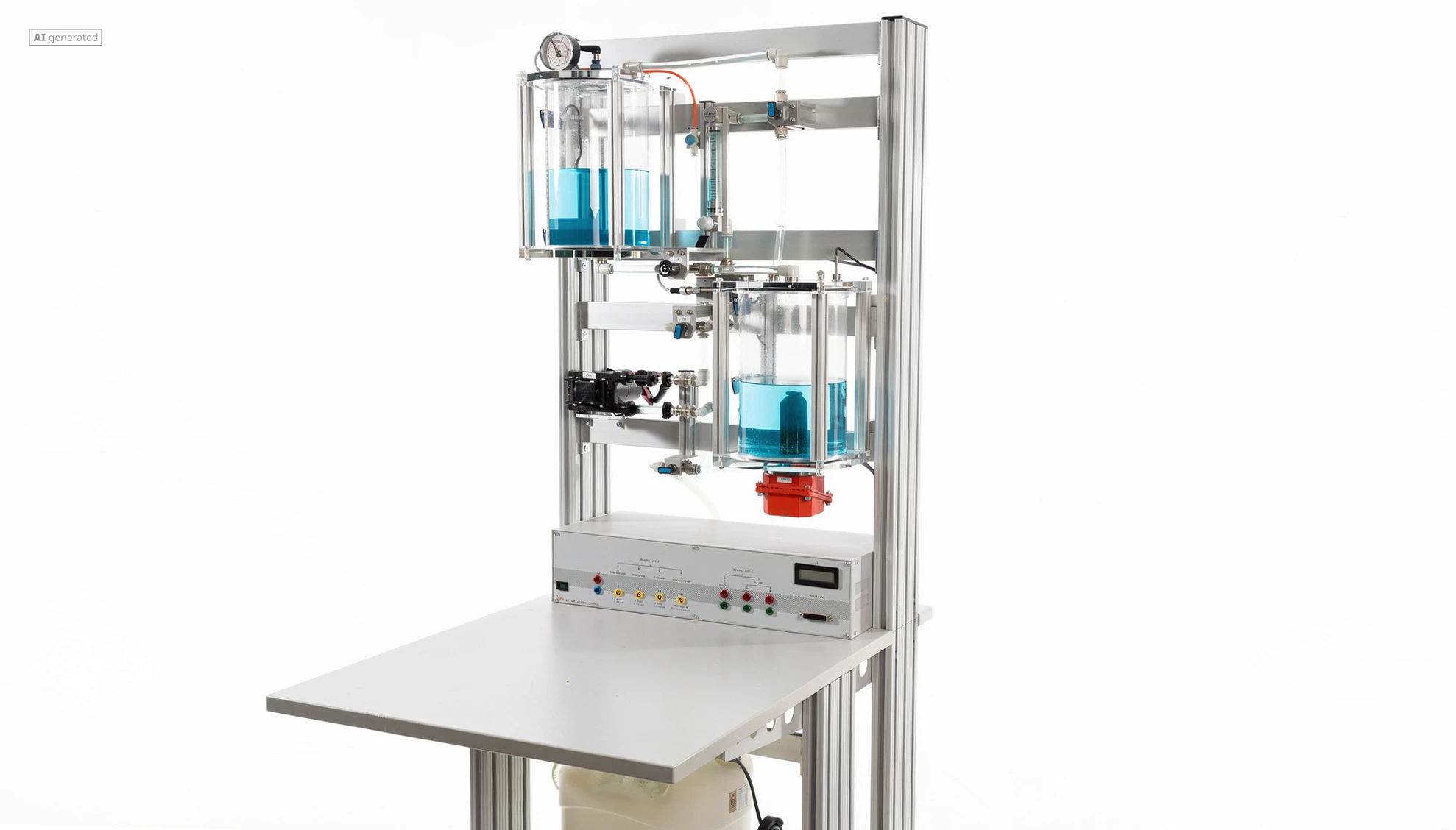
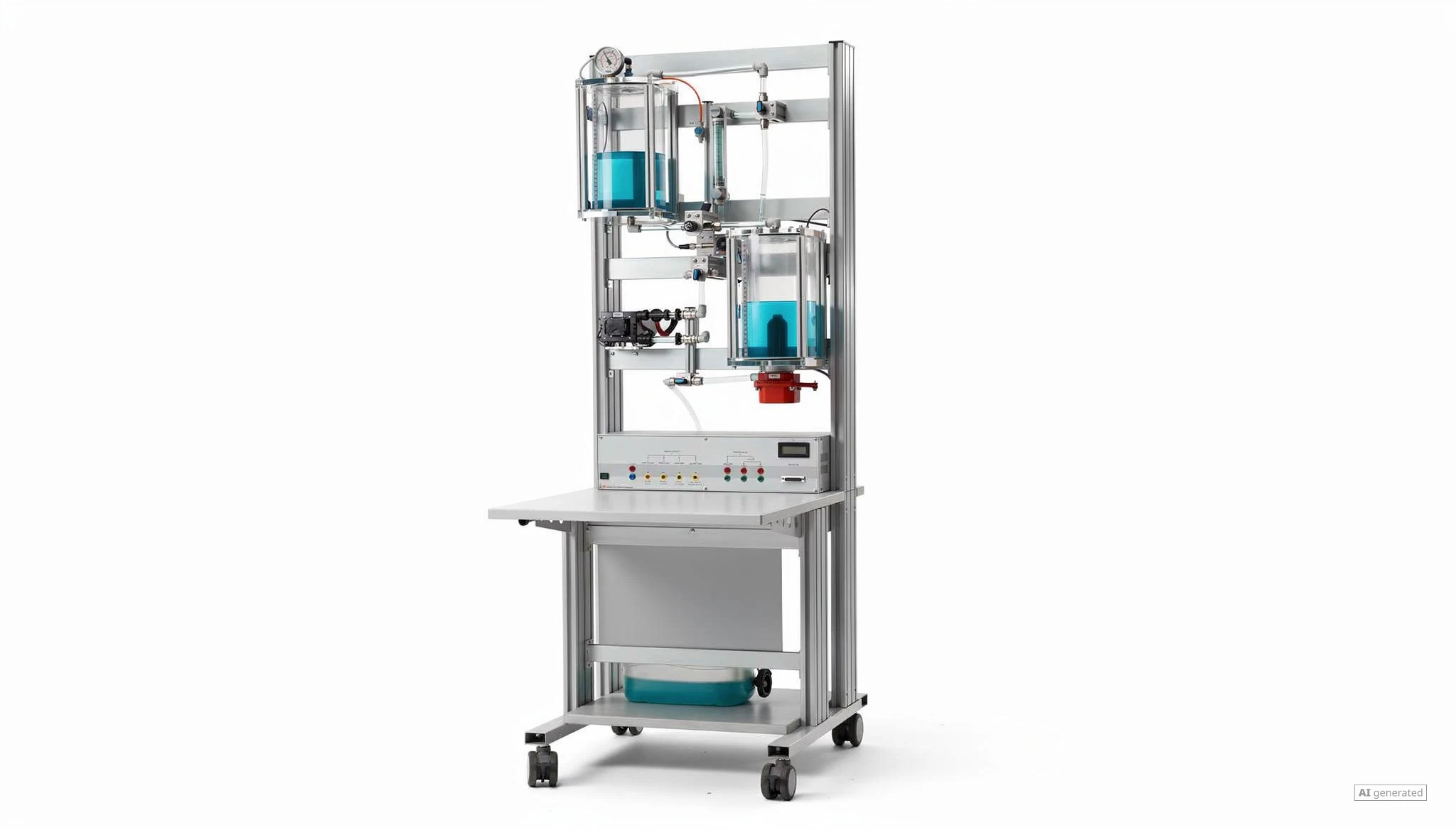
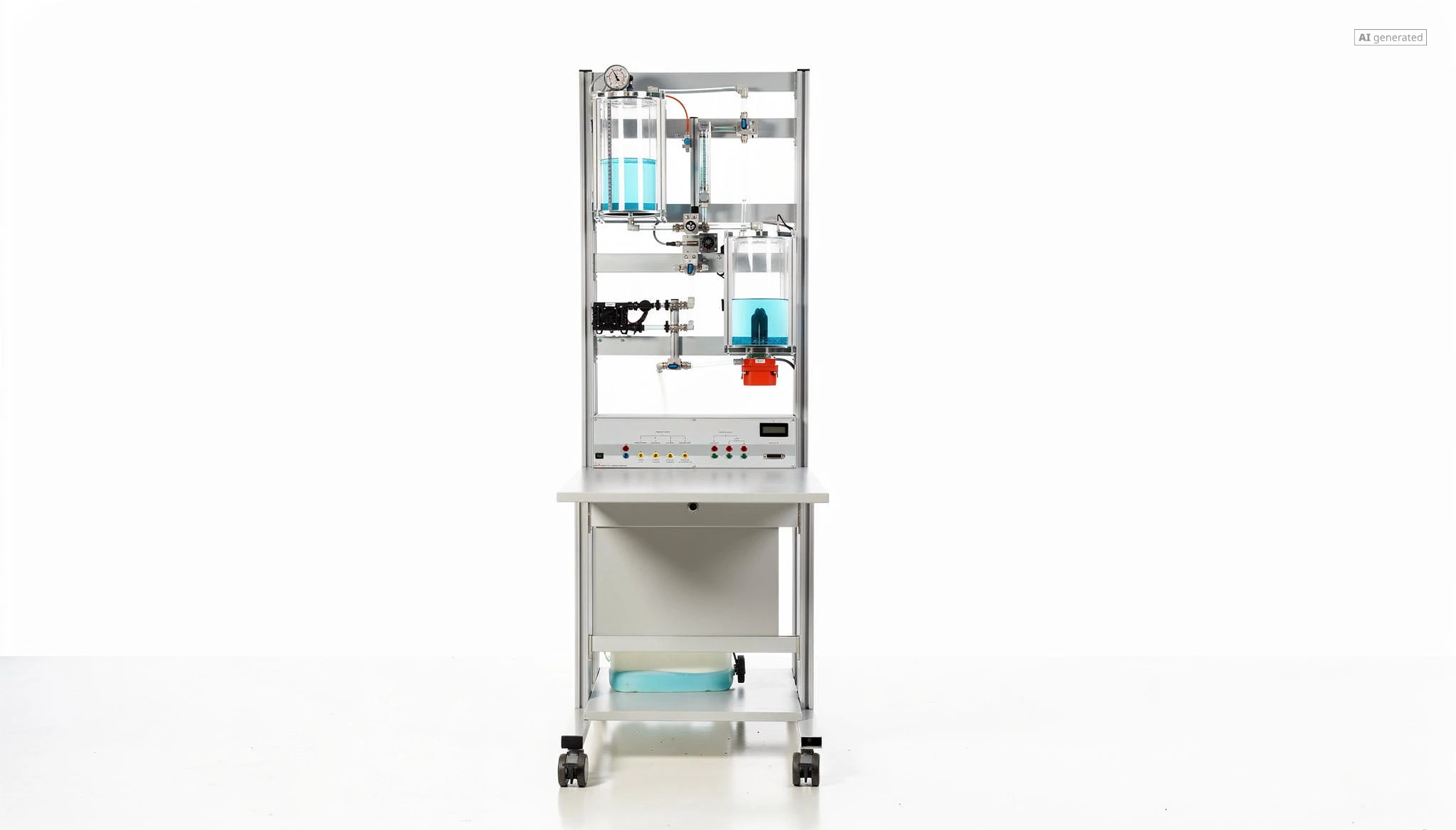
The compact station realistically replicates four fundamental controlled systems in process engineering. Learn the entire workflow – from analysis to controller optimization.

Learning Content
  • Engineering closed-loop control on a PLC
  • Carrying out experimental controller optimization
  • Programming control algorithms
  • Applying continuous and discontinuous controllers
KEY FEATURES
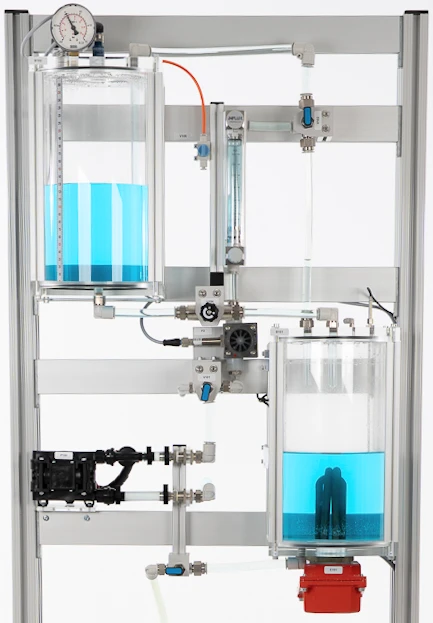
  • Four controlled systems in one compact unit
  • Practical industrial components
  • Teaching experimental controller optimization
  • Flexible plug-in piping system
Speak with a Product Specialist +1 (757) 808-5696 · sales@lucas-nuelle.com

Controlling physical variables such as pressure, temperature, level and flow is a core task throughout the process industry. With the compact IPA station from Lucas-Nülle, you offer your learners an ideal platform for acquiring these essential skills in a practical way. This compact station realistically replicates the four fundamental controlled systems of process engineering. Your learners measure and control these systems using industrial sensors and actuators – exactly as they will later in their professional work. The course enables learners to work through the entire control engineering workflow: from analyzing a controlled system and determining controller parameters experimentally to commissioning and optimizing P, PI and PID controllers. This takes the load off you as an instructor, as ready-made learning content and a robust system architecture can be used immediately. The short setup time and simple operation make preparation child’s play. This creates an effective and motivating learning environment that prepares learners directly for the requirements of industry.

LM9550IPA compact station
ST7200-3RExperiment trolley 600x760x900mm WxHxD
SO6200-2EQuickChart, IPA 1 Compact station
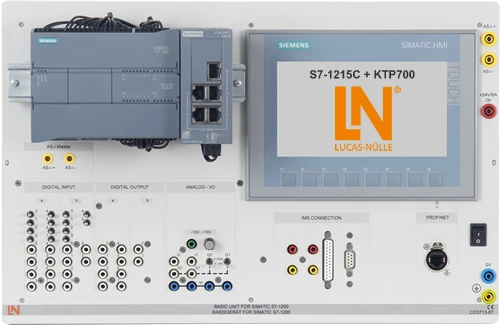
CO3713-8TSIMATIC S7-1215C + KTP700
SO6200-5JQuickChart, Siemens PLC S7 board, safety instructions (GB)
ST8003-1YSideways training panel frame extension for A3 panels
ST8010-8MProtective cover for 600mm wide IMS experiment trolleys complete with experiments
SO6001-7GIPA Virtual Compact Station (School license)
SH5003-6KHandbuch IPA 1 Virtual Kompaktstation
SO6200-2DQuickChart, IPA Virtual
SO2805-4JInteractive Lab Assistant: IPA1 Compact station
SO6002-1XSoftware, STEP 7 Trainer package 6xSTEP 7, S7-Graph, S7-SCL, PLC-Sim (D,GB,F,E,I)
LA9601Configuration IPA Station compactoptional
LM906125-pin serial interface cable, Sub-D plug/socket
SO5126-9ASafety measurement cable 4mm, 100cm/40", blue, 600V CAT III ~1000V CAT II / 32A
SO5126-8USafety measurement cable 4mm, 100cm/40", red, 600 V CAT III ~1000 V, CAT II / 32A
SO5126-9HSafety measurement cable 4mm, 150 cm, yellow, 600 V CAT III ~ 1000 V, CAT II/32 A
SO5126-9PSafety measurement cable 4mm, 150cm/60", green, 600V CAT III ~1000V CAT II / 32A
SO5126-9KSafety measurement cable 4mm, 150cm/60", blue, 600V CAT III ~1000V CAT II / 32A

Learning Content in Detail

With the IPA compact station, your learners acquire sound, practical skills in industrial process automation that they can apply directly in their working lives. Discover our detailed learning objectives for comprehensive qualification.

Engineering closed-loop control on a PLC

Learners automate the four fundamental controlled systems of process automation – level, pressure, flow and temperature – using a PLC.

Carrying out experimental controller optimization

Learners record the step response of a controlled system and use it to systematically determine the optimum PI/PID controller parameters according to empirical tuning rules (for example the inflection tangent method).

Programming control algorithms

Learners create their own fully functional PID control algorithm in a PLC programming language (for example ST) and test how it works on a simulated PT1 system.

Applying continuous and discontinuous controllers

Learners commission both continuous controllers (P, PI, PID) for analog final control elements (pump) and discontinuous controllers (two-position controllers) for switching actuators (heater).

Reading and understanding P&IDs

Learners analyze process plants on the basis of their representation in the piping and instrumentation diagram (P&ID) and understand the function of the individual components.

Features & Applications

The IPA compact station offers instructors a wide range of applications in process automation. It enables complex content to be taught efficiently through practical scenarios. Discover how our teaching concepts and product benefits support your classes.
  • Four controlled systems in one compact unit — The compact station integrates the core controlled systems of process automation: level, pressure, flow and temperature. As a space-saving, versatile solution, it gives learners hands-on experience of dynamics and control parameters and makes complex relationships easy to understand.
  • Practical industrial components — We use only industrial sensors and actuators (such as PT100, level and pressure sensors). This means your learners work directly with the technology that is relevant in their working lives, which ensures high practical relevance and transferable skills and makes it easier to teach industry-standard practices.
  • Teaching experimental controller optimization — Teach the practical experimental determination of parameters for commissioning controllers. Step responses are recorded and optimum P, PI or PID parameters are tuned systematically using empirical methods (e.g. Ziegler–Nichols). The result: a structured, proven concept.
  • Flexible plug-in piping system — With its plug-in piping system and manual three-way valves, the system allows learners to actively modify the flow diagram and so build and understand control loop configurations (e.g. cascade control) themselves. This enables a wide variety of experiments with little effort.
  • Open interfaces for various control systems — The compact station is an open system that can be operated with external controllers. Compatible with various control platforms such as industrial PLCs (e.g. Siemens S7-1200) or universal digital controllers, it guarantees versatility and integrates your existing hardware.
  • PLC-based, self-programmed PID controller — Learners program the PID control algorithm in the PLC (TIA Portal) themselves, implement the mathematical principles of the PID components and gain a detailed understanding of how it works (including anti-reset windup) – instead of a black-box solution.
  • Multifunctional actuators with pump and heater — The final control elements are a variable-speed double-diaphragm pressure pump (0–10 V analog signal) for continuous control and a 1000 W heater with two-position control and switching hysteresis. This gives you extensive scope for experiments with continuous and discontinuous control modes.
  • Analyzing step responses with virtual instruments — LabSoft, our PC software with virtual instruments (e.g. a step response plotter), enables precise recording and graphical evaluation of the dynamic behavior of controlled systems for experimental parameter determination and controller calculation. This allows learners to visualize complex data effectively.
  • Representation in the P&ID — Learners are taught the industry-standard P&ID representation of process plants and the standardized symbols for sensors, actuators and control functions – essential for understanding plant diagrams. This skill ensures the professional competence of process and automation technicians.
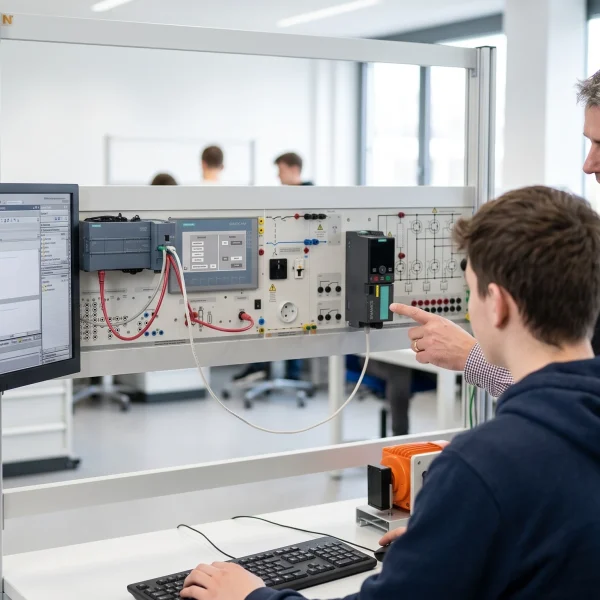
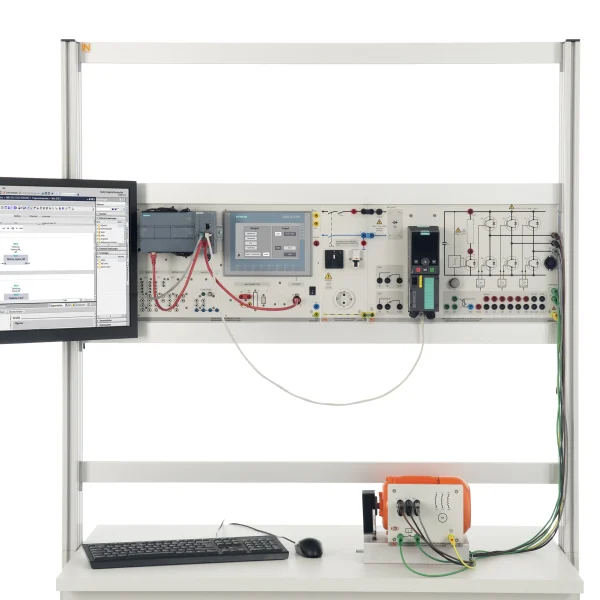
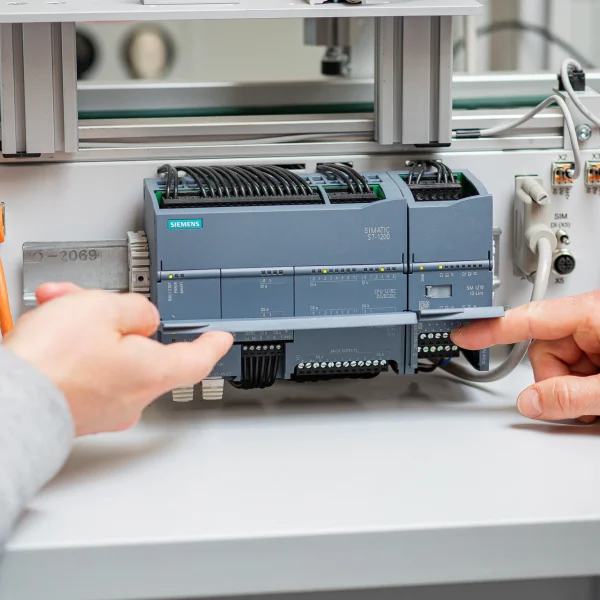
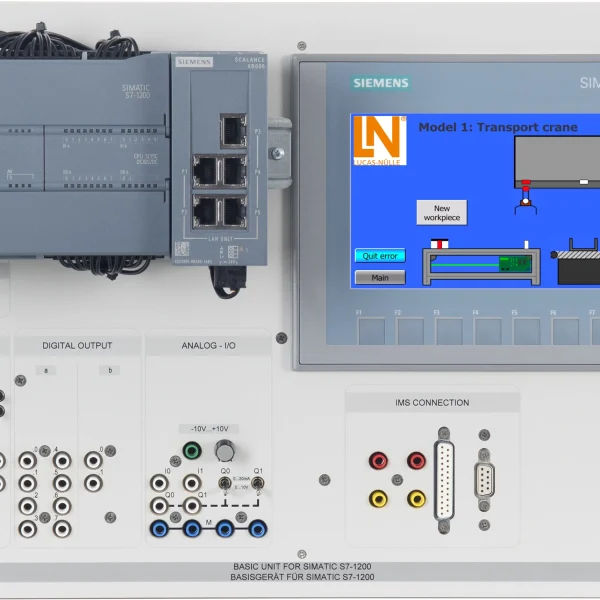
  • PLC trainer with integrated simulation and test functions — With its integrated pushbuttons and potentiometers, the PLC trainer (e.g. SIMATIC S7-1215C) allows setpoints and digital signals to be simulated. This enables learners to systematically test and commission closed-loop and open-loop control functions.
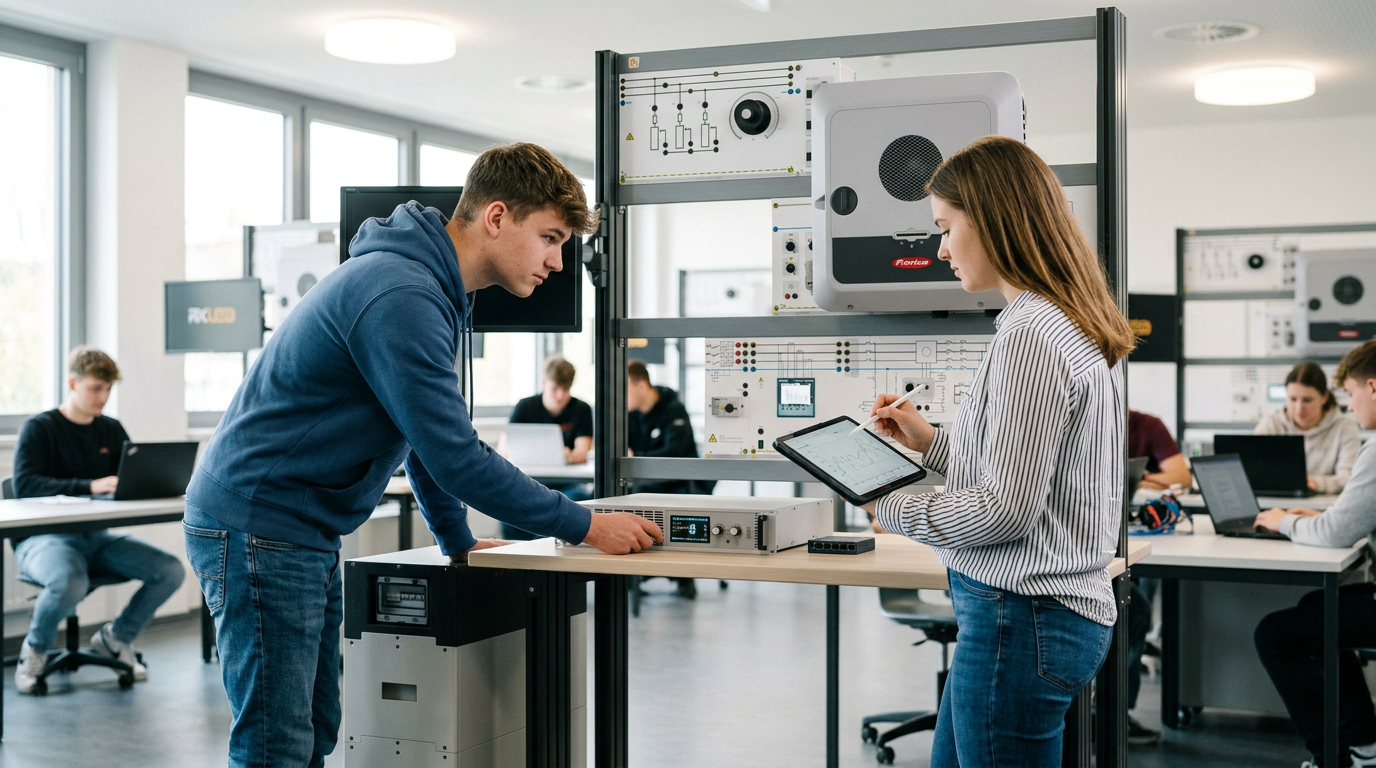
Learners working with RXLea on a tablet at a Lucas-Nuelle training system
RXLea

From Knowledge Comes Capability.

You guide the learning

Where theory and practice go hand in hand.

RXLea brings a new way of learning: project-based, hands-on and clearly structured. Learners solve real-world tasks, while instructors save time on preparation. Interactive modules, smart analytics and real hardware create a modern, efficient learning world.

Hands-on and interactive

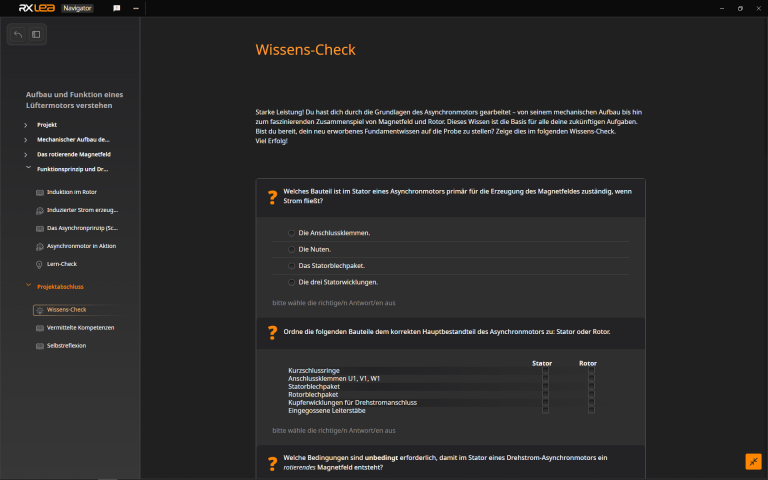
Animations, interactive tasks and realistic scenarios build a deep understanding. All content is organized into clear learning paths for focused, hands-on learning.

Digital support

3D assembly animations and digital instructions simplify complex procedures, reduce errors and help learners work more independently.

Visual support

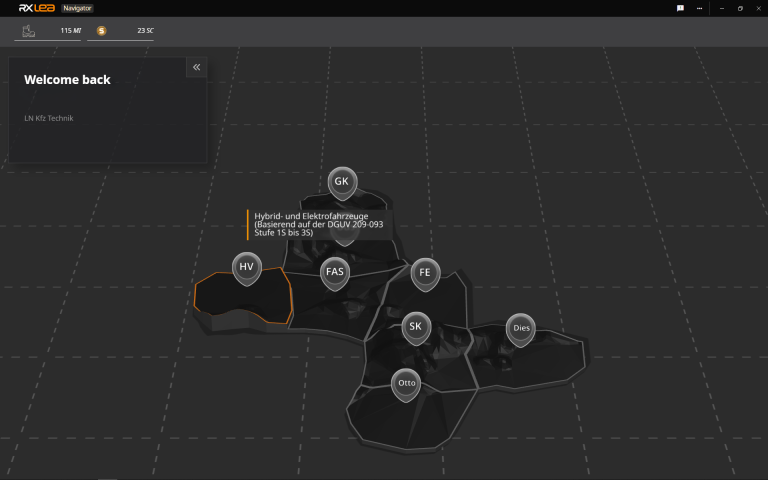
Overview graphics, screenshots and sample animations make the learning world transparent. Photos from the learning packages are also available, including country-specific versions where needed.
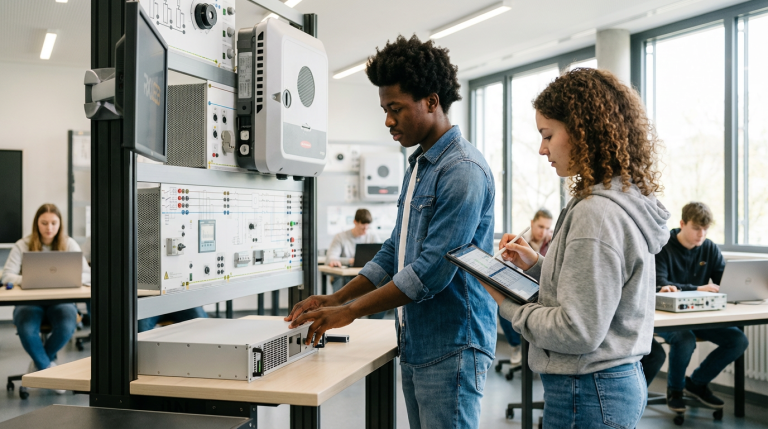
Learners using a tablet at an energy training system
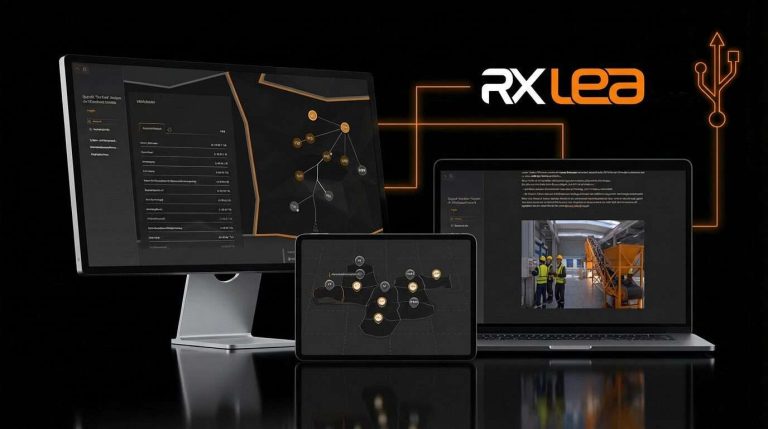
RXLea on desktop, laptop and tablet
RXLea Path Creator for building learning journeys
RXLea Navigator showing the learning world
Learn more about RXLea
Newsletter

Stay ahead in
technical training.

Get the latest training systems, product launches and educational insights, delivered directly to your inbox.

Your email address

By subscribing, you agree to our Privacy Policy. You can unsubscribe at any time.

 Please select at least one category before subscribing.
I'm interested in - select all that apply