


Application Circuits
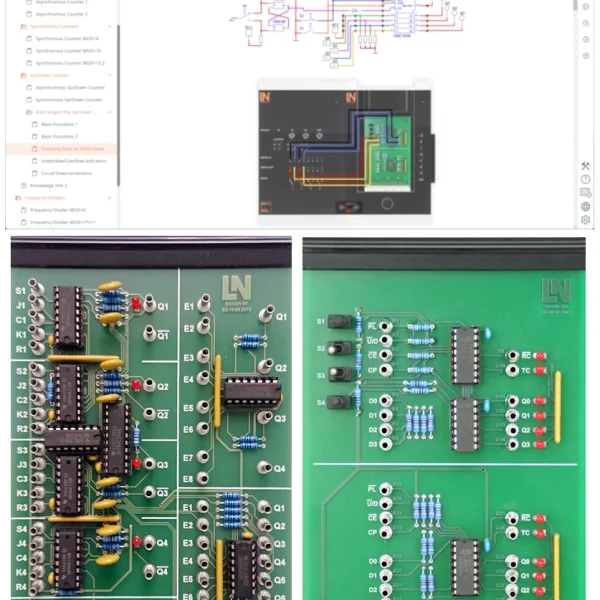
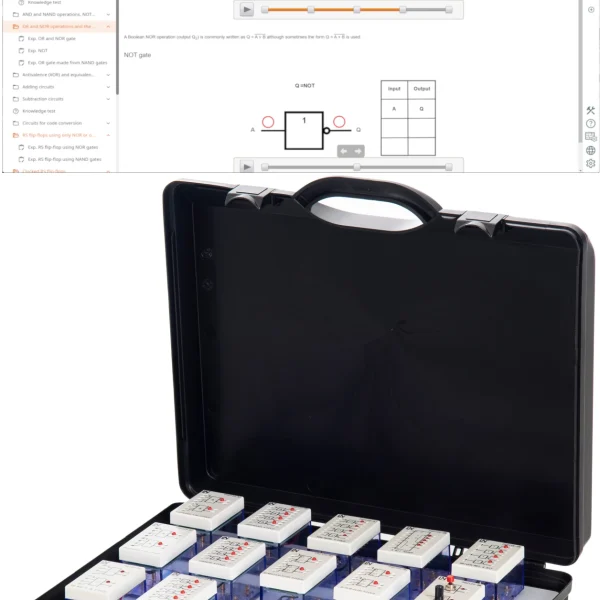
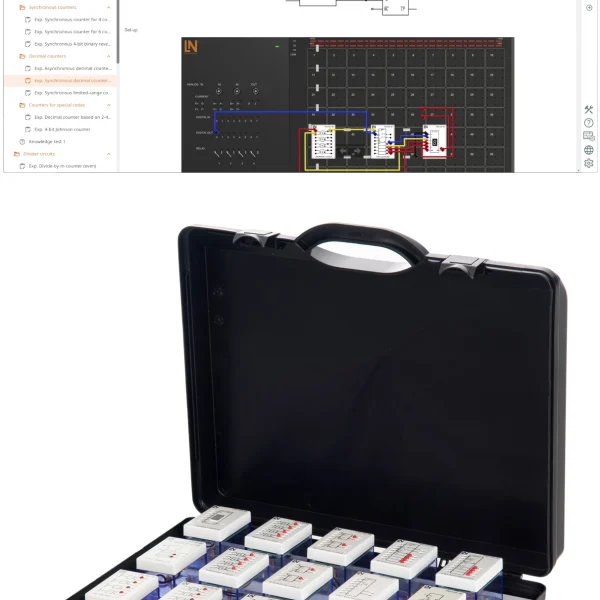
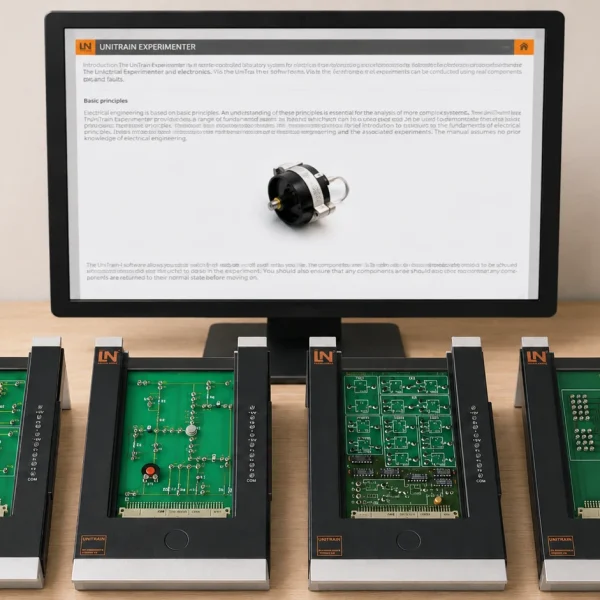
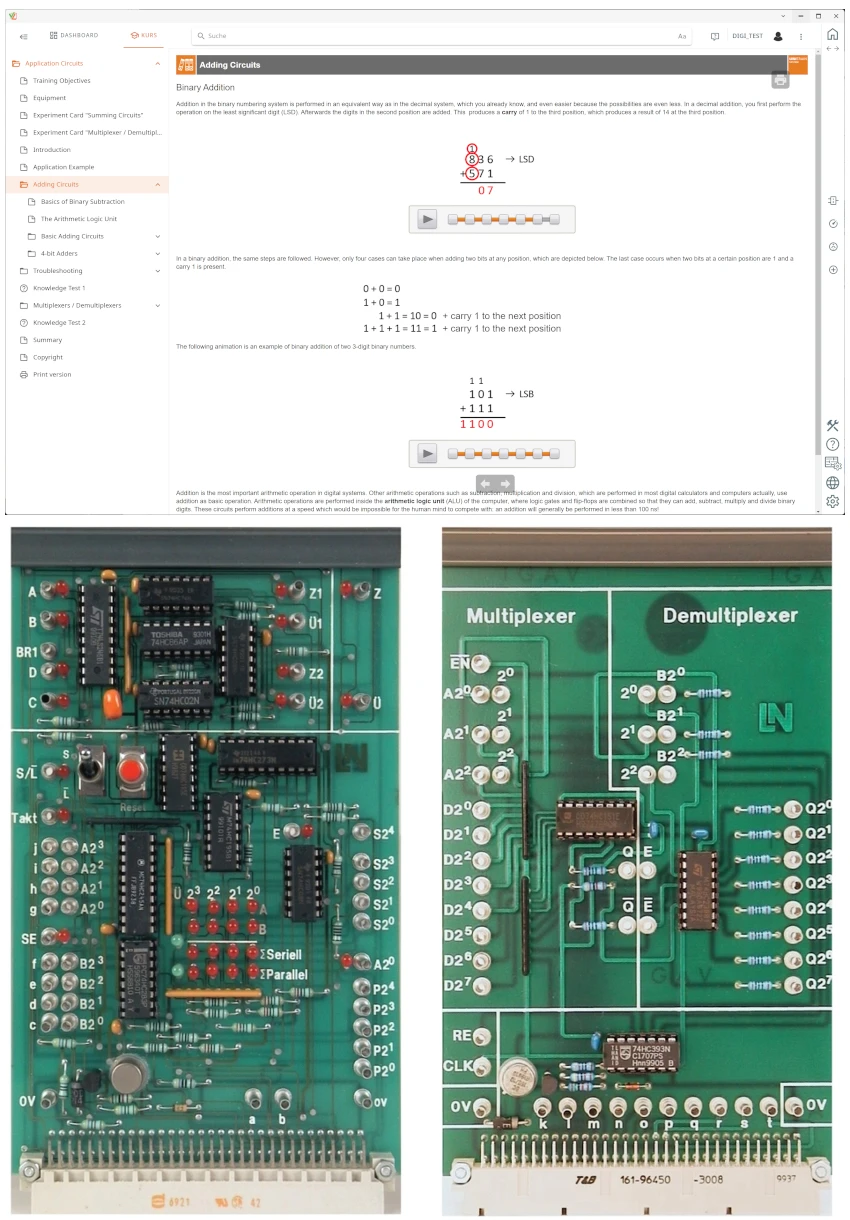
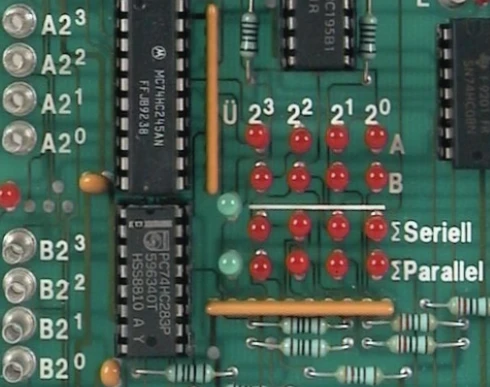
UniTrain course with the Summing Circuits and Multiplexer/Demultiplexer experiment cards. Learners build half and full adders, parallel adders and clocked transmission systems, and take measurements on them.
- Understanding how binary half and full adders work
- Analyzing half and full adders
- Investigating parallel adders
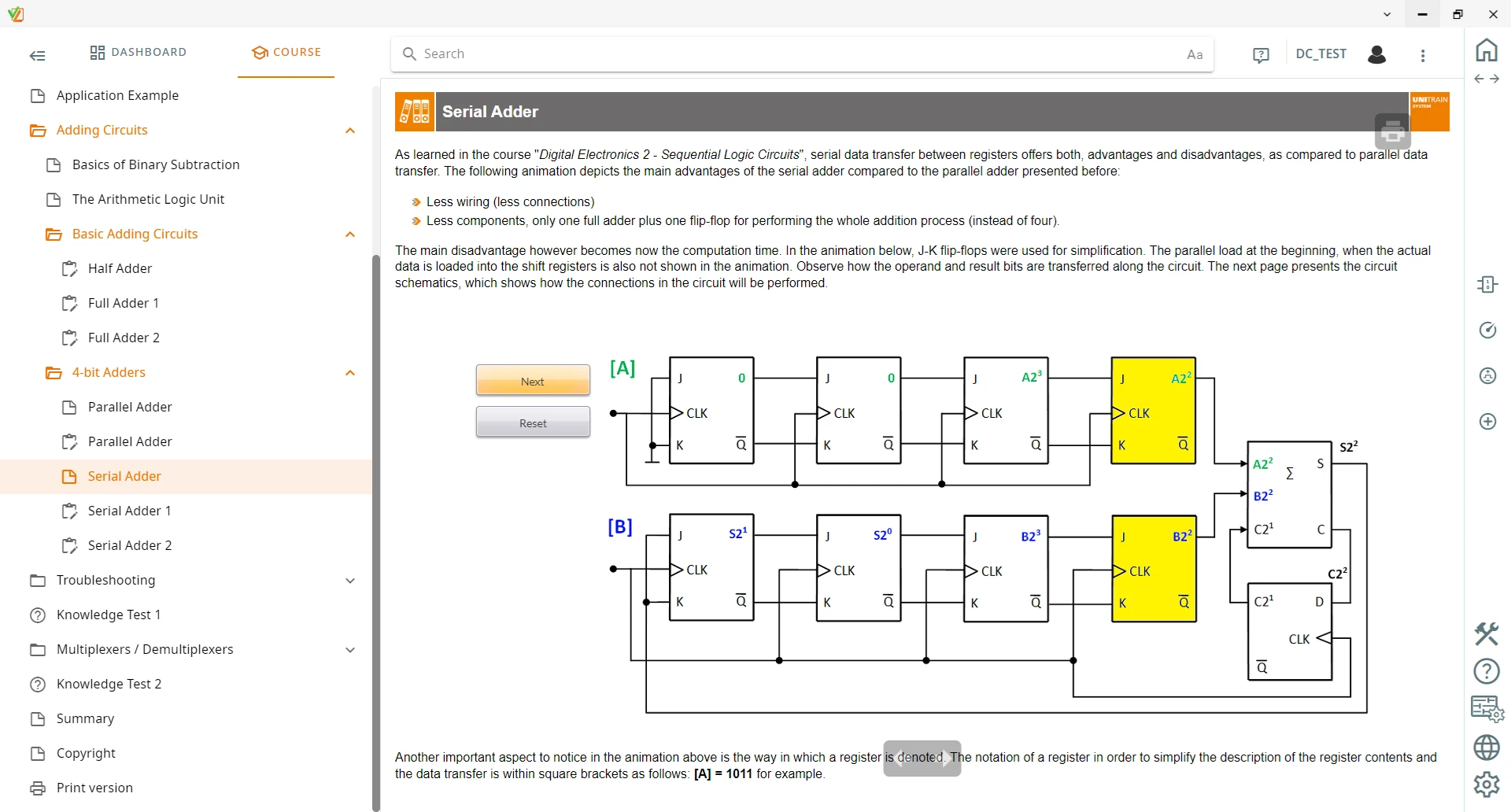
- Performing serial addition
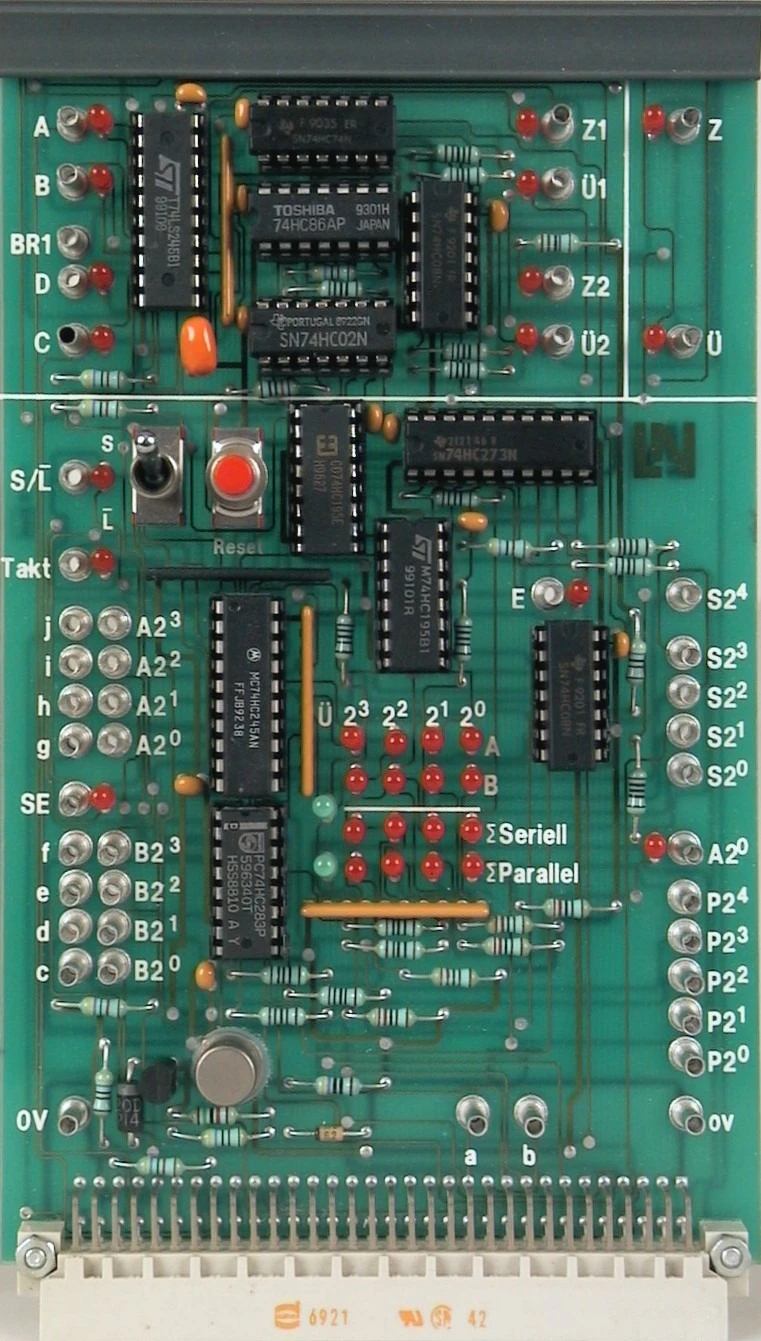
- Summing Circuits experiment card
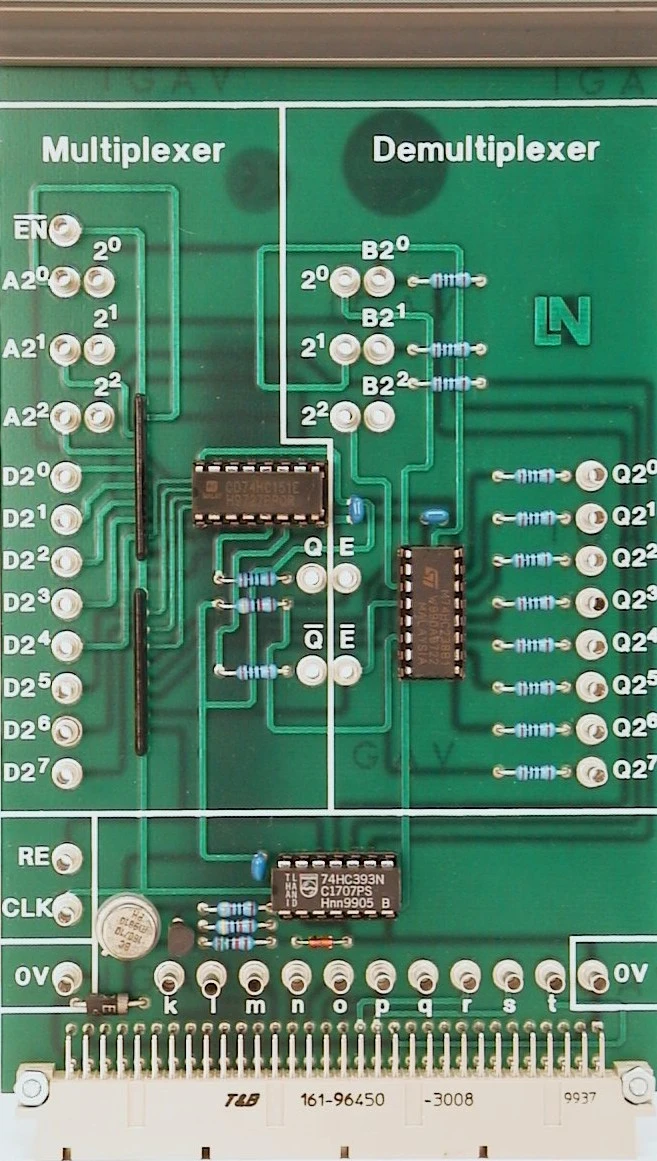
- Multiplexer/Demultiplexer experiment card
- Software-controlled troubleshooting
- Comparing parallel and serial addition
Adders, shift registers and multiplexers form the basis of fast signal processing and efficient data buses. This UniTrain course brings both topics together: arithmetic units and addressed data transmission. The Summing Circuits card provides two discrete half adders, a 4-bit full adder IC and shift registers; learners add 4-bit binary numbers with the 74HC283 IC, evaluate its behavior on overflow and compare parallel addition with serial, bit-by-bit addition. The second card combines an 8-bit multiplexer, a demultiplexer and a 4-bit binary counter to form a clocked transmission system. Faults that can be activated via relays round off the course with troubleshooting on adder circuits.
| Course | |
| CO4204-6E | Course Digital electronics 3: Application circuits |
| Accessories | |
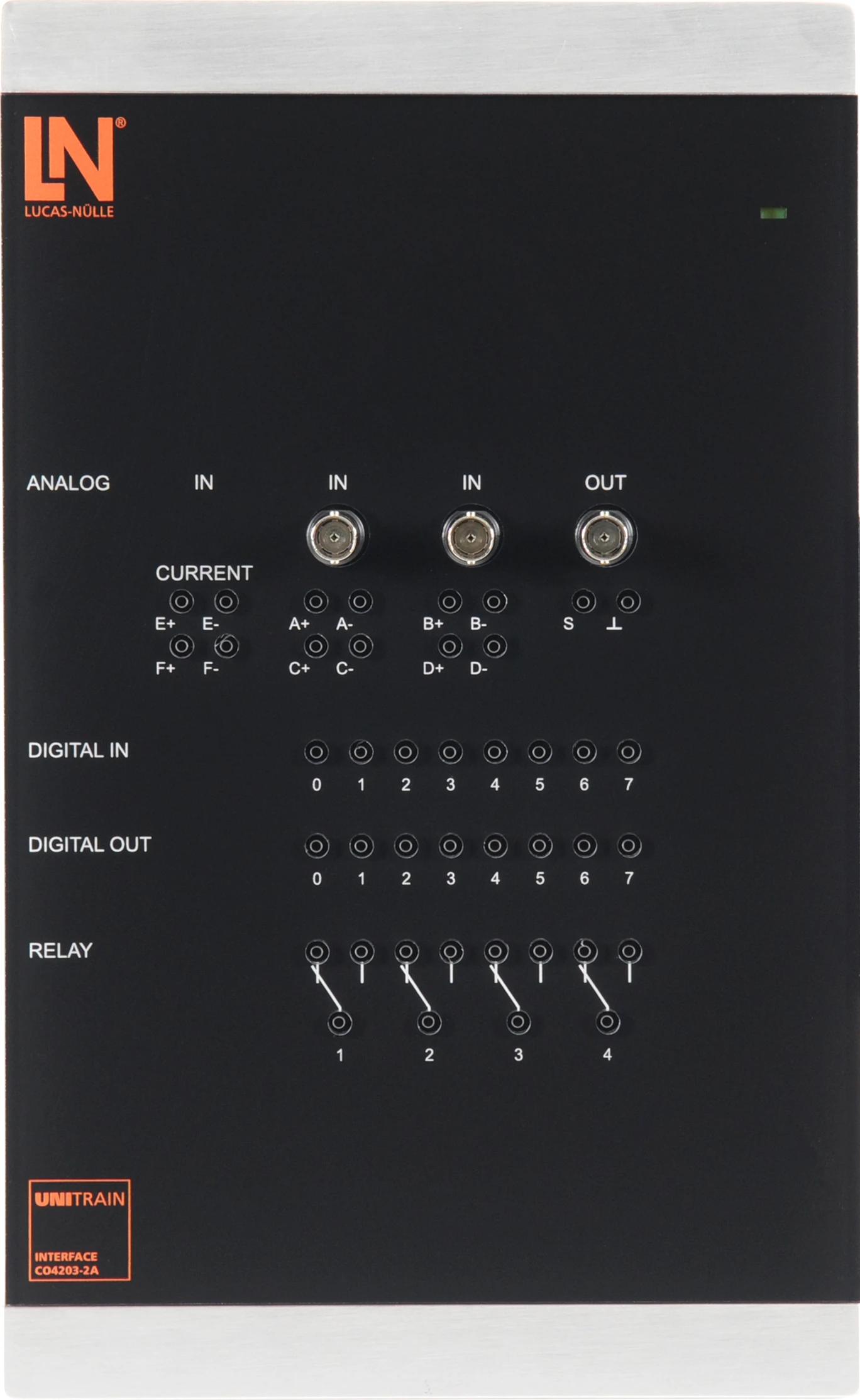
| CO4203-2A | UniTrain Interface mit virtuellen Instrumenten (Basis VI) |
| CO4203-2J | UniTrain measurement accessories, shunts and connection cables |
| CO4203-2Y | UniTrain storage case for one UniTrain system |
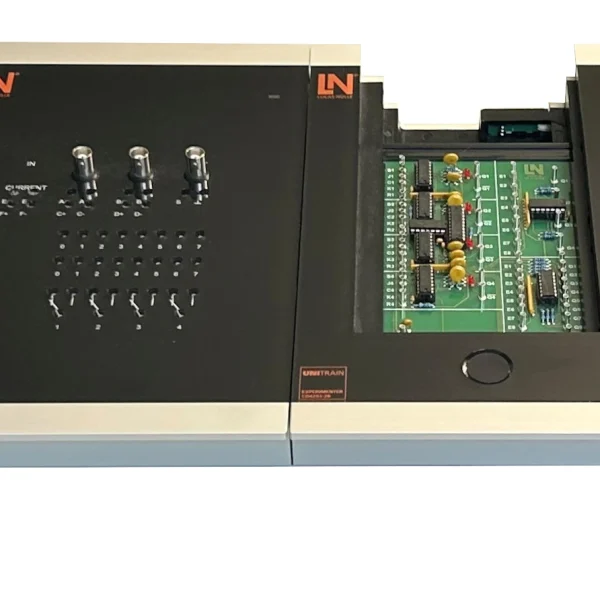
| CO4203-2B | UniTrain Experimenter |
Learning Content in Detail
Understanding how binary half and full adders work
Analyzing half and full adders
Investigating parallel adders
Performing serial addition
Understanding the structure of multiplexers and demultiplexers
Trying out multiplexer functions
Performing demultiplexing
Building data transmission systems
Narrowing down faults in adder circuits
Features & Applications
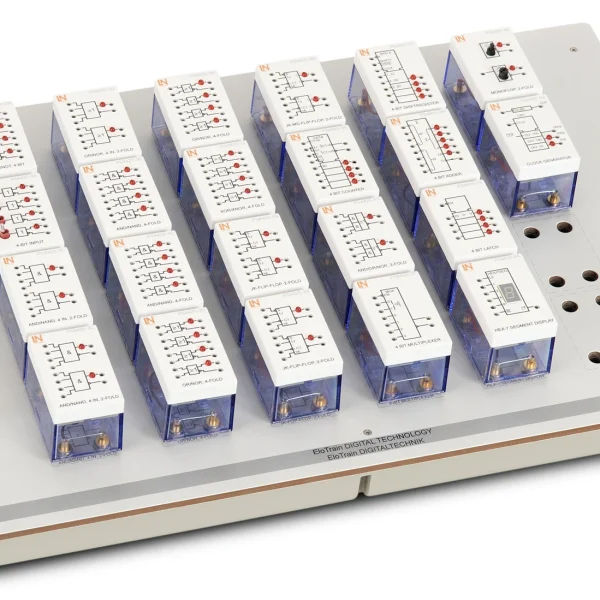
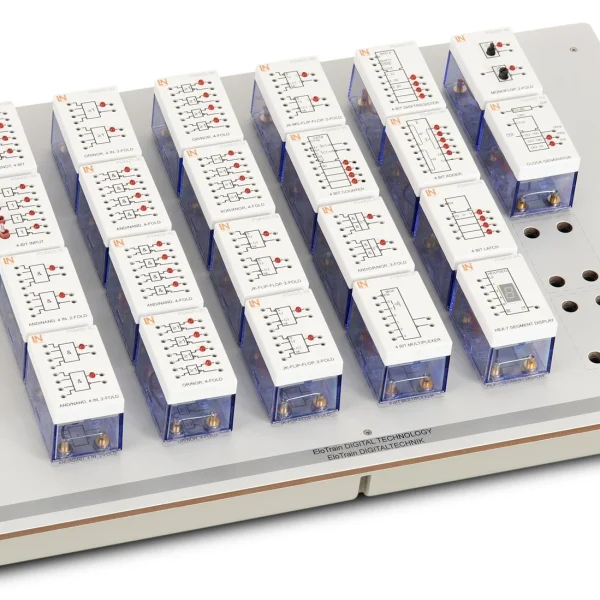
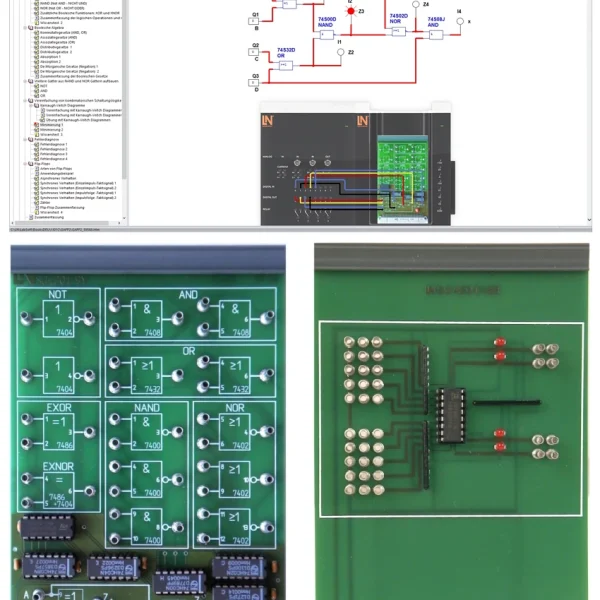
- Summing Circuits experiment card — The card contains two discrete half adders, a 4-bit full adder IC and shift registers. This allows both parallel and serial arithmetic units to be investigated.
- Multiplexer/Demultiplexer experiment card — The card is equipped with a 74HC151 8-bit multiplexer, a 74HC238 demultiplexer and a 74HC393 4-bit binary counter for addressed signal distribution.
- Software-controlled troubleshooting — Faults that can be activated via relays turn line breaks and short circuits at logic inputs into diagnostic tasks.
- Comparing parallel and serial addition — The fast 4-bit parallel adder with carry look-ahead is contrasted with the space-saving serial shift-register adder. Learners evaluate both methods using the same task.
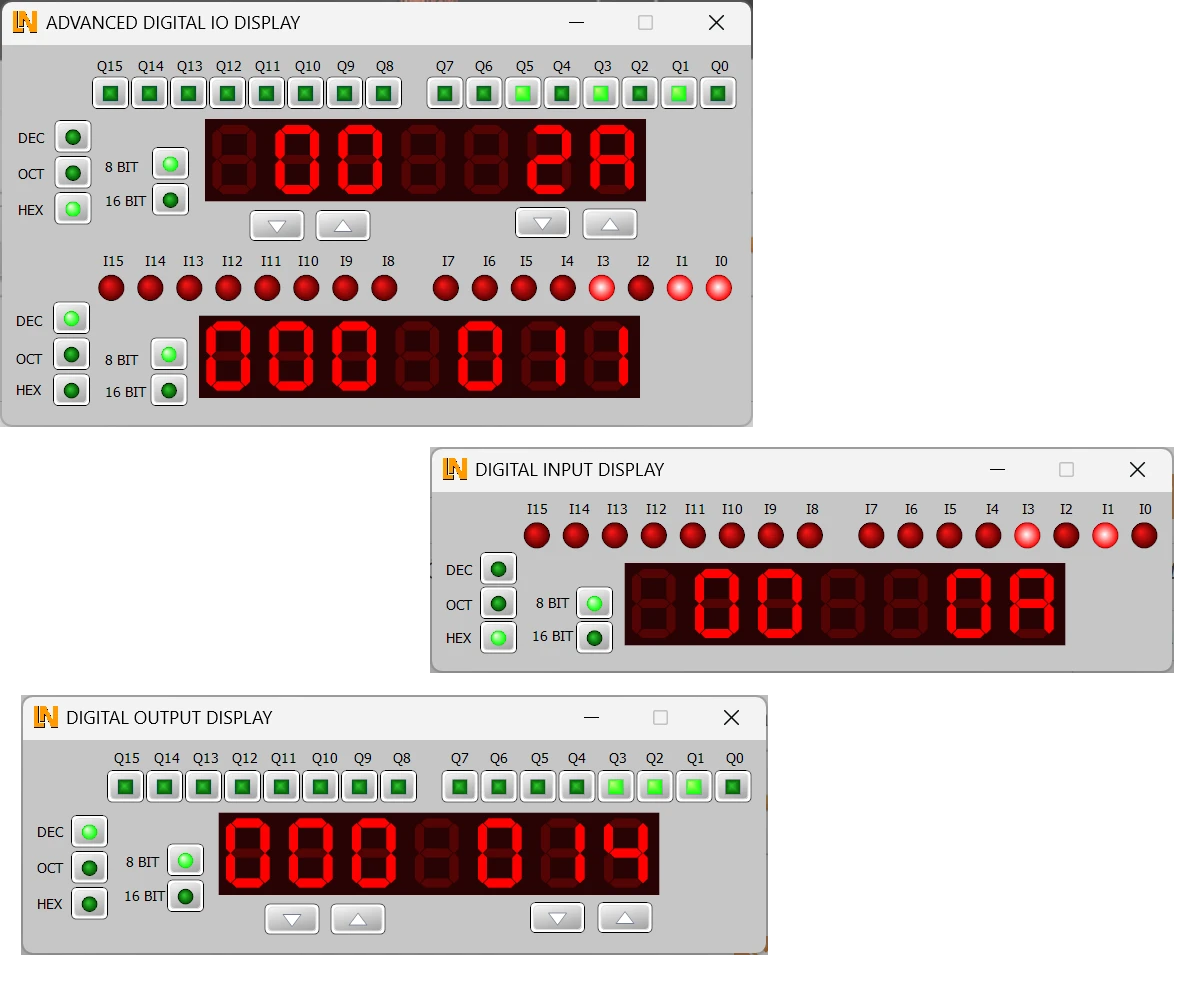
- Interactive logic analysis via the UniTrain interface — The connection to the UniTrain interface provides digital I/O displays and logic analyzers that allow clock and address signals to be evaluated with precise timing.
- Investigating arithmetic structures — Learners examine the structure and logic of half and full adders and verify how the sum and carry bits are formed in the binary system.
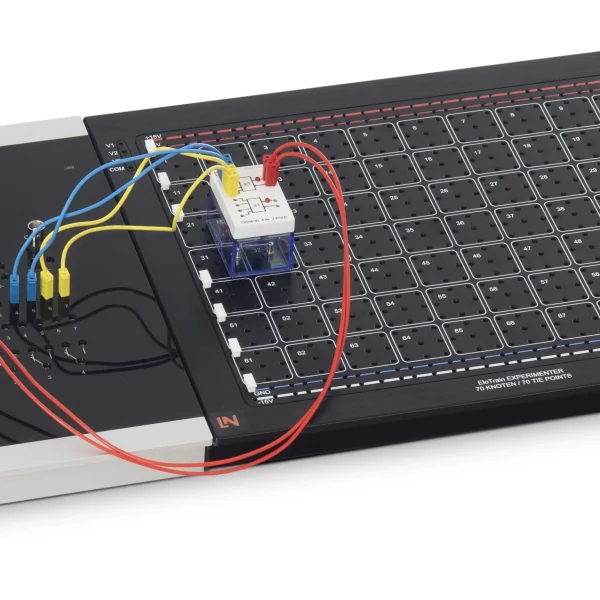
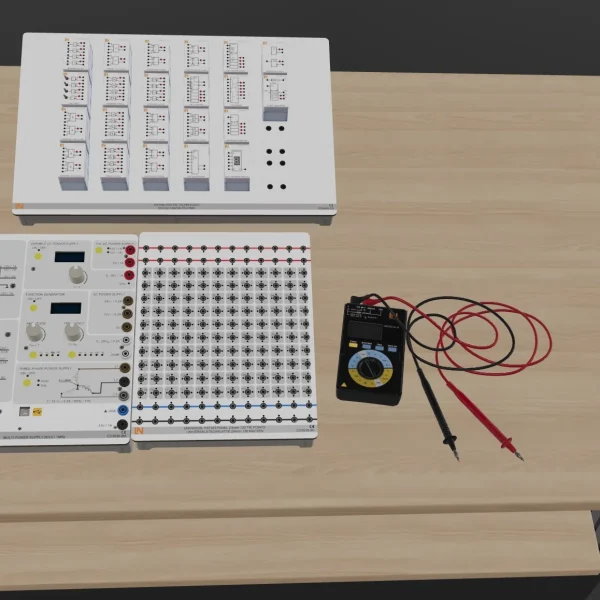
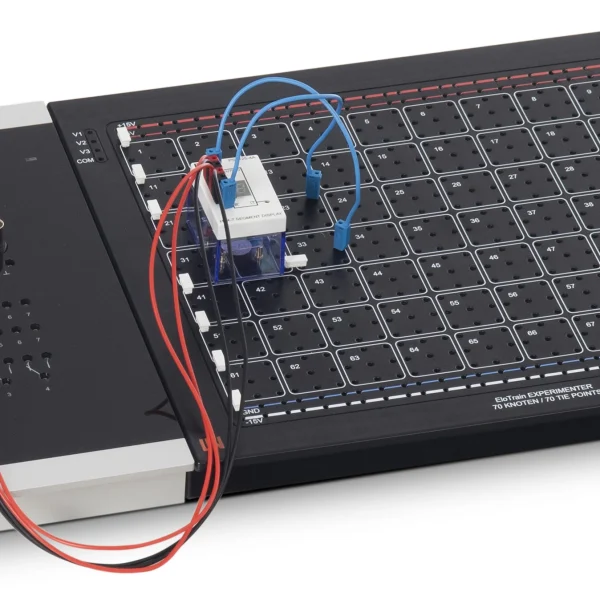
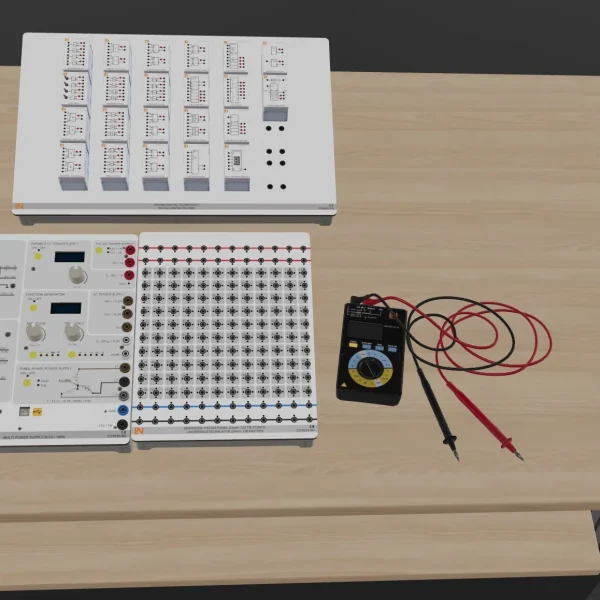
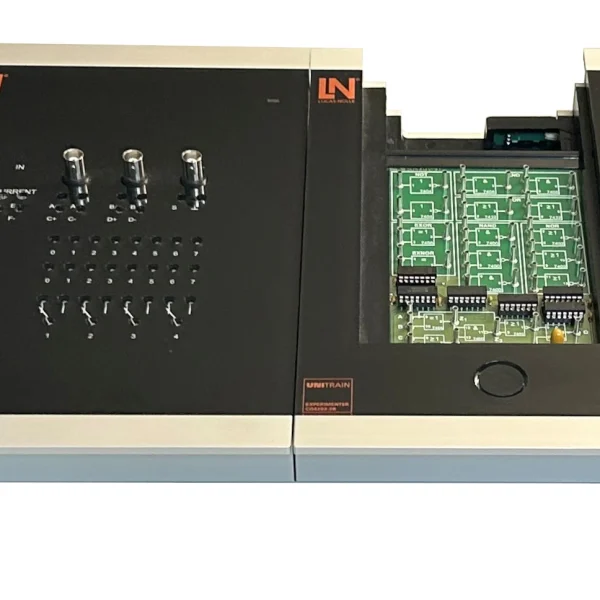
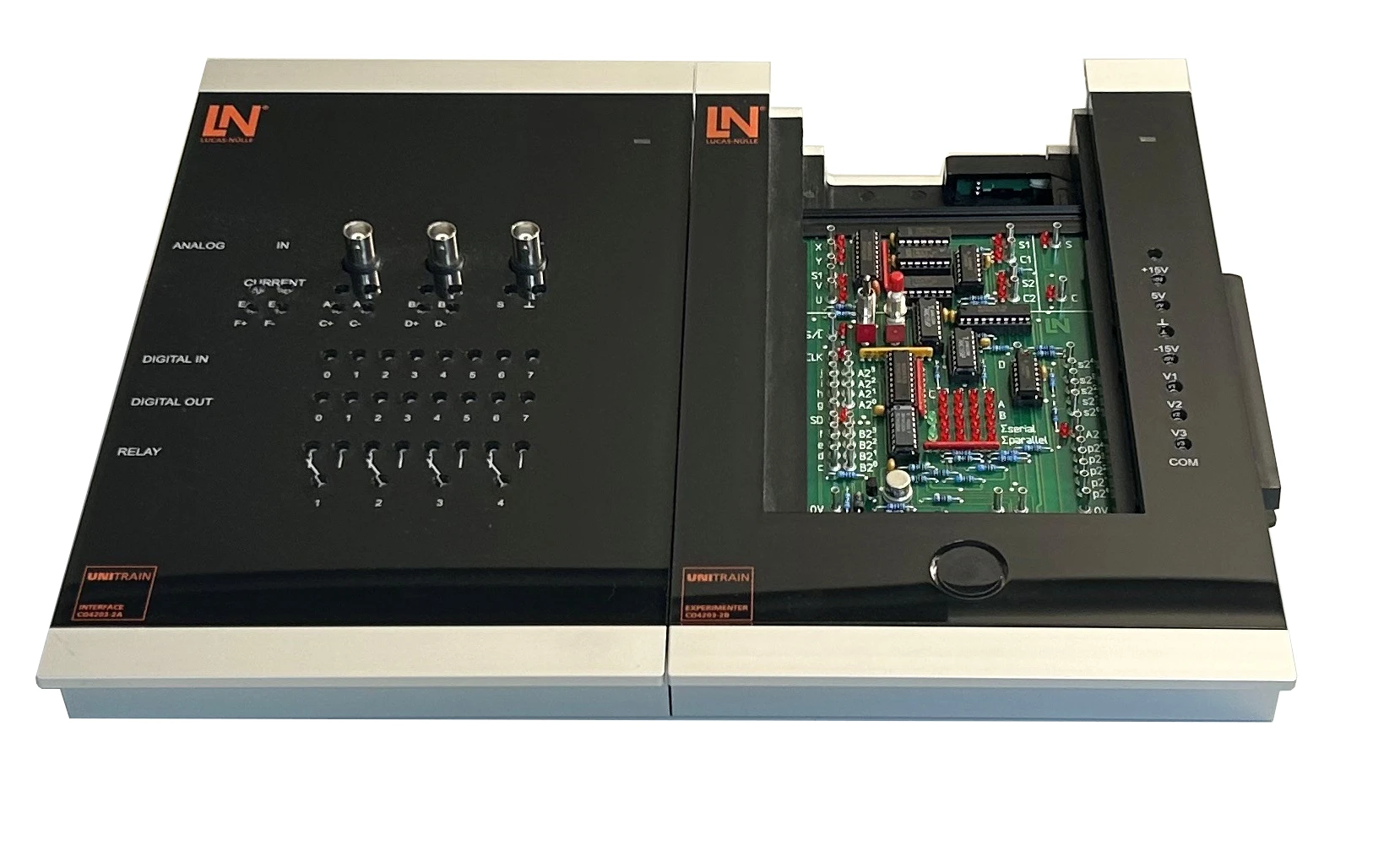
- UniTrain experimenter CO4203-2B — The experimenter holds the cards, connects them to the UniTrain bus and supplies all the required logic voltages at the contacts.
- Efficient data transmission via MUX and DEMUX — Learners connect 8-bit multiplexers and demultiplexers to form synchronous systems and analyze how address counters can be used to reduce the number of lines.
- Integrated I/O status LEDs — LED indicators on all logic inputs and outputs of the experiment cards show the high and low levels while the experiment is running.
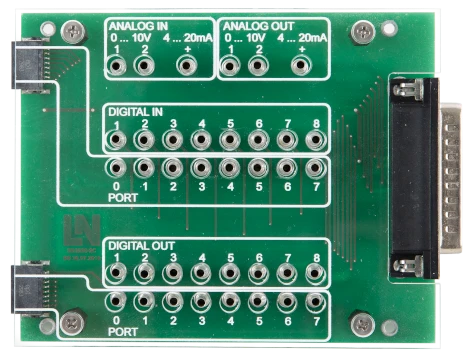
- UniTrain interface CO4203-2A — The interface offers 16 digital signal inputs and outputs as well as relays for fault simulation, and connects the experiment hardware to the PC software.
- Digital inputs and outputs — The instruments control the digital inputs and outputs and display their states in binary, hexadecimal and decimal.

From Knowledge Comes Capability.
You guide the learning
Where theory and practice go hand in hand.
RXLea brings a new way of learning: project-based, hands-on and clearly structured. Learners solve real-world tasks, while instructors save time on preparation. Interactive modules, smart analytics and real hardware create a modern, efficient learning world.
Hands-on and interactive
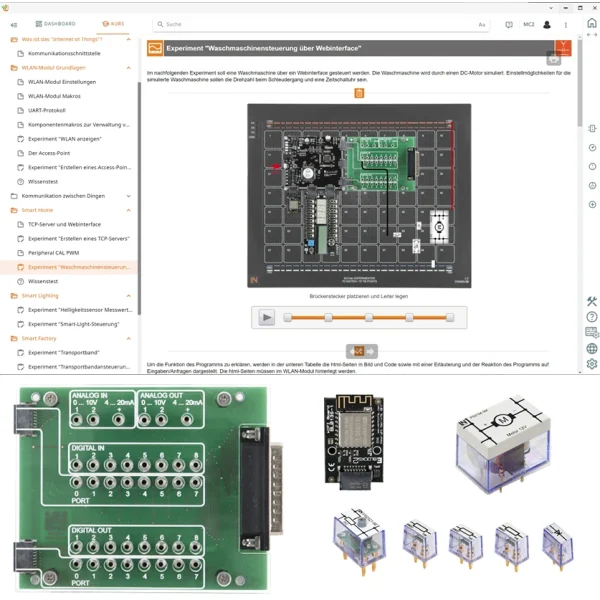
Animations, interactive tasks and realistic scenarios build a deep understanding. All content is organized into clear learning paths for focused, hands-on learning.
Digital support
3D assembly animations and digital instructions simplify complex procedures, reduce errors and help learners work more independently.
Visual support
Overview graphics, screenshots and sample animations make the learning world transparent. Photos from the learning packages are also available, including country-specific versions where needed.




Stay ahead in
technical training.
Get the latest training systems, product launches and educational insights, delivered directly to your inbox.