

Skip to content

Energy Efficient Drive Design 300W

RXLea
Digital projects for hands-on learningInteractive learning content, directly connected to the training system.

Energy Efficient Drive Design 300W

EEM11PT-300W

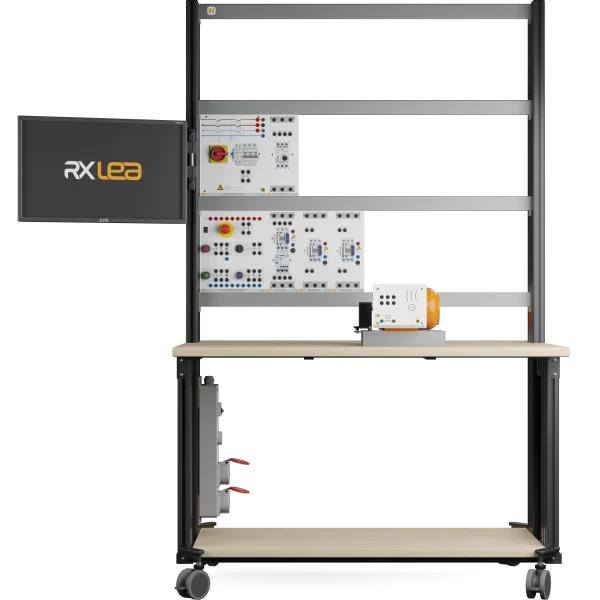
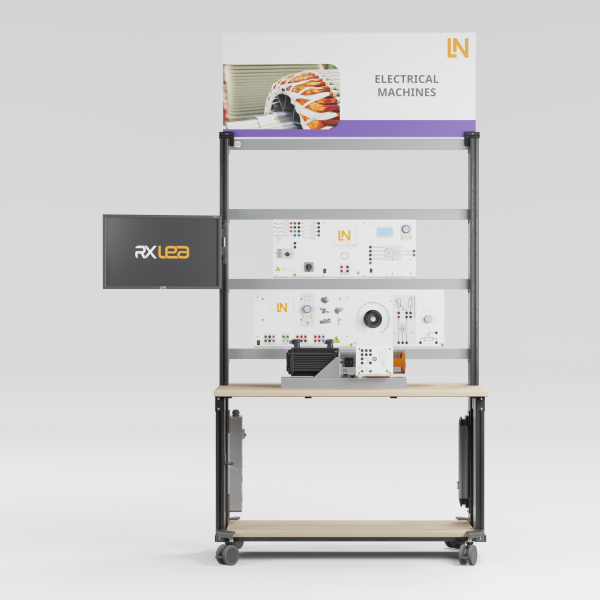
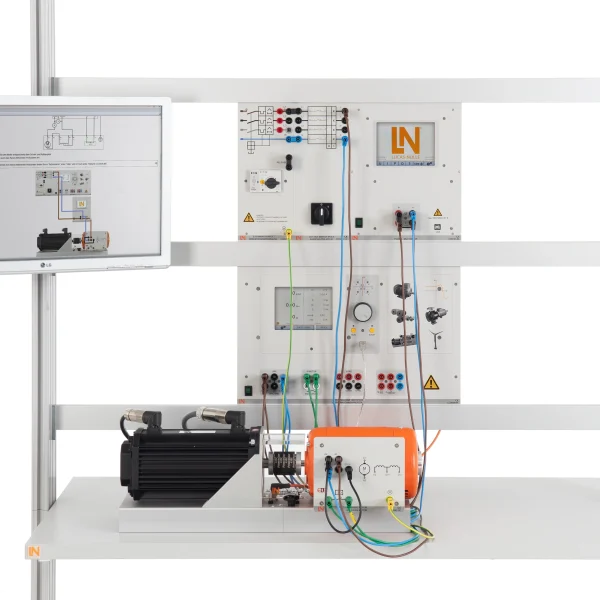
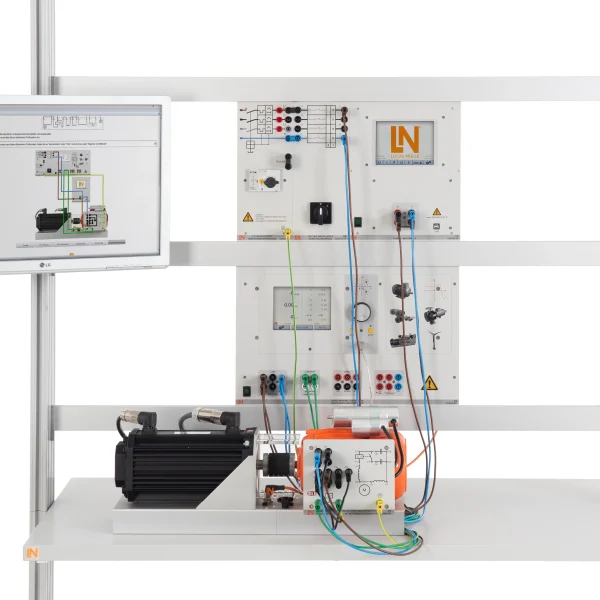
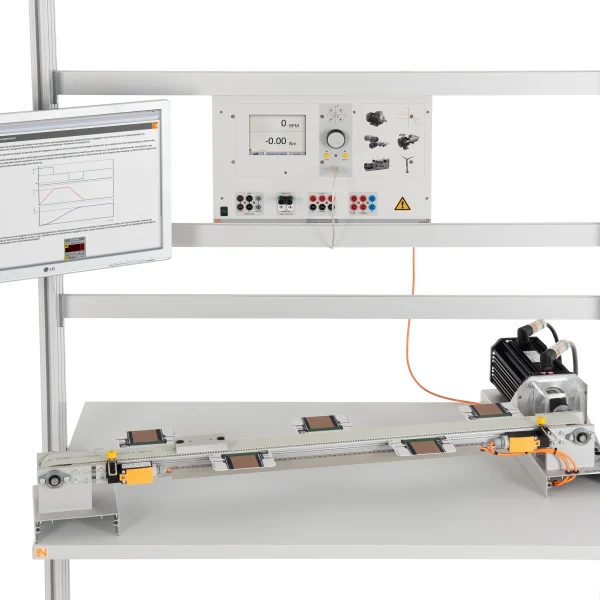
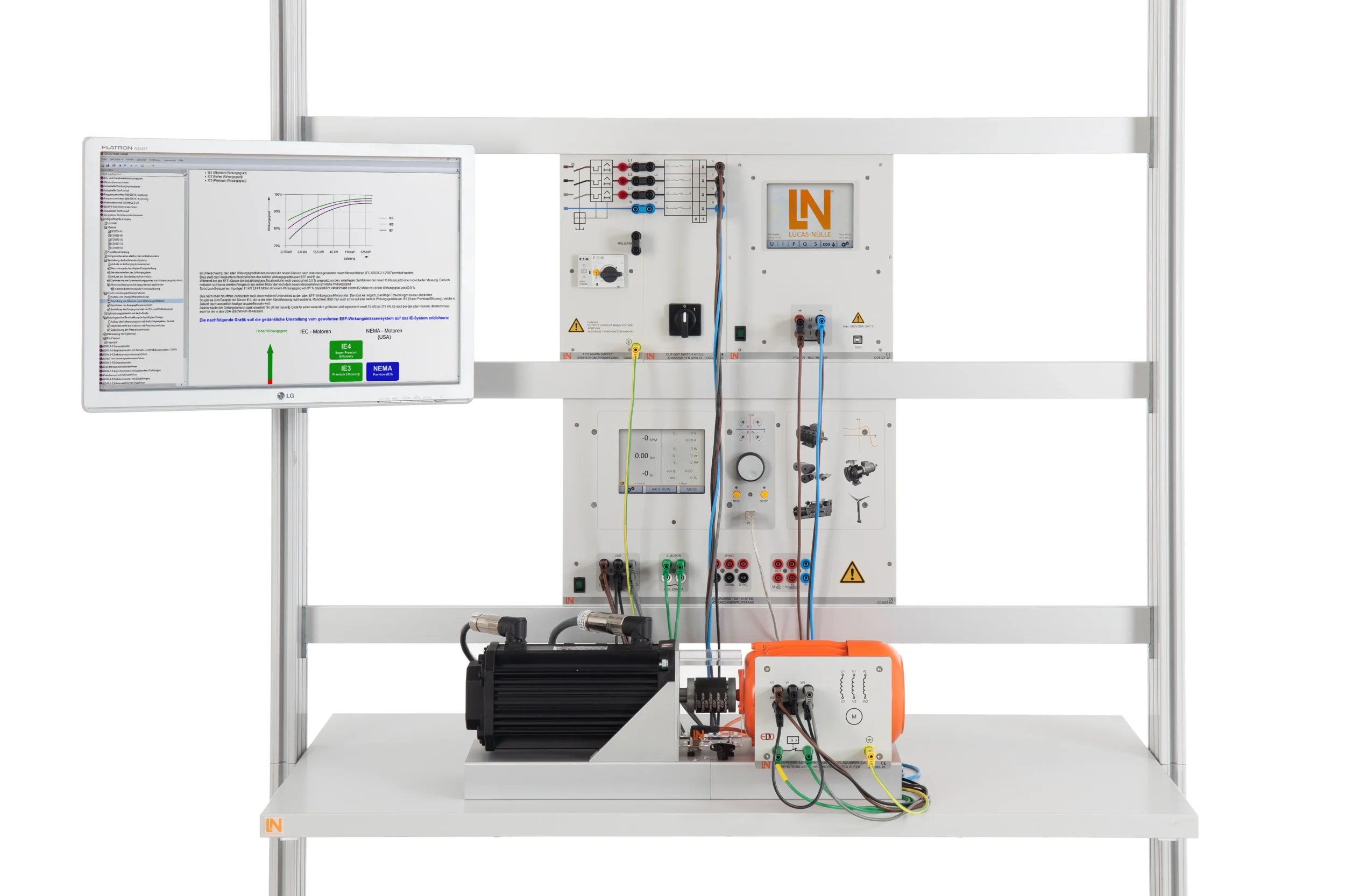
PanelTrain bench-top system for energy-efficient drive design: learners couple a three-phase squirrel-cage motor (IE2) to the servo machine test system and measure what an oversized motor costs a ventilation system.

Learning Content
  • Calculating process power
  • Analyzing losses
  • Optimizing operating points
  • Determining motor utilization
KEY FEATURES
  • Hall ventilation as an end-to-end project
  • Emulating real driven machines
  • Working safely on rotating machines
  • Analyzing motor and load behavior in real time
Speak with a Product Specialist +1 (757) 808-5696 · sales@lucas-nuelle.com

Electric drives account for a large share of electricity consumption in industry, and oversized motors permanently drive up operating costs. The training system takes up this scenario using the example of an industrial hall ventilation system: learners determine the process power actually required and uncover the consequences of the existing motor being oversized. To do this, they couple a three-phase squirrel-cage motor (IE2) to the servo machine test system, which emulates a fan system as the load, and record the power balance with the power multimeter. Finally, they determine the efficiency, operating point and motor utilization and calculate the annual savings.

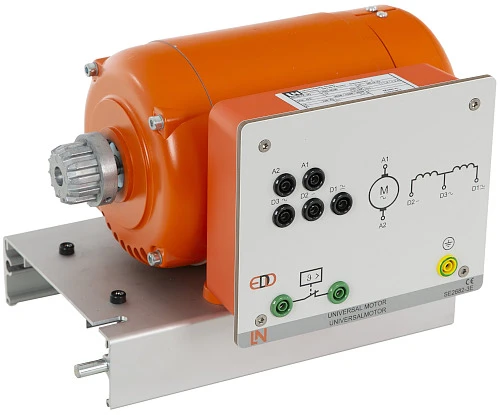
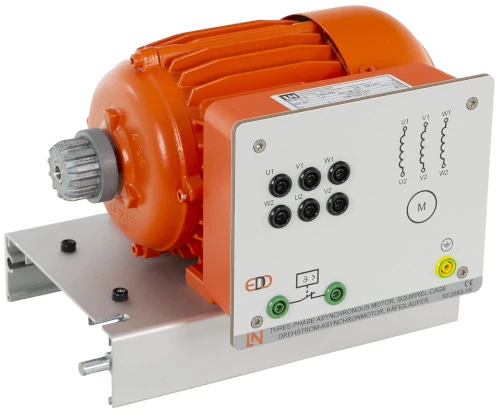
SE2683-1HThree-phase asynchronous motor, 0.3 kW n=1400 (230V/400V)
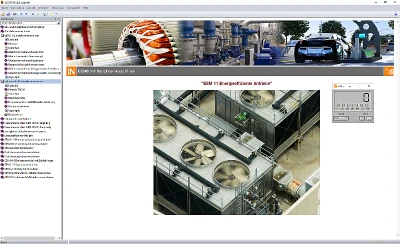
SO2805-1JInteractive Lab Assistant: Energy efficient drives
CO3212-5VThree-phase power supply with motor protection switch
CO5127-2APower-Multimeter
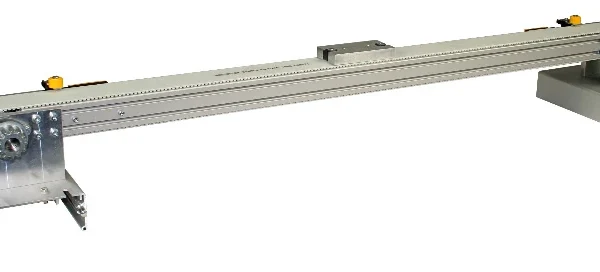
CO3636-6XDynamic servo machine test system for 0.3kW machines incl. software ActiveServo
SE2662-2ARubber coupling sleeve, 0.3kW
SE2662-7CCoupling guard with LED lighting for 300W machines
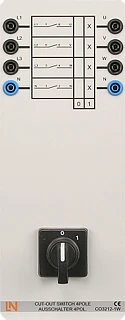
CO3212-1WCut-out switch, 4 pole
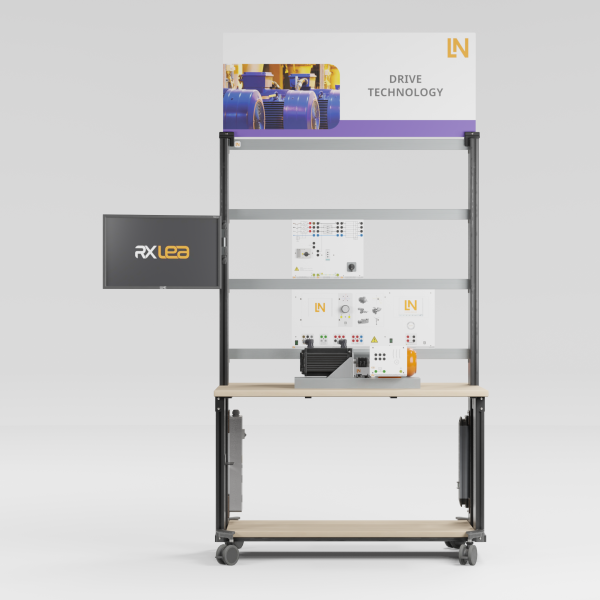
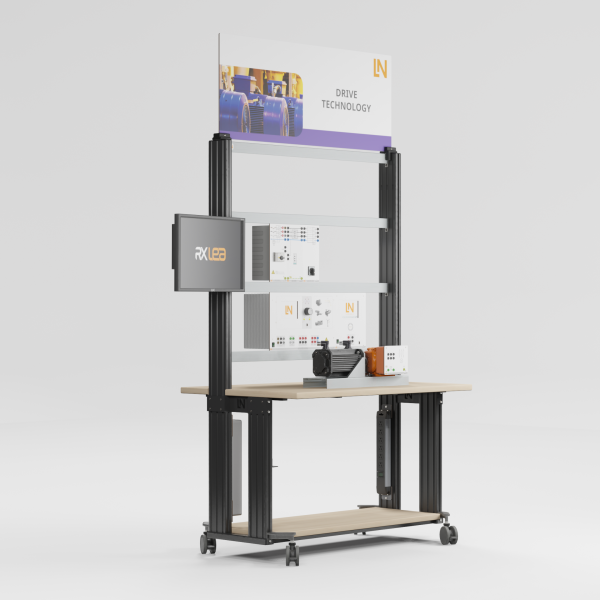
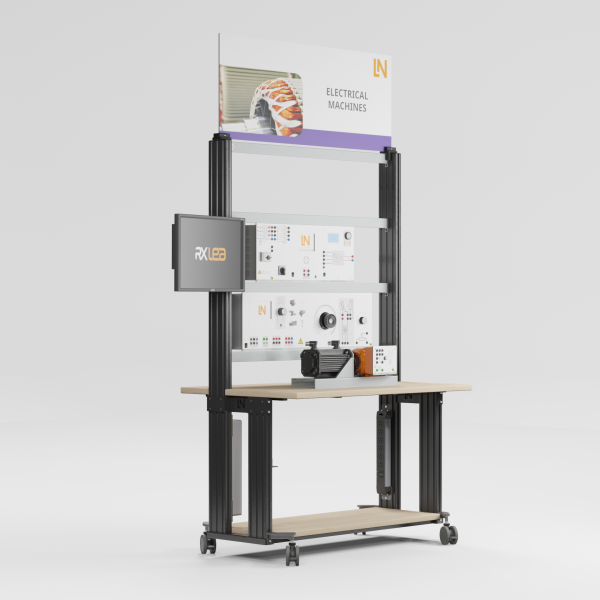
ST7200-7ASybaPro experiment trolley, 3-level, 6 sockets, 1250x1970x800mm
ST8010-4TMonitor holder for flat screen monitor of weight up to 15kg / 33lbs
ST7200-5LProtection cover for three-level experiment trolleys
ST8010-4GKeyboard adapter for flat screen monitor holders
ST8008-8NProtected power distribution for working stations
ST8010-4JMultiple socket outlet, 6 fold, with illuminated switch
ST8000-5ADisplay for Electrical Machines equipment
SO5148-1LSet of safety measurement cables, 4mm (31 leads)
SO5126-3RSafety connecting plug 4mm with tap (2x), black, 1000V/32A CAT II
SO5126-3VSafety connecting plug 4mm with tap (2x), blue, 1000V/32A CAT II
SO5126-3WSafety connecting plug 4mm with tap (2x), green/yellow, 1000V/32A CAT II

Learning Content in Detail

Learners work their way toward needs-based drive design: from process power, losses and operating point through to the cost-effectiveness calculation.

Calculating process power

Learners determine the air power required for the hall and evaluate the energy consequences of oversizing the motor.

Analyzing losses

Learners identify mechanical and electrical sources of loss in the drive and measure the efficiency of the existing motor.

Optimizing operating points

Learners record torque-speed characteristics, superimpose them on fan characteristics and determine the most energy-efficient operating point.

Determining motor utilization

Learners measure speed and power consumption and use indirect methods to derive the actual motor utilization during system operation.

Assessing cost-effectiveness

Learners calculate the annual energy costs at partial load and in rated operation and derive potential for optimization from these.

Features & Applications

The experiments address tasks from building automation, industrial drive technology, and maintenance and plant optimization.
  • Hall ventilation as an end-to-end project — Learners analyze a hall ventilation system. They determine the actual process power and uncover the consequences of the existing motor being oversized.
  • Emulating real driven machines — The servo brake system simulates driven machines such as fans. Learners investigate the drive behavior with these realistic load profiles directly in the lab.
  • Working safely on rotating machines — The hardware includes plug-on shaft covers with electronic monitoring. This allows learners to work safely on rotating machines.
  • Analyzing motor and load behavior in real time — The servo machine test system records all mechanical and electrical values and displays them live on the PC. Learners superimpose the recorded motor characteristic on the characteristic of the emulated driven machine and read off the operating point of the drive.
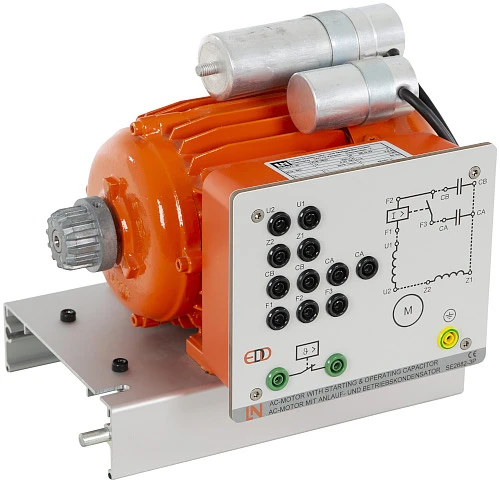
  • Three-phase induction motor 0.37 kW IE2 — The squirrel-cage motor represents a typical existing industrial motor. An electronic nameplate provides all the machine data directly to the test system.
  • Servo machine test system — A digital control unit, an induction servo motor acting as an active brake and the ActiveServo software make up the test system. Learners operate the drive in four-quadrant mode and simulate up to 10 industrial driven machines such as fans, pumps or flywheel masses.
  • Power multimeter with touch display — The instrument measures voltage and current independently of the waveform and calculates active, apparent and reactive power in real time. It also captures high-frequency switched signals from modern power converters. Learners transfer all measured values to the PC via USB.
  • Tool-free coupling of test object and test system — A coupling sleeve with an internal ring gear connects the motor and brake free of backlash and with vibration damping, entirely without tools. The plug-on shaft cover switches off the supply voltage as soon as it is removed during operation. LEDs indicate the safe system status.
  • ActiveServo software — The software offers three views for machine analysis. Learners record motor characteristics under speed or torque control, define ramp functions and emulate eight driven machines. They determine the static operating point and record the starting behavior in high resolution.
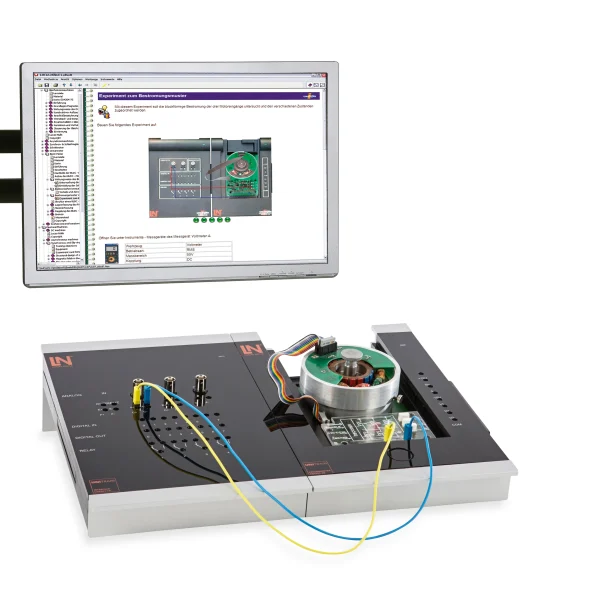
  • Interactive Lab Assistant (ILA) — The multimedia course guides learners through the planning and design of a ventilation system. Learners document their measurements and calculate the energy cost savings directly on the computer.
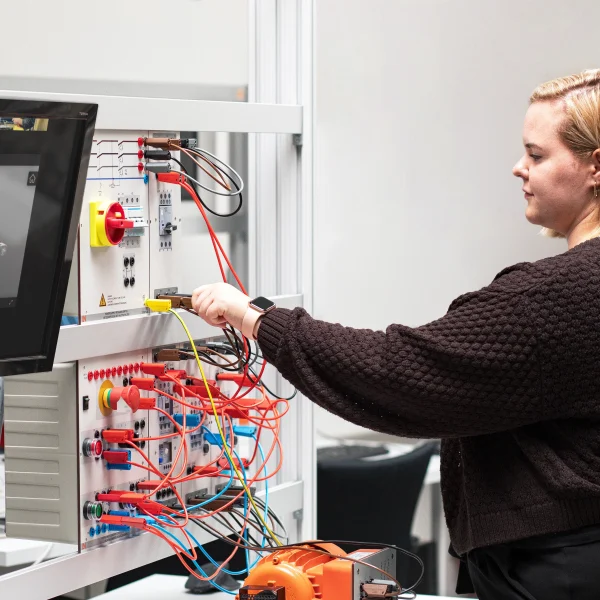
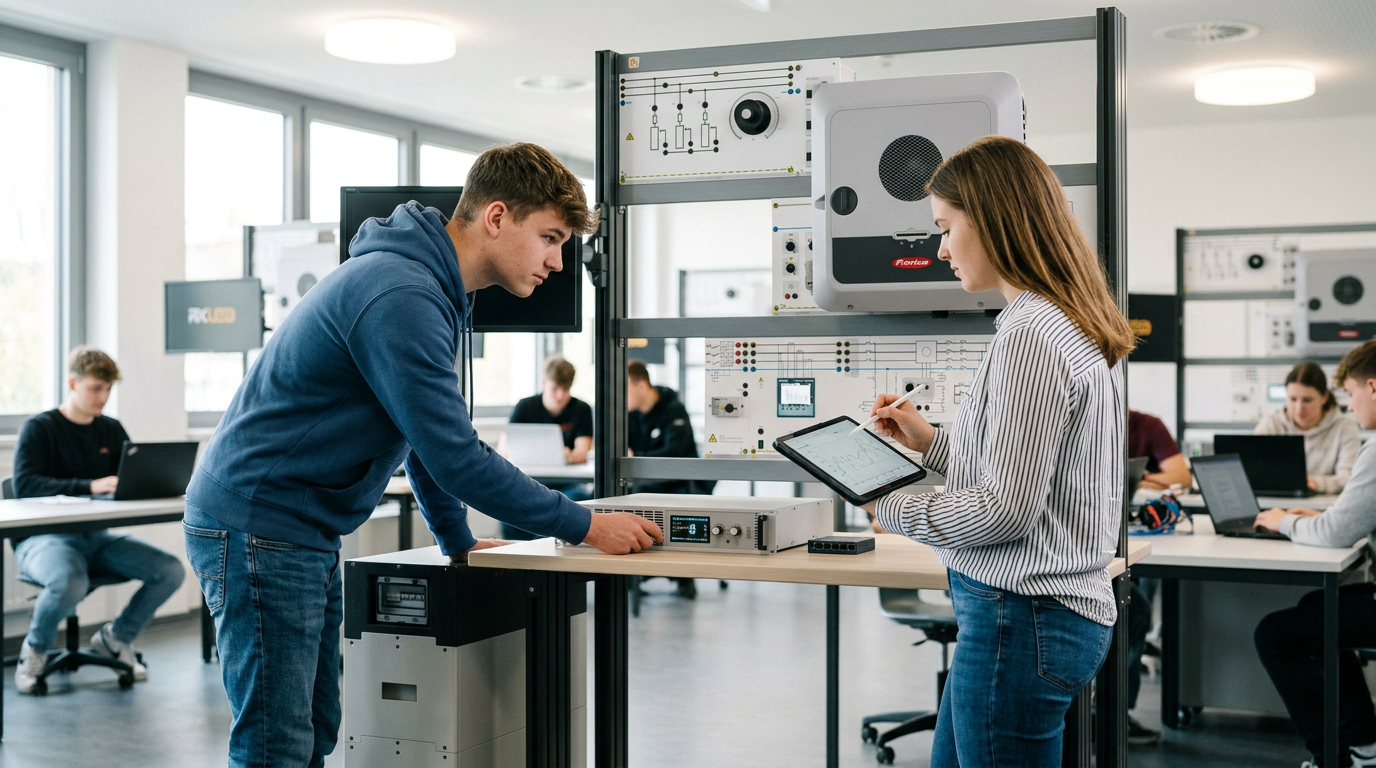
Learners working with RXLea on a tablet at a Lucas-Nuelle training system
RXLea

From Knowledge Comes Capability.

You guide the learning

Where theory and practice go hand in hand.

RXLea brings a new way of learning: project-based, hands-on and clearly structured. Learners solve real-world tasks, while instructors save time on preparation. Interactive modules, smart analytics and real hardware create a modern, efficient learning world.

Hands-on and interactive

Animations, interactive tasks and realistic scenarios build a deep understanding. All content is organized into clear learning paths for focused, hands-on learning.

Digital support

3D assembly animations and digital instructions simplify complex procedures, reduce errors and help learners work more independently.

Visual support

Overview graphics, screenshots and sample animations make the learning world transparent. Photos from the learning packages are also available, including country-specific versions where needed.

Learners using a tablet at an energy training system
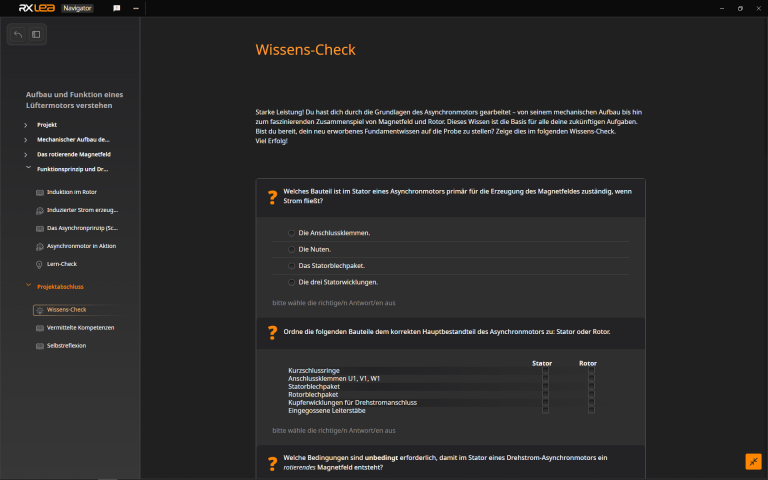
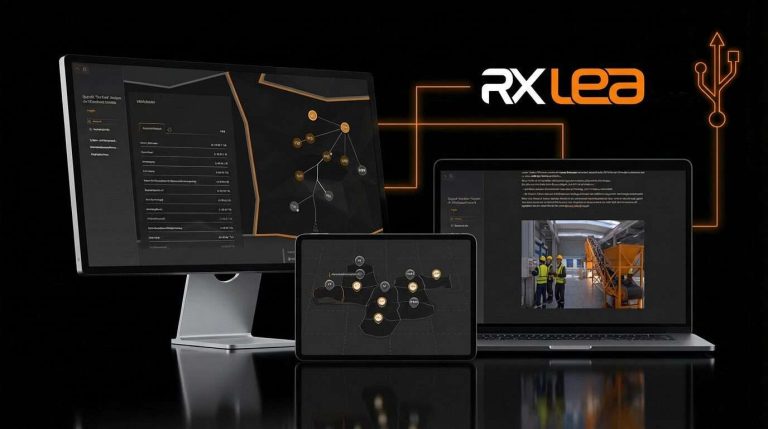
RXLea on desktop, laptop and tablet
RXLea Path Creator for building learning journeys
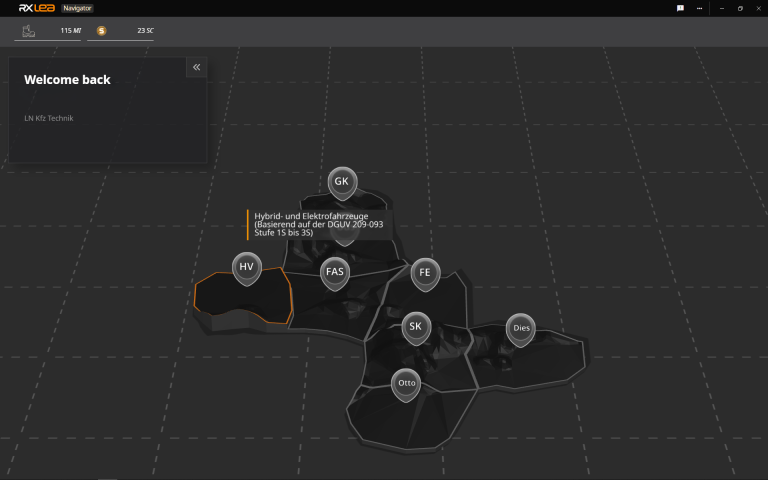
RXLea Navigator showing the learning world
Learn more about RXLea
Newsletter

Stay ahead in
technical training.

Get the latest training systems, product launches and educational insights, delivered directly to your inbox.

Your email address

By subscribing, you agree to our Privacy Policy. You can unsubscribe at any time.

 Please select at least one category before subscribing.
I'm interested in - select all that apply