


Skip to content

Manual and Automatic Compensation of Reactive Power

RXLea
Digital projects for hands-on learningInteractive learning content, directly connected to the training system.

Manual and Automatic Compensation of Reactive Power

EUC31PT

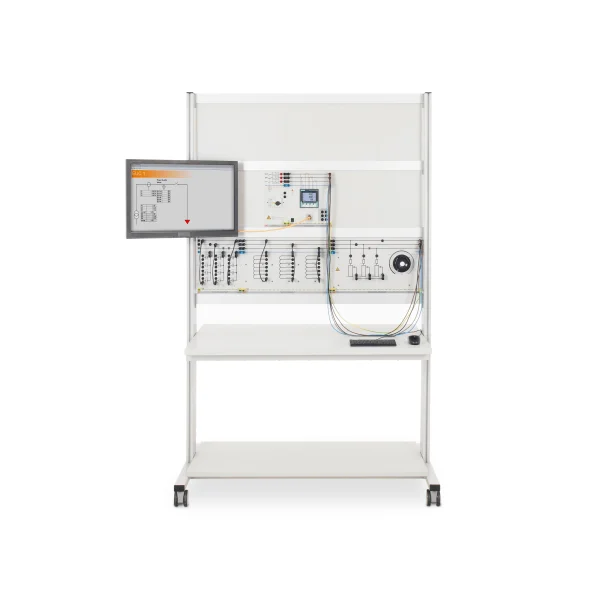
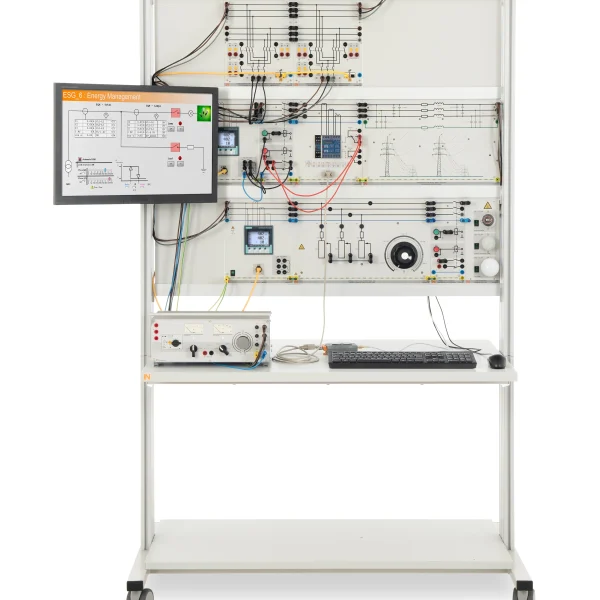
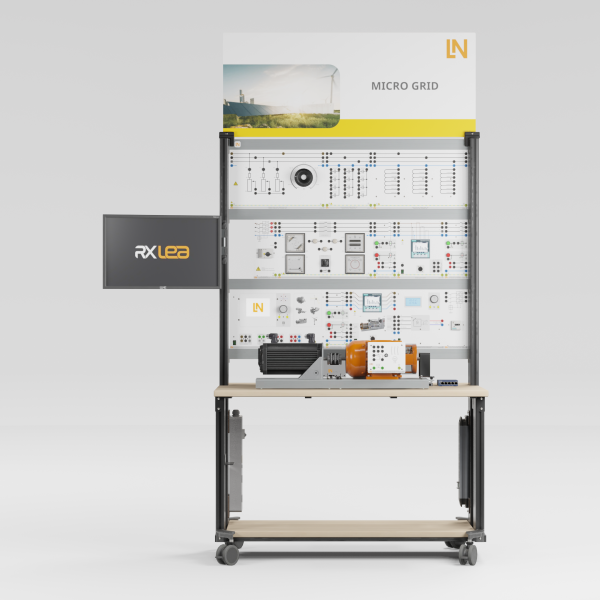
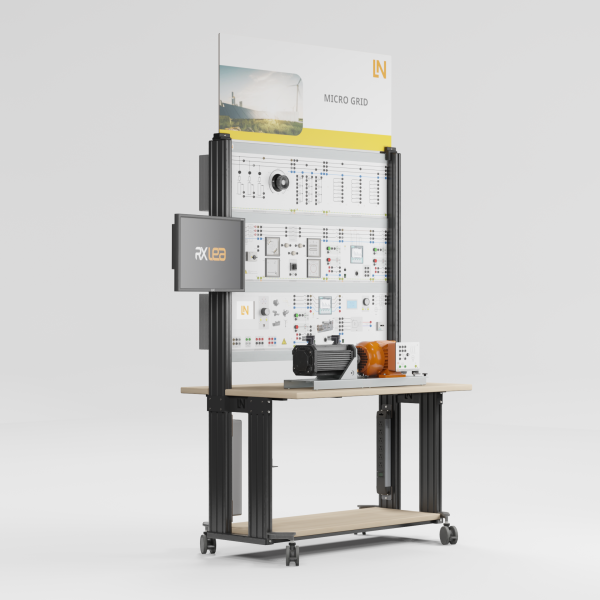
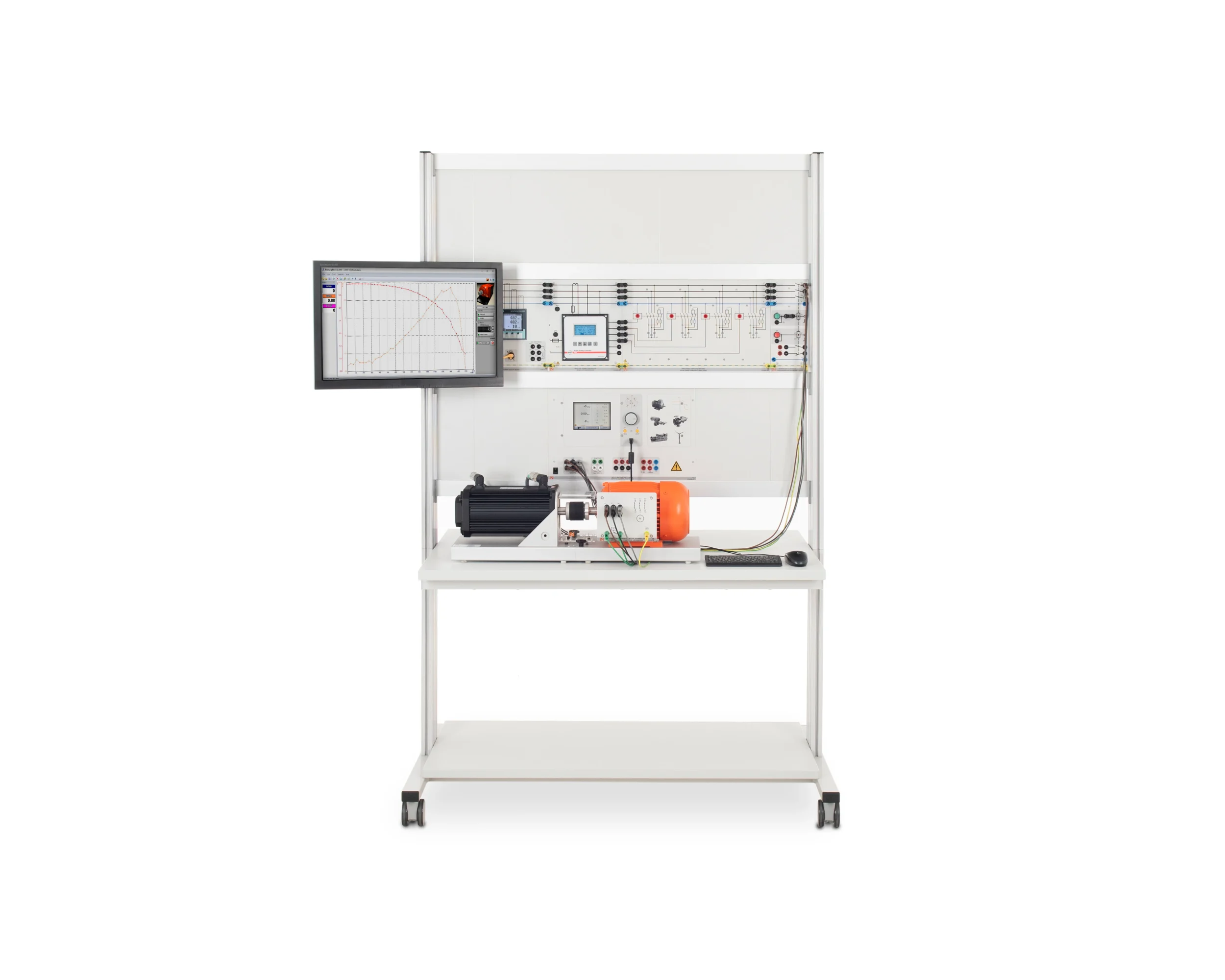
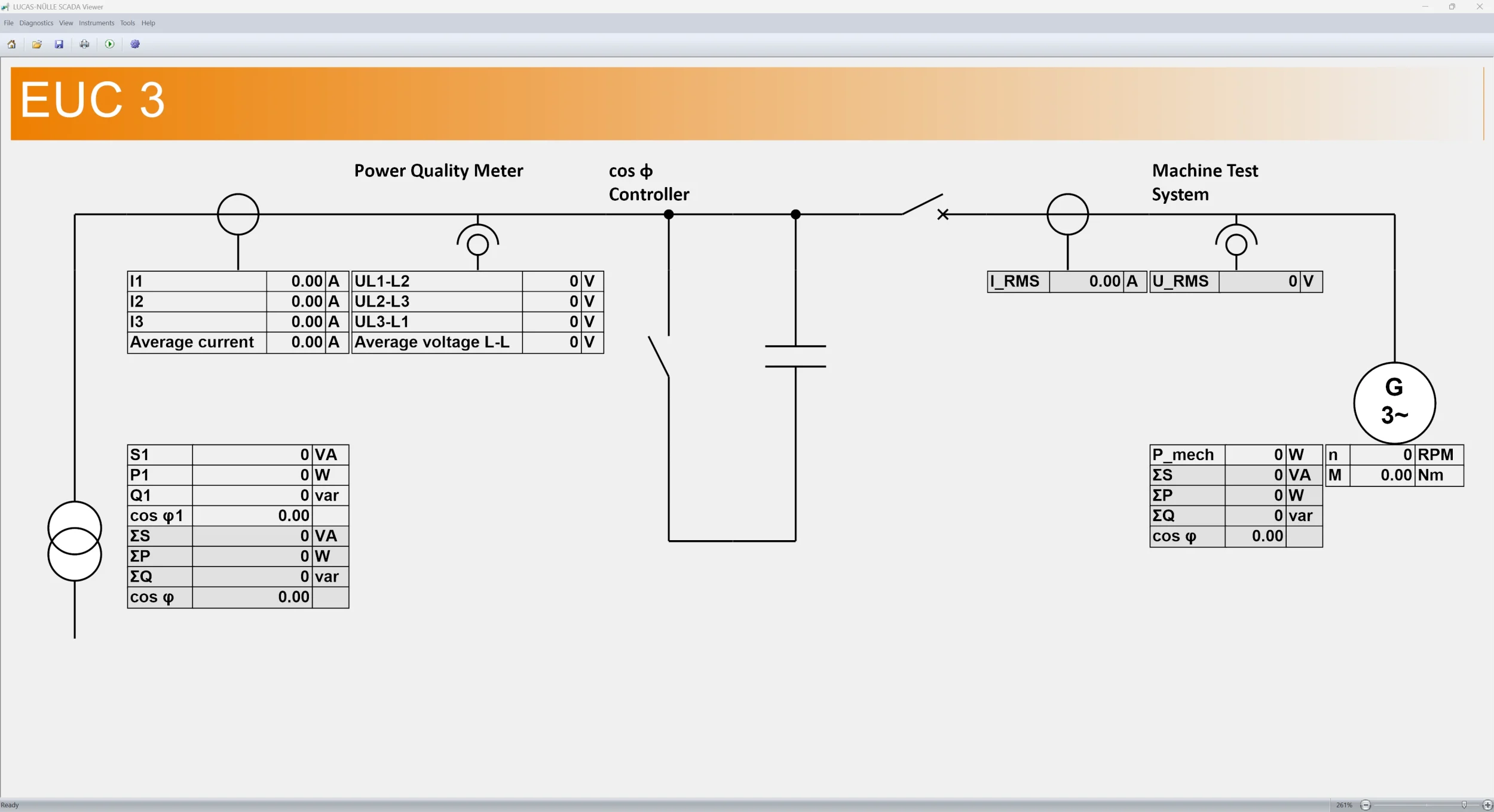
System for industry-oriented reactive power compensation: measure the demand of an induction motor, switch capacitor stages manually and commission a genuine industrial controller.

Learning Content
  • Determining reactive power demand and designing capacitors
  • Switching in capacitor stages manually
  • Configuring and testing the reactive power controller
  • Avoiding critical fault conditions
KEY FEATURES
  • Freeing up grid capacity and reducing costs
  • Commissioning a genuine industrial controller
  • Making overcompensation and self-excitation visible
  • Servo machine test bench as a controllable load machine
Speak with a Product Specialist +1 (757) 808-5696 · sales@lucas-nuelle.com

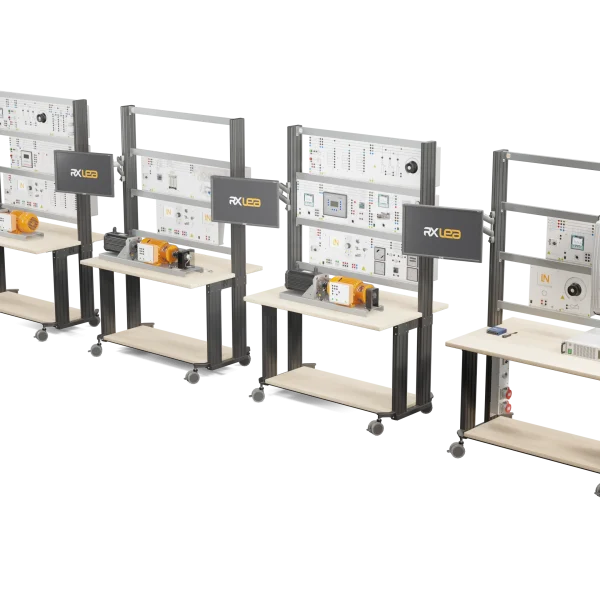
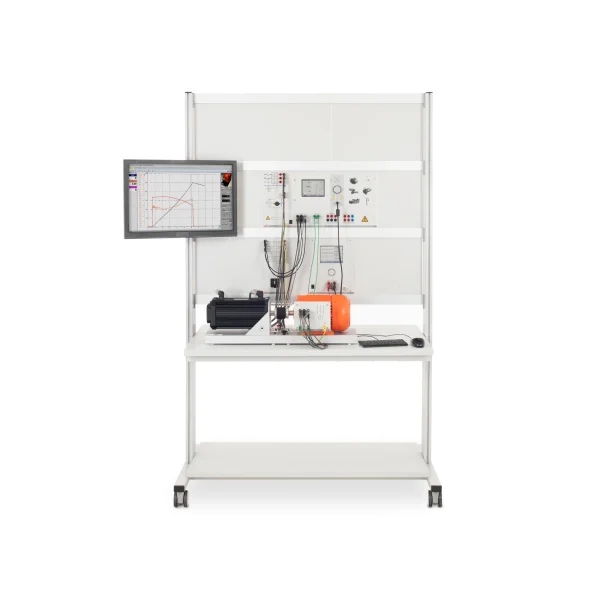
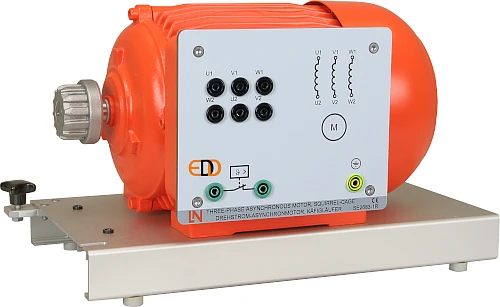
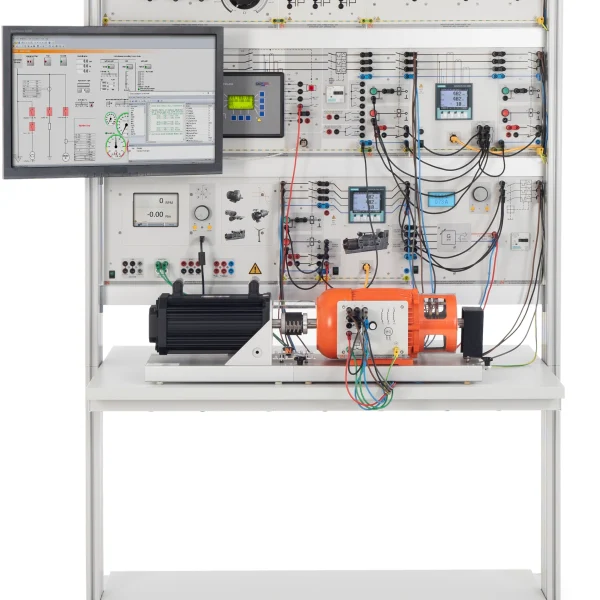
Large motors draw inductive reactive power, which loads the grid and costs companies money through reactive energy charges. The countermeasure is a matter of practical skill: measure the demand, design the capacitors, commission the system. For this purpose, the system provides a 1 kW three-phase motor on the servo machine test bench, a switchable four-stage capacitor bank, an industrial reactive power controller and a Power Quality Meter. Participants determine the reactive power demand, calculate the compensation capacitance, first switch the stages manually and then hand over control to the industrial device. Overcompensation and self-excitation during motor run-down can also be demonstrated without risk.

Artikel-Nr.MengeBezeichnung
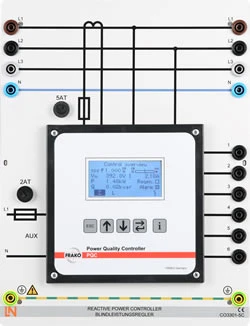
CO3301-5C1Reactive power controller
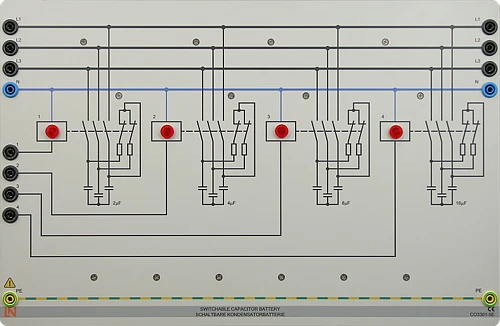
CO3301-5E1Switchable Capacitor Battery
SE2683-1R1Three-phase asynchronous motor, squirrel-cage, 1 kW, 690/400 V
CO3212-2D1Star-Delta switch
CO3212-1P1Motor protection switch, 3 pole, 1.6-2.5A
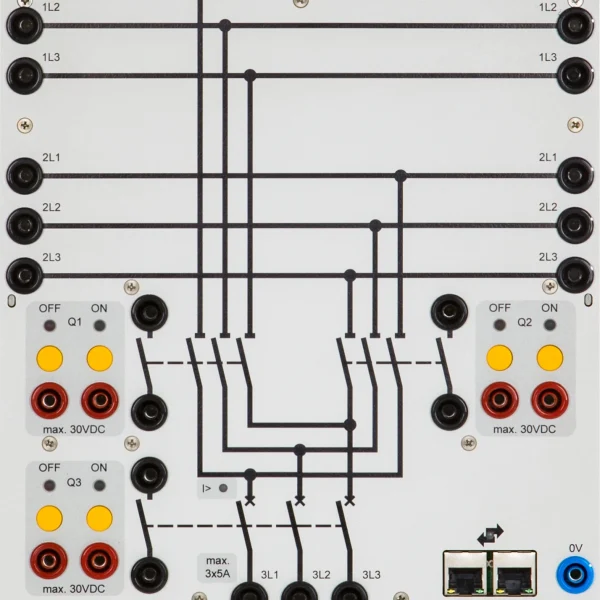
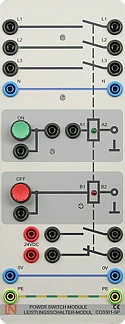
CO3301-5P1Power switch module
SO2800-3Y1Interactive Lab Assistant: Energy management
SO4001-3H1Software SCADA Viewer
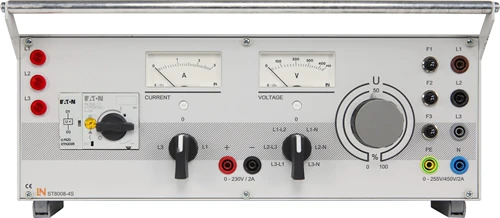
CO3212-5V1Three-phase power supply with motor protection switch
CO5127-2S1Power Quality Meter mit Grafikdisplay und Langzeitspeicher
LM90571Patch cable Cat5E 1x 1m yellow, 2x 2m yellow
LM998815-Port Ethernet Switch
LM82571USB 2.0 Ethernet adapter, 10/100
CO3636-6Y1Servo machine test stand for 1kW machines incl. software ActiveServo (D,GB,F,E)
SE2662-7D1Coupling guard with LED lighting for 1kW machines
SE2662-6A10Rubber coupling sleeve, 1kW
ST7200-7A1SybaPro experiment trolley, 3-level, 6 sockets, 1250x1970x800mm
ST8010-4T1Monitor holder for flat screen monitor of weight up to 15kg / 33lbs
ST7200-5L1Protection cover for three-level experiment trolleys
ST8010-4G1Keyboard adapter for flat screen monitor holders
ST8008-8N1Protected power distribution for working stations
ST8010-4J1Multiple socket outlet, 6 fold, with illuminated switch
ST8000-4C1Display for Energy Management equipment
SO5126-3R40Safety connecting plug 4mm with tap (2x), black, 1000V/32A CAT II
SO5126-3V2Safety connecting plug 4mm with tap (2x), blue, 1000V/32A CAT II
SO5126-3W2Safety connecting plug 4mm with tap (2x), green/yellow, 1000V/32A CAT II
SO5148-1L1Set of safety measurement cables, 4mm (31 leads)

Learning Content in Detail

Participants carry out the entire compensation process: determining the demand, designing the capacitors, switching manually, configuring the automatic controller and avoiding fault conditions.

Determining reactive power demand and designing capacitors

Participants measure the demand of industrial induction motors and calculate the required compensation capacitors.

Switching in capacitor stages manually

Participants assess in practice how line current, apparent power and power factor change with each stage switched in.

Configuring and testing the reactive power controller

Participants commission the controller, specify target power factors and check connection detection and stage switching.

Avoiding critical fault conditions

Participants analyze overcompensation and self-excitation of motors and avoid them through correct dimensioning.

Features & Applications

The experiments address the optimization of power quality, as well as avoiding additional reactive current charges in industrial plants and commissioning automatic reactive power controllers.
  • Freeing up grid capacity and reducing costs — Through measurement, participants experience how stepped compensation relieves the load on lines, frees up grid capacity and avoids additional charges from the energy supplier.
  • Commissioning a genuine industrial controller — The system works with an industrial reactive power controller. Participants set up control profiles, switching stages and delay times exactly as required in the factory.
  • Making overcompensation and self-excitation visible — Overcompensation and self-excitation during motor run-down can be reproduced without risk. Participants recognize the danger and prevent it by designing the system correctly.
  • Servo machine test bench as a controllable load machine — The test bench loads the motor under software control with exact reproducibility. As a result, measurement series remain comparable across groups and runs.
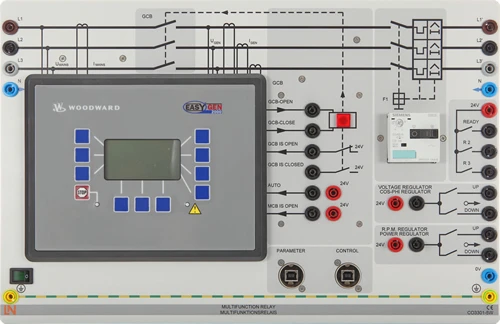
  • Industrial reactive power controller (PQC) — The controller automatically detects the phase angle and switches capacitor stages in or out depending on the load. Participants thus work on a closed, automated control loop.
  • Switchable capacitor bank with four stages — Four stepped capacitor groups allow different switching combinations. This makes the principle of stepped compensation comprehensible through measurement.
  • ActiveServo software — Automatically records speed-torque characteristics, sets the load parameters and superimposes the motor and load characteristics to determine the operating point. Time diagrams record dynamic processes such as heavy starting.
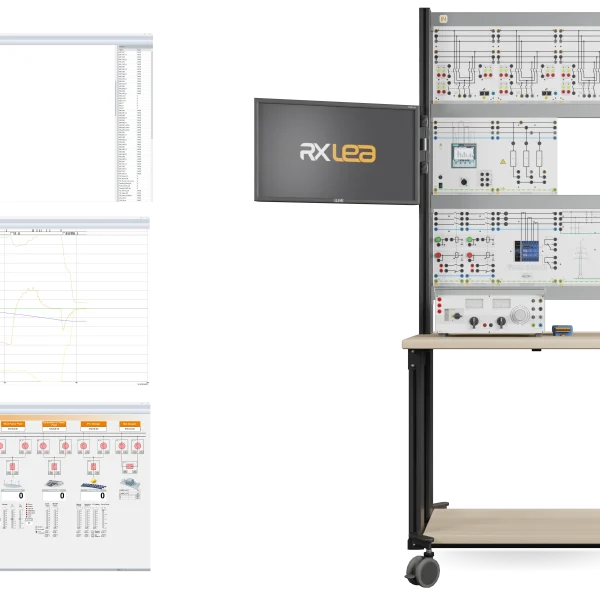
  • SCADA Viewer — Shows in real time on a digital phasor diagram how switching in capacitors changes cos φ, and records the measured values via the data logger.
Learners working with RXLea on a tablet at a Lucas-Nuelle training system
RXLea

From Knowledge Comes Capability.

You guide the learning

Where theory and practice go hand in hand.

RXLea brings a new way of learning: project-based, hands-on and clearly structured. Learners solve real-world tasks, while instructors save time on preparation. Interactive modules, smart analytics and real hardware create a modern, efficient learning world.

Hands-on and interactive

Animations, interactive tasks and realistic scenarios build a deep understanding. All content is organized into clear learning paths for focused, hands-on learning.

Digital support

3D assembly animations and digital instructions simplify complex procedures, reduce errors and help learners work more independently.

Visual support

Overview graphics, screenshots and sample animations make the learning world transparent. Photos from the learning packages are also available, including country-specific versions where needed.


Learners using a tablet at an energy training system
RXLea on desktop, laptop and tablet
RXLea Path Creator for building learning journeys
RXLea Navigator showing the learning world
Learn more about RXLea
Newsletter

Stay ahead in
technical training.

Get the latest training systems, product launches and educational insights, delivered directly to your inbox.

Your email address

By subscribing, you agree to our Privacy Policy. You can unsubscribe at any time.

 Please select at least one category before subscribing.
I'm interested in - select all that apply