


Skip to content

Wheel Speed Sensors

RXLea
Digital projects for hands-on learningInteractive learning content, directly connected to the training system.

Wheel Speed Sensors

ARS21UT

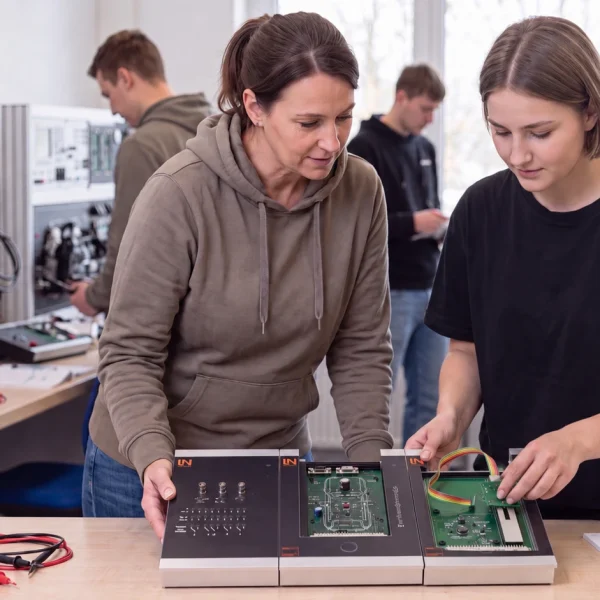
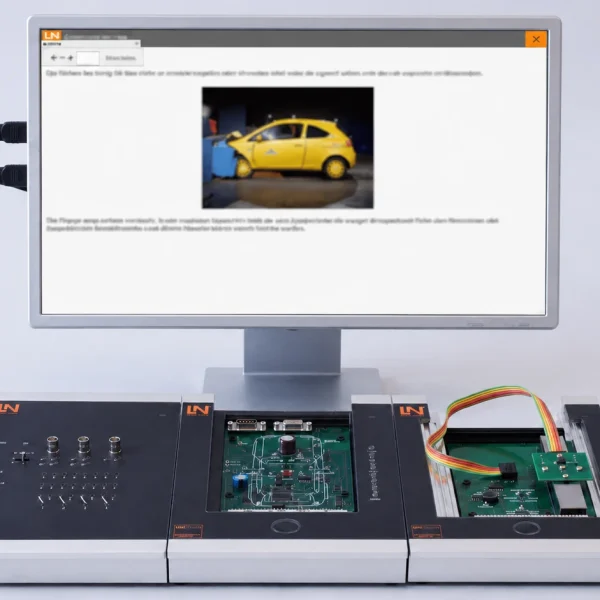
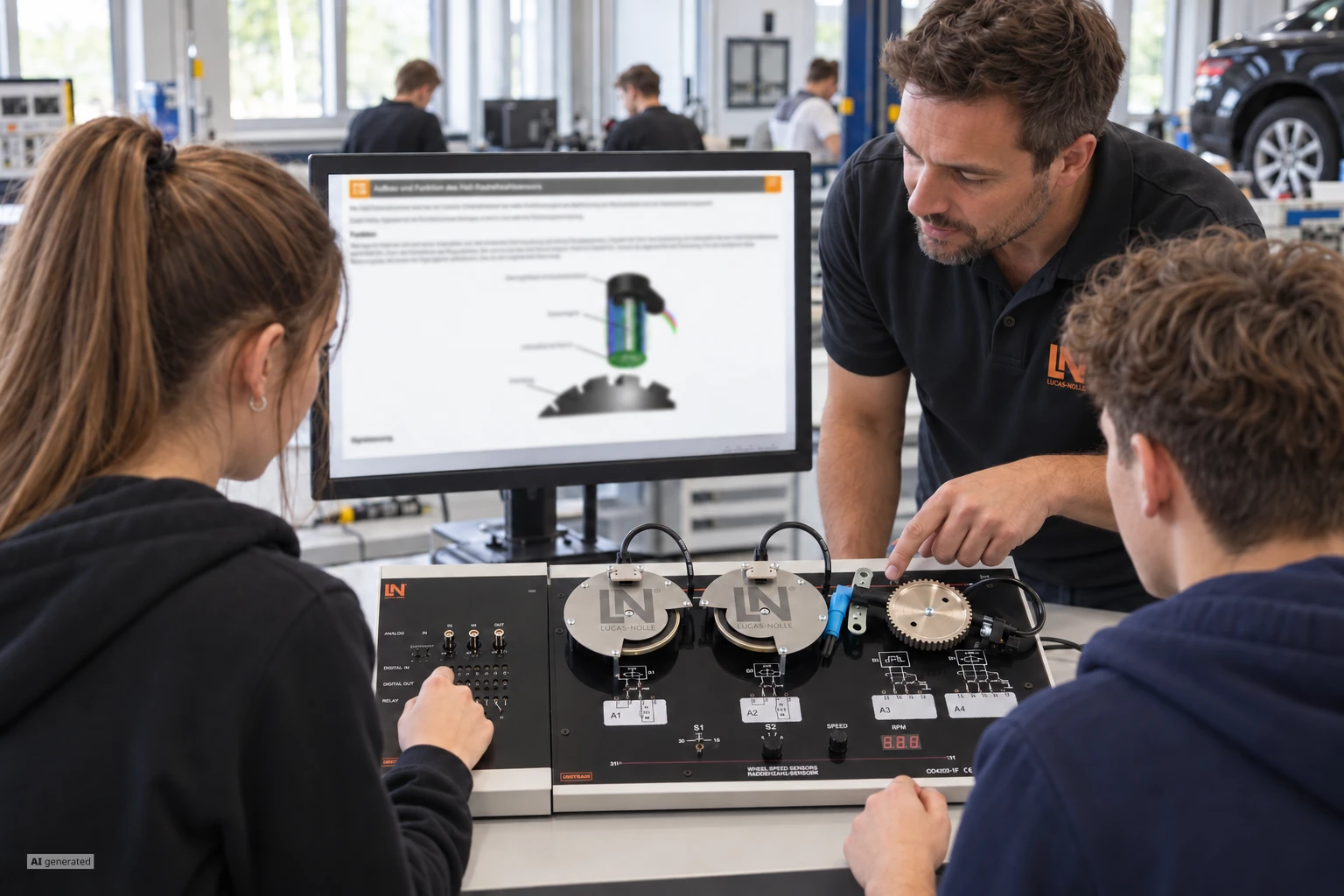
Learners diagnose modern wheel speed sensors in a hands-on way. The system compares inductive and Hall sensors with magnetoresistive technology.

Learning Content
  • Comparing sensing principles
  • Analyzing inductive signals
  • Evaluating Hall sensor function
  • Investigating magnetoresistive sensors
KEY FEATURES
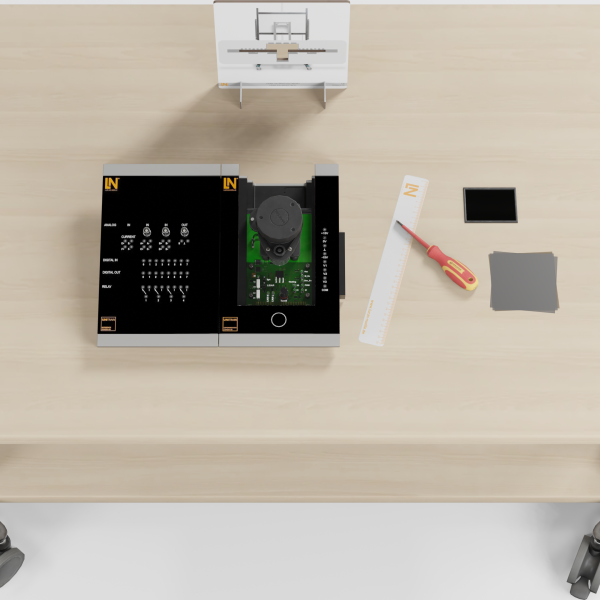
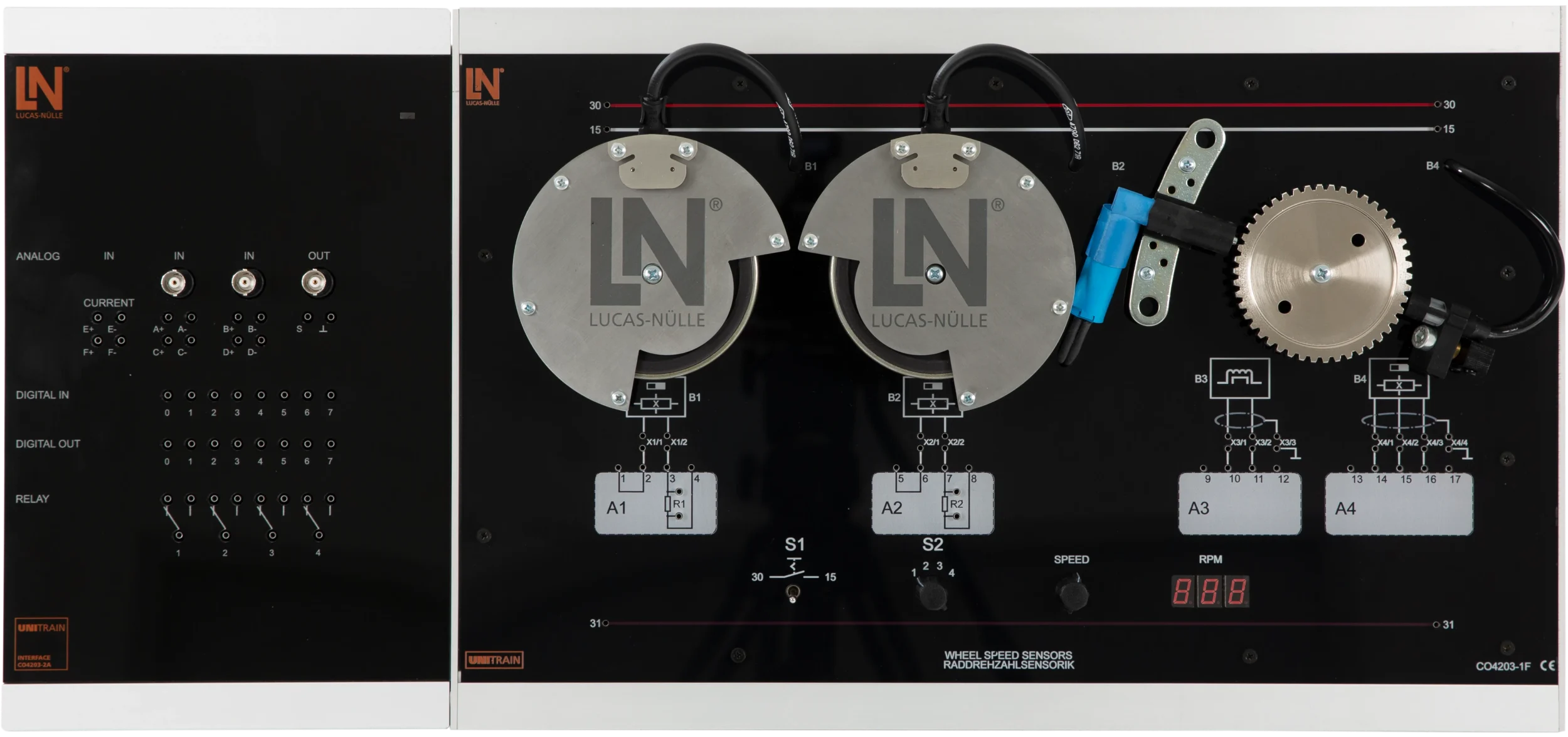
  • Visual inspection of the rotating sensor wheels
  • Mechanical magnetic track check with test card
  • Triple motor drive unit with speed display
  • Visible waveform contrasts on the oscilloscope
Speak with a Product Specialist +1 (757) 808-5696 · sales@lucas-nuelle.com

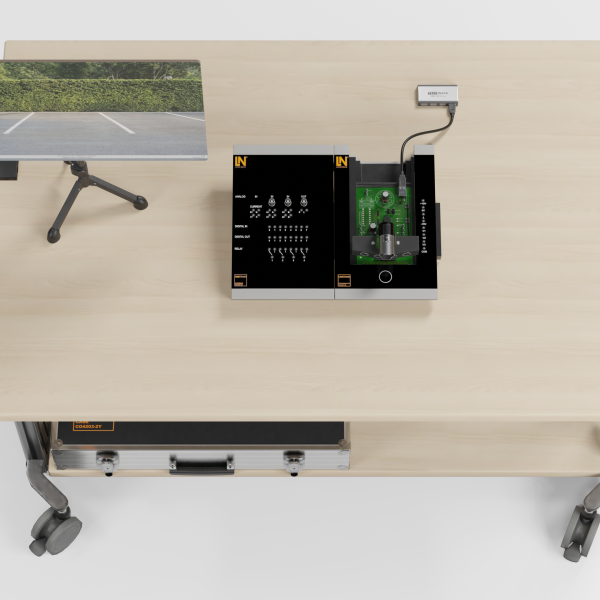
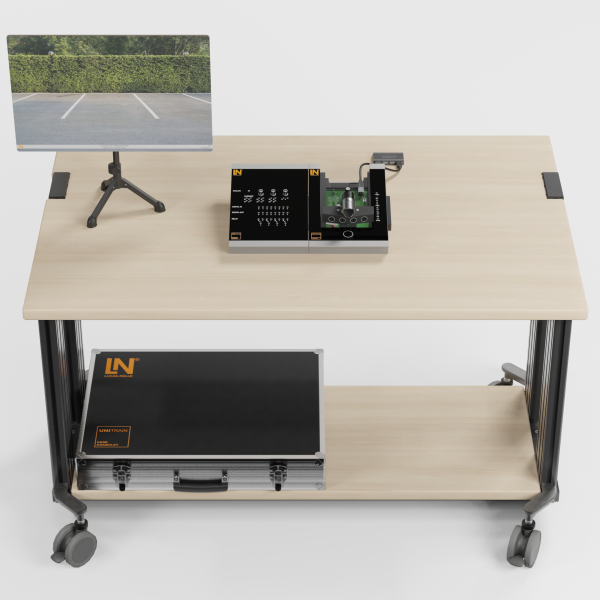
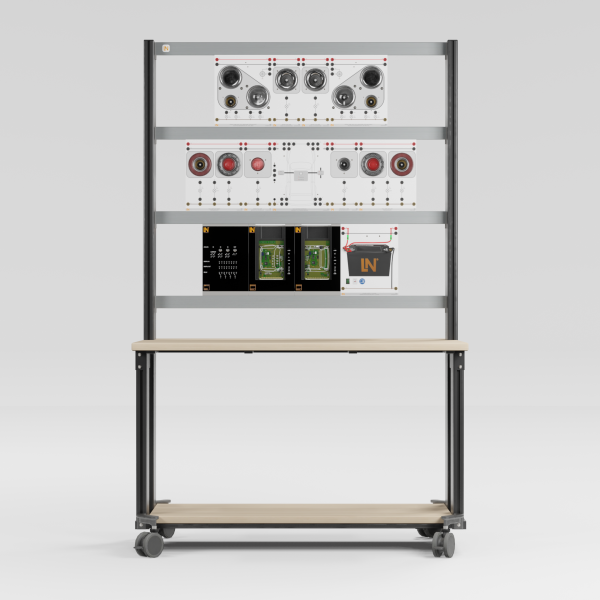
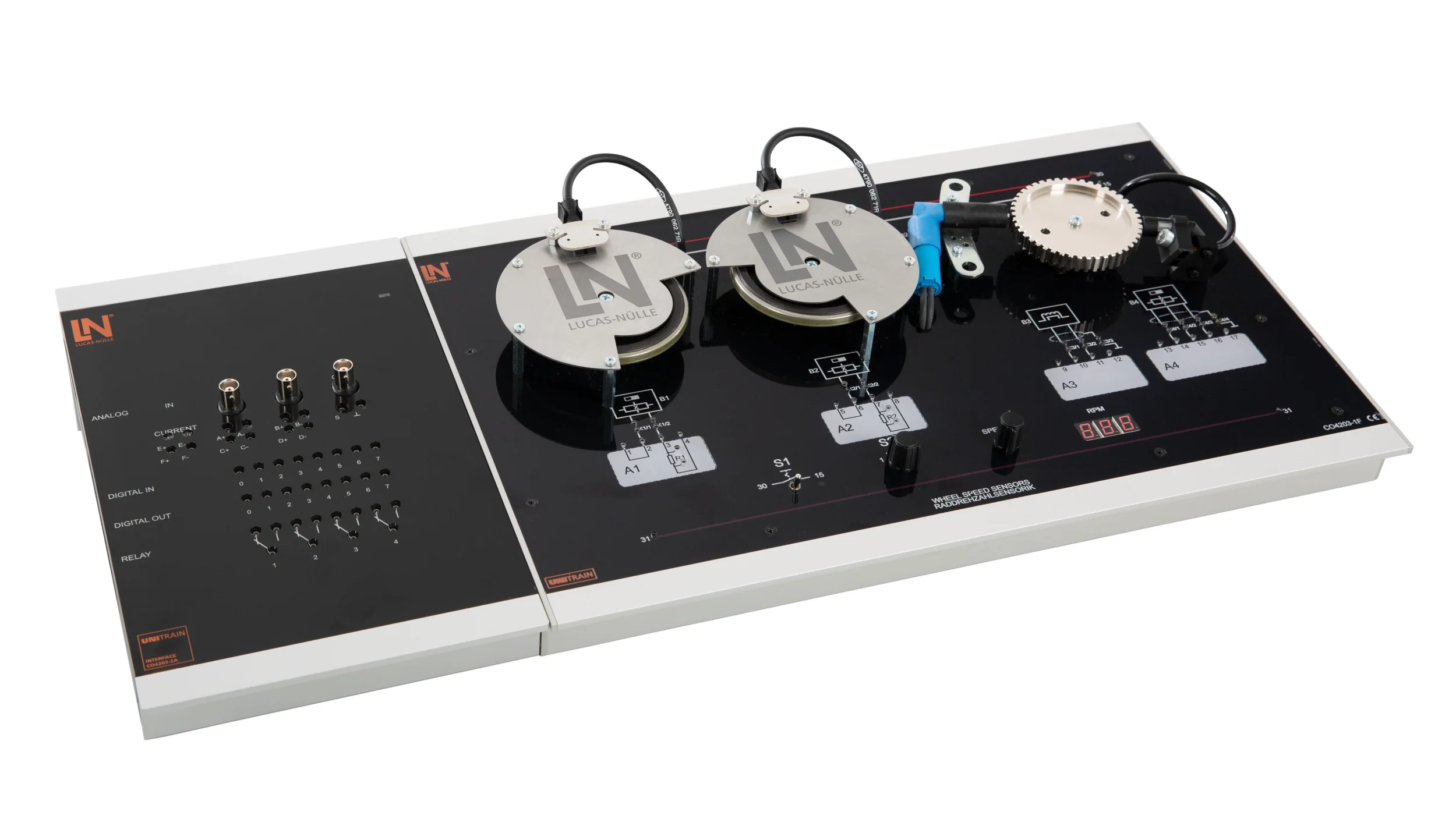
Modern driver assistance systems require high-precision wheel speed signals, and service shops must be able to diagnose the different sensing principles precisely. The UniTrain training system for wheel speed sensors is based on scanning mechanical pulse rings and magnetic encoders. On three genuinely driven sensor wheels, learners safely capture signal characteristics and check mechanical magnetic tracks with a test card. They measure the current-signal principle at the shunt and evaluate seven integrated fault conditions.

CO4205-1FCourse: Wheel Speed Sensors
CO4203-2AUniTrain Interface mit virtuellen Instrumenten (Basis VI)
CO4203-2JUniTrain measurement accessories, shunts and connection cables
CO4203-2YUniTrain storage case for one UniTrain system
SO4203-2VUniTrain storage case for experiment board

Learning Content in Detail

With the UniTrain course, learners acquire essential skills for diagnosing modern wheel speed sensors in automotive technology:

Comparing sensing principles

Learners distinguish passive inductive sensors from active Hall and magnetoresistive sensors.

Analyzing inductive signals

Learners capture the sinusoidal voltage with its variable amplitude at different motor speeds.

Evaluating Hall sensor function

Learners determine the constant square-wave output voltage when the pulse ring is scanned.

Investigating magnetoresistive sensors

Learners measure the pulsating current flow via the internal shunt resistor in the control unit.

Checking magnetic encoders mechanically

Learners check the magnetic tracks of the wheel bearing using the magnetic test card.

Diagnosing faults in the wheel speed system

Learners evaluate the fault memory and isolate defective sensors or damaged encoder tracks.

Features & Applications

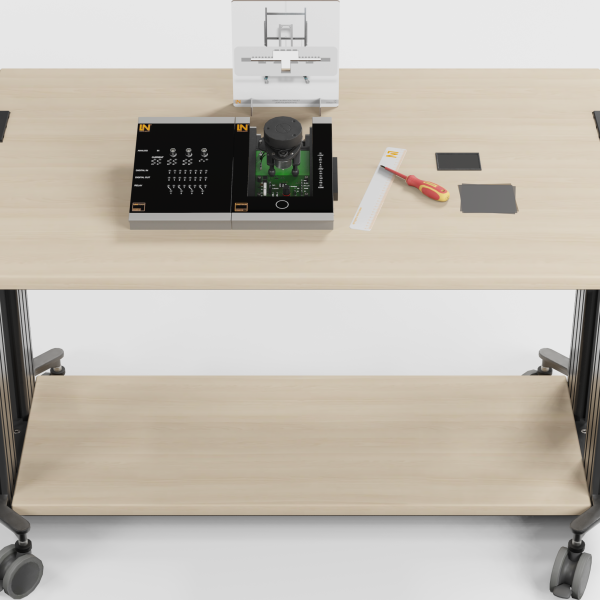
The UniTrain wheel speed sensor board offers hands-on tests. Discover its wide range of functions for your teaching:
  • Visual inspection of the rotating sensor wheels — The board exposes the pulse rings and encoders. Learners spot broken teeth or corrosion damage directly on the rotating disk.
  • Mechanical magnetic track check with test card — The film-based test card makes hidden magnetic poles visible. Learners place the card on the encoder and identify defective sectors.
  • Triple motor drive unit with speed display — Three mini motors drive the sensor wheels with infinitely variable speed. A red LED display shows the exact wheel speed in rpm directly in the test area.
  • Visible waveform contrasts on the oscilloscope — The system contrasts analog sine waves with digital square-wave signals. Learners compare the voltage rise of different sensor types.
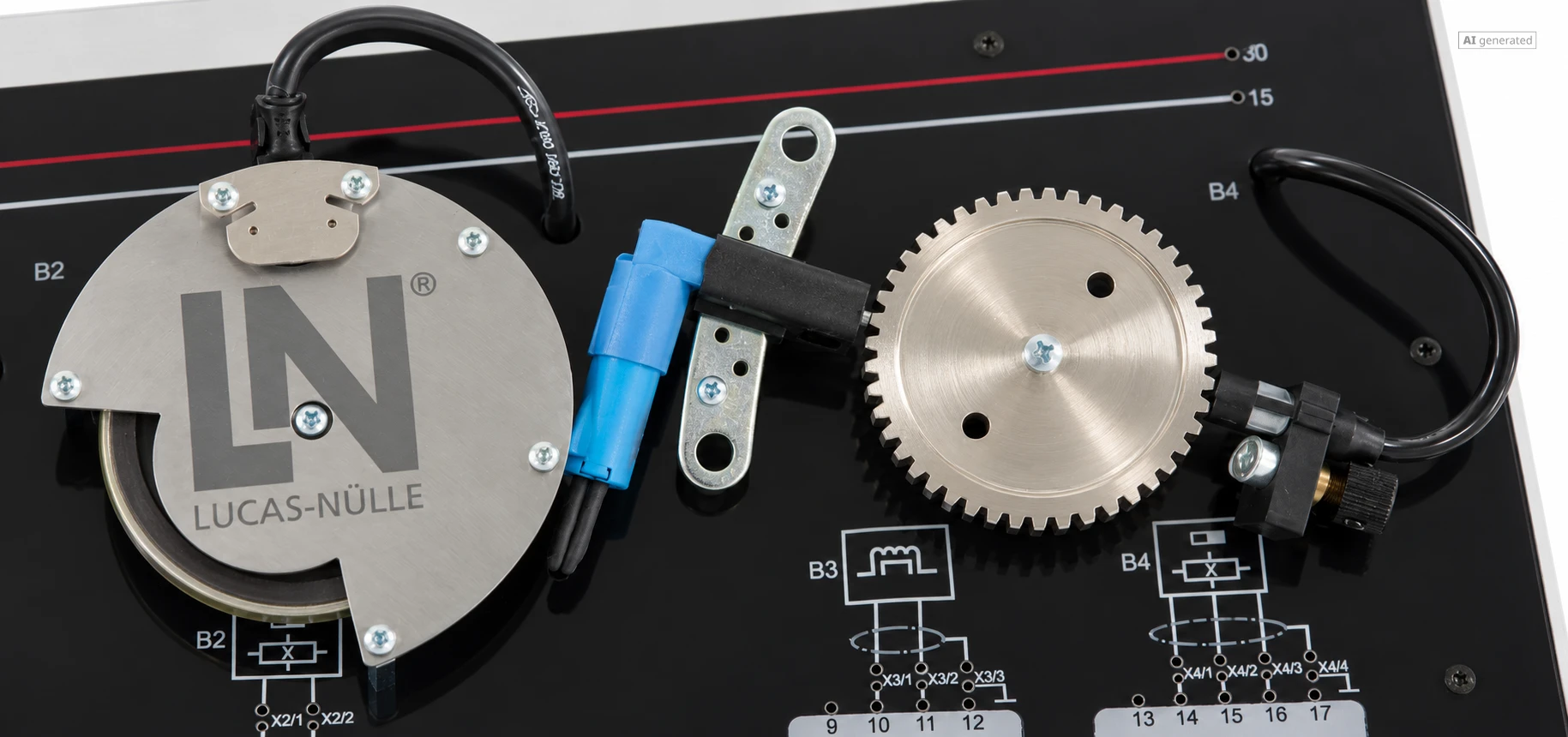
  • Metal ABS tone wheel with inductive sensor — A milled steel gear rotates in front of the sensor coil. It changes the magnetic field and generates a speed-dependent sinusoidal AC voltage.
  • Hall wheel speed sensor with integrated evaluation IC — The active sensor scans the tone wheel. The internal Hall element converts changes in the magnetic field into a sharp square-wave signal.
  • Active ASB wheel bearing with integrated magnetic encoder — The wheel bearing replica uses a plastic ring with magnetic poles. The magnetoresistive sensor detects field changes from almost 0 km/h.
  • Measuring bridge with internal control unit shunt — The circuit routes signals through a 22 Ω measuring resistor. Learners measure the pulsating sensor current directly as a voltage drop.
  • Digital shop fault memory simulation — The diagnostic tool reads out fault codes from the virtual ABS ECUs. Learners link fault texts with the oscilloscope waveforms they have actually measured.
Learners working with RXLea on a tablet at a Lucas-Nuelle training system
RXLea

From Knowledge Comes Capability.

You guide the learning

Where theory and practice go hand in hand.

RXLea brings a new way of learning: project-based, hands-on and clearly structured. Learners solve real-world tasks, while instructors save time on preparation. Interactive modules, smart analytics and real hardware create a modern, efficient learning world.

Hands-on and interactive

Animations, interactive tasks and realistic scenarios build a deep understanding. All content is organized into clear learning paths for focused, hands-on learning.

Digital support

3D assembly animations and digital instructions simplify complex procedures, reduce errors and help learners work more independently.

Visual support

Overview graphics, screenshots and sample animations make the learning world transparent. Photos from the learning packages are also available, including country-specific versions where needed.


Learners using a tablet at an energy training system
RXLea on desktop, laptop and tablet
RXLea Path Creator for building learning journeys
RXLea Navigator showing the learning world
Learn more about RXLea
Newsletter

Stay ahead in
technical training.

Get the latest training systems, product launches and educational insights, delivered directly to your inbox.

Your email address

By subscribing, you agree to our Privacy Policy. You can unsubscribe at any time.

 Please select at least one category before subscribing.
I'm interested in - select all that apply