

Skip to content

Sensors in Motor Vehicles

RXLea
Digital projects for hands-on learningInteractive learning content, directly connected to the training system.

Sensors in Motor Vehicles

ASO23UT

Teach the physical operating principles, characteristic curves and troubleshooting of sensors in engine management in a hands-on way. Ideal for modern automotive technology.

Learning Content
  • Checking sensor function
  • Recording characteristic curves
  • Analyzing signal behavior
  • Performing fault diagnosis
KEY FEATURES
  • Interactive recording of characteristic curves
  • Integrated fault insertion
  • Noise testing on potentiometers
  • Integrated motor drive
Speak with a Product Specialist +1 (757) 808-5696 · sales@lucas-nuelle.com

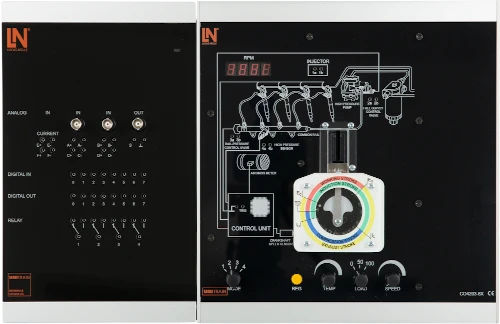
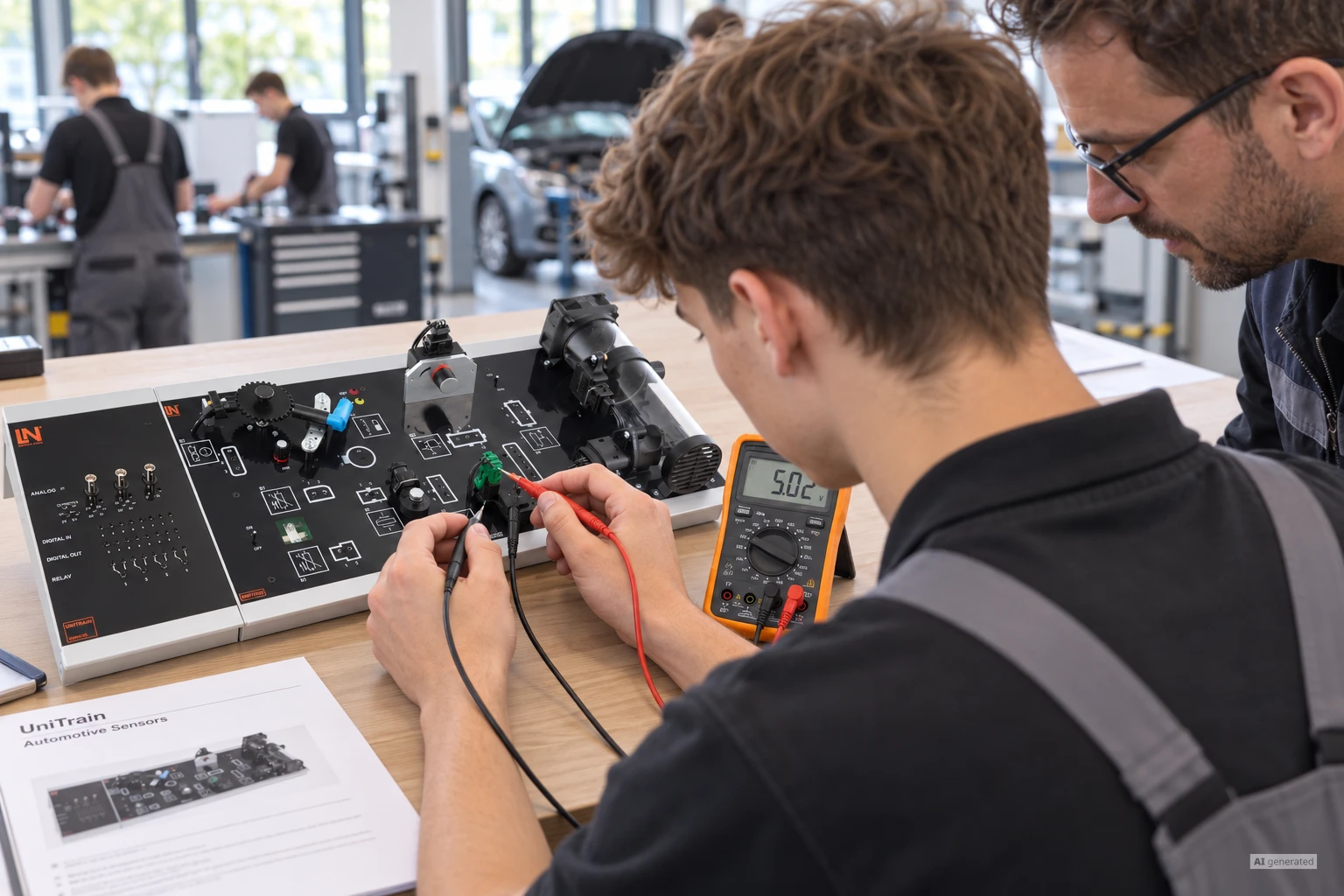
Faulty sensor values have a considerable impact on engine running and emissions behavior. Automotive service shops therefore need an in-depth understanding that enables targeted component diagnosis. The UniTrain system “Sensors in motor vehicles” offers the ideal solution: it is based on the measuring principles of modern vehicle sensors, such as induction, the Hall effect, the piezo effect and temperature-dependent resistors. Lucas-Nülle combines real sensor circuits on an experiment system with interactive experiments and integrated fault simulation. This allows participants to get to know complex sensor technology safely and in a hands-on way.

CO4204-7FCourse - Automotive 6: Sensors in motor vehicles
CO4203-2AUniTrain Interface mit virtuellen Instrumenten (Basis VI)
CO4203-2JUniTrain measurement accessories, shunts and connection cables
CO4203-2YUniTrain storage case for one UniTrain system
LM2330Multi13S digital multimeter
LM8213Over-/under pressure pump
SO4203-2VUniTrain storage case for experiment board

Learning Content in Detail

With this system, learners acquire essential skills for diagnosing modern vehicle sensors. The focus is on the following learning objectives:

Checking sensor function

Learners measure the square-wave signal of the Hall sensor with the oscilloscope at variable speed.

Recording characteristic curves

Learners precisely determine the temperature-dependent change in resistance of NTC and PTC sensors.

Analyzing signal behavior

Learners compare the induced voltage of the crankshaft sensor at low and high engine speeds.

Performing fault diagnosis

Learners systematically locate 8 faults inserted via relays in the sensor supply lines.

Features & Applications

Discover the wide range of applications of the UniTrain system. Benefit from interactive experiments and realistic diagnostics.
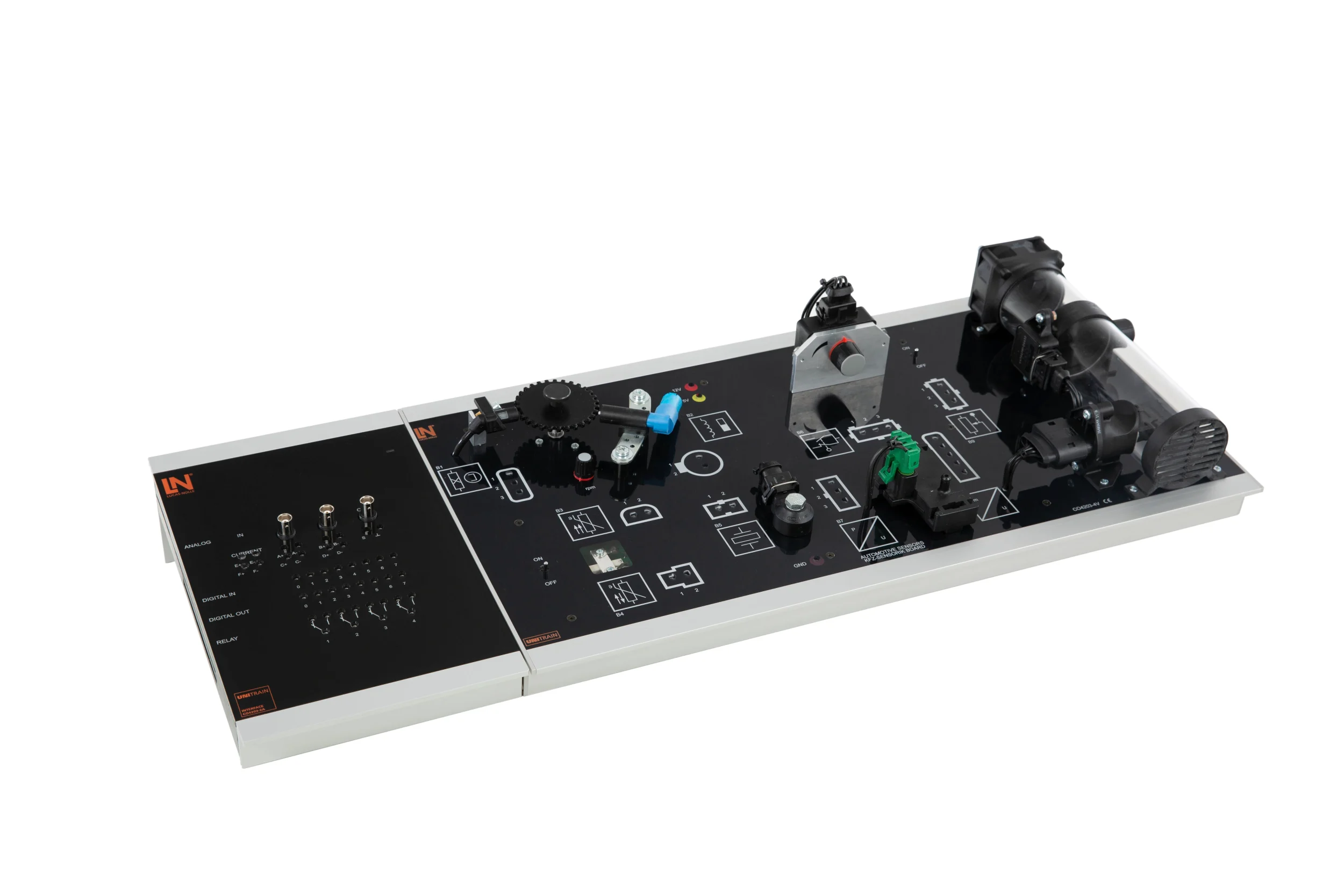
  • Interactive recording of characteristic curves — Learners record temperature- and pressure-dependent characteristic curves of NTC, PTC and MAP sensors in real time and evaluate them.
  • Integrated fault insertion — Learners activate up to 8 realistic faults via the software. They systematically narrow down open circuits and short circuits.
  • Noise testing on potentiometers — Learners check throttle valve potentiometers with the oscilloscope. They reliably detect contact dropouts and worn spots.
  • Integrated motor drive — An electric motor drives trigger wheels. Learners investigate changes in the frequency and amplitude of Hall and inductive sensors.
  • Speed sensors — Learners analyze the waveforms of Hall and inductive sensors and discover the differences between the various speed sensors.
  • Piezoresistive MAP pressure sensor — The piezo diaphragm converts intake manifold pressure into voltage signals. Learners simulate vacuum using a hand pump and capture the signal.
  • Hot-film air mass meter — An integrated fan generates the air flow. Learners measure the voltage-based control of the hot-film element under changing load.
  • NTC and PTC temperature sensors — An integrated heater warms up the sensors. Learners compare the opposing resistance behavior of NTC and PTC thermistors.
  • Throttle valve switch — The combination sensor detects idle, part load and full load. Learners measure microswitch contacts and continuous resistance tracks.
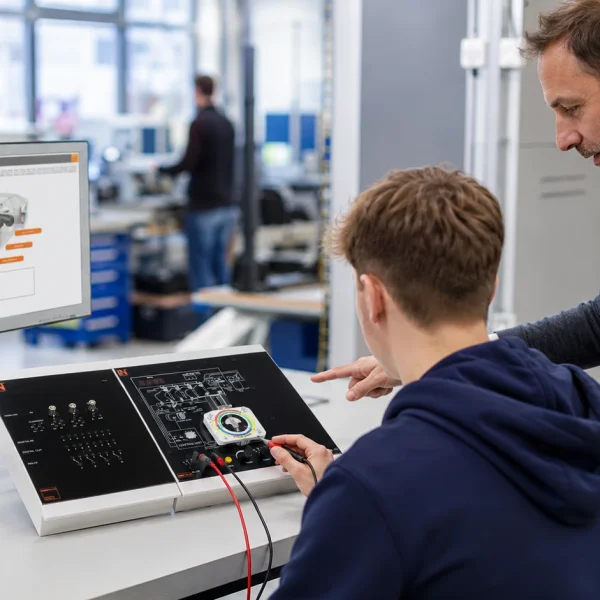
Learners working with RXLea on a tablet at a Lucas-Nuelle training system
RXLea

From Knowledge Comes Capability.

You guide the learning

Where theory and practice go hand in hand.

RXLea brings a new way of learning: project-based, hands-on and clearly structured. Learners solve real-world tasks, while instructors save time on preparation. Interactive modules, smart analytics and real hardware create a modern, efficient learning world.

Hands-on and interactive

Animations, interactive tasks and realistic scenarios build a deep understanding. All content is organized into clear learning paths for focused, hands-on learning.

Digital support

3D assembly animations and digital instructions simplify complex procedures, reduce errors and help learners work more independently.

Visual support

Overview graphics, screenshots and sample animations make the learning world transparent. Photos from the learning packages are also available, including country-specific versions where needed.

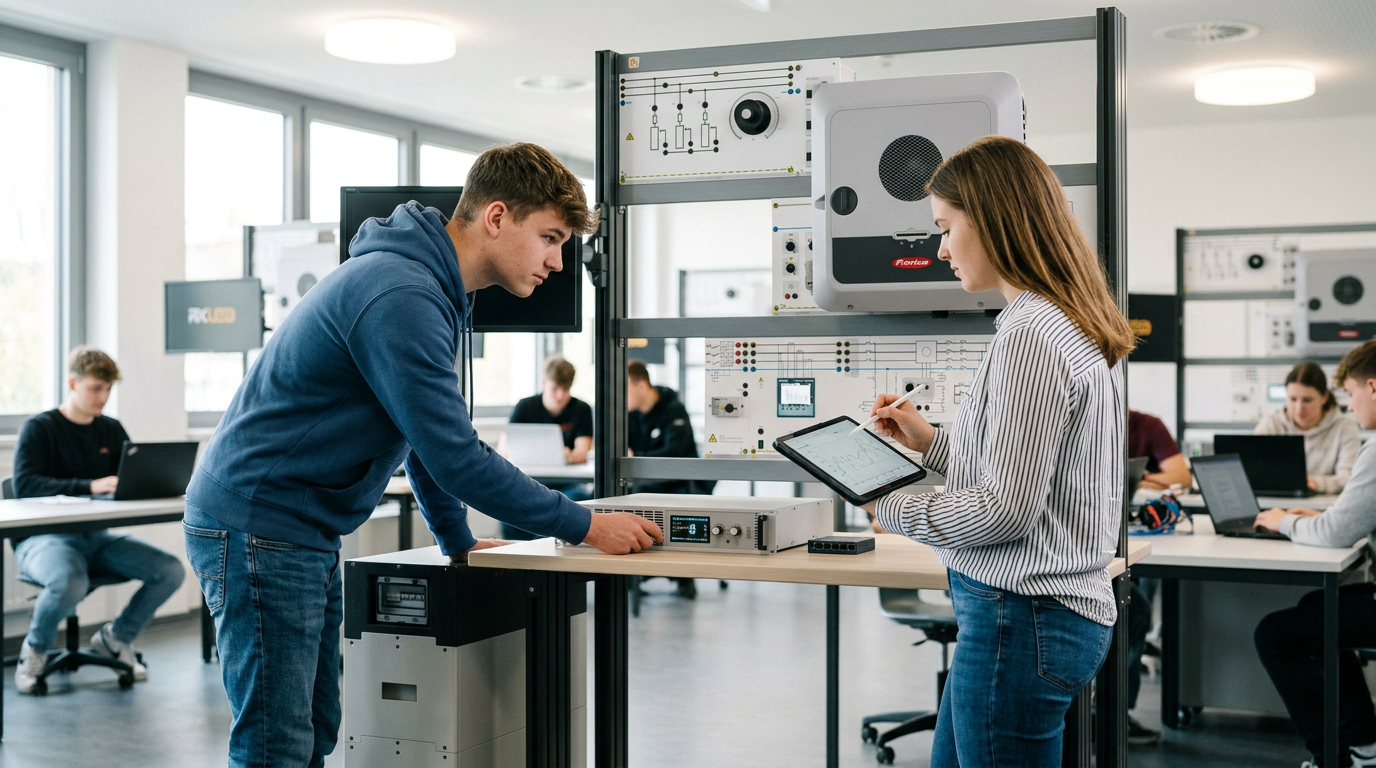
Learners using a tablet at an energy training system
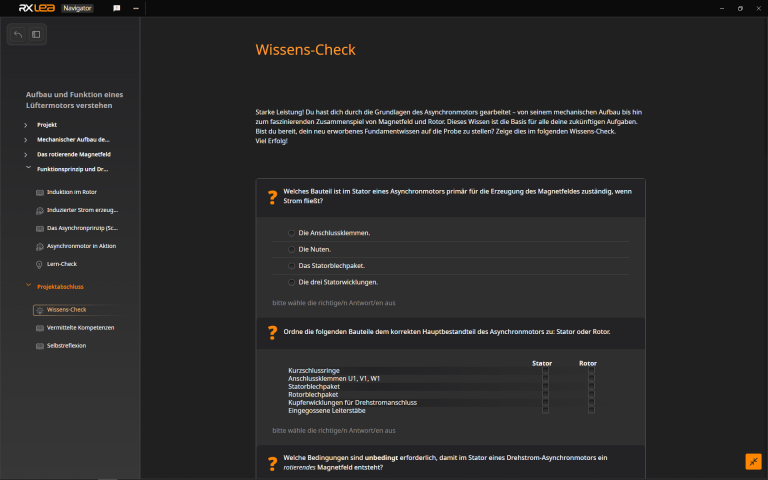
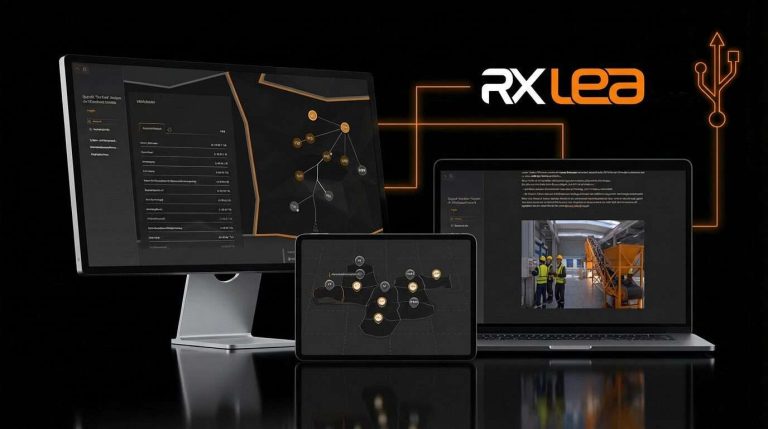
RXLea on desktop, laptop and tablet
RXLea Path Creator for building learning journeys
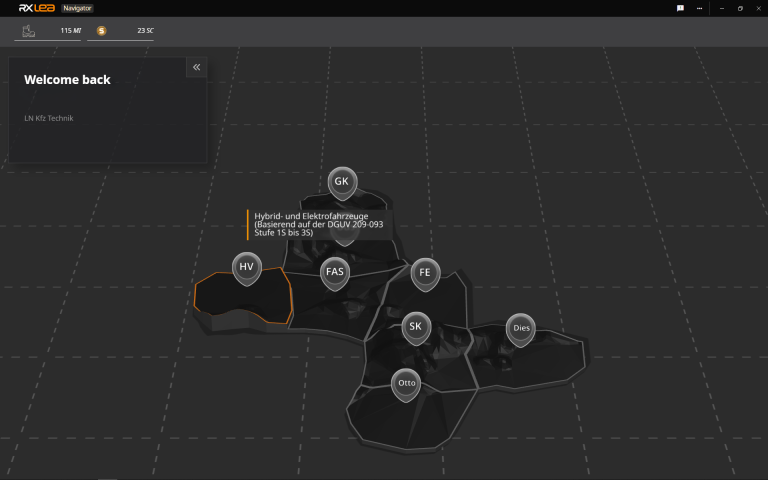
RXLea Navigator showing the learning world
Learn more about RXLea
Newsletter

Stay ahead in
technical training.

Get the latest training systems, product launches and educational insights, delivered directly to your inbox.

Your email address

By subscribing, you agree to our Privacy Policy. You can unsubscribe at any time.

 Please select at least one category before subscribing.
I'm interested in - select all that apply