


Design and Function of a Turbocharged Direct Petrol Injection System
Learners master the systematic diagnosis of modern gasoline direct injection systems. The training system combines real components and interactive software for maximum practical relevance.
- Performing troubleshooting
- Analyzing injector signals
- Checking sensor signals
- Applying OBD diagnostics
- Original vehicle components
- Real and simulation mode
- Automatic fault insertion
- Dynamic map visualization
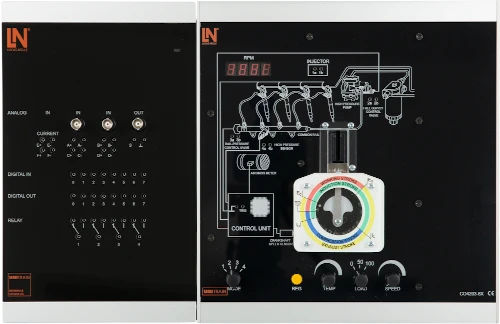
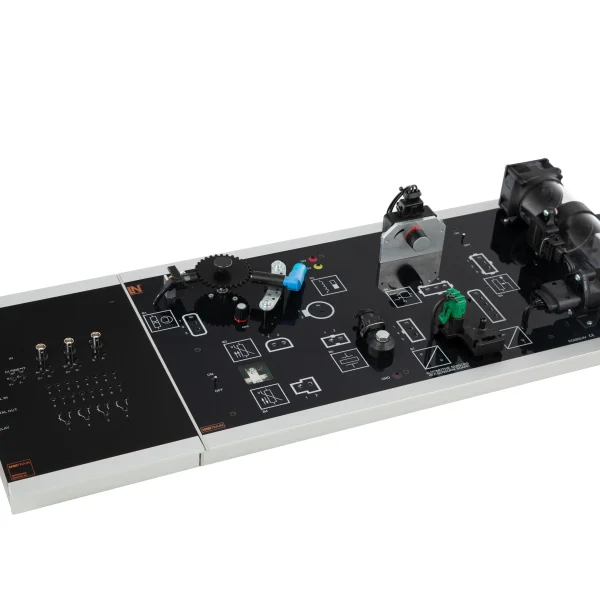
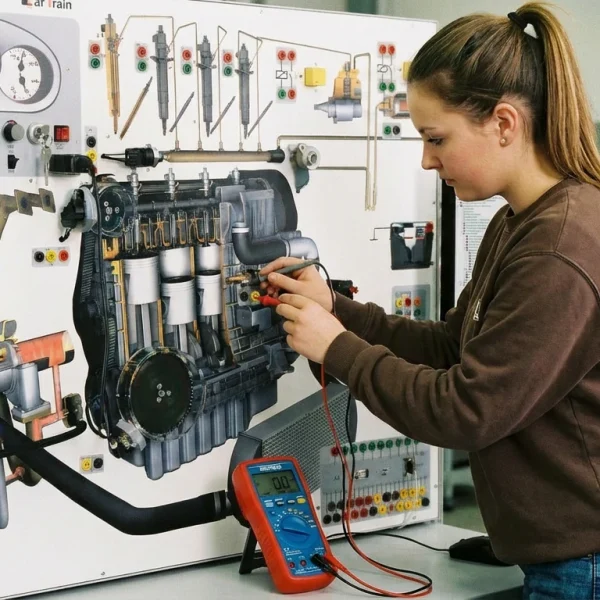
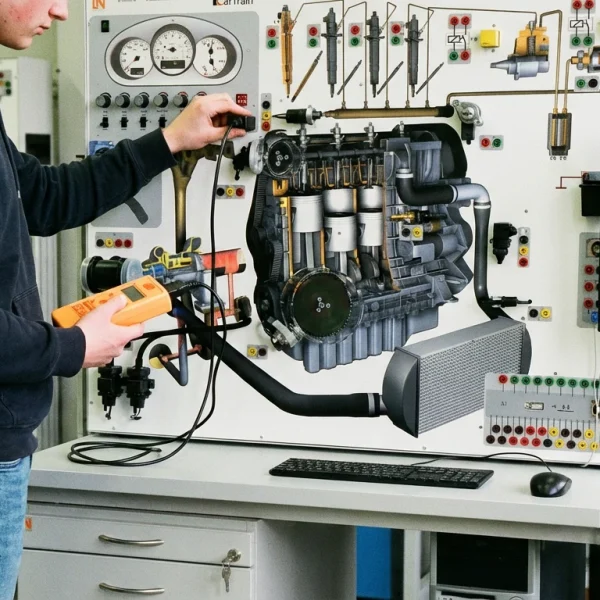
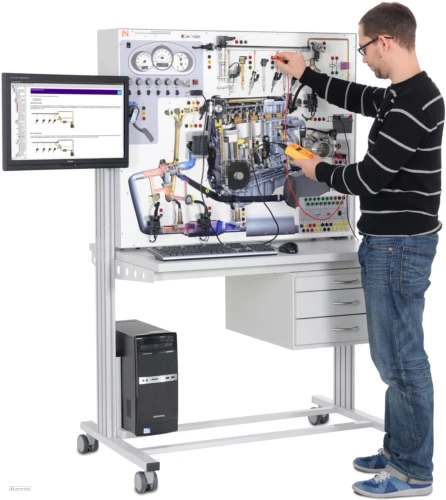
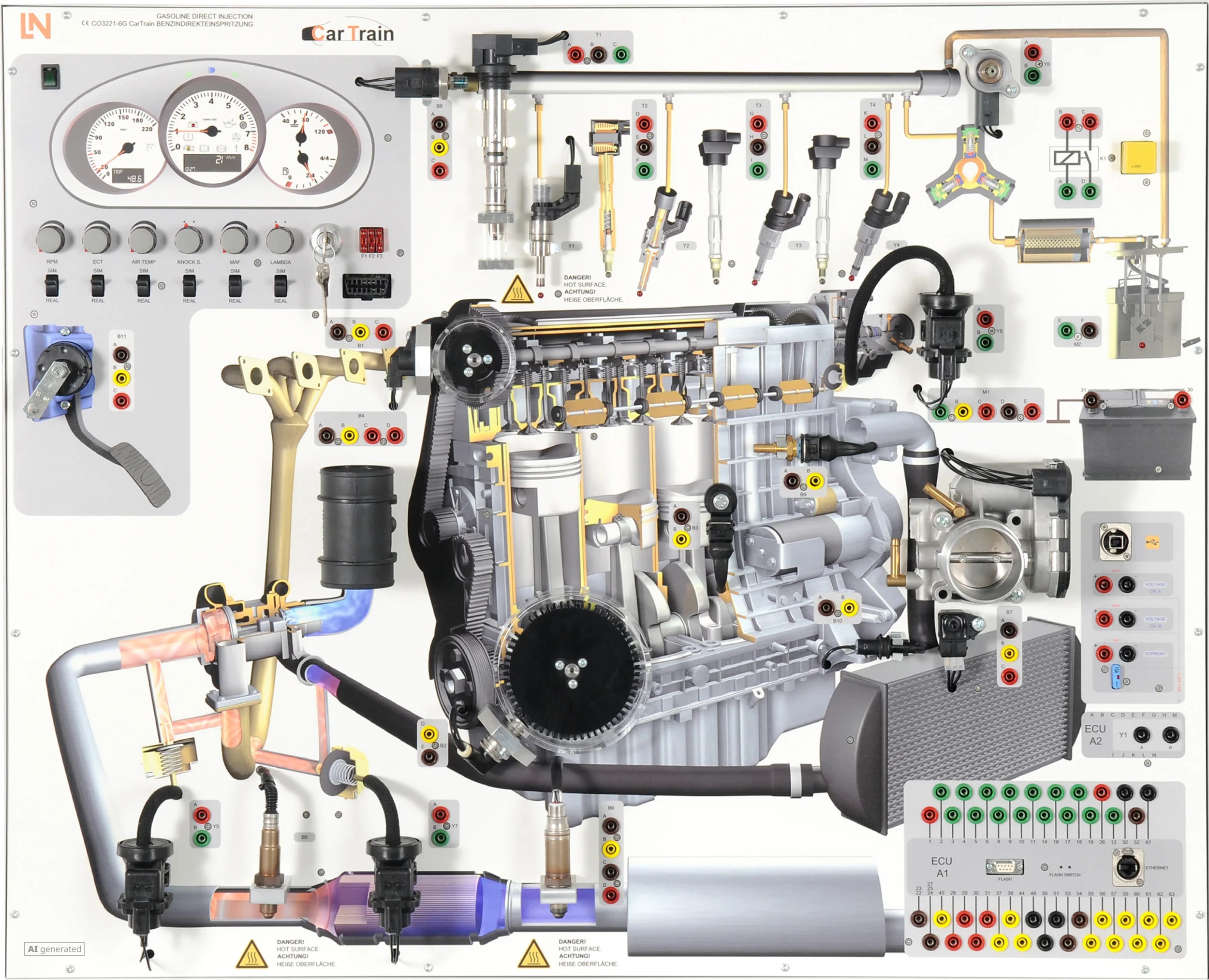
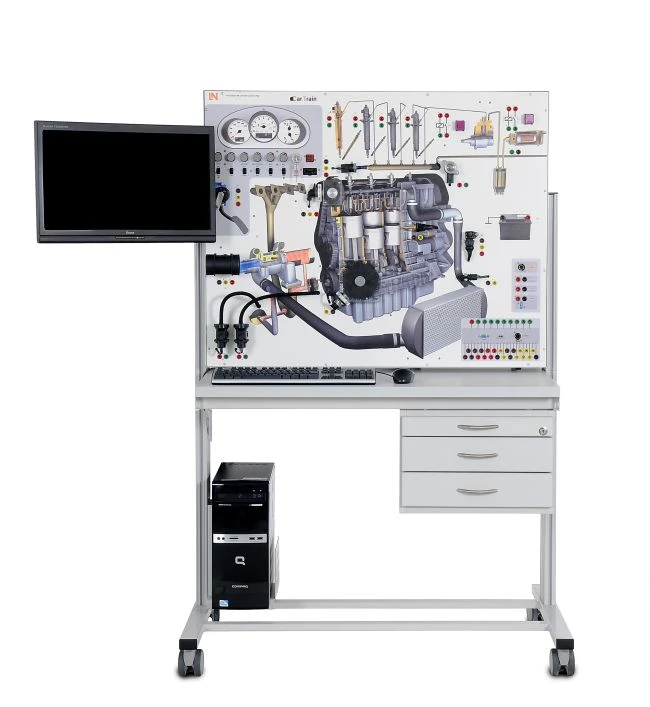
Modern vehicles have to meet strict emission limits. Automotive service shops therefore need technicians with comprehensive diagnostic skills for complex engine management systems. With the CarTrain gasoline direct injection MED system, you prepare learners optimally for these requirements. The system uses real vehicle components, a programmable control unit and interactive learning software with automated fault insertion. Participants analyze the engine management system with electronic throttle control and fully variable boost pressure control in a hands-on way. This lets you convey an in-depth understanding of operation, control and diagnosis – safely and efficiently, right in the classroom.
| Base Product | |
| CO3221-6G | CarTrain "Turbocharged Gasoline Direct Injection" |
| Accessories | |
| LM8213 | Over-/under pressure pump |
| SO3216-8R | Set of circuit breakers for vehicles (10A/15A) |
| Furniture | |
| ST7200-7K | SybaPro Experiment trolley for Ins-/Car-/TruckTrain, 1085x1350x800mm |
| Furniture Accessories | |
| ST7200-5M | Protection cover for CarTrain/InsTrain experiment trolleys |
| Measurement Leads | |
| CO3223-7B | CarTrain Software Common Rail |
Learning Content in Detail
Performing troubleshooting
Analyzing injector signals
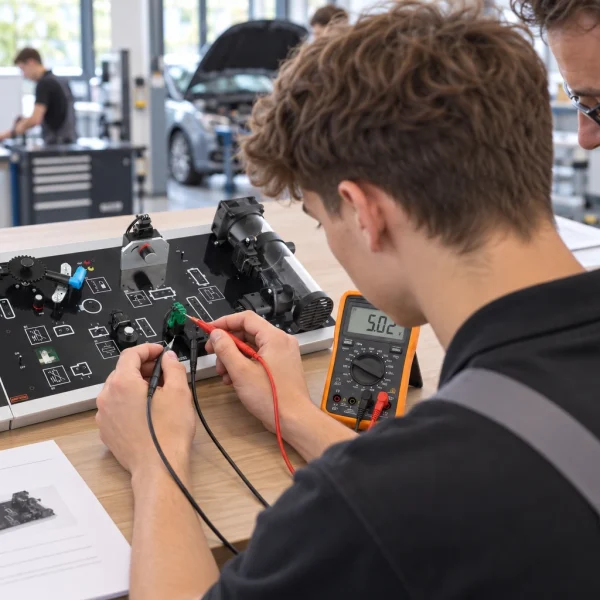
Checking sensor signals
Applying OBD diagnostics
Features & Applications
- Original vehicle components — The system uses sensors and actuators from real vehicles. Learners recognize them immediately.
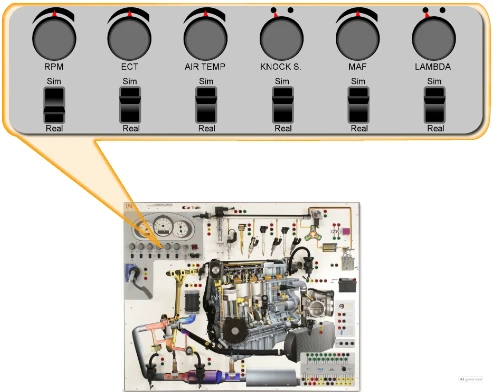
- Real and simulation mode — Switch between real sensor values and simulated signals. Learners analyze the behavior in real time.
- Automatic fault insertion — Activate up to 20 realistic faults via the PC. Learners locate malfunctions systematically.
- Dynamic map visualization — Learners observe 3D and 4D maps. They investigate the influence of engine speed on ignition timing.
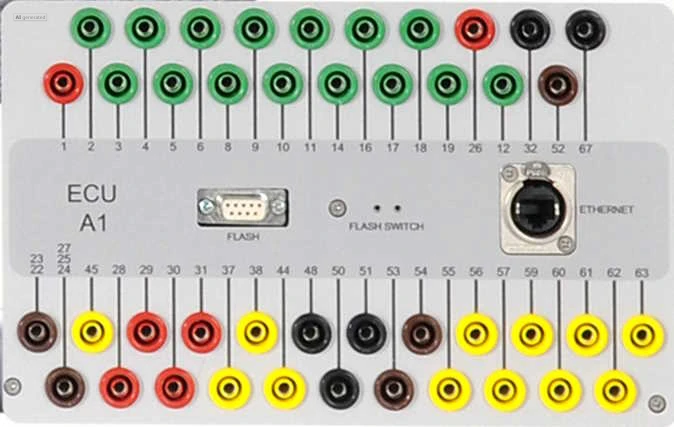
- Programmable control unit — Learners acquire sensor signals and control actuators with the control unit according to the IPO (input-process-output) principle.
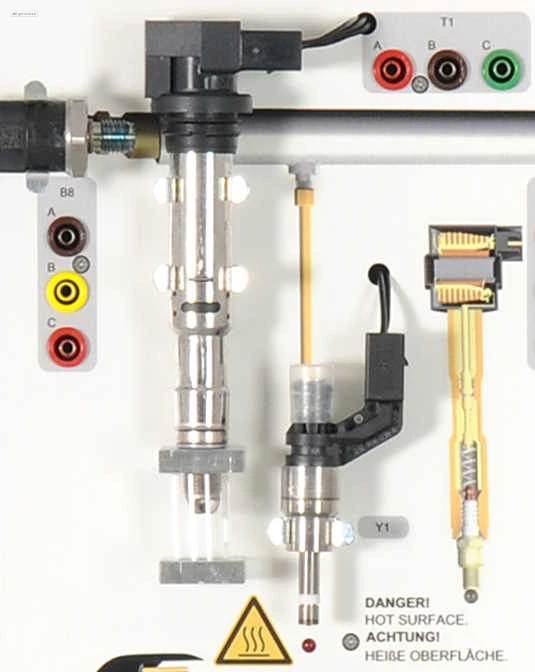
- High-pressure injectors — Learners measure the extremely short activation pulses of the multi-point injectors directly with the oscilloscope.
- Tumble flap valve — Learners analyze the Venturi effect at part load and control the intake manifold cross-section.
- OBD diagnostic interface — Use shop hardware to capture fault codes and measured values via standard protocols.

From Knowledge Comes Capability.
You guide the learning
Where theory and practice go hand in hand.
RXLea brings a new way of learning: project-based, hands-on and clearly structured. Learners solve real-world tasks, while instructors save time on preparation. Interactive modules, smart analytics and real hardware create a modern, efficient learning world.
Hands-on and interactive
Animations, interactive tasks and realistic scenarios build a deep understanding. All content is organized into clear learning paths for focused, hands-on learning.
Digital support
3D assembly animations and digital instructions simplify complex procedures, reduce errors and help learners work more independently.
Visual support
Overview graphics, screenshots and sample animations make the learning world transparent. Photos from the learning packages are also available, including country-specific versions where needed.




Stay ahead in
technical training.
Get the latest training systems, product launches and educational insights, delivered directly to your inbox.