


Skip to content

Power Semiconductors for AC Voltage Applications

RXLea
Digital projects for hands-on learningInteractive learning content, directly connected to the training system.

Power Semiconductors for AC Voltage Applications

EPE10UT

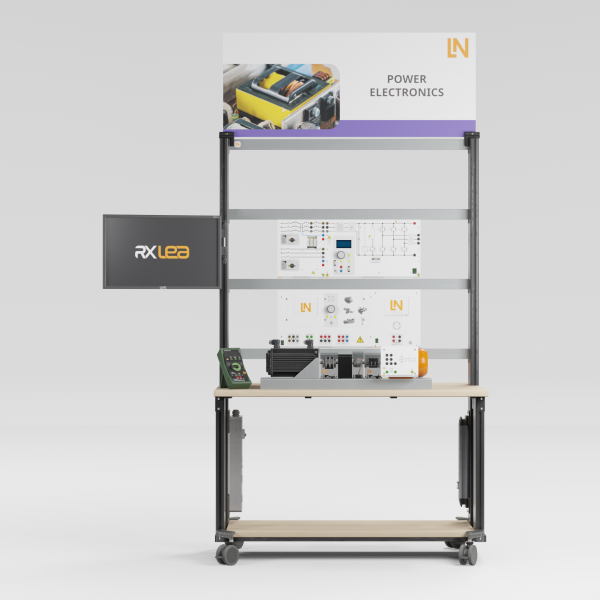
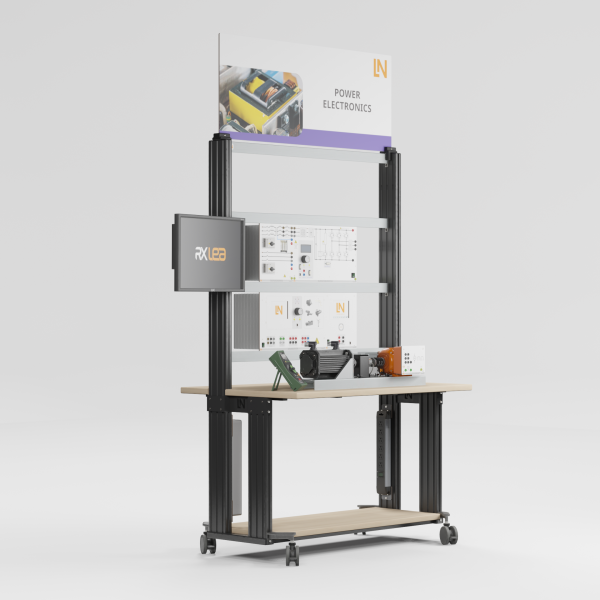
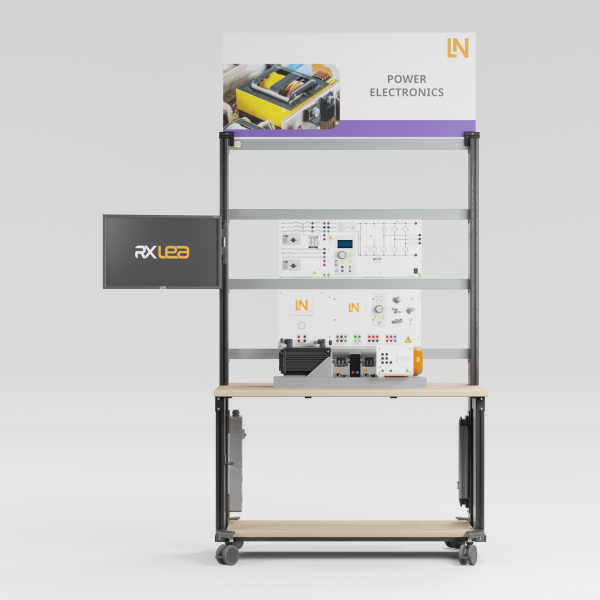
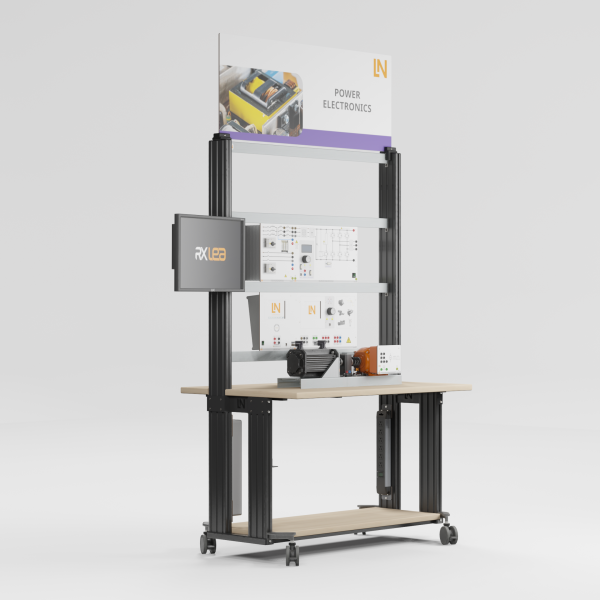
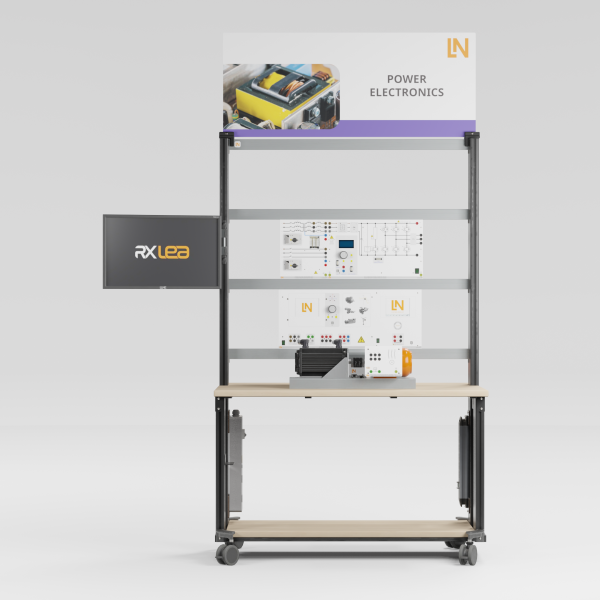
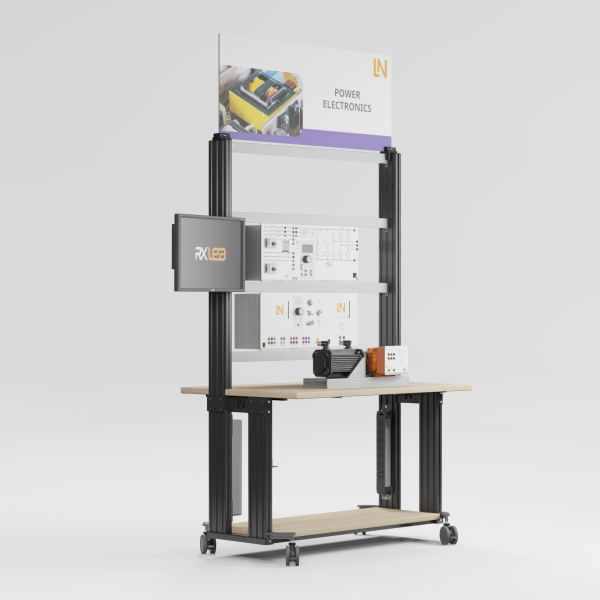
A UniTrain course on thyristors, triacs and solid-state relays: learners record characteristics, test leading-edge and trailing-edge phase control on resistive, inductive and capacitive loads and locate inserted faults.

Learning Content
  • Recording semiconductor characteristics
  • Applying control methods
  • Analyzing switching behavior
  • Diagnosing faults
KEY FEATURES
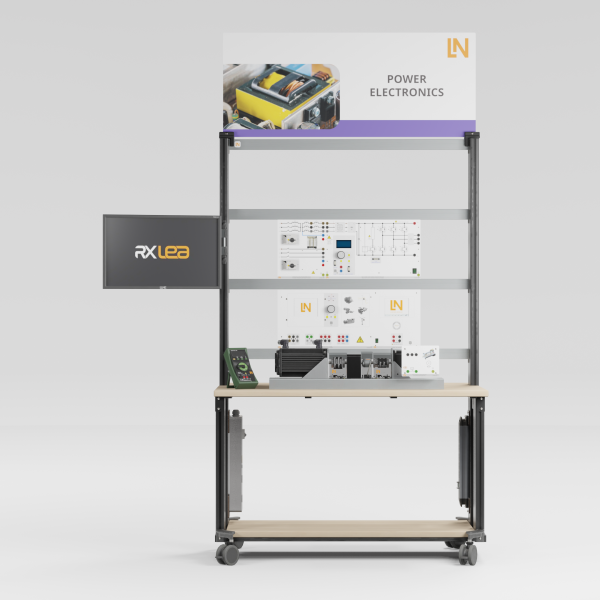
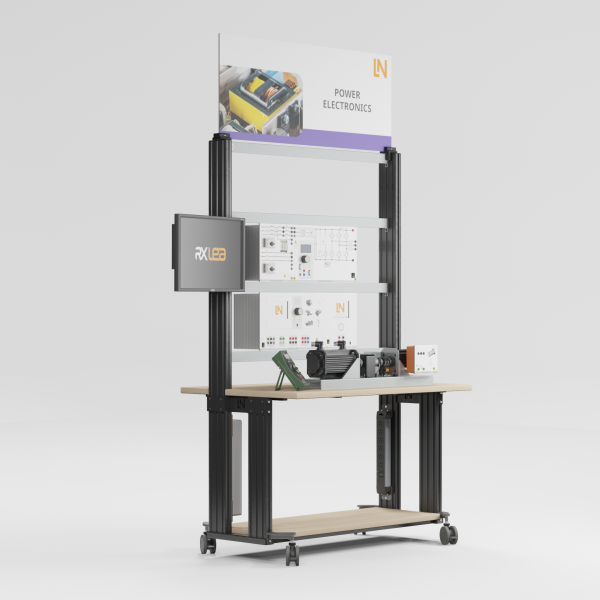
  • All important power semiconductors in a compact arrangement
  • Integrated fault simulation
  • Visual load indication
  • Safe experimenting at safety extra-low voltage
Speak with a Product Specialist +1 (757) 808-5696 · sales@lucas-nuelle.com

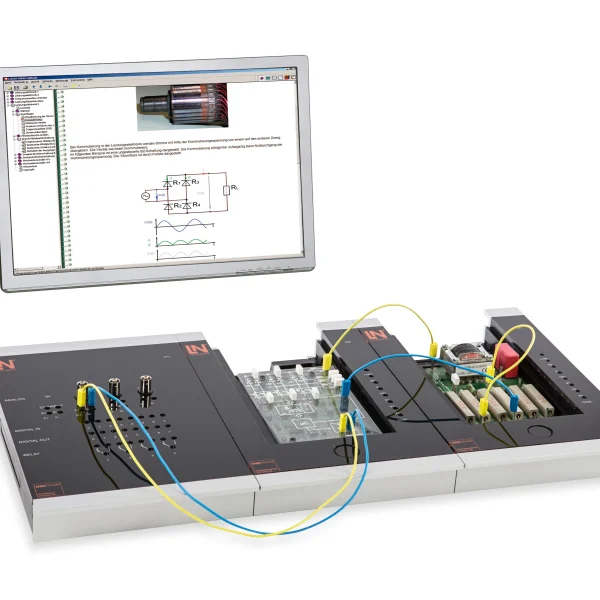
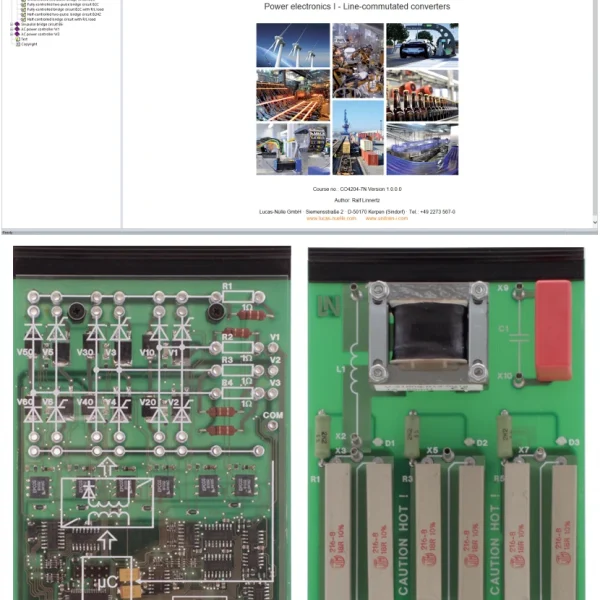
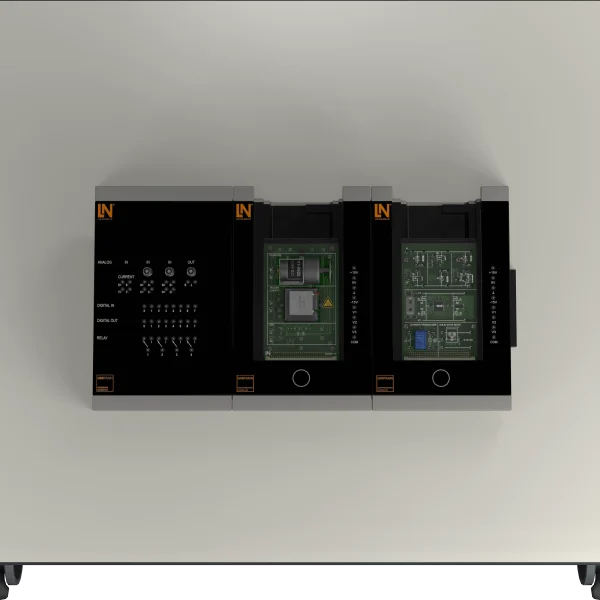
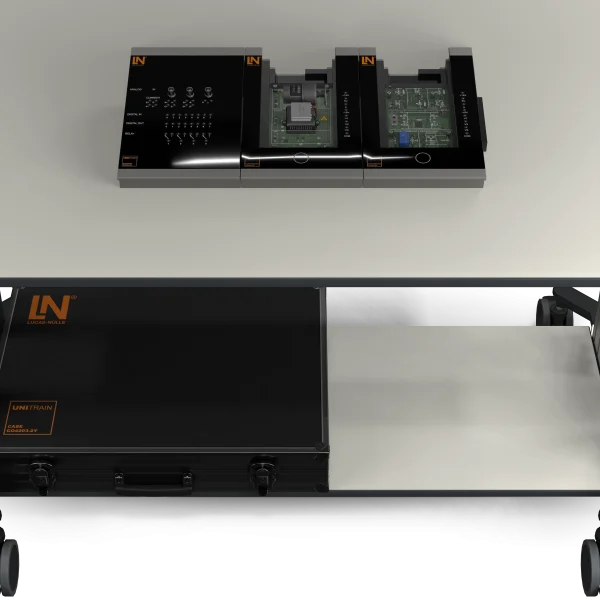
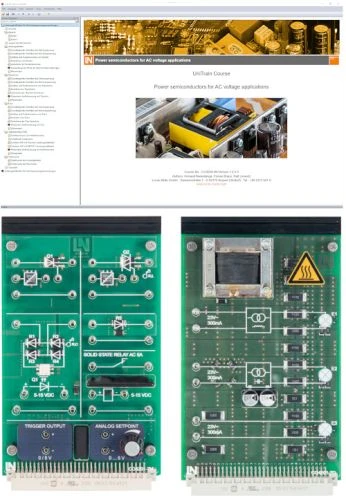
Dimming and switching in AC circuits rely on controllable power semiconductors. In practice, knowing how they work is not enough: skilled technicians must master their switching behavior with inductive and capacitive loads and be able to pinpoint faults in control circuits. The UniTrain course replicates this on a small scale. One card carries a thyristor, triac, power diode, MOSFET and solid-state relay, while the load card carries resistive, capacitive and inductive loads with LED indication of the current direction. Learners record characteristics, set the firing angle and pulse type on the digital firing pulse generator and compare leading-edge with trailing-edge phase control. When the system inserts a component fault, they locate it through targeted signal measurements.

CO4204-5NCourse Electronics 6.1: Power semiconductors for AC voltage applications
CO4203-2AUniTrain Interface mit virtuellen Instrumenten (Basis VI)
CO4203-2JUniTrain measurement accessories, shunts and connection cables
CO4203-2YUniTrain storage case for one UniTrain system
CO4203-2BUniTrain Experimenter

Learning Content in Detail

Learners acquire the competence to switch and dim AC loads using controllable power semiconductors and to find faults in such circuits.

Recording semiconductor characteristics

Learners determine the forward and reverse regions of diodes, thyristors and triacs from measured current and voltage values.

Applying control methods

Learners use firing pulses for phase-angle control and compare the behavior with different AC loads.

Analyzing switching behavior

Learners evaluate the difference between leading-edge and trailing-edge phase control with inductive and capacitive loads.

Diagnosing faults

Learners investigate faulty circuits and locate defective components on the basis of asymmetrical waveforms.

Features & Applications

The experiments address typical fields of application: lighting technology, heating control and electronic transformers, as well as speed control of AC motors and switched-mode power supply technology.
  • All important power semiconductors in a compact arrangement — The card combines a thyristor, triac, diode, MOSFET and solid-state relay. Learners compare the components directly and use them to dim and switch realistic AC loads.
  • Integrated fault simulation — The system uses software to insert real component faults. Learners systematically locate defects in the rectification through targeted signal measurements.
  • Visual load indication — LEDs on the load card indicate current direction and intensity. Learners recognize the switching behavior directly on the setup.
  • Safe experimenting at safety extra-low voltage — All the power electronics work at safety extra-low voltage. Learners handle power semiconductors without risk and can concentrate on signal analysis.
  • Galvanic signal isolation — Control is provided via pulse transformers and optocouplers. Learners use this to grasp the electrical isolation between control and load circuits.
  • Power semiconductor card — The card combines a thyristor, triac, power diode and MOSFET solid-state relay. Learners investigate the different firing conditions directly on the hardware.
  • Complex load card — The module provides resistive, capacitive and inductive loads. Learners use it to replicate real lighting scenarios with electronic or conventional transformers.
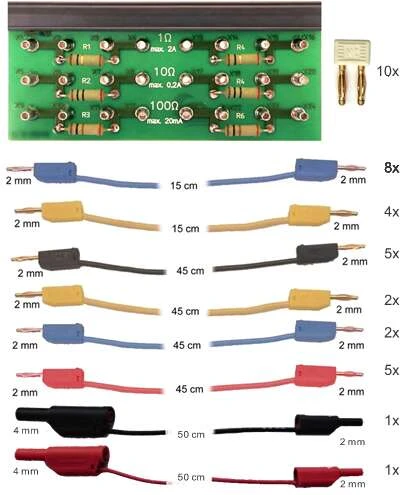
  • Shunt resistor — Precision shunts enable indirect current measurement. Learners capture currents safely via the oscilloscope and make phase shifts visible.
  • LabSoft digital learning environment — The software combines theory and experiment: learners read instructions, answer interactive tests and save their measurement results directly in the HTML interface.
  • Digital firing pulse generator — Learners set the firing angle and pulse type, single or multi-pulse, directly on the PC and optimize the control of inductive loads in real time.
Learners working with RXLea on a tablet at a Lucas-Nuelle training system
RXLea

From Knowledge Comes Capability.

You guide the learning

Where theory and practice go hand in hand.

RXLea brings a new way of learning: project-based, hands-on and clearly structured. Learners solve real-world tasks, while instructors save time on preparation. Interactive modules, smart analytics and real hardware create a modern, efficient learning world.

Hands-on and interactive

Animations, interactive tasks and realistic scenarios build a deep understanding. All content is organized into clear learning paths for focused, hands-on learning.

Digital support

3D assembly animations and digital instructions simplify complex procedures, reduce errors and help learners work more independently.

Visual support

Overview graphics, screenshots and sample animations make the learning world transparent. Photos from the learning packages are also available, including country-specific versions where needed.


Learners using a tablet at an energy training system
RXLea on desktop, laptop and tablet
RXLea Path Creator for building learning journeys
RXLea Navigator showing the learning world
Learn more about RXLea
Newsletter

Stay ahead in
technical training.

Get the latest training systems, product launches and educational insights, delivered directly to your inbox.

Your email address

By subscribing, you agree to our Privacy Policy. You can unsubscribe at any time.

 Please select at least one category before subscribing.
I'm interested in - select all that apply