


Skip to content

Micro Grid – Isolated Parallel Operation (Multifunction relay)

RXLea
Digital projects for hands-on learningInteractive learning content, directly connected to the training system.

Micro Grid – Isolated Parallel Operation (Multifunction relay)

EMG22PT

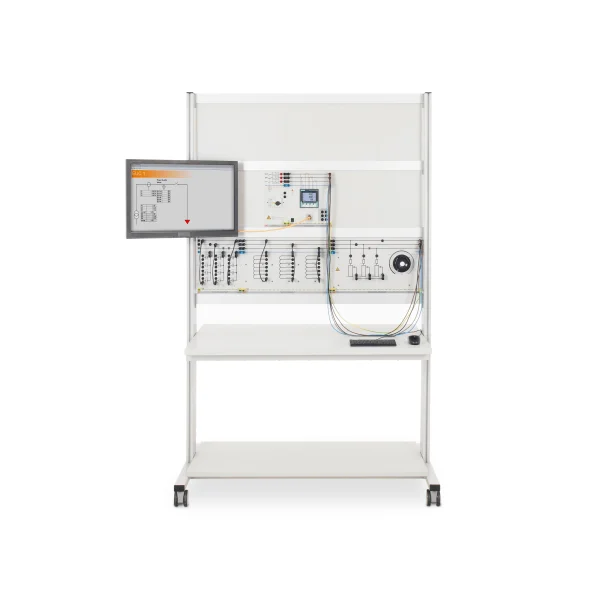
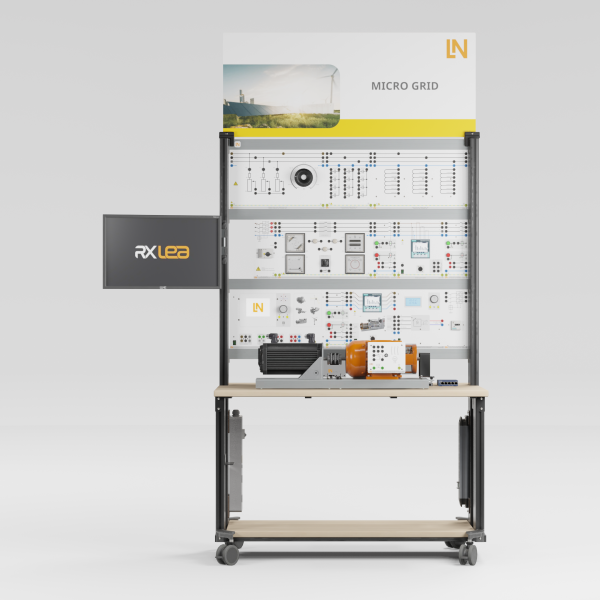
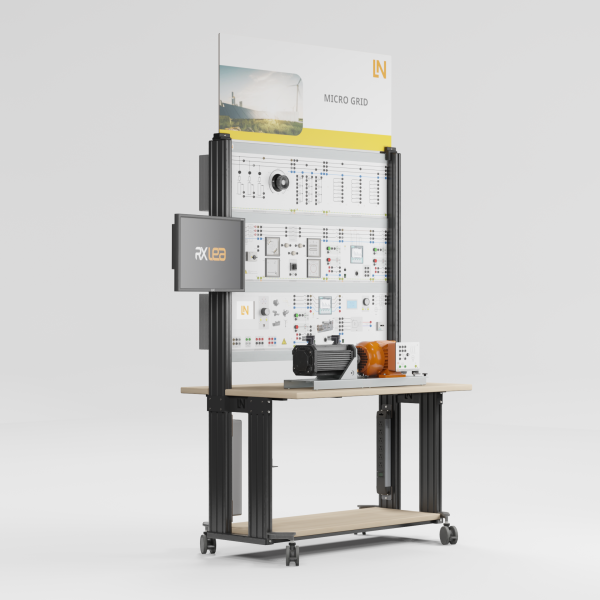
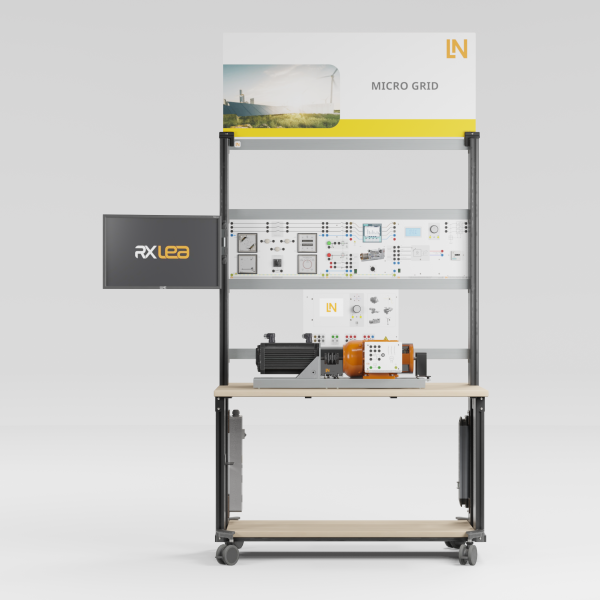
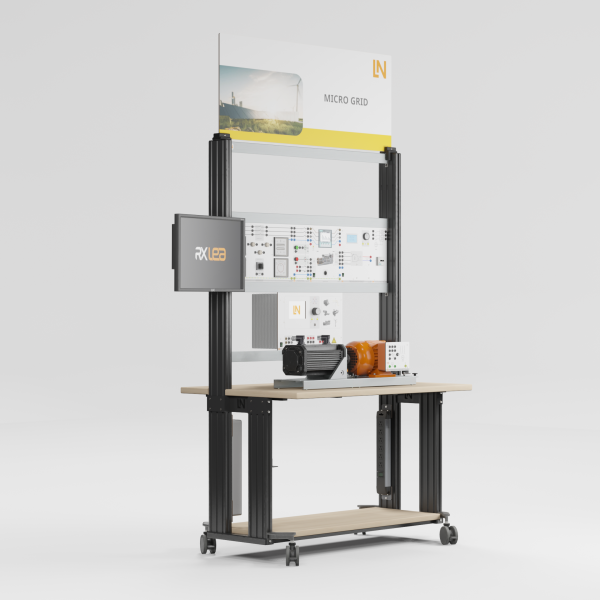
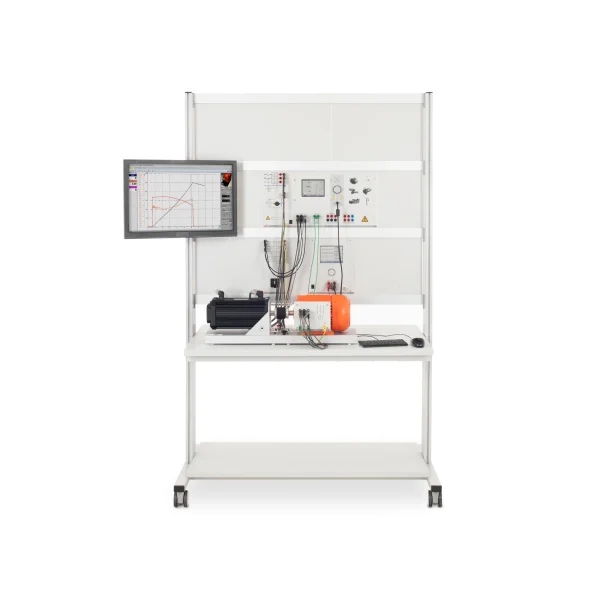
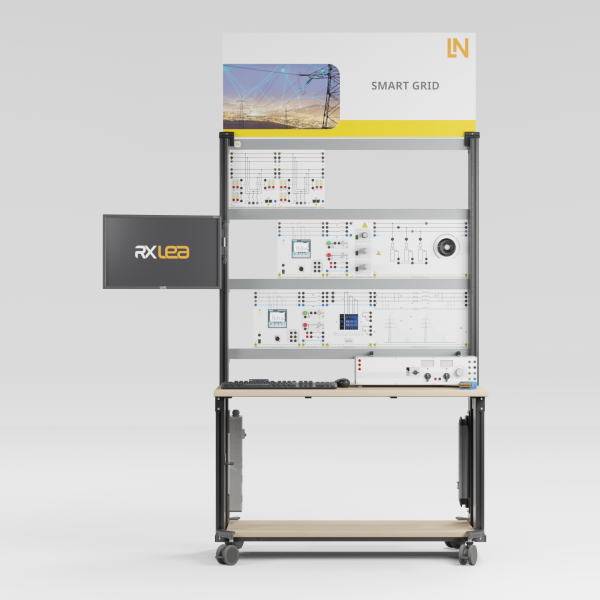
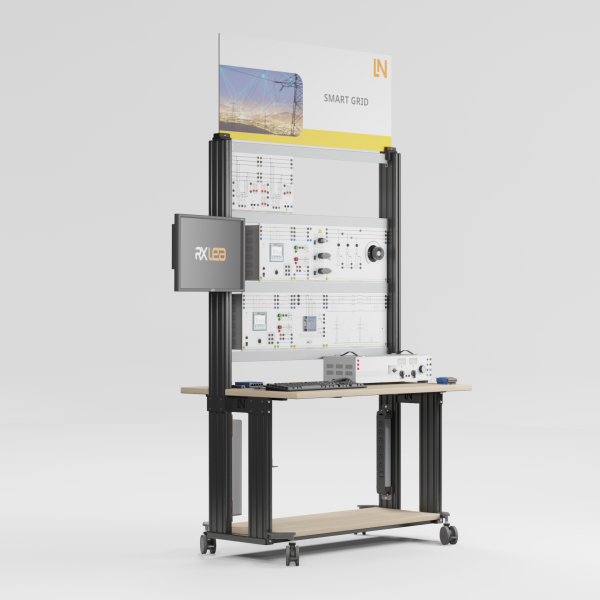
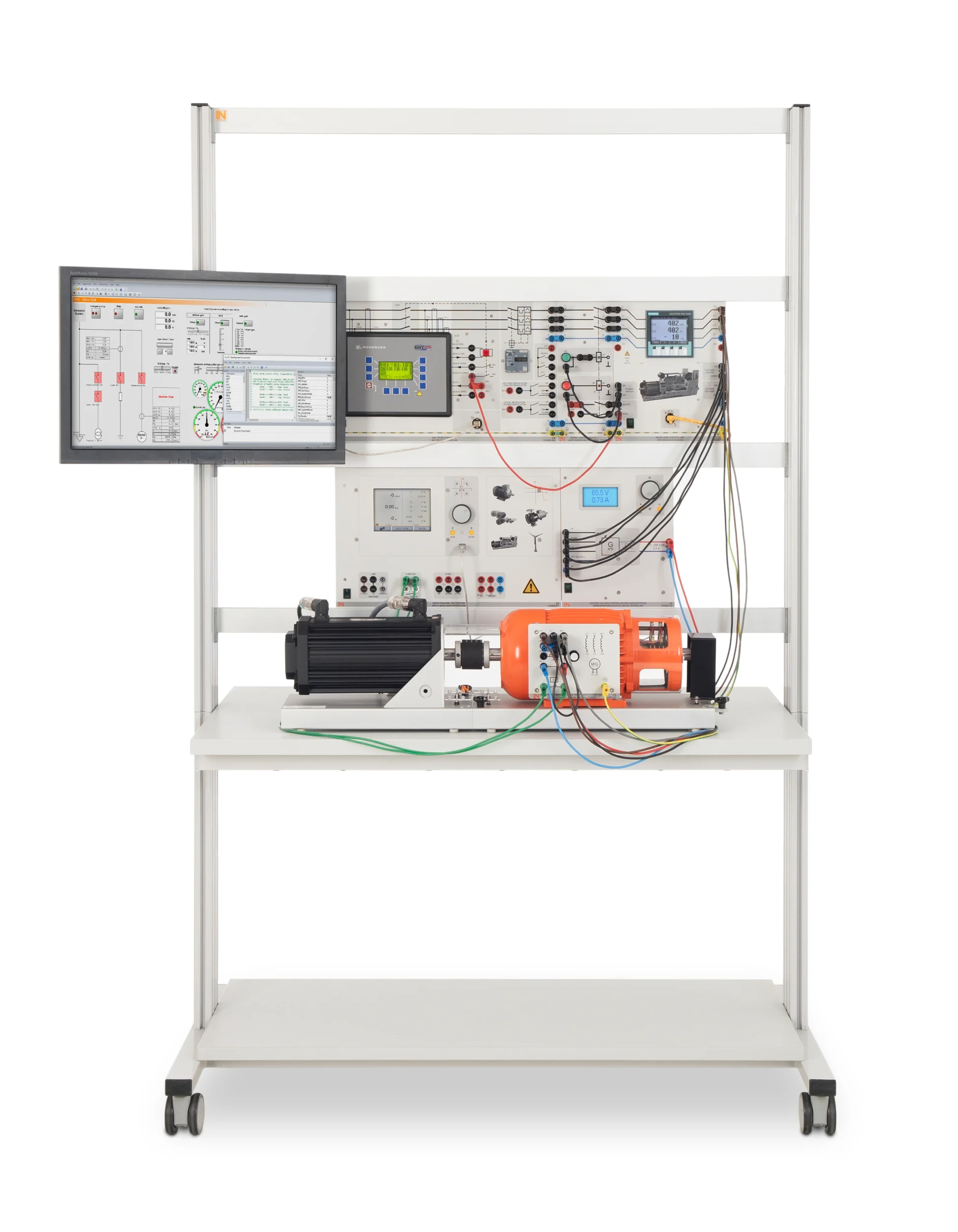
Extension to the EMG12PT for parallel island operation: students synchronize a second generator to a weak grid and share real and reactive power via droop control or SCADA.

Learning Content
  • Synchronizing a second generator to a weak grid
  • Applying P and Q droop control
  • Parameterizing load sharing via SCADA
  • Correcting reactive power oscillations
KEY FEATURES
  • Interaction of several generators
  • Communication versus autonomy
  • Analyzing circulating currents in practice
  • Servo machine test bench (CO3636-6Y)
Speak with a Product Specialist +1 (757) 808-5696 · sales@lucas-nuelle.com

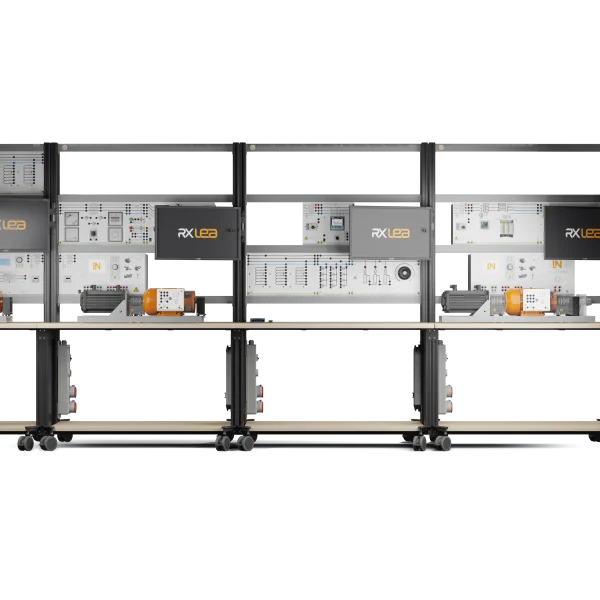
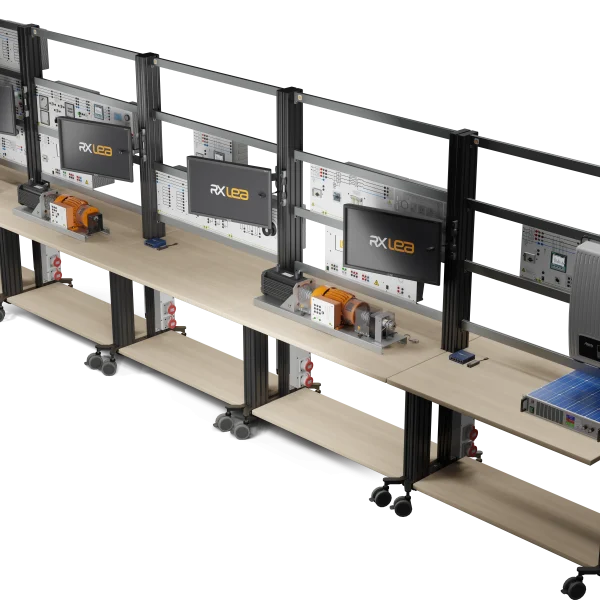
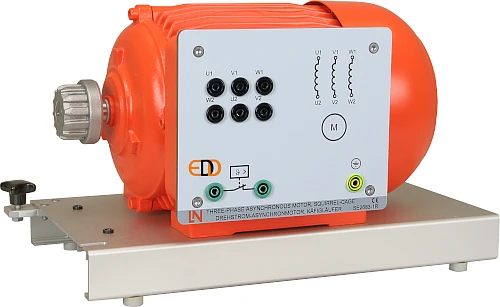
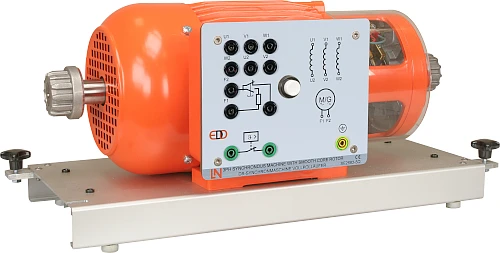
If one generator is not sufficient for an island grid or redundancy is required, several machines have to work together. Frequency and voltage are then not rigidly specified but are supported jointly by all generators. This extension adds a second machine set to the EMG12PT, consisting of a synchronous machine, servo machine test bench, excitation voltage controller, generator HMI and multifunction relay. Students synchronize the second machine to the weak grid and then share the load: once purely physically via P and Q droop characteristics without a communication line, and once network-based via SCADA. They provoke instabilities, observe equalizing currents and correct reactive power oscillations via the excitation currents.

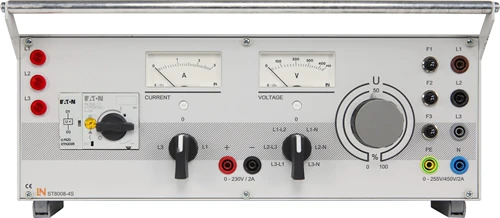
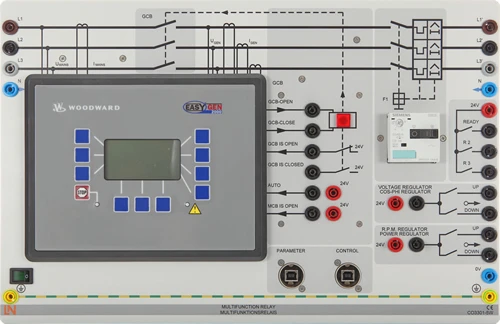
CO3301-5WMultifunktionsrelais, Leistungsregler, cos-phi Regler, Synchronisiergerät
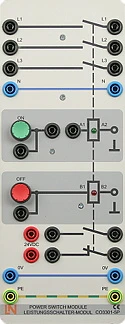
CO3301-5PPower switch module
SO2800-3XInteractive Lab Assistant: Control of stand-alone networks with Micro Grid
CO3212-1PMotor protection switch, 3 pole, 1.8-2.5A
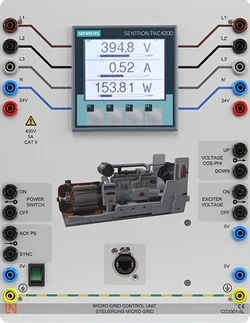
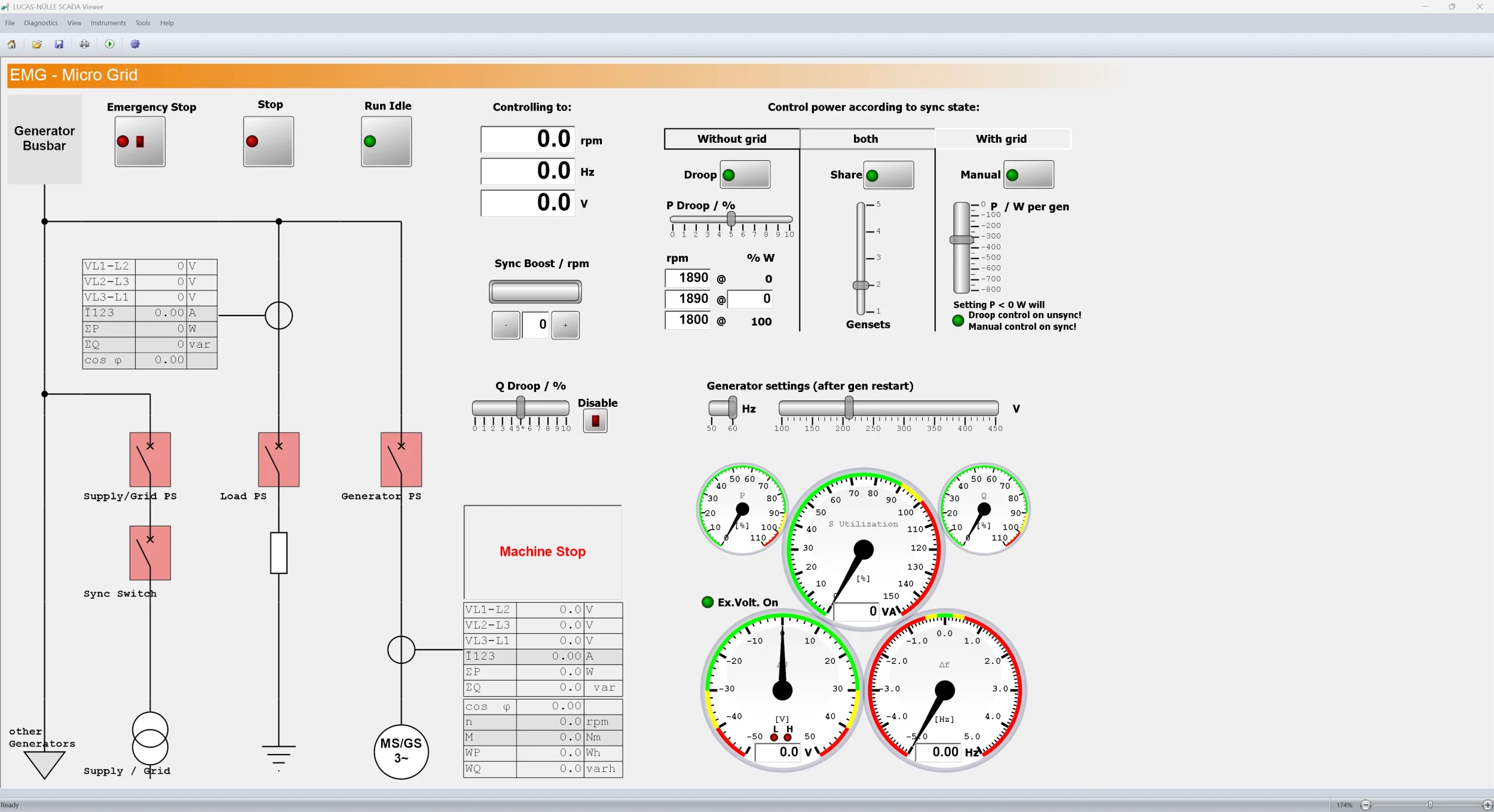
CO3301-5LHMI (Human Machine Interface) for generators
ST8010-4JMultiple socket outlet, 6 fold, with illuminated switch
CO3636-6YServo machine test stand for 1kW machines incl. software ActiveServo (D,GB,F,E)
SE2662-7DCoupling guard with LED lighting for 1kW machines
SE2662-6ARubber coupling sleeve, 1kW
ST7200-7ASybaPro experiment trolley, 3-level, 6 sockets, 1250x1970x800mm
ST8010-4TMonitor holder for flat screen monitor of weight up to 15kg / 33lbs
ST7200-5LProtection cover for three-level experiment trolleys
ST8010-4GKeyboard adapter for flat screen monitor holders
ST8008-8NProtected power distribution for working stations
ST8010-4JMultiple socket outlet, 6 fold, with illuminated switch
ST8000-4BDisplay for Microgrid equipment
SO5126-3RSafety connecting plug 4mm with tap (2x), black, 1000V/32A CAT II
SO5126-3VSafety connecting plug 4mm with tap (2x), blue, 1000V/32A CAT II
SO5126-3WSafety connecting plug 4mm with tap (2x), green/yellow, 1000V/32A CAT II
SO5148-1LSet of safety measurement cables, 4mm (31 leads)
SO5148-1ZSet of safety measurement cables, 4mm, 10m, 5 pcs, incl. fastening

Learning Content in Detail

Students work through parallel operation in the island grid, from synchronization and load sharing to the correction of reactive power oscillations.

Synchronizing a second generator to a weak grid

Students connect the secondary system manually or automatically without causing frequency or voltage dips.

Applying P and Q droop control

Students share real and reactive power solely via frequency and voltage, without a communication line.

Parameterizing load sharing via SCADA

Students set up the network-based control system via Ethernet and analyze the response to sudden load increases.

Correcting reactive power oscillations

Students explain their causes and compensate for them via the excitation currents of both systems.

Features & Applications

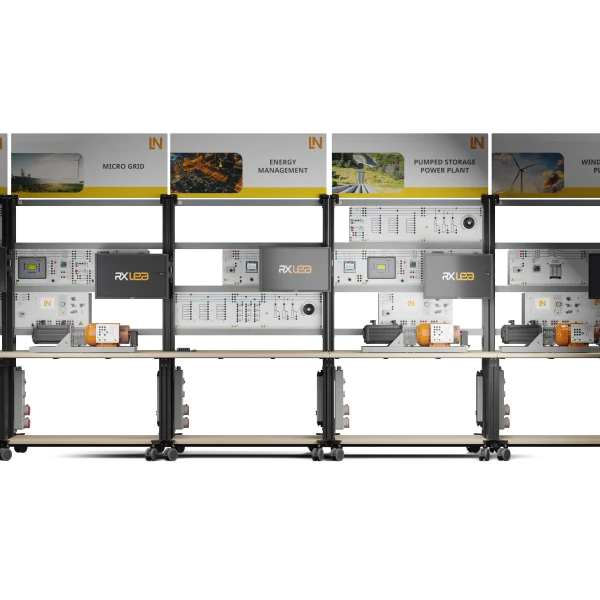
The experiments reflect the tasks of distributed generation: operating several emergency generator sets redundantly, dynamically sharing the load between industrial generators and keeping closed distribution networks stable without a supporting transmission grid.
  • Interaction of several generators — In a pure island grid, all active generators jointly support frequency and voltage. Students experience how every intervention on machine A has an immediate effect on machine B.
  • Communication versus autonomy — Control is either network-based via SCADA as load sharing or purely physical via droop characteristics without a communication line. Students compare the two strategies in terms of reliability.
  • Analyzing circulating currents in practice — Students provoke instabilities in the safe lab environment and learn how controllers must intervene to suppress equalizing currents and reactive power oscillations.
  • Servo machine test bench (CO3636-6Y) — The test bench emulates the drive turbine and responds dynamically to load changes. Students see how the prime mover has to readjust its torque to maintain the grid frequency.
  • Three-phase complex loads (CO3301-3F, -3D, -3E) — With the adjustable resistive, inductive and capacitive elements, students replicate extreme load scenarios and observe how reactive power affects the terminal voltage.
  • Digital multifunction relay (CO3301-5W) — The industrial device combines frequency and phase matching, power distribution and alarm acknowledgment in one physical interface. Students practice the complete automation process there.
  • SCADA for PowerLab — For load sharing, the software links the control PCs via TCP/IP as client and server. It records the frequency and voltage of both generators synchronously, thus showing the P/f and Q/V droop characteristics.
Learners working with RXLea on a tablet at a Lucas-Nuelle training system
RXLea

From Knowledge Comes Capability.

You guide the learning

Where theory and practice go hand in hand.

RXLea brings a new way of learning: project-based, hands-on and clearly structured. Learners solve real-world tasks, while instructors save time on preparation. Interactive modules, smart analytics and real hardware create a modern, efficient learning world.

Hands-on and interactive

Animations, interactive tasks and realistic scenarios build a deep understanding. All content is organized into clear learning paths for focused, hands-on learning.

Digital support

3D assembly animations and digital instructions simplify complex procedures, reduce errors and help learners work more independently.

Visual support

Overview graphics, screenshots and sample animations make the learning world transparent. Photos from the learning packages are also available, including country-specific versions where needed.


Learners using a tablet at an energy training system
RXLea on desktop, laptop and tablet
RXLea Path Creator for building learning journeys
RXLea Navigator showing the learning world
Learn more about RXLea
Newsletter

Stay ahead in
technical training.

Get the latest training systems, product launches and educational insights, delivered directly to your inbox.

Your email address

By subscribing, you agree to our Privacy Policy. You can unsubscribe at any time.

 Please select at least one category before subscribing.
I'm interested in - select all that apply