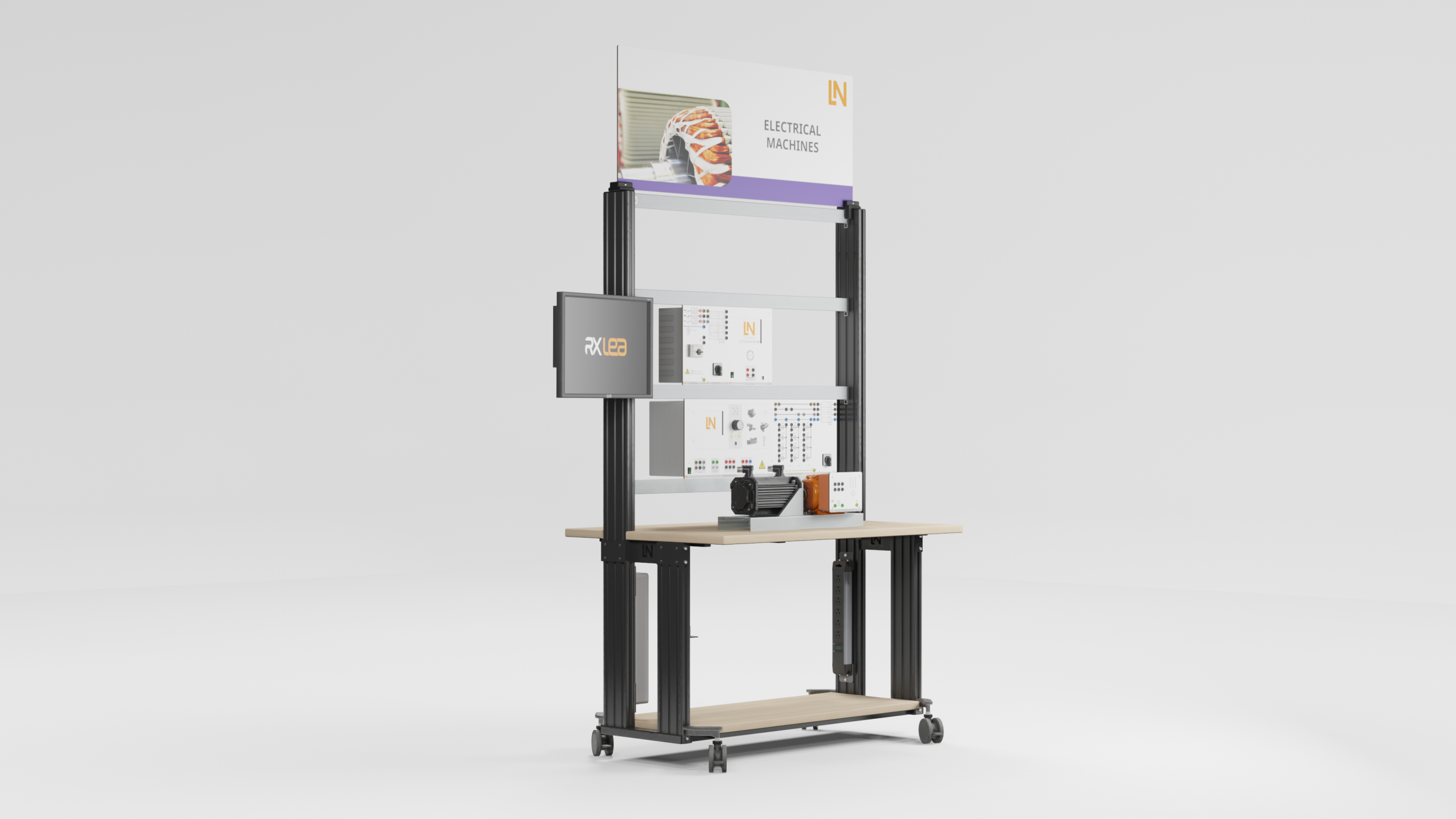



Three-Phase Induction Motor with Squirrel Cage and Distinct Pull-Out Torque 300W
Compact training system for analyzing squirrel-cage motors, including star-delta starting, Steinmetz circuitry, and reactive power compensation.
- Analyzing motor operation
- Minimizing starting currents
- Applying the Steinmetz circuit
- Compensating reactive power
- Analyzing wye and delta connections in detail
- Analyzing wye-delta starting in detail
- Operation on the single-phase supply (Steinmetz circuit)
- Compensating reactive power
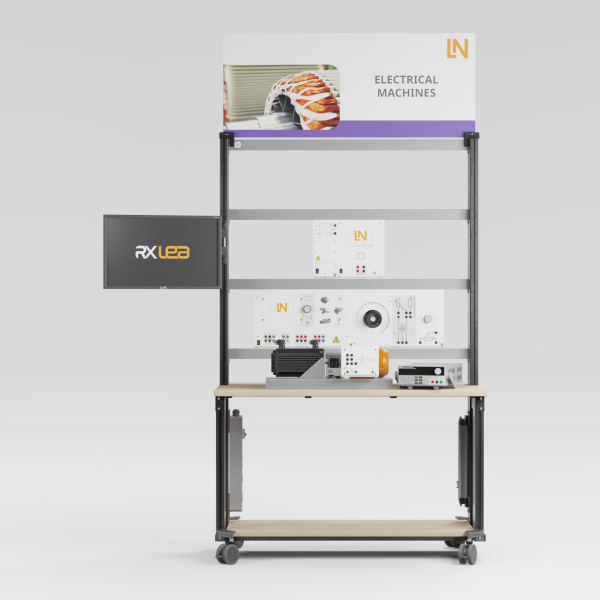
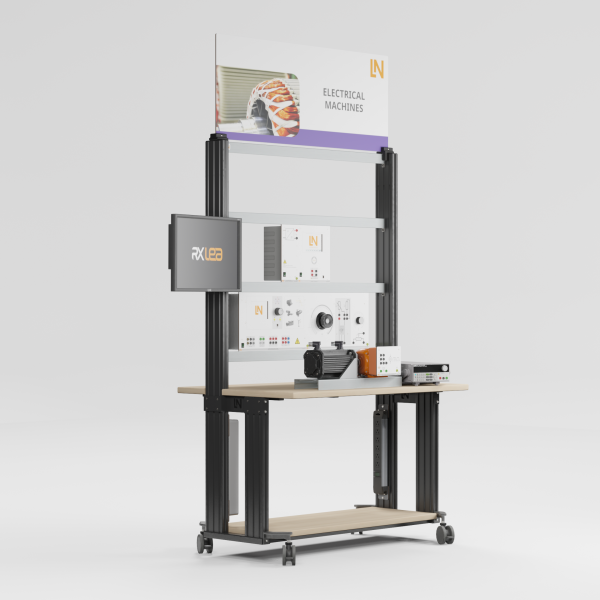
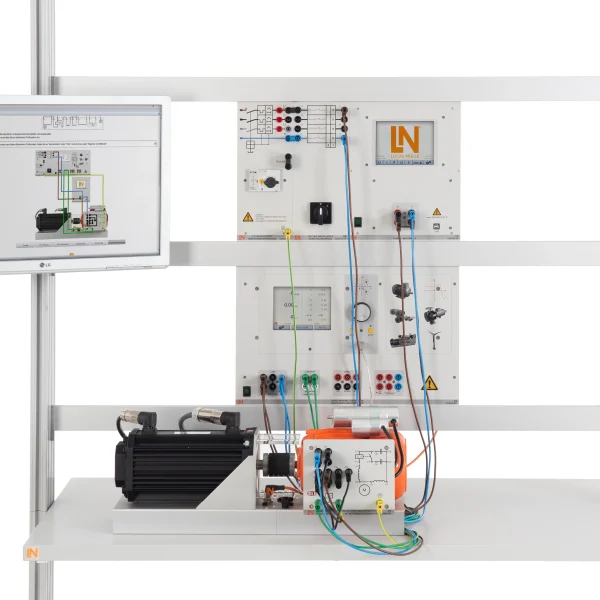
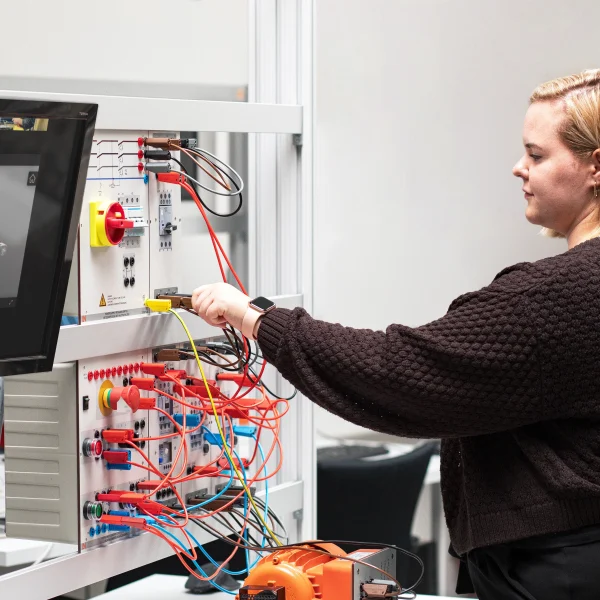
Thanks to their robust and simple design, induction machines are the most widely used electric drives in industry. They drive installations, conveyor belts and pumps, which is why connecting them and understanding their starting behavior are basic skills for every electrical technician. The training system introduces learners to the connection, reversal of rotation and starting methods of squirrel-cage motors under real load. Learners measure phase and line quantities in wye and delta connection, compare direct-on-line starting with wye-delta starting using an industrial cam switch, and operate the motor in the Steinmetz circuit on the single-phase supply. With the 14-step capacitor bank, they compensate the reactive power, while the servo machine test system emulates heavy starting, pumps or fans.
| Base Product | |
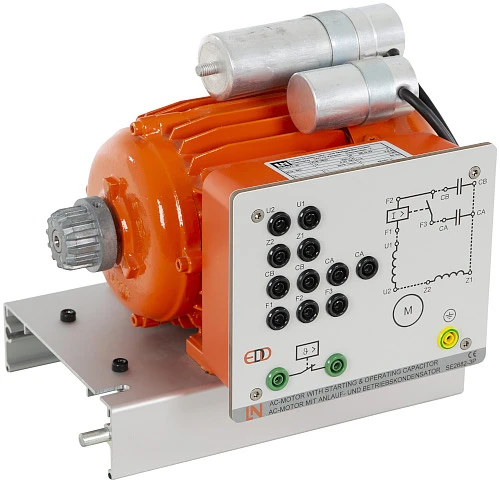
| SE2683-1G7 | Three-phase asynchronous motor, 0.3 kW n=1720 (208V/360V) |
| CO3212-2D | Star-Delta switch |
| CO3212-6Y | Capacitive load, three-phase, 14-stage |
| SO2805-1C7 | Interactive Lab Assistant: Asynchronous machines 0.3 kW |
| Power Supply | |
| CO3212-5V7 | Three-phase power supply with motor protection switch |
| Measuring Instruments | |
| CO5127-2A | Power-Multimeter |
| Accessories | |
| CO3212-1W | Cut-out switch, 4 pole |
| CO3636-6X7 | Dynamic servo machine test stand for 300W machines incl. control software ActiveServo 2.0 |
| SE2662-2A | Rubber coupling sleeve, 0.3kW |
| SE2662-7C | Coupling guard with LED lighting for 300W machines |
| Furniture | |
| ST8010-4G | Keyboard adapter for flat screen monitor holders |
| ST8008-8N7 | Protected power distribution for workstations |
| ST8010-4J8 | Multiple power outlet strip, 6 outlets, US-standard |
| Furniture Accessories | |
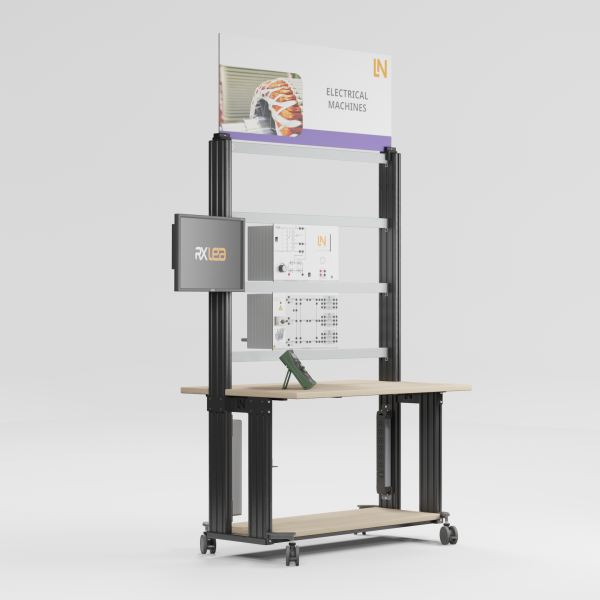
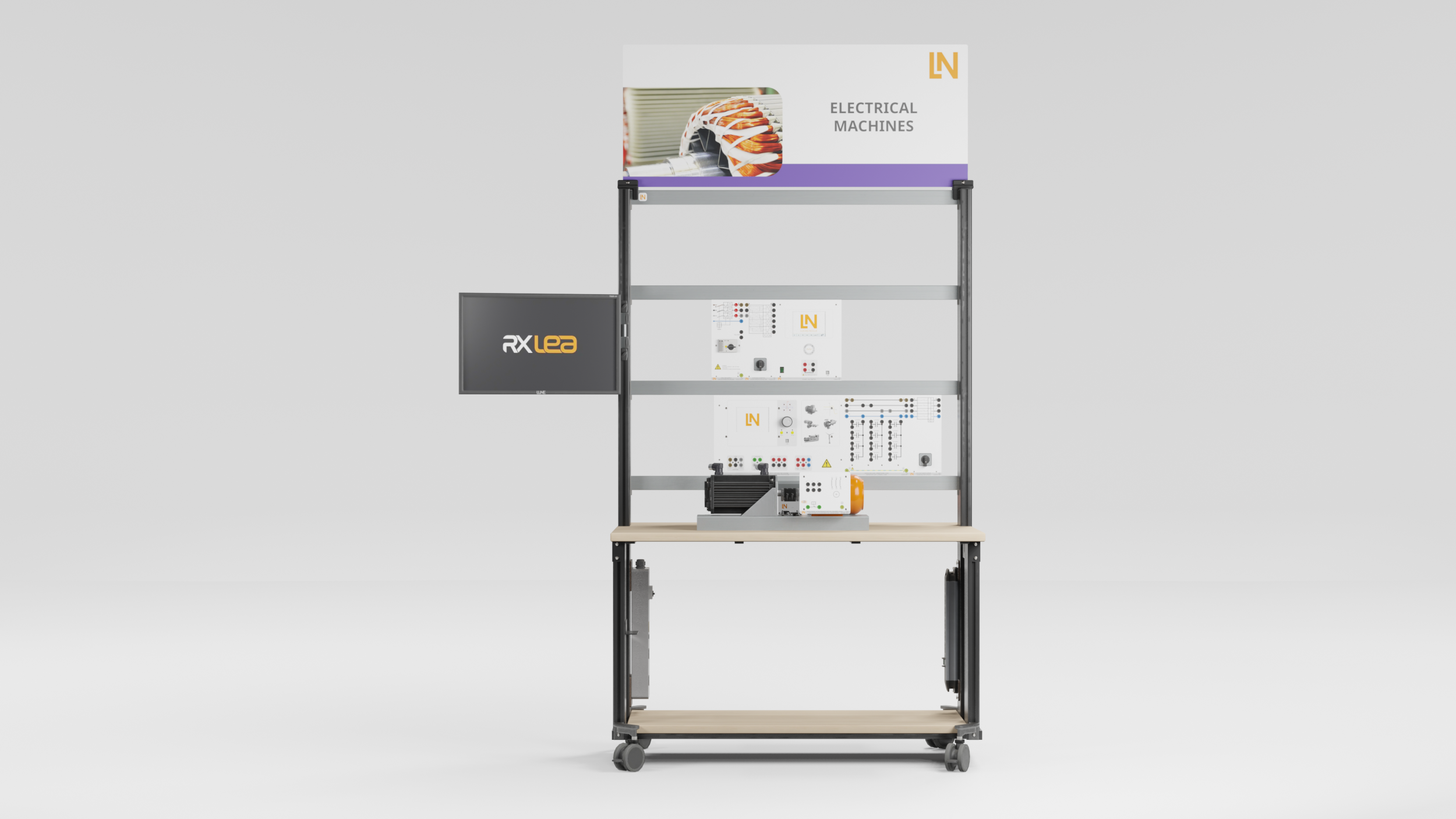
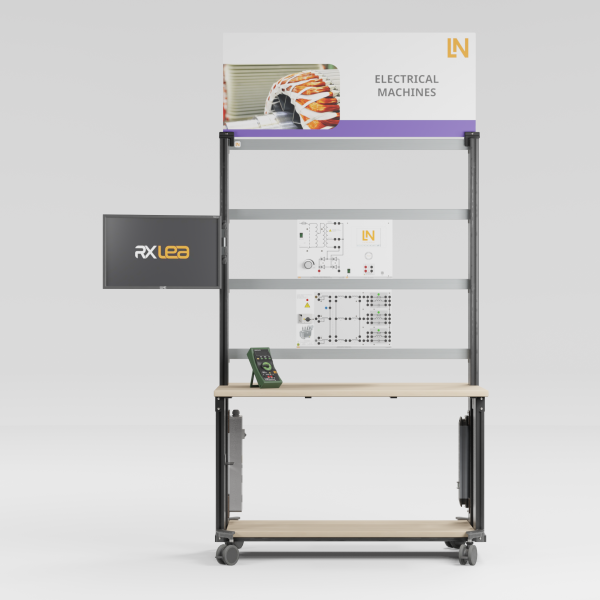
| ST8000-5A | Display for Electrical Machines equipment |
| Measurement Leads | |
| SO5148-1L | Set of safety measurement cables, 4mm (31 leads) |
| SO5126-3R | Safety connecting plug 4mm with tap (2x), black, 1000V/32A CAT II |
| SO5126-3V | Safety connecting plug 4mm with tap (2x), blue, 1000V/32A CAT II |
| SO5126-3W | Safety connecting plug 4mm with tap (2x), green/yellow, 1000V/32A CAT II |
Learning Content in Detail
Analyzing motor operation
Minimizing starting currents
Applying the Steinmetz circuit
Compensating reactive power
Simulating driven machines
Features & Applications
- Analyzing wye and delta connections in detail — Learners measure phase and line quantities for both connection types. They record load characteristics and analyze the torque, electrical power and efficiency of the motor.
- Analyzing wye-delta starting in detail — Learners compare the starting behavior with direct-on-line starting and with wye-delta connection, evaluating starting currents and torque curves.
- Operation on the single-phase supply (Steinmetz circuit) — Learners operate the three-phase motor on a single-phase AC supply and investigate the effects of different running capacitors.
- Compensating reactive power — Learners analyze the reactive power of the motor and use capacitive loads for compensation. They evaluate the result for wye and delta connection.
- Dynamic four-quadrant operation — The system allows load tests in all quadrants. Learners adjust torque and speed continuously and evaluate the measurement series on the PC.
- Emulating industrial driven machines — Using the software, learners emulate heavy starting, pumps or fans. They investigate how the drive behaves under these real load requirements.
- Three-phase induction motor, 0.3 kW — The squirrel-cage motor exhibits a pronounced breakdown torque in both wye and delta connection. An electronic nameplate (EDD) assists with parameterizing the software.
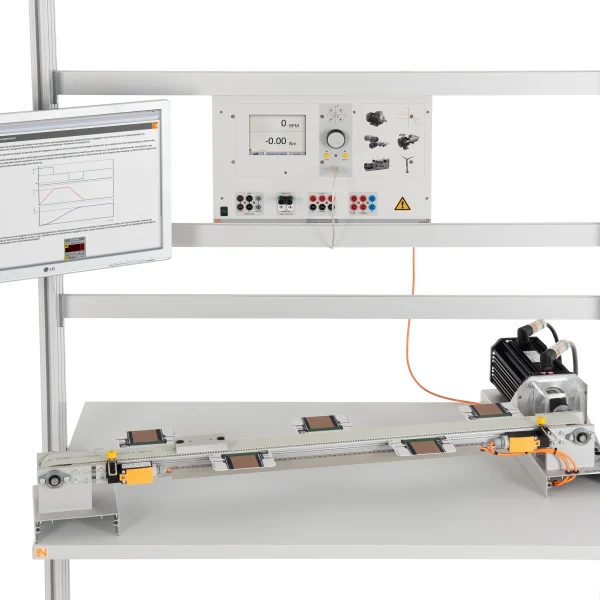
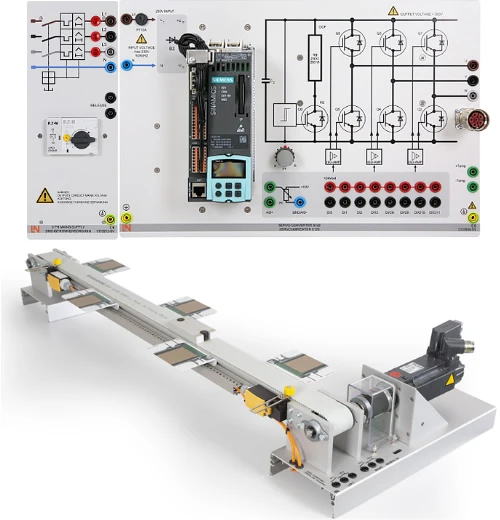
- Servo machine test system — The control unit and induction servo form the test system. Learners control torque or speed and measure the resulting mechanical and electrical quantities.
- Wye-delta switch — An industrial cam switch changes over between wye and delta operation. Learners wire the machines realistically using 4 mm safety sockets.
- Capacitive load, three-phase — The capacitor bank, freely switchable in 14 steps, is used for reactive power compensation and for setting up the Steinmetz circuit.
- Power multimeter with touch display — The measuring instrument records voltages, currents and power regardless of waveform. Learners evaluate the signal waveforms on the PC via the USB interface.
- Tool-free coupling with temperature protection — Learners couple the machine under test and the brake without backlash and without tools. An integrated temperature contact monitors the motor and protects it against thermal overload.
- Shaft cover with safety interlock — The plug-on shaft cover protects against rotating parts. Its LED lights up green and enables the voltage only when there are no faults; in the event of faults such as overtemperature, it stays off.
- ActiveServo software — Learners use the software to record characteristics. They configure ramps, record load characteristics and export the measurement series for evaluation.
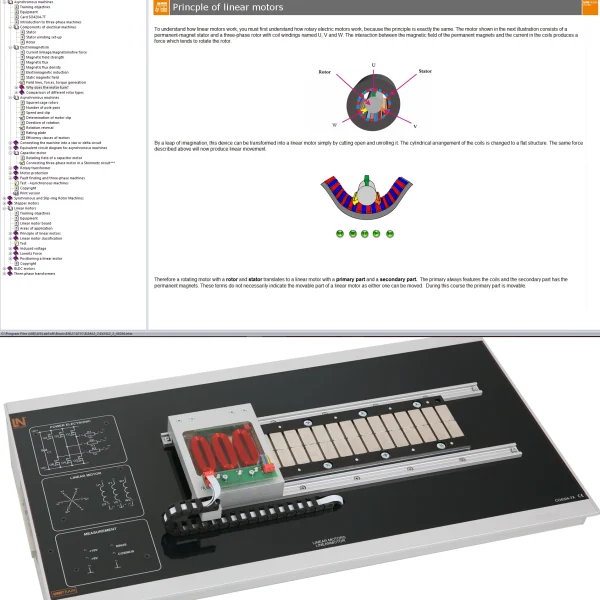
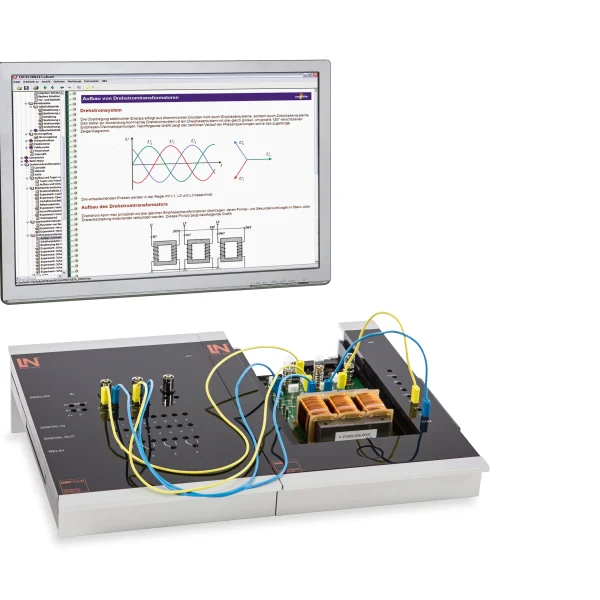
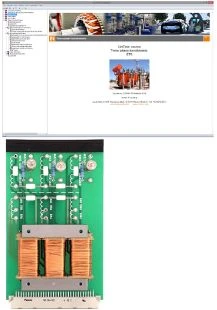
- Interactive ILA course — The software guides learners through all the experiments using multimedia. Learners answer knowledge questions, evaluate their measurements and save the results by drag and drop.
- Load simulation module — The software superimposes the motor characteristic on the characteristic of a virtual driven machine. Learners follow the operating point live on the crosshair.

From Knowledge Comes Capability.
You guide the learning
Where theory and practice go hand in hand.
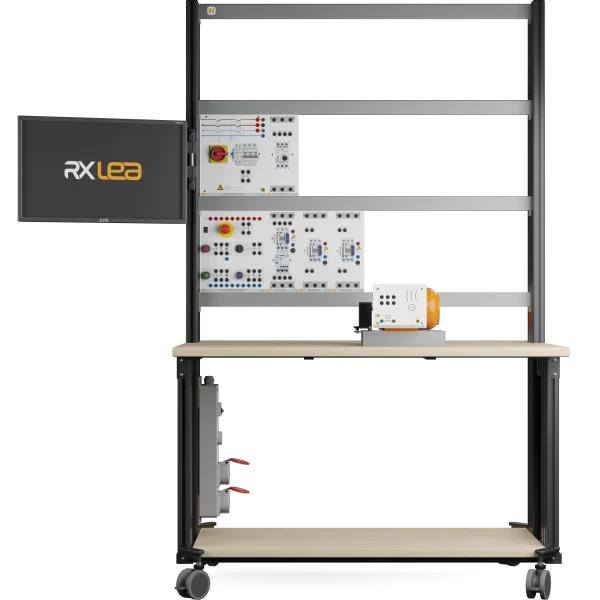
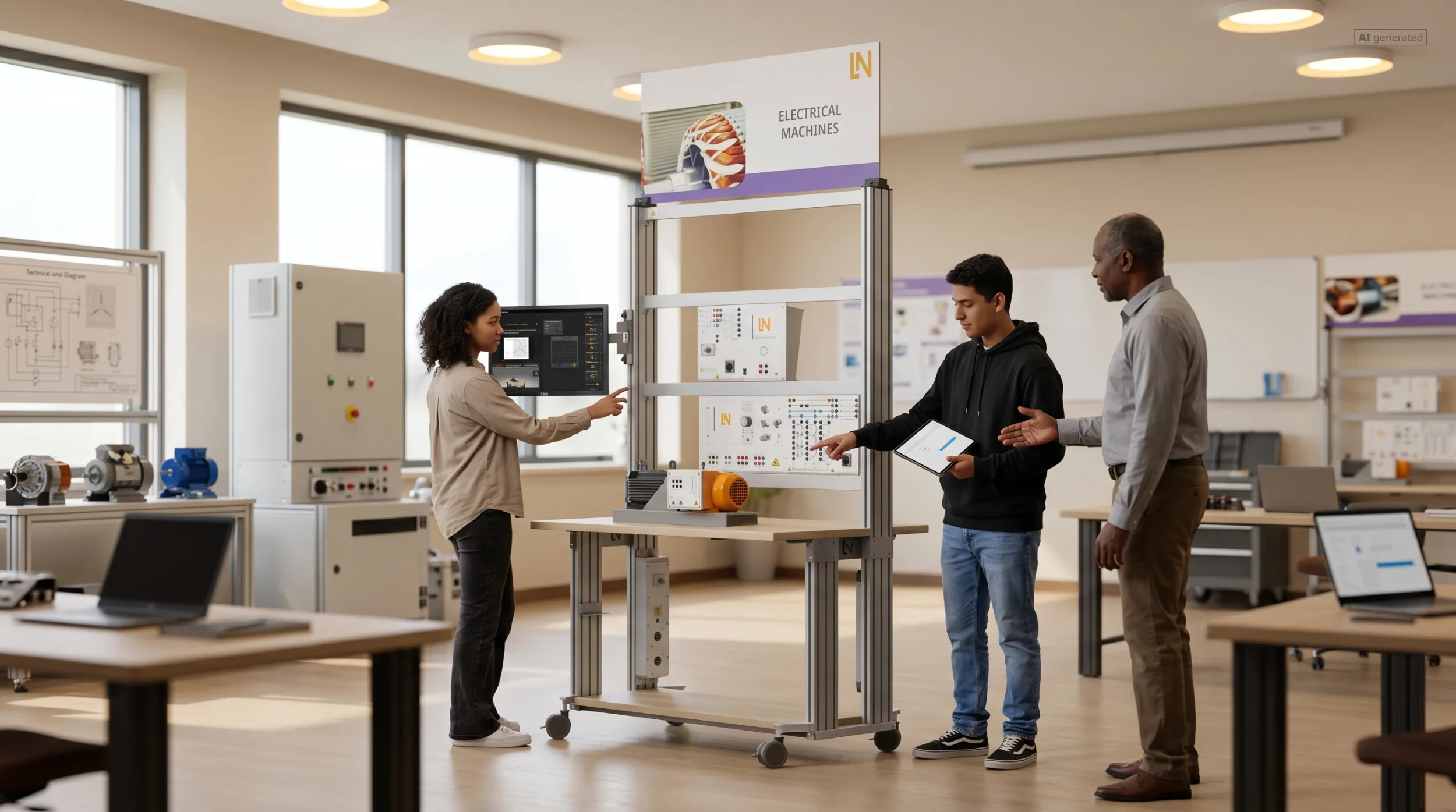
RXLea brings a new way of learning: project-based, hands-on and clearly structured. Learners solve real-world tasks, while instructors save time on preparation. Interactive modules, smart analytics and real hardware create a modern, efficient learning world.
Hands-on and interactive
Animations, interactive tasks and realistic scenarios build a deep understanding. All content is organized into clear learning paths for focused, hands-on learning.
Digital support
3D assembly animations and digital instructions simplify complex procedures, reduce errors and help learners work more independently.
Visual support
Overview graphics, screenshots and sample animations make the learning world transparent. Photos from the learning packages are also available, including country-specific versions where needed.




Stay ahead in
technical training.
Get the latest training systems, product launches and educational insights, delivered directly to your inbox.